
AI for Content Writer's Block: A Guide to Creative Speed

Every content creator has faced the "blink of death"—that relentless white cursor pulsating against a blank digital page. Writer's block is more than just a momentary lapse in creativity; it is a professional bottleneck that can derail editorial calendars and stifle marketing momentum.[1] In the high-stakes world of modern content production, where consistency is the primary currency of growth, the psychological weight of an empty screen can be paralyzing.
Fortunately, the advent of Artificial Intelligence (AI) has shifted the paradigm from isolation to collaboration. Rather than replacing the writer, AI serves as a sophisticated co-pilot, designed to dismantle the barriers of perfectionism and information overload. By strategically leveraging AI for content writer's block, professionals can transform their workflow from a grueling uphill climb into a streamlined process of iteration and refinement. This article explores how AI systems act as the ultimate catalyst for creative breakthroughs, allowing writers to regain their momentum and produce higher-quality work at scale.
I. Understanding the Nuances of Writer's Block in Content Creation
In the professional sphere, writer's block is rarely about a total lack of talent; it is almost always a symptom of cognitive overload or emotional resistance. For content writers, this "block" manifests in several distinct ways. It might be the paralysis of perfectionism, where the desire to write the perfect opening hook prevents any words from landing on the page. It could be idea depletion, common among those who have covered the same niche for years and feel they have exhausted every possible angle.
The triggers are often practical as well. Repetitive tasks, like drafting fifty Meta descriptions or dozens of social media captions, can lead to mental fatigue. Furthermore, the sheer scope of a project—such as a 3,000-word White Paper—can feel so overwhelming that the brain's "fight or flight" response triggers an "avoidance" state. The impact is tangible: missed deadlines, a decline in semantic richness, and a blow to professional morale. By identifying whether the block is rooted in research gaps, structural confusion, or creative burnout, writers can better select the specific AI tool to bridge the gap.
II. AI as an Ideation Catalyst: Generating Novel Content Concepts
When the "well of ideas" runs dry, AI serves as a high-speed pump. Large Language Models (LLMs) are uniquely positioned to identify "white space" in a niche by analyzing vast datasets of existing content. Instead of staring at a keyword list, writers can use AI to build topic clusters. For instance, if you are writing about "sustainable logistics," an AI tool can instantly suggest sub-topics like "last-mile drone delivery ethics" or "circular economy impacts on warehousing," angles you might not have considered.[2]
Prompt engineering is the key to unlocking these novel concepts. Rather than asking for "blog ideas," a business-like prompt should be specific: "Act as a content strategist for a B2B SaaS company. Identify five counter-intuitive pain points enterprise CTOs face regarding legacy system integration that haven't been widely covered in 2024 editorial trends." This shift from generic requests to persona-based prompts ensures the output is sophisticated enough to spark genuine professional inspiration.
III. AI-Powered Research Assistance: Streamlining Information Gathering
One of the most common causes of writer's block is the intimidating mountain of research required for technical or long-form content. AI tools now act as advanced synthesis engines, capable of distilling 50-page PDFs into actionable executive summaries. Instead of spending hours manually scouring Search Engine Results Pages (SERPs), writers can use AI to find specific data points, industry statistics, and authoritative citations that provide the backbone for a credible piece of content.
Beyond simple summaries, AI-powered research identifies content gaps. By feeding the AI your competitor's top-performing URLs, you can ask it to find the one question they failed to answer or the data set they overlooked. This moves the writer from a state of "what do I say?" to "here is the unique value I can add," effectively bypassing the research-induced paralysis that often precedes the drafting phase.
IV. AI for Outlining and Structuring Content: Building a Solid Framework
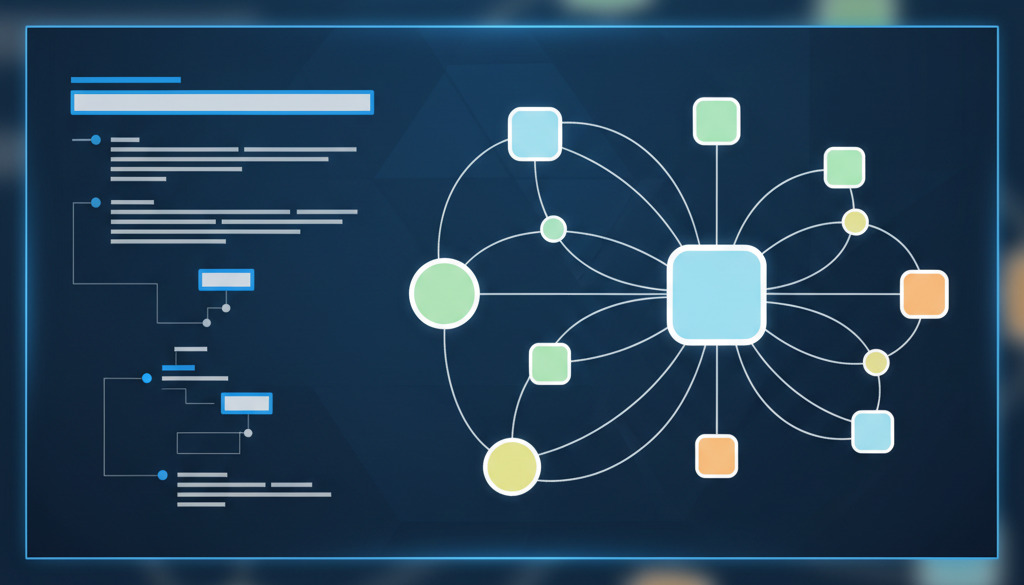
Writing is significantly easier when the skeleton is already built. A primary reason for mid-article "stalling" is a lack of logical flow. If the structure is weak, the writer will inevitably get lost in the middle of a section. AI excel at creating comprehensive outlines that ensure a logical progression from the introduction to the call-to-action (CTA).
A professional workflow involves providing the AI with the core thesis and the intended target audience. The AI can then suggest a hierarchy of H2 and H3 headings, ensuring that each section builds upon the previous one. This structural "map" prevents the writer from wandering into irrelevant tangents. It provides a series of smaller, manageable "mini-tasks" (filling in one section at a time) rather than the daunting task of writing a monolithic article. This modular approach is one of the most effective psychological hacks for overcoming the fear of length.
V. AI-Driven Drafting and Sentence Generation: Overcoming the Blank Page
If the outline is the skeleton, the initial draft is the muscle. AI models can overcome writing inertia by generating "zero drafts"—unpolished but complete versions of a section. The goal here isn't to use the AI's output verbatim, but to have something to react to. It is infinitely easier to edit a poorly written paragraph than it is to conjure a brilliant one from thin air.
When you find yourself stuck at a specific sentence, AI can offer rephrasing or expansion suggestions. Professional systems like SidekickWriter emphasize that these tools should be used for persistence—maintaining the thread of a long-form document without losing context. Ethical best practices dictate that this AI-generated text serves as the foundation, which the human writer then injects with original thought, proprietary data, and a unique brand voice. The AI provides the "clay," and the writer performs the "sculpting."
VI. AI for Enhancing Creativity and Exploring New Styles
Sometimes writer's block is simply a case of "style fatigue." We get bored with our own voices. AI allows writers to experiment with different personas and tones without the risk of failure. An AI can take a dry, technical explanation and rewrite it as a persuasive narrative or a humorous analogy, providing a fresh perspective that can re-ignite the writer's interest in the subject matter.
Furthermore, AI can assist in persona development. By asking the AI to "read this draft from the perspective of a skeptical Chief Financial Officer," the writer can discover where their arguments lack punch or where the tone is too casual. This interactive feedback loop mimics a brainstorming session with a creative director, pushing the writer to explore more evocative metaphors and storytelling elements that elevate the content from "standard" to "exceptional."
VII. AI for Refining and Editing: Polishing Your Work
The "block" often occurs late in the process during the self-editing phase, where the writer is too close to the work to see errors. Advanced AI editing tools go far beyond basic spellchecks; they analyze semantic density and readability scores. They can identify where a writer uses jargon as a crutch or where sentence structures have become repetitive and monotonous.
For business content, consistency is vital. AI can be trained on a specific brand style guide to ensure that every piece of content—regardless of the original author—adheres to the same tone, terminology, and formatting. By handling the "mechanical" aspects of editing, AI frees the writer's mind to focus on high-level messaging and emotional resonance, preventing the burnout that comes from obsessive manual proofreading.
VIII. Strategic Integration: The Human-AI Collaborative Workflow
The most successful content professionals view AI as a "system" rather than a "chatbot." A true collaborative workflow keeps the human in the loop (HITL) at every critical junction. In this model, the AI handles the heavy lifting of data synthesis, initial structuring, and variation generation, while the human provides the critical review, fact-checking, and "soul" of the piece.
Iterative refinement is the hallmark of this relationship. A writer might prompt the AI for an outline, manually adjust three of the subheadings, then ask the AI to suggest three data points for the revised sections. This back-and-forth ensures that the final output remains grounded in human expertise while benefiting from the speed and expansive knowledge base of the AI. Mastering this "sandwich method"—human input, AI generation, human refinement—is the professional standard for 2024 and beyond.
IX. Overcoming AI-Related Concerns for Content Writers
It is natural for writers to worry that AI might dilute their unique voice or, worse, replace them entirely. However, the rise of "AI slop"—generic, unedited machine output—has actually increased the market value of certified human authenticity. As Peter Lewis noted in The Guardian, as the web becomes flooded with low-quality automated content, readers and brands will increasingly demand work that shows evidence of real-world experience and critical thought.
The key to thriving in an AI-augmented world is to move up the value chain. Instead of competing with AI on speed, writers should use it to handle the drudgery, allowing them more time for deep-dive interviewing, investigative research, and strategic storytelling. Authenticity isn't lost when using AI; it is enhanced when the writer uses the tool to remove the friction of the mundane, leaving more room for genuine brilliance.

X. Advanced AI Techniques for Combating Persistent Writer's Block
When traditional methods fail, advanced techniques like content repurposing can break the stalemate. If you cannot write a new blog post, give the AI one of your existing successful articles and ask it to "fragment" it into ten LinkedIn posts or a video script. Often, seeing your old ideas in a new format can spark a fresh connection that leads back to a new long-form concept.
Another powerful technique is the use of AI for A/B variation generation. When you are stuck on a headline or a Call to Action (CTA), use AI to generate 20 different versions—ranging from "fear of missing out" (FOMO) to "data-driven" hooks. Decision paralysis is a major form of writer's block; by letting the AI generate the variables, your role shifts from "creator" to "selector," which involves a different (and often less blocked) part of the brain.
XI. Measuring the Impact of AI on Content Writer Productivity
To justify the integration of these tools, writers and managers should track specific Key Performance Indicators (KPIs). The most obvious metric is Time-to-First-Draft. Professional writers often find that AI reduces the time spent on the "blank page" phase by 50% to 70%. By quantifying how much time is saved on research and outlining, writers can better allocate their remaining hours to high-value creative tasks.
Qualitative benefits are equally important but harder to measure. Reduced stress levels, fewer missed deadlines, and a higher "content output per month" without a corresponding drop in quality (or an increase in burnout) are clear indicators of a successful AI strategy. When the mental "cost" of starting a project is lowered, the frequency of writer's block naturally diminishes, leading to a more sustainable and fulfilling creative career.
Conclusion
Writer's block is no longer an insurmountable wall; it is a signal to switch tools. In the evolving landscape of content creation, AI represents the most significant leap in writer productivity since the word processor. By shifting from a solo endeavor to a collaborative human-AI partnership, content writers can reclaim their time and mental energy. AI does not just help you write faster; it empowers you to think deeper, explore broader perspectives, and ultimately produce content that resonates more effectively with your audience. The blank page is no longer a threat—it is an invitation to collaborate with the most powerful creative assistant ever built.
Leveraging Generative AI for Enhanced Content Ideation and Structure
Beyond simply accelerating the drafting process, generative AI offers powerful capabilities for overcoming writer's block at its very inception: the ideation phase. When staring at a blank page, the overwhelming task is often generating compelling ideas or finding a unique angle on a well-trodden topic. AI tools can act as an inexhaustible brainstorming partner, capable of suggesting a multitude of potential topics, sub-topics, and unique selling propositions based on minimal prompts. For instance, a content marketer tasked with writing about sustainable fashion could input keywords like "sustainable fashion," "eco-friendly materials," and "consumer trends." The AI could then generate a list of potential article titles, such as "The Rise of Recycled Fabrics in High Fashion," "5 Sustainable Fashion Brands Redefining Luxury," or "How Consumers Can Shop More Ethically for Clothing." This initial burst of diverse ideas can jolt a writer out of a creative rut, providing a springboard for further development.
Furthermore, AI excels at structuring content, a crucial step that often eludes writers experiencing block. Once a topic is chosen, the AI can help map out a logical flow and outline. By analyzing established patterns in successful content within a given niche, AI can propose a framework for an article, blog post, or even a longer-form piece of content. This might include suggesting key sections, potential subheadings, and even proposing the order in which information should be presented for maximum clarity and engagement. For example, if the chosen topic is "The Benefits of Remote Work for Employee Well-being," an AI might suggest an outline including: an introduction defining remote work and its growing prevalence, sections on improved work-life balance, reduced commute stress, increased autonomy, potential downsides and how to mitigate them, and finally, a conclusion summarizing the advantages. This structured approach demystifies the writing process, breaking down a daunting task into manageable components, thereby reducing the cognitive load that often contributes to writer's block.
The collaborative potential extends to refining existing ideas and audience targeting. If a writer has a general concept but struggles to narrow its focus, AI can help identify specific audience segments and tailor the message accordingly. By inputting information about the target demographic (e.g., age, interests, pain points), AI can suggest how to frame the content to resonate most effectively. This might involve recommending specific language, tone, or examples that will appeal to that particular group. This targeted ideation prevents the writer from casting too wide a net and becoming overwhelmed by the infinite possibilities. Instead, the AI guides the creative process towards a more defined and impactful outcome. For example, an AI could suggest that for a younger audience interested in technology, an article on cybersecurity should focus on emerging threats and accessible prevention tips, whereas for a business audience, the focus should shift to compliance and reputational risk. This ability to refine ideas and align them with specific audiences is a powerful antidote to the paralysis that writer's block often induces.
FAQ
What is AI for content writer's block?
AI for content writer's block refers to the use of artificial intelligence tools and techniques to overcome creative blocks and generate new ideas or content. These tools can help brainstorm topics, outline articles, draft sections, and even rephrase existing text.
How can AI help me overcome writer's block?
AI can provide prompts, suggest keywords, generate outlines, and even draft initial content, giving you a starting point to build upon. It can also help you explore different angles or rephrase sentences to make them more engaging.
Will AI replace human content writers?
While AI can be a powerful assistant for content writers, it's unlikely to fully replace them. Human creativity, critical thinking, emotional intelligence, and the ability to understand nuanced audience needs are still crucial elements that AI cannot replicate.
Keep reading
Hand-picked guides that go deeper — open the one you need next:
- AI Marketing: Volteruno Delivers ROI
- Local Businesses Rejoice: Geo-Targeted Content With AI
- The Future of Content Marketing: AI is Your New Edge
- Top AI Content Agency Alternatives: A Strategic Guide
→ Read the full AI Content guide