
Unleash Your Blog's Potential: AI-Powered Publishing

Key Takeaways
- Overcome the Content Bottleneck: AI-powered publishing solves the biggest challenge for busy business owners—a lack of time and resources to create consistent, high-quality blog content.
- Boost SEO Efficiently: AI tools can seamlessly integrate keywords, optimize for search intent, and handle on-page SEO elements, helping you rank on Google with less manual effort.
- Maintain Quality with Human Oversight: The best results come from a partnership between AI and human expertise. AI generates the draft, while you provide the final strategic direction, fact-checking, and brand voice.
- Potential ROI: By reducing the time and cost associated with content creation, AI may support your marketing efforts. Results such as increased traffic, leads, or brand authority are not guaranteed.
- Check Current Offers: Some AI content services may offer trials or free allowances. Check each provider’s current terms before signing up.
Understanding the Modern Blogging Landscape
In today's digital-first economy, a strong online presence is not just an advantage; it's a necessity for small and medium-sized enterprises (SMEs) aiming for sustainable growth. At the heart of this presence lies a powerful, yet often underutilized, tool: the company blog. But many business owners find themselves facing a significant hurdle—the relentless demand for fresh, engaging, and valuable content. You understand that a blog is crucial, but the time, specialized knowledge, and consistent effort required to maintain one can feel overwhelming.
This is the classic content creation bottleneck. You know you need to publish articles to attract customers through Google, but you're busy running your actual business. This is where a revolutionary technology comes in, offering a modern, efficient solution: AI-powered blog publishing. It promises to deliver the high-quality content you need, without the traditional time-consuming and costly processes.
Why a Blog Still Matters in 2024
Some may see blogging as a relic of the past, but its role has simply evolved. Today, a well-maintained blog is a cornerstone of effective digital marketing, serving several critical functions:
- Search Engine Optimization (SEO): Every article is a new opportunity to rank on Google for keywords your potential customers are searching for.
- Brand Authority: Consistently publishing insightful content positions your business as a trusted expert in your industry.
- Customer Engagement: A blog opens a channel for communication, allowing you to answer customer questions and build a loyal community.
- Lead Generation: By offering valuable information, your blog can attract potential customers and guide them into your sales funnel.
The Time vs. Quality Dilemma
For most business owners, blogging presents a tough trade-off. You can either spend countless hours you don't have trying to write a high-quality post, or you can quickly put something together that lacks the depth and optimization needed to make an impact. Neither option is ideal. This dilemma is precisely why so many business blogs are started with good intentions, only to be abandoned a few months later. Quality and consistency are king, but they demand a resource you can't spare: time.
The Emergence of AI in Content Creation
Artificial intelligence in writing has moved rapidly from a futuristic concept to a practical, everyday business tool.[1] What started as simple text spinners has evolved into sophisticated systems capable of producing coherent, well-researched, and contextually relevant articles. This transition marks a pivotal moment for content marketing.
How AI Understands and Generates Text
Without getting too technical, these AI platforms operate on complex models called Large Language Models (LLMs). They are trained on vast amounts of text from the internet, books, and articles. This training allows them to understand grammar, context, style, and the relationships between different concepts. When you provide a prompt, the AI uses this knowledge to predict the most logical sequence of words, effectively "writing" new, original sentences and paragraphs that match your request.
The Promise of Efficiency and Scale
The most transformative aspect of AI for blog publishing is its ability to deliver both speed and scale. A human writer might take several hours or even days to research and write a comprehensive blog post. An AI can generate a solid first draft in a matter of minutes. This efficiency means you can move from publishing one article a month (or less) to a consistent weekly or even daily schedule, dramatically increasing your "shots on goal" for ranking on search engines.
Decoding AI-Powered Blog Publishing: The Core Mechanics
So, how does AI-powered blog publishing actually work in practice? It's a collaborative process where you guide the technology to produce the content you need. The workflow is designed for simplicity, even for those who aren't tech-savvy.
The Input Process: Guiding the AI
You are the strategist. The process begins with you providing instructions to the AI. This typically involves:
- Defining the Topic: What is the article about?
- Specifying Keywords: Which search terms do you want to target?
- Outlining the Structure: You can often provide a general outline or key points to cover.
- Setting the Tone: Should the article be professional, casual, witty, or technical?
The more specific your input, the better and more relevant the AI's output will be.
The AI's Output: Crafting the Content
Once the AI has its instructions, it gets to work. It synthesizes information from its training data, structures the article with headings and paragraphs, and writes the text. Modern platforms, as noted by recent industry launches, can even perform real-time research to include up-to-date information and facts, ensuring the content is current and valuable.
Customization and Refinement
It’s crucial to understand that the AI-generated text is a powerful first draft, not necessarily a finished masterpiece. The final, and most important, step is human oversight. You or a team member should review the draft to refine the messaging, inject your unique brand personality, and verify any critical facts. This human touch is what elevates good content to great content.
Key Benefits of AI-Assisted Blogging for SMEs
For busy SME owners, the advantages of integrating AI into your blogging strategy are direct and transformative. It addresses your most significant pain points and unlocks new opportunities for growth.
Unlocking Massive Time Savings
This is the number one benefit. The time spent struggling with a blank page, researching, writing, and editing is reduced by up to 90%. Instead of blocking out an entire day for one article, you can approve a high-quality draft in under an hour. This frees you up to focus on what you do best: running your business and serving your customers.
Achieving a Consistent Publishing Cadence
SEO success is built on consistency. Search engines favor websites that regularly publish fresh, relevant content. AI removes the friction of content creation, making it easy to establish and maintain a regular publishing schedule. A consistent cadence signals to Google that your site is a current and authoritative source of information.
Bridging the Expertise Gap
What if you need to write about a topic that’s important to your customers but outside your core area of expertise? AI can be an invaluable research assistant. It can generate a well-structured article on almost any subject, providing a comprehensive foundation of information that you can then fact-check and tailor with your unique insights.
Mastering SEO Through AI-Generated Content
Ultimately, the goal of a business blog is to be found by potential customers. This means mastering SEO. AI-powered platforms are increasingly built with SEO as a foundational component, not just an afterthought. They are designed to create content that both humans and search engine algorithms love.
Keyword Integration Made Effortless
One of the most tedious parts of SEO writing is naturally weaving in your target keywords. AI excels at this. You provide the keywords, and the AI will strategically place them throughout the article—in headings, body paragraphs, and introductions—in a way that feels organic and non-repetitive, which is crucial for ranking.
On-Page Optimization Features
Effective SEO goes beyond keywords. Many AI tools and services can also handle other critical on-page elements. For example, they can automatically generate:
- Meta Descriptions: The short snippets that appear in search results.
- SEO-Friendly Titles: Headlines designed to grab attention and include keywords.
- Internal Linking: Some advanced platforms can even analyze your existing website and add links from the new article to other relevant pages on your site, strengthening your site’s overall SEO structure.
Understanding User Intent
Modern SEO starts with the questions behind a search query—often called user intent. AI can help organize available research and suggest an outline, but its interpretation needs checking against reliable sources and your audience’s needs. A useful content workflow connects that research to accurate, relevant articles; using AI alone does not establish search demand or guarantee search performance.
Ensuring Content Quality and Authenticity with AI
A common concern with AI-generated content is whether it can truly be high-quality and reflect a company's unique brand. The answer is yes, but it requires a smart workflow that blends technology with human intelligence.
"The AI isn't there to replace strategy, it's there to execute strategy at volume." This insight from industry experts highlights that the human element remains central to creating authentic, high-performing content.
The Human Touch: Editing and Review
The role of the human editor is indispensable. AI is a tool, like a word processor or a calculator. It produces a draft, but you are the publisher. A final review is essential to:
- Ensure Accuracy: Double-check all facts, statistics, and key claims.
- Refine the Tone: Adjust the language to match your brand’s personality.
- Add Personal Stories: Weave in unique examples, case studies, or anecdotes from your business experience. This is something only you can do.
Factual Verification Strategies
While AI is incredibly powerful, it isn't infallible. It can occasionally "hallucinate" or present information that is outdated or incorrect. Always treat AI-generated facts as claims that need verification. A quick search on a reputable source is all it takes to confirm data points before you hit "publish."
Maintaining Brand Voice and Personality
Your brand voice is your competitive advantage. To ensure AI content aligns with it, you can "train" the AI by providing it examples of your existing writing. Over time, you can also create a simple style guide for your human editor to follow, outlining key phrases, tone of voice, and other brand-specific nuances to apply during the final review.
Practical Implementation: Getting Started with AI Blog Publishing
Adopting AI for your blog doesn't have to be complicated. For a busy business owner, the key is to find a solution that fits your needs and is easy to use from day one.
Choosing the Right AI Platform
When evaluating AI solutions, consider the following:
- Ease of Use: Is the interface intuitive for someone who isn't a tech expert?
- SEO Features: Does it offer specific tools for keyword integration and on-page optimization?
- Workflow Integration: Does it publish directly to your website (e.g., WordPress), or do you need to copy and paste? Full automation is a huge time-saver.
- Cost vs. Value: Compare pricing models (subscription vs. per-article) and weigh them against the features offered.
Checking Current Free Offers
The best way to assess a service is to check its current terms and test the workflow where a trial or Free allowance is available. At Volteruno, the Free allowance is one successfully generated, quality-passed article per account lifetime for one connected website. Failed generation does not consume it; it does not reset monthly or return when you delete a completed article or website. You can publish the completed free article. Activating and running Autopilot requires a paid plan.
AI-Powered Content Creation Workflow for Busy Owners
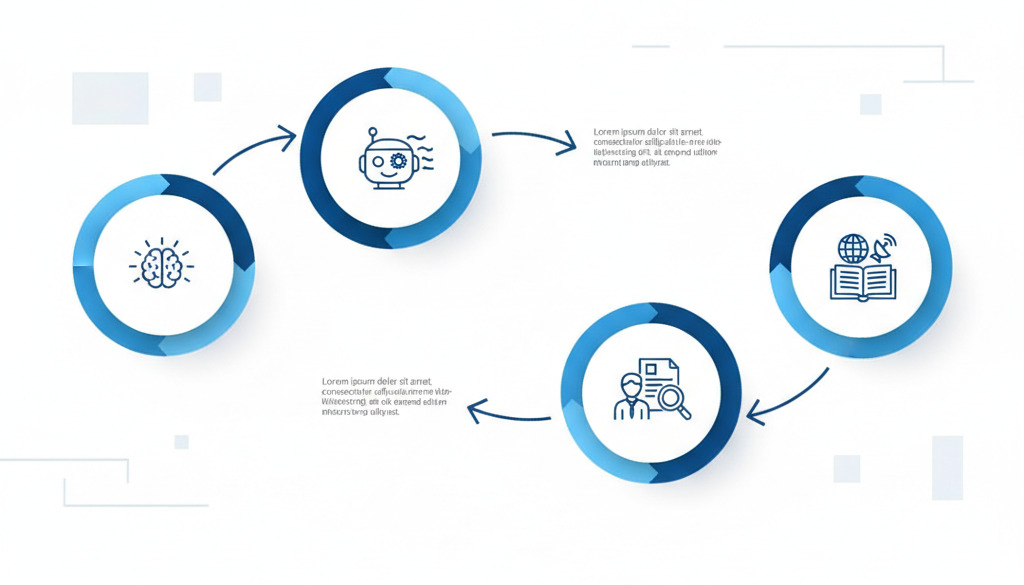
Here is a realistic, step-by-step workflow that leverages AI while minimizing your time commitment. This process transforms blogging from a chore into a manageable and efficient marketing task.
- Topic Generation & Keyword Research (AI-Assisted): Use AI tools to brainstorm a list of blog topics relevant to your customers' pain points. The AI can also suggest target keywords with good search volume and low competition.
- AI Content Generation: Input your chosen topic, keywords, and any specific points you want to include. Let the AI generate the full article draft.
- Human Review & Editing: This is your crucial quality control step. Read through the draft, check facts, inject your brand voice, and add personal insights or examples.
- SEO Optimization & Publishing: Give the content a final SEO check (title, meta description, image alt text) and publish it directly to your blog.
Time Allocation: A Realistic Workflow Breakdown
To show how manageable this is, here’s a sample time breakdown for producing one high-quality, 1500-word blog post:
| Stage | Traditional Method | AI-Assisted Method |
|---|---|---|
| Research & Outlining | 2-4 hours | 15 minutes |
| Writing First Draft | 3-6 hours | 10 minutes |
| Editing & Refinement | 1-2 hours | 30-45 minutes |
| SEO & Formatting | 1 hour | 15 minutes |
| Total Time | 7-13 hours | ~1.5 hours |
Overcoming Common Objections and Misconceptions
As with any transformative technology, there are common questions and concerns. Let’s address the most frequent ones business owners have about AI content.
"Will AI replace human writers?"
No, AI is augmenting human writers, not replacing them. It handles the most time-consuming parts of the job—the research and initial drafting. This frees up human strategists and editors to focus on higher-value tasks: strategy, creativity, fact-checking, and ensuring the content resonates with the brand’s audience. The relationship is collaborative.
"Is AI content original and unique?"
Reputable AI tools are designed to generate original content. They don't copy and paste from other sources. Instead, they construct new sentences based on the patterns they’ve learned. However, because they are trained on existing human knowledge, the ideas themselves may not be revolutionary. The uniqueness comes from your specific prompts, your edits, and the personal stories you add.
"Is AI content trustworthy?"
AI content is only as trustworthy as the process used to create and verify it. This is why human oversight is non-negotiable. You are the ultimate authority and guardian of your brand’s credibility. The AI provides the clay; you are the sculptor who ensures the final piece is accurate and true.
AI and the Future of SME Marketing
The adoption of AI in content creation is not a passing trend; it's the future of digital marketing for businesses of all sizes. As the technology continues to evolve, it will unlock even more powerful capabilities.
The Evolution of Content Marketing
AI will continue to make content marketing more accessible and data-driven. We can expect AI to play a larger role in content strategy, suggesting entire content calendars based on market trends and competitor analysis, and even predicting which topics will perform best.
Personalization at Scale
Looking ahead, AI holds the potential to create highly personalized content for different segments of your audience. Imagine being able to automatically generate variations of a blog post tailored to the specific interests of beginners versus experts in your field. This level of personalization at scale was previously unimaginable for SMEs.
The Competitive Edge
Today, adopting AI for blog publishing gives you a significant competitive advantage. It allows you to produce more high-quality content than competitors who are still relying on slow, manual processes. In the near future, using AI will become table stakes—a standard practice required to keep up.
Success Stories and Case Studies (Conceptual)
The proof of AI's impact lies in the results it delivers for businesses just like yours. While individual results vary, the pattern is consistent.
From Content Creation Paralysis to Consistent Output
Consider a typical SME: a local consulting firm. They knew they needed a blog but only managed to publish an article every few months. After adopting an AI-powered service, they began publishing two well-researched, SEO-optimized articles per week. Their time commitment? About two hours a week for review and approval.
Measuring Possible Outcomes
As a hypothetical illustration, a local consulting firm might use AI tools to help publish more regularly. The firm could then track organic traffic, keyword rankings, and client inquiries over time to see whether its content strategy is helping. Actual results vary, and using an AI service does not guarantee more traffic, rankings, or leads.
Measuring the ROI of AI-Powered Blog Publishing
Every business decision must be justified by its return on investment (ROI). AI-powered blogging is no different, and its value is remarkably easy to measure.
Cost-Benefit Analysis
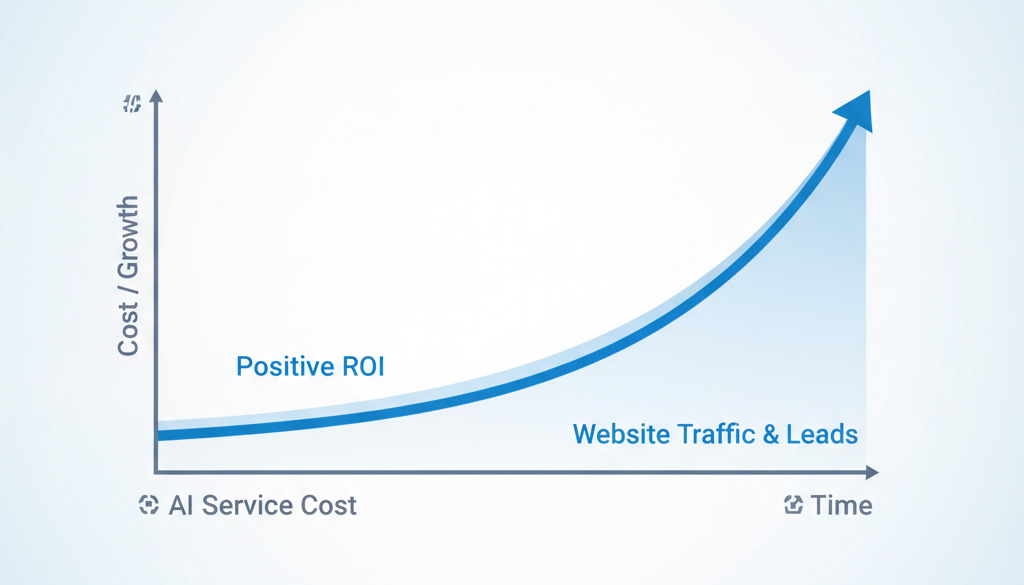
Compare the hard costs. A single freelance article can cost anywhere from $150 to $1,000+. Hiring a full-time writer is a significant salary expense. An AI subscription or service is typically a fraction of that cost. Now, factor in the value of your own time. If AI saves you 10 hours per article, what is that time worth to your business? The cost savings alone are often compelling.
Tracking Key Performance Indicators (KPIs)
To measure success, track these simple KPIs in your website analytics:
- Organic Traffic: Is traffic from search engines increasing?
- Keyword Rankings: Are you appearing on page one of Google for your target terms?
- Leads Generated: How many people are contacting you or signing up for your newsletter through your blog?
- Time on Page: Are people reading your articles, or are they leaving immediately?
An upward trend in these metrics is a clear sign your AI-powered content strategy is working.
The Human Role in an AI-Driven Content Ecosystem
It’s important to re-emphasize that AI is a partner, not a replacement for human intellect and strategy. Your role becomes more strategic and less tactical.
Strategic Direction and Goal Setting
AI can execute tasks, but it can't set your business goals. You provide the vision. You decide which products or services to promote, which customer personas to target, and what you want your brand to be known for. This strategic direction guides the entire content creation process.
Quality Assurance and Brand Integrity
You are the brand guardian. The human review process is your opportunity to ensure every piece of content that goes out with your company’s name on it meets your standards for quality, accuracy, and tone. This maintains the trust you’ve built with your audience.
Creative Oversight and Nuance
Humans excel at understanding nuance, emotion, and storytelling. Your ability to add a personal anecdote, a clever turn of phrase, or a passionate argument is what will make your content stand out. AI provides the foundation; you provide the soul.
Integrating AI Content with Broader Marketing Efforts
A blog post is not an endpoint; it’s a content asset that can fuel your entire marketing ecosystem. AI makes it easier than ever to create this central asset, which you can then repurpose.
Social Media Promotion
Pull out key quotes, statistics, or tips from your AI-generated blog post to create a week’s worth of social media content. Each post can link back to the full article, driving traffic and engagement.
Email Marketing
Use your latest blog post as the main feature in your email newsletter. This provides value to your subscribers and keeps your brand top-of-mind, nurturing them towards a future purchase.
Lead Magnets
Combine several related blog posts into a more comprehensive guide or e-book. Offer this "lead magnet" as a free download in exchange for an email address, turning your blog traffic into a list of potential customers.
Ethical Considerations and Best Practices
As you adopt AI, it's wise to be mindful of ethical best practices to maintain transparency and trust with your audience.
Transparency with Your Audience
The current consensus is that you don't need to label every AI-assisted article, just as you don't disclose that you used a spell checker. The focus for readers is on the quality and value of the information, not the tools used to create it. However, you should never misrepresent yourself or the content’s accuracy.
Avoiding Plagiarism
Use reputable, high-quality AI platforms, as these are designed to generate original content. Many also include built-in plagiarism checkers to provide an extra layer of assurance. The final human review is also a safeguard against any unintentional similarities.
Data Privacy and Security
Always choose established and secure AI platforms. Be mindful of the information you input—avoid sharing sensitive or proprietary company data in public AI tools. Specialized business services often provide a more secure, private environment for content creation.
Partnering for Success: Professional AI Content Services
For many busy SME owners, even the streamlined AI-assisted workflow can feel like one task too many. If you truly want a "hands-off" solution, partnering with a professional AI content service might be the perfect fit.
When to Outsource vs. DIY
Consider a managed service if:
- You have zero time to dedicate to content review and publishing.
- You want to ensure a high level of SEO expertise is applied consistently.
- You prefer a predictable, fixed cost for a guaranteed amount of content each month.
Benefits of a Specialized Service
A specialized service goes beyond just providing a tool. They offer a complete solution that includes strategy, generation, editing, and publishing. This provides the ultimate level of consistency and quality assurance without taking up any of your time.
A managed content service can reduce the work involved in research, drafting and publishing, but included services differ. Volteruno automates article creation and configured publishing with quality checks; it does not promise a human editorial team for every article, a fixed completion time, search rankings or customer growth. Its Free allowance is one successful, quality-passed article per account lifetime, not five posts. Compare the service’s actual scope and current plan before choosing it.
Conclusion
The world of digital marketing is evolving, and AI-powered blog publishing represents one of the most significant leaps forward for small and medium-sized businesses. It demolishes the biggest barrier to content marketing success: the lack of time and resources. By embracing this technology, you can finally achieve the consistent, high-quality blog your business needs to grow its online presence, attract more customers, and build lasting authority in your field.
This technology empowers you, the busy business owner, to focus on your core operations while your digital marketing engine runs efficiently in the background. The path to a powerful online presence is no longer about who has the most time, but who uses the smartest tools. We encourage you to explore an AI solution and take the first step towards unlocking your blog’s true potential.
Frequently Asked Questions
- 1. Is AI-generated content penalized by Google?
- No. Google has stated that its focus is on the quality of content, not how it is produced. High-quality, helpful content that meets user needs is rewarded, regardless of whether it was created with AI assistance. Low-quality, spammy content will be penalized, whether written by a human or an AI.
- 2. How much human oversight is really needed for AI-generated blog posts?
- While an AI can produce a surprisingly good draft, human oversight is crucial for ensuring factual accuracy, aligning with your brand voice, and adding unique insights or personal stories. A good rule of thumb is to budget 30-60 minutes for reviewing, editing, and finalizing an AI-generated draft to ensure it meets your quality standards.
- 3. Can AI really capture my unique brand voice?
- On its own, an AI will produce content in a generic, informative tone. However, you can guide it to capture your brand voice by providing it with examples of your writing and by making targeted edits during the review process. The combination of AI efficiency and your specific human touch is what creates content that sounds authentically like your brand.
- 4. Is using AI for blogging expensive?
- Compared to traditional methods, AI is extremely cost-effective. Hiring a freelance writer for a single article can cost hundreds of dollars, while an entire month's subscription to an AI tool or service is often less than that. The return on investment, considering the time saved and the potential for increased traffic and leads, is typically very high.
- 5. Will my content be the same as my competitor's if we both use AI?
- No. Reputable AI models generate unique text for every request. Furthermore, the final content is shaped by your unique inputs—your chosen keywords, your specific prompts, your edits, and the personal anecdotes you add. This ensures your published article is distinct from your competitor's, even if you are writing about similar topics.
- 6. What's the best way to get started if I have no experience with this technology?
- Start by checking the provider’s current terms, including any trial or free allowance, and what happens when it ends. Offers vary, so confirm the details before signing up. This helps you understand the workflow, costs, and whether the service fits your business needs.
→ Read the full AI Content guide
Keep reading
Hand-picked guides that go deeper — open the one you need next:
- Getting Started with AI Content: A Business Guide
- Why Manual Content Creation is Obsolete: The AI Advantage
- AI Blog Workflow Automation: Idea to Published
- AI Content for Customer Acquisition: Your Blog's New Engine
→ Read the full AI Content guide