
Boost Your Business: The Power of AI in Blog Creation

Key Takeaways
- Content is Critical: A professional blog is no longer optional; it's essential for attracting customers, building authority, and improving Google rankings.
- AI Solves the Time Barrier: For busy small and medium-sized business (SMB) owners, AI content tools eliminate the biggest hurdle to consistent blogging: lack of time and resources.
- Not All AI is Equal: Simple chatbots are different from sophisticated AI writing systems. Professional solutions are built to understand your brand, optimize for SEO, and manage entire content strategies.
- Human Oversight is Key: AI is a powerful assistant, not a replacement for your expertise. The best results come from guiding the AI and adding a final human touch for personalization and brand alignment.
- Measurable ROI: AI-powered blogging delivers tangible results, including increased website traffic, more leads, and higher search rankings, all of which can be tracked with standard analytics tools.
- The Time is Now: Adopting AI for content creation provides a significant competitive advantage, and with accessible solutions available, it's easier than ever to get started.
Revolutionize Your Small Business Content Strategy with AI-Powered Professional Blog Posts
In today's digital marketplace, being invisible on Google is like having a storefront on a deserted street. You could have the best product or service in the world, but if potential customers can’t find you, you don’t exist. For years, the answer has been content marketing—specifically, running a professional blog to attract, engage, and convert your ideal audience.[2] Yet, for most small and medium-sized business (SMB) owners, the idea of creating this content feels like taking on a second full-time job. The research, writing, editing, and optimizing is a mountain of work. What if there was a better way? What if technology could handle the heavy lifting, allowing you to reap the rewards of a powerful blog without sacrificing the time you need to actually run your business? Welcome to the new paradigm of content creation, powered by Artificial Intelligence.
Understanding the 'Why': The Core Benefits of a Robust Blog for SMBs
Before we dive into the 'how,' it's crucial to understand 'why' a professional blog is one of the most powerful assets for your business. It’s not just about writing articles; it’s about building a predictable engine for growth. A well-maintained blog works for you 24/7, even while you sleep.
Attracting Organic Traffic
Every time you publish a high-quality, optimized blog post, you create a new opportunity for customers to find you through search engines like Google. When a potential client types a question related to your industry, your blog post can be the answer that appears. This process, known as *Search Engine Optimization* (SEO), draws in a steady stream of relevant visitors—people actively looking for the solutions you provide.
Establishing Credibility and Authority
Consistently publishing insightful, helpful content positions you as an expert in your field. When customers see that you provide valuable information for free, they begin to trust your brand. You are no longer just a seller; you are a go-to authority. This credibility is invaluable when it time for them to make a purchasing decision.
Nurturing Leads and Building Relationships
Not every visitor to your site is ready to buy immediately. A blog is the perfect tool to nurture these potential leads. By addressing their pain points, answering their questions, and educating them about your industry, you build a relationship. When they are ready to take the next step, your business will be the first one they think of.
The Traditional Content Creation Bottleneck: Why Many SMBs Struggle
If the benefits are so clear, why do so many business blogs end up as digital ghost towns, with the last post dated over a year ago? The answer lies in the significant barriers that traditional content creation presents, especially for the SMB owner who is already wearing too many hats.
- The Immense Time Commitment: Proper blogging is not a quick task. It involves hours of keyword research, topic ideation, outlining, writing, sourcing images, editing, and formatting. For a business owner, these are hours that could be spent on sales, operations, or customer service.
- The High Cost of Outsourcing: The logical next step is to hire someone. But professional freelance writers and marketing agencies come with a price tag that can be prohibitive for many small businesses, often running into thousands of dollars per month for a consistent output.
- The In-House Expertise Gap: Simply having someone who can write isn't enough. Effective business blogging requires a deep understanding of SEO, keyword strategy, content structure, and your specific industry. Finding or training an employee with this unique skill set is a challenge in itself.
- The Burnout Factor: Many owners start with the best intentions, but the relentless need for new ideas and fresh content leads to burnout. The blog, once a source of excitement, becomes a nagging chore.
Enter Artificial Intelligence: A New Era of Content Generation
This is where Artificial Intelligence (AI) changes the game entirely. Once the realm of science fiction, AI has evolved into a practical, accessible business tool. Recent analysis shows the volume of AI-related content has skyrocketed, growing roughly 300% since 2023, proving its rapid integration into the business world. Rather than replacing human strategy, AI acts as a supremely powerful assistant, reshaping job functions to be more efficient and productive. According to a 2026 report from Boston Consulting Group, 50% to 55% of jobs in the US will be reshaped by AI, highlighting a fundamental shift toward collaboration between humans and machines.
Think of AI in content marketing not as an autonomous robot, but as an incredibly capable digital employee. You are still the CEO and the strategist. You set the direction, define the goals, and provide the core expertise. The AI then executes the most time-consuming parts of the task—research, drafting, and optimization—at a scale and speed that is simply not humanly possible.
The Magic Behind Generating Professional AI Blog Posts
How can a machine write a compelling article about your specific business? The "magic" lies in the sophistication of modern AI models, often referred to as Large Language Models (LLMs). These models are trained on vast datasets containing billions of documents, books, and websites, allowing them to understand grammar, context, nuance, and style.
However, the real power for business comes from specialized platforms that have refined this technology for a specific purpose: creating professional SEO content. Instead of a generic chatbot, these are focused writing systems. You provide prompts and key information—your target audience, the keywords you want to rank for, your brand's tone of voice—and the AI uses this guidance to construct a relevant, well-structured article.
For instance, the proprietary technology behind services like More Customers From Your Blog is designed specifically for this task. It can generate professional SEO blog articles for a website in minutes. For a business owner who is not a digital native, the experience feels, as they put it, "almost like magic." You input your needs, and a ready-to-publish draft appears, turning a week-long task into a coffee break.
Overcoming Objections: Addressing Common Concerns About AI-Generated Content
It's natural to be skeptical. Can content generated by a machine truly be good enough to represent your professional brand? Let's address the most common concerns.
Quality and Originality
A primary fear is that an AI will produce generic or plagiarized content. However, advanced AI systems are designed to create entirely new sentences and paragraphs based on the patterns they've learned. They don’t copy and paste. Reputable AI tools also have built-in plagiarism checkers to ensure the output is 100% unique. Furthermore, by providing specific details and data points in your prompts, you guide the AI to create content that is not only original but also factually accurate and rich with information.
Tone and Brand Voice
Your brand has a unique personality. Can an AI capture it? While basic chatbots may struggle, sophisticated *AI writing systems* can be trained to adopt different tones. Whether your brand is formal and corporate, friendly and conversational, or witty and humorous, you can instruct the AI to write in that specific style. The key is providing clear instructions and perhaps an example of your desired voice. The final polish is where your human touch ensures it perfectly aligns with your brand.
SEO Effectiveness
Content created by AI can be highly effective for SEO. Professional AI blogging platforms are built with SEO as a core function. They are programmed to naturally weave in your target keywords, create meta descriptions, suggest optimized titles, and structure the article with proper headings (H2s, H3s) and lists—all critical ranking factors for Google. The AI essentially acts as an SEO expert, ensuring the technical aspects are handled correctly from the start.
The 'How-To': Implementing AI for Your Business Blog - A Step-by-Step Guide
Adopting AI into your workflow is more straightforward than you might think. It’s about creating a simple, repeatable process that saves you time while producing high-quality results.
Step 1: Define Your Content Strategy with AI
Before you write, you must plan. Your strategy is the foundation. Start by defining your ideal customer. Who are they? What are their biggest challenges and questions? You can even use AI tools to help brainstorm these *customer personas*. Then, identify the main topics and keywords related to your business that these customers are searching for. This gives you a roadmap for your content.
Step 2: Leverage AI Tools for Research and Ideation
Staring at a blank page is intimidating. Use an AI tool to generate dozens of blog post ideas based on your core topics. For example, a plumber could ask for "blog ideas for homeowners worried about winter pipes," and instantly receive titles like "5 Ways to Prevent Frozen Pipes This Winter" or "Is Your Water Heater Ready for the Cold? A Homeowner's Checklist." The AI can also help gather initial facts, statistics, and data points to include in your article.
Step 3: Guiding the AI Writer
This is where you direct your digital assistant. Craft a clear, detailed prompt. Don't just say, "Write a post about frozen pipes." Instead, provide a structured command: "Write a 1500-word blog post for US homeowners. The title is '5 Ways to Prevent Frozen Pipes This Winter.' Use a helpful, reassuring tone. Include the keywords 'frozen pipes,' 'winter plumbing tips,' and 'emergency plumber.' Include a section on what to do if a pipe has already burst." The more detailed your prompt, the better the result.
Step 4: The Crucial Review and Refinement
This step is non-negotiable. The AI produces a high-quality draft, but you add the finishing touches of genius. Read through the article. Does it flow well? Is the tone exactly right? Can you add a personal story or a specific client example to make it more relatable? This human oversight is what elevates great AI content into exceptional content that truly connects with your reader.
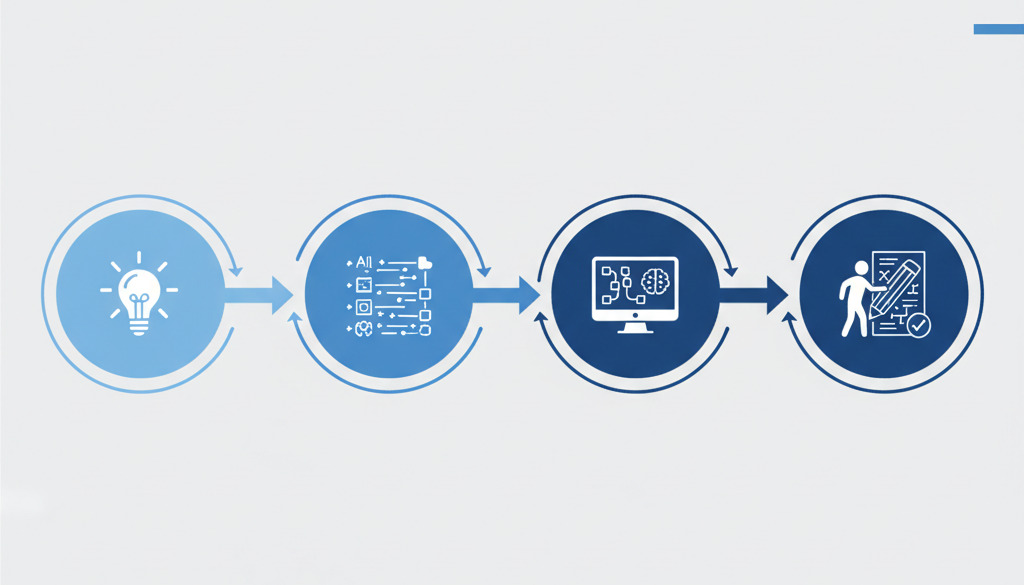
Case Study Snippet: The SMB Revolution in Action
The impact of this technology isn't theoretical; it's delivering real-world results for businesses every day. Consider a hypothetical example: a small accounting firm that struggled to find time for marketing. By using an AI content service, they were able to publish two optimized blog posts per week, targeting questions their potential clients were asking Google, such as "small business tax deductions for 2026" and "how to choose an accounting software."
Within six months, their website traffic from organic search tripled. They began receiving contact form submissions from potential clients who said, "I read your blog post, and it was incredibly helpful." The firm established itself as a knowledgeable resource, building trust before ever speaking to a client. This story is being replicated across countless industries. In fact, the proof is in the numbers; specialized platforms are seeing explosive growth. For example, the service More Customers From Your Blog is already used by more than 500 companies who are turning their blogs into automatic customer acquisition channels.
Identifying the Right AI Solution: Key Features to Look For
The market for AI tools is vast and can be confusing. As a business owner, you need to look past the hype and focus on features that deliver real value. It's important to understand the difference between a simple, conversational chatbot and a true *AI writing system* built for professional use.
As one industry analysis from 2026 noted, the key shift is no longer about "which chatbot is smartest," but rather "what is the best AI writing system?" for a complete, end-to-end workflow.
Here’s a breakdown of what matters when choosing a solution:
| Feature | Basic Chatbot (e.g., free ChatGPT) | Professional AI Writing System | Why It Matters for SMBs |
|---|---|---|---|
| Ease of Use | Simple interface, but requires complex prompting for good results. | Guided, user-friendly workflow designed for non-technical users. | Saves time and reduces the learning curve, allowing you to get started immediately. |
| SEO Optimization | Manual. You must know and specify all SEO elements. | Built-in. Automatically suggests keywords, meta titles, and proper structure. | Ensures your content is actually found on Google without you needing to be an SEO expert. |
| Content Quality & Relevance | Can be generic; lacks long-term memory of your business. | Learns your business and industry to produce highly relevant, expert-level drafts. | The content directly addresses your customers' needs and reflects your brand's expertise. |
| Brand Voice Customization | Limited and requires constant reminders in prompts. | Can save and consistently apply your unique brand voice across all content. | Maintains brand consistency, which is crucial for building trust and recognition. |
| Scalability | Difficult to manage for a full content calendar. | Designed to plan, generate, and manage a long-term content strategy efficiently. | Allows you to build a true content engine for your business, not just create one-off articles. |
The "Hands-Off" Content Creation Advantage
For a business owner, your most valuable resource is time. Every hour you spend struggling with a blog post is an hour you aren't spending on strategy, innovation, or with your customers. The ultimate advantage of adopting a service-oriented AI solution is reclaiming that time. Platforms like More Customers From Your Blog are designed to provide a "hands-off" experience. You provide the strategic direction, and the system handles the execution. This allows you to maintain a powerful, professional online presence and a consistent publishing schedule without the corresponding drain on your personal energy and focus. You get to concentrate on your core business, confident that your digital marketing is running smoothly in the background.
Measurable Results: Tracking the ROI of AI-Powered Blogging
Investing in any new strategy requires a clear return on investment (ROI). The beauty of digital content is that its impact is highly measurable. Once your AI-powered blog is up and running, you can use standard, free tools to track its performance and justify the investment.
- Website Traffic: Use Google Analytics to monitor your overall site traffic. Watch for a steady increase in "Organic Search" traffic, which indicates more people are finding you through search engines.
- Keyword Rankings: With Google Search Console, you can see which keywords your blog posts are ranking for. You can watch your site climb up the rankings for terms that are valuable to your business.
- Lead Conversions: Track how many visitors who read a blog post go on to fill out a contact form, sign up for your newsletter, or make a purchase. This directly ties your content efforts to revenue.
- User Engagement: Metrics like *time on page* and *bounce rate* tell you if your content is resonating with readers. High time on page means people are finding your articles valuable and reading them thoroughly.
By monitoring these Key Performance Indicators (KPIs), you can see exactly what’s working and refine your AI prompts and content strategy over time for even better results.

The Future of Content Marketing for SMBs: Embracing AI as a Partner
The rise of AI is not a fleeting trend; it is the future of digital marketing. The technology is continuously improving, becoming more nuanced, more context-aware, and more integrated into business workflows. For SMBs, this is incredibly empowering. It levels the playing field, giving smaller companies access to the kind of marketing power that was once reserved for large corporations with massive budgets.
Early adopters of this technology will gain a significant strategic advantage. As your competitors struggle with the time and cost of manual content creation, you can be building a vast library of helpful, SEO-optimized content that consistently draws in new customers. It is crucial to view AI not as a threat, but as an indispensable partner for growth in the modern economy.
Getting Started: Your First Steps with AI Content Creation
The barrier to entry for AI content creation has never been lower. You don't need a degree in computer science or a massive budget. Many professional platforms are designed for usability and affordability, with some offering a risk-free way to test the waters. This is a key part of the business model for customer-focused solutions.
To make it incredibly easy for business owners to experience the benefits firsthand, services like More Customers From Your Blog provide an unbeatable introductory offer: your first five blog posts are completely free. This allows you to see the quality, speed, and ease of use for yourself and to generate tangible assets for your website with zero initial investment. It’s the perfect, no-risk opportunity to test the power of AI for your business.
A Strategic Advantage: Why Now is the Time to Embrace AI Blogging
In the competitive business landscape, standing still means falling behind. Your competitors are either already using these tools or they will be soon. Embracing AI for your blog now is not just about efficiency; it’s about securing your future online visibility. The consistent content you create today will become the foundation of your search engine authority for years to come.
Marketing is being democratized. Powerful AI tools are now available to every business owner, giving you the ability to compete and win in the digital arena.[1] The long-term, compounding benefits of building your online presence are immense. The sooner you start, the more significant your advantage will be.
Conclusion: Unlock Your Business's Online Potential with AI
The challenge for small and medium-sized businesses has always been one of resources. You have the industry expertise, but you lack the time and marketing budget to turn that expertise into a content engine that drives growth. AI-powered blog post creation fundamentally solves this problem.
It empowers you to efficiently produce the high-quality, professional, SEO-optimized content needed to increase your visibility on Google, establish your brand as an industry authority, and consistently attract new customers. By leveraging the right AI partner, you can finally overcome the content bottleneck and unlock the full online potential of your business. The end goal is simple, and now, more achievable than ever: more customers from your blog.
Frequently Asked Questions
- 1. Will Google penalize my website for using AI-generated content?
- No. Google's official stance is that they reward high-quality content, regardless of how it is produced. Their focus is on content that is helpful, reliable, and user-focused. As long as you are using AI to create original, valuable articles and not to spam or manipulate search rankings, it is perfectly acceptable. The key is quality, not the method of creation.
- 2. How much human editing is really needed for an AI-written blog post?
- This depends on the quality of the AI tool and your prompt. With a sophisticated AI writing system, the initial draft is often 85-95% of the way there. The human editing process is less about fixing errors and more about adding your unique brand voice, inserting personal anecdotes or specific case studies, and fact-checking any hard data. Think of it as a 10-minute final polish rather than a multi-hour writing session.
- 3. Is this expensive? What does an AI blogging service cost?
- Compared to hiring a freelance writer or an agency, AI solutions are incredibly cost-effective. Pricing models vary, but many professional platforms operate on a subscription basis that can be less than the cost of a single human-written article. With offers like the one from "More Customers From Your Blog" where the first five posts are free, the initial investment is zero.
- 4. Can AI really write knowledgeably about my niche industry?
- Yes. Modern AI models are trained on an enormous breadth of information, including specialized and technical topics. By providing the AI with the correct keywords, context, and target audience, you can guide it to write with surprising accuracy about everything from advanced manufacturing and financial services to local home repair and wellness coaching. Your role is to provide the niche expertise in the prompt and during the final review.
- 5. How is this different from just using a free tool like ChatGPT?
- Free tools like ChatGPT are general-purpose conversational AIs. Professional AI blogging platforms are specialized *writing systems*. They have features specifically for creating long-form, SEO-optimized content, such as built-in SEO tools, brand voice memory, structured workflows, and plagiarism checkers. They are designed for a business workflow to produce consistent, high-quality results efficiently, which is difficult to manage with a generic chatbot.
AI-Powered Content Creation: A Scalable Solution for Businesses
The integration of artificial intelligence into the content creation process offers businesses a powerful and scalable solution to meet their blogging needs. Unlike traditional methods that can be time-consuming and resource-intensive, AI-driven platforms streamline the generation of high-quality blog posts. This technological advancement allows companies to significantly increase their content output without a proportional rise in operational costs. The ability to produce a larger volume of content consistently is crucial for maintaining an active online presence, engaging a wider audience, and improving search engine rankings.
One of the primary advantages of using AI for blog post creation is its efficiency. AI tools can generate drafts in minutes, which human writers can then refine and enhance. This hybrid approach, often referred to as "augmented writing," leverages the speed and data-processing capabilities of AI alongside the creativity, critical thinking, and nuanced understanding of human experts. This synergy ensures that the content is not only produced quickly but also remains accurate, engaging, and aligned with the brand's voice and objectives. Furthermore, AI can assist in various stages of content creation, from initial topic ideation and keyword research to outline generation and first draft production, thereby accelerating the entire workflow.
The scalability of AI content generation is another significant benefit. As a business grows and its content demands increase, AI solutions can readily adapt. Whether a company needs to produce one blog post per week or ten, AI platforms can scale to meet the demand without requiring the addition of a large content team. This flexibility is particularly valuable for small to medium-sized businesses that may not have the resources to hire a full-time writing staff. By investing in professional AI blogging services, these businesses can access sophisticated content creation capabilities, enabling them to compete more effectively in the digital landscape. The economic advantage is clear: achieving greater content reach and impact at a potentially lower overall investment than solely relying on manual content production.