
AI Content Marketing for Entrepreneurs: Set It & Forget It
Key Takeaways
- The Core Problem: Entrepreneurs know they need content for growth but lack the time and resources to produce it consistently. This is the primary bottleneck to effective online marketing.
- The Solution is Automation: Content marketing automation, powered by Artificial Intelligence (AI), is no longer just for scheduling posts. It's a comprehensive solution for generating, distributing, and analyzing content, freeing up entrepreneurs to focus on their core business.
- AI is Your Co-pilot, Not Your Replacement: Modern AI tools act as powerful assistants, helping draft SEO-optimized articles, brainstorm ideas, and scale production. The entrepreneur's role shifts from writer to editor and strategist, ensuring brand voice and authenticity remain intact.
- Focus on Strategy First: Automation is most effective when it's built on a solid foundation. This means deeply understanding your ideal customer and defining clear business goals for your content.
- Measure Everything: The "set it and forget it" aspect comes from creating systems, but you must monitor performance. Track key metrics like website traffic, lead conversions, and engagement to refine your strategy and prove ROI.
- Start Small, Scale Smart: You don't need a massive, expensive software suite to begin. Start by implementing one part of the process, like using an AI writer for blog drafts, and build from there.
As an entrepreneur, you wear countless hats. You're the CEO, the head of sales, the financial controller, and often, the janitor. When you finally find a spare moment, the last thing you want to do is stare at a blinking cursor, burdened by the task of writing another blog post. You know content is king, you know it drives traffic and builds authority, but the relentless demand for it feels like a battle you can't win. What if you could automate the war so you only had to show up for the victory celebration? This is the promise of content marketing automation—a strategic, AI-powered solution designed for busy entrepreneurs who need to achieve more with less.[1]
The Modern Entrepreneur's Content Conundrum
In today's digital-first economy, a strong online presence isn't a luxury; it's the bedrock of a sustainable business. Your customers expect to find you on Google. They want to see expert advice on your blog and engage with you on social media. This constant need for fresh, high-quality content creates a significant dilemma for small to medium-sized business (SMB) owners. The reality is stark: you are an expert in your field, whether it's consulting, construction, or artisan coffee, but you are probably not a professional writer, SEO specialist, and social media manager rolled into one.
This leads to the classic entrepreneur's content conundrum: "I know I need a powerful online presence, but I simply don't have the time, the specialized skills, or the desire to create all the content myself." This gap between necessity and reality often results in one of three frustrating outcomes:
- Inconsistent Efforts: You publish a flurry of articles one month, only to go silent for the next three. This sporadic activity fails to build momentum with search engines or your audience.
- Delegating to the Wrong People: You might task an administrative assistant or an intern with "handling the blog," but without a strategic approach, the content often misses the mark and fails to generate tangible results.
- Complete Paralysis: The task seems so overwhelming that you do nothing at all, leaving your digital storefront empty and conceding valuable ground to your competitors.
Defining Content Marketing Automation: Beyond Just Scheduling
When many people hear "marketing automation," they think of tools that schedule social media posts or send out happy birthday emails. While that's a part of it, true content marketing automation is a far more comprehensive and powerful strategy. It's not just about scheduling; it's about creating a cohesive, intelligent system that streamlines the entire content lifecycle.
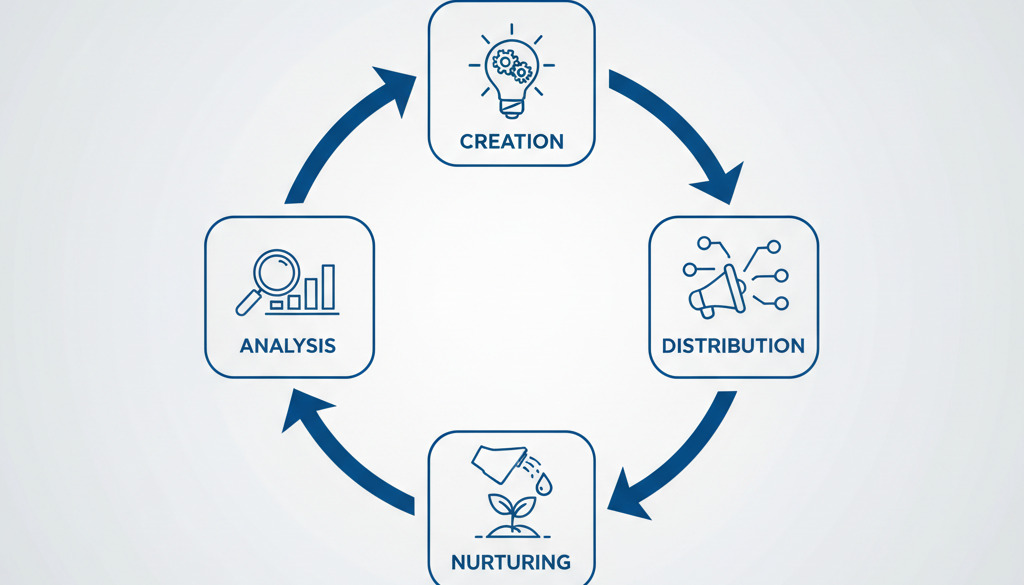
Think of it as an assembly line for your digital marketing. A well-designed automation strategy handles four core components:
- Creation: Utilizing tools, particularly AI, to assist in brainstorming, drafting, and optimizing content like blog posts, emails, and social media updates.
- Distribution: Automatically pushing that finished content to all your relevant channels—your website, email newsletters, LinkedIn, Facebook, etc.—at the most effective times.
- Nurturing: Delivering a pre-planned sequence of content to new leads based on their behavior, guiding them from initial interest to a final purchase decision without manual intervention.
- Analysis: Automatically tracking key performance metrics, so you have a clear dashboard showing what’s working, what’s not, and where your leads are coming from.
The "intelligent" aspect is key. We're not just putting tasks on a timer. We're using technology to make smarter decisions, deliver personalized experiences at scale, and create a marketing engine that runs 24/7, even when you're focused on other parts of your business.
Why Entrepreneurs Need Content Marketing Automation (The ROI)
The primary reason to embrace content marketing automation is its profound impact on your bottom line and your most valuable asset: your time. This isn't about adding another complex tool to your plate; it's about implementing a system that gives you leverage. The Return on Investment (ROI) is measured in several tangible ways.
Tangible Business Benefits:
- Increased Lead Generation: A consistent flow of SEO-optimized content means more opportunities to be discovered on Google. Each article is a new digital doorway for potential customers to find your business.
- Improved Brand Authority: Regularly publishing insightful, helpful content positions you as an expert and a leader in your industry. This builds trust, the currency of modern business.
- Enhanced Customer Engagement: Automation allows you to stay top-of-mind with your audience through timely emails and social posts, fostering a community around your brand.
- Accelerated Sales Cycles: Automated lead nurturing warms up prospects with valuable information, meaning that when they do speak to you, they are more informed and closer to a buying decision.
- Significant Time Savings: Consider the hours spent brainstorming, writing, editing, and posting. Automation reclaims a huge portion of that time, allowing you to focus on strategy, client relationships, and business development—the activities that only you, the owner, can do. According to McKinsey, AI agents can reduce time spent on repetitive tasks by up to 40%, freeing up teams for higher-value work.
Ultimately, content marketing automation allows you to work smarter, not harder. It’s about building an asset—a library of valuable content—that works for you around the clock, generating leads and revenue long after you’ve hit "publish."
Identifying Your Ideal Customer: The Foundation of Automated Content
Automation without direction is just faster noise. You can have the most sophisticated AI and the slickest software, but if you don't know who you're talking to, your message will fall on deaf ears. Before you write a single automated email or generate a single blog post, you must have a crystal-clear picture of your ideal customer.
This goes beyond simple demographics like age and location. For business owners, especially those over 40 who have built their businesses on relationships, this should be an intuitive process. Think about your best-ever customers. What do they have in common? This process involves creating an *ideal customer persona*.
How to Define Your Customer Persona:
- Demographics: Start with the basics. Age, gender, income level, job title, industry. For a B2B entrepreneur, this might be "CEO of a manufacturing company with 50-100 employees."
- Goals & Motivations: What are they trying to achieve? Are they looking to increase profitability, reduce operational headaches, or gain a competitive edge?
- Pain Points & Challenges: This is the most crucial part. What keeps them up at night? What problems are they trying to solve that your business addresses? For example, "They know they need a better online presence but are completely overwhelmed by the technology."
- Online Behavior: Where do they hang out online? Are they active on LinkedIn? Do they read specific industry publications? Do they search for solutions on Google using phrases like "how to..." or "best solution for..."?
Once you have this persona defined, every piece of content you create should be designed to speak directly to their goals and pain points. This understanding informs the topics you’ll write about, the language you’ll use, and the channels where you’ll distribute your content. It turns automation from a blunt instrument into a precision tool.
The Power of AI in Content Creation for Entrepreneurs
For many entrepreneurs, the single biggest hurdle in content marketing is the creation itself. The blank page is intimidating. This is where Artificial Intelligence has become a complete game-changer, transitioning from a futuristic concept to a practical, everyday business tool.
AI isn't here to replace your expertise; it's here to amplify it. Think of an AI content tool as the world's most efficient research assistant and writing apprentice. Here’s how it helps:
- Overcoming Writer's Block: AI can generate dozens of topic ideas, article outlines, and introductory paragraphs in seconds, based on a single keyword.
- Drafting Initial Content: The most time-consuming part of writing is often the first draft. AI can produce a well-structured, information-rich draft in minutes, which you can then edit, refine, and infuse with your unique brand voice and insights.
- SEO Optimization: Many AI tools are designed with SEO in mind. They can naturally incorporate relevant keywords, suggest appropriate headings, and help structure the content in a way that Google’s algorithms favor.
Services have emerged specifically for business owners who want to harness this power without managing the tools themselves. Consider a solution modeled after the promise of "More Customers From Your Blog" — a service where the primary goal is turning your digital space into a lead-generation machine. The best of these services leverage advanced AI to do the heavy lifting. They operate on the principle that their proprietary artificial intelligence writes professional SEO blog articles for your website in minutes—almost like magic. For the business owner, this means you get the benefit of expert-level content output without the steep learning curve of the technology itself. You provide the strategic direction, and the AI-powered service executes, turning your expertise into a steady stream of traffic-driving content.
Streamlining Content Distribution: Reaching Your Audience Effectively
Creating great content is only half the battle. If no one sees it, it doesn't matter how brilliant it is. This is where distribution automation comes in, ensuring your valuable content reaches the right people on the right platforms at the right time.
Effective automated distribution involves more than just blasting your new blog post everywhere. It’s a strategic process:
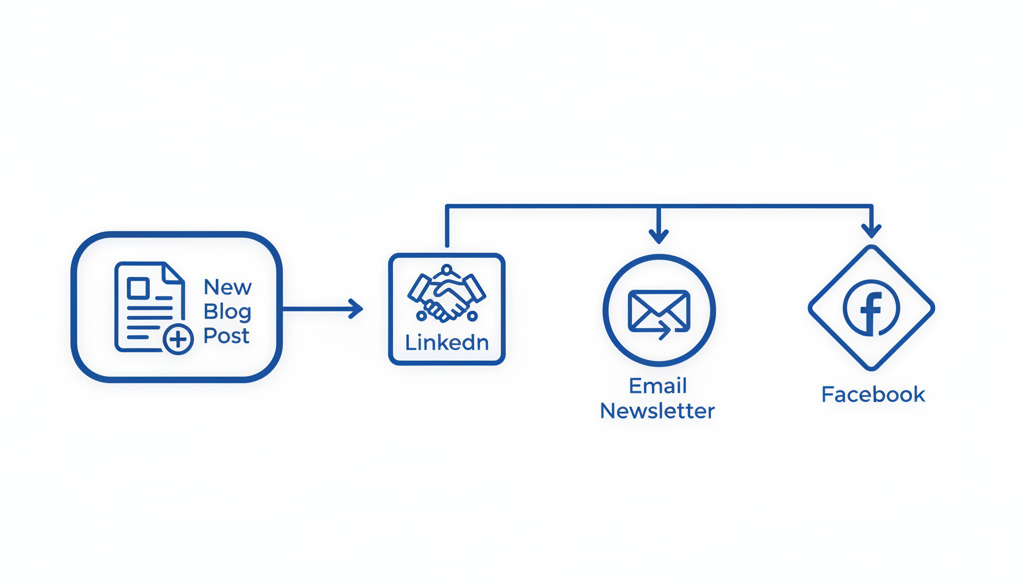
- Multi-Channel Management: An automation platform can take your single piece of content—say, a new blog post—and automatically re-format and distribute it. The full post goes on your website, a professional summary goes to LinkedIn, a question-based visual goes to Instagram, and a link with a compelling hook goes into your email newsletter.
- Audience Segmentation: Not all content is for everyone. Automation tools allow you to segment your email and contact lists based on demographics, interests, or past behavior. This means you can send targeted content that is highly relevant to each segment, dramatically increasing engagement rates. For example, existing customers might get a different email about a new blog post than prospective leads.
- Optimal Timing: When is the best time to post on LinkedIn for your industry? When are your subscribers most likely to open an email? Automation platforms can analyze past performance data or use pre-set best practices to schedule and send your content at peak engagement hours, maximizing its visibility without you having to constantly watch the clock.
This systematic approach ensures that every piece of content you invest in achieves its maximum potential reach and impact.
Nurturing Leads Through Automated Content Workflows
So, your automated content strategy is driving traffic to your website, and people are signing up for your newsletter or downloading your free guide. What happens next? This is where many businesses drop the ball. A new lead is an opportunity, but most aren't ready to buy immediately. They need to be nurtured.
Lead nurturing is the process of building a relationship with potential customers by providing them with a steady stream of relevant, valuable content over time. Doing this manually is nearly impossible. With automation, it’s not only possible; it’s highly effective.
How an Automated Nurturing Workflow Works:
- A Trigger: A user takes a specific action, like downloading your "Guide to Financial Planning for Retirees."
- The Welcome Sequence: They immediately receive an automated email delivering the guide. A day or two later, a follow-up email arrives asking if they had any questions and sharing a link to a related blog post, such as "5 Common Mistakes in Retirement Planning."
- The Educational Path: Over the next few weeks, the system automatically sends them 3-4 more emails, each offering valuable content related to their initial interest—a case study, a video a client testimonial, or an invitation to a webinar.
- The Conversion Point: Once they have engaged with several pieces of your content (the system can track opens and clicks), the final email in the sequence can make a soft offer: "Ready to create your own personalized retirement plan? Book a free, no-obligation consultation with us today."
This entire process happens automatically. It builds trust, demonstrates your expertise, and guides the prospect down the sales funnel. It ensures that when you finally do have a conversation, you’re talking to a well-informed, qualified lead who already sees you as a credible authority.
Measuring Success: Key Metrics for Automated Content Marketing
The beauty of digital marketing is that everything is measurable. You don’t have to guess if your strategy is working. Content marketing automation platforms come equipped with analytics dashboards that give you real-time insights into your performance. It’s crucial to move beyond "vanity metrics" like likes and shares and focus on the Key Performance Indicators (KPIs) that directly impact your business.
Key Metrics to Track:
| Metric | What It Measures | Why It Matters for Entrepreneurs |
|---|---|---|
| Website Traffic (Organic) | The number of visitors arriving at your site from search engines like Google. | This is a direct measure of your SEO content's success. It shows you're capturing demand and drawing in new potential customers. |
| Lead Conversion Rate | The percentage of website visitors who take a desired action (e.g., fill out a form, subscribe to a newsletter). | Traffic is nice, but leads pay the bills. This metric shows how effectively your content and website are at turning anonymous visitors into actual contacts. |
| Time on Page / Bounce Rate | How long visitors stay on your content pages and whether they leave after viewing just one page. | This is a proxy for content quality. High time on page and low bounce rate signal to you (and Google) that your content is engaging and valuable. |
| Email Open/Click-Through Rate | The percentage of people who open your automated emails and click on the links inside. | Measures the effectiveness of your lead nurturing campaigns. Low rates may indicate your subject lines or content aren't resonating. |
| Customer Acquisition Cost (CAC) | The total cost of your marketing efforts divided by the number of new customers acquired. | This is the ultimate business metric. Automation aims to lower your CAC by creating a more efficient and scalable marketing engine. |
Regularly reviewing these KPIs allows you to make data-driven decisions. You can double down on the types of content that generate the most leads and refine or eliminate strategies that aren’t delivering ROI.
Choosing the Right Content Marketing Automation Tools for Your Business
The market for marketing automation software is vast and can be intimidating. You'll see names like HubSpot, ActiveCampaign, Marketo, and countless others, each with different features and price points. The "best" tool doesn't exist; the "right" tool for your business does.
For an entrepreneur who is not a tech native, the selection criteria should be simple and pragmatic:
- Ease of Use: Does the interface feel intuitive? Can you see yourself using it without needing a developer on standby? Many platforms are specifically designed for non-technical users.
- Core Features: Does it handle the essentials you need right now? This might be a combination of AI content creation, email marketing, and simple lead nurturing workflows. Don't pay for a suite of 100 features when you only need five.
- Integration Capabilities: Does it connect easily with the tools you already use, like your website platform (e.g., WordPress) or your CRM?
- Budget & Scalability: Start with a tool that fits your current budget. Does it have a free trial? Can you start on a lower-cost plan and upgrade as your business and your needs grow?
- Support & Training: What kind of customer support is available? Do they offer tutorials, webinars, or onboarding assistance to help you get up and running?
Instead of trying to find one tool that does everything, many entrepreneurs have success by "stacking" a few best-in-class tools. You might use an AI writing service for blog content, Mailchimp for email, and a simple scheduling tool for social media. The key is to start with a clear goal and choose the simplest path to achieving it.
Overcoming Common Objections and Fears
Even with all the clear benefits, it's natural for a prudent business owner to have reservations about investing in a new technology or strategy. Let's address the most common concerns head-on.
"It's too expensive."
This is about reframing "cost" as an "investment." Calculate the cost of your own time. If automation saves you 10 hours a month, what is that time worth? What is the value of one new client that a consistent content strategy could bring in? Often, the cost of an automation tool is a fraction of the revenue it can generate or the cost of hiring a part-time marketing employee. Compare the subscription fee to the lost opportunity of having a weak online presence.
"It will make my content sound robotic."
This is a valid fear, and it highlights a crucial point: automation is a tool, not a replacement for human judgment. An AI writer should produce the first draft, not the final word. Your job as the expert is to review, edit, and inject your personal stories, your unique perspective, and your brand’s voice into the content. The AI handles the structure and the research; you provide the soul. This combination of machine efficiency and human authenticity is what wins.
"I don't have the technical skills to use it."
The tech industry has finally understood that its customers are not all software engineers. Modern marketing automation platforms are increasingly designed for business users, not IT experts. With drag-and-drop editors, clear dashboards, and extensive libraries of video tutorials, the barrier to entry has never been lower. Many companies also offer dedicated onboarding support to get you started. If you can run a business, you have more than enough skill to learn how to operate these tools.
Building Trust: The Role of Authentic Content in Automation
A common misconception is that "automation" is mutually exclusive with "authenticity." In reality, the goal of automation is to free you from the mundane, repetitive tasks so you have more time for genuine human connection. Your content must always be built on a foundation of trust.
Even when a draft is generated by AI, it must be filtered through your real-world experience. Authenticity comes from:
- Sharing Real Stories: Weave in examples from your own business or your clients (with permission, of course).
- Expressing a Clear Point of View: Don’t just regurgitate facts. Tell your audience what you think it means and why it matters.
- Being Genuinely Helpful: The primary goal of your content should be to solve your audience's problems. When you do that consistently, you earn their trust.
Automation manages the process; you manage the message. The system ensures the content gets delivered, but your expertise ensures the content is worth delivering. This synergy is what builds an unshakeable brand.

The SEO Advantage: How Automation Drives Organic Visibility
Search Engine Optimization (SEO) is how you get found by people who are actively looking for your products or services. One of the single most important ranking factors for Google is the consistent publication of high-quality, relevant content. And what is the biggest obstacle to consistency for an entrepreneur? Time.
This is where automation provides a massive SEO advantage. By systemizing content creation and distribution, you can:
- Increase Publishing Velocity: Instead of one blog post a month, you can publish one a week. This creates many more pages for Google to index and rank, dramatically increasing your digital footprint.
- Target a Wider Range of Keywords: With a higher content output, you can create articles that target dozens of different long-tail keywords—the specific, multi-word phrases your ideal customers are typing into the search bar.
- Build Topical Authority: When you consistently publish in-depth articles about a specific subject, Google begins to recognize your website as an authority on that topic. This helps all of your content rank higher.
- Utilize AI for Optimization: AI tools aren't just for writing; they are brilliant at SEO. They can analyze top-ranking articles for a given keyword and tell you what headings to include, what related questions to answer, and how long your article should be.
The strategic goal of this entire process is simple but powerful: Customers will find you on their own in Google. Instead of you having to constantly chase leads, your automated content engine turns your website into a magnet, attracting a steady stream of qualified, inbound prospects who are already looking for the solution you provide.
Case Study Snapshot: Entrepreneurs Thriving with Automation
The theory is great, but what does this look like in the real world? Let’s look at a couple of hypothetical examples of how entrepreneurs can leverage this strategy.
Case Study 1: The Financial Consultant
- The Problem: A financial consultant for small businesses wanted to attract more clients but spent most of her time in client meetings. Her blog was dormant and her LinkedIn presence was non-existent.
- The Automated Solution: She subscribed to an AI-powered content service. She defined her audience (business owners with 10-50 employees) and provided a list of core topics (cash flow management, tax planning, scaling). The service generated two SEO-optimized blog posts per month. She spent 30 minutes per article reviewing and adding her own anecdotes. An automation tool then automatically posted the articles to her blog, shared them on LinkedIn, and sent them to her small email list.
- The Result: Within six months, her website traffic from Google had tripled. She received two new, high-value client inquiries directly from her blog, and her LinkedIn connections grew by 40%. She had become a visible authority without sacrificing billable hours.
Case Study 2: The Home Renovation Contractor
- The Problem: A contractor was fantastic at his job but hated "office work." His website was outdated, and his only source of new business was word-of-mouth, which was unpredictable.
- The Automated Solution: He used a simple automation tool to create a lead-nurturing workflow. When a visitor on his site requested a quote, they were put into a 3-part automated email sequence. Email 1 sent a "What to Expect" guide. Email 2 showcased a portfolio of finished projects. Email 3 shared a client testimonial video.
- The Result: The contractor noticed that the leads he spoke to were much better educated about his process and more serious about moving forward. His closing rate on web-generated leads increased by 30% because the automation had built trust and demonstrated value before he even picked up the phone.
Implementing Your First Automated Content Campaign
Getting started can feel like the hardest part. The key is to start small and simple. You don't need to build a fully autonomous marketing machine overnight. Just take the first step.
- Step 1: Define One Goal and One Audience. Don't try to boil the ocean. What is your single most important goal right now? Is it getting more traffic to your website? Nurturing new leads? Pick one. And who is the one customer persona you want to reach? Be specific.
- Step 2: Choose Your First Tool. Based on that one goal, pick one tool. If your goal is traffic, start with an AI article writer. Many offer free trials. If your goal is nurturing, start with a basic email marketing service.
- Step 3: Create a Simple Content Calendar. Decide on just four article topics that address the primary pain points of your chosen audience. That’s your content for the next month or two.
- Step 4: Set Up One Basic Workflow. Your first automation might be incredibly simple: "When a new blog post is published, automatically send an email to my subscriber list." That’s it.
- Step 5: Monitor and Refine. After a month, look at the data. Did people open the email? Did they click the link? Did you see a bump in traffic? Use these simple insights to inform your next steps. Every small win will build the confidence to expand and sophsticate your strategy over time.
The Future of Content Marketing Automation for Entrepreneurs
The technology driving content marketing automation is evolving at a breathtaking pace. What seems cutting-edge today will be standard tomorrow. Emerging trends like hyper-personalization (where AI tailors content not just to a segment, but to an individual user based on their real-time behavior), predictive analytics (where AI can forecast which leads are most likely to convert), and more advanced autonomous "marketing agents" are on the horizon.
For entrepreneurs, this means the tools will only get easier to use, more powerful, and more integrated. The key to long-term success is to remain adaptable and cultivate a mindset of curiosity. You don't need to be a first adopter of every new trend, but you should stay aware of the evolving landscape. Embracing content marketing automation today is not just about solving an immediate problem; it's about building a foundation for a more resilient, scalable, and successful business in the future.
Conclusion: Your Time is Now
The entrepreneurial journey is defined by the intelligent allocation of limited resources. Of all the resources you manage, your time is the most finite and the most valuable. For years, content marketing has felt like a tax on that time—a necessary but draining activity. That era is over.
With the rise of user-friendly AI and sophisticated automation platforms, you now have the power to build a world-class content marketing engine that works for you, not the other way around. It allows you to codify your expertise, scale your voice, and build a system that attracts, nurtures, and converts customers 24/7. This isn't a futuristic fantasy; it's an accessible, powerful, and essential strategy for growth in the modern digital landscape.
The question is no longer whether you can afford to implement content marketing automation. It’s whether you can afford not to. Start exploring the solutions available, take the first small step, and reclaim your time to focus on what you do best: building your business.
Frequently Asked Questions
- 1. Will my content sound generic if I use AI and automation?
- Only if you let it. The best practice is to use AI to generate the first 80% of a draft. You, the expert, must provide the final 20%—your unique insights, personal stories, and brand voice. Automation is for efficiency; authenticity is for connection. The combination is what makes it powerful.
- 2. I'm not a tech person. Are these tools too complicated for me?
- While some high-end platforms have a steep learning curve, many of the best tools for entrepreneurs are designed specifically for non-technical users. They feature intuitive drag-and-drop interfaces, extensive tutorial libraries, and helpful customer support. If you can use email and social media, you can learn to use these tools. Start with a tool that offers a free trial to see how it feels.
- 3. How much should I expect to spend on content marketing automation?
- The cost can range from nearly free to thousands of dollars per month. A solo entrepreneur can start effectively with a "stack" of affordable tools: an AI writer subscription (e.g., $30-$50/month), an email marketing service with a free or low-cost tier, and a social media scheduler. The key is to see it as an investment with a clear ROI in time saved and leads generated, not just an expense.
- 4. How long does it take to see results from content marketing automation?
- It depends on your goals. You will see immediate results in time saved. Results from lead nurturing email campaigns can show within weeks. Seeing significant results from SEO—meaning, ranking on the first page of Google for competitive keywords—is a long-term strategy and can take 6-12 months of consistent effort. The key is that automation makes that "consistent effort" far more achievable.
- 5. Can I just "set it and forget it" completely?
- The phrase "set it and forget it" refers to the automated execution of the system once it's built. You no longer have to manually post every article or send every email. However, you should not forget your strategy. It’s crucial to periodically review your analytics (e.g., monthly) to see what’s working, refine your content topics, and adjust your workflows to optimize performance. It’s "set the system, then forget the manual tasks."