
Drive Organic Traffic: The Core Benefit of Volteruno's AI
Key Takeaways
- The Shift in Search: Organic search is moving beyond ranked links. Success in 2026 and beyond depends on being cited in AI-generated answers, a practice known as Answer Engine Optimization (AEO).
- The SME Challenge: Business owners often lack the time, expertise, and budget to consistently create the high-quality SEO content needed to attract organic traffic.
- AI as the Solution: AI organic traffic platforms automate the entire content creation workflow, from keyword research to writing fully optimized articles, making high-level SEO accessible to everyone.
- Sustainable Growth: Unlike paid ads, which stop when you stop paying, content generated by an AI platform builds a long-term asset that can attract customers for years.
- Measurable ROI: These platforms not only generate traffic but also provide analytics to track key metrics like keyword rankings, user engagement, and conversions, proving their value.
The Evolving Landscape of Online Customer Acquisition
For established business owners, the digital marketplace feels like a constantly shifting puzzle. The methods that worked five years ago are now losing their punch, and acquiring new customers online has become a more complex and expensive endeavor. For decades, the go-to solution was paid advertising—a straightforward transaction where you pay for clicks and hope for conversions. However, this model has significant drawbacks.
The cost of digital ads is in a state of perpetual increase, and you are essentially renting space on someone else's platform. The moment you turn off the ad spend, the flow of potential customers dries up completely. This creates a dependency that can be both costly and stressful. For small and medium-sized enterprises (SMEs), particularly those whose owners are not digital natives, competing with the massive ad budgets of larger corporations is a losing battle.
This is where the power of organic traffic comes into play. It represents a more sustainable, cost-effective, and ultimately more valuable strategy for long-term growth. Organic traffic is about earning your audience's attention, not buying it. And now, a revolutionary technology is making this powerful strategy accessible to every business, regardless of size or in-house expertise: Artificial Intelligence. AI is no longer a futuristic concept; it is a practical tool that is leveling the playing field, making it possible to attract customers automatically and consistently.
Understanding Organic Traffic: The Cornerstone of Sustainable Growth
At its core, organic traffic refers to the visitors who land on your website from unpaid search results. When someone types a query into Google, Bing, or another search engine and clicks on one of the natural, non-ad listings, that's organic traffic. It is the digital equivalent of a customer finding your physical store through a recommendation or by seeing your sign, rather than you paying to have a flyer placed in their hand.
Key Benefits of Organic Traffic
Focusing on organic traffic is one of the most powerful investments a business can make. The benefits are substantial and long-lasting:
- Higher Trust and Credibility: Users inherently trust organic search results more than paid ads. A high ranking on Google is seen as an endorsement of your authority and relevance, which builds instant credibility with potential customers.
- Improved Conversion Rates: Because organic visitors are actively searching for a solution to a problem that you solve, their intent is much higher. This means they are often more qualified and more likely to convert into paying customers compared to visitors from other channels.
- Exceptional Return on Investment (ROI): While it requires an upfront investment of time and resources, a single well-ranked blog post can bring in consistent, targeted traffic for months or even years. The cost per acquisition drops over time, leading to a phenomenal long-term ROI.
- Sustainable and Compounding Growth: Every piece of optimized content you publish is a permanent asset that works for you 24/7. These assets build on each other, creating a compounding effect where more content leads to more authority, higher rankings, and a steady, predictable stream of visitors.
Organic vs. Other Traffic Sources
To fully appreciate its value, it's helpful to see how organic traffic compares to other primary sources.
| Traffic Source | Description | Primary Advantage | Primary Disadvantage |
|---|---|---|---|
| Organic | Visitors from unpaid search engine results. | High trust, sustainable, excellent long-term ROI. | Takes time and consistent effort to build. |
| Paid | Visitors from clicks on ads (e.g., Google Ads). | Immediate results and highly scalable. | Expensive; traffic stops when you stop paying. |
| Direct | Visitors who type your URL directly into their browser. | Represents strong brand recognition and loyalty. | Difficult to scale; relies on existing brand awareness. |
| Referral | Visitors who click a link to your site from another website. | Builds authority and can bring highly relevant visitors. | Dependent on other websites linking to you. |
The Limitations of Traditional Content Creation for Small and Medium Businesses
If organic traffic is so valuable, why isn't every business dominating the search results? The reality is that traditional content creation is fraught with challenges, especially for SME owners who are already juggling countless responsibilities.[1]
For many business owners over 40, who built their companies through hard work and real-world relationships, the online world can feel like a foreign land. They know having online content is important, but the process itself is a major hurdle. This is born from a few key limitations:
- Severe Time Constraints: A business owner's most valuable asset is time. The process of brainstorming topics, researching keywords, writing, editing, and optimizing a single blog post can take 4-8 hours. Committing to this weekly is simply not feasible when you're also managing operations, sales, and employees.
- The SEO Knowledge Gap: Search Engine Optimization (SEO) is a complex and ever-changing field. Understanding keyword intent, semantic search, schema markup, and Google's ranking algorithms is a full-time job. Most business owners don't have the background or the desire to become SEO experts.
- The High Cost and Inconsistent Quality of Outsourcing: The logical next step is to hire someone. However, freelance writers can be expensive, with quality US-based writers charging hundreds of dollars per article. Furthermore, finding a writer who understands both your industry and the nuances of SEO is a difficult, time-consuming process, and the quality can be wildly inconsistent.
- The Struggle for Consistency: The key to succeeding with organic traffic is consistency. Sporadically publishing an article every few months won't move the needle. Search engines reward websites that regularly publish fresh, high-quality content. For a busy team, maintaining this cadence is a constant struggle.
These barriers often leave business owners feeling stuck—they know they need to invest in content, but they lack the time, expertise, or reliable resources to do it effectively.
Introducing AI-Powered Solutions for Content Generation
This is precisely the problem that AI-powered solutions were built to solve. Imagine having a world-class SEO strategist and a professional writer on your team, ready to create expert-level content on demand, in minutes. That is the promise of an AI organic traffic platform.
At a high level, AI content generation uses sophisticated algorithms, known as Large Language Models (LLMs), that have been trained on vast amounts of text and data from the internet. By analyzing this data, they learn the patterns, structures, and nuances of human language. When you provide a prompt—such as a keyword or a topic—the AI can generate unique, coherent, and well-written text that is tailored to your request.
Early versions of AI writers produced content that was often robotic and easy to spot. However, the technology has evolved at a breathtaking pace. Modern AI platforms are far more advanced. They don't just string words together; they can understand context, adopt specific tones of voice, structure articles with logical flows, and even incorporate complex SEO strategies. For the busy business owner, this technology bridges the gap between knowing you need content and actually having it published on your site, driving traffic.
How an AI Organic traffic platform Works: The Mechanics Behind the Magic
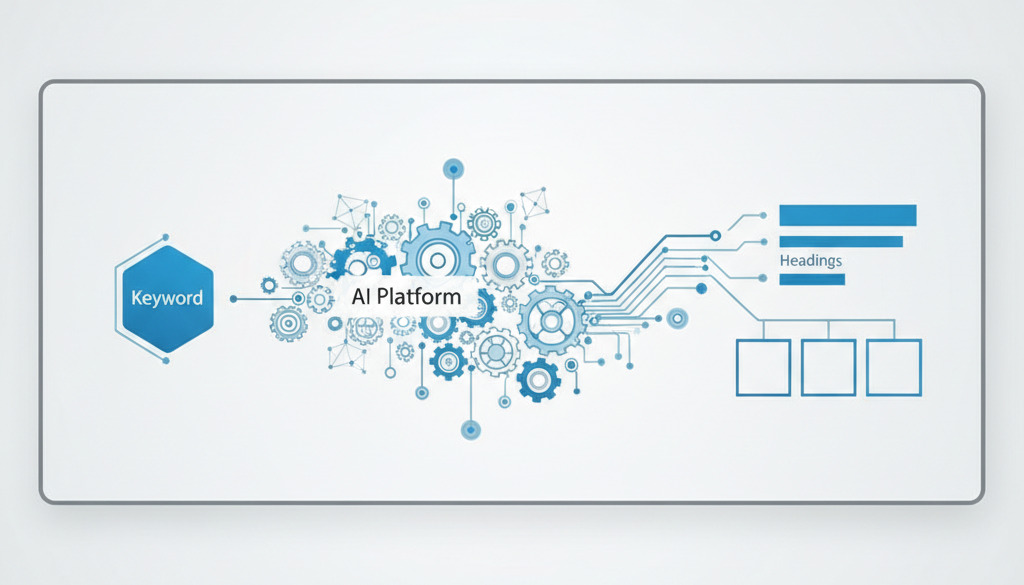
An AI organic traffic platform is more than just a writing tool; it's an end-to-end system designed to automate the most difficult parts of content marketing. While the technology is complex, the user experience is designed to be incredibly simple. Here’s a breakdown of what happens behind the scenes:
- Keyword Analysis and Strategy: The process begins with your target keyword. The platform's AI analyzes this keyword, examining the current top-ranking content on Google to understand search intent. It asks: Are users looking for a how-to guide, a comparison, a list of benefits, or a simple definition? It also identifies related subtopics and questions people are asking.
- Content Structuring and Outlining: Based on its analysis, the AI constructs a detailed outline for the article. This includes a compelling title, a logical sequence of H2 and H3 headings, and key points to cover in each section. This ensures the final piece is comprehensive and directly addresses the user's query.
- Natural Language Generation (NLG): This is where the writing happens. Using advanced machine learning models, the platform drafts the content section by section. It focuses on creating text that is not only informative but also readable, engaging, and in a business-appropriate tone. It's programmed to avoid "keyword stuffing," instead weaving keywords and related terms into the text naturally.
- Built-in SEO Optimization: As it writes, the platform automatically applies on-page SEO best practices. This includes proper heading structure (H1, H2, H3), including the target keyword in strategic locations like the title and introduction, and ensuring the content has sufficient depth and length to be considered authoritative by search engines.
The result is a fully-drafted, SEO-friendly article, produced in a fraction of the time it would take a human writer. It transforms a multi-hour process into one that takes just a few minutes of your time.
The 'More Customers From Your Blog' Method: Effortless SEO Content Creation
Not all AI platforms are created equal. Many are general-purpose tools that still require significant user input and SEO knowledge to be effective. This is where specialized platforms like Volteruno stand out by focusing on a single, powerful outcome: getting more customers from your blog. The entire system is engineered for the business owner who wants results without becoming an SEO expert.
The core philosophy is simple but powerful: Our proprietary artificial intelligence writes professional SEO blog articles for your website in minutes—almost like magic.
This approach is built on a sophisticated, fine-tuned AI model that goes beyond generic text generation. It's specifically trained on content that performs well in search rankings. It understands what makes an article not just well-written, but also effective at attracting organic traffic. The key is in its ease of use. You don't need to craft complex prompts or spend hours editing. You provide a keyword, and the platform handles the intricate process of competitor analysis, structuring, writing, and optimization for you. This speed and efficiency empower you to build a content-rich website that search engines love, even if you have only a few minutes to spare each week.
Identifying High-Impact Keywords: The Foundation of Organic Visibility
Even the best article in the world will fail if no one is searching for its topic. This is why keyword research is the bedrock of any successful SEO strategy. It’s the process of finding the words and phrases your potential customers are typing into Google. An effective AI organic traffic platform doesn't just write content; it helps you find the right keywords to target in the first place.
AI tools can analyze massive amounts of search data to uncover opportunities you might miss. They can identify trending topics in your industry and suggest keywords with high search volume (many people are looking for it) but low competition (not many other businesses are targeting it). This is the sweet spot for SMEs.
A particularly powerful technique is finding long-tail keywords. These are longer, more specific phrases, typically three words or more. For example, instead of targeting the highly competitive keyword "accounting," you might target "accounting services for small construction companies." Someone searching for this long-tail keyword is a much more qualified lead. AI platforms excel at uncovering these valuable, high-intent phrases, laying the perfect foundation for content that attracts customers who are ready to buy.
Generating SEO-Optimized Content with AI: Quality and Relevance
Once you have your keywords, the next challenge is creating content that both search engines and human readers will love. This is where an advanced AI platform truly shines, moving beyond simple text generation to become a strategic content creator.
AI's Ability to Incorporate Keywords Naturally
In the early days of SEO, writers would awkwardly "stuff" keywords into an article as many times as possible. This practice is now penalized by Google. Modern SEO is about relevance and natural language. An AI organic traffic platform is expertly trained to do this. It understands the primary keyword, but also a host of related "semantic" keywords. It then weaves these terms throughout the text in a way that feels organic and adds context, signaling to Google that your article is a comprehensive resource on the topic.
Ensuring Readability and an Engaging Tone
Search engines don't just scan for keywords; they measure user engagement. If visitors click on your article and leave immediately, Google takes it as a sign that your content isn't helpful. AI platforms are programmed to write in a clear, concise, and professional manner. They use short paragraphs, bullet points, and proper heading structures to break up the text and make it easy to scan. This ensures that when a visitor lands on your page, they find the information they need quickly, which keeps them engaged and on your site longer.
Platforms designed for business owners take this a step further. In essence, we write the SEO articles for you. The system is built to automate the laborious task of writing, editing, and formatting, freeing you to focus on running your business while your website's content engine works tirelessly in the background.
Whether you need a blog post, a how-to guide, or an informational article, the AI can adapt its output to the required format, maintaining a consistent level of quality and SEO performance every time.
The Strategic Advantage: How AI Drives Organic Traffic
So, how does consistently publishing AI-generated content translate into more website traffic? It creates a powerful, self-reinforcing cycle known as a content flywheel. Here’s how it works:
- Consistent Publishing Builds Authority: By using an AI platform to publish high-quality, targeted articles on a regular schedule (e.g., once or twice a week), you send a strong signal to Google that your website is an active and authoritative source of information in your niche.
- Targeted Content Ranks for Keywords: Each article is optimized for a specific set of keywords. Over time, your website begins to appear in the search results for hundreds or even thousands of different queries related to your products or services.
- Higher Rankings Drive Clicks: As your pages climb the search rankings, more and more people will click through to your website. This initial trickle of organic traffic is the first sign that the strategy is working. The ultimate goal is that customers will find you on their own in Google, reducing your reliance on expensive advertising.
- Increased Traffic and Engagement Boosts Rankings Further: Google notices when your website is getting more traffic and when users are staying on your pages to read your content. These are positive engagement signals that tell the algorithm your site is a quality resource, which in turn helps all your pages rank even higher.
This flywheel effect is the key to sustainable growth. Each new article you publish adds more momentum, attracting more visitors and building your site's authority over time. It's an asset that compounds in value.
Beyond Content: Essential Elements for Organic Traffic Success
While high-quality content is the most critical factor for organic traffic, it's not the only one. A truly effective strategy also considers the technical health and user experience of your website. While an AI platform primarily handles content, it's important to be aware of these other elements:
- Technical SEO: This involves the behind-the-scenes aspects of your website. Key factors include site speed (how fast your pages load), mobile-friendliness (how well your site works on a smartphone), and having a secure connection (HTTPS). A slow, clunky website can hurt your rankings regardless of how good your content is.
- On-Page Optimization: This goes beyond keyword placement. It includes crafting compelling meta descriptions (the short text snippet that appears under your title in search results) and title tags that entice users to click. Using clear, descriptive header tags (H1, H2, H3) also helps both users and search engines understand your content's structure.
- Internal and External Links: Internal links are links from one page on your website to another. They help search engines understand the relationship between your pages and help visitors discover more of your content. External links (or backlinks) are links from other websites to yours. They act as "votes of confidence" and are a powerful ranking signal. Well-researched content generated by AI is more likely to be linked to by others, naturally attracting these valuable backlinks over time.
Measuring Your Success: Key Metrics for Organic Traffic Growth
One of the greatest advantages of digital marketing is that everything can be measured. An AI organic traffic platform shouldn't be a "set it and forget it" tool. You need to track your progress to understand what's working. Most platforms offer built-in analytics, or you can use free tools like Google Analytics and Google Search Console. Here are the key metrics to watch:
| Metric | What It Means | Why It's Important |
|---|---|---|
| Organic Sessions | The number of visits to your site from organic search. | This is the most direct measure of your SEO success. You want to see this trending up over time. |
| Keyword Rankings | Your website's position in the search results for your target keywords. | Tracking this shows if your content is successfully competing for visibility on Google. |
| Click-Through Rate (CTR) | The percentage of people who see your site in search results and click on it. | A high CTR indicates that your titles and meta descriptions are compelling and relevant. |
| Bounce Rate | The percentage of visitors who leave your site after viewing only one page. | A high bounce rate might suggest your content isn't matching user intent or your site is hard to use. |
| Conversions | The number of visitors who take a desired action (e.g., fill out a contact form, make a purchase). | This is the ultimate measure of ROI, connecting your organic traffic directly to business goals. |
Modern AI systems can help analyze this data, providing insights and reports that are easy to understand, even for non-experts. They can highlight your best-performing articles and suggest new content opportunities based on what's already driving results.
Case Studies: Real-World Results from AI-Powered Organic Traffic
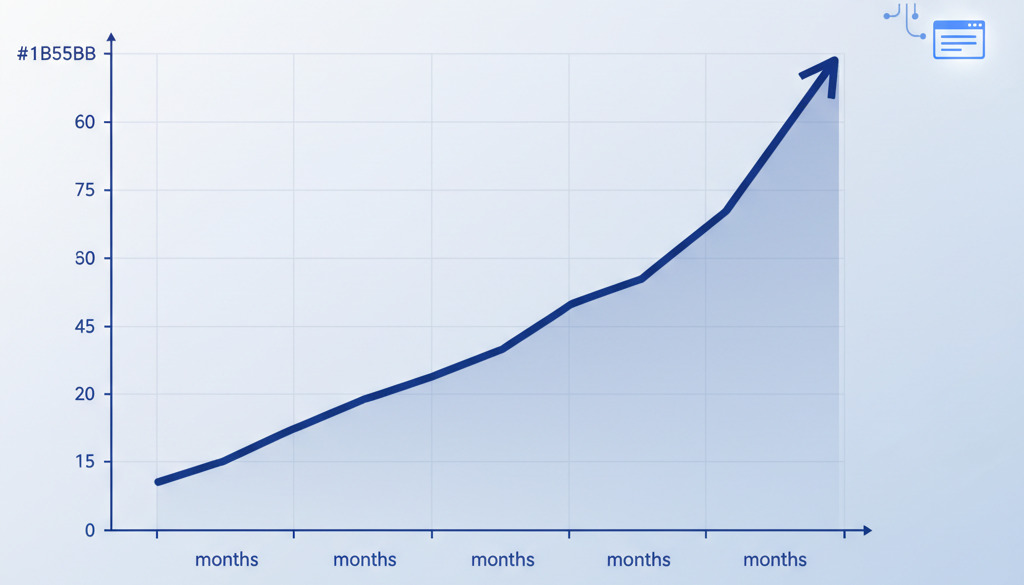
The theory behind AI-driven SEO is compelling, but the real proof is in the results. Businesses across numerous industries are already leveraging this technology to achieve remarkable growth. With a user base that confirms its effectiveness—already used by more than 500 companies—this approach has a proven track record.
Consider the example of a local consulting firm. Like many SMEs, they had a basic website but no blog and relied entirely on word-of-mouth referrals. Their online presence was practically non-existent. After adopting an AI organic traffic platform, they began publishing two SEO-optimized articles per week, targeting specific questions their ideal clients were asking.
Fictional Case Study: B2B Consulting Firm
| Metric | Before AI Platform (Month 1) | After AI Platform (Month 6) | Percentage Increase |
|---|---|---|---|
| Monthly Organic Visitors | 58 | 2,150 | 3,607% |
| Keywords Ranked in Top 10 | 3 | 94 | 3,033% |
| Monthly Qualified Leads from Website | 1 | 18 | 1,700% |
Within six months, their website transformed from a digital brochure into a lead-generation machine. They began ranking for dozens of valuable, long-tail keywords in their niche. The result was a steady flow of qualified inquiries from potential clients who found them through Google—all without spending a single dollar on ads. This illustrates the incredible ROI and cost-effectiveness of an AI-powered content strategy.
Overcoming Common Objections and Misconceptions about AI Content
As with any transformative technology, there's a degree of skepticism around AI-generated content. Many business owners worry about quality, originality, and how search engines will perceive it. It's important to address these valid concerns.
- Myth: AI content is robotic and lacks originality.
While this was true of older AI tools, modern platforms are incredibly sophisticated. They can adopt different tones, create nuanced arguments, and produce content that is indistinguishable from that written by a skilled human. The best platforms use proprietary models that ensure the content is unique and passes plagiarism checks. - Myth: Google will penalize my site for using AI content.
Google's official stance is that they reward high-quality content, regardless of how it's produced. Their focus is on content that is helpful, reliable, and user-centric. Low-quality, spammy content will be penalized whether it's written by an AI or a human. A good AI organic traffic platform is designed to produce content that aligns perfectly with Google's quality guidelines. - Myth: AI is replacing human creativity and strategy.
This is perhaps the biggest misconception. AI is not a replacement for human strategy; it's an enhancement. It should be viewed as an incredibly powerful tool that executes the laborious parts of a content strategy that you, the business owner, still direct. You provide the industry expertise and choose the topics, and the AI acts as your tireless writing assistant, freeing you up to focus on the big picture.
The Future of Organic Traffic: AI as an Indispensable Partner
The world of search is currently undergoing its most significant transformation in a decade. Recent data shows just how rapidly the landscape is changing. According to a 2026 report from Conductor, AI Overviews now appear in over 25% of all Google searches. These AI-generated summaries answer user questions directly on the results page, creating a surge in "zero-click searches."
"The future of SEO is not about ranking higher. It is about becoming the answer," states a recent Adobe Business report. This means visibility will depend less on your page position and more on whether your brand and content are cited within these AI-generated responses.
This new paradigm is called Answer Engine Optimization (AEO). To succeed, your content must be structured for extractability, verifiability, and contextual clarity so that AI systems can easily interpret and reference it. Manually creating content for this new AI-first world is incredibly challenging. An AI organic traffic platform, however, is perfectly suited for this task. It is designed to create the type of well-structured, comprehensive, and authoritative content that AI-powered search engines like Google's Gemini are programmed to trust and cite. Embracing AI is no longer just about efficiency; it's about staying relevant and visible in the future of search.
Getting Started with Your AI Organic Traffic Platform: A Practical Guide
Embracing AI for your business doesn't require a steep learning curve or a massive budget. Specialized platforms are designed to be intuitive for non-technical users. The best way to understand the power of this technology is to try it for yourself, especially when you can start without any financial commitment.
Many leading platforms offer a risk-free way to begin, with a common introductory offer being: Your first 5 posts are free. This allows you to see the quality of the content and the ease of the process firsthand. Here’s a simple, step-by-step guide to getting started:
- Sign Up for a Trial: Choose a platform that specializes in organic traffic for businesses and sign up for their free trial. This usually only requires a name and email address.
- Identify Your First Keywords: Think about the top 5 questions your customers ask you. Turn these into keywords. For example, if you're a plumber, a keyword might be "how to fix a leaking faucet."
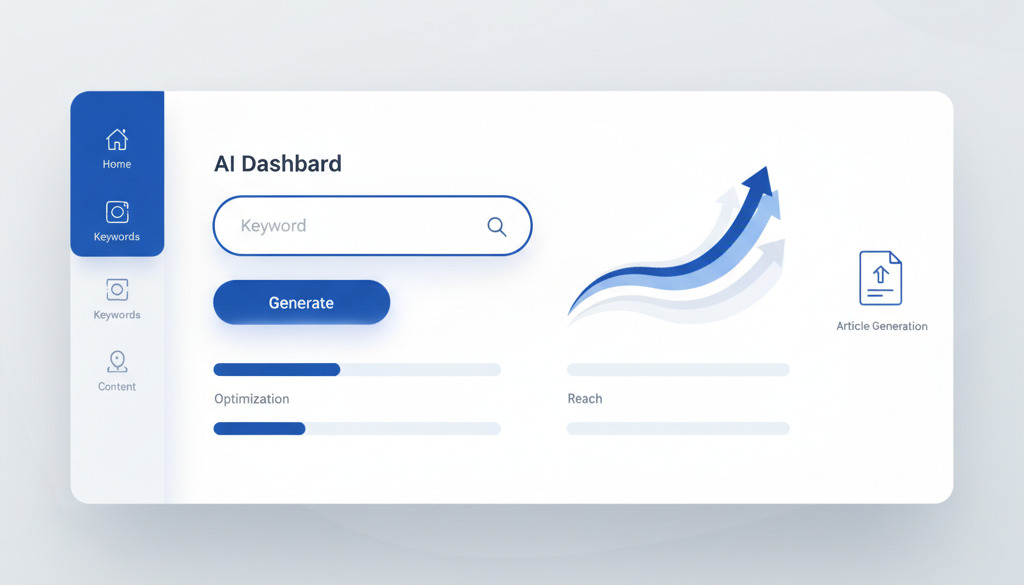
- Generate Your First Articles: Enter your chosen keywords into the platform one by one. Within minutes, the AI will generate fully-written and optimized blog posts for each topic.
- Review and Publish: Give the generated articles a quick read. While they are designed to be publish-ready, you might want to add a personal anecdote or a specific detail about your business. Then, copy and paste them into your website's blog and hit "publish."
- Monitor Your Results: Keep an eye on your analytics over the next few weeks. While SEO takes time, this initial content will begin the process of building your site's authority and relevance in the eyes of Google.
By following these steps, you can kickstart your content marketing engine and begin the journey toward sustainable, long-term organic growth.
Conclusion: Unlocking Sustainable Business Growth Through AI and Organic Traffic
The path to attracting new customers online has fundamentally changed. The expensive, short-term tactics of paid advertising are giving way to the sustainable, long-term value of organic traffic. For too long, the complexity and time commitment of content creation and SEO have been significant barriers for busy SME owners. Today, that is no longer the case.
An AI organic traffic platform demystifies SEO and automates the heavy lifting of content creation. It empowers you to build a powerful digital asset—a content-rich website that works around the clock to attract, engage, and convert your ideal customers. It's about shifting from renting your audience's attention to owning it.
By embracing this technology, you can finally execute a professional-level SEO strategy without needing a large marketing team or an exorbitant budget. You can save time, build credibility, and create a predictable, scalable channel for business growth. In an increasingly competitive digital world, leveraging AI is not just an advantage; it's the key to securing your business's long-term success.
Frequently Asked Questions
- What exactly is an AI organic traffic platform?
- An AI organic traffic platform is a specialized software tool that uses artificial intelligence to automate the process of creating SEO-optimized content, such as blog posts and articles. Its primary goal is to help businesses increase their visibility in search engine results and attract more visitors to their website without paying for ads.
- Will AI-generated content be penalized by Google?
- No, Google does not penalize content simply because it was created using AI. Google's focus is on the quality, helpfulness, and relevance of the content. High-quality, user-focused content is rewarded, regardless of whether it was written by a human or a sophisticated AI. Platforms designed for SEO create content that aligns with Google's quality guidelines.
- How is this different from just using a tool like ChatGPT?
- General AI tools like ChatGPT are powerful, but they are not specialized for SEO. An AI organic traffic platform is an end-to-end system that incorporates keyword research, competitor analysis, content structuring, and on-page SEO best practices directly into the content generation process. It's designed specifically for the goal of ranking on Google, which requires more than just writing text.
- I'm not a tech expert. Can I really use this?
- Absolutely. These platforms are designed specifically for business owners and marketers, not coders or SEO professionals. The user interface is typically very simple: you enter a keyword or topic, and the platform handles the complex tasks for you. The goal is to make high-level SEO accessible to everyone.
- How long does it take to see results from AI-driven SEO?
- SEO is a long-term strategy, not an overnight fix. While you can start publishing content immediately, it typically takes 3 to 6 months to see significant, measurable results in organic traffic. The key is consistency. By regularly publishing AI-generated content, you build momentum that compounds over time, leading to sustainable growth.
Keep reading
Hand-picked guides that go deeper — open the one you need next:
- The Future of Business: Becoming an AI Content Entrepreneur
- The ROI of AI Content: Why Volteruno is Your Smartest Marketing Investment
- From Idea to Publish: The Seamless AI Content Generation Workflow
- Scaling Your Content with AI: Volteruno for Growing Businesses
→ Read the full AI Content guide