
Geo-Targeted Content for Small Business Growth
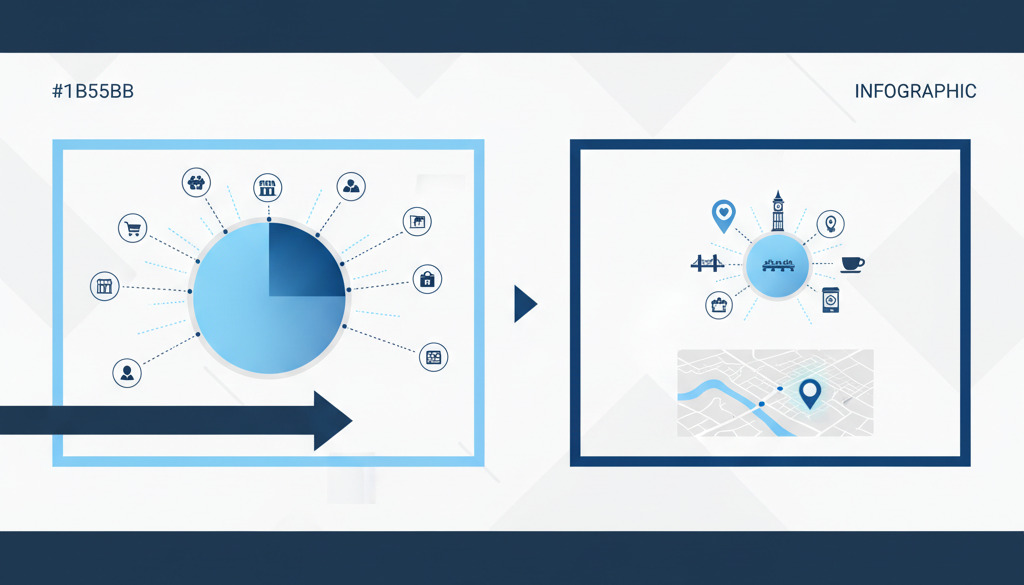
Key Takeaways
- What Geo-Targeting Is: It's the strategy of creating and delivering content specifically for an audience in a particular geographic location, from a state or city down to a single neighborhood.
- Why It Matters for SMBs: Geo-targeting allows small businesses to compete effectively against larger companies by focusing resources on their local customer base, leading to higher relevance, better ROI, and increased trust.
- The Foundation is Local Keywords: Success starts with targeting terms your local customers actually use, such as "emergency plumber in downtown Boston" instead of just "plumber."
- Content That Connects: The most effective content includes localized service pages, community news and events, and helpful local guides that position your business as a community expert.
- Local SEO is Non-Negotiable: A fully optimized Google Business Profile, consistent NAP (Name, Address, Phone) information across the web, and local backlinks are essential for visibility.
- AI is a Major Accelerator: For busy business owners, AI tools can automate the creation of high-quality, localized content, solving the problem of time and resource constraints.
- The Future is About Answers: The next evolution is Generative Engine Optimization (GEO), which focuses on getting your business cited directly in AI-generated answers, a trend heavily influenced by strong local content.
The Untapped Power of Local Audiences
In a crowded digital world, shouting your message to everyone often means you're heard by no one. For small and medium-sized businesses (SMBs), the key to sustainable growth isn't a bigger megaphone; it's a more precise map. This is the core of geo-targeted content marketing: the strategic practice of delivering relevant, valuable content to users based on their specific geographical location. It’s about trading a wide, empty net for a well-placed, baited hook.
Today’s consumers have come to expect personalization. They use phrases like "near me" in their searches as second nature, and their devices are constantly aware of their location. This behavior presents a golden opportunity. When a potential customer in your city searches for a solution you provide, you need to be the first, most relevant answer they find. Geo-targeted content ensures you are. By tailoring your message, you move from being just another option online to becoming a trusted local authority. This approach leads to higher engagement, better conversion rates, and the kind of brand loyalty that builds a lasting business.
Understanding Your Local Customer: Beyond Basic Demographics
To effectively reach your local audience, you must first understand them on a deeper level than simple age and gender demographics. A customer in a dense urban center has different needs, concerns, and local slang than one in a nearby suburb. Truly effective geo-targeting requires you to build a nuanced profile of your local customer.
Digging for Local Insights
How do you find out what makes your local customers tick? It requires a little digital detective work. Spend time in the online spaces where your community gathers. This could include:
- Local Facebook Groups and Community Forums: Pay attention to the problems people discuss, the recommendations they seek, and the local events they're excited about. A hardware store might notice homeowners in a specific neighborhood constantly asking for advice on dealing with a particular local pest.
- Nextdoor: This platform is a goldmine of hyperlocal concerns, from finding reliable electricians to complaining about local traffic patterns.
- Competitor Analysis: Look at the successful local competitors in your space. What topics do they cover on their blogs? What questions do customers ask in their reviews? This can reveal gaps you can fill.
Segmenting Your Local Audience
Don't stop at just your city. If you serve a larger metropolitan area, consider segmenting your audience further. A roofing company, for instance, might create different content for a historic district with unique building codes versus a newer development with modern homes. This level of granularity shows customers that you don't just operate in their area—you understand it.
The Foundation: Why Geo-Targeting is Crucial for SMBs
For a small business, competing with the massive marketing budgets of national chains can feel like an impossible battle. Geo-targeting is the strategic advantage that levels the playing field. It allows you to sidestep the competition by focusing your efforts where they will have the most significant impact: your own backyard.
Cost-Effective Marketing with Higher ROI
Broad, national marketing campaigns are expensive and largely wasteful for a business with a defined service area. Why pay to reach customers in California if you're a bakery in Chicago? Geo-targeted content focuses your budget exclusively on potential customers within your reach. This precision means every dollar spent on content creation and promotion is more likely to result in a lead or sale, dramatically improving your return on investment (ROI).
Building Trust and Local Credibility
When customers see content that speaks directly to their local context—mentioning familiar landmarks, discussing local events, or addressing region-specific problems—it builds an immediate sense of connection and trust. You are no longer a faceless entity on the internet; you are a neighbor. This positions your business as a knowledgeable and reliable local expert, making customers more likely to choose you over a generic national brand.
Crafting Location-Specific Keywords: The Lingua Franca of Local Search
Keywords are the bridge between a customer's need and your business. In geo-targeted content, that bridge must have strong local foundations. There's a critical difference between a broad keyword like "landscaper" and a powerful geo-modified keyword like "drought-tolerant landscape design Phoenix." The first is a wish; the second is a plan.
Identifying Your Local Keywords
Your goal is to think like a local. How would someone in your area search for what you offer? Brainstorm variations that include:
- City/Town + Service: "auto repair in Silver Spring MD"
- Neighborhood + Service: "best coffee shop Williamsburg Brooklyn"
- Zip Code + Service: "tax preparer 78704"
- "Near Me" Modifiers: While you can't target "near me" directly, creating content optimized for your location helps Google serve your business for these searches.
- Local Landmarks or Regions: "accountant near Fenway Park" or "wineries in the Finger Lakes region"
Using Keyword Research Tools
You don't have to guess. Use tools like Google Keyword Planner or other popular SEO platforms to identify local keyword opportunities. Look for terms with decent search volume and relatively low competition. Don't ignore long-tail keywords—longer, more specific phrases like "24-hour emergency AC repair Austin." These searches are often made by customers who are further along in the buying process and ready to make a decision.
Content Pillars for Local Engagement: What to Publish
Once you have your keywords, you need to build your content around them. Your goal is to create a resource hub that is genuinely useful for your local audience. This content should revolve around several key pillars that reinforce your local expertise and community connection.
Localized Service or Product Spotlights
Go beyond a simple list of services. Create dedicated pages or blog posts that explain how your offerings solve specific local problems. Showcase your expertise in a way that resonates with the community. Examples:
- A pest control company in the Southeast could write, "Your Guide to Preventing Termite Swarms in Georgia."
- A boutique in a cold climate could feature, "How to Layer Like a Pro for a Minnesota Winter."
- A tech repair shop could offer, "Why Salt Air in Coastal Florida is Damaging Your Phone."
Community-Focused News and Events
Become a part of the local conversation. Dedicate a section of your blog to covering things that are happening right in your community. This shows you are invested in the area beyond just making a sale. You could cover:
- Local festivals and seasonal events
- Charity fun-runs or community drives
- The opening of a new park or public space
- Spotlights on other local, non-competing businesses
By becoming a source for this information, you attract local traffic that may not be looking for your services today but will remember your helpfulness when they do.
Local Guides and Resources
Create helpful content that is related to your industry but serves a broader purpose. This positions you as a helpful expert and builds significant goodwill. Think about what a newcomer or even a long-time resident might want to know. Examples:
- A real estate agent could create, "The Ultimate Guide to Family-Friendly Neighborhoods in Charlotte."
- A bicycle shop could publish, "The Top 5 Safest Bike Trails in the Portland Area."
- A bookstore could curate a list of "Best Rainy-Day Activities for Kids in Seattle."
Leveraging User-Generated Content (UGC) for Local Authority
User-Generated Content (UGC) is any content—text, videos, images, reviews—created by people, rather than brands. For a local business, UGC is the digital equivalent of powerful word-of-mouth marketing. Seeing a review or a social media post from a neighbor is incredibly influential and builds what marketers call social proof.
Encouraging and Collecting Local UGC
Your happy customers are your best marketers, but you often need to prompt them. Here are some effective strategies:
- Ask for reviews: After a successful sale or service, send a follow-up email with a direct link to your Google Business Profile, Yelp, or industry-specific review site.
- Create photo opportunities: If you have a physical location, create an "Instagrammable" spot where customers are encouraged to take photos.
- Run a social media contest: Ask customers to share photos using your product or service with a specific local hashtag (e.g., #MyCityBakery) for a chance to win a prize.
Showcasing UGC to Boost Credibility
Once you have this content, feature it prominently. Embed positive Google reviews on your website. Create a "community" page showing off customer photos. Share positive social media mentions on your own profiles (always with permission). When potential customers see real people from their own community enjoying your business, it erases doubt and builds immediate trust.
The Role of Local SEO in Geo-Targeted Content Success
Geo-targeted content and Local Search Engine Optimization (Local SEO) are two sides of the same coin. Your great local content won't drive growth if no one can find it. Local SEO is the technical framework that ensures your content appears in front of the right local eyes when they search.

Optimizing Your Google Business Profile (GBP)
Your Google Business Profile is arguably your most important tool for local visibility. It is the information box that appears in Google Maps and on the right side of the search results. Optimizing it is not optional. Ensure it is 100% complete and accurate, including:
- Your exact business name, address, and phone number.
- Your hours of operation.
- Your primary and secondary business categories.
- High-quality photos of your business, team, and work.
- Regularly posting updates, offers, and events.
- Actively responding to all customer reviews, both positive and negative.
For businesses looking to streamline this process, exploring solutions like GMB Automation AI can be a powerful way to maintain a competitive edge.
The Importance of NAP Consistency and Local Citations
NAP stands for Name, Address, and Phone number. Search engines use this information across the web to verify that you are a legitimate local business. If your NAP is inconsistent—for example, listing "Street" on your website and "St." on a local directory—it confuses search engines and can harm your rankings. A local citation is any online mention of your NAP. Ensure your business is listed correctly on major directories like Yelp, Angie's List, and other industry-specific sites.
Building Local Links
Just as in traditional SEO, backlinks (links from other websites to yours) are a powerful ranking signal. In Local SEO, links from other well-regarded local entities are pure gold. You can earn these by sponsoring a local charity event, guest posting on a local blogger's website, or joining your local Chamber of Commerce.
Technical Implementation: Geo-Targeting Tools and Techniques
While the strategy behind geo-targeting is about understanding people, the execution often involves technology. For many business owners who aren't digital natives, this can sound intimidating, but the basic tools are more accessible than you might think.
Website Localization
This involves tailoring parts of your website to different locations. If you have multiple locations, this is essential. Techniques include:
- Location-Specific Pages: Create a unique page for each physical store or service area. These pages should feature the local address, phone number, hours, staff bios, and customer testimonials from that specific area.
- IP Geolocation: More advanced services can detect a user's location based on their IP address and automatically show them relevant information, such as the nearest store location or location-specific promotions.
Social Media Geo-Targeting
Social media platforms offer powerful built-in tools for reaching local audiences. When you post, you can:
- Geo-tag your posts: Tag your city or even your specific location in every post on platforms like Instagram and Facebook. This makes your content discoverable to users searching for that location.
- Use local hashtags: Research and use hashtags that are popular in your community, such as #[YourCity]eats, #[YourNeighborhood]life, or #[LocalEventName].
Paid Advertising Geo-Targeting
Platforms like Google Ads and Facebook Ads allow for incredibly precise geographic targeting. You can choose to show your ads only to people within a specific country, state, city, zip code, or even a one-mile radius around your business. This is a highly effective way to promote your geo-targeted content directly to the audience it was made for, ensuring no part of your ad spend is wasted.
Creating Content at Scale: The Power of AI Assistance
The strategy is clear: create consistent, high-quality, localized content. However, for a busy small business owner juggling sales, operations, and customer service, the reality is daunting. Who has the time to be a local reporter, a keyword expert, and a prolific writer? This is where technology, specifically artificial intelligence, provides a revolutionary solution.
The challenge of content creation is no longer a barrier. For business owners who know they need an online presence but lack the time or inclination to write, services now exist that can shoulder the entire burden. Imagine having a professional SEO expert and a writer on your team, ready to go at a moment's notice. That's the power of modern AI. For instance, services like Get More Customers From Your Blog — We Write The SEO Articles For You use advanced AI to generate professional, SEO-optimized blog posts directly for your website in minutes. This technology can analyze your business, identify local keyword opportunities, and produce content that attracts customers from Google searches, effectively acting as a digital marketing engine that runs on its own.
This approach is a cornerstone of a modern small business AI content strategy, turning what was once a time-consuming chore into a simple, automated process that drives tangible growth.

Measuring Success: KPIs for Geo-Targeted Content
You can't improve what you don't measure. To know if your geo-targeted content strategy is working, you need to track the right Key Performance Indicators (KPIs). The goal is to see a direct link between your content efforts and your business growth.
Key Metrics to Watch:
- Local Organic Traffic: In Google Analytics, you can filter your audience by location. Are you seeing an increase in website visitors from your target cities or regions?
- Local Keyword Rankings: Use a tool like Google Search Console to see which keywords are bringing people to your site. Are you starting to rank for the geo-modified terms you're targeting? Seeing your site climb from page 10 to page 1 for "custom cabinetry in Portland" is a clear win.
- Conversion Rate by Location: Track how many visitors from your target area complete a desired action (e.g., fill out a contact form, make a phone call, purchase a product). Is this rate higher for local visitors who interact with your localized content?
- Google Business Profile Insights: GBP provides valuable data, including how many people found you via "Direct" searches (typing your name) versus "Discovery" searches (searching a category, product, or service). An increase in Discovery searches is a strong indicator that your local SEO and content are working.
Regularly reviewing these metrics will help you understand which topics resonate most with your local audience, allowing you to double down on what works and refine the rest of your strategy.
Overcoming Common Geo-Targeting Challenges
While powerful, geo-targeting isn't without its potential pitfalls. Being aware of these challenges ahead of time allows you to navigate them effectively and ethically.
Inaccurate Geolocation Data
The technology used to identify a user's location (like IP-based geolocation) isn't always perfect. Users on a VPN or certain mobile networks might be misidentified. Because of this, it's best to use geo-targeting to offer helpful, relevant content rather than strictly gating it. For example, suggest a location rather than forcing a user into a specific version of your site.
User Privacy Concerns
In an age of heightened awareness around data privacy, some customers can be wary of brands that seem to know too much about them. The key is transparency. Be clear in your privacy policy about what data you collect and how you use it to create a better, more relevant experience. Avoid being "creepy" by using location data subtly to add value, not to call out the user's specific location in a startling way.
Alienating Non-Targeted Audiences
While your focus is local, you don't want to completely alienate potential customers from outside your primary service area (e.g., someone planning a move to your city, or looking to buy a gift for a local resident). Ensure your website is still fully accessible and navigable for all users, even if you highlight local content for a specific segment.
Integrating Geo-Targeted Content with Other Marketing Efforts
Your geo-targeted content should not exist in a silo. Its power is multiplied when it is woven into the fabric of all your marketing activities, creating a cohesive and consistent local brand presence.
Email and Social Media Marketing
Did you just publish a blog post on "The Best Dog-Friendly Patios in Minneapolis"? Share it on your social media channels using local hashtags. Send a link to the post in an email newsletter to your local subscriber list. This cross-promotion drives more traffic to your content and reinforces your local expertise across multiple touchpoints.
Local Events and Offline Advertising
If you sponsor a local charity 5K, create content about it. Write a blog post celebrating the event and your company's involvement. Mention the post in any print or radio ads you're running. This creates a synergy between your offline and online efforts, showing deep community integration.
Customer Service and Sales Support
Your local content can be a valuable tool for your team. When a customer calls with a question that is answered in one of your local guides, your staff can direct them to the article. This not only provides a thorough answer but also showcases the wealth of resources available on your website, impressing the customer and saving your team time.
The Future of Geo-Targeted Content: Emerging Trends
The digital landscape is always evolving, and localization is becoming even more sophisticated. Staying aware of emerging trends will keep your business ahead of the curve.
The Rise of Generative Engine Optimization (GEO)
A major shift is underway from traditional SEO to what experts now call Generative Engine Optimization (GEO). SEO focuses on ranking your website in a list of blue links. GEO, on the other hand, focuses on optimizing your content to be cited directly as the answer by AI systems like Google's AI Overviews and ChatGPT. As a recent report from ImpactPlus highlights, SEO and GEO are becoming two sides of the same coin. Your strong local content, especially when it directly answers a local question, is prime material for these AI summaries. According to research from Digital Applied, content structure is critical, with the first 200 words of a page being a key factor in citation selection.
Voice Search and Hyperlocal Queries
The use of voice assistants like Siri, Alexa, and Google Assistant is on the rise. Voice searches are often more conversational and hyperlocal (e.g., "Hey Google, where can I find a hardware store that's open now and has garden supplies?"). Content that directly answers these long-tail questions in a natural, conversational tone will be prioritized.
AI and Hyper-Personalization
Advancements in AI will allow for even more granular personalization. Imagine a website that can tailor its content not just to a user's city, but to a real-time event like a traffic jam or bad weather. For example, a coffee shop’s website could automatically highlight its delivery service to users who are currently in an area with heavy rain. The foundation you lay now with good geo-targeted content will prepare you for this future.
Case Study: A Local Business Transformed by Geo-Targeting
Consider "Patriot Painters," a fictional veteran-owned painting company in the greater Boston area. Initially, their website was generic, with keywords like "house painter" and "commercial painting." They were lost on page 10 of Google, struggling to compete with national franchises and low-cost gig workers.
They decided to implement a geo-targeted content strategy. Their challenges were a limited budget and almost no time to write. They started by creating specific service pages for the towns they served most: "Newton Interior House Painting" and "Cambridge Historic Home Repainting." They then launched a blog with posts like, "Choosing the Right Paint Colors for a New England Colonial" and "How the Boston Winter Can Damage Your Exterior Paint." They optimized their Google Business Profile and started asking every customer for a review.
The results were transformative. Within six months, they were appearing on the first page of Google for their target local keywords. Website traffic from their service area tripled. More importantly, their lead quality improved dramatically; customers were already convinced that Patriot Painters understood their specific needs. Their success could have been achieved even faster today. A service that uses AI to write SEO articles for you could have produced that entire library of localized blog content in a matter of days, not months, accelerating their path to local market leadership.
Unlocking Hyperlocal Growth: The Strategic Power of Geo-Targeted Content Marketing
In today's crowded digital landscape, standing out requires more than just a strong online presence; it demands a deep understanding of your local audience and their specific needs. Geo-targeted content marketing offers small businesses a powerful, yet often underutilized, strategy to achieve precisely this. Unlike broad, nationwide campaigns, geo-targeting focuses your efforts on attracting and engaging customers within a defined geographical area, ensuring that your marketing message resonates with the people most likely to become paying clients. This approach acknowledges a fundamental truth: a customer in Boston has different concerns and interests related to home maintenance than someone in Phoenix. By tailoring content to these local nuances, businesses can build trust, establish authority, and ultimately drive more qualified leads. The effectiveness of geo-targeted content marketing stems from its inherent relevance. When a potential customer searches for "best local plumber near me" or "emergency roof repair in [specific neighborhood]," they are seeking immediate solutions relevant to their immediate surroundings. By having content that specifically addresses these local needs – perhaps detailing common plumbing issues in older homes in a historic district, or discussing the best roofing materials for the specific microclimate of a town – your business instantly becomes a more appealing and trustworthy option. This hyper-relevance not only improves search engine rankings for local terms but also significantly enhances the user experience. Visitors who find exactly what they're looking for, presented in a familiar context, are far more likely to convert. Furthermore, this strategy can be remarkably cost-effective, allowing small businesses with limited budgets to compete effectively against larger, more established players who may not be prioritizing local SEO as granularly.Measuring the Impact: KPIs for Geo-Targeted Success
To truly gauge the success of your geo-targeted content marketing efforts, it's crucial to track specific Key Performance Indicators (KPIs) that reflect local engagement. Beyond general website traffic, pay close attention to metrics such as: the geographic breakdown of your website visitors, the performance of location-specific keywords in search engine results pages (SERPs), the number of "click-to-call" actions from your Google Business Profile, and the conversion rates for leads originating from your targeted service areas. Analyzing review data from local platforms can also provide invaluable qualitative insights into how well your content is addressing local customer concerns. Consistency in content creation, combined with diligent monitoring of these localized KPIs, will illuminate the path toward sustained hyper-local growth and market dominance.FAQ
What is geo-targeted content marketing?
Geo-targeted content marketing involves creating and distributing content that is specifically tailored to a particular geographic location or audience. This strategy aims to resonate more deeply with local customers by addressing their specific needs, interests, and cultural nuances.
How does geo-targeting help small businesses grow?
By focusing content on local areas, small businesses can attract more relevant customers, improve their search engine rankings in local searches, and build stronger community engagement.[1] This often leads to higher conversion rates and increased sales within their service area.
What are some examples of geo-targeted content for small businesses?
Examples include blog posts about local events, social media updates highlighting local partnerships, website content featuring customer testimonials from the immediate vicinity, or even running local-specific promotions and ads.
→ Read the full AI Content guide
Keep reading
Hand-picked guides that go deeper — open the one you need next:
- AI Scalable Content Strategy for Rapid Growth
- Scale Your Business with AI: Content Marketing for Growth
- AI Keyword Research: Beyond Basic Keywords
- From Zero to Hero: Launch Your Business Blog with AI in Days
→ Read the full AI Content guide