
International Business AI Content: A Strategic Guide

The global marketplace has reached a pivotal juncture where the capacity to communicate effectively across borders is no longer just a linguistic challenge, but a technological one. As we move through 2026, Artificial Intelligence (AI) has transitioned from a speculative experiment to a foundational pillar of international business operations.[1] For enterprises looking to scale beyond their domestic borders, AI-powered content is no longer an optional innovation; it is a strategic imperative that dictates market share, operational efficiency, and brand relevance.
Managing a global brand requires balancing the "global-local" paradox—maintaining a consistent corporate identity while appearing deeply rooted in local cultures. Traditional methods of content creation and localization often fall short under the weight of modern speed requirements. This guide explores how international businesses are leveraging sophisticated AI frameworks to navigate these complexities, ensuring that every piece of content, from a technical whitepaper in Tokyo to a social media campaign in Berlin, resonates with precision and impact.
1. The Evolving Landscape of Global Content Creation
Historically, international content creation was a linear, labor-intensive process. A central "global" team would produce an English-language asset, which would then be sent to various regional agencies for translation and adaptation. This model faced significant roadblocks: prohibitive costs, long turnaround times, and the inevitable "telephone game" where the original brand intent was diluted during translation. Furthermore, scaling this process across 50+ markets was virtually impossible for all but the largest conglomerates.
AI is fundamentally dismantling these barriers. By automating the foundational layers of content production, businesses can now achieve "localization at scale." According to recent industry shifts, the goal is no longer just to translate words, but to synthesize cultural context instantaneously. AI allows for the democratization of global market access, meaning mid-market firms can now compete with multinationals by deploying high-quality, localized digital storefronts and marketing funnels in a fraction of the time previously required.
2. Understanding AI Technologies for Content Generation
To build a robust international content engine, one must understand the three core pillars of AI technology currently driving the sector:
Natural Language Generation (NLG)
NLG is the component of AI that transforms structured data into human-written narratives. In international business, this is revolutionary for generating high-volume assets such as E-commerce product descriptions, quarterly financial reports, and personalized email sequences. Platforms like Jasper, Copy.ai, and enterprise-grade GPT-4 implementations allow teams to input core product specifications and receive thousands of unique descriptions tailored to specific market personas.
Natural Language Processing (NLP)
While NLG writes, NLP "reads" and understands. NLP is critical for sentiment analysis across different regions. For instance, a US-based firm can use NLP to monitor social media discourse in Brazil, understanding the specific linguistic nuances and emotional triggers of the local audience. This enables the "summarization" of global feedback, allowing headquarters to make data-driven decisions without a massive boots-on-the-ground presence.
Machine Translation (MT) and AI-Powered Localization
Modern AI-driven translation is light-years ahead of the literal "dictionary-swap" methods of the past. Neural Machine Translation (NMT) uses deep learning to understand context. However, the cutting edge lies in "Agentic AI" translation—systems that are programmed with a brand’s style guide and target audience data, ensuring that the translated output adheres to specific cultural etiquette and technical terminology peculiar to an industry.
3. Strategic Applications of AI in International Business Content
Strategic deployment of AI moves beyond simple task automation and into high-level market intelligence. One of the most potent applications is Market Research and Trend Analysis. AI can ingest millions of data points from local news cycles, competitor websites, and consumer forums to identify "micro-trends" before they hit the mainstream. For example, an AI might detect a rising interest in specific sustainable packaging materials in Scandinavia, allowing a global consumer brand to pivot its content strategy in that region months ahead of competitors.
Furthermore, Personalized Marketing Campaigns have become hyper-granular. In the past, companies might have had a "Latin America" strategy; now, AI enables a "São Paulo tech professional aged 25-30" strategy. By segmenting audiences based on real-time behavior, AI can dynamically generate content variations for A/B testing across dozens of languages simultaneously, optimizing conversion rates in real-time rather than waiting for post-campaign analysis.
4. The Importance of AI-Powered Content Localization
True localization is an exercise in cultural empathy, not just linguistic accuracy. AI tools are now capable of identifying "cultural red flags." For example, certain idioms that are common in American business—such as "hitting a home run"—have no resonance in non-baseball-playing cultures and might even confuse the reader. Advanced AI filters can flag these colloquialisms and suggest local equivalents that maintain the same emotional weight.
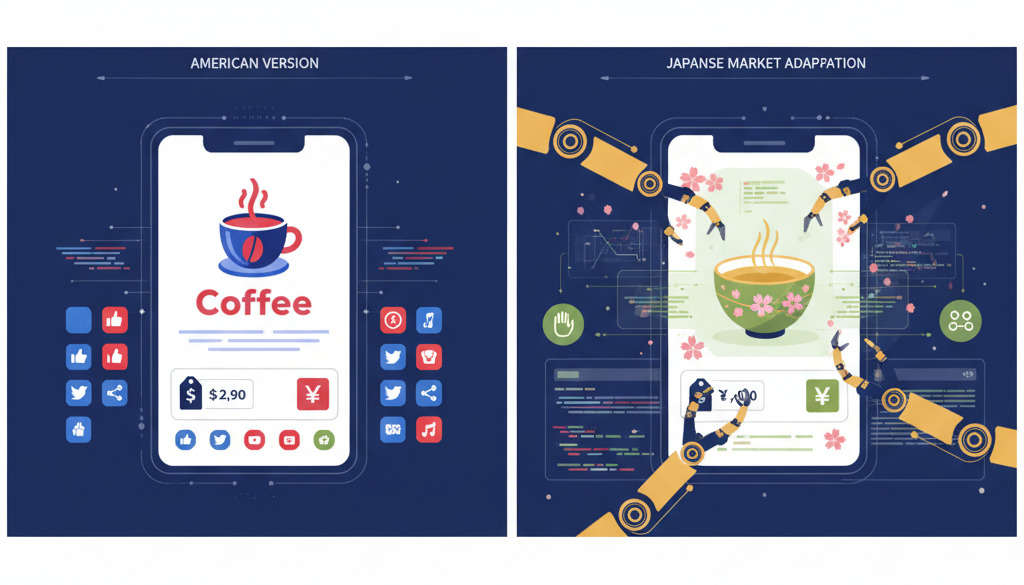
Visual and multimedia adaptation is another frontier. AI can now assist in "visual transcreation"—recommending or even generating imagery that reflects local demographics and aesthetic preferences. A marketing video for the Middle East might require different color palettes and social cues than one for Western Europe. Furthermore, AI helps ensure Compliance and Legal Considerations. Regulatory frameworks like the GDPR in Europe or specific advertising laws in China require strict adherence. AI can act as a first-line auditor, flagging content that might violate local "truth in advertising" laws or data privacy requirements before a human legal team performs the final review.
5. Implementing an AI-Driven Content Workflow
Implementing AI is not a "plug-and-play" endeavor; it requires a structural rethink of how work moves through an organization. The first step is Defining Objectives and Use Cases. A company specializing in industrial machinery will have different AI needs (technical manual translation) than a fashion retailer (rapid-fire social media trend responses). Clearly defined KPIs allow for the selection of the right tools.
When Choosing the Right AI Tools, integration is key. The most successful international businesses are moving away from siloed tools and toward integrated AI-marketing suites that sync with their existing Content Management Systems (CMS) and Customer Relationship Management (CRM) platforms. This ensures that the AI has access to the "source of truth"—the company’s actual data—reducing the risk of "hallucinations" or factual errors. Integration allows for a seamless workflow where a blog post created in the US is automatically queued for localized versions in five different languages, each optimized for local SEO keywords.
6. The Human Element: AI as a Co-Pilot, Not a Replacement
A common misconception in the era of Generative AI is that the technology will replace human creators. Evidence from firms like HubSpot and Boston Consulting Group (BCG) suggests the opposite: AI reshapes roles rather than eliminating them. BCG’s 2026 research indicates that while 55% of jobs will be reshaped by AI, the human element remains the arbiter of "brand soul."
Humans must act as the directors of AI engines. Human editors are essential for Quality Control and Ethical Oversight. AI can generate 90% of a draft, but the final 10%—the nuance, the ethical check, the brand "vibe"—must come from a human who understands the long-term business strategy. Furthermore, companies must invest in AI Literacy. A team that knows how to write "prompts" that include cultural constraints and brand voice parameters will outperform a team that uses AI as a generic typewriter every time.
7. Measuring the Impact and ROI of AI Content Strategies
To justify the investment in enterprise-grade AI, businesses must move beyond "vanity metrics." Key Performance Indicators (KPIs) should focus on three areas: Efficiency, Reach, and Conversion.
- Efficiency: Reductions in "time-to-market" for localized campaigns and lower per-word costs for translation.
- Reach: Increases in organic traffic from international search engines (Google, Baidu, Yandex) due to better localized SEO.
- Conversion: Improvements in click-through rates (CTR) and sales, indicating that the AI-generated content is actually resonating with the local consumer’s intent.
A comprehensive Cost-Benefit Analysis often reveals that while the initial setup and training of AI models require capital, the long-term savings on agency fees and the revenue gains from entering new markets faster provide a substantial ROI. Recent data suggests that companies using AI for content localization can enter new markets up to 70% faster than those using traditional human-only workflows.

8. Navigating Challenges and Future Trends
The path to an AI-driven global strategy is not without obstacles. Data Privacy and Security remain paramount. Moving data across borders to be processed by AI models requires strict adherence to international data transfer protocols. Businesses must ensure they are using "private" instances of AI models where their proprietary data isn’t used to train public algorithms, potentially leaking trade secrets.
Another challenge is Maintaining Brand Authenticity. If every company uses the same AI models, content risks becoming "homogenized" and bland. To counter this, businesses must feed their AI models "first-party data" and unique brand manifestos to ensure the output remains distinctive. Looking forward, the trend is moving toward Hyper-Personalization. We are approaching a future where a global website doesn't just show a version for "France," but a version specifically tailored to the individual user’s past interactions, industry, and browsing habits in real-time.
Conclusion
International business in the mid-2020s is an environment of "accelerated complexity." To thrive, enterprises must embrace the efficiency of AI while doubling down on the unique creativity that only human teams can provide. By integrating AI into the very fabric of content creation and localization, businesses can bridge the gap between global ambition and local resonance. The future of international commerce belongs to those who view AI not just as a tool for cutting costs, but as a bridge to deeper, more meaningful engagement with a global audience. Now is the time to audit your current workflows, experiment with agentic AI, and build the infrastructure for a truly borderless brand.
Navigating the Ethical Landscape of International Business AI Content
As businesses increasingly rely on Artificial Intelligence for generating and localizing content across international markets, a critical dimension emerges: the ethical considerations inherent in this process.[2] The speed and scale at which AI can operate, while offering immense advantages, also present unique challenges that demand careful navigation. One of the most pressing concerns revolves around data privacy and security. When utilizing AI for content creation, particularly for personalized marketing campaigns or customer service interactions, vast amounts of user data are processed. For international businesses, this becomes exponentially complex due to varying data protection regulations across different jurisdictions, such as the GDPR in Europe, CCPA in California, and numerous other national and regional laws. Ensuring compliance is not merely a legal obligation but a cornerstone of building trust with a global customer base. A breach or misuse of personal data can lead to severe financial penalties, reputational damage, and a loss of customer confidence that can take years to rebuild. Therefore, companies must implement robust data governance frameworks, anonymization techniques where feasible, and transparent data handling policies. This includes clearly communicating to users how their data is being used by AI systems and obtaining explicit consent. Furthermore, the sourcing and training of AI models themselves carry ethical weight. If AI models are trained on biased data sets, they can perpetuate and even amplify existing societal biases related to race, gender, age, or socioeconomic status. This can manifest in discriminatory hiring practices (if AI is used in recruitment content), unfair targeting in marketing campaigns, or even the generation of offensive or stereotypical content within localized materials. International businesses have a responsibility to audit their AI models for bias and actively work to mitigate it. This might involve curating more diverse and representative training data, employing bias detection tools, and establishing human oversight mechanisms to review AI-generated content before it is deployed. The pursuit of hyper-personalization, while effective from a marketing standpoint, also raises questions about manipulation and consumer autonomy. When AI can predict and cater to every individual desire, the line between helpful personalization and intrusive targeting can blur. Businesses must strike a balance, ensuring that personalization enhances the user experience without exploiting vulnerabilities or creating filter bubbles that limit exposure to diverse perspectives. Transparency in AI’s role in content delivery is paramount; users should be aware when they are interacting with an AI-generated recommendation or piece of content, fostering a sense of fairness and control.
Another significant ethical consideration is the impact of AI-driven content on employment and the creative industries. As AI becomes more adept at generating text, images, and even video, concerns arise about job displacement for writers, translators, graphic designers, and other creative professionals. International businesses have a responsibility to manage this transition thoughtfully. This could involve reskilling and upskilling existing workforce to collaborate with AI tools, focusing on roles that require human strategy, critical thinking, and emotional intelligence. The emphasis should shift from AI *replacing* human creativity to AI *augmenting* it. Furthermore, the intellectual property rights surrounding AI-generated content are still a developing area of law. Questions about copyright ownership, authorship, and plagiarism need to be addressed, especially when AI models are trained on vast amounts of existing creative works. Companies must establish clear guidelines and potentially new legal frameworks to govern the use and ownership of AI-created intellectual property in their international ventures. Maintaining authenticity and avoiding cultural insensitivity is also a critical ethical imperative when deploying AI for international business content. While AI can rapidly adapt language, it may struggle with nuanced cultural contexts, idiomatic expressions, and the underlying values that shape communication in different regions. Over-reliance on AI without sufficient human cultural expertise can lead to unintentionally offensive or nonsensical content that alienates local audiences. This underscores the necessity of a hybrid approach, where AI assists in the initial translation or generation, but human experts provide the final review for cultural appropriateness and brand alignment. Building trust with international stakeholders, from customers to employees to regulatory bodies, requires a proactive and transparent approach to the ethical challenges posed by AI in content creation. It’s not just about leveraging AI for efficiency; it’s about doing so responsibly and sustainably, ensuring that technological advancement aligns with societal values and contributes positively to the global business landscape.
The responsibility extends to the long-term societal impact of AI-driven content. As AI becomes more sophisticated, its ability to influence public opinion and shape narratives grows. International businesses, by deploying AI-powered content across diverse markets, become significant players in this information ecosystem. There is an ethical obligation to consider how their AI-generated content might influence cultural discourse, political understanding, or consumer behavior on a global scale. This necessitates a commitment to responsible AI deployment, which includes rigorous testing for unintended consequences, establishing clear lines of accountability for AI outputs, and actively participating in industry-wide discussions about AI ethics and governance. The development of AI-powered content generators also presents an opportunity to promote inclusivity and accessibility on a global scale. AI can be instrumental in creating content that is easily adaptable for people with disabilities, such as generating alt-text for images or providing automated captions for videos in multiple languages. However, this requires a deliberate ethical design choice to prioritize accessibility during the AI development and deployment phases. International businesses that proactively integrate ethical considerations into their AI content strategies will not only mitigate risks but also build stronger, more resilient, and more trusted global brands. This commitment to ethical AI is increasingly becoming a competitive differentiator, attracting socially conscious consumers and talent alike. The future of international business AI content hinges not just on technological prowess, but on the unwavering commitment to ethical principles that guide its creation and dissemination.
FAQ
What is international business AI content?
International business AI content refers to written material generated by artificial intelligence tools specifically tailored for global markets. This includes localized website copy, marketing materials, and product descriptions designed to resonate with diverse international audiences and adhere to different cultural nuances.
How can AI content help businesses expand internationally?
AI content can significantly speed up the localization process, allowing businesses to translate and adapt marketing materials for multiple languages and regions more efficiently and cost-effectively than traditional methods.
What are the potential challenges of using AI for international business content?
While powerful, AI-generated content may still require human oversight for cultural accuracy, brand voice consistency, and a deep understanding of local market sensitivities. Over-reliance without expert review could lead to misinterpretations or ineffective communication.
Keep reading
Hand-picked guides that go deeper — open the one you need next:
- AI Blog Workflow Automation: Idea to Published
- AI Content for Customer Acquisition: Your Blog's New Engine
- Unlock Your Blog's Potential: Maximize AI Content ROI
- Future-Proof Your Marketing: AI in Content Creation for 2026
→ Read the full AI Content guide