
AI Content Marketing: Volteruno's ROI Secrets
Key Takeaways
- Defining ROI: Content marketing ROI isn't just about traffic. It encompasses tangible business outcomes like lead generation, lower customer acquisition costs (CAC), and increased customer lifetime value (CLV).
- Cost vs. Investment: AI dramatically reduces the cost of content production, which is a major component of the ROI calculation. While traditional content can cost hundreds or thousands per piece, AI makes high-volume publishing affordable.
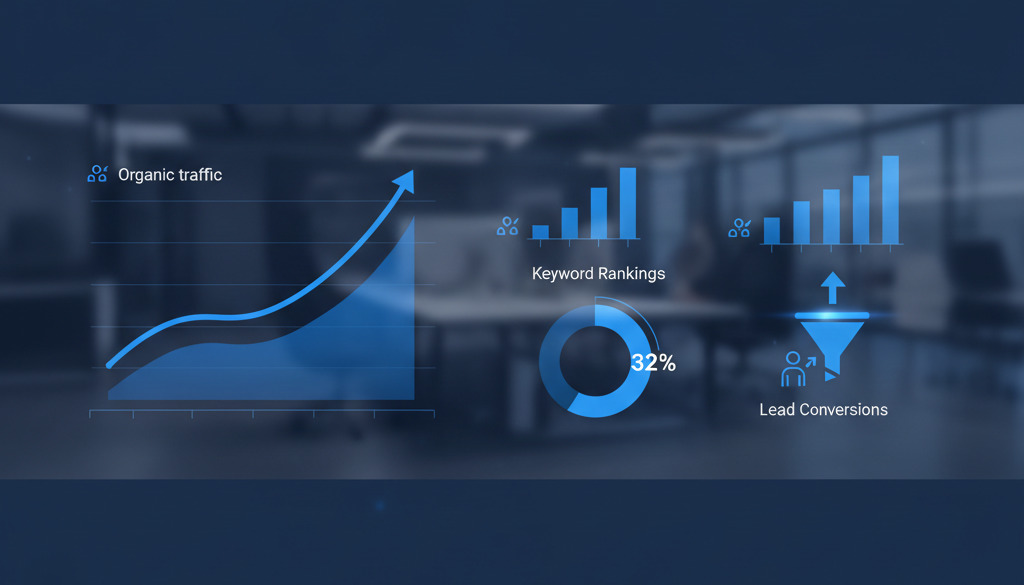
- Critical KPIs: To measure AI content ROI, track a mix of metrics: Traffic & Engagement (organic visits, time on page), Leads & Conversions (form fills, demo requests), and SEO Authority (keyword rankings, backlinks).
- Efficiency & Scale: AI solves the biggest content challenges for business owners: lack of time and resources. It allows for a consistent publishing schedule, which is critical for SEO success, without the heavy time investment.
- Strategic Approaches: You can use DIY AI tools or leverage done-for-you services. For busy owners who want results without the learning curve, a service that handles the entire process—from writing to optimization—offers the most direct path to ROI.
Understanding the Core of Content Marketing ROI
Defining ROI Beyond Simple Metrics
For many business owners, the term "Return on Investment" often brings to mind direct financial gains. However, in content marketing, the concept of ROI is much broader and more strategic.[1] While the ultimate goal is, of course, to boost your bottom line, the path to that goal is paved with a variety of valuable outcomes. True content marketing ROI goes beyond just counting website visitors. It involves measuring improvements in lead generation, reductions in customer acquisition costs (CAC), growth in brand authority, and a higher long-term customer lifetime value (CLV). Traditionally, attributing a specific sale to a blog post read three months prior has been challenging. Modern analytics and a strategic approach, however, make it possible to connect the dots between your content efforts and real business results.
The Financial Framework of ROI Calculation
At its heart, the formula for ROI is simple: (Net Profit from Investment - Cost of Investment) / Cost of Investment x 100%. When applying this to content marketing, the "Cost of Investment" includes expenses like software subscriptions, freelance writer fees, or the cost of your team's time. The "Net Profit" is the revenue generated from leads that originated from your content. The challenge lies in accurately tracking these figures. It requires distinguishing between direct benefits, like a customer who clicks a "buy now" link in an article, and indirect benefits, like building the brand trust that influences a purchase decision weeks later. Understanding this framework is the first step to proving the value of your content strategy.
The Landscape of AI in Content Creation
AI's Current Capabilities in Content Generation
Artificial intelligence is no longer a futuristic concept; it's a practical tool that is revolutionizing content creation. Today's AI can do far more than just correct grammar. It can assist across the entire content lifecycle. This includes brainstorming article topics based on search trends, outlining a post's structure, drafting entire sections of text, and even optimizing content for search engines. For example, AI can analyze top-ranking articles for a specific keyword and identify common themes and heading structures, giving you a blueprint for success. This technology acts as a powerful assistant, dramatically speeding up the creative process.
Distinguishing AI-Assisted from Fully Automated Content
It's important to understand that AI in content exists on a spectrum. On one end, you have AI-assisted content, where a human writer uses AI tools to speed up research and drafting, but ultimately maintains full creative control. On the other end, you have fully automated content, where a system can generate and even publish articles with minimal human intervention. While fully automated solutions sound appealing, the most effective strategies almost always involve a degree of human oversight. A human expert provides the strategic direction, fact-checks for accuracy, and refines the tone to ensure it perfectly aligns with your brand. The key is to find the right balance that delivers both efficiency and quality.
Identifying Key Performance Indicators (KPIs) for AI Content
Metrics Tied to Traffic and Engagement
The first signs of a successful content strategy often appear in your website analytics. These top-of-funnel KPIs are crucial for gauging whether your AI content is reaching and captivating your target audience. Key metrics to monitor include:
- Organic Search Traffic: An increase in visitors from search engines like Google is a primary indicator that your SEO efforts are working.
- Time on Page: This metric shows how long visitors are spending reading your content. Longer times suggest the material is relevant and engaging.
- Bounce Rate: A high bounce rate means people are leaving your site after viewing only one page. AI-optimized content that includes strong internal links can help lower this number by guiding visitors to other relevant pages on your site.
- Social Shares and Comments: When readers share or comment on your posts, it signals that the content resonates deeply and is extending your reach.
Metrics Demonstrating Lead Generation and Conversion
While traffic is important, the ultimate goal for any business is to generate leads and sales. Your AI content strategy must be measured against these bottom-line objectives. The most important conversion-focused KPIs include:
- Form Submissions: This tracks how many users fill out "Contact Us" forms, a direct signal of interest.
- Demo or Consultation Requests: For service-based businesses, this is a high-value conversion that indicates a prospect is ready to talk business.
- Newsletter Sign-ups: Building an email list is a powerful way to nurture leads over time. Your blog is one of the best tools for attracting subscribers.
- Direct Sales or Quote Requests: For e-commerce or project-based businesses, tracking how many sales or quote requests originate from your blog content is the clearest measure of ROI.
Metrics Reflecting Brand Authority and SEO Performance
Some of the most valuable benefits of content marketing are long-term assets that build your brand's digital foundation. These SEO and authority metrics demonstrate the compounding value of your AI content efforts:
- Keyword Rankings: Tracking your position in search results for target keywords shows how visible you are to potential customers. Consistent, high-quality AI content can steadily improve these rankings.
- Domain Authority (DA): This is a score that predicts how well your website will rank. Earning backlinks from other reputable sites—often as a result of them citing your great content—is the primary way to increase your DA.
- Backlinks Acquired: The number and quality of websites linking to your content is a massive vote of confidence in the eyes of search engines.
- Brand Mentions: Monitoring how often your brand is mentioned online indicates growing awareness and thought leadership.
Quantifying the Cost of AI Content Marketing
Investment in AI Tools and Platforms
The first layer of cost involves the technology itself. Many AI writing assistants operate on a subscription model, with prices ranging from as little as $20 per month for basic access to several hundred dollars for advanced enterprise-level platforms. When calculating this cost, consider not only the monthly fee but also any one-time setup or integration expenses. Different pricing models might be based on the number of users, the volume of words generated, or the range of features included. It's essential to choose a tool that aligns with your content goals and budget.
Human Resources and Expertise
This is often the most significant—and most underestimated—cost associated with a do-it-yourself AI content strategy. Even the best AI tool requires a human strategist. You still need someone to perform keyword research, develop a content strategy, create the prompts for the AI, edit and fact-check the output, and ensure the final article has the right tone and perspective. This requires time and expertise that many business owners simply don't have. This is where the value proposition of a done-for-you service becomes clear. A solution like Volteruno, which handles the entire SEO article writing process for you, absorbs these human resource costs, freeing you to focus on running your business.
Content Distribution and Promotion Costs
Writing the article is only half the battle. For content to generate ROI, it needs to be seen. This means you must also budget for content distribution and promotion. This category can include the cost of SEO tools needed for analysis and rank tracking, any spending on paid social media promotion to boost your content's reach, or the time spent on email marketing and outreach to build backlinks. Forgetting to factor in these promotional costs can lead to an inaccurate understanding of your total investment.
Measuring the Financial Returns of AI Content
Attributing Revenue to Content Efforts
To calculate financial ROI, you must connect revenue back to your content. This can be done using analytics platforms like Google Analytics. By setting up "Goals," you can track when a user who first entered your site through a blog post eventually makes a purchase or fills out a contact form. For businesses with longer sales cycles, it's important to use multi-touch attribution models. These models give credit to multiple touchpoints—like an initial blog post, a follow-up email, and a final direct visit—that influenced a customer's decision, providing a more holistic view of your content's impact.
Calculating Customer Lifetime Value (CLV) Impact
Great content doesn't just attract new customers; it helps you keep them. By providing ongoing value and establishing your brand as a trusted resource, you can increase customer loyalty and repeat business. An effective AI-driven content strategy can attract higher-quality leads who are a better fit for your services. These customers are often more profitable over the long run. By analyzing the CLV of customers who engage with your content versus those who don't, you can demonstrate the long-term financial benefits of your AI content strategy.
Analyzing Lead Quality and Conversion Rates
Volume of leads is one thing; quality is another. An important part of measuring ROI is analyzing whether the leads generated by your AI content are more likely to convert into paying customers. Are they asking more informed questions? Is the sales cycle shorter? By tracking the conversion rate of leads from your content marketing efforts compared to other channels (like paid ads), you can prove that you're not just generating more leads, but better leads. This improvement in lead quality directly contributes to a higher ROI.
The Efficiency Gains of AI Content Marketing
Time Savings in Content Production
For any business owner, time is the most precious commodity. Traditional content creation is incredibly time-consuming, often taking 8-10 hours to research, write, and edit a single comprehensive article. AI can reduce this time dramatically. An AI writing assistant can produce a solid first draft in minutes, not hours. This might cut the total time per article down to 2-3 hours, most of which is spent on editing and refinement. This isn't just a small improvement; it's a fundamental change in the economics of content production.
Scalability and Volume of Output
Search engines reward consistency. Businesses that publish content regularly tend to see much better results than those that post sporadically. Before AI, increasing your publishing frequency from one article a month to one article a week meant quadrupling your content budget or workload. With AI, you can significantly increase your content volume without a proportional increase in human hours or cost. This ability to scale allows you to target more keywords, answer more customer questions, and accelerate your path to achieving SEO authority.

Resource Optimization and Cost Reduction
By automating the most time-intensive parts of content creation, AI frees up your most valuable resource: your team's strategic thinking. Instead of spending hours on basic drafting, your marketing staff (or you) can focus on higher-level tasks like analyzing performance data, developing deeper customer insights, and building strategic partnerships. This optimization leads to significant cost reduction. It's the digital equivalent of an assembly line, where technology handles the repetitive work, allowing humans to focus on quality control and innovation. For busy entrepreneurs, this is where a service that leverages AI for them becomes invaluable. Our proprietary artificial intelligence at Volteruno writes professional SEO blog articles in minutes—almost like magic—solving the core resource constraints you face every day.
AI-Powered SEO Optimization for Enhanced ROI
Keyword Research and Content Relevance
Effective SEO begins with understanding what your potential customers are searching for. AI tools can supercharge this process. They can analyze vast amounts of search data to identify high-intent keywords—phrases that indicate a user is close to making a purchase decision. Furthermore, AI helps ensure your content is deeply relevant by helping you structure it in topic clusters. This involves creating a main "pillar" page on a broad topic and linking out to several "cluster" pages that cover related subtopics in more detail. This tells search engines you have a high degree of authority on the subject, a key strategy you can learn more about in our AI Content Keyword Research guide.
On-Page Optimization and Readability
On-page SEO refers to the practice of optimizing individual web pages to rank higher and earn more relevant traffic. AI can automate many of these tasks. It can help you write compelling meta titles and descriptions that increase click-through rates from search results. It can also suggest optimal heading structures (H1, H2, H3), ensure proper keyword density, and recommend internal links to other relevant content on your site. Many AI tools also include readability analysis, ensuring your content is clear, concise, and easy for your target audience to understand—a factor that Google increasingly values.
Content Performance Analysis and Iteration
Your content strategy shouldn't be static. It should be a living, breathing part of your business that you continuously improve. AI can help you analyze content performance data to identify what's working and what isn't. It can pinpoint articles with high traffic but low conversion rates, suggesting they need a stronger call-to-action. It can also identify older posts that are losing traffic and could be updated with new information to regain their rankings. This creates a data-driven feedback loop, ensuring your content investment yields better returns over time.
Building Brand Authority with AI-Generated Content
Establishing Thought Leadership
Thought leadership is about becoming the go-to source of information in your industry. This requires consistently publishing insightful, expert-level content. For a busy SME owner, this can seem impossible. AI changes the equation. By handling the heavy lifting of drafting, AI allows you to produce a steady stream of content on niche topics, answering your audience's most pressing questions. Over time, this consistency builds a reputation for expertise and positions your business as a leader in its field.
Enhancing Audience Trust and Credibility
Trust is the currency of modern business. Customers buy from brands they trust, and high-quality content is one of the best ways to build it. While AI can generate the text, human oversight is critical here. It's your responsibility to ensure every article published is accurate, well-researched, and genuinely helpful. When AI is used as a tool to produce valuable content at scale—content that is then fact-checked and polished by a human—it becomes a powerful engine for building credibility. Each helpful article serves as a positive touchpoint with your brand.
Consistent Brand Voice and Messaging
Your brand voice is the personality your business projects through its communications. It should be consistent across your website, social media, and all marketing materials. One of the challenges of working with multiple freelance writers is maintaining that single, unified voice. Modern AI platforms can be "trained" on your existing content or given specific style guides to follow. By providing detailed prompts and refining the output, you can use AI to maintain a consistent brand voice across dozens or even hundreds of articles, reinforcing your brand identity at every turn.
Reducing Customer Acquisition Cost (CAC) Through AI Content
Attracting High-Quality Organic Leads
Customer Acquisition Cost (CAC) is the total cost of sales and marketing efforts needed to acquire a single customer. Channels like paid search or social media ads can be effective, but they are expensive and require constant investment. Content marketing, powered by AI, offers a more sustainable alternative. A well-optimized blog post can attract high-quality organic leads for years after it's published, with no additional cost per click. These are potential customers actively searching for the solutions you provide, making them far more valuable than leads from interruptive advertising.
Nurturing Prospects More Effectively
The path from initial interest to purchase can be long. AI can help you create content tailored to every stage of that buyer's journey. For someone in the initial "awareness" stage, you can create broad, educational blog posts. For a prospect in the "consideration" stage, you might produce more detailed guides or comparison articles. This targeted content nurtures leads through the funnel, answering their questions and building trust along the way, thereby shortening the sales cycle and lowering the overall cost to acquire them.
The Economic Advantage of Inbound Marketing
Inbound marketing—the strategy of drawing customers in with valuable content—has a clear economic advantage. Recent data shows it generates three times more leads than traditional outbound marketing while costing over 60% less. AI amplifies this advantage. By drastically lowering the cost of producing the "fuel" for your inbound engine (the content), AI makes this already-efficient strategy even more profitable. Every article you publish becomes a long-term asset that works for you 24/7, a principle at the core of scalable growth for small businesses. Check out our guide on Small Business AI Content to learn more about this approach.
Measuring the Impact on Lead Quality and Conversion Funnels
Identifying 'Warm' Leads from Content
Not all leads are created equal. Someone who downloads a comprehensive guide or reads multiple service-related blog posts is a much "warmer" prospect than someone who just visits your homepage once. By using website analytics, you can track this user behavior. You can set up systems to identify users who consume specific pieces of high-intent content. AI can help you segment these audiences automatically, allowing your sales team to focus their efforts on the prospects who are most likely to convert.
Analyzing Conversion Paths
A "conversion path" is the sequence of pages a user visits on their way to becoming a lead. For example, a user might find your site via a blog post on "how to choose a new accounting software," then navigate to a features page, and finally fill out a demo request form. Analyzing these paths helps you understand which pieces of AI-generated content are most effective at moving users through your sales funnel. This analysis can reveal bottlenecks (e.g., a page where users frequently drop off) and opportunities to improve the journey.
Improving Sales Team Efficiency
A well-stocked library of AI-generated content is a powerful tool for your sales team. When a prospect has a specific question, a salesperson can send them a link to a detailed blog post that provides a comprehensive answer. This not only saves the salesperson time but also reinforces the company's expertise and builds trust with the prospect. This library of content assets empowers your team to overcome objections and close deals more efficiently.
Overcoming Content Creation Bottlenecks with AI Solutions
Addressing Time Constraints
For most SME owners, the single biggest barrier to content marketing is a lack of time. You're busy managing operations, serving customers, and leading your team. Finding 10+ hours a month to dedicate to writing is often impossible. This is the most direct problem that AI solves. However, even with AI tools, there's still a learning curve and a time commitment for strategy and editing. For those who want the results without any of the work, a service like Volteruno is the ultimate solution. It’s designed specifically for business owners who understand the importance of online content but have no time to create it, delivering professional SEO articles directly to your website.
Bridging the Skills Gap
Effective content marketing requires a unique blend of skills: SEO expertise, strong writing ability, and strategic thinking. Many small business owners are experts in their field but not in digital marketing. AI helps democratize these skills. It can provide SEO recommendations and writing assistance that make it possible for a non-expert to create a reasonably well-optimized piece of content. This bridges the skills gap and makes effective content marketing more accessible than ever before.
Maintaining Content Velocity
"Content velocity" refers to the speed and consistency with which you publish new content. As mentioned earlier, search engines favor websites that are updated regularly. A high content velocity signals that your site is an active and current source of information. Long gaps in your publishing schedule can hurt your rankings and cause your audience to disengage. AI provides the engine to maintain a steady content velocity, ensuring you have a constant stream of new articles to engage both search engines and human readers.
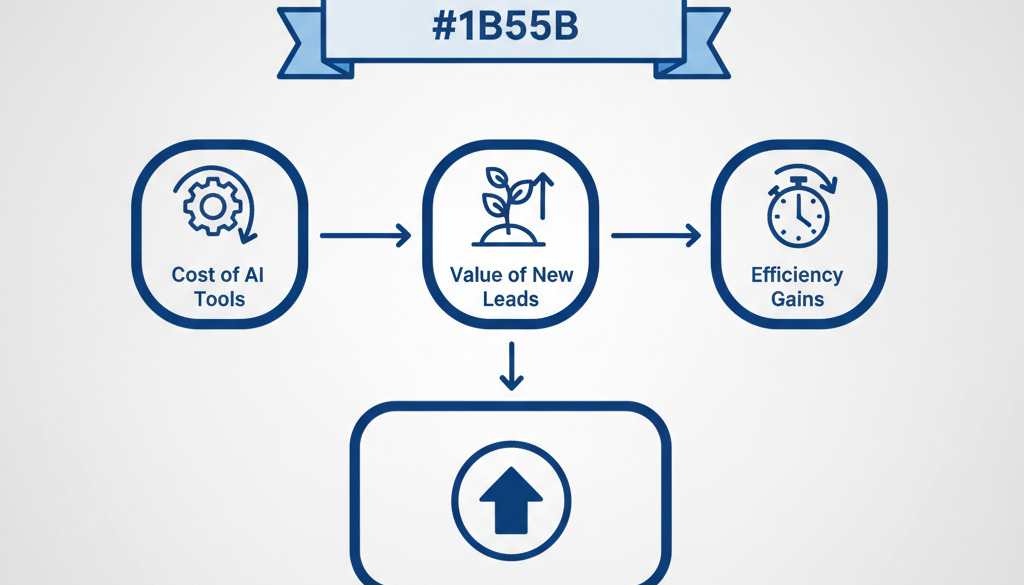
Calculating the ROI of AI Tools vs. Outsourced Content Services
Cost-Benefit Analysis of AI Platforms
Investing in a DIY AI writing platform gives you maximum control. You can generate unlimited content and fine-tune every detail. However, you must weigh the subscription cost against the "hidden" costs. These include the time your team (or you) will spend learning the software, developing prompts, editing text, and managing the entire workflow. The benefit is full control, but the primary drawback is the significant time and expertise required to achieve a positive ROI.
Cost-Benefit Analysis of Outsourced Content Creation
Outsourcing to a content service completely removes the burden of production. With a service like Volteruno, you aren't just buying software; you are buying a complete, hands-off solution. We leverage our own proprietary AI to write professional SEO articles for your website in minutes, and our team handles the entire process. The cost is often a predictable monthly fee, and the primary benefit is speed to results and zero time investment from you. When you consider that your time has value, this approach often delivers a much higher and faster ROI, freeing you to get more customers from your blog while you focus on your core business.
Determining the Optimal Approach for Your Business
Choosing the right path depends on your internal resources. If you have a dedicated marketing person on your team with the time and skills to manage an AI-driven process, a DIY platform might be a great fit. However, for the typical SME owner over 40 who is not a digital native and whose main priority is running their business, a fully outsourced service is almost always the more efficient and profitable choice. It provides a direct path to the benefits of AI content marketing without the associated learning curve and time commitment.
Strategic Implementation for Maximum AI Content ROI
Defining Clear Content Goals
Before you write a single word, you must know what you want to achieve. AI is a tool, not a strategy. Your content goals must be tied directly to your business objectives. Do you want to generate 20 new leads per month? Increase organic traffic by 50% in six months? Or establish your brand as the top expert in your local market? Setting clear, measurable goals is the most important step in ensuring your AI content efforts are focused and effective. For more on this, explore our blueprint for Mastering SEO Optimized Blog Articles.
Developing a Content Calendar and Workflow
A content calendar is a schedule of when and what you plan to publish. It turns your strategy into an actionable plan. This calendar should be based on your keyword research and content goals. A workflow defines the process for creating each piece of content. This includes steps for topic ideation, AI-powered drafting, human editing and fact-checking, optimization, and finally, publishing and promotion. A clear workflow ensures a smooth and efficient process, even when using AI.
Human Oversight and Quality Control
This point cannot be overstated: the success of AI content hinges on human oversight. AI is a powerful tool, but it lacks genuine understanding, life experience, and a true brand perspective. A human editor is essential for fact-checking claims, refining the tone to match your brand voice, adding unique insights and personal anecdotes, and ensuring the content is strategically aligned with your goals. A robust review process is the firewall that protects your brand's reputation and ensures your content is genuinely valuable to your readers.
Future-Proofing Your Content Marketing with AI
Adapting to Algorithmic Changes
Search engine algorithms are constantly changing. AI can help you stay ahead of the curve. AI-powered SEO tools can analyze ranking data in real-time to detect shifts in how Google is evaluating content. This allows businesses to adapt their content strategies quickly, rather than waiting months to react to a rankings drop. This proactive approach helps to future-proof your SEO investment.
Personalization at Scale
The future of marketing is personalization. Customers now expect experiences that are tailored to their specific interests and needs. AI is making it possible to deliver this personalization at scale. In the near future, AI will be able to dynamically assemble content on your website based on a visitor's past behavior, creating a unique and hyper-relevant experience for every individual. This level of personalization can dramatically increase engagement and conversion rates.
The Evolving Role of Human Marketers
AI is not replacing human marketers; it is elevating their role. By automating repetitive and time-consuming tasks, AI allows marketers to focus more on strategy, creativity, and building human connections. The successful marketer of the future will be an expert in leveraging AI tools to execute their vision. Their value will come from their strategic insights, their understanding of the customer, and their ability to tell compelling brand stories—all amplified by the power of AI.
Calculating Your Personal AI Content Marketing ROI: A Step-by-Step Guide
Step 1: Define Your Investment
Start by listing every cost associated with your AI content strategy. This is your "Cost of Investment."
- Software Costs: Monthly or annual fees for AI writers, SEO tools, and analytics platforms.
- Human Resource Costs: If you use an internal team member, calculate their hourly wage multiplied by the time spent on content tasks. If you outsource, this is the agency or freelancer fee. For a service like Volteruno, this is your simple subscription cost.
- Distribution Costs: Any budget allocated to paid promotion of your content.
Step 2: Identify Your Gains
Next, you need to quantify the return. This is the "Net Profit from Investment."
- Value of New Leads: Multiply the number of leads from content by your lead-to-customer conversion rate and your average customer value. (Number of Leads x Conversion Rate x Average Sale Value = Content Revenue).
- Cost Savings: Estimate the money saved compared to previous, more expensive content production methods.
Step 3: Implement Tracking Mechanisms
You can't measure what you don't track. Set up the necessary tools to capture your data accurately. Use Google Analytics to track traffic and conversions. Set up unique tracking URLs for campaigns to monitor specific results. If you have a CRM, ensure it's integrated with your website to follow leads from their first click to the final sale.
Step 4: Perform the Calculation and Analysis
With your costs and gains identified, plug them into the ROI formula: (Gains - Investment) / Investment x 100%. For example, if you invested $1,000 in a month and generated $4,000 in new business value, your ROI would be (($4000 - $1000) / $1000) x 100% = 300%. Analyze this result month over month to track trends and make data-driven decisions to optimize your strategy.
Conclusion: Embracing AI for Sustainable Business Growth
For small and medium-sized businesses, artificial intelligence is the great equalizer in content marketing. It provides a powerful solution to the timeless challenges of limited time, budget, and resources. By automating the heavy lifting of content creation, AI allows you to boost efficiency, reduce costs, and dramatically improve your SEO performance. It empowers you to compete for customers on a level playing field with larger competitors, turning your website into a reliable engine for sustainable growth.
Now is the time to explore how AI can fit into your marketing plan. For many business owners, the simplest and fastest way to experience these benefits is to partner with an expert solution. Services like Volteruno remove all the guesswork, delivering professionally written, SEO-optimized articles directly to you. This approach offers a low-risk, high-reward entry point into the world of AI content marketing, allowing you to see a tangible return on investment almost immediately. The future of marketing is here, and it offers incredible opportunities for businesses ready to embrace it.
Frequently Asked Questions
1. Can AI-generated content really rank on Google?
Absolutely. Google's official stance is that it rewards high-quality content, regardless of how it's produced. The key is value. As long as the AI-generated content is accurate, original, and satisfies the user's search intent, it can rank just as well as—or even better than—human-written content, especially when it's properly optimized for SEO with human oversight.
2. How much does AI content marketing cost?
The cost varies widely based on your approach. A subscription to a DIY AI writing tool can range from $20 to several hundred dollars per month. However, this doesn't include the cost of your time for strategy, editing, and management. A full-service outsourced solution like Volteruno offers a predictable monthly cost that covers the entire process, often providing a higher ROI for busy owners when you factor in the value of your time.
3. Do I still need a human marketer if I use AI?
Yes. AI is a tool, not a replacement for human strategy. You still need a human to set goals, understand your customers, define the brand voice, and provide final quality control and fact-checking. AI handles the labor-intensive drafting, while the human provides the critical strategic and creative direction.
4. What is the difference between using an AI tool and a done-for-you service?
Using an AI tool yourself (DIY) requires you to learn the software, develop the content strategy, write effective prompts, edit the output, and manage the entire workflow. A done-for-you service handles all of this for you. You provide the business goals, and the service delivers finished, optimized articles, making it an ideal choice for those who lack the time or marketing expertise.
5. How quickly can I expect to see ROI from AI content?
Content marketing is a long-term strategy, but AI can accelerate the results. You can see initial improvements in efficiency and cost savings immediately. Metrics like organic traffic and keyword rankings typically start to show positive movement within 3 to 6 months of consistent publishing. Tangible ROI in the form of leads and sales often follows, building compounding returns over time.
→ Read the full AI Content guide
Keep reading
Hand-picked guides that go deeper — open the one you need next:
- AI Scalable Content Strategy for Rapid Growth
- Scale Your Business with AI: Content Marketing for Growth
- AI Keyword Research: Beyond Basic Keywords
- From Zero to Hero: Launch Your Business Blog with AI in Days
→ Read the full AI Content guide