
Volteruno vs. Manual Blogging: Save Time, Save Money, Get

Key Takeaways
- Speed vs. Soul: AI generates content at an unparalleled speed and scale, ideal for covering many topics quickly. Manual blogging provides authenticity, deep expertise, and a unique brand voice that builds strong reader connections.
- Cost Dynamics: AI tools typically involve a fixed monthly subscription, making costs predictable. Hiring human writers involves variable costs that can be higher but offer deep, nuanced content. The best choice depends on your budget and content goals.
- The Hybrid Advantage: The most effective strategy often combines AI and human talent. Use AI for initial drafts, keyword research, and scaling content production, while humans provide strategic oversight, editing, and in-depth analysis. This model, used by services like Volteruno, balances efficiency with quality.
- Human Oversight is Non-Negotiable: Data shows that while AI adoption is high (nearly 90% of some marketing teams use it), most professionals (over 78%) heavily edit AI output to ensure accuracy, brand alignment, and quality. AI is a tool, not a complete replacement for human judgment.
- Focus on Business Goals: The ultimate goal is not just to create content, but to attract customers. Whether you choose AI, manual, or a hybrid approach, the strategy must align with your business objectives, such as lead generation and driving sales.
The Evolving Landscape of Business Content Creation
As a business owner, you’re an expert in your field—be it construction, finance, or retail. You know your craft inside and out. But today, success isn’t just about what you do offline; it’s about how you show up online. The pressure is on to consistently create content that attracts, engages, and converts customers. For many established business owners, especially those over 40 who didn’t grow up with a smartphone in hand, this can feel like a daunting, full-time job you never signed up for.
The world of marketing has shifted. Gone are the days when a simple ad in the local paper was enough. Now, your customers are on Google, searching for answers, solutions, and trustworthy businesses. To be the one they find, you need a steady stream of fresh, relevant blog content. This reality has created a clear divide in strategy: do you stick with the tried-and-true method of manual blogging, or do you embrace the new frontier of Artificial Intelligence (AI)?[1]
The Rise of Two Paths
Traditional, human-written content has long been the gold standard for quality and connection. It allows you to share your hard-won expertise and build a loyal following. On the other hand, AI has exploded onto the scene, promising to write articles in minutes, not days, potentially saving you immense time and money. This article will cut through the hype and give you a clear-eyed comparison of both approaches. We’ll explore the benefits, the drawbacks, and how to choose the right path for your business goals.
The Enduring Value of Human-Crafted Content
Before we dive into the promises of AI, it’s crucial to understand what makes manual blogging so powerful. When a person sits down to write, they bring more than just words to the page; they bring their life’s experience, their unique perspective, and their ability to connect on an emotional level.
Authenticity and a Unique Voice
A human writer can infuse your blog with a distinct personality. They can share personal anecdotes, industry-specific stories, and nuanced opinions that resonate with readers. This creates an authentic voice that can’t be easily replicated. Think of it as the difference between a handcrafted piece of furniture and a mass-produced one; both serve the same function, but one has a story and a soul.
Your brand's voice is its personality. It's how you build trust and make your business memorable. A human writer is the most direct way to cultivate and express that voice, turning casual readers into loyal customers.
Building Genuine Relationships
People connect with people. A skilled writer can tap into the specific pain points and aspirations of your target audience, showing genuine empathy. They can tell stories that make a reader feel seen and understood. This emotional connection is the bedrock of brand loyalty. It’s why customers will choose your business over a competitor, even if your prices are slightly higher.
AI: Revolutionizing Content Generation Speed and Scale
The single most significant advantage of AI in blogging is its extraordinary efficiency. For a busy business owner who views content creation as a time-consuming chore, this benefit cannot be overstated.[2] AI isn’t just a little faster; it’s exponentially faster.
From Days to Minutes
Manually writing a well-researched, 2,000-word blog post can take anywhere from 4 to 10 hours, or even longer. An AI content generator can produce a first draft of similar length in under five minutes. This incredible speed allows you to move from having one new blog post a month to publishing multiple articles a week, dramatically increasing your digital footprint.
Unlocking SEO at Scale
Search Engine Optimization (SEO) requires targeting a wide range of keywords to attract different segments of your audience. Manually creating content for dozens of specific keywords is a monumental task. AI can be directed to generate articles for an entire list of keywords simultaneously, allowing a small business to compete with larger companies by covering more ground, faster.

Manual Blogging: Cultivating Deep Expertise and Thought Leadership
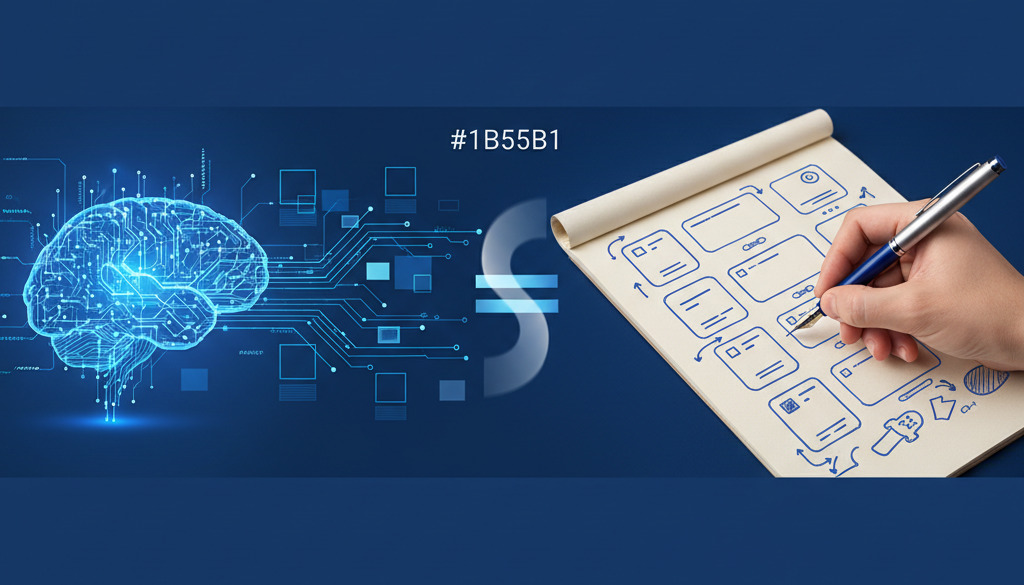
While AI is great for speed and breadth, manual blogging excels at depth and authority. When you need to establish your business as a leader in its field, a human expert is your greatest asset. True thought leadership goes beyond summarizing existing information; it involves creating new insights.
In-Depth Analysis and Unique Perspectives
A human writer, especially a subject matter expert, can conduct profound research, analyze complex topics, and synthesize information to form a unique point of view. They can challenge conventional wisdom, introduce novel ideas, and provide the kind of in-depth analysis that positions your brand as a go-to resource. This is how you build a reputation for being the best in your industry.
Connecting with a Niche Audience
Deep expertise allows you to connect with a sophisticated, niche audience. A human writer can use specific industry jargon, reference unspoken challenges, and provide high-level advice that a generalist AI might miss. This level of detail shows your most valuable potential customers that you truly understand their world.
AI's Capacity for Data-Driven Keyword Research and Topic Ideation
One of the most powerful and often overlooked benefits of AI is its ability to inform your content strategy before you even write a single word. Modern AI tools can analyze massive amounts of search data to guide your efforts with remarkable precision.
Identifying Winning Topics
Instead of guessing what your customers are searching for, AI can tell you. These tools analyze search trends, competitor content, and question-based queries on forums like Reddit and Quora to identify topics with high search volume and low competition. This data-driven approach ensures you’re creating content that people are actively looking for.
Understanding Search Intent
AI can go beyond just identifying keywords; it can help you understand the *intent* behind them. Is a searcher looking to buy something (transactional intent), learn something (informational intent), or find a specific website (navigational intent)? By understanding this, you can create content that perfectly matches their needs, which is a major ranking factor for Google.
The Human Touch: Fostering Brand Personality and Connection
While AI can be programmed to follow instructions, it cannot truly *feel* or *embody* your brand’s personality. A brand isn’t just a logo and a color scheme; it’s a set of values, a mission, and a unique way of communicating. This is where the human touch remains irreplaceable.
Conversational vs. Robotic Content
Even the most advanced AI can sometimes produce content that feels a bit sterile or "robotic." A human writer can naturally weave in humor, warmth, and a conversational tone that makes your brand feel approachable and relatable. They can read a piece of text and ask, "Does this *sound* like us?" This subtle but crucial element is key to building an inviting brand presence.
Building Trust and Lasting Loyalty
Ultimately, customers do business with brands they trust. That trust is built through consistent, authentic communication. When your audience feels a genuine connection to your brand’s personality—whether it’s witty and modern, or wise and traditional—they are more likely to become long-term, loyal customers.
Cost-Effectiveness: Comparing AI Tools and Freelance Writers
For any business owner, the bottom line is a critical factor. The decision between AI and manual blogging often comes down to a careful analysis of costs versus benefits. The financial picture for each approach is quite different.
The Investment Breakdown
Investing in an AI content tool typically involves a monthly or annual subscription fee. These can range from $50 to several hundred dollars per month, depending on the features and output volume. This is a predictable, fixed operational expense.
Hiring a human writer, such as a freelancer, is a variable cost. Rates can vary dramatically based on the writer’s experience and the complexity of the content. A single, high-quality blog post could cost anywhere from $200 to over $1,000. While the per-post cost is higher, you are paying for dedicated expertise, research, and a polished final product.
Data Table: Cost Comparison at a Glance
| Factor | AI Content Tool | Freelance Human Writer |
|---|---|---|
| Cost Structure | Fixed monthly/annual subscription | Variable (per word, per hour, or per project) |
| Typical Monthly Cost (for 4 posts) | $50 - $300 | $800 - $4,000+ |
| Initial Output | Generates unedited first drafts | Delivers a polished, edited final draft |
| Hidden Costs | Time spent editing, fact-checking, and refining content | Time spent on recruitment, briefing, and project management |
| Scalability | Highly scalable; produce more content for little to no extra cost | Less scalable; more content requires more budget/writers |
Keep reading
Hand-picked guides that go deeper — open the one you need next:
- Scaling Your Content with AI: Volteruno for Growing Businesses
- Before You Hire: Why AI Writing Outperforms Freelancers
- Mastering the AI Content Creation Process: 2026 Guide
- Content Creation in Minutes: The AI Solution for Busy Entrepreneurs
→ Read the full AI Content guide