
AI-Powered SEO for Small Business: Zero to Page One
Key Takeaways
- The SEO Landscape Has Changed: Search engines now use AI to provide direct answers (AEO - Answer Engine Optimization). The goal is no longer just to rank, but to be cited as the source.
- AI Levels the Playing Field: Artificial Intelligence gives small businesses powerful tools—once only available to large corporations—to compete effectively for online visibility, even with smaller budgets.
- Content is King, AI is the Kingmaker: AI can automate and scale the creation of high-quality, SEO-optimized content, solving one of the biggest challenges for time-strapped business owners.
- Deeper Insights, Better Strategy: AI tools provide advanced analytics for keyword research, technical audits, and competitor analysis, uncovering opportunities that manual methods would miss.
- Human Oversight is Crucial: AI is a powerful assistant, not a replacement for human strategy. The most successful approach combines AI's efficiency with human creativity, brand knowledge, and final approval.
Understanding the Core Principles of SEO for Small Businesses
At its core, Search Engine Optimization (SEO) is the process of making your website more attractive to search engines like Google. For a small business, this isn't just a technical exercise; it's a fundamental strategy for survival and growth.[1] The primary goals of SEO are straightforward: to drive organic, unpaid traffic to your website, increase your brand's visibility when potential customers search for your services, and ultimately, generate qualified leads and sales.
However, small business owners face a unique set of challenges. You are often up against larger competitors with deeper pockets and dedicated marketing teams. The most common hurdles include:
- Limited Resources: Both time and money are in short supply. You can't afford to spend months on complex campaigns with uncertain returns.
- Lack of Technical Expertise: SEO can seem like a complex world of algorithms, code, and constantly changing rules. Many business owners, especially those over 40 who didn't grow up as digital natives, find it intimidating.
- Time Constraints: As a business owner, you wear many hats. Finding the hours to consistently write content, build links, and analyze data is a significant struggle.
These challenges are precisely where the new wave of technology comes in, offering a lifeline to businesses that know online content is critical but lack the time or inclination to manage it themselves.
The Rise of AI in the Digital Marketing Landscape
You’ve likely heard the term Artificial Intelligence (AI) everywhere, but what does it actually mean for your business? In simple terms, AI refers to computer systems designed to perform tasks that normally require human intelligence. A subset of this, Machine Learning (ML), involves training these systems on vast amounts of data to recognize patterns, make predictions, and "learn" over time without being explicitly programmed for every scenario.
While this might sound like science fiction, AI is already transforming industries from finance to healthcare. In digital marketing, its impact is profound. AI is no longer a futuristic concept but a practical tool that is reshaping how businesses connect with customers. It has moved from a tactical add-on to a critical piece of infrastructure for modern SEO.
As recent industry analyses from sources like Adobe Business highlight, the conversation is shifting from "ranking on Google" to "being the answer" in AI-driven search results. This changes everything.
For small businesses, this evolution is not something to fear but an opportunity to embrace. AI provides the leverage to automate repetitive tasks, uncover powerful insights, and execute strategies with a level of precision and scale that was previously unimaginable.
AI-Powered Keyword Research: Uncovering Hidden Opportunities
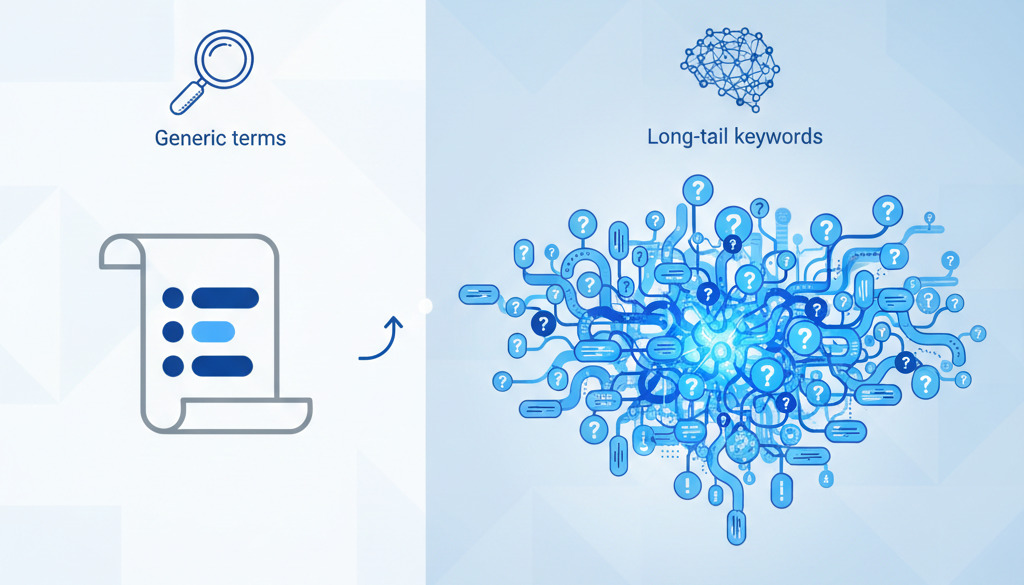
Effective SEO begins with understanding what your potential customers are searching for. Keyword research is the foundation of your entire strategy. Traditionally, this was a manual process of brainstorming terms and using basic tools to check search volume.[2] It was time-consuming and often based on guesswork.
The AI Advantage in Keyword Discovery
AI transforms keyword research from a tactical chore into a strategic advantage. AI-powered tools can analyze millions of data points in seconds, far beyond human capability. They help you:
- Identify High-Intent, Low-Competition Keywords: AI can pinpoint "long-tail" keywords (longer, more specific phrases) that indicate a user is close to making a purchasing decision. It also identifies niche topics where larger competitors aren't active, giving you a clear path to ranking.
- Analyze Semantic Search: Modern search engines focus on the *intent* behind a query, not just the words themselves. AI excels at understanding these nuances, suggesting topic clusters and related keywords to build your site's authority on a subject.
- Predict Trends and Seasonality: AI algorithms can analyze historical data and market signals to predict which keywords will trend in the future. This allows you to create content proactively, capturing traffic as interest peaks rather than reacting to it.
Instead of just finding keywords, AI helps you build a comprehensive content map that directly addresses the questions and needs of your target audience.
Revolutionizing Content Creation with AI for Small Businesses
For most small business owners, this is the biggest pain point: creating a steady stream of high-quality blog posts, articles, and website copy. It requires time, writing skill, and relentless consistency—three things that are often in short supply. This content gap is where many SEO strategies fail before they even begin.
AI-driven content generation tools are a game-changer. These platforms use advanced language models to draft articles, product descriptions, social media posts, and more, based on a few simple prompts. They can help you overcome writer's block, produce first drafts in minutes instead of hours, and maintain a consistent publishing schedule.
A Practical Solution for the Overwhelmed Entrepreneur
While various tools exist, some services have been built specifically for business owners who want the results without the learning curve. For instance, a new breed of AI-powered services is emerging, designed to function as your outsourced content team. One such example is a platform whose service, **"More Customers From Your Blog,"** uses its own proprietary AI to write professional, SEO-ready blog posts directly for your website in minutes. The promise is simple and powerful: customers start finding you through Google, as the AI handles the heavy lifting of content creation. It’s an elegant solution for the savvy business owner who knows they need content but has zero time to create it.
Enhancing On-Page SEO with AI Assistance
Once you have content, it needs to be optimized to perform well in search results. On-page SEO refers to the practice of optimizing individual web pages, including the text, titles, headers, and images. AI brings a new level of sophistication to this process.
How AI Fine-Tunes Your Content
AI SEO tools act like an expert consultant, analyzing your content and providing specific, actionable recommendations. They can:
- Optimize for Semantic Relevance: Beyond just checking for a primary keyword, AI analyzes whether your content covers the topic comprehensively. It suggests related concepts and terms (LSI keywords) that search engines expect to see, adding depth and authority to your article.
- Improve Readability: AI can score your content's readability, ensuring it is clear and accessible to your target audience (typically a 7th-9th grade reading level for general business content). It might suggest shortening sentences or replacing jargon with simpler words.
- Refine Meta Tags: Your meta title and description are your sales pitch on the search results page. AI tools can analyze top-ranking competitors and suggest optimized, compelling titles and descriptions designed to maximize click-through rates (CTR).
By using AI to handle these detailed optimizations, you ensure every piece of content you publish has the best possible chance of ranking and engaging readers.
Leveraging AI for Advanced Technical SEO Audits
Technical SEO is the foundation upon which your entire website stands. It involves ensuring your site is structured in a way that search engine crawlers can easily find, understand, and index your content. If the technical foundation is weak, even the best content may never be seen.
Traditionally, technical audits required deep expertise and hours of manual checking. AI-powered crawlers and audit tools have automated and democratized this process. They can continuously monitor your site and flag issues in real-time.
Common Issues AI Can Detect Instantly
An AI audit can scan thousands of pages in minutes and provide a prioritized list of fixes for issues such as:
- Slow Page Load Speeds: A critical ranking factor and user experience issue.
- Broken Links (404 Errors): Which harm user experience and waste "link equity."
- Mobile Usability Problems: Crucial in a mobile-first indexing world.
- Duplicate Content: Which can confuse search engines and dilute your rankings.
- Improper Redirects or Canonical Tags: Technical errors that can make entire sections of your site invisible.
- Sitemap and Robots.txt Errors: Issues that prevent search engines from crawling your site efficiently.
For a business owner, this means you no longer need to be a technical wizard. You can run an AI-powered audit, get a clear report, and hand it to a web developer for implementation, saving time and consultation fees.
AI-Driven Link Building Strategies: Building Authority and Trust
Backlinks—links from other websites to yours—remain one of the most powerful signals of authority and trust for search engines. A site with a strong portfolio of high-quality backlinks is seen as more credible and will typically rank higher. However, link building is notoriously difficult and time-consuming.

AI is streamlining this process by bringing data intelligence to outreach and opportunity identification. AI tools can:
- Identify High-Value Link Prospects: Instead of manually searching for relevant blogs or websites, AI can analyze the web to find authoritative sites in your niche that are likely to link to content like yours.
- Analyze Competitor Backlink Profiles: AI can deconstruct your competitors' backlink strategies. It shows you exactly which websites are linking to them, allowing you to target the same sources and close the gap.
- Assess Link Quality: Not all links are created equal. AI algorithms can evaluate the authority, relevance, and health of a potential linking domain, helping you avoid spammy or low-quality links that could harm your SEO.
By automating the prospecting and analysis phases, AI allows you to focus your limited time on the human element of link building: forging genuine relationships with other site owners.
AI for Local SEO: Connecting with Your Neighborhood Customers
For small businesses with physical locations or defined service areas—like a local bakery, plumbing service, or dental clinic—Local SEO is paramount. It’s about appearing in the "map pack" and local search results when a customer nearby needs you. AI is becoming an indispensable tool for dominating the local search landscape.
Optimizing for "Near Me" Searches
AI’s influence on local SEO is felt in several key areas:
- Google Business Profile (GBP) Optimization: AI tools can analyze your GBP listing and suggest improvements to help you rank higher. This includes optimizing your business description, selecting the right categories, and ensuring all information is consistent across the web.
- Review Analysis: Customer reviews are a major local ranking factor. AI can analyze the sentiment and language of your reviews at scale, providing insights into what customers love and what needs improvement. This helps you refine your services and marketing messages.
- Local Trend Identification: AI can monitor local search trends and social media conversations to identify what’s currently resonating with your community. Are people searching for "emergency roof repair after storm"? An AI can flag this trend, prompting you to create relevant content or promotions.
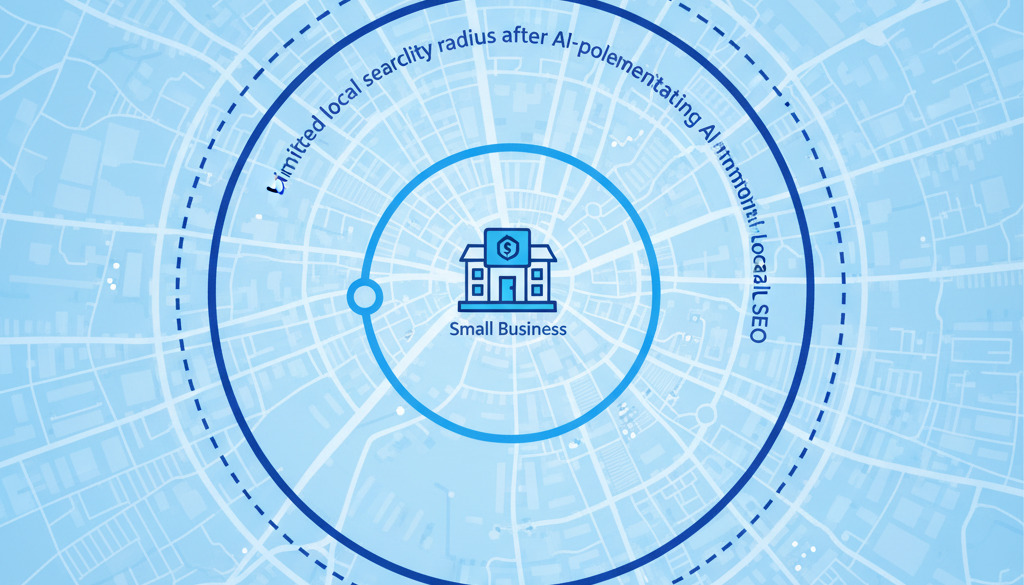
This level of localized intelligence allows you to be more proactive and relevant to the customers right in your backyard.
Personalization and User Experience: AI's Impact on Engagement
Modern SEO is not just about getting a click; it's about what happens *after* the click. Search engines closely monitor user engagement signals, such as how long a visitor stays on your site (dwell time), how many pages they visit, and whether they immediately click the "back" button (bounce rate). A positive user experience (UX) is a powerful ranking signal.
AI is at the forefront of creating more personalized and engaging web experiences. By analyzing user behavior in real-time, AI can:
- Personalize Content: AI-powered recommendation engines can dynamically change the content a user sees. For an e-commerce site, this could mean showing products related to their browsing history. For a blog, it might mean suggesting other articles relevant to their interests.
- Identify User Friction Points: Through heatmap and session recording analysis, AI can identify where users are getting stuck or dropping off in their journey. It can pinpoint confusing navigation, broken forms, or poorly worded calls-to-action that are hurting your conversions.
- Optimize for Engagement: AI can test different headlines, button colors, and layouts (A/B testing) automatically to determine which variations lead to the best user engagement, continuously improving your site’s performance over time.
The Future of Search: AI-Powered Voice Search and Conversational SEO
The way people search is changing. With the rise of smart speakers and voice assistants on phones, more and more queries are spoken, not typed. Voice searches are typically longer, more natural, and phrased as questions (e.g., "Where is the best Italian restaurant near me that is open now?").
AI is the technology that makes this possible, as it excels at understanding natural language processing (NLP). To succeed in the coming years, your SEO strategy must adapt to this conversational trend. This involves:
- Optimizing for Long-Tail Keywords: Voice searches are almost always long-tail. Your content should be built around answering specific questions your customers are asking.
- Using a Conversational Tone: Content written in a natural, easy-to-understand style is more likely to be picked up by voice search algorithms.
- Implementing Structured Data: Using schema markup (a type of code) helps search engines understand the context of your content, making it easier to pull into a direct spoken answer. An FAQ page is a perfect example of content that can be structured for voice search.
As AI Overviews and other generative AI search features become more common, being the direct, cited source for an answer will be the new "page one" ranking.
Measuring SEO Success: AI-Powered Analytics and Reporting
You can't improve what you don't measure. However, traditional SEO analytics can be overwhelming, presenting a sea of data with little clear direction. For a busy business owner, deciphering these reports is often a low priority.
AI-powered analytics platforms cut through the noise to deliver actionable insights. They move beyond basic metrics like traffic and rankings to tell you the "why" behind the data.
Deeper Insights, Smarter Decisions
AI analytics tools can:
- Provide Predictive Forecasts: Based on current trends and data, AI can forecast future traffic and revenue from your SEO efforts, helping you justify your investment.
- Automate Anomaly Detection: AI can monitor your traffic 24/7 and alert you instantly if there’s a sudden drop or spike, allowing you to react quickly to algorithm updates or technical problems.
- Generate Automated Reports: Forget spending hours building spreadsheets. AI can create clear, concise reports that highlight the most important Key Performance Indicators (KPIs), tailored to your business goals. These reports can be automatically emailed to you, keeping you informed without adding to your workload.
This level of intelligent reporting empowers you to make data-driven decisions confidently, focusing your efforts on what truly drives results.
Integrating AI into Your Small Business SEO Workflow: Practical Steps
The idea of "integrating AI" can sound daunting, but it doesn’t have to be a massive, complex overhaul. The best approach is to start small and focus on your biggest pain points.
- Identify Your Primary Challenge: Is it a lack of content? Start with an AI content generator. Are you unsure which keywords to target? Begin with an AI keyword research tool. Don't try to adopt everything at once.
- Choose a User-Friendly Tool: Select a tool or service designed for business owners, not just SEO experts. Look for clear interfaces, helpful tutorials, and good customer support.
- Start with a Low-Risk Trial: Many AI services offer free trials or limited free plans. This is the perfect way to experiment without a significant financial commitment.
For example, services like the aforementioned **"More Customers From Your Blog"** are designed for exactly this purpose. They often provide a low-risk entry point, with offers like a **free trial for the first 5 posts**. This allows a business to experience the power of AI-generated content firsthand, see the quality, and measure the initial impact before committing further. It’s a practical, results-oriented way to take your first step into AI-powered SEO.
Choosing the Right AI SEO Tools for Your Business
The market for AI SEO tools is exploding, which can be both exciting and overwhelming. They generally fall into a few categories: all-in-one platforms, specialized tools for content generation, technical analysis tools, and keyword research tools. When selecting a tool, consider the following factors:
- Ease of Use: Is the interface intuitive for a non-expert? Can you get started quickly or is there a steep learning curve?
- Key Features: Does the tool solve your specific problem? Don’t pay for a dozen features you’ll never use.
- Cost vs. Value: The price of AI tools can range from free to thousands of dollars per month. Evaluate the potential return on investment. Will the time saved or the traffic gained justify the cost?
- Integration Capabilities: Does the tool work well with other software you use, like WordPress or Google Analytics?
A word of caution: **avoid tool overload.** It’s better to master one or two tools that address your core needs than to subscribe to a dozen that you barely use. Start with your biggest bottleneck and choose a tool that solves it brilliantly.
The Human Element: When AI Complements, Not Replaces
One of the biggest misconceptions about AI in marketing is that it will completely replace human creativity and strategy. This couldn't be further from the truth. **AI is a tool to augment your intelligence, not replace it.**
Think of AI as the most efficient and knowledgeable junior assistant you’ve ever had. It can do the research, create the first draft, and analyze the data at superhuman speed. However, your expertise as a business owner remains indispensable. Human oversight is critical for:
- Brand Voice and Accuracy: You must review AI-generated content to ensure it aligns with your brand’s personality and tone. You also need to fact-check it to ensure accuracy.
- Strategic Direction: AI can suggest keywords, but you know your customers best. Your strategic input is required to choose which topics are most aligned with your business goals.
- Building Relationships: AI can identify link building opportunities, but it can’t forge a genuine human connection with another website owner or a potential customer.
The winning formula is a partnership: AI handles the scale and the data-crunching, while you provide the strategy, the final polish, and the human touch that makes your brand unique.
Overcoming Common Objections to AI in SEO
As with any new technology, there is healthy skepticism. Many business owners have valid concerns that are worth addressing directly.
"Will Google penalize AI-generated content?"
Leveraging AI for Small Business SEO: Navigating the Digital Landscape
For small businesses, establishing a strong online presence is no longer a luxury but a necessity. Search Engine Optimization (SEO) remains a cornerstone of this digital strategy, helping businesses connect with potential customers actively searching for their products or services. However, the complexities and ever-evolving nature of SEO can be daunting, especially for small teams with limited resources. This is precisely where Artificial Intelligence (AI) emerges as a transformative force, democratizing advanced SEO capabilities and making them accessible to even the smallest of enterprises. AI-powered SEO tools are not just about automating tasks; they offer a profound shift in how small businesses can approach their online visibility, moving from a reactive stance to a proactive, data-driven strategy that can genuinely propel them to the forefront of search engine results pages (SERPs).
The core challenge for many small businesses lies in the sheer volume of data and the intricate algorithms that govern search engine rankings. Traditionally, mastering SEO required dedicated expertise, constant learning, and significant time investment. AI, as a "small business SEO AI" partner, can bridge this gap. It excels at processing vast datasets – competitor analysis, keyword trends, user search behavior, and content performance metrics – at speeds unattainable by humans. This allows small business owners to gain actionable insights that were previously the domain of large corporations with expansive marketing departments. From identifying untapped keyword opportunities to predicting content performance and automating repetitive tasks like meta tag generation and schema markup implementation, AI empowers small businesses to compete more effectively in crowded online marketplaces. The goal is not simply to rank but to rank for the right terms, attracting qualified traffic that converts into loyal customers.
Furthermore, AI’s ability to personalize and optimize content on a large scale is invaluable for small businesses aiming for higher search rankings. By analyzing user engagement patterns and search intent, AI can help tailor content to resonate more deeply with target audiences. This means creating blog posts, landing pages, and product descriptions that not only satisfy search engine algorithms but also genuinely address the questions and needs of potential customers. Imagine an AI tool suggesting optimal paragraph structures, recommending relevant internal links, or even flagging content that might be underperforming based on real-time user interaction data. This level of granular optimization, powered by AI, can significantly shorten the journey from search query to customer conversion, making the aspiration of reaching "Zero to Page One" a more tangible reality for small businesses. It’s about working smarter, not just harder, to achieve measurable SEO success.
Leveraging AI for Enhanced Content Strategy
AI tools are revolutionizing how small businesses approach content creation and optimization. Instead of relying solely on intuition or historical data, AI can analyze vast amounts of information to identify trending topics, audience sentiment, and competitor strategies. This allows for the development of a more dynamic and responsive content calendar, ensuring that businesses publish relevant and engaging material that captures user interest.Predictive Content Analytics
Furthermore, AI can predict the potential performance of content before it's even published. By analyzing factors such as keyword difficulty, search volume, and audience engagement metrics, AI provides data-driven recommendations on how to refine headlines, adjust keyword density, and structure content for maximum impact. This predictive capability helps small businesses allocate theirFAQ
What is AI-powered SEO for small businesses?
AI-powered SEO for small businesses utilizes artificial intelligence tools to automate and optimize various aspects of search engine optimization. This includes tasks like keyword research, content creation, and technical analysis to improve a website's ranking on search engine results pages.
How can AI help a small business improve its SEO?
AI can identify high-ranking keywords specific to your niche, suggest content topics, analyze competitor strategies, and even help generate meta descriptions and other on-page elements to boost your visibility.
Is AI SEO a replacement for human SEO experts for small businesses?
While AI tools can significantly enhance SEO efforts, they are best used to augment the work of human experts. An AI can handle data analysis and content generation, but a human touch is still valuable for strategy, nuanced understanding of brand voice, and ethical considerations.
Keep reading
Hand-picked guides that go deeper — open the one you need next:
- More Customers Through Your Blog
- The Ultimate Guide to AI-Powered SEO for Small Businesses
- Volteruno AI for SMB Content Marketing
- Local SEO Made Easy: AI Content for Small Businesses
→ Read the full Small Business guide