
AI for SEO: Master Meta Descriptions & Internal Linking
Key Takeaways
- Meta Descriptions & Internal Links are Crucial: Meta descriptions act as your sales pitch in search results to improve click-through rates (CTR), while internal links guide users and search engines, spreading authority throughout your site.
- AI is a Game-Changer for SMBs: Artificial intelligence automates the time-consuming process of writing unique meta descriptions and can help identify internal linking opportunities, freeing up valuable time for business owners.
- Synergy is Key: Well-crafted, AI-generated meta descriptions containing target keywords can inform a more effective internal linking strategy by providing perfect anchor text opportunities.
- Human Oversight is Non-Negotiable: AI is a powerful tool, not a replacement for human strategy. Always review, edit, and refine AI-generated content to ensure it aligns with your brand voice and provides real value.
- Measure Everything: Track metrics like CTR for meta descriptions and user flow for internal links to understand what's working and continuously optimize your approach for better results.
As a business owner, you wear many hats. You're the CEO, the head of sales, the customer service manager, and often, the chief marketing officer. With so much on your plate, how can you possibly find the time for tedious but critical search engine optimization (SEO) tasks? What if you could put two of your most challenging SEO duties on autopilot, saving hours each week while driving more qualified customers to your website?
For many entrepreneurs, especially those who didn't grow up with the internet, writing compelling meta descriptions and building a strategic internal linking structure feels like a heavy chore. The rules seem to change constantly, and the work is never truly done. But it doesn't have to be this way. The rise of artificial intelligence has created a powerful new opportunity to automate these processes, making top-tier SEO more accessible than ever before.
Understanding the Foundational Elements: What are Meta Descriptions and Why They Matter
Before we dive into the "how," let's clarify the "what." Think of Google's search results page as a massive digital shopping mall. Your website is one of the stores in that mall. So, what is a meta description? It's the short snippet of text under your page's title in the search results. It's your storefront window display, designed to entice a potential customer to walk through your digital door.
The Primary Goal: Earning the Click
While meta descriptions don't directly influence your search engine ranking, they have a massive indirect impact. Their sole purpose is to convince a human user that your page has the best answer to their query. A well-written meta description can dramatically increase your click-through rate (CTR)—the percentage of people who see your listing and actually click on it.[1]
A higher CTR sends a strong signal to Google: "Users prefer this page." Over time, this positive user engagement can lead to improved rankings. It's your first, and often only, chance to make a good impression on a potential customer.
Components of a Great Meta Description
- Concise and Informative: Typically under 160 characters, it should accurately summarize the page's content.
- Contains the Keyword: It should naturally include the main keyword the user searched for. Google often bolds this keyword in the results, drawing the user's eye.
- Includes a Call-to-Action (CTA): Encourage the user to do something, like "Learn more," "Shop now," or "Get a free quote."
- Highlights a Benefit: What's in it for them? "Save time," "find expert advice," or "enjoy free shipping."
The Unseen Powerhouse: The Crucial Role of Internal Linking in SEO
If meta descriptions are your storefront window, internal links are the helpful signs and store associates inside your shop, guiding customers to the right aisles. An internal link is simply a hyperlink that points from one page on your website to another page on the same website. While they may seem simple, they are a powerhouse for SEO.
Guiding Users and Search Engines
For users, internal links make your website easier to navigate. They help people discover more of your valuable content, keeping them on your site longer and guiding them from a blog post to a product or service page. This improved user experience is a valuable goal in itself.
For search engines like Google, internal links are a roadmap. They help the search engine's "spiders" or "crawlers":
- Discover New Pages: Without links, some of your pages might remain hidden.
- Understand Site Structure: A logical linking structure reveals the hierarchy of your content and which pages are most important.
- Spread "Link Equity": Pages with more authority (like your homepage) can pass some of that authority to other pages through links, boosting their potential to rank. This is often called "link juice."
The AI Advantage: Transforming Meta Description Creation
Now, imagine having to write a unique, compelling, 160-character sales pitch for every single page, blog post, and product on your website. For a small business, this is a monumental task. This is where artificial intelligence steps in, addressing the primary pain point for most business owners: a lack of time.
Speed, Scale, and Efficiency
AI-powered SEO tools can generate high-quality meta descriptions in seconds. Instead of staring at a blank screen, you can produce dozens of options for a single page. This is particularly transformative for e-commerce sites with thousands of products. As one SEO expert noted in a 2026 case study, a team that was burning out manually writing descriptions for 5,000 items was able to use an AI approach to not only save time but also improve the professional consistency across their entire site.
From Features to Benefits
Modern AI doesn't just stuff keywords into a sentence. It uses Natural Language Processing to understand the content of your page and translate product features into compelling user benefits. This shift from "what it is" to "what it does for you" is the cornerstone of effective marketing, and AI makes it easier to achieve at scale.
Introducing Content Growth Engine: Your AI Content Partner for SEO Success
For business owners over 40 who know they need a strong online presence but lack the time or inclination to manage it themselves, the prospect of adopting yet another tool can be daunting. This is where a fully managed service can be a lifesaver. Consider a solution like Content Growth Engine, a service designed specifically for businesses that want the results of professional SEO content without the hands-on effort.
The core promise is simple: "We write the SEO articles for you." The service uses its own proprietary artificial intelligence to produce professional, SEO-optimized blog posts for your website in minutes—it can feel like magic. By handling the entire content creation process, it frees you to focus on running your business, secure in the knowledge that your online presence is growing.
Bridging the Gap: How AI-Generated Meta Descriptions Enhance Internal Linking Efforts
Here's where the strategy becomes truly powerful. AI meta descriptions and internal linking are not two separate tasks; they are deeply interconnected. The output of one feeds directly into the strategy for the other.
Creating Anchor Text Opportunities
An AI tool can analyze a page and generate a meta description that naturally includes not only the primary keyword but also related secondary keywords. These keywords are perfect candidates for anchor text—the clickable text in a hyperlink.
For example, let's say you have a blog post about "DIY Home Painting Tips."
- AI Meta Description Generated: "Ready for a new look? Discover our expert DIY home painting tips for a flawless finish. Learn how to choose the right eco-friendly paint and master your technique today!"
- Internal Linking Opportunity: The phrase "eco-friendly paint" is now a perfect anchor text to link to your product page selling that exact type of paint.
This creates a seamless and contextually relevant journey for both the user and Google's crawlers.
Crafting Effective AI Meta Descriptions: Beyond Basic Keyword Stuffing
While AI gives you a massive head start, your final approval and strategic input are essential. Use the AI-generated text as a first draft, then refine it with your unique business knowledge.
Inject Your Unique Selling Proposition (USP)
What makes your business different? Do you offer a lifetime warranty, 24/7 support, or locally sourced materials? Your meta description is prime real estate to showcase this. Weave your unique benefits into the AI-generated text to make it even more compelling.
The Power of a Clear Call-to-Action (CTA)
Never leave the user guessing what to do next. A strong meta description should always guide them toward an action. Look at the difference:
- Without CTA: "We sell handmade leather wallets. Our wallets are made from full-grain leather and are built to last."
- With CTA: "Discover handmade full-grain leather wallets built to last a lifetime. Shop the collection now and enjoy free US shipping."
The second version is far more likely to earn the click.
Strategic Internal Linking: Guiding Users and Search Engines Through Your Content
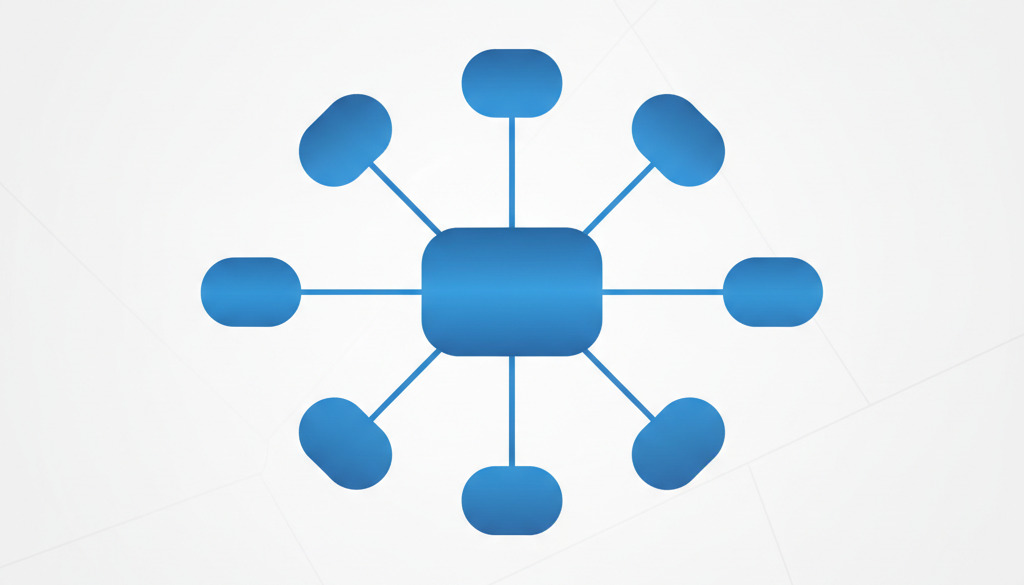
A successful internal linking strategy isn't about randomly adding links. It's about creating a logical, hierarchical structure that boosts your site's overall SEO health. The most effective approach is the "topic cluster" model.
Pillar Content and Cluster Content
This strategy involves creating:
- Pillar Pages: A long, comprehensive page covering a broad topic (e.g., "The Ultimate Guide to Small Business Accounting").
- Cluster Content: Several shorter, more specific articles that address sub-topics related to the pillar page (e.g., "Choosing the Right Accounting Software," "Understanding Quarterly Tax Payments," "How to Read a Balance Sheet").
You then internally link all the cluster articles back to the pillar page, and the pillar page links out to the cluster articles. This structure signals to Google that your pillar page is an authority on the topic, making it more likely to rank for competitive keywords.
Context is Everything
When adding internal links, always ask: "Is this link helpful to the reader?" The link should feel natural and provide additional value. Forcing irrelevant links onto a page can harm the user experience and be seen as spammy by search engines.
The Technical Nuances: Implementing AI Meta Descriptions and Internal Links Correctly
Once you have your content, you need to implement it correctly on your website. Fortunately, this is easier than it sounds, even for those who don't have extensive technical knowledge.
Keep reading
Hand-picked guides that go deeper — open the one you need next:
- Beyond Keywords: How AI Crafts Expert-Level SEO Blog Posts, Fast
- Demystifying SEO for Small Business Owners with Volteruno's AI
- Unlock Global Markets: Multilingual AI Content for International SEO
- Free AI Article Trial: Unlock SEO Growth with Volteruno