
Content Marketing Automation for Small Business
Key Takeaways
- Save Dozens of Hours Weekly: Content marketing automation handles repetitive tasks like posting on social media, sending emails, and distributing blog articles, freeing you up to focus on running your business.
- Attract Customers on Autopilot: By consistently publishing SEO-optimized content, you can attract customers through Google search without constant manual effort.
- Increase Your Reach and Authority: A steady stream of high-quality content establishes you as an expert in your field, building trust and credibility with potential customers.
- Nurture Leads Effectively: Automation allows you to send the right message to the right person at the right time, guiding potential customers from initial interest to final purchase.
- Start Small, Grow Big: You don't need a massive budget or a team of experts. Modern tools, including AI content creators, make it easy to start with simple campaigns and scale as your business grows.
As a small business owner, your most valuable asset is time. Between managing operations, serving customers, and handling finances, marketing can often feel like a monumental task that gets pushed to the bottom of the list. You know you need a strong online presence, but the idea of constantly creating content, posting on social media, and managing email lists is exhausting. What if there was a way to put your content marketing on autopilot, attracting new customers even while you sleep?
This is not a far-fetched dream; it's the reality of content marketing automation.[1] It’s a strategy that can level the playing field, allowing your small business to compete with larger companies without the need for a huge marketing department or budget.
The Evolving Digital Landscape for Small Businesses
Not long ago, a listing in the local Yellow Pages and a few newspaper ads were enough to keep a small business thriving. Today, the landscape has fundamentally changed. When people need a product or service—whether it’s a local plumber, a boutique accounting firm, or a custom furniture maker—their first move is almost always the same: they turn to a search engine like Google.
Your Customers Are Searching, Are They Finding You?
This shift in consumer behavior means that your visibility online is no longer optional; it's critical for survival and growth. If potential customers can't find you with a quick search, you effectively don't exist to them. A consistent and relevant online presence, anchored by valuable content, is what makes you visible. It’s how you build trust before a customer ever picks up the phone or walks through your door.
Traditional marketing methods are becoming less effective on their own. While they may still have a place, relying solely on them in a digital-first world is like trying to navigate a highway with a horse and buggy. Your competition is online, your customers are online, and your business needs to be there too, making a strong, professional impression.
Understanding Content Marketing Automation: Beyond the Buzzword
The term "marketing automation" can sound intimidating, technical, and expensive. But for a small business, it’s simpler than you think. Let's break it down. Content marketing automation is simply the use of software and technology to manage and streamline the repetitive tasks involved in your content marketing strategy.
Instead of you manually posting every article to Facebook, or sending a welcome email to every new subscriber by hand, you set up a system to do it for you. This isn’t about creating robotic, impersonal marketing. It’s about using technology to execute your strategy more efficiently so you can focus on the parts that require a human touch.
The Core Components
Content marketing automation typically involves three key areas:
- Content Creation: This can involve tools that help you generate ideas, schedule content, or even assist in writing drafts.
- Content Distribution: This is about automatically sharing your content across various channels. For example, once you publish a new blog post, the system can automatically create social media posts about it and email it to your subscribers.
- Nurturing: This involves sending a series of targeted, automated messages (usually emails) to prospects based on their actions, guiding them from casual interest to becoming a ready-to-buy customer.
Why Small Businesses Need Content Marketing Automation
For large corporations, automation is about optimizing a large team. For small businesses, automation is about survival and creating a competitive edge. It directly addresses the most common pain points experienced by owners like you.
- Lack of Time: This is the single biggest challenge for most small business owners. Automation buys back your time, taking over the mundane tasks that would otherwise consume hours each week.
- Limited Resources: You may not have the budget to hire a full-time marketing manager or a social media expert. Automation tools provide the power of a marketing team for a fraction of the cost.
- Inconsistent Efforts: It's easy to be enthusiastic about marketing for a week, only to get busy and let it slide for a month. This inconsistency hurts your brand. Automation ensures your marketing is always on, building momentum and keeping your business top-of-mind.
The return on investment (ROI) from automation isn't just about money. It's about the return on your time and energy. By increasing your efficiency, you achieve greater outreach and deeper customer engagement without burning yourself out.
Mapping Your Customer Journey with Automated Content
The customer journey is the path a person takes from first hearing about your business to making a purchase. Automation is incredibly powerful for guiding people along this path. The journey typically has three main stages:
- Awareness: The person has a problem or a need and is just starting to research it. They aren't ready to buy yet. At this stage, you want to provide helpful, educational content like blog posts, checklists, or social media tips that don't feel like a hard sell.
- Consideration: The person now understands their problem and is researching specific solutions. They are comparing your business to your competitors. Here, you can automate the delivery of content like case studies, webinars, or detailed guides that showcase your expertise.
- Decision: The person is ready to make a choice. This is where you can offer content like free consultations, demos, customer testimonials, or special offers to close the deal.
Automation software allows you to deliver this content at precisely the right moments. For example, when someone downloads your "10 Tips for Home Improvement" checklist (Awareness), your system can automatically wait a few days and then send them an email with a case study of a recent project (Consideration). It’s a personalized, timely approach at scale.
Key Benefits of Automating Your Content Strategy
Embracing content automation provides tangible benefits that directly impact your bottom line and your work-life balance.
Efficiency & Time Savings
Imagine writing one blog post and having it automatically scheduled to post on your website, then shared on LinkedIn, Facebook, and Twitter over the next few days, all while an email newsletter is sent to your subscribers announcing it. This is the power of automation. It transforms a 2-hour multi-step process into a 20-minute task, freeing you to focus on strategic growth.
Consistency & Brand Authority
A sporadically updated blog or social media profile can make a business look unreliable. Automation ensures a steady, consistent stream of communication. This regular presence builds trust and establishes your brand as a knowledgeable and authoritative voice in your industry. When customers see you consistently providing value, they start to see you as the go-to expert.
Scalability & Growth
As your business grows, so does your audience and the demand for content. Manually managing 100 contacts is doable; managing 5,000 is not. An automated system scales with you. It can send personalized communications to tens of thousands of people as easily as it can to ten, ensuring you can continue to grow without being overwhelmed.
Data-Driven Insights
How do you know if your marketing is working? Automation platforms provide clear analytics. You can see exactly who opened your emails, which links they clicked, and what content is most popular. This data is gold. It helps you understand your customers better and make smarter decisions about your marketing strategy, eliminating guesswork.
Core Automation Workflows for Small Business Content
Getting started doesn't have to be complicated. Here are three foundational automation "workflows" that can provide immense value to any small business.
- Lead Nurturing Sequences: This is a series of automated emails that are triggered when someone takes a specific action, like filling out a contact form or downloading a guide. A simple sequence might be:
- Email 1 (Immediate): Delivers the requested guide and thanks them.
- Email 2 (2 days later): Offers a related tip or resource.
- Email 3 (4 days later): Shares a customer success story.
- Email 4 (7 days later): Invites them to a free consultation. - Social Media Scheduling: Instead of logging into each social media platform every day, you use a tool to schedule a week's or a month's worth of posts in a single sitting. You can create content in one batch and let the system post it for you at the optimal times for engagement.
- Blog Post Promotion: This workflow automatically promotes your new content. The moment you hit "publish" on a new blog post, the system can trigger a chain of events: sending an email to your mailing list, scheduling multiple posts about it on social media, and monitoring for comments.
Content Creation Automation: AI at Work
Perhaps the most significant barrier to content marketing for small business owners is the act of creation itself. Staring at a blank page, trying to come up with a blog topic, or finding the right words can be incredibly time-consuming. This is where Artificial Intelligence (AI) has become a revolutionary tool.
AI-powered content generation tools can help you brainstorm ideas, create outlines, write entire first drafts, and optimize your text for search engines (SEO). This isn't about replacing your expertise; it's about giving you a powerful assistant to do the heavy lifting.
For business owners who know they need great content but simply lack the time or inclination to write, dedicated services have emerged to fill this gap. For instance, a service called More Customers From Your Blog leverages its own powerful AI to generate professional, SEO-ready blog articles in minutes. Their tagline, "We write the SEO articles for you," perfectly encapsulates the value proposition. It’s designed specifically for business owners who want the result—customers finding them on Google—without the struggle of writing. With over 500 companies already using the service, it demonstrates a clear demand for automated, high-quality content solutions.
Selecting the Right Content Marketing Automation Tools
The market for automation tools is vast, ranging from simple and free to complex and expensive. As a small business, the key is to choose tools that are easy to use, fit your budget, and solve your immediate problems.
Criteria for Choosing a Platform
- Ease of Use: The platform should be intuitive. If you can't figure it out without extensive training, it will only add to your workload.
- Core Features: Does it do what you need most? Whether that's email automation, social media scheduling, or both.
- Integration: Does it connect with the other tools you already use, like your website platform or contact management system?
- Cost: Look for platforms with transparent pricing and a free or low-cost entry plan that allows you to grow.
Here’s a breakdown of common tool categories for small businesses:
| Tool Category | Primary Use Case | Examples for Small Business | Typical Starting Price |
|---|---|---|---|
| All-in-One Platforms | Combines email, CRM, and basic automation. | HubSpot Starter, Brevo (formerly Sendinblue) | $15 - $50/month |
| Email Marketing Automation | Automated email sequences, lead nurturing. | ActiveCampaign, Mailchimp | $0 - $20/month |
| Social Media Management | Scheduling posts, monitoring engagement. | Buffer, Later | $0 - $15/month |
| AI Content Writers | Generating blog posts, social content, and ideas. | Jasper, Copy.ai, Services like 'More Customers From Your Blog' | Varies (per-word or subscription) |
Implementing Your First Automated Content Campaigns
Starting with automation is about taking small, manageable steps. Don't try to automate everything at once. Pick one area that causes you the most pain and start there.
A Simple Step-by-Step Guide
- Choose Your Goal: What is the #1 thing you want to achieve? (e.g., "I want to welcome every new contact automatically.")
- Select Your Tool: Based on the goal, pick a user-friendly tool. For a welcome series, an email marketing platform like Mailchimp or ActiveCampaign is perfect.
- Map the Flow: Write down the steps. "1. User submits contact form. 2. System sends Welcome Email #1. 3. Wait 3 days. 4. System sends Follow-up Email #2."
- Create the Content: Write the two emails for your sequence. Keep them simple, helpful, and friendly.
- Build and Test: Use the tool's visual builder to create the automation. Send a test to yourself to ensure it works as expected.
- Activate! Turn it on and let it run. You’ve just created your first automation!
Starting with a simple welcome email series or scheduling your social media posts a week in advance are fantastic first projects that deliver immediate time savings.
Crafting High-Converting Content for Automation
Automation is the delivery truck, but the content is the package. For your automated efforts to be successful, the content itself must be valuable and compelling. The goal is to drive action, not just send messages.
Focus on a clear Call to Action (CTA) in every piece of content. What do you want the reader to do next? "Download the guide," "Schedule a call," "Read this case study." Be direct and specific. Furthermore, use the data you have to personalize the content. Addressing a subscriber by their first name is a simple start, but true personalization involves sending content based on their known interests or past behavior.
To fuel your automation, you need to attract people into your system. This is done with lead magnets—valuable pieces of content you offer for free in exchange for an email address. Examples include:
- Checklists or worksheets
- Short e-books or guides
- Templates
- Email courses
- Webinar recordings
Leveraging SEO with Automated Content Distribution
Search Engine Optimization (SEO) and content automation are a perfect match. SEO is the practice of getting your website to rank high in Google search results. The primary way to do this is by regularly publishing high-quality, relevant content. But publishing content is only half the battle; people need to see it.
This is where automation comes in. By automatically distributing your content across social media, email newsletters, and other channels, you create signals that tell Google your content is valuable. This increased traffic and engagement can significantly boost your search rankings over time. A consistent publishing schedule, powered by automation, is a cornerstone of a successful SEO strategy.
This is another area where AI-driven solutions shine. For instance, the articles generated by the More Customers From Your Blog service are created with SEO as a primary goal. By ensuring the content is already optimized for search engines, it provides the perfect fuel for your automated distribution engine, creating a powerful system for getting your business found on Google.
Measuring the Success of Your Automated Content Efforts
The beauty of digital marketing is that everything is measurable. You no longer have to wonder if your efforts are paying off. Automation platforms come with built-in analytics dashboards that track your Key Performance Indicators (KPIs).
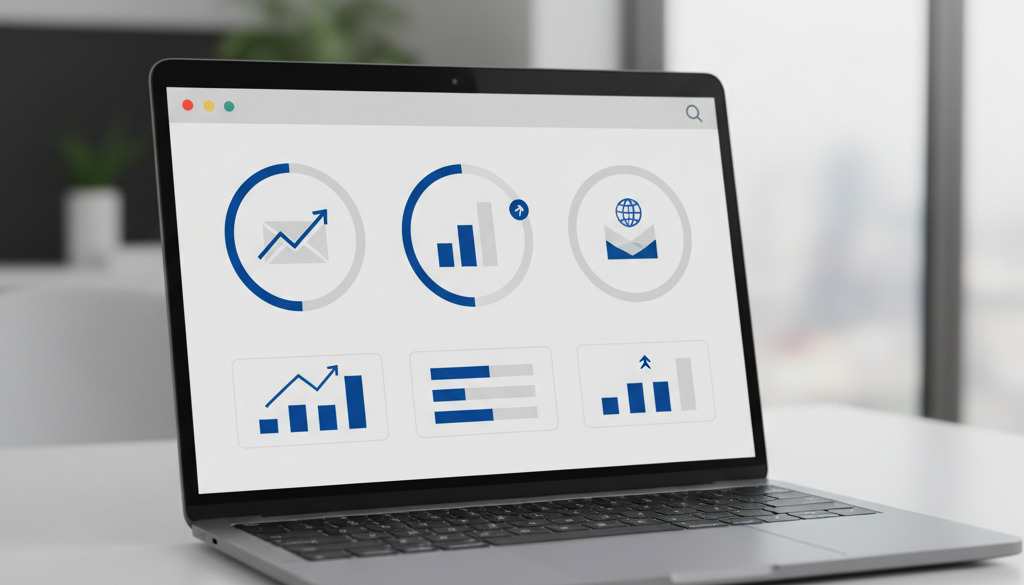
Key Metrics to Watch:
- Email Open Rate: The percentage of people who open your automated emails.
- Click-Through Rate (CTR): The percentage of people who click a link in your email or social post.
- Conversion Rate: The percentage of people who complete your desired action (e.g., fill out a form, make a purchase).
- Website Traffic: Is my automated content distribution driving more visitors to my site? (Track this in Google Analytics).
- Unsubscribe Rate: The percentage of people who opt out of your emails. A high rate might indicate you're sending too often or the content isn't relevant.
Review these metrics monthly. Look for trends. What content is resonating? Where are people dropping off? Use these insights to tweak and improve your automated campaigns over time.
Overcoming Common Challenges in Content Automation
While automation is powerful, it's not without potential pitfalls. Being aware of them can help you avoid common mistakes.
- Poor Data Quality: Automation is only as good as the data it uses. If your contact list is full of outdated or incorrect email addresses, your efforts will fail. Regularly clean your contact list.
- Sounding Robotic or Spammy: The biggest fear is that automation will make your marketing impersonal. To avoid this, write your content in your own voice, use personalization (like first names), and ensure every message provides genuine value. The goal is to automate the delivery, not the personality.
- Technical Hurdles: Sometimes, connecting different tools can be tricky. This is why it’s crucial to choose user-friendly platforms designed for small businesses. Most modern tools have simple, built-in integrations that don't require a developer.
The Human Touch in an Automated World
It’s crucial to remember that content marketing automation is a tool to enhance human connection, not replace it. Automation handles the repetitive, top-of-funnel communication, which frees you up for higher-value, personalized interactions.
Let automation send the welcome emails and schedule the social posts. You should spend the time you save responding personally to a detailed customer inquiry, making a follow-up phone call to a promising lead, or networking with industry partners. Automation manages the process; you manage the relationship. It’s a partnership between technology and your unique human expertise.
Future Trends in Small Business Content Marketing Automation
The world of automation is constantly evolving. While you should focus on mastering the basics first, it's helpful to know what's on the horizon. The next wave of automation will be driven heavily by AI, leading to hyper-personalization—the ability to tailor content for an individual, not just a segment. We'll see systems that don't just execute pre-set rules but learn from results and adjust their own strategies over time.
Video and interactive content will also become more integrated into automated sequences. Imagine systems that can send personalized video messages or interactive quizzes to nurture leads. For a small business owner, the key is to remain adaptable and maintain a mindset of continuous learning, embracing new tools as they become accessible and user-friendly.
Getting Started: Your Automation Action Plan
Feeling motivated? Here is a simple, four-step action plan to begin your journey into content marketing automation.
- Identify Your Biggest Time Sink: For the next week, pay close attention to your marketing tasks. Which one is the most repetitive and time-consuming? Is it posting on social media? Trying to write a blog post? Handling new inquiries? This is your starting point.
- Automate Your Content Creation: The biggest hurdle is often creating the content itself. To overcome this instantly, consider a service built for this exact problem. For example, you can take advantage of the introductory offer from More Customers From Your Blog, which provides your first five SEO blog posts for free. This is a risk-free way to get high-quality content onto your site and experience the power of AI-driven creation firsthand.
- Automate Your Content Distribution: Sign up for a free or low-cost social media scheduler. Take one of the blog posts you’ve had created, write 3-4 short social media posts about it, and schedule them to go out over the next week.
- Set Up One Nurture Sequence: Choose an email marketing tool and create a simple 2-email welcome series for anyone who joins your list. This ensures every new contact gets a warm, professional welcome, even if you’re busy.
By tackling these steps, you will have built a foundational content automation engine that saves you time and works to grow your business around the clock.
Conclusion
Content marketing automation is not a luxury reserved for large corporations; it is a transformative strategy that can empower small businesses to achieve unprecedented efficiency and growth. By embracing these tools, you can trade tedious, repetitive tasks for a streamlined system that saves you time, amplifies your reach, and builds a consistent, authoritative brand presence. Automation allows you to nurture customer relationships at scale, turning initial interest into loyal patronage.
In today's digital world, standing still means falling behind. By intelligently automating your content, you are not just keeping pace; you are building a resilient, scalable foundation for future success, allowing you to focus on what you do best: running your business and serving your customers.
Frequently Asked Questions
1. Is content automation too expensive for a very small business?
Not at all. Many of the most powerful automation tools are designed with small businesses in mind. You can start with free plans for email marketing (like Mailchimp) and social media scheduling (like Buffer). Even advanced AI content services often have free trials or introductory offers, allowing you to see value before you invest heavily.
2. Will automation make my marketing feel impersonal and robotic?
This is a common concern, but the answer is no—if done correctly. The goal of automation is to automate the delivery, not the personality. You still write the emails and social posts in your own authentic voice. Good automation uses personalization (like a customer's name) and segmentation (sending messages based on interests) to make communication feel *more* relevant and personal, not less.
3. How much technical skill do I need to set up automation?
Very little for most foundational tools. Modern automation platforms are built for business owners, not developers. They feature drag-and-drop editors, visual workflow builders, and step-by-step guides. If you can use email and browse the internet, you have the skills needed to set up a basic automated campaign.
4. What is the difference between content automation and just scheduling social media posts?
Social media scheduling is one *part* of content automation, but it's not the whole picture. True content automation is a connected system. It includes not only scheduling posts but also creating the content (often with AI assistance), distributing it via email, nurturing leads through automated sequences based on their behavior, and analyzing the results across all channels.
5. Can I automate the content creation part completely?
Yes, this is becoming increasingly popular and effective. While you might want to add a final review or personal touch, AI-powered content generation services can now produce high-quality, SEO-optimized, and human-like articles from scratch. For a busy owner, this can be the single most impactful piece of automation, solving the "blank page" problem entirely.
6. How long will it take to see results from content automation?
You will see some results, like time savings, immediately. Results like increased website traffic and new leads take more time because they rely on consistency. SEO is a long-term strategy. You can expect to see noticeable momentum in website traffic and lead generation within 3-6 months of implementing a consistent, automated content strategy.