
AI Content for Sales: Drive Small Business Revenue
Key Takeaways
- AI is a necessity, not a novelty: For small businesses, using AI for sales content is now essential for staying competitive, saving time, and overcoming resource limitations.
- Drive leads and sales: AI-powered content directly impacts revenue by improving SEO to attract organic traffic, crafting personalized sales pitches, and nurturing leads through the customer journey.
- Solve the content problem: AI automates the time-consuming process of content creation, allowing business owners who lack the time or expertise to maintain a consistent, high-quality online presence.
- Quality requires collaboration: The best results come from a "human-in-the-loop" approach, where business owners guide the AI and review the output to ensure brand alignment and accuracy.
- Data-driven optimization: AI tools can analyze content performance, providing valuable insights into what resonates with customers, enabling continuous improvement of your sales and marketing strategy.
In the fast-paced world of digital commerce, small and medium-sized businesses (SMBs) are constantly facing new challenges. The sales landscape has shifted dramatically, moving from traditional outreach to a domain where digital presence is paramount. Customers are more informed, the competition is fiercer, and the demand for personalized, valuable content is at an all-time high. In this environment, efficiency and data-driven strategies are not just advantages—they are requirements for survival. This is where Artificial Intelligence (AI) emerges as a transformative force, particularly in the realm of content creation. For many business owners, AI is the key to unlocking consistent growth and driving revenue. This article will explore how AI-powered content can revolutionize sales strategies for SMBs, providing a clear path from zero content to a thriving sales funnel.
Understanding the SMB Sales Content Conundrum
For many seasoned business owners, the value of their product or service is self-evident. You know your craft, your customers, and your industry. However, translating that expertise into a steady stream of online content is a completely different challenge. This is the sales content conundrum many SMBs face.
Common Content Creation Pain Points
The primary hurdles are often a combination of factors that resonate with any busy entrepreneur:
- Time Constraints: Running a business is more than a full-time job. Finding hours to brainstorm, write, edit, and publish blog posts, social media updates, or email newsletters is often impossible.
- Lack of In-House Expertise: You are an expert in your field, not necessarily in search engine optimization (SEO) or digital marketing. Writing content that not only reads well but also ranks on Google requires a specific skill set.
- High Cost of Outsourcing: Hiring a marketing agency or a team of freelance writers can be prohibitively expensive for a small business, with costs quickly running into thousands of dollars per month.
- Inconsistent Quality and Output: When you do find the time or budget, maintaining a consistent publishing schedule and a uniform brand voice can be difficult, leading to a sporadic and ineffective online presence.
The Critical Role of Sales Content
In today's market, customers find you. They use search engines to ask questions, look for solutions, and compare options. Effective sales content is your 24/7 salesperson. It attracts potential buyers, builds trust by demonstrating your authority, answers their questions, and guides them toward a purchase. For business owners who built their companies offline but recognize the necessity of an online presence, this digital gap can feel daunting. AI content provides the bridge to cross it.
What is AI Content for Sales, Exactly?
AI-generated content for sales refers to any text created by an artificial intelligence program designed to support the sales process. This isn't about robots having creative ideas; it's about sophisticated technology using patterns and data to produce human-like text based on specific instructions.
The Technology Behind the Words
The core technology is known as Natural Language Generation (NLG), a subset of AI that focuses on creating written or spoken narratives from data. Machine learning (ML) algorithms are trained on vast amounts of text from the internet, allowing them to understand grammar, tone, context, and style. When you provide a prompt, the AI uses this training to predict the most logical and relevant sequence of words to form coherent sentences and paragraphs.
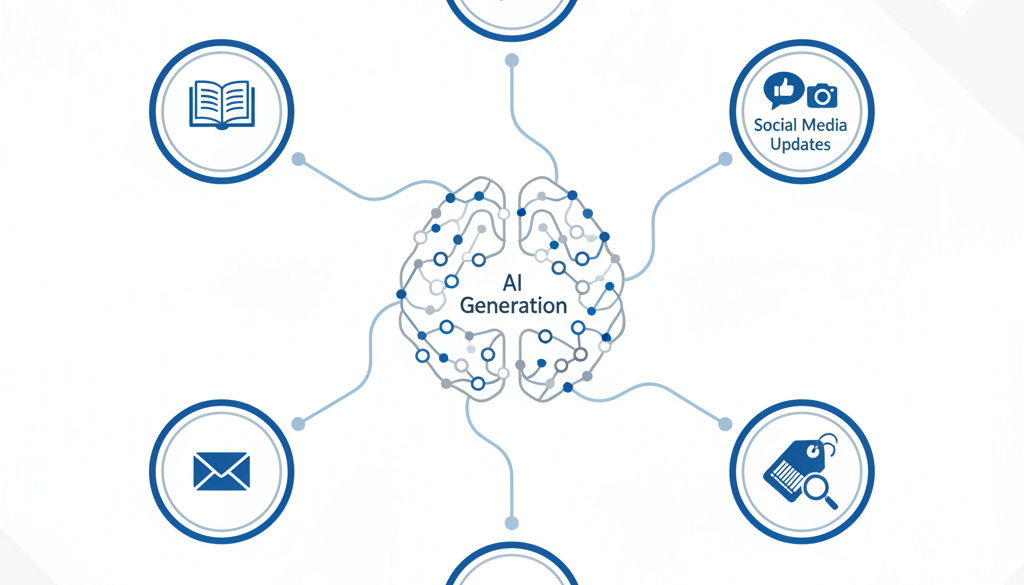
Types of Sales Content AI Can Create
AI is incredibly versatile and can be tasked with producing a wide range of content essential for a modern sales strategy:
- SEO Blog Posts: Articles designed to attract visitors from search engines.
- Social Media Updates: Engaging posts for platforms like LinkedIn, Facebook, and Instagram.
- Email Campaigns: Copy for newsletters, promotional emails, and lead nurturing sequences.
- Product Descriptions: Persuasive and detailed descriptions for e-commerce sites. Learn more in this ultimate guide to AI product description generators.
- Landing Page Text: Compelling copy for pages designed to convert visitors into leads.
- Video Scripts: Scripts for promotional or informational videos.
The Strategic Imperative: Why AI Content is No Longer Optional for Sales
Not long ago, using AI for business was a novelty. Today, it's a strategic necessity. Recent research highlights that AI adoption in sales can increase leads by up to 50%, transforming sales processes from reactive to predictive.[1] As your competitors begin to leverage these tools to boost their efficiency and output, standing still means falling behind. For the business owner who knows they need to be online but doesn’t know where to start, AI offers a direct and powerful solution. It bridges the gap between acknowledging the importance of digital content and possessing the resources to execute it effectively, leveling the playing field for SMBs.
Streamlining Lead Generation with AI-Powered Content
The first step to making a sale is getting a potential customer's attention. AI content is exceptionally good at this, particularly when it comes to attracting inbound leads through search engines.
Automated SEO and Keyword Integration
One of the most powerful applications of AI is in SEO. To rank on Google, you need content that targets the specific phrases people are searching for. AI tools excel at this:
- Keyword Identification: AI can analyze search trends and competitor websites to identify the most valuable keywords for your business.
- Content Development: Once you have your keywords, AI can write comprehensive, keyword-rich articles that are structured for search engine success. This process is detailed in this guide on AI content keyword research.
Answering Customer Questions at Scale
AI can generate a multitude of articles, blog posts, and guides that address the common pain points and questions of your target audience. By creating this helpful content, you position your business as a trusted authority. When a potential customer searches for a solution to a problem, they find your website, building a relationship long before they are ready to buy.
Crafting Compelling Sales Pitches with AI
Once you have a lead, the next step is to persuade them that your product or service is the right choice. AI can help craft the compelling messaging needed to convert interest into action.
Persuasive Product and Service Descriptions
Writing product descriptions that sell is an art form. AI can learn the key features of your offering and translate them into benefit-oriented copy. It can generate multiple versions for A/B testing, helping you find the message that resonates most with your customers and drives the most sales.
Personalized Outreach and Follow-ups
AI can assist your sales efforts by generating personalized email templates for outreach and follow-ups. By inputting details about a prospect, the AI can create a message that speaks directly to their needs, increasing the likelihood of a positive response. This saves hours of manual writing and ensures every communication is sharp and professional.
Enhancing the Customer Journey with AI-Informed Content
A customer doesn't typically make a purchase immediately. They go through a journey, from becoming aware of a problem to considering different solutions and finally making a decision. AI is instrumental in creating content for every stage.
Mapping Content to the Buyer's Journey
An AI content system can be instructed to create different types of content for each phase:
- Awareness Stage: Top-of-funnel blog posts and articles that address broad industry problems.
- Consideration Stage: More detailed guides, comparison articles, and case studies that showcase your solution.
- Decision Stage: In-depth product pages, FAQs, and testimonials that build confidence and encourage a purchase.
This ensures you have the right message for the right person at the right time, nurturing them seamlessly towards a sale.
Boosting Website Traffic Through Consistent, High-Quality Content
Search engines like Google reward websites that consistently publish fresh, high-quality content. For a busy SMB owner, this is one of the biggest challenges. A powerful solution lies in services built on the principle of "more customers from your blog," where specialized AI systems write the SEO articles for you. By leveraging such platforms, you can establish a steady flow of optimized content without lifting a finger. This consistent pipeline signals to search engines that your site is a relevant and active authority in your niche, leading to higher rankings and a significant increase in organic website visitors who are actively searching for what you offer.
The "Nearly Magic" of AI Content Generation: Addressing Time and Effort Concerns
For the business owner who feels they have neither the time nor the inclination for content creation, the efficiency of AI is a revelation. This is where the true power of AI becomes apparent. As some advanced platforms promise, their proprietary artificial intelligence can write professional SEO blog articles for your website in minutes—almost like magic. What once took hours or even days of concerted effort—researching, drafting, and editing—can now be accomplished in the time it takes to drink a cup of coffee. This removes the single greatest barrier to content marketing for SMBs: the manual effort. It democratizes content creation, making a powerful online presence accessible to every entrepreneur, regardless of how packed their schedule is.
Ensuring Quality and Authority: Beyond Basic AI Output
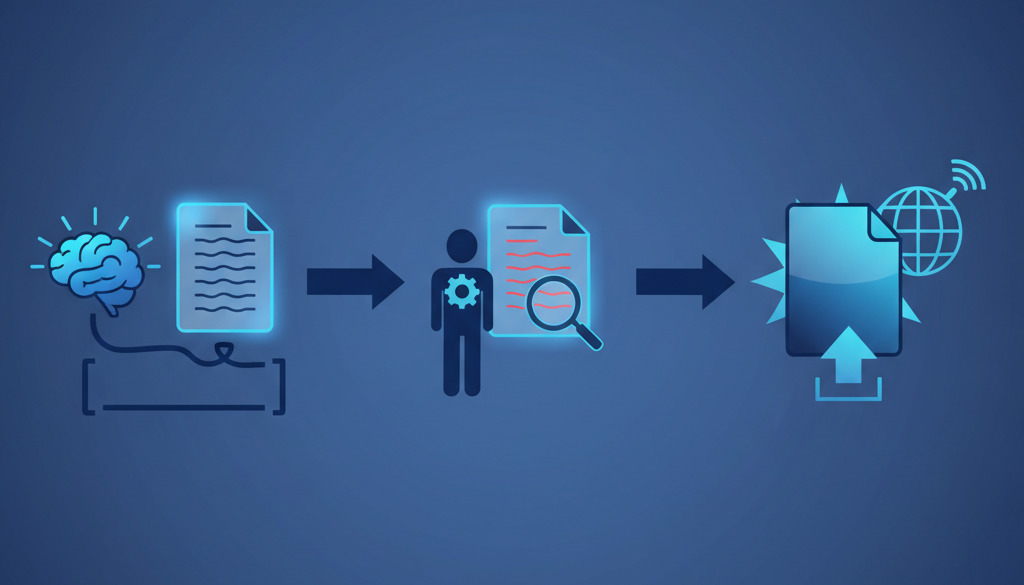
A common and valid concern about AI is that its output can be generic, repetitive, or even inaccurate. This is why a "human-in-the-loop" approach is essential for creating top-tier sales content.
The Importance of Human Oversight
Think of AI as an incredibly skilled but junior writer. It can produce a fantastic first draft, but it needs your expertise to ensure it's perfect. Your role is to:
- Fact-Check: Verify any statistics, claims, or technical details for accuracy.
- Inject Your Voice: Edit the text to ensure it aligns with your unique brand personality and tone.
- Add Personal Stories: Weave in your own experiences, anecdotes, and case studies to make the content truly unique and authoritative.
This combination of AI efficiency and human expertise produces content that is far superior to what either could create alone.
Personalization at Scale: Tailoring Content to Individual Prospects
One of the most significant advantages AI brings to sales is the ability to personalize content at a scale that was previously unimaginable. By analyzing customer data from your CRM or website, AI can help you understand your audience on a deeper level.
Dynamic Content for Higher Engagement
AI can power dynamic content on your website or in your emails. This means that different visitors will see slightly different versions of the content based on their past behavior, industry, or interests. For example, a landing page could show a testimonial from someone in the same industry as the visitor. This level of hyper-personalization makes prospects feel understood, dramatically increasing engagement and conversion rates.
The Data-Driven Advantage: Using AI for Content Performance Analysis
Creating content is only half the battle. You also need to know what’s working. AI is a powerful analytical tool that can provide deep insights into your content performance.
Optimizing Your Strategy with Insights
AI platforms can track key metrics such as:
- Engagement Rates: How long are people staying on your pages?
- Conversion Rates: Which articles are driving the most leads or sales?
- SEO Performance: How are your articles ranking for your target keywords?
By analyzing this data, AI can identify patterns and tell you which topics resonate most with your audience. This allows you to stop guessing and start making data-driven decisions, focusing your efforts on the content that delivers the best return on investment (ROI).
Overcoming Hesitations and Building Trust in AI Content
It's natural to be skeptical of new technology, especially when it involves something as important as your business communication. Many wonder if AI-generated content can truly represent their brand and build trust with customers. The key is to view AI as a partner, not a replacement. With proper guidance and a human review process, the quality can be exceptional. The proof is in the adoption; this technology is not just theoretical. It's a proven solution that is already used by more than 500 companies to fuel their growth. This widespread use demonstrates its reliability and effectiveness in real-world business environments.
Implementing AI Content for Sales: A Step-by-Step Approach
Getting started with AI content doesn't have to be complicated. Here is a simple, practical approach for any SMB owner.
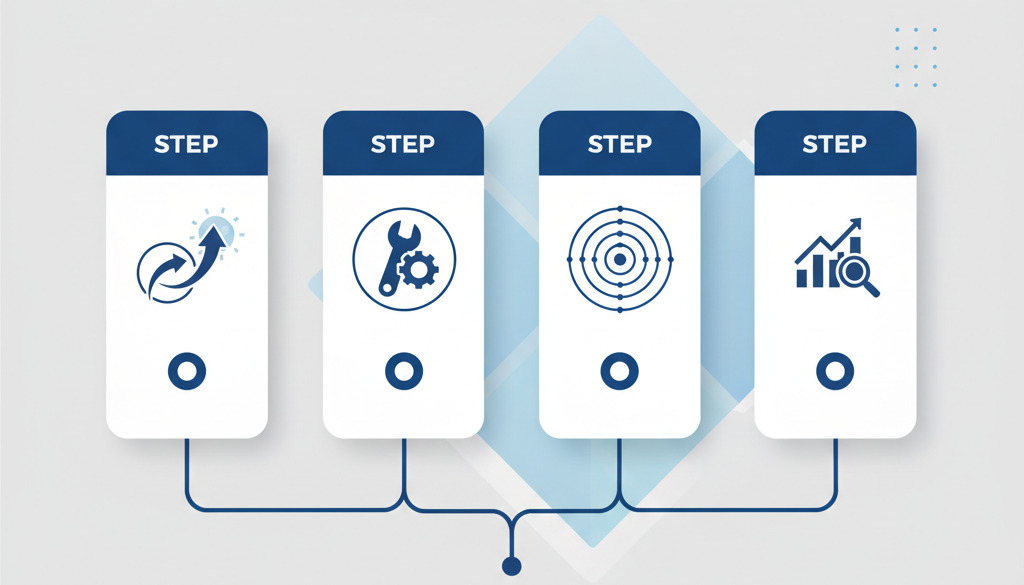
A Simple Path to Integration
- Identify Your Goals: What do you want to achieve? More website traffic? Better-quality leads? Higher email open rates? Start with one clear goal.
- Choose the Right Platform: Look for AI content solutions designed for businesses, not just hobbyists. You need a tool that understands SEO and sales. For instance, if your site is on a popular platform, you might look for guides on WordPress SEO automation with AI to see how these tools integrate.
- Start Small and Test: You don't need to overhaul your entire strategy overnight. Begin by generating a few blog posts or a new email sequence. Many services recognize this and offer low-risk ways to begin. For example, some platforms let you try the service with a promise that your first 5 posts are free. This allows you to see the quality and results for yourself without any commitment.
- Measure and Scale: Once you've seen the positive impact, you can scale up your efforts, integrating AI into more aspects of your sales and marketing workflow.
The Future of Sales: AI as an Indispensable Partner
The integration of AI into sales is not a passing trend. It represents a fundamental shift in how businesses operate. As the technology continues to evolve, its capabilities will only become more impressive. We will see AI become more adept at predicting customer needs, automating complex communication sequences, and providing real-time strategic advice to sales teams. Businesses that embrace AI now and make it a core part of their sales process will build a significant and lasting competitive advantage.
Expert Tips for Maximizing Your AI Sales Content ROI
To get the most out of your AI content efforts, follow these expert best practices:
Collaborate, Don't Abdicate
Always treat the AI as a collaborator. Provide it with detailed prompts, clear instructions, and context about your audience and goals. The more you give the AI, the better its output will be. Then, use your human expertise to refine the final product.
Focus on Content Strategy
Don’t just create content for the sake of it. Use AI to execute a deliberate content strategy. Map your content to your sales funnel and create clusters of articles around important topics to build authority in your niche.
Continuously Learn and Adapt
The world of AI is moving quickly. Stay informed about new tools, features, and strategies. Be willing to experiment and adapt your approach as the technology evolves. Continuous learning is key to staying ahead of the curve.
Conclusion: Embracing the AI Era for Smarter, More Effective Sales
For small business owners, the pressure to create a constant stream of high-quality sales content can be overwhelming. It’s a task that demands time, skill, and resources that are often in short supply. AI-powered content generation effectively solves this problem, transforming a major business challenge into a significant growth opportunity. It allows you to produce SEO-optimized articles, persuasive sales copy, and engaging social media posts with unprecedented speed and efficiency.
This technology is no longer the exclusive domain of large corporations; it is an accessible, affordable, and powerful tool for any entrepreneur. By embracing solutions designed to bring more customers from your blog, you can automate your content pipeline, attract organic traffic, and focus your valuable time on what you do best: running your business. The path from having no online presence to generating consistent sales is clearer and more attainable than ever before. Now is the time to explore the power of AI and build a smarter, more effective sales engine for your business.
Frequently Asked Questions
1. Is AI-generated content penalized by search engines like Google?
No. Google's official stance is that it rewards high-quality content, regardless of how it is produced. As long as the content is original, helpful, and provides a good experience for the user, it can rank well. The key is to use AI to create valuable content, not to produce low-quality spam.
2. Do I need to be a tech expert to use AI for sales content?
Absolutely not. Modern AI content platforms are designed to be incredibly user-friendly. Most feature simple interfaces where you can generate content by typing in plain English instructions. They are built specifically for business owners who are not tech experts.
3. Can AI truly understand my specific business and industry?
Yes, to a great extent. You can provide the AI with context about your business, your target audience, and your industry. By "training" it with your own information and prompts, you can guide it to create content that is highly relevant and uses the correct terminology for your niche. Your final review adds the perfect layer of industry expertise.
4. How much does it cost to use AI for content creation?
The cost varies depending on the platform, but it is significantly more affordable than hiring a writer or an agency. Many services operate on a subscription model, and some offer free trials or a certain number of free articles so you can test the service with no financial risk.
5. How can I ensure the AI content matches my brand's unique voice?
This is achieved through a combination of clear instructions and human editing. In your prompts, you can specify the desired tone of voice (e.g., "professional and expert," "friendly and casual"). Then, during your review process, you can make small tweaks to the text to ensure it perfectly captures your brand's personality.
Leveraging AI Content for Sales: Strategies for Small Business Growth
The effective integration of AI-generated content into a small business's sales strategy can yield significant growth, moving beyond mere efficiency to a sophisticated enhancement of customer engagement and conversion rates. While the core functionalities of AI in content creation are impressive, the true power lies in how these tools can be strategically deployed to address specific sales challenges and opportunities. For instance, AI can be instrumental in personalizing outreach at scale. Imagine a scenario where your sales team needs to follow up with hundreds of leads. Instead of sending generic emails, AI can analyze lead data – such as industry, previous interactions, and expressed interests – to craft highly tailored follow-up messages. This level of personalization, previously achievable only with extensive manual effort, drastically increases the likelihood of a positive response. AI can identify patterns in successful sales conversations and customer objections, then generate content that directly addresses these points proactively. This could manifest as a targeted email campaign addressing common hesitations for a specific product, or a series of social media posts highlighting solutions to problems frequently encountered by your ideal customer profile. Furthermore, AI content generation excels at creating a consistent and comprehensive flow of information across the entire sales funnel. At the top of the funnel, AI can help produce engaging blog posts, social media updates, and ad copy designed to attract attention and generate initial interest. As prospects move further down the funnel, AI can assist in crafting more detailed product descriptions, case studies, and whitepapers that provide in-depth information and build credibility. For the critical consideration and decision-making stages, AI can even draft personalized proposals or targeted email sequences that reinforce value propositions and encourage conversion. This multifaceted application ensures that potential customers are consistently met with relevant and persuasive content, guiding them smoothly towards a purchase decision. The ability to rapidly generate diverse content formats also allows small businesses to experiment with different marketing channels and approaches without significant upfront investment in content creation resources. For example, a small e-commerce business could use AI to quickly generate product descriptions in multiple languages for international expansion, or create video scripts for social media ads, all while maintaining a consistent brand message.Optimizing Sales Content with AI: Beyond Basic Generation
The strategic application of AI in sales content extends beyond simply generating text. It involves a deeper understanding of how to leverage AI-powered insights to refine and optimize your sales messaging. One powerful avenue is the use of AI for sentiment analysis and feedback incorporation. By analyzing customer feedback from reviews, surveys, and support interactions, AI can identify recurring themes, pain points, and areas of satisfaction. This information is invaluable for refining sales pitches and marketing materials. For instance, if customer feedback consistently highlights a particular feature as a key differentiator, AI can help craft sales collateral that emphasizes this benefit more prominently. Conversely, if many customers express confusion about a specific aspect of a product or service, AI can assist in generating clearer explanations or FAQs. This iterative process, driven by real customer sentiment, ensures that your sales content remains relevant, persuasive, and addresses genuine customer needs and concerns. Another advanced application involves AI-powered A/B testing and content optimization. AI can generate multiple variations of sales copy – such as different headlines, calls to action, or value propositions – and help deploy these variations across different campaigns. By analyzing the performance data (click-through rates, conversion rates, time on page), AI can identify which variations are most effective for specific audience segments. This allows small businesses to continuously refine their messaging, ensuring that their sales content is not static but evolves to maximize its impact. Tools can even predict which content resonates best with particular demographics or customer journey stages, enabling proactive adjustments to sales strategies. Beyond mere text, AI can also be applied to optimize visual content for sales. For example, AI can suggest improvements to product imagery, analyze the effectiveness of different ad creatives, or even assist in generating personalized video snippets for sales outreach. The ability to rapidly test and iterate on content based on data-driven insights is a game-changer for small businesses looking to achieve a competitive edge in their sales efforts. This sophisticated approach transforms AI from a simple content generator into a strategic partner in driving sales performance and achieving sustainable business growth.Leveraging AI for Sales Content Personalization and Automation
A key benefit of employing AI in sales content creation for small businesses lies in its unparalleled ability to personalize messaging at scale. Traditional methods of personalization often involve manual segmentation and tailored outreach, which can be time-consuming and resource-intensive. AI, however, can analyze vast amounts of customer data – including past purchases, browsing behavior, and demographic information – to identify individual preferences and pain points. This allows AI algorithms to generate highly customized sales content, from email subject lines and body copy to product recommendations and even social media posts, that speaks directly to each prospect's specific needs and interests. This level of personalized engagement significantly increases the likelihood of a positive response and, ultimately, a conversion.
Furthermore, AI significantly streamlines the content creation workflow through automation. Repetitive tasks such as drafting initial versions of product descriptions, creating follow-up email sequences, or generating social media updates can be handled by AI tools, freeing up valuable time for sales teams to focus on higher-level strategic activities and relationship building. This automation doesn't mean sacrificing quality; many AI platforms are designed to learn from user feedback and existing successful content, ensuring that the generated material is not only efficient but also effective and brand-aligned. The integration of AI into these routine tasks allows small businesses to maintain a consistent and robust online presence without the need for a large content marketing department, making sophisticated sales content strategies more accessible than ever before.
Keep reading
Hand-picked guides that go deeper — open the one you need next:
- Why Manual Content Creation is Obsolete: The AI Advantage
- AI Blog Workflow Automation: Idea to Published
- AI Content for Customer Acquisition: Your Blog's New Engine
- Unlock Your Blog's Potential: Maximize AI Content ROI
→ Read the full AI Content guide