
No Technical Knowledge Needed: Easy SEO with Volteruno
Key Takeaways
- SEO is accessible: You don't need to be a programmer to improve your website's ranking. SEO is about clear communication with search engines and customers.
- Content is king: High-quality, informative content that answers customer questions is the most crucial element of a successful SEO strategy.
- Focus on fundamentals: Simple actions like optimizing titles, using headings, improving site speed, and managing your Google Business Profile make a huge difference.
- Consistency over complexity: A steady routine of creating valuable content and monitoring basic metrics will yield better long-term results than sporadic, complex technical fixes.
- Leverage smart solutions: For busy business owners, automated solutions like Volteruno can handle the heavy lifting of content creation, allowing you to focus on running your business while still achieving online growth.
Introduction: Why Your Business Needs to Be Found Online (Even If You're Not a Tech Whiz)
As a business owner, you know your industry inside and out. You understand your customers, your products, and your services. But in today's digital world, that expertise needs to be visible online. The modern customer journey almost always begins with a search engine. Whether they're looking for a local plumber, a corporate consultant, or a new pair of shoes, potential customers turn to Google. If your business isn't there to answer their call, you are, in effect, invisible.
Many business owners, especially those who didn't grow up with the internet as a native language, hear the term "SEO" and immediately picture complex code and incomprehensible jargon. The good news? That perception is outdated. At its core, Search Engine Optimization (SEO) is not about being a tech wizard. It's about clearly communicating what you do to both search engines and potential customers. It’s about structuring your expertise in a way that Google can understand and present to people who are actively looking for a solution you provide. This guide will demystify SEO, providing a clear path for small and medium-sized enterprises (SMEs) to unlock substantial growth without needing a degree in computer science.
Decoding the Digital Landscape: What Exactly IS SEO?
Let's break it down into the simplest terms. Search Engine Optimization (SEO) is the process of making improvements to your website to increase its visibility in search engine results. When people search for terms related to your business, you want your website to appear as high up on the results page as possible. The higher you rank, the more likely you are to attract new customers.
The Core Components of SEO
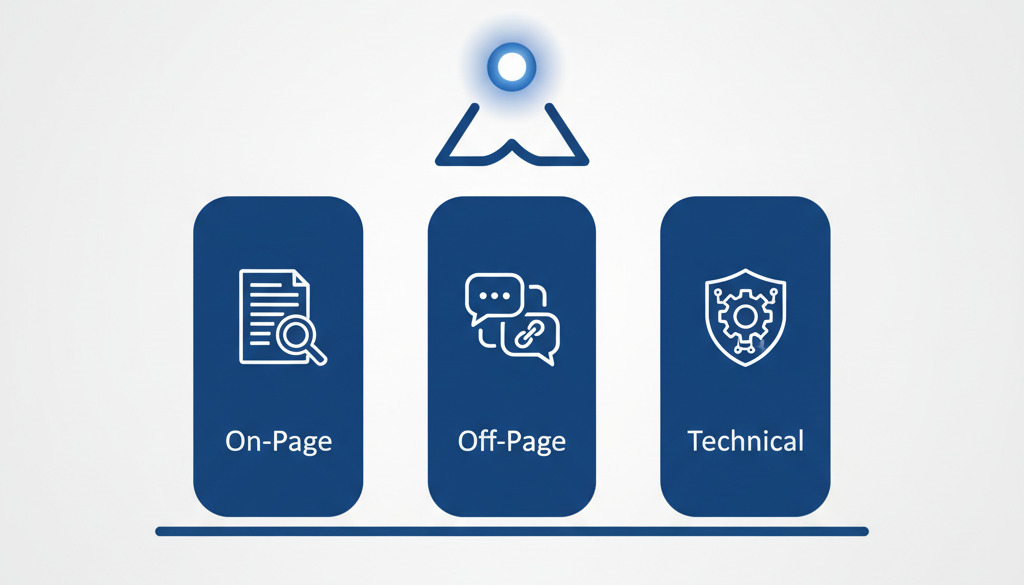
While SEO can get complex, it can be understood through three main categories:
- On-Page SEO: This refers to all the optimizations you perform directly on your website. It includes the quality of your content, the structure of your pages, and the use of keywords. This is the area where you have the most control.
- Off-Page SEO: These are actions taken outside of your own website to impact your rankings. This primarily involves building authority and trust, most notably through backlinks (links from other websites to yours).
- Technical SEO: This is the part that often lắm people. It refers to the technical aspects of your website that help search engines crawl and index your site more effectively. While some elements are highly technical, the basics—like site speed and mobile-friendliness—are more accessible than you think.
Focusing on these areas helps you move beyond "vanity metrics" like just getting more traffic. The goal is to attract the *right* traffic—customers who are genuinely interested in what you offer, leading to tangible business results like more leads, sales, and revenue.
Keyword Research: Speaking Your Customers' Language
Before you can rank, you need to know what you want to rank for. Keyword research is the foundational step of any SEO strategy. It’s the process of identifying the words and phrases that your potential customers are typing into search engines. This isn’t about guessing; it’s about understanding the exact language your audience uses.
How to Discover What Your Customers Search For
You don't need expensive, complicated tools to get started. Begin by brainstorming a list of topics related to your business. Think about the problems you solve and the services you offer. Then, use free tools like Google Trends or even Google’s own search bar—the autocomplete suggestions and the "People also ask" section are goldmines for customer queries. Ask yourself: if I were a customer, what would I search for? Talk to your existing customers and ask them what terms they would use. For a deeper dive, our guide on AI Content Keyword Research offers strategies for the modern digital landscape.
Understanding Search Intent
Beyond the keywords themselves is the search intent—the *why* behind the query. Is the person looking to buy something (transactional intent), find information (informational intent), or locate a specific website (navigational intent)? For example, someone searching "best running shoes" is still in the informational phase, while someone searching "buy Nike Air Zoom Pegasus" is ready to make a purchase. Aligning your content with the user's intent is critical for ranking well.
Crafting Compelling Content: The Cornerstone of SEO Success
Content is the heart of SEO. Without high-quality, valuable content, there is nothing for search engines to rank. The days of "keyword stuffing" (unnaturally forcing keywords into a page) are long gone. Today, Google rewards content that is comprehensive, authoritative, and genuinely helpful to the reader. There is a direct, symbiotic relationship: great content earns higher rankings, and higher rankings bring more people to your great content.

Types of Content That Drive SEO
Different types of content serve different SEO purposes:
- Blog Posts: Perfect for targeting informational keywords and answering customer questions in depth.
- Service Pages: Essential for targeting transactional keywords related to the services you offer.
- Product Descriptions: Crucial for e-commerce, targeting specific product-related searches.
- About Us Page: Helps build trust and authority with both users and search engines.
Structuring for Success
How you structure your content is almost as important as what you write. Use a clear hierarchy with a main heading (H1) and multiple subheadings (H2s and H3s) to break up the text. This not only makes the content easier for humans to read but also helps search engines understand the main topics of your page. As noted in a recent guide on Mastering SEO Optimized Blog Articles, a well-structured article is a key component of a strategic blueprint for success.
On-Page Optimization: Making Your Website Speak SEO Fluently
Once you have great content, on-page optimization ensures search engines can understand it perfectly. These are simple adjustments you can make to each page on your site to improve its relevance and ranking potential. Think of it as labeling your content so search engines can file it correctly.
Title Tags and Meta Descriptions
The title tag is the blue link you see in a Google search result. It should be a concise and accurate description of the page’s content, ideally under 60 characters, and include your primary keyword. The meta description is the short snippet of text below the title. While not a direct ranking factor, a compelling meta description (under 160 characters) encourages users to click on your result instead of a competitor's.
The Power of Headings and Alt Text
Headings (H1, H2, H3) create a logical structure for your content. Your main title should be the only H1 tag on the page. Use H2s for main sections and H3s for subsections. This signals the content hierarchy to search engines. Additionally, every image on your site should have alt text—a brief, descriptive phrase explaining what the image shows. This helps search engines "see" your images and is crucial for accessibility for visually impaired users.
Off-Page SEO: Building Authority and Trust Beyond Your Website
Off-page SEO involves actions taken outside your website to build its reputation and authority. If on-page SEO is what you say about yourself, off-page SEO is what the rest of the internet says about you. The most significant component of this is backlinks.
Understanding Backlinks
A backlink is simply a link from another website to your website. Search engines view backlinks as votes of confidence. If a reputable, high-authority website links to your page, it signals to Google that your content is trustworthy and valuable, which can significantly boost your rankings. Quality is more important than quantity; one link from a respected industry publication is worth more than a hundred links from low-quality, spammy sites.
How to Earn Quality Backlinks
Earning backlinks doesn't have to be a technical chore. It often happens naturally when you create exceptional content that others want to cite. You can also engage in activities such as:
- Publishing original research or data.
- Creating ultimate guides or resources.
- Guest posting on other relevant blogs.
- Building relationships with journalists and bloggers in your niche.
Online reviews on platforms like Google, Yelp, and industry-specific sites also contribute to your off-page authority and social proof.
Technical SEO Essentials: The Foundation You Can't Ignore
This is the section that gives non-technical business owners the most anxiety, but the fundamentals are straightforward. You don't need to understand code to grasp the core concepts that impact your website's performance.
Website Speed Matters
How fast your website loads is a critical ranking factor. Users are impatient; if a page takes more than a few seconds to load, a significant percentage will leave. You can check your site’s speed for free using Google’s PageSpeed Insights tool. Common culprits for slow sites include large image files (always compress them before uploading) and clunky website themes. Making improvements here can provide an immediate SEO boost.[1]
Mobile-Friendliness is Non-Negotiable
The majority of online searches now happen on mobile devices. Google uses the mobile version of your website for indexing and ranking (this is called "mobile-first indexing"). Your website must provide a seamless, easy-to-use experience on a smartphone. Text should be readable without zooming, and buttons should be easy to tap. Most modern website builders (like Shopify and WordPress) offer mobile-responsive themes by default.

Local SEO: Connecting with Customers in Your Neighborhood
For businesses that serve a specific geographic area, local SEO is paramount. It’s the process of optimizing your online presence to attract more business from relevant local searches. When someone searches "pizza near me" or "electrician in Brooklyn," local SEO determines who shows up.
Your Google Business Profile is Your Best Friend
Your Google Business Profile (GBP), formerly known as Google My Business, is a free and powerful tool. It
Mastering SEO for Non-Technical Users: Effortless Strategies with Volteruno
For many small business owners and individuals, the term "SEO" can conjure images of complex code, intricate algorithms, and a steep learning curve. The good news is that modern SEO practices, especially when combined with user-friendly platforms like Volteruno, have made search engine optimization accessible to everyone, regardless of their technical background. You don't need to be a coding guru or a data scientist to improve your website's visibility and attract more organic traffic. Volteruno is designed with the non-technical user in mind, abstracting away much of the complexity and providing intuitive tools to implement essential SEO strategies.
The core principle of SEO for non-technical users is to focus on creating high-quality content that naturally answers the questions and solves the problems of your target audience. Search engines like Google are becoming increasingly sophisticated at understanding user intent. Therefore, if you can provide clear, concise, and valuable information on your website, you're already halfway to achieving good SEO. This involves understanding what keywords your potential customers are using to find products or services like yours. Fortunately, tools exist that can help identify these keywords without requiring you to delve into advanced analytics. Volteruno often integrates or suggests accessible keyword research features. Beyond keywords, the user experience on your website plays a massive role. A site that is easy to navigate, loads quickly, and is mobile-friendly will naturally perform better in search results. These are all aspects that platforms like Volteruno prioritize in their design, making it easier for you to implement best practices.
Simplifying Keyword Research and Content Creation
One of the most significant hurdles for non-technical users in SEO is understanding and implementing keyword research. The idea is to identify the terms and phrases people type into search engines when looking for what you offer. While advanced tools can be overwhelming, many platforms, including Volteruno, offer simplified approaches. You might find features that suggest relevant keywords based on your website's content or industry, or provide basic insights into keyword popularity and competition. The key is to start with what you know: your business, your customers, and their needs. Think about the questions you frequently answer for clients or customers. These are often excellent starting points for blog posts, service pages, or FAQs. For example, if you run a bakery, common customer questions might be "how to store sourdough bread," "best gluten-free cake recipes," or "custom birthday cakes near me." Each of these can form the basis of a well-optimized piece of content.
Volteruno's interface is typically designed to guide you through content creation. This means that when you're writing a blog post or a product description, the platform might offer real-time feedback or suggestions. This could include prompting you to use your target keyword naturally within the text, recommending a certain length for your content, or highlighting the importance of clear headings and subheadings. The goal is not to stuff your content with keywords unnaturally, but to create helpful, informative articles that organically incorporate the terms your audience is searching for. By focusing on providing genuine value and making your content easy to read and understand, you naturally align with what search engines want to rank. Think of it as having a helpful assistant that gently nudges you towards SEO best practices without requiring you to become an expert yourself.
On-Page Optimization Made Easy
Beyond content creation, on-page optimization involves specific elements on your web pages that tell search engines what your content is about. For non-technical users, this traditionally involved meta descriptions, title tags, and image alt text – elements that could seem daunting. However, platforms like Volteruno streamline this process significantly. When you create a new page or blog post within Volteruno, you'll likely find dedicated fields for these crucial SEO elements. The platform might provide clear instructions or examples of what to include in your "meta title" and "meta description." These are the snippets that appear in search engine results pages (SERPs), and they are your prime real estate to entice users to click on your link. A compelling meta title that includes your primary keyword and a concise, benefit-driven meta description can dramatically improve your click-through rate.
Furthermore, Volteruno typically makes image optimization straightforward. You can often compress images directly within the platform or be prompted to do so before uploading. Crucially, when you upload an image, there will be a field for "alt text" (alternative text). This text is not visible to users on the page but is read by screen readers for accessibility and by search engines to understand the image's content. Providing descriptive alt text, incorporating relevant keywords where natural, is a simple yet powerful SEO tactic that Volteruno ensures you don't overlook. Similarly, the structure of your content, using headings (H1, H2, H3, etc.), is managed intuitively. Your page title will often automatically become your H1 tag, and you can easily add subheadings to break up your text and improve readability and search engine comprehension. Volteruno's focus is on making these fundamental SEO practices accessible and actionable, empowering even the least technical user to build a more visible and successful online presence.
Harnessing the Power of Content for Non-Technical Users
Volteruno’s commitment to making SEO accessible for non-technical users extends deeply into the realm of content creation and optimization itself. Many platforms might present a steep learning curve when it comes to crafting content that resonates with both human readers and search engine algorithms. However, Volteruno simplifies this process by focusing on intuitive tools and guidance that empower users to create high-quality, SEO-friendly content without needing a background in digital marketing. One of the key areas where Volteruno shines is in guiding users to produce content that naturally incorporates relevant keywords. Instead of requiring users to manually stuff keywords into their text, Volteruno’s interface often suggests keyword ideas or prompts users to think about what terms their target audience might use to find their services or products. This nudges users towards a more organic and user-centric approach to keyword integration. For instance, when writing a product description, a non-technical user might be presented with a prompt like, "What words would a customer use to search for this item?" This simple question encourages them to think from the customer's perspective, leading to more effective keyword placement. The platform can also offer real-time feedback as you write, highlighting sentences or phrases that might be over-optimized or could benefit from more natural keyword inclusion. This conversational approach to SEO means you’re not just writing for search engines; you’re writing for people first, with the underlying SEO principles handled elegantly by Volteruno. Furthermore, Volteruno understands that content quality is paramount, and this goes beyond just keyword density. The platform often provides resources or checks to ensure your content is engaging, informative, and valuable to your audience. This might include suggestions for improving readability, such as recommending shorter paragraphs, using bullet points, or incorporating visually appealing elements. For a non-technical user, the idea of "content quality" can seem abstract. Volteruno demystifies this by translating it into actionable advice: "Is your paragraph too long and dense? Try breaking it into a few shorter ones," or "Could this list be clearer with bullet points?" Such guidance helps users create content that keeps visitors on their site longer, a strong signal to search engines that your content is relevant and useful. The platform might even integrate with readability score tools, providing a simple numerical score that helps users gauge how easy their content is to understand. This focus on user engagement and readability directly contributes to better SEO performance because search engines prioritize websites that offer a positive user experience. Volteruno also simplifies the process of structuring your content for both users and search engines. While the use of H1, H2, and H3 tags is fundamental, non-technical users might struggle with hierarchy and logical flow. Volteruno typically ensures that your main page title automatically becomes your H1 tag, setting a clear primary heading. When creating new sections or sub-topics within your content, the platform often provides an intuitive way to add H2 and H3 tags. This isn't just about adding a different font size; it's about creating a semantic structure that helps search engines understand the different topics and sub-topics covered on your page. For example, if you’re writing about different types of coffee, Volteruno might guide you to use an H2 for "Espresso Drinks" and then H3s for "Cappuccino," "Latte," and "Americano." This methodical approach, guided by the platform's user-friendly editor, makes it simple to create well-organized content that is both easy for humans to digest and easily crawlable by search engine bots. The underlying goal is to ensure that the content itself serves as a powerful SEO tool, not a barrier, for users with no technical expertise.Leveraging Internal and External Linking for SEO Longevity
Beyond the immediate optimization of individual content pieces, Volteruno also provides accessible tools for managing internal and external linking. These are crucial for building website authority and improving user navigation, yet can be daunting for beginners. Internal links, which connect different pages within your own website, help search engines discover and crawl your content more effectively, and they also distribute "link equity" across your site, boosting the ranking potential of deeper pages. Volteruno often simplifies the process of adding internal links, perhaps through a user-friendly link picker that allows you to easily search for and select other pages on your site to link to. Instead of manually typing URLs, you might type a few keywords related to the page you want to link to, and Volteruno presents you with matching internal pages. This removes the risk of broken links and ensures a cohesive navigation experience for your visitors. External links, or outbound links, which point to credible external resources, signal to search engines that your content is well-researched and provides valuable supplementary information. While the act of linking itself is simple, a non-technical user might not know which external sites are considered authoritative or how to best integrate these links. Volteruno can address this by offering suggestions or highlighting opportunities to link to reputable sources. For instance, if you mention a statistic, the platform might prompt you to verify its source and provide a link to the original study if available. This encourages best practices without requiring the user to be an expert in link building. The platform’s guidance ensures that these linking strategies, fundamental to SEO success, are incorporated seamlessly into the content creation workflow, making them accessible and effective even for those without prior technical knowledge.Mastering Content Optimization Without Technical Jargon
Volteruno's commitment to making SEO accessible for non-technical users extends beyond just internal and external linking. A significant hurdle for many individuals new to SEO is the seemingly complex world of content optimization. Traditional SEO advice often involves understanding keywords, meta descriptions, header tags, and schema markup, all of which can sound like a foreign language to someone without a technical background. Volteruno aims to demystify these concepts by integrating them directly into the content creation process in an intuitive and user-friendly manner. Instead of requiring users to study SEO guides and then manually implement changes, the platform provides prompts and suggestions that guide them toward creating content that is both engaging for readers and optimized for search engines.
Consider the process of keyword integration. A non-technical user might naturally write about a topic using their own phrasing. While this is great for human readability, search engines might not immediately grasp the core topic if the exact keywords aren't present. Volteruno could analyze the content as it's being written and identify opportunities to naturally weave in relevant keywords that users might have missed. This doesn't mean stuffing keywords unnaturally; rather, it means suggesting synonyms or related terms that would improve the content's discoverability without sacrificing its flow. For instance, if a user is writing about "vegan baking recipes," Volteruno might suggest incorporating phrases like "plant-based desserts" or "dairy-free cakes" if they are relevant and improve the keyword density in a natural way. This type of guidance helps users understand how their language choices impact search engine visibility without needing to delve into keyword research tools or understand complex search algorithms.
Furthermore, Volteruno can simplify the creation of compelling meta descriptions and title tags. These are the snippets of text that appear in search engine results pages (SERPs) and are crucial for enticing users to click on a link. For non-technical users, crafting these concise yet informative summaries can be challenging. They might not know what makes a meta description effective or how to incorporate relevant keywords within the character limits. Volteruno could analyze the content of a page and automatically generate a few optimized meta description options, or provide a simple interface where users can select key phrases from their content to build a description. Similarly, the platform could suggest title tag variations that are both search-engine friendly and attention-grabbing, perhaps by highlighting the most important keywords or benefits of the page's content. This proactive assistance ensures that even novice content creators are producing search-engine friendly snippets that improve click-through rates, a key metric in SEO. By abstracting away the technical details and embedding SEO best practices within the natural flow of content creation, Volteruno empowers non-technical users to achieve significant SEO improvements without feeling overwhelmed or needing to become SEO experts.
Elevating Readability and User Experience
Beyond keyword and meta information, Volteruno can also guide non-technical users in optimizing their content for readability and overall user experience, two factors that have a profound impact on SEO. Search engines increasingly prioritize content that users find valuable and easy to consume. This means paying attention to factors like sentence structure, paragraph length, and the use of headings and subheadings. A common pitfall for those unfamiliar with content strategy is producing large blocks of text that can be intimidating and difficult to read on screen. Volteruno can identify these instances and suggest breaking up longer paragraphs into shorter, more digestible ones. It might also prompt users to introduce subheadings to organize their content logically, making it easier for both readers and search engine crawlers to understand the structure and main points of the article. This not only enhances the user's journey on the page but also signals to search engines that the content is well-structured and user-friendly.
Another crucial aspect of user experience is visual appeal and the use of varied content formats. Non-technical users may not realize the SEO benefits of incorporating images, videos, or lists into their articles. Volteruno can act as a gentle guide, suggesting places where a visual element might enhance understanding or break up text. For example, if a user is explaining a complex process, the platform might recommend adding an infographic or a short explanatory video. Similarly, when presenting a series of steps or key points, Volteruno could encourage the use of bullet points or numbered lists, which are not only easier to scan but also frequently featured in rich snippets on search results pages. The platform could even offer basic guidance on image alt text, explaining its importance for accessibility and SEO in simple terms and perhaps suggesting relevant keywords to include. By providing these nudges and suggestions, Volteruno helps users understand that creating excellent content involves more than just writing words; it involves crafting an engaging and accessible experience that delights both human readers and search engine algorithms alike, all without requiring them to master technical SEO concepts.
Frequently Asked Questions (FAQ)
What is SEO for non-technical users?
SEO for non-technical users focuses on making search engine optimization accessible without requiring coding or deep technical understanding. It emphasizes content creation, keyword research, and user experience, which can be managed through intuitive tools and platforms like Volteruno.
How can Volteruno help someone with no technical knowledge improve their SEO?
Volteruno provides a user-friendly interface and guided processes for essential SEO tasks. This includes simple keyword suggestion tools, content optimization checklists, and clear reporting, allowing anyone to implement effective SEO strategies without needing to understand the underlying technical complexities.
What are the basic SEO tasks a non-technical user can perform with Volteruno?
With Volteruno, non-technical users can easily perform tasks such as identifying relevant keywords for their content, optimizing page titles and descriptions, creating high-quality blog posts, and tracking basic website performance metrics, all through an intuitive and straightforward platform.
Keep reading
Hand-picked guides that go deeper — open the one you need next:
- Mastering AI Keyword Research: A Volteruno Guide
- Automate Your Blog: The Power of AI Autopilot Publishing
- AI-Generated SEO: Engaging Content Beyond Keywords
- AI drives 3x organic traffic growth: Volteruno explained