
E-commerce Content Marketing Automation Strategy 2026
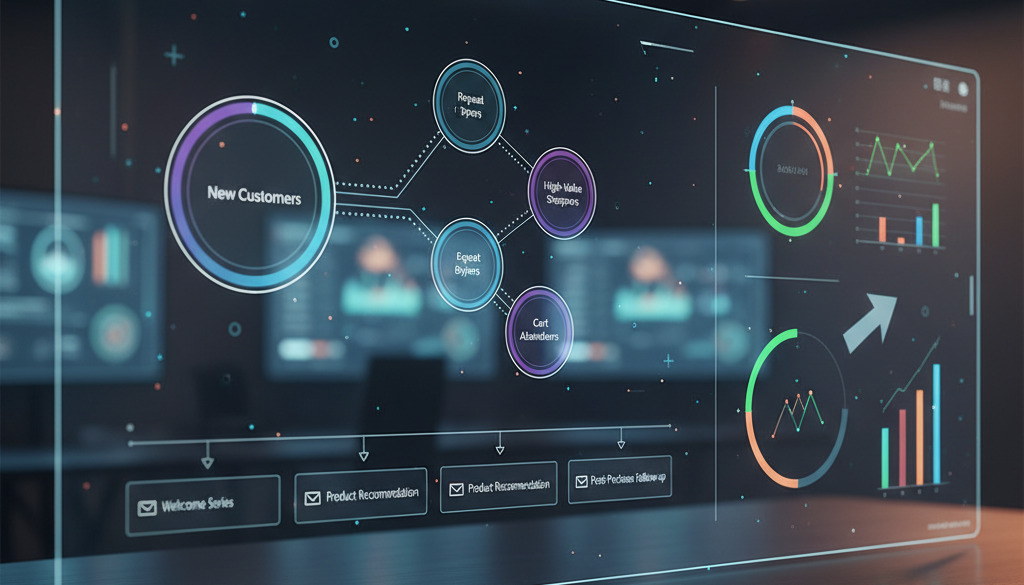
In the high-stakes environment of modern digital retail, the traditional manual approach to content production has become a bottleneck. As we move deeper into 2026, the volume of high-quality, relevant content required to sustain a brand’s presence across dozens of channels has surpassed human capacity alone. This is where e-commerce content marketing automation transitions from a luxury to an operational necessity.[2] It is the practice of using software platforms and artificial intelligence to orchestrate, deliver, and optimize content across the customer journey without constant manual intervention.
For US-based retailers, the “Efficiency Reset” of 2026 has shifted the focus from broad experimentation to disciplined, data-driven execution. Content marketing automation allows brands to scale their message while maintaining a thin, agile team. By automating the distribution of personalized product stories, educational blog posts, and retargeting assets, businesses can ensure that the right message reaches the right individual at the exact moment of intent. This article explores how sophisticated automation frameworks are redefining the e-commerce landscape, driving higher conversions, and fostering long-term brand loyalty.
Understanding the Core Components of E-commerce Content Marketing Automation
The foundation of any successful automation strategy lies in its ability to process data and translate it into a meaningful customer experience. At the heart of this system are Customer Segmentation and Personalization Engines. These tools don't just collect information; they synthesize demographics, purchase history, and real-time browsing behavior into actionable "intent profiles." For instance, a luxury footwear brand might use automation to identify a segment of "sustainability-focused high-spenders" and dynamically adjust the content they see to highlight eco-friendly materials rather than price points.
Another pillar is Automated Email Marketing Workflows. Moving beyond the "batch and blast" methods of the past, 2026 workflows are event-driven. Common triggers include abandoned cart recovery, post-purchase replenishment reminders, and birthday rewards. The key differentiator today is predictive timing—AI determines when a specific user is most likely to open their inbox and triggers the email accordingly, significantly increasing open rates beyond industry averages.
Finally, Social Media Automation has evolved from simple post-scheduling to intelligent content distribution. Modern tools now curate user-generated content (UGC) and automatically format it for various platforms like Instagram, TikTok, and Pinterest. By leveraging predefined rules based on trending topics or engagement metrics, these systems ensure a brand's social presence remains active and relevant, even during non-working hours.
Strategic Implementation: Building Your E-commerce Automation Framework
Before deploying software, a business must define clear Goals and Key Performance Indicators (KPIs). Without a measurable roadmap, automation can become a "set it and forget it" liability rather than an asset. Key metrics in 2026 include Customer Lifetime Value (CLV), Average Order Value (AOV) growth, and specific conversion rate lifts attributed to automated touchpoints. If the goal is to increase AOV, your automation framework should focus on cross-sell and up-sell logic within the checkout and post-purchase sequences.
Selecting the right tools requires an evaluation of the business's current scale. While all-in-one platforms like HubSpot or Klaviyo offer powerful native features, enterprise-level brands may opt for a "best-of-breed" approach, integrating specialized tools for CRM, email, and social. The selection criteria should prioritize integration capabilities. Your automation stack must "talk" to your e-commerce platform—whether it's Shopify Plus, Magento, or WooCommerce—through robust APIs. This data flow ensures that a customer who just bought a pair of running shoes doesn't get an automated discount code for the same pair five minutes later, a common friction point in poorly integrated systems.
Integration also extends to the data pipeline. In the era of privacy-first marketing, your system must respect "zero-party" data—information customers proactively share. Ensuring this data flows seamlessly into your personalization engine allows for a unified customer view, preventing fragmented messaging across email, SMS, and web channels.
Automated Email Marketing Workflows: From Triggers to Conversions
Email remains the highest ROI channel in e-commerce, but its success now depends on sophisticated behavioral triggers. A standard "Welcome Series" is no longer enough. In 2026, top-performing brands use tiered onboarding that adjusts based on the user's initial interaction. If a subscriber joins via a 10% off popup but doesn't use it, the automation might pivot to an educational piece about the brand's heritage or product quality, rather than simply sending more reminders about the discount.
Abandoned Cart Recovery has also reached a new level of maturity. Instead of a single "You forgot something" email, automation engines now analyze the cart's value. A high-value cart might trigger a sequence that includes a personalized video message or a limited-time offer for free shipping, whereas a lower-value cart might simply receive a social proof email featuring testimonials from other buyers. This nuance ensures that margins are protected while conversion chances are maximized.
A/B testing is built directly into these workflows. Modern automation tools can run continuous "Champion/Challenger" tests on subject lines, send times, and button colors. The system automatically diverts the majority of traffic to the winning variant after a statistically significant period, allowing marketers to optimize performance without manual calculation. This constant iteration loop is the hallmark of a self-optimizing marketing system.
Dynamic Website Content and On-Site Personalization
The website experience shouldn't be static in 2026. Dynamic Website Content allows a retailer to rearrange its homepage based on the visitor’s history. If a returning customer has only ever bought outdoor gear, the hero banner should feature the latest hiking equipment, not the general "New Arrivals" collection. This real-time adaptation reduces the cognitive load on the shopper, leading them to their desired product faster.
AI-driven recommendations go beyond "customers also bought." Advanced engines analyze cross-category affinities and visual similarities. For example, if a customer is browsing a specific mid-century modern sofa, the automation engine can dynamically display matching rugs and lamps that fit that specific aesthetic, even if those items haven't been frequently purchased together historically. This is particularly effective for Personalized Landing Pages used in ad campaigns, where the content can be tailored to match the specific ad creative that the user clicked.
Contextual CTA (Call to Action) buttons are another lever. A first-time visitor might see a "Sign Up for 15% Off" button, while a loyal customer might see "Check Your Points Balance." This ensures every interaction is relevant to the user's specific stage in the buying journey, significantly reducing bounce rates and increasing the likelihood of a meaningful engagement.

Leveraging AI and Machine Learning for Predictive Content
We have moved past reactive automation into the age of Predictive Content. By employing machine learning models, e-commerce brands can now anticipate a customer's next move before they make it. Predictive analytics can identify when a customer is likely to "churn" or stop buying, triggering a proactive re-engagement sequence with a high-value offer to win them back. This shift from defensive to offensive marketing is critical for maintaining high retention rates in a crowded market.
Chatbots and Virtual Assistants have similarly evolved. In 2026, they are no longer just basic FAQ repositories. Integrated with a brand’s content library, these assistants act as personal shoppers. A user can type, "Find me a cocktail dress for a beach wedding in November," and the AI will scan the inventory, check weather trends for that season, and return curated content including product links and styling advice. This is the essence of "Conversational AI"—delivering high-value content through a natural, automated interface.
The concept of Agentic Commerce—optimizing for AI shopping bots that act on behalf of consumers—is also emerging. Automation systems must now structure their content metadata so that these autonomous agents can easily parse product benefits and price comparisons. If your content isn't "bot-readable," you may be invisible to a growing percentage of shoppers who use AI to navigate the web and make purchasing decisions.
Automated Content for Customer Lifecycle Management
Content automation is a powerful tool for the entire Customer Lifecycle, starting with Onboarding and Education. For complex products, such as skin care regimens or high-end electronics, automated sequences can guide the buyer through getting the most out of their purchase. Weekly "Tips and Tricks" emails or automated SMS links to "How-To" videos reduce buyer's remorse and decrease the volume of support tickets by proactively answering common questions.
Moving toward the middle of the lifecycle, Loyalty and Retention Automation keeps the brand top-of-mind. Instead of a generic monthly newsletter, a loyalty automation system sends personalized updates on a customer's progress toward their next reward. This might include content like "You're only 50 points away from a free gift! Here are three items you'll love that will get you there."
Finally, Win-back Campaigns leverage historical data to re-engage dormant customers. If a user was a frequent buyer of coffee pods but hasn't ordered in 60 days, an automated workflow can send a content piece about "Exploring New Flavors" along with a personalized discount. By automating this process, brands ensure no customer falls through the cracks, effectively extending the lifetime value of every acquisition.
Measuring and Optimizing Automated Content Performance
The "Efficiency Reset" requires rigorous Attribution Modeling. To truly understand the ROI of content marketing automation, brands must look beyond "last-click" attribution. Fractional attribution models allow marketers to see how an automated social post influenced a later search, which eventually led to a conversion through an automated email. This holistic view is necessary for justifying the investment in sophisticated automation stacks.
Continuous A/B Testing is the engine of improvement. In an automated environment, testing should be perpetual. Every element—from the sender's name in an email to the placement of "Recommended for You" blocks on a mobile app—should be under constant scrutiny. The goal is to reach a state where the system is self-optimizing. For instance, if an automation platform notices that video content is driving higher engagement with Gen Z shoppers while long-form blogs work better for Boomers, it should automatically shift the content mix for those respective segments.
Data visualization tools are essential for this stage. Dashboards should not just show "what" happened, but "why" it happened. By connecting performance data back to strategic goals, e-commerce managers can make informed decisions about where to scale their efforts. If data shows that automated SMS is yielding a 5x higher conversion rate than email for flash sales, the automation strategy can be adjusted to prioritize the mobile channel for time-sensitive content.
Addressing Data Privacy and Compliance in Automation
As automation becomes more pervasive, Data Privacy and Compliance (such as GDPR in Europe and CCPA in California) must be at the forefront. Ethical automation requires transparency. Brands must clearly communicate what data is being collected and how it will be used to enhance the shopping experience. Robust "Consent Management Platforms" (CMPs) should be integrated directly into the automation workflow to ensure that a customer's marketing preferences are respected across all channels instantly.
Maintaining security within automated workflows is also vital. When systems are sharing data via APIs, every connection is a potential point of failure. E-commerce brands must ensure that their chosen automation partners adhere to the highest security standards, such as SOC2 compliance. This protects the brand's reputation and ensures the customer's personal data is never compromised in the pursuit of hyper-personalization.
Furthermore, brands must be careful to avoid Intrusive Automation Tactics. There is a fine line between a helpful recommendation and "digital stalking." Over-automation—sending too many messages or being too specific about a user's off-site behavior—can lead to "brand fatigue" and high unsubscribe rates. Best practices in 2026 suggest a "less is more" approach: highly relevant, timed content will always outperform a high volume of generic outreach. Audience segmentation is the best defense against being perceived as spammy.

The Future of E-commerce Content Marketing Automation
The horizon of e-commerce automation points toward Hyper-personalization at Scale. We are moving toward a future where every single customer sees a unique version of a digital storefront, tailored in real-time by AI. This could include Augmented Reality (AR) integrations, where an automated content flow sends a customer a personalized AR filter to "virtually try on" a product they recently viewed on the site. This level of immersion will redefine the boundaries between content and commerce.
Voice Commerce and Conversational AI will also play a massive role. As smart speakers and voice assistants become more integrated into the household, automation will need to adapt. Brands will need to produce "audio-first" content specifically designed for voice search and interaction. The automation system of the future will handle the logic of when to speak to a customer, what tone of voice to use, and how to facilitate a purchase through a simple voice command.
Finally, we will see the rise of Self-Optimizing Systems that require minimal human input. These systems will not only distribute content but also generate it. Generative AI will create unique images and copy for every individual, ensuring that the visual and textual aesthetic of the marketing perfectly aligns with the customer’s personality and preferences. The human marketer’s role will shift from "creator" to "orchestrator," setting the ethical boundaries and strategic direction for these powerful machines.
Conclusion: Strategic Automation for Sustainable E-commerce Growth
E-commerce content marketing automation is no longer a futuristic concept; it is the fundamental infrastructure for growth in 2026.[1] By automating the repetitive tasks of segmentation, distribution, and optimization, brands can refocus their creative energy on high-level strategy and brand storytelling. The benefits are clear: reduced operational costs, a significantly improved customer experience, and a measurable increase in revenue through higher conversion rates and customer retention.
However, the transition to an automated framework must be intentional. It requires a solid foundation of clean data, a strategic selection of tools, and a commitment to ethical, privacy-first marketing. As the digital landscape continues to evolve through AI and new commerce agents, those who embrace sophisticated automation today will be the ones who lead the market tomorrow. Now is the time to audit your current content workflows and identify where automation can turn your manual bottlenecks into a scalable engine for sustainable growth.
FAQ
What is e-commerce content marketing automation?
E-commerce content marketing automation involves using software to streamline and automate tasks related to creating, distributing, and optimizing content for online sales. This includes everything from personalized product recommendations to automated email campaigns that nurture leads and drive conversions.
How can automation improve e-commerce content marketing in 2026?
Automation allows e-commerce businesses to scale their content efforts efficiently, deliver highly personalized experiences to customers at every stage of the buyer's journey, and gain deeper insights into content performance for continuous improvement.
What are the key benefits of adopting an e-commerce content marketing automation strategy?
The primary benefits include increased efficiency, enhanced customer engagement through personalized content, improved lead generation and conversion rates, and a more data-driven approach to content strategy refinement.
→ Read the full Shopify & Ecommerce guide
Keep reading
Hand-picked guides that go deeper — open the one you need next:
- Shopify Blog Content for Sales: A Strategic Blueprint
- Shopify SEO: Boost Sales with Blog Content Strategy
- Shopify AI Blog Content: Drive Sales
- E-commerce Blog Automation: The Smart Way to Grow Your Store
→ Read the full Shopify & Ecommerce guide