
Google Business Profile AI Content: The 2026 Strategy Guide
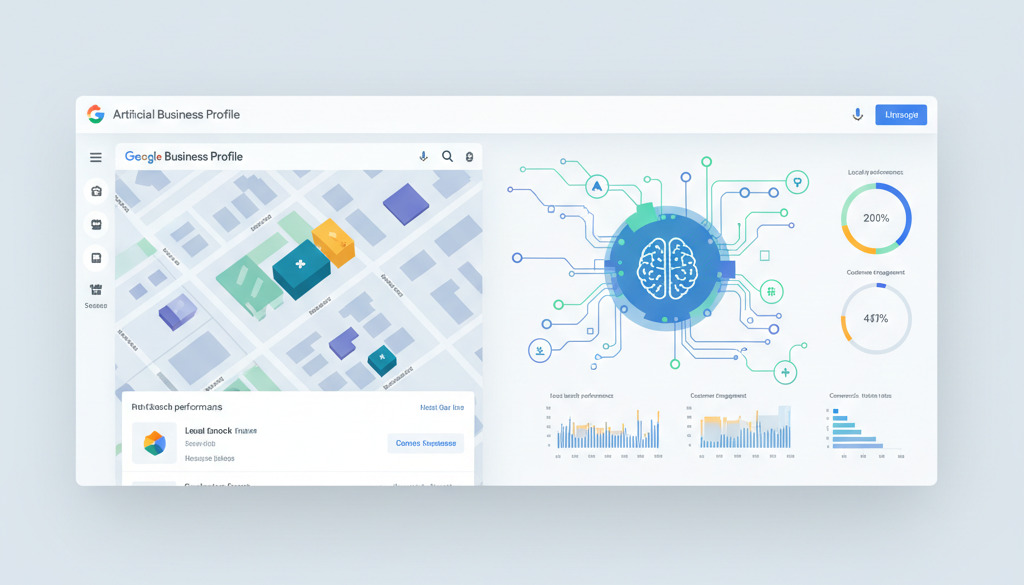
The landscape of local search is undergoing its most significant transformation since the inception of the smartphone. For nearly two decades, Google Business Profile (GBP) served as a digital storefront—a static collection of contact details and hours that users would browse like a modern-day Yellow Pages.[1] However, as we move through 2026, the arrival of "Ask Maps" and Gemini-powered search has turned these profiles into the "primary source of truth" for conversational AI. Managing a GBP is no longer just about filling out fields; it is about feeding a sophisticated AI ecosystem the data it needs to recommend your business over a competitor.
Google Business Profile AI content is the intersection of traditional Local SEO and the new frontier of Generative Engine Optimization (GEO). Businesses that leverage AI tools to craft, optimize, and manage their listings are seeing higher engagement and better placement in AI-driven summaries. This guide explores how to integrate AI into your GBP strategy while maintaining the authenticity and accuracy required to convert local searchers into loyal customers.
Understanding Google Business Profile and Its Content Pillars
A Google Business Profile is the cornerstone of local visibility. When a user asks an AI-powered search tool for a recommendation, the AI crawls specific "pillars" of your profile to determine relevance. If these pillars are incomplete or outdated, your business effectively becomes invisible to conversational search engines.
The core functionalities of a GBP include visibility in Google Maps and Search, direct customer interaction via messaging, and the distribution of essential business data. To optimize for AI, we must look at the key content types:
- Business NAP (Name, Address, Phone): The foundational data points. AI uses these to verify your physical existence and proximity to the user.
- Operating Hours and Attributes: AI models like Gemini now prioritize businesses with specific attributes (e.g., "wheelchair accessible," "free Wi-Fi," or "Saturday service") when answering nuanced user queries.
- Visual Media: Photos and videos provide the "proof" the AI needs to verify your services. AI vision models can actually "see" what is inside your photos to categorize your business accurately.
- Dynamic Content (Posts, Q&A, Reviews): These areas are where Google Business Profile AI content truly shines. Frequent updates through posts and a healthy Q&A section provide the context that helps AI understand the current state of your business.
By treating each of these pillars as a data source for Google’s Large Language Models (LLMs), businesses can transition from simply being "listed" to being "recommended."
The Emergence of AI in Content Creation
The rise of Artificial Intelligence (AI) and Machine Learning (ML) has fundamentally changed how marketing teams approach content. In the context of GBP, AI is no longer just about generating text; it is about analyzing massive datasets to predict what information a customer will need before they even ask for it. Current AI tools can now perform text generation, sophisticated image editing, and sentiment analysis at a scale previously impossible for small businesses.
AI tools can analyze competitors’ profiles to identify content gaps. For example, if an AI analysis reveals that nearby competitors are not mentioning "eco-friendly packaging" despite high local search interest, it can suggest integrating that specific content into your profile. This shift toward data-driven content generation ensures that every word on your GBP serves a strategic purpose in the local search ecosystem.
AI-Powered Content Generation for GBP: Textual Elements
Text is the primary medium through which AI communicates your value to potential customers. Using Generative AI to manage textual elements can save dozens of hours while improving the professional quality of your listing.
Crafting Compelling Business Descriptions
The business description is your elevator pitch to both humans and AI. AI tools like ChatGPT or Gemini can take a bulleted list of your unique selling points and transform them into a cohesive, 750-character narrative optimized for local intent. However, the "set it and forget it" approach is a mistake. To succeed, businesses must prompt the AI to include specific local landmarks or neighborhood names, which anchors the business in a specific geographic context. Human review remains essential to ensure the tone matches the brand’s actual personality.
Optimizing Service and Product Listings
Many businesses leave their service menus incomplete. AI can bridge this gap by analyzing industry trends and suggesting services you might have overlooked. If you run a HVAC company, AI might suggest adding "Smart Thermostat Installation" or "Seasonal Efficiency Audits" to your service list based on rising search volumes. AI can also generate technical yet accessible descriptions for these services, ensuring they contain the keywords necessary for high-ranking visibility.
Generating Engaging GBP Posts
Consistency is the biggest challenge with GBP posts. AI excels at creating a content calendar based on upcoming holidays, local events, or seasonal promotions. For instance, a local bakery can use AI to draft a series of posts for "National Croissant Day," complete with enticing copy and relevant calls to action (CTAs). By automating the drafting process, businesses can maintain a "fresh" profile, which Google’s algorithm interprets as an active, reliable business.

Leveraging AI for Visual Content on GBP
In the era of "Ask Maps," visual content is just as important as text. Google's AI can now interpret objects, text, and even "vibes" within images to decide if a business belongs in a search result. If a user asks for a "cozy cafe for working," the AI looks for photos containing laptops and comfortable seating.
Enhancing Photo and Video Content
AI-powered editing tools can now automatically adjust lighting, remove distracting background objects, and upscale lower-resolution photos to ensure your profile looks professional. While Google’s policies emphasize authenticity, using AI to improve the quality of a real photo is a highly effective way to increase click-through rates. Furthermore, AI tools can now help businesses "transcribe" their video content into captions, making the visual data more accessible to search crawlers.
Ensuring Visual Quality and Relevance
A major pitfall for local businesses is uploading irrelevant or low-quality images. AI content scanners can evaluate your photo library before you upload, flagging images that might be out of focus or inconsistent with your brand. AI can also help in the curation process by identifying which types of photos (e.g., "interior," "team members," or "products") are currently receiving the most engagement in your specific industry, allowing you to prioritize the visual content that actually drives conversions.
AI for GBP Q&A and Review Management
Reviews and the Q&A section are the social proof of your GBP. They are also highly dynamic data sources that AI uses to gauge customer satisfaction and business reliability. Managing these sections is critical for maintaining high rankings in 2026.
Proactive Q&A Content Generation
The "Questions & Answers" section is often neglected. Savvy businesses are now using AI to analyze customer emails, call logs, and common industry queries to pre-populate the Q&A section. By using AI to draft clear, concise answers to questions like "Do you offer contact-less delivery?" or "Is there parking behind the building?", you provide the AI with more "surface area" to index, making it easier for Conversational AI to recommend you when those specific topics are searched.
AI-Assisted Review Response Strategies
Google has begun testing "Reply to reviews with AI" directly within the GBP interface. This feature analyzes the sentiment of a review—whether positive, negative, or neutral—and suggests a professional draft. For a positive review, the AI might highlight specific products mentioned by the customer. For a negative review, it can help de-escalate the situation with an empathetic, non-confrontational tone.
"Responding to reviews can impact conversions and trust. But generic AI replies could be risky and erode trust... Response quality matters more than whether a business replies." — Search Engine Land, 2026.This underscores the need for "Human-in-the-loop" management: use the AI to draft, but have a human refine the response to ensure it feels genuine.
AI for Optimizing GBP Performance and Insights
The true power of AI lies in its ability to turn raw data into actionable insights. GBP provides a wealth of information—"Insights"—that many business owners find overwhelming. AI simplifies this by identifying patterns that are not visible to the naked eye.
Keyword Research and Integration
Modern keyword research for GBP has shifted from broad terms to "long-tail" local queries. AI tools can analyze search trends to find hyper-local keywords unique to your city or neighborhood. Instead of just "Plumber," AI might identify a surge in searches for "emergency pipe repair in [Neighborhood Name]." Integrating these AI-identified keywords naturally into your business description and posts can significantly boost your presence in Generative Engine Optimization (GEO).
Performance Analysis and Content Refinement
AI-driven analytics can correlate specific updates to spikes in customer action. For example, an AI report might show that every time you post a photo of a "monthly special," calls to the business increase by 15% within 48 hours. This allows for a continuous feedback loop where AI suggests content updates based on what is actually working, rather than guesswork. AI can also monitor GBP "health," alerting you if your profile’s performance dips compared to local competitors.

Ethical Considerations and Best Practices for AI in GBP
As AI becomes more prevalent in local marketing, maintaining ethical standards is paramount. Google’s algorithms are increasingly sophisticated at detecting "spammy" or deceptive AI content. Adhering to best practices is not just about ethics; it is about protecting your listing from suspension.
- Transparency and Authenticity: AI should augment your brand, not replace it. Avoid using AI-generated stock photos that don't represent your actual business. Customers expect the physical reality of your shop to match the digital representation.
- The Critical Need for Accuracy: AI can occasionally "hallucinate" or provide incorrect information (e.g., stating you are open on a holiday when you are not). Every piece of AI-generated content—especially hours, prices, and services—must be fact-checked by a human before going live.
- Avoiding Manipulation: Do not use AI to generate fake reviews or "stuff" keywords into the Q&A section. These practices are high-risk and can lead to permanent bans.
- Brand Voice Consistency: AI can sometimes sound overly formal or "robotic." It is essential to feed your AI tools examples of your brand’s past successful content to "train" it on your specific voice and tone.
By focusing on "Good GEO is Good SEO," as noted by industry experts, businesses can ensure their AI usage aligns with Google’s goal of providing the most helpful, accurate information to the end-user.
The Future of AI and Google Business Profile Content
Looking ahead, the integration of AI and GBP will only deepen. We are already seeing the move toward hyper-personalization, where the content shown to a user on your GBP might change based on their past search history. If a user frequently searches for "vegan options," the AI might prioritize your vegan-related photos and reviews when showing them your profile.
Predictive content creation is also on the horizon. AI may soon suggest updating your profile with "ice melt services" the moment a winter storm warning is issued for your zip code. The role of the human marketer is shifting from "content creator" to "strategic orchestrator," where the focus is on guiding the AI and ensuring the data it uses is current and truthful.
Furthermore, the integration of GBP AI with other marketing channels—like automated email follow-ups or localized AI-driven ads—will create a seamless ecosystem where local businesses can compete with national brands on a more level playing field.
Conclusion
Google Business Profile AI content is no longer a luxury for the tech-savvy; it is a necessity for any local business that wants to remain competitive in 2026 and beyond. By leveraging AI for textual storytelling, visual optimization, and proactive customer engagement, businesses can ensure they provide the high-quality data that Google’s Gemini and "Ask Maps" demand.
The key to success lies in balance. Use AI to handle the heavy lifting of drafting, analyzing, and scheduling, but never lose the human touch that builds trust with your local community. As AI continues to redefine the "search" in local search, those who embrace these tools with a focus on accuracy, authenticity, and strategic optimization will lead the pack in local rankings and customer conversions.
The Evolving Landscape of Google Business Profile AI Content and Its Strategic Implications
As Google Business Profile (GBP) continues its rapid AI integration, businesses must recognize that this evolution is not merely about automated content generation; it signifies a fundamental shift in how local businesses are discovered and engaged with online. The data fed into these AI models is becoming the primary currency for visibility. Consequently, the accuracy, completeness, and recency of your GBP information directly impact how effectively AI can represent your business. For instance, an AI analyzing your business profile might interpret a sudden influx of reviews mentioning "late delivery" as a sign of customer dissatisfaction, even if those reviews are outliers. Without human oversight to contextualize and address such feedback, the AI could inadvertently deprioritize your business in relevant local searches. This underscores the critical need for businesses to actively manage and curate their data, ensuring it paints an accurate and nuanced picture of their operations.
The introduction of AI-powered features within GBP also extends to sophisticated analytics and performance insights. Instead of simply showing raw data, future GBP dashboards, driven by AI, will likely offer predictive analytics. Imagine receiving an AI-generated report that not only tells you how many people viewed your profile but also suggests specific actions to improve engagement based on an analysis of successful competitors and evolving consumer trends. This could include recommendations for new service offerings, optimized posting schedules, or even targeted promotional content tailored to specific audience segments identified by the AI. This proactive, data-driven approach transforms GBP from a static listing into a dynamic marketing hub, capable of anticipating market needs and guiding businesses towards greater success.
Leveraging AI for Enhanced Customer Interaction and Reputation Management
Beyond content creation and analytics, Google Business Profile AI content is set to revolutionize customer interaction and reputation management. AI is already facilitating faster responses to customer inquiries through automated suggestions for replies to reviews and questions. Anticipate this capability expanding significantly. AI chatbots integrated with GBP could soon handle basic customer service inquiries, appointment scheduling, and even provide personalized recommendations based on a customer's search history and stated preferences. This frees up human staff to focus on more complex issues and high-value customer interactions, ultimately improving overall customer satisfaction. Furthermore, AI can be instrumental in monitoring and analyzing online sentiment across reviews and Q&A sections, flagging potentially damaging comments or emerging customer concerns for prompt human intervention. This strategic use of AI ensures that businesses not only generate compelling content but also maintain a stellar online reputation and foster stronger customer relationships in an increasingly automated world.
Keep reading
Hand-picked guides that go deeper — open the one you need next:
- The Ultimate Guide to AI-Powered SEO for Small Businesses
- Volteruno AI for SMB Content Marketing
- AI-Powered SEO for Small Business: Zero to Page One
- Local SEO Made Easy: AI Content for Small Businesses
→ Read the full Small Business guide