
Local SEO AI: The Ultimate Guide to Dominating Local Search

The digital storefront has undergone a radical transformation. For decades, local search was a predictable game of proximity and keyword density. If a business was physically close to a user and mentioned "plumber in Chicago" enough times on their website, they likely appeared in the "Local Pack." However, as we move into 2026, the landscape has shifted from simple keyword matching to complex intent interpretation driven by Artificial Intelligence (AI).[1]
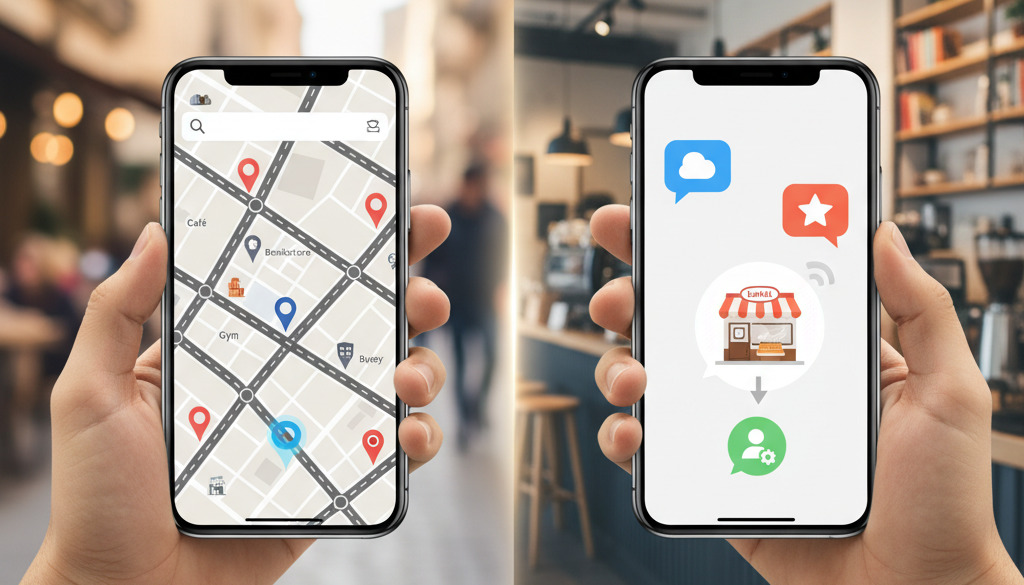
Today, local search is no longer confined to the Google search bar. It has fragmented across AI assistants like Gemini, visual discovery platforms like Instagram and TikTok, and community-driven hubs like Reddit. Businesses are no longer just competing for "blue links"; they are competing for AI recommendations. This guide explores the intersection of AI and local search, offering a roadmap for businesses to leverage these technologies to dominate their local markets.
The Foundational Pillars of Local SEO in the AI Era
Local SEO remains the practice of optimizing an online presence to attract more business from relevant local searches. The core objectives—increasing visibility, climbing local rankings, and driving physical foot traffic—remain unchanged. Traditionally, this involved a "Big Three" approach: Google Business Profile (GBP) management, local citation building (consistent Name, Address, and Phone number), and garnering customer reviews.
In the AI era, these fundamentals are not obsolete; they have become the data fuel that powers AI recommendation engines. AI doesn't replace the need for a GBP or accurate NAP data; instead, it uses this information to build an "Entity." In the eyes of an AI, your business isn't just a website link; it's an entity with specific attributes, relationships, and a reputation. AI-driven search models like Google’s Gemini or search-generative experiences (SGE) analyze these pillars to determine if your business is the most "trustworthy" answer to a query. Therefore, the foundation of modern Local SEO is ensuring your data is so structured and consistent that an AI can parse it without friction.
Unveiling AI's Impact on Keyword Research for Local Search
Traditional keyword research often relies on historical volume data, which can be lagging. AI changes this by performing real-time linguistic analysis to uncover hyper-local search patterns. While a human might target "Italian restaurant Dallas," AI tools can identify that users in specific neighborhoods are shifting toward more conversational, long-tail queries like "romantic outdoor patio dining with gluten-free pasta near Turtle Creek."
Furthermore, AI-powered sentiment analysis allows marketers to look through the keywords into the intent. By analyzing thousands of local forums, reviews, and social media posts, AI can identify what customers in a specific region actually care about. For example, in a specific suburb, "emergency HVAC repair" might be less important than "energy-efficient cooling systems" due to high local utility costs. AI performs a "competitor keyword gap analysis" by scanning local rivals' content and identifying the topics they’ve missed, allowing you to capture untapped local traffic.
Optimizing Google Business Profile (GBP) with AI-Driven Insights
Google Business Profile remains the crown jewel of local search, and AI is significantly enhancing how businesses manage it. One of the most common hurdles for multi-location brands is maintaining a consistent posting schedule. AI tools now analyze historical engagement data to suggest the exact day and hour a business should post a "Special Offer" or "Update" to maximize impressions in a specific geographic area.
AI also tackles the nuances of the business description and Q&A sections. Using natural language generation (NLG), AI can draft responses to common customer questions by pulling information directly from your service menus or website, ensuring accuracy and brand voice. A critical, often overlooked function of AI in 2026 is its ability to identify "ghost" or duplicate listings. AI crawlers can cross-reference millions of data points to spot unauthorized duplicates that dilute your ranking power, signaling Google to merge or remove them instantly. This protects your "Entity Authority" and ensures customers are always directed to the verified profile.
AI-Powered Local Content Creation and Personalization
Content is the bridge between a search query and a conversion, but generic content no longer cuts it. AI enables "Localized Content at Scale." Instead of writing one blog post about "Winter Car Maintenance," AI can generate variations tailored to specific regions—focusing on road salt and rust for Minneapolis, or battery health in the extreme cold of Buffalo—while incorporating local landmarks or neighborhood names to signal relevance to search engines.
Personalization goes a step further by segmenting your local audience. AI can analyze the browsing behavior of local users to serve different content. A first-time visitor to a local gym’s site might see an AI-generated offer for a "New Member Trial," while a returning local might see a schedule for "Advanced HIIT Classes." Additionally, AI tools automate the implementation of Local Schema Markup—the backend code that tells search engines your exact coordinates, service area, and business hours—ensuring your content is perfectly formatted for AI "Answer Engines."
Enhancing Local Link Building and Citation Management through AI
Link building has traditionally been the most labor-intensive part of Local SEO. AI simplifies this by acting as a high-speed scout. AI tools can analyze the backlink profiles of every top-ranking local competitor and identify high-authority local "linking hubs"—such as neighborhood blogs, local news sites, and chamber of commerce directories—that are likely to grand a link. These tools can even draft personalized outreach emails that reference specific recent articles on those sites, significantly increasing the success rate of local PR efforts.
In the realm of citations, consistency is king. NAP (Name, Address, Phone number) inconsistencies are the primary reason for ranking drops. AI-driven citation managers monitor the web 24/7. When a third-party directory pulls outdated information from an old phone book or a previous tenant, AI detects the discrepancy and automatically triggers a correction request. This automated "housekeeping" ensures that the AI models powering Google and Bing always see a unified, trustworthy data set for your business.
Leveraging AI for Advanced Local Technical SEO Audits
Technical SEO for local businesses has a unique set of requirements, primarily focused on the mobile experience. Since most local searches happen on the move, AI audits prioritize mobile-first indexing, page speed, and "thumb-friendly" UI elements. AI-driven audit tools don't just find broken links; they analyze site structure for "Local Relevance." For instance, an AI auditor might flag that your "Boston Services" page is too deep in the site architecture and suggest moving it closer to the root domain to improve its ranking potential.
Furthermore, AI models can simulate "Crawl Budgets" for multi-location sites. By predicting how search bots will navigate your site, AI can recommend internal linking strategies that pass maximum "link juice" to the specific location pages that need a boost. It also identifies crawlability issues specific to localized dynamic content, such as scripts that pull in local weather or inventory, ensuring that these elements don't hinder indexation.
Analyzing Local Search Performance with AI-Driven Analytics
The standard Google Analytics setup often fails to show the full picture of a local customer’s journey. AI-driven analytics fill these gaps by attributing offline actions to online searches. Through predictive analytics, AI can forecast that a 10% increase in search impressions for "best brunch" on Thursday will likely result in a 15% increase in foot traffic on Saturday morning. This allows business owners to staff up or adjust inventory proactively.
AI also excels at "Attribution Modeling." It can track a user who first saw an Instagram ad, later searched for the business on Maps, and finally called via the GBP "Click-to-Call" button. By connecting these dots, AI gives businesses a "true" ROI for their Local SEO spend, moving past simple ranking metrics to tangible business outcomes like store visits and phone leads. This level of insight allows for more clinical, data-backed decisions regarding marketing budget allocation.

Mitigating Local SEO Risks and Staying Ahead with AI
The only constant in SEO is change. AI is now the primary tool for "Algorithm Volatility Monitoring." By tracking thousands of SERPs (Search Engine Results Pages) simultaneously, AI can detect the early tremors of a Google algorithm update before it is officially announced. This allows businesses to pivot their strategy—perhaps by shifting focus from link building to content depth—before their rankings take a hit.
However, the rise of AI in Local SEO brings ethical considerations. Over-reliance on AI-generated reviews or "spun" local content can lead to penalties for "spammy" behavior. The key is using AI as a co-pilot, not an autopilot. High-level strategy, brand voice, and community engagement still require a human touch. In 2026, the businesses that win are those that combine the efficiency of AI with the authenticity of a local neighborhood staple. Staying ahead means using AI to handle the data-heavy "drudge work" while humans focus on building real relationships with the local community.
Conclusion
We are witnessing a paradigm shift where "Local Search" is evolving into "Local Discovery." AI has moved from a buzzword to the underlying engine that determines which businesses survive and thrive in a fragmented digital world. By leveraging AI for hyper-local keyword research, Google Business Profile optimization, and predictive analytics, businesses can turn the complexity of the modern search landscape into a competitive advantage.
The future of Local SEO belongs to the agile. As Answer Engine Optimization (AEO) and Generative Engine Optimization (GEO) become the new standards, the focus must shift toward building "Entity Authority" and providing unmistakable value to the local user. Integrate AI into your strategy today—not to replace your human expertise, but to amplify it—and ensure your business remains the top recommendation for the AI-driven customers of tomorrow.
Keep reading
Hand-picked guides that go deeper — open the one you need next:
- Small Business AI Content: A Guide to Scalable Growth
- Small Business, Big Impact: Leveraging AI for Professional Content Marketing
- Boost Your SEO in 2026: The AI Edge for Small Businesses
- Mastering SEO for Small Businesses: An AI-Powered Approach
→ Read the full Small Business guide