
Multilingual AI Content: Reach 25 Languages
Key Takeaways
- Global Reach is Essential: In today's interconnected economy, limiting your content to a single language means missing out on the vast majority of the world's potential customers.
- AI as a Scalable Solution: Artificial intelligence has revolutionized content creation, making it possible to produce high-quality, localized articles in multiple languages at a scale and speed previously unimaginable.
- Localization Over Translation: Effective multilingual marketing goes beyond simple word-for-word translation. It requires deep cultural adaptation to resonate with local audiences, a process AI can be trained to assist with.
- Significant ROI: By drastically reducing the costs and time associated with traditional translation and content creation, multilingual AI offers a powerful return on investment, driving organic traffic and leads from new markets.
- Human Strategy is Irreplaceable: AI is a powerful tool, but it requires human oversight, strategic direction, and cultural expertise to be truly effective. The most successful strategies involve a partnership between human creativity and AI efficiency.
In an increasingly digital and borderless world, the ability to communicate with a global audience is no longer a luxury—it's a necessity. For many business owners, especially those who aren't digital natives, the thought of creating content for international markets can be daunting.[1] The barriers seem immense: high costs of professional translators, the complexity of managing multiple languages, and the time commitment required. However, a technological revolution is dismantling these barriers. The rise of sophisticated Artificial Intelligence now makes it possible to generate compelling, SEO-optimized blog articles in dozens of languages, opening up a world of opportunity. This is the new frontier of multilingual AI content marketing.
The Untapped Potential: Why Multilingual Content is Crucial for Global Growth
The internet has connected every corner of the globe, creating a single, massive marketplace. Yet, many businesses still operate as if their customers only speak one language. A staggering 75% of consumers prefer to buy from websites in their native language. By communicating with potential customers in the language they think, dream, and live in, you build an immediate foundation of trust and understanding. This isn't just about convenience; it's about respect. It shows you see them as a valued market, not just an afterthought. Relying solely on English in 2026 and beyond is a significant competitive disadvantage, as forward-thinking competitors are already capturing the loyalty of diverse audiences by speaking their language.
Beyond Translation: The Nuances of True Localization for Content
A common mistake in global marketing is confusing translation with localization. Translation is the literal, word-for-word conversion of text from one language to another. Localization is a much deeper process. It involves adapting your entire message—including text, visuals, and overall tone—to fit the cultural context of a specific market. Direct translation often leads to awkward phrasing, nonsensical idioms, or even offensive mistakes. For example, a slogan that is catchy in English might be meaningless or have a negative connotation in Japanese. True localization ensures your content feels natural and authentic to native speakers, building credibility and fostering a genuine connection.
Cultural Context in Content
Localization extends beyond words. Visual elements play a huge role in how your brand is perceived. Colors, for instance, have wildly different meanings across cultures. While white might signify purity and weddings in the West, it is associated with mourning in many parts of Asia. Imagery that resonates with a US audience might be confusing or inappropriate in the Middle East. Societal norms, values, and even humor vary dramatically from one country to the next. Your content must navigate these subtleties to be effective. This is where the synergy of AI and human cultural understanding becomes critical.
AI's Leap Forward: Revolutionizing Multilingual Content Creation
The role of AI in content has evolved dramatically. What began as rudimentary machine translation tools has blossomed into advanced Natural Language Generation (NLG) platforms. These modern AI systems don't just translate; they *write*. They can be trained to understand context, adopt a specific tone of voice, and structure information logically. This leap forward allows businesses to move beyond simple translations of existing articles and start generating unique, original content specifically for each target market. The ability to produce articles in 25, 50, or even more languages simultaneously allows for unprecedented scalability, transforming a once-prohibitive process into a streamlined, efficient workflow.
Choosing the Right AI Tools for Multilingual Marketing
Navigating the crowded market of AI solutions can be a challenge, especially when many tools are just riding a wave of hype. To find a platform that delivers real business value, you need a clear evaluation framework. Look for AI systems specifically designed for multilingual content generation, not just translation. Key considerations should include the breadth and quality of language support, the ability to customize content for different regions, and built-in SEO features. For business owners who want to bypass the complexity entirely, managed services can be an ideal solution. For example, some companies offer a service to get "More Customers From Your Blog" by leveraging their own proprietary AI to write and publish professional SEO blog posts for your website in minutes. This hands-off approach is perfect for those who know they need a strong online presence but lack the time or technical expertise to build it themselves.
Key Features to Prioritize
When assessing AI platforms, focus on these critical capabilities:
- Natural Language Generation (NLG): Does the AI produce text that is fluent, coherent, and indistinguishable from high-quality human writing?
- Multilingual Accuracy: The system must demonstrate a high degree of accuracy not just in grammar, but in applying context across its supported languages. Check if it supports low-resource languages that may be relevant to your expansion goals.
- Scalability and Efficiency: The platform should be able to handle a high volume of content production without a drop in quality, enabling you to launch in new markets quickly.
The Economics of Multilingual AI Content Marketing
Traditionally, a global content strategy was a major financial undertaking. It required hiring expensive marketing agencies, professional translators for each language, and dedicated content managers. AI-powered content generation dramatically changes this economic equation. The cost of creating an article with a sophisticated AI is a fraction of the cost of the manual process. This isn’t just about the initial outlay; it’s about the long-term ROI. By rapidly populating your website with high-quality, localized SEO content, you begin to attract organic traffic from new markets almost immediately. This sustainable stream of inbound leads generates revenue that far outweighs the investment in the AI technology, all while saving countless hours of manual work.
Cost-Benefit Analysis
Consider the direct comparison:
- Human-Powered: A single 2,000-word article could cost hundreds of dollars to write and another few hundred to translate into just one additional language. The process could take weeks.
- AI-Powered: An AI platform can generate a similar article in minutes. Even with human review and editing, the cost can be 70-90% lower, and the time-to-market is reduced from weeks to hours. When multiplied across dozens of articles and multiple languages, the savings are exponential.
Strategic Keyword Research for a Global Audience
To attract customers through search engines, you need to target the terms they are actually using. A common pitfall is to simply translate your existing English keywords and assume they will work in other markets. This rarely succeeds. Search behavior is deeply cultural. The words and phrases people use to find products or services can vary significantly by region, even among countries that speak the same language. AI-powered tools are invaluable here, as they can analyze massive datasets of local search queries to identify high-intent keywords and trending topics in each target market. For a deeper dive into this topic, our AI Content Keyword Research: The 2026 Strategy Guide offers advanced strategies.
Tools and Techniques for Global Keyword Discovery
An effective global strategy involves using AI-powered keyword research tools to uncover local search patterns. These tools can provide data on search volume, competition, and semantic variations for terms in virtually any language. It is also crucial to analyze the top-ranking content of your local competitors in each market. Understanding what keywords they are targeting and what topics are resonating with their audience provides a clear roadmap for your own content strategy.
Crafting Culturally Relevant AI-Generated Content
The quality of AI-generated content depends heavily on the quality of the instructions it receives. To create content that is culturally resonant, you must guide the AI with specific prompts and detailed context. This includes providing information about the target audience, desired tone of voice, local customs, and topics to avoid. However, AI, no matter how advanced, currently lacks true consciousness or cultural experience. Therefore, human oversight is a non-negotiable part of the process. This collaborative model ensures the final product is not only linguistically accurate but also culturally intelligent and brand-aligned.
Human-AI Collaboration in Content Refinement
The most effective workflow combines AI's speed with human expertise. This often involves having a native speaker or a cultural consultant review the AI-generated draft. Their role is to catch subtle nuances, correct any culturally awkward phrasing, and ensure the content genuinely speaks to the local audience. They act as a final quality-control layer, elevating the content from technically correct to truly engaging. This human-in-the-loop system is the gold standard for high-stakes multilingual content.

Optimizing Multilingual Content for Search Engines (SEO)
International SEO involves a unique set of technical considerations to ensure search engines like Google can understand and correctly rank your multilingual content. It’s not enough to simply post a German translation on your English website; you need to signal to search engines which version should be shown to which users. AI can assist in this process by automatically including targeted local keywords, but the technical framework must be correctly implemented.
Technical SEO for Multilingual Websites
Two key elements are crucial for international SEO:
- Hreflang Tags: These are small code snippets that tell search engines what language and regional targeting a specific page has. For example, a hreflang tag can specify that one version of a page is for French speakers in France, while another is for French speakers in Canada. This prevents duplicate content issues and ensures the right page appears in the right country's search results.
- Multilingual Sitemaps: Your XML sitemap should include all language versions of your URLs, with annotations linking them together. This helps search engine crawlers discover all your translated pages efficiently and understand your site's structure.
AI-Powered Multilingual Content Distribution Strategies
Creating great content is only half the battle; it needs to be seen by the right people. AI can play a pivotal role in optimizing your distribution strategy for a global audience. AI-driven analytics tools can analyze data to determine which channels—social media, professional networks, forums, or email—are most effective for reaching your target demographic in a specific country. This allows you to allocate your marketing budget more effectively and maximize the visibility of your newly created content. The process can be further streamlined; to learn how, explore our guide on Mastering Automated Content Publishing for Business Scale.
Tailoring Distribution Channels
A social media strategy that works in the US may not be effective in South Korea or Brazil. Each region has its preferred platforms. AI can help identify where your target audience is most active, whether it's on Facebook, Instagram, LinkedIn, or region-specific networks like VK in Eastern Europe or Line in Japan. Similarly, your email marketing efforts should be segmented by language and location to deliver personalized, relevant messages that resonate with subscribers in each market.
Measuring the Success of Your Multilingual AI Content Campaigns
To justify your investment and refine your strategy, you must track performance. Key Performance Indicators (KPIs) for multilingual content marketing are similar to domestic ones but must be analyzed on a per-language basis. You need to monitor organic traffic, user engagement metrics (like bounce rate and time on page), and conversion rates for each language version of your site. This granular data will reveal which markets are responding best to your content and where adjustments may be needed. Analytics platforms like Google Analytics can be configured to track these metrics with precision.
Essential Multilingual Analytics
Focus on these key reports:
- Organic Search Performance by Language: Track impressions, clicks, and average search ranking for each language-specific section of your website.
- Geographic Audience Reports: Analyze where your traffic is coming from. Are you successfully attracting visitors from your target countries?
- Conversion Rates on Localized Pages: Monitor how many visitors from a specific country are completing your desired goals, such as filling out a contact form or making a purchase on a localized landing page.
Case Studies: Businesses Thriving with Multilingual AI Content
The theoretical benefits of multilingual AI are being proven in the real world every day. Consider a small e-commerce business selling handmade leather goods. Initially limited to the US market, they used an AI platform to generate product descriptions and blog posts in Spanish, German, and French. Within six months, they saw a 40% increase in international traffic and a 15% rise in overseas sales. Similarly, a B2B software company expanded into the Asia-Pacific market by producing localized case studies and technical articles in Japanese and Korean. This led to a significant increase in demo requests from these regions. These businesses are discovering they get more customers from their blog by using AI-driven solutions that handle the heavy lifting of SEO content creation, allowing them to be discovered organically on Google by a whole new customer base. Many find that having the ability to have their own artificial intelligence write professional SEO blog posts for their website in minutes, almost like magic, is a complete game-changer for growth.
Overcoming Challenges and Future Trends in Multilingual AI Content
While powerful, AI is not without its challenges. One concern is inherent bias in AI models, which are often trained on English-centric data. This can sometimes lead to content that doesn't accurately reflect the nuances of other cultures or might inadvertently perpetuate stereotypes. Another challenge is ensuring data privacy and compliance with varying international regulations. As AI continues to advance, we can expect more sophisticated models capable of deeper cultural understanding, improved contextual awareness, and even more seamless integration into existing marketing workflows. The future likely holds AI that can proactively identify trending topics in specific regions and suggest culturally appropriate content formats, further blurring the lines between human and machine creativity.
Diversifying Your Reach: Multilingual AI Content Marketing for Global Audiences
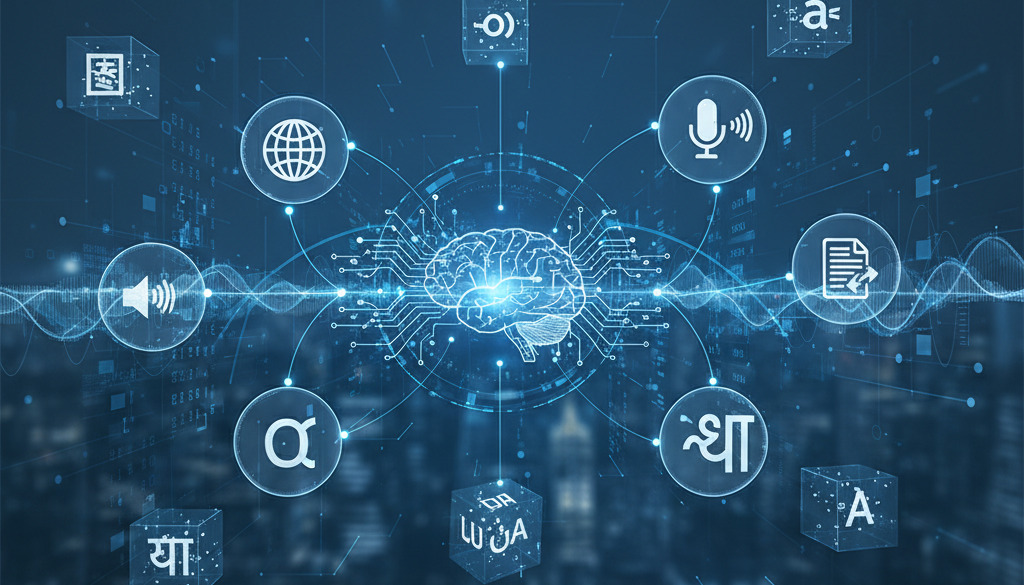
In today's interconnected world, the aspiration to reach a global audience through multilingual AI content marketing is not just a growth strategy; it's becoming a necessity for businesses aiming for sustained relevance and competitive advantage. The power of artificial intelligence in generating content has been steadily increasing, but its ability to transcend language barriers and cultural nuances is where its true transformative potential lies.[2] By leveraging multilingual AI content marketing, companies can unlock previously inaccessible markets, foster deeper connections with diverse customer bases, and establish a truly international brand presence. This strategic approach moves beyond simple text translation to nuanced content creation that resonates with local sensibilities, driving engagement and conversion across a multitude of linguistic landscapes.
The core of effective multilingual AI content marketing lies in the strategic deployment of AI tools that understand and adapt to specific linguistic and cultural contexts. This goes beyond automated translation, which often results in stilted or inaccurate messaging. Instead, advanced AI models can be trained on vast datasets representative of different languages and cultures, enabling them to generate original content that feels authentic and locally relevant. Imagine an AI that can not only translate a product description into Spanish but also adapt the tone, idioms, and even the cultural references to appeal specifically to consumers in Mexico versus Spain. This level of sophistication is what multilingual AI content marketing offers, empowering businesses to speak directly to their target audiences in their own language and on their own terms. The implications for customer acquisition, brand loyalty, and market penetration are profound, offering a scalable and efficient way to engage with a global customer base.
Furthermore, the economic advantages of embracing multilingual AI content marketing are significant. Developing and maintaining high-quality content in multiple languages has traditionally been a resource-intensive and costly endeavor, often requiring large teams of translators, copywriters, and regional marketing specialists. AI-powered solutions drastically reduce these costs and time investments, allowing businesses of all sizes to gain a global footprint without prohibitive expenses. This democratization of international marketing means that smaller businesses and startups can compete on a more level playing field with larger corporations, accessing global markets previously out of reach. The ability to produce localized marketing materials, customer support documentation, and engaging social media content in dozens of languages simultaneously accelerates market entry and allows for rapid iteration based on regional feedback. The return on investment is amplified as businesses tap into new revenue streams and build stronger, more loyal customer relationships worldwide.
The operational efficiency gained through multilingual AI content marketing is another critical benefit. Automating the creation of multilingual content frees up human marketing teams to focus on higher-level strategic tasks such as campaign planning, brand messaging, and analyzing market trends. Instead of spending hours overseeing manual translation processes or commissioning regional content, marketers can leverage AI to generate multiple versions of a campaign quickly and consistently. This streamlined workflow ensures brand consistency across all markets while allowing for rapid response to emerging opportunities or regional market shifts. The ability to A/B test different messaging in various languages simultaneously, powered by AI, provides invaluable data for optimizing global campaigns. This agility is paramount in today's fast-paced global marketplace, where the ability to adapt and respond quickly can be the difference between success and failure.
Targeting Niche Markets with Cultural Precision
One of the most exciting frontiers of multilingual AI content marketing is its capacity to enable hyper-targeted outreach to niche markets within specific linguistic groups. For instance, a company selling specialized software might find that while the primary language is French, the specific features and benefits resonate most with software developers in Quebec, who have a distinct colloquialism and professional jargon. An AI trained on this specific dialect and professional context could generate marketing collateral that speaks directly to their needs, using terminology that a general French AI might miss. This level of precision ensures that marketing efforts are not just broadly localized but deeply ingrained in the cultural and professional fabric of the intended audience. Such targeted content significantly increases the probability of engagement, conversion, and long-term customer loyalty, as individuals feel understood and catered to on a personal level.
This granular approach extends to how AI can analyze sentiment and cultural context in online discussions and media within a specific linguistic community. By processing vast amounts of data from forums, social media, and news outlets in, say, Portuguese, an AI can identify emerging trends, pain points, and cultural sensitivities unique to Brazil versus Portugal. This intelligence can then inform the creation of AI-generated content—blog posts, social media updates, or even ad copy—that is not only grammatically correct but also culturally resonant and contextually appropriate. For example, identifying a particular idiom that is gaining traction in Brazilian online communities could lead to an AI crafting a catchy marketing slogan that leverages this trend. This proactive and context-aware content generation is a hallmark of advanced multilingual AI content marketing, allowing businesses to stay ahead of the curve and connect authentically with their target demographics.
The implications for e-commerce are particularly noteworthy. Imagine an online fashion retailer wanting to expand into several Southeast Asian markets, each with its own primary language and distinct cultural preferences regarding fashion, modesty, and purchasing behavior. Multilingual AI content marketing can help tailor product descriptions, style guides, and promotional banners to suit each specific market. An AI could learn, for instance, that in Indonesia, where over 80% of the population is Muslim, products emphasizing modest fashion and featuring models adhering to these cultural norms will perform better. Conversely, in the Philippines, a more Westernized approach might be more effective. The AI could then generate differentiated content for each market, optimizing product presentation and marketing messages for maximum appeal and conversion. This intelligent adaptation ensures that the brand respects local customs while effectively showcasing its offerings, a critical step in building trust and driving sales in diverse global markets.
Scaling Content Creation for Global Brands
The challenge of scaling content creation to meet the demands of a global brand is immense. A company with a presence in, say, 25 countries, each potentially requiring marketing materials in its native language, faces an overwhelming logistical and financial hurdle if relying on traditional methods. Multilingual AI content marketing provides a powerful solution. AI platforms can be configured to generate hundreds of variations of a single piece of content—a press release, a white paper, or a website landing page—in up to 25 languages, or even more, simultaneously. This rapid, scalable production capability means that a company can launch unified global marketing campaigns with localized nuances concurrently across all its key markets. This vastly increases efficiency, reduces time-to-market for new products or initiatives, and ensures a consistent brand message is delivered everywhere.
Moreover, AI's ability to learn and adapt over time enhances this scaling capability. As AI models process more data and receive feedback on content performance in different languages and regions, they become increasingly sophisticated. They can learn which tones are most effective, which keywords drive organic traffic in specific languages, and even which calls to action resonate best with particular cultural groups. This continuous improvement means that the content generated becomes progressively more effective, refining itself for optimal performance across a complex global landscape. For a global brand, this means that their multilingual content engine doesn't just produce volume; it produces increasingly high-quality, culturally attuned content that drives measurable business outcomes, from website traffic to sales conversions, across a vast array of linguistic and cultural marketplaces. This iterative refinement is crucial for maintaining relevance and capturing market share in a dynamic global environment.
The strategic advantage for global brands in adopting multilingual AI content marketing is clear: it allows for both broad reach and deep connection. It enables companies to speak to millions or even billions of potential customers in their own language, building rapport and trust through culturally relevant messaging. At the same time, it empowers them to micro-target specific demographics within those linguistic groups, understanding and catering to their unique needs and preferences. This dual capability—global scale and hyper-local relevance—is the cornerstone of modern international marketing success. By harnessing the power of AI to create and optimize content across dozens of languages, global brands can effectively navigate the complexities of the international marketplace, foster genuine customer relationships, and achieve sustainable growth on a worldwide scale. The ability to articulate a brand's value proposition in a way that resonates with every potential customer, regardless of their linguistic background, is no longer a distant dream but an achievable reality through advanced multilingual AI content strategies.
Unlocking Global Markets: The Strategic Imperative of Multilingual AI Content Marketing
The modern business landscape is defined by its interconnectedness. As companies increasingly aspire to tap into international markets, the ability to communicate effectively across linguistic and cultural borders has transitioned from a competitive advantage to an absolute necessity. This is where multilingual AI content marketing emerges not just as a tool, but as a fundamental strategic pillar for sustainable global growth. The sheer scale of the internet and the proliferation of digital channels mean that reaching a global audience requires a sophisticated approach that goes far beyond simple translation. It demands an understanding of nuance, cultural context, and the intricate ways in which different demographics consume and interact with information. AI-powered multilingual content generation offers a solution that is both scalable and increasingly nuanced, allowing brands to connect with diverse populations on an unprecedented level of intimacy and relevance.
Consider the traditional challenges faced by global brands. Expanding into a new market often involved significant investments in localization teams, market research, and the painstaking process of adapting marketing materials. This was often a slow, costly, and imperfect endeavor, prone to misinterpretations and cultural faux pas that could undermine brand reputation. Multilingual AI content marketing fundamentally disrupts this paradigm. It enables the rapid creation of high-quality, culturally appropriate content across a vast spectrum of languages – often in the dozens or even hundreds – with unprecedented speed and efficiency. This is not merely about producing more content; it’s about producing smarter, more resonant content that speaks directly to the hearts and minds of consumers in their native tongue. The ability to generate blog posts, social media updates, product descriptions, and even video scripts in languages ranging from Spanish and Mandarin to Swahili and Bengali, all while maintaining brand consistency and cultural sensitivity, presents a transformative opportunity for businesses aiming for true global reach. The AI doesn't just translate words; it aims to understand and replicate the sentiment, tone, and stylistic preferences that characterize successful communication within specific cultural contexts, paving the way for deeper engagement and more robust customer relationships.
Furthermore, the power of multilingual AI content extends to its intrinsic ability to cater to the micro-level nuances of consumer behavior. In today's hyper-personalized digital environment, generic messages fall flat. AI can analyze vast datasets of consumer interactions, preferences, and linguistic patterns within specific regions and demographics. This allows for the creation of content that is not only linguistically accurate but also culturally tailored to resonate with specific sub-groups. For instance, marketing campaigns targeting young adults in Japan might require a vastly different tone, visual style, and messaging than those aimed at business professionals in Germany, even if the core product or service remains the same. Multilingual AI content marketing excels at facilitating these granular adaptations. It allows brands to generate variations of their core message, optimizing for local idioms, cultural references, and even humor, thereby fostering a much stronger sense of connection and understanding. This precision targeting, powered by AI, unlocks new levels of customer loyalty and drives higher conversion rates by ensuring that every piece of communication feels personal and relevant, irrespective of the consumer’s geographical or cultural origin.
The AI Advantage: From Translation to Transcreation at Scale
The distinction between simple translation and effective transcreation is critical in multilingual content marketing. While translation focuses on converting words from one language to another, transcreation goes a step further by adapting the content to the target culture in a way that evokes the same emotional response and achieves the same communicative intent as the original source. This often involves rewriting, rephrasing, and modifying cultural references to ensure relevance and impact. Historically, transcreation has been a labor-intensive and costly process, typically outsourced to specialized agencies. However, advancements in AI are revolutionizing this field. Sophisticated AI models are now capable of performing transcreation tasks at scale, analyzing the context, tone, and intended audience of the original content and generating localized versions that are not just accurate but also culturally resonant and persuasive. This means businesses can now achieve a level of localized marketing previously only accessible to a select few, democratizing the ability to connect deeply with a global customer base.
AI-powered transcreation doesn't just replicate language; it learns and adapts. Through machine learning algorithms, these systems can continuously refine their outputs based on performance data, user feedback, and evolving linguistic trends. This iterative learning process allows the AI to become increasingly adept at capturing the subtle nuances of different cultures and languages, leading to content that feels increasingly authentic and organic. For example, an AI might learn that a certain type of call-to-action performs better in a specific region, or that a particular phrasing in a product description resonates more strongly with a target demographic. This data-driven optimization ensures that marketing efforts are not static but constantly evolving to meet the dynamic demands of the global market. The result is a more dynamic and effective engagement strategy, where content not only reaches a wider audience but does so with greater precision and impact, driving meaningful business outcomes.
Moreover, the efficiency gains offered by AI in transcreation are substantial. Businesses can significantly reduce the time and cost associated with localization projects, allowing them to enter new markets faster and respond more agilely to emerging opportunities. This speed-to-market advantage is invaluable in today's rapidly changing global economy. Instead of waiting weeks or months for translated and localized marketing collateral, companies can leverage AI to generate and deploy content across multiple languages simultaneously, reaching diverse customer segments with tailored messaging almost instantaneously. This capability empowers brands to undertake more ambitious global expansion strategies, experiment with different market approaches, and maintain a consistent, high-quality brand presence across a truly international footprint, solidifying their competitive edge in the global arena.
Multilingual AI Content Marketing FAQ
What is multilingual AI content?
Multilingual AI content refers to text, articles, or other marketing materials generated by artificial intelligence that can be produced in multiple languages. This technology automates the translation and adaptation process, making it possible to create content for a global audience efficiently.
How does AI help in creating multilingual content for marketing?
AI significantly streamlines multilingual content creation by instantly translating and localizing existing content, researching keywords in different languages, and generating entirely new marketing copy tailored to specific cultural nuances and linguistic preferences.
What are the benefits of using multilingual AI content marketing?
The primary benefits include expanding your market reach to a global audience across numerous languages, improving SEO performance in diverse linguistic markets, and reducing the cost and time traditionally associated with manual translation and localization efforts, thereby increasing overall marketing ROI.
Keep reading
Hand-picked guides that go deeper — open the one you need next:
- Automated Content Publishing for Business Growth
- AI Marketing: Volteruno Delivers ROI
- Local Businesses Rejoice: Geo-Targeted Content With AI
- The Future of Content Marketing: AI is Your New Edge
→ Read the full AI Content guide