
Shopify E-commerce SEO: The Complete 2026 Guide

- Shopify's market share: Now commanding 28% of the global e-commerce market, Shopify is the leading platform for scalable growth.
- Focus on Intent: Moving beyond volume to target transactional and commercial search intent for higher conversions.
- Technical Excellence: Optimizing site speed and mobile responsiveness is critical as Google prioritizes mobile-first indexing.
- AI Integration: Leveraging Shopify Magic and Sidekick can improve product descriptions and conversion rates by up to 18%.
- Schema Markup: Using structured data is essential for achieving rich snippets in Search Engine Results Pages (SERPs).
I. Introduction: Unlocking the Power of SEO for Your Shopify Store
The digital marketplace has never been more crowded. As of 2026, Shopify powers over 5.6 million active stores, contributing to a global landscape where standing out requires more than just a great product.[2] Shopify E-commerce SEO is the strategic process of optimizing your online store to rank higher in search engine results, ensuring that when potential customers search for what you sell, your brand is the first one they see.
The E-commerce Landscape
In a world where 28% of the global e-commerce platform market is held by Shopify, competition for the top spot on Google is fierce.[1] Organic search remains the primary driver of web traffic, often outperforming paid social and display advertising in terms of long-term sustainability and trust.
What is Shopify E-commerce SEO?
While general SEO principles apply, Shopify SEO involves navigating the platform's specific architecture. This includes managing automated sitemaps, handling canonical tags for product variants, and utilizing Shopify-specific apps to overcome native structural limitations. It is about aligning your store’s technical health with high-quality content that satisfies user intent.
Why SEO is Non-Negotiable for Shopify Success
Investing in SEO provides a compounding return on investment. Unlike paid ads, which stop generating traffic the moment you stop paying, an optimized Shopify store continues to attract visitors month after month. Furthermore, Shopify stores utilizing AI-enhanced features are seeing 18% higher conversion rates, proving that modern SEO is deeply tied to the user experience (UX).
II. Foundational Keyword Research for Shopify Success
Keyword research is the blueprint for your entire SEO strategy. Successful Shopify merchants don't just guess what their customers are typing; they use data to identify the exact phrases that lead to sales.
Understanding Your Target Audience and Their Search Intent
Search intent is the "why" behind a search query. To rank effectively, your content must match the user's goal.
- Informational: Users looking for answers (e.g., "how to clean leather boots").
- Navigational: Users looking for a specific brand (e.g., "Nike Shopify store").
- Commercial Investigation: Users comparing options (e.g., "best eco-friendly yoga mats").
- Transactional: Users ready to buy (e.g., "buy blue light blocking glasses").
Choosing the Right Keyword Research Tools
While Google Keyword Planner is a staple, professional Shopify SEO requires more robust tools. SEMrush and Ahrefs are industry standards for competitor analysis and keyword gap identification. For those on a budget, Shopify’s built-in analytics provide a starting point by showing what terms customers currently use to find your store.
Identifying High-Impact Keywords
Focus on long-tail keywords. These are phrases with three or more words that have lower search volume but much higher conversion intent. Instead of targeting "shoes," target "handmade waterproof leather hiking boots." These specific terms allow smaller Shopify stores to compete with retail giants by dominating niche markets.
III. On-Page Optimization: Mastering Your Shopify Product Pages
Your product pages are your virtual sales floor. If they aren't optimized, you are leaving money on the table. In 2026, Shopify's checkout converts 15% higher than the industry average, but you must get users to the checkout first.
The Anatomy of an Optimized Product Page
Every element on your product page should serve both the user and the search engine. This includes a clear H1 tag, keyword-rich headers, and a layout that prioritizes the Call to Action (CTA).
Crafting Compelling Product Titles and Descriptions
Avoid using the manufacturer’s default descriptions, as this creates duplicate content issues. Use Shopify Magic (AI) to generate unique, benefit-driven copy, but always edit it to match your brand voice. Ensure your primary keyword appears in the first 100 words and that the title tag remains under 60 characters to avoid truncation in SERPs.
Optimizing Product Images and Alt Text
High-resolution images are vital for conversions, but they can slow down your site. Use WebP formats and compress images before uploading. Alt text is crucial; it should be a descriptive sentence that helps Google understand the image while improving accessibility for visually impaired users.
IV. Technical SEO Essentials for Shopify Stores
Technical SEO ensures that search engines can crawl, index, and understand your website without friction. Shopify handles many technical aspects automatically, but there are areas where manual intervention is required.
Understanding Shopify's Technical SEO Capabilities
Shopify automatically generates sitemap.xml and robots.txt files. However, it also uses a unique URL structure (e.g., /products/ and /collections/) that cannot be fully customized. SEO success on Shopify means working within these parameters by using canonical tags to prevent duplicate content when a product is featured in multiple collections.
Site Structure and Navigation Optimization
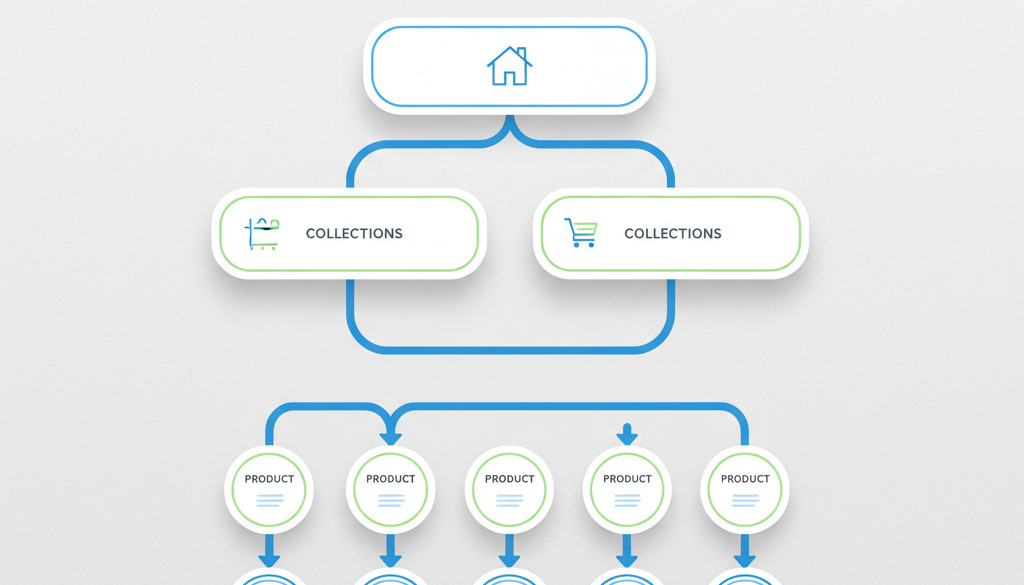
A logical hierarchy is essential. Users should be able to reach any product within three clicks of the homepage. Use breadcrumbs to improve navigation; they provide a clear path for users to move back to category pages and help Google understand the relationship between different pages.
Schema Markup for E-commerce
Structured data (Schema) allows you to display "Rich Snippets" in search results, such as star ratings, prices, and stock availability. This significantly increases your Click-Through Rate (CTR). Most premium Shopify themes include basic product schema, but utilizing advanced apps to add Review and FAQ schema can give you a competitive edge.
V. Content Marketing Strategies for E-commerce Growth
To rank for broader terms and build trust, you must look beyond your product pages. Content marketing allows you to capture top-of-funnel traffic.
Blogging for SEO Success
A Shopify blog shouldn't just be for company news. Use it to answer the questions your customers are asking. If you sell skin care, write articles like "The Ultimate 5-Step Morning Routine for Oily Skin." This positions your brand as an authority. Interlinking these blog posts back to relevant product pages passes "link equity" and guides readers toward a purchase.
Creating Buying Guides and Comparison Content
Comparison articles (e.g., "Brand A vs. Brand B") are powerful because they target users in the Commercial Investigation phase. These users are highly likely to buy; they just need a final push to decide which product is right for them.
VI. Building Authority with Off-Page SEO and Link Building
Backlinks remain one of the top three ranking factors for Google. In the context of e-commerce, a backlink is a vote of confidence from another website.
The Importance of Backlinks for E-commerce Trust
A link from a high-authority publication like Vogue or TechCrunch tells Google that your Shopify store is a legitimate, trustworthy entity. This is especially important for New Shopify stores trying to break into competitive niches.
Strategies for Earning High-Quality Backlinks
Focus on Digital PR. Instead of buying low-quality links, reach out to industry influencers for product reviews or guest post on reputable blogs. Broken link building—where you find a 404 error on another site and suggest your product as a replacement link—is a highly effective, "white-hat" tactic.
VII. Enhancing Shopify SEO with Essential Apps and Integrations
While Shopify is powerful out of the box, the right ecosystem of apps can automate and refine your SEO efforts.
Must-Have SEO Apps for Shopify
Apps like SEO Manager or Plug in SEO act as a "second set of eyes," scanning your site for broken links, missing alt text, and title tag issues. For image optimization, apps like Crush.pics can automate the compression and renaming process, ensuring your site speed remains optimal.
Integrating with Google Analytics and Search Console
You cannot improve what you do not measure. Integrating Google Search Console is mandatory; it allows you to see which keywords are driving traffic and alerts you to any crawl errors. Combine this with Google Analytics 4 (GA4) to track user behavior and conversion paths from organic search.

VIII. Measuring and Analyzing Your Shopify SEO Performance
Data-driven decisions are the hallmark of successful e-commerce businesses. You must track the right Key Performance Indicators (KPIs) to ensure your strategy is working.
KPIs for E-commerce SEO
- Organic Traffic: Are the number of visitors from search engines increasing?
- Organic Conversion Rate: Are search visitors actually buying products?
- Keyword Rankings: Is your store moving from page 2 to page 1 for target terms?
- Bounce Rate: Are users leaving immediately, or are they engaging with your content?
IX. Advanced Shopify SEO Tactics for Sustainable Growth
As your store grows, you need more advanced tactics to maintain your edge. This includes optimizing for Voice Search, which focuses on natural, conversational language and long-tail questions.
International SEO for Shopify
If you are selling globally, implementing Hreflang tags is crucial. This tells Google which version of your site (e.g., US vs. UK) to show to users based on their location and language, preventing duplicate content issues across international domains.
X. Common Shopify SEO Mistakes to Avoid
Even experienced merchants make mistakes that can tank their rankings.
- Duplicate Content: Having the same product description on multiple pages.
- Ignoring Mobile: With Google's mobile-first indexing, a slow mobile site will result in lower rankings across the board.
- App Bloat: Installing too many apps can significantly slow down your site speed, hurting both SEO and UX.
- Stock-out Management: Deleting pages for out-of-stock products. Instead, keep the page live with "out of stock" notifications or redirects to similar products to preserve SEO value.
XI. Future-Proofing Your Shopify SEO Strategy
The search landscape is shifting toward AI and Machine Learning. Google’s Search Generative Experience (SGE) means that brand authority and "Experience, Expertise, Authoritativeness, and Trustworthiness" (E-E-A-T) are more important than ever. Focus on building a real brand, gathering genuine customer reviews, and providing unparalleled value to your audience to ensure your store remains relevant in the years to come.
XII. Conclusion: Your Roadmap to E-commerce SEO Dominance on Shopify
Dominating the search results on Shopify is not an overnight achievement; it is a long-term commitment. By combining rigorous keyword research, technical perfection, and a robust content strategy, you can build an organic traffic engine that fuels your business growth independently of rising ad costs. The best time to start optimizing was when you launched your store; the second best time is today. Take the insights from this guide, audit your current performance, and begin the journey toward e-commerce SEO dominance.
Frequently Asked Questions
Is Shopify good for SEO compare to other platforms?
Yes, Shopify is highly effective for SEO. While it has some structural constraints (like fixed URL paths), it covers the essentials—SSL certificates, fast hosting, and mobile responsiveness—extremely well. Success depends more on your keyword strategy and content quality than the platform itself.
How long does it take to see results from Shopify SEO?
Typically, it takes 3 to 6 months to see significant movement in rankings. SEO is a long-term strategy that builds momentum over time. New stores may take longer to establish trust with search engines, while established stores may see faster results from technical optimizations.
Do I need an app for Shopify SEO?
While not strictly necessary, SEO apps can save you dozens of hours by automating tasks like image optimization, schema markup, and site audits. For most merchants, at least one comprehensive SEO app is recommended to ensure nothing falls through the cracks.
Does Shopify's site speed affect its ranking?
Absolutely. Site speed is a confirmed Google ranking factor. Because Shopify is a hosted platform, your speed is largely determined by your choice of theme and the number of active apps. Periodically auditing your app list and optimizing images are the best ways to keep your store fast.
What is the most important SEO factor for a Shopify store?
There is no "silver bullet," but high-quality, unique content combined with a strong backlink profile is generally the most impactful. Search engines prioritize sites that provide the best answer to the user's query and are cited as authorities by other reputable websites.
Can I edit the robots.txt file in Shopify?
Yes, Shopify allows merchants to customize their robots.txt file. This is useful for advanced users who want to prevent search engines from crawling specific pages that don't add SEO value, such as policy pages or internal search result pages.
Keep reading
Hand-picked guides that go deeper — open the one you need next:
- Shopify AI Blog Content: A Strategic Guide for Merchants
- Shopify AI Content for E-commerce Success
- Shopify Store Owners: Maximize Sales with AI-Powered Blog Content
- Shopify Store SEO: Drive Sales with AI-Powered Blog Content
→ Read the full Shopify & Ecommerce guide
→ Read the full Shopify & Ecommerce guide