
WordPress AI No Code: Advanced Web Development for Business
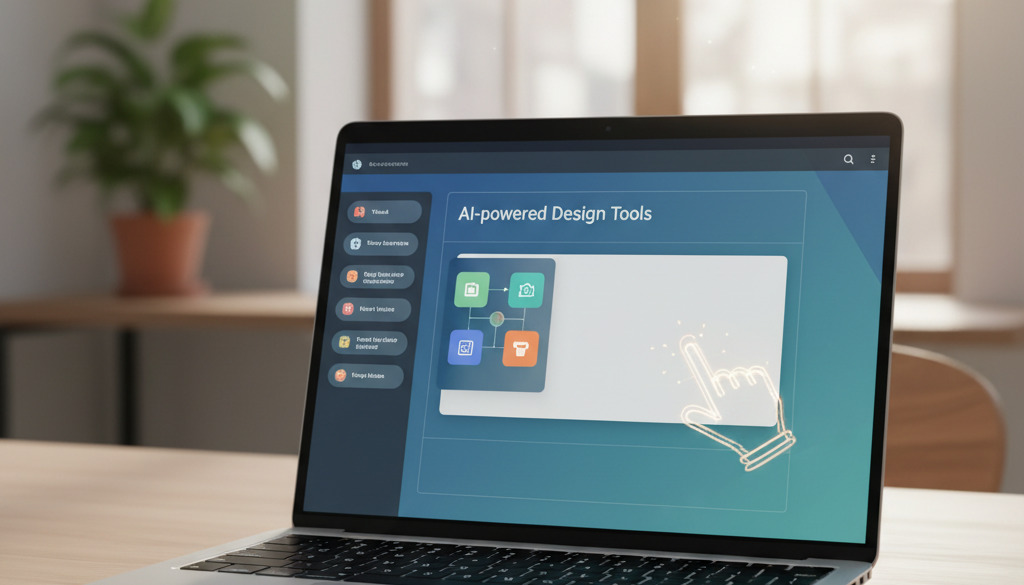
- WordPress AI No Code integration allows businesses to build professional, high-performing websites without writing a single line of code.
- AI tools automate critical tasks like content generation, image optimization, and technical SEO, significantly reducing time-to-market.
- The combination of WordPress and AI empowers non-technical teams to maintain complex sites, decreasing reliance on expensive external developers.
- Modern AI-driven WordPress sites can deliver hyper-personalized user experiences that were previously only possible for enterprise-level budgets.
- Successful implementation requires a strategic balance between AI automation and human brand oversight to ensure data privacy and authenticity.
I. Introduction: The Evolving Landscape of Website Creation
The digital economy is currently undergoing a massive structural shift. For decades, the "No Code" movement has been the vanguard of democratizing technology, allowing business owners and marketing professionals to bypass the technical gatekeeping of traditional programming. However, as we move further into a data-driven era, the classic no-code model is evolving. We are now witnessing the rise of WordPress AI No Code—a synergy that combines the most popular content management system (CMS) in the world with the power of generative and predictive artificial intelligence.[2]
In the past, building a sophisticated website required a choice: accept the limitations of a rigid template or hire an expensive development team. AI is the catalyst that removes this trade-off. By augmenting no-code tools with machine learning and natural language processing, businesses can now achieve enterprise-level functionality with the agility of a startup. This article explores how this convergence is reshaping the internet, making advanced website development accessible to every business, regardless of their technical pedigree.
II. Understanding the Core Components: WordPress, No Code, and AI
WordPress: The Foundation of Flexibility
WordPress powers over 43% of the internet for a reason. Its open-source nature and massive ecosystem of themes and plugins provide an unparalleled foundation for business websites. Unlike proprietary site builders, WordPress offers total ownership of data and the ability to scale from a simple blog to a multi-national e-commerce store. It is the architectural bedrock upon which the current AI revolution is being built.
No Code Platforms: Empowering Non-Developers
No-code development is defined by visual interfaces—drag-and-drop editors, logic builders, and intuitive dashboards—that allow users to create software without manual coding.[1] The primary benefits are speed and cost-effectiveness. In a traditional environment, a change to a website's layout might take a developer hours; in a no-code environment, a marketing manager can do it in minutes. However, traditional no-code tools often struggle with "the blank page problem," where users don't know where to start. This is where AI steps in.
Artificial Intelligence (AI): The Intelligent Augmentation
AI in web development isn't just about chatbots. It involves Machine Learning (ML) to analyze user patterns and Natural Language Processing (NLP) to generate human-like content. When integrated into the WordPress workflow, AI acts as a co-pilot. It can automate repetitive tasks like image alt-text generation, predict which layouts will convert better based on historical data, and even write functional code snippets in the background to bridge gaps between different software tools.
III. The Intersection: Defining "WordPress AI No Code"
WordPress AI No Code is a specialized approach to web development that utilizes visual building tools enhanced by artificial intelligence to create, manage, and optimize WordPress websites. It represents a shift from "building manually" to "building through guidance." In this model, the user provides the intent (goals, brand voice, and industry), and the AI handles the heavy lifting of execution.
The key characteristics of this approach include visual logic creators, where you define how a site behaves using flowcharts rather than JavaScript, and generative design assistants that can build an entire landing page draft from a single text prompt. Unlike traditional development, which focuses on syntax and server-side configurations, AI No Code focuses on user intent and business outcomes. It moves the user from the role of a "laborer" to that of an "architect" or "editor."
IV. AI-Powered No Code Tools for WordPress: A Practical Toolkit
Content Generation and Optimization
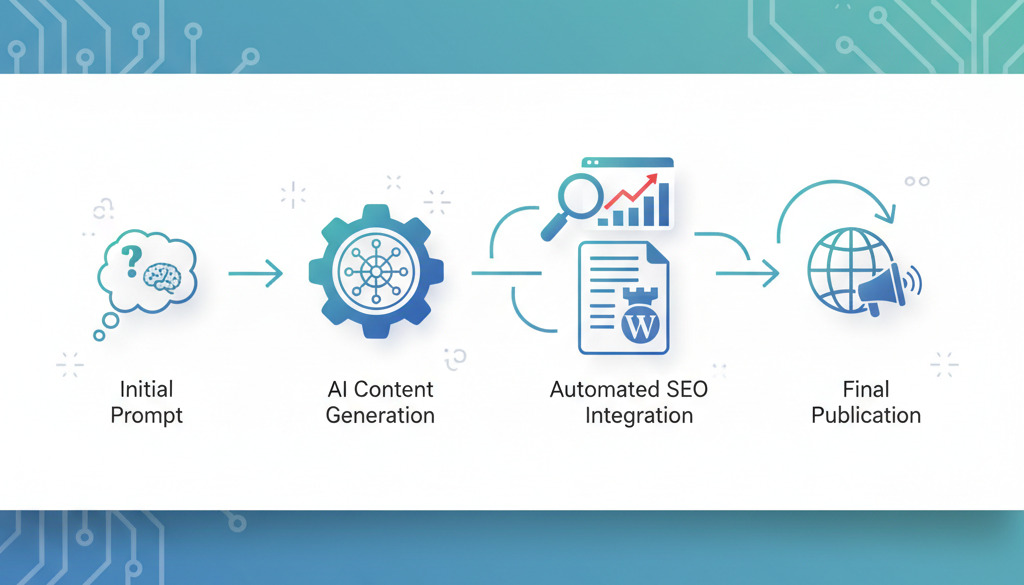
The most immediate application of AI within WordPress is content. Tools like Jetpack AI or Elementor AI allow users to generate professional blog posts, product descriptions, and marketing copy directly within the editor. Beyond mere text, these tools can automatically generate SEO titles and meta descriptions, ensuring that every page is optimized for search engines the moment it is published. This eliminates the manual drudgery of SEO audits and allows for content personalization where the copy actually changes based on the geographic location or browsing history of the visitor.
Design and Layout Assistance
AI-driven themes are revolutionizing the aesthetics of the web. Modern builders can now analyze a company's logo and industry to suggest harmonious color palettes and typography. Furthermore, AI can handle automated responsive design, intelligently resizing and repositioning elements so the site looks perfect on everything from an iPhone to a 32-inch 4K monitor. This type of intelligent design ensures that non-designers don't accidentally create "ugly" or broken websites.
User Experience (UX) and Personalization Tools
AI chatbots have evolved from simple script-based tools to sophisticated assistants capable of lead qualification and sentiment analysis. Within the WordPress ecosystem, AI can track user behavior in real-time to offer personalized content recommendations. For instance, if a user lingers on a page about "cloud security," the AI can dynamically update the sidebar to show related whitepapers or case studies, significantly increasing engagement rates through automated relevance.
Technical Optimization and Security
The "backend" of WordPress is also getting an AI makeover. AI-powered plugins now perform predictive performance analysis, identifying which scripts are slowing down a site before they cause a bounce. In terms of security, AI excels at anomaly detection. Rather than just checking against a list of known viruses, AI security tools monitor for "unusual" behavior, such as a localized login attempt from an unknown IP at 3 AM, and can proactively patch vulnerabilities or block threats before a human administrator is even aware of the risk.
V. Revolutionizing Content Strategy with AI No Code on WordPress
A successful content strategy is no longer just about volume; it is about precision and scale. By leveraging AI within WordPress, businesses can overcome "writer's block" by using AI to generate comprehensive outlines and initial drafts. This allows the human staff to focus on strategic editing rather than staring at a blank screen. AI can also facilitate "content repurposing"—taking a single long-form article and automatically breaking it down into social media snippets, email newsletter summaries, and FAQ sections.
The SEO landscape is also being transformed. AI doesn't just look at keywords; it analyzes topic clusters and search intent. Tools integrated into WordPress can now perform "content gap analysis," telling you exactly what topics your competitors are covering that you are missing. By automating the technical aspects of on-page SEO—such as internal linking suggestions and image compression—AI ensures that your content is "discovered" by search engines while your team stays focused on the creativity and brand voice that resonates with human readers.
VI. Business Benefits: Unleashing Agility and Efficiency
Accelerated Time-to-Market
In the traditional business world, launching a new product site could take months. With WordPress AI No Code, that timeline is compressed into days or even hours. Marketing teams can rapidly iterate on landing pages for specific campaigns without waiting for a ticket to clear the IT department. This unprecedented agility allows businesses to respond to market trends in real-time, capturing opportunities that would have been lost during a lengthy development cycle.
Reduced Development Costs
The cost of a senior WordPress developer can exceed $100 per hour. While developers are still essential for high-level custom architecture, AI No Code allows 80% of daily tasks to be handled by the existing marketing or administrative team. This significant reduction in "technical debt" and payroll costs means that small and medium-sized enterprises (SMEs) can compete with much larger corporations that have massive IT budgets.
Enhanced Scalability and Flexibility
As a business grows, its website must grow with it. Traditional sites often become brittle over time as "spaghetti code" accumulates. AI-integrated no-code platforms generate clean, modular code that is easier to scale. Whether you are adding an e-commerce wing to your site or integrating a complex third-party CRM, AI tools can help manage these integrations with fewer errors, providing a future-proof digital infrastructure.
VII. Implementing WordPress AI No Code: A Strategic Approach
Adopting AI is not about buying every plugin available; it is about strategic integration. The first step for any business is to identify bottlenecks. Is your team struggling to keep the blog updated? Are your conversion rates low because the design doesn't look modern? By pinpointing the problem, you can choose the AI tool that provides the highest immediate ROI.
When selecting AI no-code solutions for WordPress, businesses must use strict evaluation criteria. Look for tools that offer seamless integration with the Block Editor (Gutenberg) and have a proven track record of regular updates. Scalability is also vital; the tool might work for one page, but will it work for a hundred? Check the pricing models—many AI tools use token-based systems (paying per word or per image generated), so it's essential to project your usage to ensure the costs remain sustainable as your site grows. Finally, ensure the provider offers enterprise-grade support to assist when technical hurdles arise.
VIII. Challenges and Considerations in the WordPress AI No Code Ecosystem
While the benefits are immense, the transition to AI-driven development is not without risks. Data Privacy is a paramount concern. Many AI tools process data on external servers. For businesses operating in the EU or California, ensuring that these tools are GDPR or CCPA compliant is non-negotiable. You must understand where your data is going and who has access to the "prompts" and customer information being fed into the AI.
Another challenge is maintaining the "Human Touch." There is a risk that AI-generated content can become generic or lose the unique personality of the brand. It is critical to view AI as an assistant, not a replacement. Human oversight is required to review every piece of content for accuracy and brand alignment. Furthermore, there is the risk of vendor lock-in. If you build your entire workflow around a specific proprietary AI plugin, moving away from it in the future could be difficult. Businesses should prioritize tools that allow for data portability and standard WordPress exports.

IX. Future Trends and the Evolution of WordPress AI No Code
The future of WordPress is hyper-personalization. We are moving toward a web where a site's structure literally changes for every visitor. Using "predictive intent," a WordPress site could identify that a visitor is likely in the "consideration phase" of a purchase journey and automatically surface testimonial videos and comparison charts to help them make a decision. This level of bespoke digital experience was once the exclusive domain of companies like Amazon or Netflix.
We are also seeing the rise of Predictive Website Maintenance. Instead of waiting for a site to crash, AI will proactively optimize the database, clear caches, and update plugins in a "sandbox" environment to test for conflicts before pushing them to the live site. In the realm of e-commerce, AI will go beyond basic related products to offer automated merchandising, where the site "decorates" its shop window differently for every user based on their past browsing habits and current seasonal trends.
X. Conclusion: Empowering the Future of Business Websites
The integration of AI and No Code within the WordPress ecosystem is more than just a trend; it is a fundamental shift in how digital value is created. It represents the final stage of democratization for the web. No longer are advanced features, high-end aesthetics, and data-driven optimizations reserved for the technical elite. Today, any business with a vision can translate that vision into a high-performing digital reality.
As we look forward, the competitive advantage will no longer be held by those who can "write the code," but by those who can direct the AI. By embracing WordPress AI No Code, businesses can unlock levels of efficiency and creativity that were technically impossible just a few years ago. Now is the time to audit your digital strategy, identify where AI can elevate your workflow, and begin the journey toward a more intelligent, agile, and profitable online presence.
Frequently Asked Questions
Do I need any coding knowledge to use WordPress AI No Code tools?
No, the primary purpose of these tools is to eliminate the need for coding. Most AI-powered WordPress builders use visual, drag-and-drop interfaces and natural language prompts. While a basic understanding of how websites work is helpful, you do not need to write CSS, HTML, or PHP to build a professional-quality site.
Is AI-generated content bad for SEO?
Google has clarified that its focus is on high-quality, helpful content, regardless of how it is produced. As long as the AI-generated content is reviewed by a human for accuracy, provides real value to the reader, and is not used to manipulate search rankings through spammy tactics, it can rank very well. The key is to use AI as a tool for research and drafting, followed by human refinement.
Will AI No Code tools slow down my WordPress site?
It depends on the tool. Many modern AI plugins are built with performance in mind and only run their processes in the backend (your dashboard) rather than the frontend (what your visitors see). However, it is always a best practice to monitor your site speed and use high-quality hosting. Some AI tools actually help improve speed by automatically optimizing images and scripts.
Is my business data safe when using AI tools in WordPress?
Privacy depends on the specific tool's terms of service. Leading AI providers are increasingly offering enterprise-grade privacy protections where your data is not used to train their global models. You should always read the privacy policy of an AI plugin to ensure it complies with your local regulations like GDPR or CCPA before integration.
Can I switch from a traditional WordPress theme to an AI no-code builder?
Yes, most AI no-code tools are designed to work alongside existing WordPress themes or can replace them entirely. However, switching builders often requires a "rebuild" of your pages to ensure everything functions correctly within the new AI ecosystem. It is recommended to perform this transition on a staging site first to avoid any downtime on your live website.
Are AI No Code tools more expensive than traditional plugins?
Generally, AI tools have a higher ongoing cost because generative AI requires significant server processing power. Many operate on a monthly subscription or credit-based system. While this might be more expensive than a one-time "pro" plugin license, the cost is usually offset by the significant savings in developer hours and the increased speed of content production.
→ Read the full WordPress guide
Keep reading
Hand-picked guides that go deeper — open the one you need next:
- WordPress SEO Made Easy: Auto-Publish Expert Articles with Volteruno's AI
- WordPress SEO AI: The Future of Ranking in Search Engines
- Unlock Your WordPress Potential: Auto-Publish SEO-Optimized Blogs with AI
- Seamless WordPress AI Integration: Publish Content Directly
→ Read the full WordPress guide