
WordPress SEO Made Easy: AI Content for Non-Technical Users
Key Takeaways
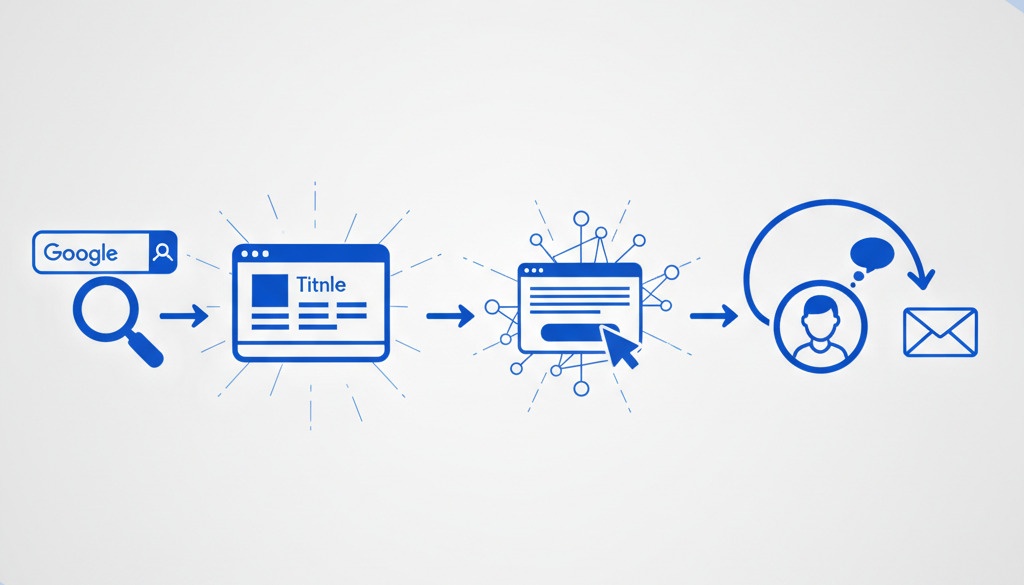
- SEO Doesn't Have to Be Technical: For business owners, SEO is about attracting the right customers, not mastering complex code. The goal is business growth, not becoming a web developer.
- AI is Your Content Co-pilot: Artificial intelligence can generate high-quality, keyword-optimized blog posts in minutes, solving the "no time for content" problem for busy entrepreneurs.
- WordPress is the Ideal Platform: WordPress is inherently SEO-friendly and user-friendly, making it the perfect foundation for an AI-powered content strategy, even for non-technical users.
- Content is King for Customer Attraction: Regularly publishing helpful articles that answer your customers' questions is the most effective way to be found on Google and build trust.
- Automated Solutions Exist: Services like 'More Customers From Your Blog' are designed specifically for business owners, providing ready-to-publish SEO articles generated by AI, with some offering free trials to get started.
Introduction: The SEO Challenge for Busy Business Owners
In today's digital-first world, your business's visibility on Google isn't just a marketing metric; it's a direct lifeline to your future customers. If they can't find you online, you might as well be invisible. Yet, for many small to medium-sized business (SMB) owners, the term Search Engine Optimization (SEO) brings on a wave of frustration.[1] It sounds complicated, expensive, and incredibly time-consuming. You're an expert in your field—be it consulting, construction, or crafting artisanal goods—not a digital marketing guru.
The common hurdles are always the same: not enough time in the day, bewildering technical jargon like schema markup and canonical URLs, and the overwhelming feeling that you're always three steps behind. You know you need a strong online presence, but the path to achieving it seems shrouded in complexity. This is the exact challenge that has left countless business owners feeling stuck.
But what if there was a different way? What if you could leverage the power of SEO to attract customers without needing a degree in computer science? This is where the revolution of non-technical, AI-powered SEO comes in. It’s a solution designed for you: the busy, 40+ business owner who is savvy enough to know that online content is critical but lacks the time or desire to become a technical expert. This guide will show you exactly how to make WordPress SEO easy and effective, using AI as your secret weapon for growth.
Demystifying SEO: What Matters to Your Business (Without the Tech Talk)
Let's strip away the intimidating jargon and focus on what SEO truly is from a business perspective. At its core, SEO is the process of making your website more attractive to search engines like Google for the specific phrases your potential customers are searching for. It’s not about tricking an algorithm; it’s about providing clear, valuable answers to people's questions.
Translate SEO Goals into Business Outcomes
Instead of thinking about "ranking for keywords," think about the business results you want. SEO helps you achieve them.
- Attracting Relevant Traffic: You don't want just anyone visiting your website. You want people who are actively looking for the products or services you offer. Good SEO brings these qualified visitors to your digital doorstep.
- Increasing Qualified Leads: When the right people find your website and see content that speaks directly to their needs, they are far more likely to pick up the phone, fill out a contact form, or make a purchase.
- Driving Sales and Revenue: Ultimately, the goal of any business effort is to increase the bottom line. SEO is a powerful engine for revenue growth, consistently bringing in new customers over time.
Focus on Answering Your Customer's Questions
The most important shift in mindset is moving from "How do I rank on Google?" to "What questions are my customers asking Google?" Every search query is a question. By creating content on your website that directly answers these questions, you align your business with what your audience is actively seeking. This is known as targeting user intent, and it's the foundation of modern, successful SEO.
Think of your website as your most knowledgeable and helpful salesperson, available 24/7. When a potential customer asks a question, your website should have the most comprehensive and useful answer.
Keyword Research from a Business Owner's Perspective
Keyword research isn't about finding obscure technical terms. It's about understanding the language of your customers. What words and phrases do they use when they describe their problems or the solutions they're looking for? Are they searching for "emergency plumbing services near me" or "how to fix a leaky faucet"? Understanding this language is the key to connecting your business with their search.
The Power of AI in Content Creation: Your New SEO Assistant
For years, the biggest barrier to effective SEO for SMBs has been the creation of high-quality content. It requires time, expertise, and consistency—three things most business owners are short on. Artificial intelligence (AI) has completely changed the game, providing a powerful solution to this long-standing problem.
How AI is Revolutionizing Content and SEO
Modern AI is not just about chatbots or voice assistants. Sophisticated language models can now understand context, nuance, and user intent with incredible accuracy. In the realm of content marketing, this means AI can:
- Analyze search data to understand what topics are resonating with audiences.
- Structure articles logically with headings, lists, and clear paragraphs.
- Write fluent, human-like text that is engaging and informative.
- Naturally integrate relevant keywords without sounding forced or "robotic."
Essentially, AI acts as a tireless assistant that can generate a well-researched, well-written draft of an article in a matter of minutes, a task that might take a human hours or even days.
Overcoming Writer's Block and Scaling Production
Every business owner has stared at a blank screen, knowing they *should* write a blog post but not knowing where to start. AI eliminates writer's block entirely. By simply providing a topic or a target keyword, you can receive a fully formed article ready for your review. This makes it possible to scale your content production efforts dramatically. Instead of publishing one article a month (if you're lucky), you can publish multiple articles per week, vastly increasing your opportunities to rank on Google and attract customers.
WordPress SEO: Why It's Your Platform of Choice for Growth
If you're a non-technical business owner, your choice of website platform is critical. WordPress stands out as the undisputed leader for a reason, especially when it comes to SEO. It provides the perfect balance of power and simplicity, allowing you to manage a professional, search-engine-friendly website without needing to write a single line of code.
Inherent SEO-Friendliness
Out of the box, WordPress is built with clean code and logical site architecture that search engines like Google can easily understand. It provides features that are fundamental to good SEO, such as:
- Customizable Page Titles and Headings: Easily control the most important on-page SEO elements.
- Simple URL Structure (Permalinks): Create clean, keyword-rich URLs for your pages and posts.
- Built-in Blogging Capability: WordPress started as a blogging platform, so content creation is at its core.
The Power of the Plugin Ecosystem
Perhaps the biggest advantage of WordPress is its vast ecosystem of plugins. These are like apps for your website that add new features and functionality. For SEO, plugins like Yoast SEO or Rank Math act as a step-by-step guide, analyzing your content and giving you simple, actionable recommendations to improve its optimization—all in plain English.
A Content-Rich Website is an SEO Powerhouse
Ultimately, SEO success hinges on having a website rich with valuable, relevant content. WordPress is designed to be a Content Management System (CMS), making it incredibly easy to add, edit, and manage blog posts, pages, and other forms of content. This makes it the ideal platform to deploy an AI-driven content strategy, as you can quickly publish the articles generated by your AI assistant and start building your site's authority.
More Customers From Your Blog — How AI-Generated Blog Posts Can Drive Organic Traffic
This is where theory meets practice. You have the ideal platform (WordPress) and a powerful new tool (AI). Now, how do you put them together to get results? This is the problem that specialized services are built to solve. For instance, our own service, which translates from Hungarian as Több vásárló a blogodról (More Customers From Your Blog), is built specifically for business owners like you. Our proprietary AI is designed to do one thing exceptionally well: write professional SEO blog articles for your website in minutes.
The concept is simple. By regularly publishing blog posts optimized for the keywords your customers are searching for, you create dozens, then hundreds, of new doorways into your website from Google. Each article acts as a magnet, attracting potential customers who are looking for information related to your industry. They find your helpful article, discover your business, and a percentage of them will become leads or sales.
For a busy business owner, the beauty of this approach is its efficiency. Instead of spending your valuable weekends trying to write, you can leverage an AI engine to do the heavy lifting. This "set it and forget it" aspect of AI content generation means you can ensure your website is consistently being updated with fresh, relevant content, a key factor in Google's ranking algorithm, all while you focus on running your business.
Keyword Research for the Non-Technical User: Finding Your Audience's Language
Keyword research sounds technical, but it’s really about market research. You just need to figure out what your customers are typing into Google. Here are some simple, non-technical ways to approach this.
Brainstorm from the Customer's Perspective
Forget industry jargon. Put yourself in your customer's shoes. Let’s say you own a landscaping company. Your customers probably aren’t searching for "horticultural maintenance services." They're more likely searching for:
- "best lawn care service near me"
- "how to get rid of weeds in my garden"
- "affordable backyard makeover ideas"
- "when is the best time to plant shrubs in Texas"
These are your starting keywords. Make a list of all the questions, problems, and needs your customers have.
Understanding Search Volume and Difficulty
When you have your list, you can use simple tools (some are even free, like Google Keyword Planner) to get an idea of two important metrics:
- Search Volume: How many people per month are searching for this phrase? Higher is generally better, but even a low volume can be valuable if the intent is strong.
- Keyword Difficulty: How hard is it to rank on the first page of Google for this phrase? As a smaller business, you want to target keywords that have lower difficulty.
The sweet spot is finding keywords with decent search volume and low difficulty. These are often longer, more specific phrases known as long-tail keywords (e.g., "drought-resistant garden design for Austin homes" instead of just "gardening").
How AI Can Help with Keyword Research
This is another area where AI shines. AI tools can analyze vast amounts of search data and suggest long-tail keywords that you might have never thought of. They can identify question-based keywords and related topics, helping you build a comprehensive content plan that covers your niche from every angle, ensuring no potential customer search is left unanswered.
| Broad Topic | Customer Question (Keyword) | User Intent |
|---|---|---|
| Retirement | "How much do I need to retire at 60?" | Informational |
| Investing | "Best investment accounts for beginners" | Investigational |
| Saving | "High-yield savings account vs CD" | Comparison |
| Local Service | "Financial advisor for small business owners in Phoenix" | Transactional |
On-Page Optimization Made Easy with AI and WordPress
Once you have your AI-generated article and your target keyword, the next step is *on-page optimization*. This simply means making sure the key signposts on the page tell Google exactly what the content is about. With WordPress and AI, this is a straightforward process.
Key On-Page Elements in Plain English
- Title Tag: This is the headline that appears in the Google search results and at the top of the browser tab. It should include your main keyword and be compelling enough to make someone click.
- Meta Description: The short paragraph of text that appears under your title in Google search results. It doesn't directly impact rankings, but a good one increases clicks. Think of it as an ad for your article.
- Headings (H1, H2, H3): These are the titles and subtitles within your article. Your main title is the H1. Your main section titles are H2s, and sub-sections are H3s. They structure your content for readers and search engines, and should naturally include your keywords.
- Image Alt Text: A short, descriptive phrase that tells search engines what an image is about. It’s also crucial for accessibility for visually impaired users.
How AI and WordPress Plugins Simplify This
This is where the magic happens. A good AI content generator will often create the article with these elements already optimized. It might suggest a title, meta description, and logical headings. Then, when you paste this content into your WordPress editor, a plugin like Yoast SEO will give you a simple checklist and traffic light system (red, orange, green) to rate your optimization. It will tell you things like, "Your keyword doesn't appear in the first paragraph. Consider adding it." It’s like having an SEO expert looking over your shoulder and giving you simple instructions.
Crafting Compelling Content That Ranks: The AI Advantage
In the past, SEO was often about keyword density and technical tricks. Today, the single most important ranking factor is content quality. Google wants to show its users the most comprehensive, helpful, and authoritative answer to their query. Creating this level of content consistently has been the biggest challenge for businesses—until now.
The Role of Depth and Relevance
A top-ranking article doesn't just mention a keyword. It explores the topic in depth. It answers related questions, addresses nuance, and provides genuine value to the reader. It demonstrates expertise. This is where AI has made incredible strides. Advanced AI models can synthesize information from countless sources to produce content that is not only well-written but also incredibly comprehensive. It can identify sub-topics and related questions that are essential for a high-quality article, ensuring your content covers all the bases that Google expects to see.
Ensuring Content Aligns with Your Brand Voice
A common concern is that AI content might sound generic. This is a valid point. The best approach is to use AI as a powerful first-draft generator. Once the AI has created the comprehensive, SEO-optimized article, you or a team member can spend just 15-20 minutes reviewing it. This human touch allows you to:
- Inject your unique brand personality and tone of voice.
- Add personal anecdotes or company-specific examples.
- Ensure every claim aligns perfectly with your business's expertise and offerings.
The Magic of Automated Content: Our 'More Customers From Your Blog' AI Engine
Let's pull back the curtain on how a service like ours, 'More Customers From Your Blog', simplifies this entire process for you. We've invested heavily in developing a proprietary AI engine designed from the ground up to meet the needs of business owners who are not SEO experts. The process is designed to be as simple and fast as possible—it feels like magic.
The workflow is elegantly simple:
- You Provide the Topic: You simply input a keyword or a topic you want to write about. This could be as simple as "patio installation" or "retirement planning for entrepreneurs."
- The AI Gets to Work: Our system analyzes the topic, researches related keywords and user intent, and outlines a comprehensive article structure designed to rank on Google.
- Content Generation in Minutes: The AI then writes the full article, complete with an optimized title, headings, and a naturally woven narrative. It produces polished, SEO-ready content that is plagiarism-free and ready to publish.
- You Review and Publish: Within minutes, you have a complete blog post. You can copy it directly into your WordPress site, give it a quick read-through to add any personal touches, and hit "publish."
This dedicated AI engine frees you from the time-consuming tasks of research, outlining, writing, and initial optimization. It allows you, the business owner, to focus your energy on high-level strategy and running your company, confident that your content marketing engine is running smoothly in the background.
Beyond Keywords: User Experience (UX) and Its SEO Impact
Google doesn't just care about the words on your page; it also cares deeply about the experience visitors have on your site. This is called *User Experience*, or UX. If visitors come to your site from a Google search and immediately leave in frustration, Google takes that as a signal that your site is not a good result. This can harm your rankings over time.

Key UX Factors for SEO
From a non-technical perspective, here are the three most important things to consider:
- Website Speed: How fast does your website load? In an age of impatience, a slow-loading site is a primary reason visitors leave. You can use free tools like Google's PageSpeed Insights to check your site, and often simple fixes (like compressing images) can make a big difference.
- Mobile-Friendliness: The majority of Google searches now happen on mobile devices. Your website must be easy to read and navigate on a smartphone. Most modern WordPress themes are "responsive," meaning they automatically adapt to different screen sizes.
- Easy Navigation: Can visitors easily find what they are looking for? Your menu should be simple and logical. A clear "Contact Us" button and a search bar are also essential.
Focusing on these simple UX improvements creates a better experience for your visitors, which keeps them on your site longer. These positive signals—low bounce rates and high time on page—tell Google that your site is a high-quality resource, which complements your AI-driven content strategy and boosts your SEO performance.
How to Get Started: Your First 5 Free SEO Articles
Understanding the potential of AI-powered SEO is one thing; experiencing it firsthand is another. The best way to see the impact is to try it for yourself, which is why a risk-free entry point is so important. Recognizing this, our 'More Customers From Your Blog' service makes it incredibly easy to begin. We offer every new business their first 5 SEO blog posts completely free.
Your Step-by-Step Guide to Claiming Your Free Articles
Here’s how a business owner can go from reading this article to having a new, professionally written SEO post on their website in under an hour:
- Visit the Website: Navigate to the service page and sign up for the free trial.
- Submit Your First Topic: Think of a question a customer recently asked you. Enter that as your first topic or keyword. For example, "benefits of professional pressure washing."
- Receive Your AI-Generated Article: In just a few minutes, the AI will deliver a complete article to your dashboard.
- Review and Post to WordPress: Copy the content, log in to your WordPress dashboard, create a new post, and paste it in. Give it a quick read, maybe add a photo of your work, and click "Publish."
It’s important to set realistic expectations. While SEO is a powerful long-term strategy, you may not see a huge influx of traffic overnight. The key is consistency. By using your 5 free articles, you can begin to build a foundation of content. Over the coming weeks and months, as Google indexes these pages and sees you as a reliable source of information, you will begin to see a steady increase in organic traffic and new customer inquiries.
Addressing Common Concerns: "Is AI Content Good Enough?"
It's natural to be skeptical about whether a machine can create content that is truly "good." The quality of AI-generated content has been a topic of debate, but much of the criticism is based on older, less sophisticated technology. Let's debunk some of the common myths.
Myth: AI Content is Robotic and Unoriginal
Early AI text generators often produced awkward phrasing and repetitive sentences. However, today's leading AI models, like the one we use, are trained on vast datasets of human-written text. They understand grammar, style, tone, and flow. The result is content that is not only readable but often indistinguishable from that written by a skilled human copywriter. Furthermore, the content is original; the AI constructs sentences and paragraphs from scratch based on its understanding, it does not copy and paste from other sources.
Fact: AI is a Tool That Requires Human Strategy
The most effective way to use AI is not as a complete replacement for humans, but as an incredibly powerful tool. The AI excels at the heavy lifting of research and drafting. The human—you, the business owner—excels at providing the strategic direction and the final layer of polish. You provide the keyword based on your customer knowledge. You perform the final review to inject your unique brand voice. This symbiotic relationship produces content that is both technically optimized for SEO and authentically representative of your brand.
Quality is paramount. When used correctly, AI content is not just "good enough" for SEO; it is highly effective at creating the very depth, relevance, and authority that Google rewards.
Building Authority and Trust Through Consistent Content
Search Engine Optimization isn't just a short-term tactic to get a few more clicks. It's a long-term strategy for building one of your most valuable business assets: *authority*. In the digital world, authority and trust are almost interchangeable. When your website consistently provides helpful, expert answers to questions in your industry, you build both.
The Cumulative Effect of a Regularly Updated Blog
Imagine your blog as a library about your industry. Each article you publish is a new book on the shelf. A website with five articles is a small bookshelf. A website with one hundred articles is a comprehensive library. Search engines like Google notice this. A site that is regularly updated with fresh, high-quality content is seen as a more authoritative and reliable source of information. This authority is a powerful ranking signal that lifts your entire website in search results over time.
Positioning Your Business as an Industry Expert
When a potential customer lands on your blog and finds a wealth of information that helps them solve a problem or make a better decision, their perception of your business changes. You are no longer just a vendor; you become a trusted advisor. This transition is critical. Customers are far more likely to buy from a business they trust and view as an expert in its field. A steady stream of AI-generated, human-polished content is the most efficient way to build this expert status at scale.[2]
Measuring Your Success: Simple SEO Metrics That Matter
One of the best parts of digital marketing is that everything is measurable. However, it's easy to get lost in an ocean of data. For a non-technical business owner, you only need to focus on a few key performance indicators (KPIs) to know if your AI content strategy is working.
Keep It Simple: The KPIs You Should Watch
- Organic Traffic: This is the number of visitors who arrive at your website by clicking on a link from a search engine result (like Google). You want to see this number trending upward over time.
- Keyword Rankings: Are you starting to appear in the search results for your target keywords? You don't need to be #1 overnight, but moving from page 10 to page 3, and then to page 1, is a clear sign of progress.
- Leads/Conversions: Are more people filling out your contact form, calling your business, or buying your products? This is the ultimate measure of success. Track how many inquiries you get from your website each month.
How to Find This Data
You don't need complex or expensive tools. Google Analytics is a free service that provides all of this information. While it may look complex at first, there are many simple tutorials online that can show you how to find these three key metrics. Some WordPress plugins also offer basic dashboards right within your website. The key is to look at the trends over months, not days. SEO is a marathon, not a sprint.
Integrating AI Content with Your Overall Marketing Strategy
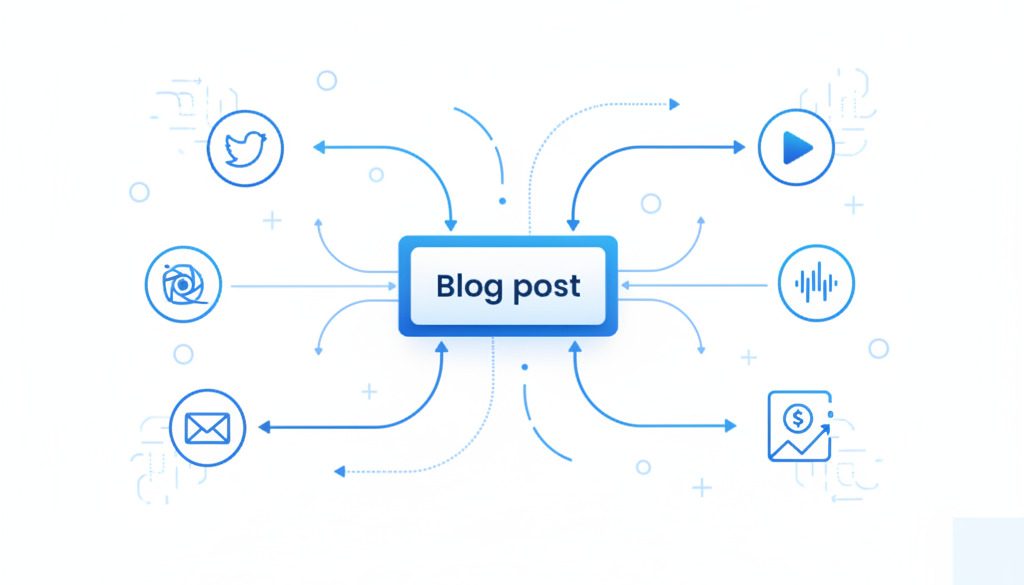
The SEO articles generated by AI shouldn't exist in a vacuum. They are powerful assets that can be leveraged across all of your marketing channels to maximize their value. Think of each blog post as the hub of a wheel, with spokes reaching out to your other marketing efforts.
Amplify Your Content on Social Media
Once you publish a new blog post, share it on your social media platforms (like Facebook or LinkedIn). You can pull out interesting quotes, statistics, or tips from the article to create multiple social media posts over several days or weeks. This drives traffic back to your website and provides valuable content for your followers.
Nurture Leads with Email Marketing
Your blog content is perfect for email newsletters. Send a monthly email to your subscriber list highlighting your best articles. This keeps your business top-of-mind and nurtures relationships with potential customers who may not be ready to buy yet. You can also use a particularly in-depth article as a "lead magnet"—offering it as a downloadable PDF in exchange for an email address to grow your list.
Support Your Paid Advertising
Informational blog posts can be a great, low-cost way to support your paid advertising campaigns on platforms like Google or Facebook. Instead of sending ad traffic to a generic sales page, you can send them to a helpful article that educates them first. This "soft sell" approach can build trust and lead to higher conversion rates when you do ask for the sale.
The Evolution of SEO: Staying Ahead with AI
The world of search is constantly evolving. What worked in SEO five years ago is obsolete today. The one constant is change, and right now, the most significant change is the integration of artificial intelligence into every aspect of search. Google itself is using more AI than ever to understand content and user intent.
By adopting an AI-powered content strategy now, you are not just solving a current business problem; you are future-proofing your business. You are aligning your marketing efforts with the direction that the entire industry is heading. Learning to leverage AI as a tool for efficiency and quality puts you at a significant strategic advantage over competitors who are still stuck in the old way of doing things—or worse, doing nothing at all because they feel it's too complicated.
Embracing this technology today means you'll be steps ahead tomorrow. A proactive approach to digital marketing, powered by smart automation, is the key to sustained online growth.
Why Over 500 Companies Trust 'More Customers From Your Blog'
Adopting new technology can feel daunting, but the path is easier when you see that others have already walked it successfully. Our service, centered around the 'More Customers From Your Blog' principle, is not an unproven experiment. Over 500 companies—many just like yours—are already using our platform to generate professional SEO articles and attract customers from Google.
The reasons for this widespread adoption and high satisfaction rate come down to a few core principles:
- It's Effective: The bottom line is that it works. The AI-generated articles rank on Google and drive real, measurable business results in the form of traffic and leads.
- It's Incredibly Easy to Use: The platform was designed for non-technical users. The process of generating an article is simple, intuitive, and takes just minutes.
- It Delivers Tangible Time Savings: For business owners, time is the most valuable commodity. Our service gives that time back, automating a critical marketing task so they can focus on what they do best.
This social proof demonstrates the reliability and credibility of using a dedicated AI writing service. It’s a tested, proven solution for the exact challenges faced by busy entrepreneurs in the digital age.
Conclusion: Your Path to Effortless Online Growth
The world of SEO no longer has to be a source of frustration for you as a business owner. You don't need to become a technical expert or sacrifice your weekends to have a powerful online presence. By combining the user-friendly nature of WordPress with the revolutionary efficiency of Artificial Intelligence, you can implement a high-performance content marketing strategy that works.
The key takeaways are simple: create content that answers your customers' questions, and do it consistently. AI makes this possible by acting as your tireless content-writing assistant. And specialized services like 'More Customers From Your Blog' (Több vásárló a blogodról) have refined this process into a simple, automated solution that delivers professional SEO articles in minutes, almost like magic.
Your path to effortless online growth is clear. The customers are out there, searching for solutions on Google. It’s time to let them find you. Take the first simple step today and discover how easy it can be to turn your blog into your best source of new customers.
Frequently Asked Questions (FAQ)
1. Can AI really write a better SEO article than a human?
An AI can often write a more *structurally perfect* SEO article faster than a human. It excels at research, incorporating keywords naturally, and building a comprehensive outline that covers all the sub-topics Google expects to see. However, the best results come from an AI-human partnership. The AI generates a 95% perfect draft, and a human adds the final 5% of brand voice, personal anecdotes, and strategic oversight.
2. How quickly can I see SEO results from AI-generated content?
SEO is a long-term strategy. While Google may index your new articles within days or weeks, seeing significant traffic a-nd ranking improvements typically takes 3 to 6 months. The key is consistency. Publishing content regularly sends strong positive signals to Google, and the results build cumulatively over time.
3. Do I need to know anything about WordPress to use this?
You only need the most basic skills. If you can log in to your WordPress site and know how to copy and paste text (like from an email or a Word document) into a new post, you have all the technical knowledge required. AI content services and SEO plugins are designed to handle the complex parts for you.
4. Is AI-generated content unique or is it copied from other websites?
Content from reputable AI writing services is 100% unique. The AI models do not "copy and paste" from existing sources. Instead, they have been trained on billions of data points to understand language, and they generate new sentences and paragraphs from scratch based on the prompt you provide. The resulting article will pass any plagiarism checker.
5. What happens after I use my first 5 free articles?
After you've experienced the value and time savings of the service with your five free posts, services like ours typically offer straightforward subscription plans. These are usually priced affordably for small businesses and allow you to continue generating a set number of articles each month to keep your content strategy running consistently and fuel your long-term growth.
Keep reading
Hand-picked guides that go deeper — open the one you need next:
- WordPress Blog Content on Autopilot: A Non-Technical Guide to SEO Success
- WordPress AI Plugin Benefits: The 2026 Comprehensive Guide
- Unlock Your WordPress Potential: Auto-Publish SEO-Optimized Blogs with AI
- WordPress SEO AI: The Future of Ranking in Search Engines
→ Read the full WordPress guide