
Your Blog, Your Rules: AI Content Customization

Key Takeaways
- Strategy Over Speed: A customizable AI content strategy focuses on aligning AI-generated articles with specific business goals, such as lead generation or SEO, rather than just producing content quickly.
- Customization is Crucial: Tailoring AI output to your brand voice, target audience, and niche is essential for creating content that resonates and builds authority. Generic AI content is ineffective.
- Goals Define Direction: Before using any AI tool, you must define what you want to achieve. Clear objectives, like increasing organic traffic by 20% or generating 50 new leads per month, guide the entire strategy.
- Human Oversight is Non-Negotiable: AI is a powerful assistant, not a replacement for human expertise. Editing, fact-checking, and refining for brand voice are critical steps to ensure quality, accuracy, and authenticity.
- Automation for Growth: Leveraging AI for SEO tasks—like keyword integration, structure optimization, and meta description creation—allows you to scale your content efforts and attract customers through Google more efficiently.
- Start Simple: Implementing an AI content strategy doesn't have to be complex. Start by defining your goals, understanding your audience, and exploring user-friendly tools or services designed for busy business owners.
Understanding the Core of a Customizable AI Content Strategy
As a business owner, you're constantly juggling priorities. You know that a strong online presence is vital, but the demand for consistent, high-quality content can feel relentless. This is where Artificial Intelligence enters the picture, not as a complex, futuristic concept, but as a practical tool for growth. However, the true power of AI lies not in its ability to simply generate words, but in its capacity for customization. It’s the difference between a generic, ill-fitting suit off the rack and one that is tailored perfectly to your specifications.
Defining "Customizable AI Content"
Let's be clear: customizable AI content is not about pushing a button and receiving a generic article. It is a strategic process where AI-generated content is meticulously shaped to fit your unique brand identity, speak directly to your target audience, and work towards your specific business objectives. This involves providing the AI with detailed instructions, brand guidelines, and strategic inputs to create content that is truly yours.
The "Why" Behind Customization
A one-size-fits-all approach to content rarely succeeds. Customization is what elevates AI-generated text from simple filler to a powerful marketing asset. The key benefits include:
- Brand Consistency: Ensures that every blog post, regardless of who or what generates it, sounds like it comes from your company.
- Audience Resonance: Creates content that addresses the specific pain points, questions, and interests of your ideal customers, building trust and engagement.
- Strategic Alignment: Guarantees that every piece of content serves a purpose and contributes directly to your overarching business goals.
Key Components of a Customizable AI Strategy
Building a successful strategy involves several key stages. Think of it as a roadmap for your content. The essential elements include setting clear objectives, profiling your audience, selecting the right AI tools, brainstorming content ideas, generating the initial draft, implementing human editing and oversight, and finally, distributing the polished content.
Identifying Your Business Objectives for AI-Powered Content
Before you write a single prompt or generate one word, you must answer a critical question: "What do we want this content to achieve?" Simply aiming for "more content" is a recipe for wasted effort. Your content must have a purpose, a job to do for your business. For most established small and medium-sized businesses (SMBs), this purpose ties directly to growth.
Beyond Just "More Content"
Shift your mindset from quantity to strategic impact. Are you trying to get your phone to ring more often? Do you want more quote requests through your website? Are you aiming to be the go-to expert in your local area? An effective AI content strategy begins with defining these high-level goals. The content then becomes the vehicle to reach those destinations.
Common Objectives for SMBs
Your content can be a workhorse for achieving several critical business goals. Consider focusing on one or two of these to start:
- Increasing Brand Awareness and Visibility: Making sure potential customers know you exist when they search for solutions you provide.
- Driving Organic Traffic through Search Engine Optimization (SEO): This is about having customers find you on Google. A well-executed strategy turns your blog into a magnet for qualified traffic.
- Generating Qualified Leads: Creating content that prompts readers to take the next step, whether it's downloading a guide, requesting a consultation, or making a purchase.
- Establishing Thought Leadership: Building trust and authority by consistently providing valuable, expert information about your industry.
- Improving Customer Engagement and Loyalty: Publishing content that keeps your existing customers informed and connected to your brand.
Setting SMART Goals
To ensure your strategy is effective, your objectives must be SMART: Specific, Measurable, Achievable, Relevant, and Time-bound. For example, instead of "get more website traffic," a SMART goal would be: "Increase organic blog traffic by 25% over the next six months by publishing two SEO-optimized posts per week." This clarity will guide your entire AI content creation process.
Deep Dive into Your Target Audience for AI Content Tailoring
If your business objectives are the "why" of your content strategy, your target audience is the "who." You can have the most brilliantly written article, but if it doesn’t speak the language of your potential customers, it will fall on deaf ears. Even the most advanced AI needs detailed instructions to craft a message that resonates.
The Foundation of Resonance
Think about your best customers. How do they talk? What problems are they trying to solve when they come to you? True connection happens when your content reflects a deep understanding of their world. Your goal is to feed this understanding into the AI so it can replicate that same conversational tone and empathy at scale.
Creating Detailed Buyer Personas
A buyer persona is a semi-fictional representation of your ideal customer. It’s a crucial tool for guiding your content. Don't just guess; base this on your real-world experience with your existing client base. Include details like:
- Demographics: What is their approximate age, location, and industry? What is their job title or role? (e.g., "Male, 55, owner of a local plumbing company in Texas").
- Psychographics: What are their biggest professional challenges (pain points)? What are their goals (aspirations)? What do they value in a business relationship?
- Online Behavior: Where do they look for information? Do they use Google, LinkedIn, or specific industry forums? Are they more likely to read a blog post or watch a video?
How AI Utilizes Audience Insights
This persona document becomes a core part of your instructions for the AI. You can tell your AI tool: "Write this article for 'Plumbing Pete,' a 55-year-old business owner who is frustrated with finding reliable employees and wants to improve his local online visibility. Use a straightforward, no-nonsense tone and avoid corporate jargon." This level of detail transforms generic output into a highly relevant and engaging piece of content.
Evaluating AI Content Generation Tools: Beyond the Hype
The market for AI tools is incredibly crowded, with many platforms making big promises.[1] As recent industry analyses from firms like Demandbase and TofuHQ point out, many tools are simply "riding the hype," offering little real value. For a business owner who isn’t a digital native, the key is to look past the marketing buzz and focus on features that deliver tangible results and true customization.
The Landscape of AI Content Tools
AI content tools generally fall into a few categories. Some are writing assistants that help refine your own writing (like Grammarly), while others are full-fledged content generators (like Jasper) designed to produce entire articles from a prompt. More advanced systems, sometimes called "AI agents," are emerging that can manage multi-step marketing tasks with greater autonomy, a trend that Gartner predicts will heavily influence business purchasing decisions in the near future.
Key Features to Look For in Customizable Tools
When evaluating a tool or service, prioritize functionality over flash. Look for these critical features:
- Flexibility in Input: The tool should allow you to provide very detailed prompts, upload brand style guides, and specify keywords. The more information you can give the AI, the better the output will be.
- Tone and Style Control: You need the ability to define the voice of your content. Can you choose from options like "expert," "business-like," and "polished," or even provide examples for the AI to emulate?
- SEO Integration: A crucial feature for any business wanting to be found on Google. Look for tools that assist with keyword integration, suggest headings, and can generate meta titles and descriptions.
- Plagiarism Checking: Originality is non-negotiable. An integrated plagiarism checker is essential for protecting your website’s reputation and SEO standing.
- Customizable Templates/Frameworks: The ability to create or adapt pre-built structures for different types of content (e.g., "how-to" guides, listicles, case studies) can save significant time.
Considering Cost and Scalability
Finally, consider how the tool’s pricing model aligns with your goals. Is it based on word count, number of articles, or a monthly subscription? Think about your long-term needs. You want a solution that can grow with your business, allowing you to scale up your content production as you start seeing a return on your investment.
Crafting Effective Prompts for Superior AI Content
The quality of your AI-generated content is directly proportional to the quality of your instructions. This process of instructing an AI is often called "prompt engineering," but you don’t need to be an engineer to master it. Think of it less as coding and more as providing a clear, detailed creative brief to a very capable, very literal assistant.
The Art of Instruction
Your goal is to eliminate guesswork for the AI. The more assumptions the AI has to make, the more generic and off-brand your content will be. A great prompt provides context, direction, and constraints, guiding the AI toward the exact output you need. It’s the single most important skill for leveraging a customizable AI content strategy.
Anatomy of a High-Quality Prompt
A well-structured prompt includes several key components. By consistently using this framework, you can ensure predictable, high-quality results.
- Context is King: Start by giving the AI background information. Who are you? What does your business do? Who is the content for? Example: "You are an expert marketing consultant writing for a small business owner who runs a local HVAC company."
- Specify the Output: Clearly define what you want the AI to create. Is it a 1500-word blog post? An outline? A list of FAQs? Specify the format and desired length.
- Set the Tone and Style: Be explicit about the desired voice. Use descriptive words. Example: "Write in a polished, expert, and business-like tone. Be encouraging and helpful, not overly technical."
- Include Keywords and Key Information: Provide a primary keyword and several related secondary keywords. Include any specific facts, statistics, or talking points that must be in the article. This is crucial for SEO.
- Define Constraints and Requirements: Tell the AI what to avoid. Example: "Do not use jargon. Do not make up statistics. Ensure the article is structured with H2 and H3 headings."
Example Prompts for Different Scenarios
Scenario 1 (Blog Post): "Write a 2000-word blog post for a small business owner. The target audience is a 45+ year old owner of a local retail store who is not tech-savvy. The primary keyword is 'local SEO tips'. The tone should be helpful, straightforward, and professional. Include a section on Google Business Profile optimization and another on collecting customer reviews. Structure the article with H2 and H3 headings."
Scenario 2 (Content Ideas): "Generate 10 blog post titles for a financial advisory firm targeting clients nearing retirement. The topics should focus on common concerns like wealth preservation, estate planning, and maximizing social security. The tone should be authoritative and trustworthy."

Leveraging AI for SEO Content Creation: The Power of Automation
For most business owners, the ultimate goal of a blog is to attract customers. The most sustainable way to do this is through Search Engine Optimization (SEO), the process of making your website more visible on search engines like Google. This is an area where a customizable AI strategy can provide a significant competitive advantage by automating and scaling tasks that are critical for ranking.
AI as Your SEO Content Co-Pilot
Think of AI as an incredibly efficient co-pilot for your SEO strategy. While you (or your marketing expert) still need to set the destination—the overall strategy and high-level keyword targets—the AI can handle much of the complex flight operations. It accelerates the process, allowing you to compete with larger companies that have entire teams dedicated to content.
Keyword Research and Integration
While you should start with strategic keyword choices, AI can help expand your reach. It can brainstorm long-tail keywords (longer, more specific phrases) related to your main topic. More importantly, once you provide the keywords, the AI can naturally weave them into the content, ensuring the article is optimized without sounding robotic. For a deeper dive into this specific topic, exploring a guide on AI-powered keyword research can provide more advanced techniques.
Content Structure Optimization
Google favors content that is well-organized and easy for readers to scan. AI excels at this. You can instruct the AI to create an article with a logical flow, using a clear hierarchy of H2 and H3 headings. This not only improves the reader's experience but also helps search engines understand the main topics of your content, which is a key factor in ranking.
Generating Meta Descriptions and Titles
The meta title and description are the snippets of text that appear in Google search results. They are your first, and perhaps only, chance to convince someone to click on your link. AI can instantly generate multiple compelling, keyword-rich options for you to choose from, saving you time and improving your click-through rates.
The Crucial Role of Human Oversight and Editing
In the rush to embrace automation, it’s easy to overlook the most important component of a successful AI content strategy: the human touch. AI is a powerful tool for generating a first draft quickly, but it is not a substitute for human knowledge, empathy, and strategic insight. Treating AI output as the final product is a critical mistake.
AI as a Tool, Not a Tyrant
The goal is to use AI to augment your capabilities, not to abdicate your responsibility for quality. The most successful businesses view AI as an incredibly fast and knowledgeable junior writer. It does the heavy lifting of research and drafting, but the final piece needs the review and approval of a senior expert—you or a trusted editor.
Fact-Checking and Accuracy
AI models, despite their vast knowledge, can make mistakes. They can misinterpret data, "hallucinate" facts, or present outdated information. This is especially risky in specialized or regulated industries like finance, legal, or healthcare. A human expert must always fact-check every claim and statistic to ensure accuracy and protect your credibility.
Ensuring Brand Voice Authenticity
Your brand’s voice is its personality. It’s the unique combination of tone, style, and values that sets you apart from your competitors. While AI can be instructed to follow a certain tone, a human editor is needed to add the final polish. They can tweak phrasing, add personal anecdotes, and ensure the content truly reflects your company’s unique perspective and personality.
Adding Nuance, Empathy, and Strategic Insights
AI can process data, but it cannot replicate human experience. It doesn’t understand the subtle nuances of your customer’s frustrations or the empathetic tone needed to build true connection. A human editor can infuse the content with stories, examples, and strategic insights that can only come from years of experience in your business and industry.
Repurposing AI-Generated Content for Maximum Reach
Creating a high-quality, long-form blog post takes significant effort, even with AI assistance. The good news is that this effort can be multiplied by strategically repurposing that single piece of content into numerous smaller assets. This allows you to reach different audience segments on various platforms without starting from scratch each time.
Multiplying Your Content's Impact
Think of your main blog post as a content "pillar." From this pillar, you can carve out many smaller pieces of content, each tailored for a specific channel. This is an efficient way to maintain a consistent presence across your entire marketing ecosystem and reinforce your core message.
Transforming Blog Posts
An AI can help accelerate this process significantly. For example, you can take a 2,000-word blog post and use AI to help you transform it into:
- Social Media Updates: Generate a series of short, punchy posts for LinkedIn, Facebook, or X (formerly Twitter) that highlight key stats or quotes from the article.
- Newsletter Snippets: Create a concise summary of the blog post to include in your next email newsletter, driving subscribers back to your website to read the full article.
- Infographic Talking Points: Extract the main data points and steps from a "how-to" article to serve as the basis for a visually engaging infographic.
- Video Script Outlines: Turn the article’s headings and key arguments into a structured outline for a short YouTube or social media video.
- Presentation Slides: Summarize each major section of the post into a bulleted list for a slide in a sales or investor presentation.
Strategic Distribution Channels
Once you have these repurposed assets, you need to distribute them where your audience spends their time. A business-focused article might be perfect for LinkedIn, while a more visual piece could perform well on Instagram or Facebook. By meeting your audience on their preferred platforms, you maximize the visibility and impact of your initial content investment.
Integrating AI Content into Your Existing Marketing Workflow
Adopting new technology can feel daunting, especially when you already have established processes for running your business. The key to successfully using AI for content is to integrate it seamlessly into your existing workflow, rather than treating it as a separate, isolated task. The goal is to make your current marketing efforts more efficient and scalable.
Bridging the Gap to Integration
You don't need to overhaul your entire marketing strategy overnight. Start by identifying the biggest bottlenecks in your current content process. Is it coming up with ideas? Writing the first draft? Optimizing for SEO? These are the areas where AI can provide immediate value. A great way to think about this is covered in guides on automated content publishing, which focus on streamlining the entire process.
Content Calendar Planning with AI
Many business owners struggle with planning their content. An AI tool can become a powerful brainstorming partner. You can provide it with a few high-level themes related to your business, and it can generate a month's worth of blog post ideas, complete with potential titles and brief outlines. This allows you to plan your content calendar with far less effort, ensuring a consistent publishing schedule.
Collaboration Between AI and Humans
Define clear roles in your new, AI-assisted workflow. For example:
- The Business Owner (Strategist): Sets the goals, defines the audience, and chooses the main topics and keywords.
- The AI Tool (Drafter): Generates the initial, SEO-optimized draft based on a detailed prompt.
- The Editor (Human Reviewer): Fact-checks, refines the tone, adds personal insights, and gives the final approval.
This division of labor ensures that you maintain strategic control while automating the most time-consuming part of the process.
Measuring the ROI of Your AI Content Strategy
Finally, connect your content efforts to business results. Use simple analytics tools to track metrics like organic traffic to your new blog posts, the number of leads generated from those posts, and your search engine ranking for target keywords. This data will prove the return on investment (ROI) and help you refine your strategy over time.
Tackling Common Concerns and Misconceptions About AI Content
It's natural for business owners to have questions and concerns about using AI for something as important as their company's voice. Many of the fears surrounding AI content stem from its earlier, more primitive versions. Modern customizable AI is a far more sophisticated and reliable tool, but it's important to address these common misconceptions directly.
"Will AI Replace Human Writers?"
This is a frequent concern, but the reality is that AI is an augmentation tool, not a replacement. As we've discussed, the best results come from a partnership between AI and a human editor. AI handles the speed and scale of drafting, while the human provides the strategy, nuance, and authenticity that builds real connections. It frees up humans to focus on higher-value strategic work.
"Is AI Content Original and Valuable?"
The originality of AI content depends entirely on the process. If you use a generic prompt, you may get a generic, low-value answer. However, when you use a customizable strategy—providing specific prompts, proprietary information, and unique audience insights—the AI produces a highly unique output. Combined with human editing and the inclusion of your own expertise, the final content is both original and valuable. Always use tools with built-in plagiarism checkers to be certain.
"Is It Difficult to Use AI Tools?"
While the technology behind AI is incredibly complex, the user interfaces of the best modern platforms are designed for non-technical users. Many platforms are becoming as easy to use as sending an email or writing a Word document. For business owners who prefer a completely hands-off approach, professional services now exist that manage the entire AI content process for you.
Ethical Considerations and Transparency
It is good practice to be transparent about your use of AI, though it is not always necessary, especially when content is heavily edited and reviewed by a human. The most important ethical consideration is ensuring your content is truthful, accurate, and provides genuine value to the reader. Never use AI to create misleading or harmful information.
Case Studies: Businesses Successful with Customizable AI Content
Theory is useful, but seeing a strategy in action provides a much clearer picture of its potential. While every business is unique, these anonymized examples show how SMBs are using customizable AI content to achieve real-world growth, often in highly competitive markets. These aren't giant corporations; they are businesses just like yours.
Example 1: The Local Service Business
A family-owned roofing company in a competitive suburban market was struggling to generate leads online. Their website had little content and was invisible on Google. By implementing a customizable AI content strategy focused on local SEO, they began publishing two blog posts per month targeting questions their customers frequently asked (e.g., "how to choose a roofing contractor," "signs you need a roof replacement in [City Name]").
- The Customization: They instructed the AI to adopt a helpful, trustworthy tone and to consistently mention their service areas, financing options, and commitment to quality.
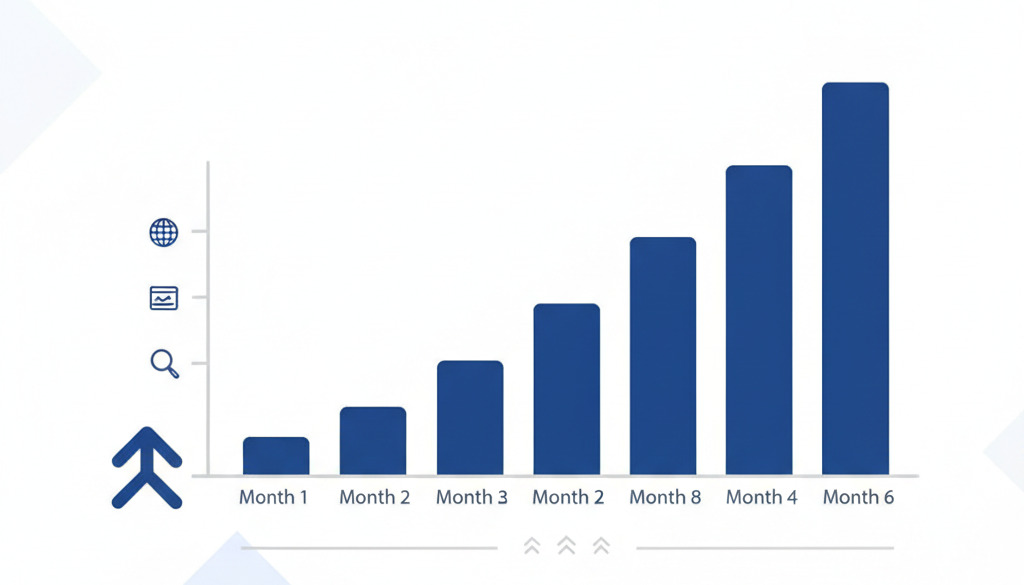
- The Result: Within six months, their website began ranking on the first page of Google for several key local search terms. Website traffic increased by over 300%, and they attributed a 30% increase in qualified leads directly to their blog content.
Example 2: The E-commerce Store
An online store selling specialized gardening tools had a high website bounce rate. Visitors would look at a product and leave without buying. They realized their product descriptions were bland and uninformative.
- The Customization: They used AI to rewrite hundreds of product descriptions. For each one, they prompted the AI to act as an "expert gardener," explaining the specific benefits of each tool, who it was for, and how to use it effectively. They also instructed it to include keywords related to the type of gardening (e.g., "urban gardening," "organic vegetable patch").
- The Result: The new, richer descriptions established more trust and authority. Their conversion rate improved by 15%, and the bounce rate on product pages dropped significantly because customers had the information they needed to make a purchase decision.
These examples highlight how success comes not just from using AI, but from directing it with a clear strategy and deep customer understanding.
The Future of Customizable AI Content for SMBs
The field of artificial intelligence is advancing at an incredible pace. For a business owner, this means that the tools and strategies available today are just the beginning. Staying aware of these trends can help you make smarter decisions and keep your business ahead of the competition. The future of AI in content is focused on deeper personalization and more seamless automation.
Evolving AI Capabilities
The AI models of tomorrow will have an even greater capacity for understanding context, nuance, and complex instructions. This will result in drafts that require less editing and can more accurately capture a specific brand voice from the very first attempt. We can expect AI to become even better at tasks like sourcing credible data and incorporating it directly into articles with citations.
Personalization at Scale
As AI becomes more integrated with customer data platforms, it will become possible to deliver highly personalized content experiences. Imagine your website automatically showing a visitor a version of a blog post that speaks directly to their industry or the specific problem they are trying to solve. This level of personalization, once only possible for giants like Amazon, will become accessible to SMBs.
The Rise of AI-Powered Content Hubs
The distinction between different marketing tools will continue to blur. We will see the rise of integrated platforms where you can manage your entire content lifecycle—from keyword research and content generation to distribution, repurposing, and performance analytics—all within a single AI-powered hub. These systems, sometimes referred to as AI agents, will act as autonomous marketing assistants.
Staying Ahead of the Curve
You don’t need to be an AI expert to benefit from these advancements. The key is to embrace a mindset of continuous learning. By starting with a simple, customizable AI content strategy today, you will build the foundational knowledge needed to adopt more powerful tools as they become available. Early adoption, even on a small scale, provides a significant competitive advantage.
Implementing Your Customizable AI Content Strategy: A Step-by-Step Action Plan
We’ve covered the why and the what; now it’s time for the how. Putting your strategy into action doesn’t require a massive budget or a team of experts. It requires a clear, step-by-step process. Follow this action plan to move from concept to execution and start generating content that grows your business.
Step 1: Define Objectives & Audience
Before you do anything else, grab a pen and paper. Write down 1-2 SMART goals for your content. What do you want to achieve? Then, sketch out a basic buyer persona for your ideal customer. Who are they and what do they need? This document will be your north star.
Step 2: Explore & Select AI Tools or Services
Based on your goals, research solutions that fit your needs and comfort level. If you are comfortable with technology, you might explore a hands-on AI writing platform. However, for many busy owners, a more efficient route is a dedicated service. For instance, some platforms are built specifically to solve this problem, offering an approach where their proprietary artificial intelligence writes professional SEO blog posts for your website in minutes. This can be a practical, hands-off solution.
Step 3: Develop Prompting Guidelines
Create a simple template for your content prompts based on the "Anatomy of a High-Quality Prompt" we discussed earlier. Include sections for your target audience, keywords, desired tone, and key information to include. This ensures consistency and quality no matter what topic you’re writing about.
Step 4: Initiate Content Creation & Human Review
Generate your first piece of content. Then, perform the crucial human review. Read it aloud to check the flow. Verify all facts and figures. Does it sound like your company? Edit it until it perfectly matches your brand voice and standards.
Step 5: Integrate, Distribute & Measure
Publish the content on your blog. Don't stop there. Share it on your social media channels and in your newsletter. After a month, check your website analytics. Are people finding the post? Are they staying on the page to read it? Use this feedback to refine your approach for the next article.
Making the Leap: When to Invest in Professional AI Content Services
For many business owners, the idea of adding "prompt engineering" and "AI tool management" to their to-do list is overwhelming. Your time is your most valuable asset, and it is often best spent running your business, not learning a new software platform. Recognizing when to delegate is a sign of a strong leader.
Recognizing Your Limits
If you find yourself intrigued by the benefits of an AI content strategy but lack the time, energy, or desire to manage the process yourself, it’s a clear signal to consider outsourcing. If your primary goal is to have professional, effective SEO content appear on your blog without adding to your workload, a professional service is the most direct path to that outcome.
Benefits of Professional AI Content Services
Partnering with a specialized service offers several advantages over a DIY approach:
- Expertise on Demand: You gain access to experts who already know how to select the best AI models and craft the perfect prompts for maximum impact.
- Seamless Integration: These services are built to be a "plug-and-play" solution. They handle the entire workflow, from topic ideation to publishing the final, polished article.
- Guaranteed Quality: Reputable services include rigorous human editing and quality assurance as a core part of their offering, ensuring brand consistency and accuracy.
- Significant Time Savings: This is the most crucial benefit. It completely removes the content burden, freeing you up to focus on serving your customers and growing your business.
The Ideal Solution for Busy Owners
For SMB owners who want professional, AI-powered SEO content without the hassle, a service designed to be an autopilot for your blog is the perfect fit. Look for a provider whose entire business model is built around making this easy for you. A great example is a service that promises: "More customers from your blog—we write the SEO articles for you." They handle the complexity of AI and SEO, and you get the results.
To make the decision even easier, many of these services offer a risk-free way to test their value. An offer where your first 5 posts are free provides a no-cost opportunity to see the quality of the content and witness the impact on your online presence firsthand.
Conclusion
The digital landscape is more competitive than ever, but you don't have to be a digital native to win. A customizable AI content strategy offers a clear path for any established business to increase its visibility, build authority, and attract more customers. The transformative power of this approach lies in its blend of artificial intelligence for efficiency and human expertise for authenticity and strategic direction.
This is not about replacing what makes your business great; it's about amplifying it. By tailoring content to your unique voice and audience, you can build a powerful engine for organic growth. Your path to digital success is achievable through a well-executed strategy, supported by the right tools and, when needed, the right partners. By taking these steps, you put your business in a position where, almost like magic, customers find you on their own in Google, allowing you to focus on what you do best.
Frequently Asked Questions
1. Is AI-generated content penalized by Google?
No, Google does not penalize content simply because it was generated by AI. Google's guidelines are clear: they reward high-quality, helpful content created for people, regardless of how it was produced. As long as your AI-assisted content is original, accurate, and provides real value to the reader (which is ensured through customization and human editing), it is perfectly fine for SEO.
2. How much does an AI content strategy cost?
The cost can vary widely. Using a DIY AI writing tool might range from $50 to a few hundred dollars per month. A comprehensive, done-for-you service that handles all aspects of content creation will be a larger investment, but it saves you dozens of hours per month. Many such services offer introductory deals, like five free articles, allowing you to prove the ROI before committing significant budget.
3. How much time does it really take to manage?
If you use a DIY approach, you should budget at least 2-4 hours per article for prompting, generating, fact-checking, editing, and formatting. The primary benefit of a professional AI content service is that it reduces this time commitment to virtually zero. You might spend 30 minutes a month approving topics, but the rest is handled for you.
4. Can AI really capture my company's unique voice?
On its own, no. But with the right inputs and human oversight, absolutely. By providing the AI with a detailed style guide, examples of your existing content, and a clear description of your brand's personality, it can generate a draft that is about 80-90% of the way there. A human editor then closes that final 10-20% gap, ensuring the content is a perfect reflection of your brand.
5. What is the difference between a customizable AI strategy and just using a basic AI writer?
A basic AI writer is like a calculator—it performs a function when you push a button. A customizable AI strategy is a complete process. It involves setting goals, defining your audience, crafting detailed instructions (prompts), and a mandatory human review process. The first approach creates generic content; the second creates a strategic business asset that drives results.
Keep reading
Hand-picked guides that go deeper — open the one you need next:
- Scale Your Business with AI: Content Marketing for Growth
- AI Keyword Research: Beyond Basic Keywords
- From Zero to Hero: Launch Your Business Blog with AI in Days
- Try Before You Buy: 5 Free AI Articles From Volteruno
→ Read the full AI Content guide