
Publishing AI Content to Any Website Platform

Key Takeaways
- Overcome Content Hurdles: AI content generation solves the biggest challenges for busy business owners: lack of time, budget, and writing expertise.
- Boost Your SEO: Modern AI tools can create search-engine-optimized content at scale, helping you attract more customers through Google with less manual effort.
- Platform Agnostic: AI-generated content can be published on any website platform, from WordPress and Shopify to custom-built sites, ensuring a consistent brand voice everywhere.
- Human Oversight is Key: AI is a powerful assistant, not a replacement for your expertise. Always review, edit, and add your unique perspective to ensure accuracy and brand alignment.
- Strategic Implementation Drives Growth: Using AI isn't just about creating content faster; it's about building a scalable and efficient marketing engine that fuels business growth.
Introduction: The Evolving Content Imperative for Modern Businesses
In today's digital-first world, having a website is just the first step. For a business to truly thrive online, its digital presence must be active, engaging, and consistently updated. This has become a non-negotiable reality for companies of all sizes, whether you're a local service provider, a niche e-commerce store, or a B2B consultant. Your website is your 24/7 salesperson, and fresh, valuable content is the fuel that keeps it running effectively.[2]
However, for many seasoned business owners, the demand for continuous content creation presents a significant challenge. You're an expert in your field, not necessarily a professional writer. The primary pain points are universal: there's never enough time in the day, hiring professional writers can be costly, and the sheer volume of content needed to stay competitive can feel overwhelming. You know you need to publish blog posts and update your site, but your core business operations rightly demand your full attention.
This is where Artificial Intelligence (AI) emerges not as a futuristic gimmick, but as a practical, powerful solution.[1] AI-generated content offers a way to bridge the gap between knowing you need content and actually having the resources to produce it. It acts as a tool to augment your strategy, overcome resource limitations, and unlock new avenues for customer engagement and growth.
Understanding the Modern Website Content Landscape
Not long ago, a business website could function as a simple digital brochure—a few static pages with contact information and a list of services. That model is no longer sufficient. The modern internet is dynamic, and customers have come to expect more from the businesses they interact with online.
From Static Pages to Dynamic Engagement
Today's successful websites are living platforms. They provide continuous value through regularly updated blogs, in-depth articles, helpful guides, and detailed product descriptions. This shift is driven by a simple fact: customers use the internet to find answers. A website that consistently provides those answers is a website that wins trust and business.
Meeting and Exceeding Audience Expectations
Your potential customers are searching for solutions. They expect to find fresh, relevant, and insightful content that addresses their specific needs, questions, and pain points. A dormant website with outdated information sends a negative signal. In contrast, a site with a vibrant blog and recently published articles shows that your business is active, knowledgeable, and engaged in its industry.
Content as a Competitive Differentiator
In a crowded digital marketplace, high-quality content is what sets you apart. When a potential customer searches for a product or service you offer, they will likely find you and your competitors. The business that provides the most helpful, comprehensive, and persuasive content is the one that will capture their attention and, ultimately, their loyalty. Consistent content creation is no longer just a marketing tactic; it's a fundamental component of your competitive strategy.
What is AI-Generated Content, and Why it Matters for SMEs
In simple terms, AI-generated content is text created by an artificial intelligence program using sophisticated language models. You provide the AI with a prompt—a topic, a keyword, a question—and it produces a fully written piece of content, such as a blog post, an email, or a product description, based on the vast amount of information it was trained on.
The Bottom Line for Business Owners
For small and medium-sized enterprises (SMEs), the "why" is crystal clear. AI content generation directly addresses your most significant operational challenges. The primary benefits include:
- Speed: An AI can draft an article in minutes, a task that could take a human hours.
- Cost-Efficiency: It dramatically reduces the cost associated with hiring freelance writers or a marketing agency, making a robust content strategy financially viable.
- Scalability: It allows you to produce a large volume of content consistently, something that is nearly impossible for a business owner to do alone.
Demystifying the Technology
A common concern is that AI-written content will sound robotic, generic, or sterile. While this was true of earlier iterations, today's advanced AI is far more sophisticated. Modern platforms can be instructed to write in specific tones—professional, friendly, witty, or technical—and can produce content that is genuinely informative, well-structured, and engaging for human readers. Think of it less as a robot and more as a highly efficient writing assistant.
The Core Benefits of Integrating AI Content into Your Website Strategy
Adopting AI for content creation isn't just about saving time; it's about building a more powerful and resilient marketing engine for your business. The strategic advantages are multi-faceted and directly impact your bottom line.
Accelerated Content Velocity
"Content velocity" refers to the speed and consistency with which you publish new content. Higher velocity means more opportunities to engage customers and rank in search engines. AI allows a small business to maintain a publishing schedule previously only achievable by large corporations with dedicated content teams. Instead of one blog post a month, you can now publish one a week, or even more, keeping your website fresh and your audience engaged.
Cost-Effective Scalability
Imagine being able to expand your marketing efforts without proportionally increasing your budget. That is the promise of AI. It allows you to scale your content production to meet your growth ambitions. Whether you're launching a new product line that needs descriptions, expanding into new service areas that require landing pages, or simply wanting to increase your blog output, AI provides a way to create the necessary content at a fraction of the cost of traditional methods.
Enhanced SEO Foundation
Search Engine Optimization (SEO) is the process of making your website more visible on search engines like Google. A key part of SEO is creating content that targets the keywords your customers are searching for. AI can be specifically instructed to incorporate these keywords naturally and effectively. Furthermore, many AI tools are designed to follow SEO best practices, such as creating well-organized articles with clear headings and easy-to-read paragraphs, laying a strong foundation for your search ranking efforts from the very start.
Identifying the Right AI Content Tools for Your Business Needs
The market for AI tools has exploded, and choosing the right one can feel daunting. However, understanding the main categories can help you identify a solution that aligns with your specific business goals and comfort level with technology.
Categorizing AI Content Solutions
Recent analysis from industry experts shows that AI tools generally fall into a few key types, each serving a different purpose:
- Writing Assistants (e.g., ChatGPT, Claude): These are powerful, general-purpose tools great for brainstorming, drafting, and refining text. You are in the driver's seat, guiding the AI to get the output you need. They are versatile but require more hands-on effort.
- Optimization Tools (e.g., Surfer SEO): These tools don't write the content for you. Instead, they analyze existing text (whether written by a human or AI) and provide detailed recommendations on how to improve it for better search engine performance.
- End-to-End Content Engines: These are integrated systems designed to handle the entire workflow, from keyword research and topic ideation to content creation, optimization, and even publishing directly to your website. They offer the most automation but are more specialized.
Key Features to Look For
When evaluating any AI tool, look for these essential functionalities:
- Customization and Tone Control: The ability to guide the AI to match your brand's voice is crucial.
- SEO Capabilities: Does the tool help with keyword integration and content structure?
- Plagiarism Checks: Reputable tools include built-in checkers to ensure the content produced is original.
- Ease of Use: For a busy business owner, the interface should be intuitive and require minimal technical expertise.
Leveraging AI for High-Impact Blog Content: Attracting Your Ideal Customers
For most businesses, a blog is the single most powerful tool for driving organic traffic and building authority. It’s your platform to answer customer questions, share your expertise, and demonstrate your value. AI can revolutionize this process.
The Critical Role of a Business Blog
Every article you publish is a new opportunity for a customer to find you through a Google search. A consistent blogging strategy positions your company as a thought leader and a reliable source of information, building trust long before a potential customer is ready to make a purchase. If you're looking for a deep dive, consider reading a guide on mastering AI article writers for truly engaging content.
From Idea to Draft in Minutes
One of the hardest parts of blogging is coming up with fresh ideas. AI can act as an inexhaustible brainstorming partner, suggesting relevant topics based on your industry and target keywords. Once you have an idea, AI can transform it into a well-structured and comprehensive draft, complete with an introduction, body paragraphs, and a conclusion. This eliminates the "blank page" problem and saves countless hours.
Effortless, SEO-Driven Article Generation
The true power of AI lies in its ability to follow instructions at scale. You can direct it to write an article on a specific topic, optimized for a particular keyword, and aimed at a certain audience. For businesses looking to harness the power of their blog without the manual grind, solutions like More Customers From Your Blog offer a streamlined approach, using their proprietary AI to generate SEO-optimized articles that attract customers directly from Google.
Crafting Compelling Website Copy with AI Assistance
While blog content is crucial for attracting visitors, the other copy on your website is what converts them into customers. Your landing pages, service descriptions, and "About Us" page all play a vital role in the sales process. AI can help sharpen your messaging across your entire site.
Beyond the Blog: Core Website Pages
Your core website pages need to be persuasive and clear. AI can help you move beyond simply listing features to highlighting the true benefits of your offerings. It can rephrase technical jargon into customer-friendly language and ensure every page has a strong call to action.
AI for Persuasive, Benefit-Driven Messaging
You can use AI to analyze your service descriptions and suggest ways to make them more powerful. For example, instead of saying "We offer accounting services," an AI might suggest "We give you back your time and peace of mind by handling all your complex accounting needs." This subtle shift from what you do to what the customer gets is the key to effective marketing copy.
Maintaining a Consistent Brand Voice
Consistency is key to building a strong brand. Whether a customer is reading a blog post, a service page, or your company story, the tone and style should feel the same. By providing an AI tool with examples of your existing content, you can train it to replicate your unique brand voice, ensuring all new content—whether for your blog or a landing page—is perfectly aligned.
Optimizing AI-Generated Content for Search Engines (SEO)
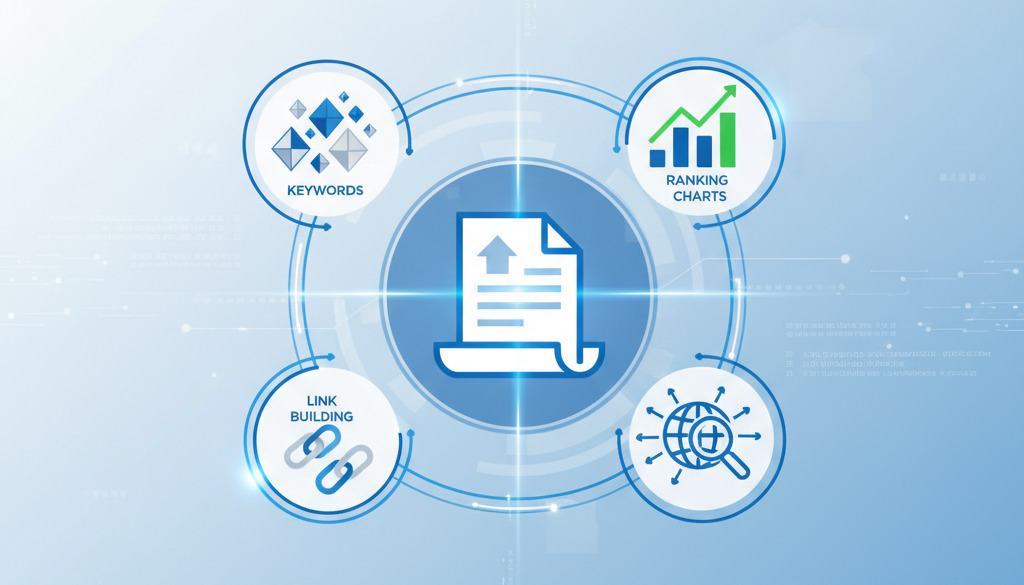
Creating content is only half the battle; ensuring it gets found by your target audience is the other. SEO can seem complex, but AI tools can simplify the process by building optimization directly into the content creation workflow.
Seamless Keyword Integration
One of the fundamentals of SEO is including relevant keywords in your content. AI can be instructed to write an article that naturally incorporates a primary keyword and several related secondary keywords. This helps search engines understand what your content is about and show it to the right people. For a comprehensive strategy, understanding how to craft SEO optimized blog articles is a must.
Focusing on Readability and Structure
Google doesn't just care about keywords; it also cares about user experience. Content that is easy to read and well-structured tends to rank better. Good AI content tools automatically create articles with a logical flow, using H2 and H3 headings, short paragraphs, and bulleted lists to break up the text. This not only pleases search engines but, more importantly, provides a better experience for your human readers.
Generating Compelling Meta Titles and Descriptions
The meta title and description are the snippets of text that appear in Google search results. They are your first chance to convince someone to click on your link. Many AI tools can generate several creative and compelling options for these crucial elements, helping to improve your click-through rate from search.
Ensuring Quality and Accuracy: The Human Element in AI Content
Perhaps the most important rule of using AI is to remember that it is a tool to assist you, not replace you. The best results come from a partnership between artificial intelligence and human expertise. Your oversight is what turns a good AI draft into a great piece of content for your business.
AI as a Co-pilot, Not the Pilot
Think of AI-generated text as a very thorough first draft. It provides the structure, the research, and the bulk of the writing. Your role is to be the editor-in-chief. You bring the nuance, the industry-specific knowledge, and the authentic voice of your brand. This final human touch is what elevates the content and makes it truly yours.
The Crucial Step of Fact-Checking
AI models are incredibly knowledgeable, but they are not infallible. They can occasionally make factual errors or present outdated information. It is absolutely essential to review any claims, statistics, or technical details in the AI-generated content. This step is non-negotiable for maintaining your credibility and the trust of your audience.
Adding Your Unique Perspective
AI can write about a topic, but it can't share your personal experience or your company's unique story. The most valuable part of the editing process is injecting your own insights, anecdotes, and opinions. This is what transforms a generic article into a piece of thought leadership that resonates with customers and sets you apart from the competition.
Streamlining Your Content Workflow with AI Solutions
The ultimate goal of using AI is to make your business more efficient. By integrating AI into your content marketing process, you can reclaim valuable time and create a scalable system for attracting new customers.
Bridging the Time Gap for Busy Owners
For most business owners, the biggest benefit is time. The hours you would have spent struggling to write a blog post can now be spent on sales, customer service, or strategic planning. An AI-driven workflow dramatically reduces the time commitment required for a successful content strategy, making it sustainable for even the busiest entrepreneur.
The "Write Once, Publish Everywhere" Model
A single piece of AI-generated content can be the foundation for a multi-channel marketing campaign. A long-form blog post can be summarized by AI into a social media update, a series of email tips, or a script for a short video. This allows you to maximize the value of each content asset and maintain a consistent presence across all the platforms where your customers spend their time.
Measuring What Matters: Content Performance
Creating content is pointless if you don't know if it's working. It's important to track key metrics like website traffic, user engagement, and, most importantly, how many new leads or sales your content is generating. This data helps you understand what resonates with your audience so you can refine your strategy. Tools like More Customers From Your Blog simplify this process, delivering ready-to-publish SEO articles that are designed to attract customers, freeing up your valuable time. Their promise of 'your first 5 posts free' provides a low-risk entry point for SMEs to experience these benefits.
Overcoming Common Objections and Misconceptions About AI Content
As with any new technology, there is a lot of misinformation surrounding AI content. Addressing these common concerns head-on can help you make an informed decision for your business.
Objection 1: "Is the content original?"
This is a valid and important question. Reputable AI content generators do not copy and paste from other sources. They generate new text word by word based on patterns learned from their training data. Most high-quality tools also include plagiarism checkers to verify the originality of the output, giving you peace of mind that you are publishing unique content.
Objection 2: "Will it sound robotic and impersonal?"
The quality of AI writing has improved exponentially. Modern AI can produce text that is nuanced, sophisticated, and remarkably human-like. Furthermore, you have control over the tone and style. The final human editing pass is where you infuse the content with your brand's unique personality, ensuring it never feels impersonal.
Objection 3: "Is it an ethical way to create content?"
The ethics of AI are a topic of broad discussion. When it comes to business content, the responsible approach is to use AI as a productivity tool. This involves being transparent about its use where appropriate, always fact-checking its output, and ensuring the final published piece provides genuine value to the reader. It's unethical to use AI to spread misinformation or create low-quality spam. It is ethical to use it to help a small business communicate more effectively and compete on a more level playing field.
The Future of AI and Content Creation for Business Growth
The integration of AI into business operations is not a passing trend. The technology is rapidly evolving and will become an even more integral part of how successful businesses create content and engage with customers.
Ever-More Sophisticated Capabilities
Looking ahead, AI will become even better at understanding nuance, context, and creative intent. We can expect tools that offer more precise control over writing style, deeper research capabilities, and even the ability to generate content in multiple formats (like text and video) from a single prompt. The gap between AI output and a final human-written piece will continue to shrink.
Personalization at an Unprecedented Scale
The ultimate goal of marketing is to deliver the right message to the right person at the right time. AI will be the engine that powers hyper-personalized content experiences. Imagine a website that can dynamically adjust its content based on a visitor's past behavior, industry, or stated interests. This level of personalization, once only possible for giants like Amazon, will become accessible to SMEs.
The Strategic Imperative of Adoption
As AI tools become more powerful and easier to use, the businesses that embrace them will gain a significant competitive advantage. Those that resist may find it increasingly difficult to keep up with the volume and quality of content their AI-equipped competitors are producing. Embracing AI for content is quickly moving from a strategic option to a business necessity.
Implementing AI Content: A Step-by-Step Approach for SMEs
Getting started with AI content doesn't have to be complicated. By following a structured approach, you can seamlessly integrate this powerful technology into your business operations.
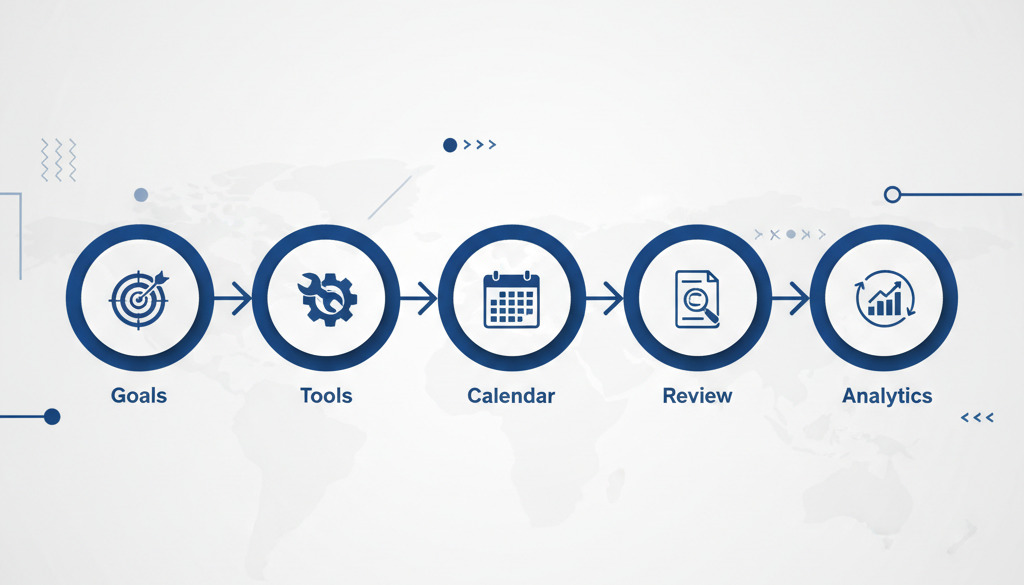
1. Define Your Content Goals
Before you write a single word, know what you want to achieve. Are you trying to increase website traffic? Generate more leads? Establish yourself as an expert? Your goals will determine the type of content you need to create.
2. Choose the Right Tool or Service
Based on your goals and your comfort with technology, select a solution. If you want a hands-on assistant, a general tool might suffice. If you're using a specific platform like WordPress, you might explore options for WordPress SEO automation with AI. However, for many SMEs, the most straightforward path is to partner with a dedicated service. More Customers From Your Blog, for example, focuses on delivering ready-made SEO articles written by their own AI, designed to bring customers to your website organically.
3. Develop a Simple Content Calendar
Planning is key to consistency. Create a simple calendar that outlines what topics you will publish and when. This doesn't need to be complex; a basic spreadsheet can work perfectly. This ensures a steady stream of content without last-minute scrambling.
4. Integrate, Review, and Enhance
Incorporate the AI-generated content into your workflow. Generate the draft, then schedule time for your review. This is where you fact-check, add your personal anecdotes, and adjust the tone to perfectly match your brand. This human review process is the most critical step.
5. Measure, Refine, and Repeat
After publishing, keep an eye on your website analytics. Which articles are bringing in the most traffic? Which ones are leading to phone calls or contact form submissions? Use this data to inform your future content topics and continuously refine your strategy for better results.
Conclusion: Empowering Your Business with Smart Content Creation
The digital landscape is more competitive than ever, but technology has provided business owners with a powerful equalizer. AI content generation effectively solves the timeless challenges of time, budget, and expertise, allowing you to build a formidable online presence that drives real-world results. By producing a consistent stream of high-quality, SEO-optimized content, you can attract your ideal customers, build trust, and establish your brand as a leading voice in your industry.
We encourage you to move beyond the question of "if" you should use AI and start exploring "how" it can best serve your business. Begin by identifying your biggest content bottleneck and investigate a tool or service that can solve it. By strategically embracing AI as your content co-pilot, you can unlock efficiency, scale your marketing efforts, and free yourself up to focus on what you do best: running your business.
Frequently Asked Questions
1. Is it legal to use AI-generated content on my business website?
Yes, it is completely legal. The content generated by AI tools is original and does not violate copyright laws. You own the content you create using these tools and can use it for any commercial purpose, including on your website and in your marketing materials.
2. Will Google penalize my website for using AI content?
No. Google's official stance is that they reward high-quality content, regardless of how it is produced. Their focus is on content that is helpful, reliable, and provides a good user experience. As long as you are using AI to create valuable content and not low-quality spam, you will not be penalized. The key is to ensure the content is reviewed and edited for accuracy and usefulness.
3. How much human editing does AI content really need?
The amount of editing depends on the quality of the AI tool and the complexity of the topic. A good rule of thumb is to treat the AI output as a solid first draft. You should always plan to perform a full review to fact-check, add your brand's unique voice, insert personal anecdotes or case studies, and ensure the overall message aligns perfectly with your business goals.
4. Can AI really understand my niche industry?
Modern AI models are trained on an incredibly vast data set, which includes specialized knowledge across thousands of industries. You will likely be surprised at how well an AI can discuss niche topics. However, for highly technical or cutting-edge subjects, your expert review is even more critical to ensure accuracy and add the nuanced insights that only a professional in the field would have.
5. What is the most significant risk of using AI for content?
The most significant risk is over-reliance without oversight. Publishing AI-generated content without a thorough human review can lead to factual inaccuracies, a tone that is misaligned with your brand, or generic content that fails to connect with your audience. The risk is not in using AI, but in using it blindly. Strategic use with human validation is the key to success.
6. How can I start using AI content if I have zero technical skills?
You don't need to be a tech expert. Many AI content solutions are designed with user-friendliness in mind. The easiest way to start is with a "done-for-you" service built for business owners. These services handle the technical side, delivering ready-to-publish articles directly to you and often providing a trial period, like the first 5 posts free, so you can see the value for yourself without any risk.
Keep reading
Hand-picked guides that go deeper — open the one you need next:
- AI Marketing: Volteruno Delivers ROI
- Local Businesses Rejoice: Geo-Targeted Content With AI
- The Future of Content Marketing: AI is Your New Edge
- Top AI Content Agency Alternatives: A Strategic Guide
→ Read the full AI Content guide