
The ROI of Automation: How AI Blog Posts Drive Growth
Key Takeaways
- Potential Cost Savings: Compare the cost of AI-assisted content with your current workflow, including review, correction and publishing time. There is no universal savings percentage.
- Massive Efficiency Gains: AI may help you produce content faster, making it easier to work toward a consistent publishing schedule without draining your own time.
- Potential Traffic and Lead Growth: High-quality, SEO-focused content may help improve search visibility and attract visitors, but rankings, traffic and leads are not guaranteed.
- Builds Brand Authority: Consistently publishing valuable articles establishes your business as a trusted expert in your field, building credibility that converts prospects into customers.
- Focus on Your Business: Automation hands your time back to you. By entrusting content creation to specialized AI, you can focus on core operations, customer service, and strategic growth—the things only you can do.
As a small or medium-sized enterprise (SME) owner, you’re an expert in your field.[1] You know your business inside and out. You also know that in today's digital world, having a strong online presence is non-negotiable. A key part of that presence is a business blog, a powerful tool for attracting customers through Google search. However, the reality for most business owners is a constant struggle. The relentless demand for fresh, high-quality content—the "content treadmill"—can be overwhelming, especially when you're already juggling operations, sales, and customer service. This article is written for you. We'll demystify the return on investment (ROI) of using Artificial Intelligence (AI) for your blog and provide a clear, practical roadmap to leveraging this technology for real, sustainable business growth.[2]
Understanding the Core Challenge: The Content Treadmill for SMEs
Helpful articles can make information about your business easier to discover and give potential customers answers to relevant questions. Publishing frequency alone does not establish authority or guarantee rankings and leads. Choose topics for their usefulness, then assess your own results.
The Reality of Resource Constraints
The main roadblocks are universal for business owners:
- Time: You simply don't have the hours to brainstorm topics, research keywords, write 4000-word articles, edit them, and publish them consistently.
- Budget: Hiring a professional writer or a marketing agency can be expensive, with costs quickly adding up for the volume of content needed to make a real impact.
- Expertise: You're an expert in your business, not necessarily in Search Engine Optimization (SEO). Writing content that is specifically designed to rank on Google is a unique skill set.
This often leads to a frustrating cycle: you invest precious time or money into a few blog posts, see little to no tangible return, and reasonably conclude that it’s not worth the effort. The content treadmill wins, and your online growth stalls.
Defining ROI in the Context of AI Blog Content
When business owners think about ROI, they often look for a direct, immediate line from an investment to a sale. While this is the ultimate goal, the ROI of blog content is more multifaceted. It's about building an asset that generates value over the long term. AI is a tool that dramatically accelerates the creation of this asset.
Key Metrics That Define Blog ROI
The true return on your content investment is measured through several key indicators:
- Increased Organic Traffic: More people finding your website through search engines.
- Improved Search Engine Rankings: Higher visibility on Google for keywords that your customers are searching for.
- Lead Generation: Capturing contact information from potential customers who are interested in your products or services.
- Enhanced Brand Visibility and Authority: Becoming the go-to resource in your industry.
- Reduced Content Creation Costs: Significantly lowering the financial outlay required to produce high-quality articles.
AI-powered content creation doesn’t change these goals; it makes them achievable for business owners who were previously constrained by time and budget.
The Efficiency Revolution: How AI Streamlines Your Content Workflow
AI can reduce repetitive research and drafting work. Measure the time needed for a complete, checked article in your own workflow; neither an instant turnaround nor a fixed time saving follows from choosing an AI tool.
From Idea to Publication in Record Time
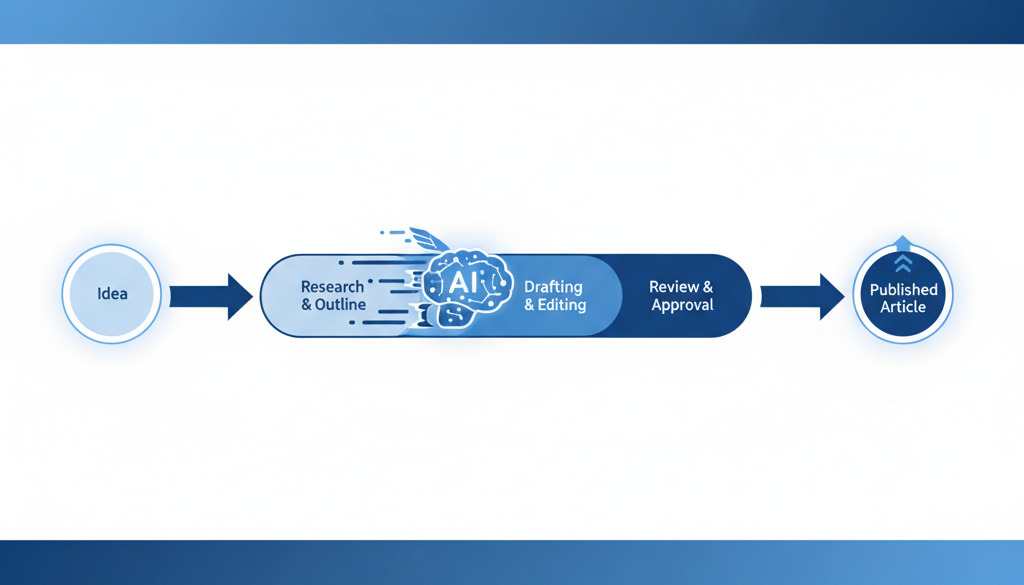
Modern AI tools can take a simple topic or keyword and generate a comprehensive, structured, and well-written draft almost instantly. This completely changes the dynamic of content creation. Instead of laboring over a blank page, you start with a nearly-finished article that simply requires your expert review and refinement. This "human-in-the-loop" approach respects your expertise while eliminating the most time-consuming parts of the writing process.
Achieving Unprecedented Consistency
Consistency is king in content marketing. Publishing one article every six months won't move the needle. AI tools may help you work toward a regular publishing schedule—whether weekly or bi-weekly—depending on your workflow and plan. Consistency can help you build momentum with search engines and keep your audience engaged. Time savings depend on the tool, task and review needed, and results vary.
Quality Over Quantity? The Evolving Landscape of AI Content Generation
A common and valid concern among business owners is the quality of AI-generated content. Early iterations of AI writers often produced robotic, generic, and unhelpful text. However, the technology has advanced at an exponential rate. Modern, sophisticated AI models are now capable of producing content that is not only readable but also professional, insightful, and optimized for SEO.
The Importance of Human Oversight
The best approach to AI content is to view it as a powerful assistant, not a complete replacement for human expertise. Your knowledge of your customers and your industry is invaluable. The role of the business owner shifts from "writer" to "editor-in-chief." You guide the AI, provide the key points, and then review the output for:
- Factual Accuracy: Ensuring all data and claims are correct.
- Tone of Voice: Aligning the writing style with your brand.
- Brand Alignment: Adding personal anecdotes, specific company information, and unique insights.
This combination of AI efficiency and human oversight produces a final product that is superior to what either could create alone.
Strategic Content Pillars for AI Implementation
To maximize your ROI, it's crucial to be strategic about the type of content you create with AI. Don't just create content for the sake of it. Focus on articles that directly address the needs of your target audience and serve your business goals. Here are some of the most impactful areas for SMEs:
SEO-Driven Cornerstone Content
These are long, in-depth articles that cover a core topic in your industry from top to bottom (e.g., "The Ultimate Guide to Kitchen Remodeling for Homeowners"). AI is exceptionally good at helping structure and draft these comprehensive pieces, which become long-term assets for attracting search traffic.
Problem-Solving and FAQ Articles
Think about the questions your customers ask you every day. Each one is a potential blog post. Using AI, you can quickly create detailed articles that answer these questions, positioning your business as a helpful expert and saving you time on repetitive customer support inquiries.
Product and Service Deep Dives
Create content that goes beyond a simple sales page. Use AI to generate articles that explain the benefits of your services, showcase different use cases for your products, or compare your offerings to alternatives. This helps guide potential customers closer to a purchasing decision.
Bridging the Gap: Leveraging AI for SEO Success
The ultimate goal of a business blog is to be found on Google. This is where AI becomes a true strategic advantage. Advanced AI content platforms can be trained to understand and implement the complex rules of SEO, taking the guesswork out of the process for non-experts.
Keyword Research Automation
Effective SEO starts with targeting the right keywords. AI tools can analyze search trends and identify high-potential keywords relevant to your business, including valuable "long-tail keywords" (longer, more specific phrases) that often indicate a customer is closer to making a purchase. For a deeper dive, consider exploring strategies for AI-powered keyword research to build a strong foundation.
On-Page Optimization with AI
AI can automatically incorporate best practices for on-page SEO. This includes generating keyword-optimized titles, meta descriptions, and headings that are structured to appeal to search engines. It can also ensure that your target keywords are integrated naturally throughout the text, avoiding the "keyword stuffing" that can harm your rankings.
Content Structure and Readability
Google prioritizes content that is easy for users to read and understand. AI excels at creating well-structured articles with clear headings, short paragraphs, and bulleted lists. This not only improves the user experience but also makes it easier for search engine crawlers to index your content, leading to better rankings.
The Power of Automation: "More Customers From Your Blog" and Your Content Pipeline
An integrated workflow can reduce the need to move between separate tools. Volteruno combines topic preparation, research, article writing, images, checks and configured publishing. This does not mean a human-managed service, a proprietary foundation model or guaranteed publication within minutes. Include your setup and review work when assessing its value.
Calculating the Cost Savings: Unpacking the Financial Benefits
Compare your total cost per useful article, including drafting, review, corrections, subscriptions and publishing. Potential savings depend on your own workflow; an unsourced industry percentage is not evidence of what your business will save.
A Simple Cost Comparison
- Freelance Writer: A good freelance writer might charge anywhere from $150 to $500+ for a single, well-researched blog post.
- Marketing Agency: A content package from an agency could run into thousands of dollars per month for just a few articles.
- AI-Powered Solutions: Costs vary by platform and the level of human oversight required; check current pricing and what each service includes.
Any savings may free up budget to reinvest in other areas of your business, such as advertising, product development, or customer support.
Beyond Cost: The Return on Investment in Brand Authority and Trust
While the cost savings are immediate and tangible, the long-term value lies in building brand authority. A consistent stream of high-quality, helpful content transforms your business from just another option into a trusted industry leader. When a potential customer has a question, they start looking for your answer. This trust is the foundation of brand loyalty and long-term customer relationships.
AI acts as an amplifier for these efforts. By enabling you to publish a high volume of valuable content consistently, you can build credibility and top-of-mind awareness much faster than you ever could manually. Every article you publish is another asset working 24/7 to demonstrate your expertise and build that crucial foundation of trust with your audience.

Lead Generation Amplification Through AI Content
Traffic is great, but leads are what pay the bills. AI can be strategically employed to create content that is specifically designed to generate leads. By understanding the different stages of the buyer's journey, you can commission AI to create content that meets customers exactly where they are.
- Top of Funnel (Awareness): Broad "how-to" guides and articles that answer general questions, optimized to attract new visitors. This is a key part of using AI for your small business content strategy.
- Middle of Funnel (Consideration): More detailed articles, case studies, or comparison guides that help prospects evaluate their options.
- Bottom of Funnel (Decision): Content that directly addresses specific pain points and presents your product or service as the ideal solution.
By creating targeted content for each stage, you build a powerful lead generation engine that nurtures prospects from initial awareness all the way to a final sale.
Improving Customer Engagement and Reducing Support Load
An often-overlooked benefit of a robust blog is its ability to serve as a proactive customer support channel. By using AI to create a comprehensive knowledge base of "how-to" articles, troubleshooting guides, and in-depth FAQs, you can answer your customers' questions before they even have to ask them.
This has two major benefits. First, it frees up your time (or your team's time) from answering the same questions over and over again. Second, it provides a better customer experience, allowing users to find answers instantly without having to wait for a response. This level of self-service support builds confidence and satisfaction with your brand.
Overcoming the Urgency: A Solution for Time-Strapped Entrepreneurs
The biggest hurdle for most SME owners is time. You’re putting out fires, managing employees, and serving customers. Finding a spare 10-15 hours a week for content marketing is simply not feasible. Some services may help with parts of the AI content process, but features and the level of hands-on work vary. If you're considering a platform such as More Customers From Your Blog, check its current features and plan details to see what it actually handles. The ease of use matters for business owners who don’t consider themselves "online natives," so look for clear information about setup and what tasks remain yours.
Implementing AI Content: A Practical 5-Step Framework
Getting started with AI content doesn't have to be complicated. Following a clear framework can help you integrate this technology smoothly and effectively.
- Define Your Goals and Target Audience: Be crystal clear about what you want to achieve. Is your primary goal to increase traffic, generate leads, or reduce support queries? Revisit the profile of your ideal customer to ensure your content will speak directly to their needs.
- Choose the Right AI Tool or Service: Not all AI solutions are created equal. Some are hands-on tools for writers, while others are full-service platforms designed for busy owners. Choose the one that best fits your technical comfort level and time commitment.
- Develop Your Content Strategy and Calendar: Plan your content. Brainstorm a list of 20-30 topics based on customer questions and keyword research. Slot them into a simple calendar to ensure a consistent publishing schedule.
- Implement AI Generation with Human Review: Use your chosen tool to generate the drafts. Then, invest a small amount of time to review, edit, and add your personal touch. This ensures the final product is accurate, authentic, and aligned with your brand. Looking into the specifics of crafting SEO optimized articles can be a huge help here.
- Monitor, Analyze, and Iterate: Track your results. Are you seeing an increase in traffic? Are certain articles generating more leads? Use this data to refine your strategy and double down on what’s working.
Measuring Success: Key Performance Indicators (KPIs) for AI Blog Content
To understand the value of your work, decide which outcomes matter and measure them consistently. Track the cost of producing checked content alongside relevant visits, inquiries or sales. Here are useful metrics to consider:
- Organic Traffic Growth: The number of visitors arriving at your blog from search engines.
- Keyword Ranking Improvements: Your position in Google search results for your target keywords.
- Lead Conversion Rate: The percentage of blog readers who sign up for your newsletter, download a resource, or contact you.
- Time Saved in Content Creation: Calculate the hours you would have spent writing manually versus editing an AI draft. This is a direct ROI on your time.
- Cost Per Lead: Divide your total content cost by the number of leads generated from your blog to see the financial efficiency.
- Engagement Metrics: Time on page and shares can indicate how valuable your audience finds the content.
Choosing an AI Content Service: Check Its Current Offer
To evaluate Volteruno, start with one successful, quality-passed article generation per account lifetime on the base Free plan, for one connected website. Failed generation does not consume this allowance; deleting a completed article or reconnecting does not restore it, and there is no monthly reset. You may publish the completed article. Autopilot activation and operation require a paid plan.
Addressing Common Objections and Misconceptions
Despite the benefits, many business owners still have reservations. It's important to address these common concerns head-on.
- The "Robotic Content" Fear: This is a dated concern. Modern AI, guided by a human expert (you), produces nuanced and high-quality content. The key is the partnership between human and machine.
- "Will Google Penalize Me?": Google has been very clear on this. Their focus is on the quality and helpfulness of the content, not its origin. High-quality, human-reviewed AI content that serves the reader is perfectly fine and can rank very well. Low-quality, spammy content—whether written by a human or AI—will be penalized.
- "Is it Ethical?": Responsible AI use is about transparency and value. The goal is not to deceive the reader but to use technology to deliver valuable information more efficiently.
- "It's Too Technical for Me": This is a major barrier for many. The solution is to choose platforms specifically designed for non-technical users. Services that handle the entire process for you completely remove this obstacle.

The Future of SME Content: AI as a Strategic Partner
Adopting AI for content creation is not just about keeping up with trends; it's about securing a long-term competitive advantage. As the technology continues to evolve, its capabilities for personalization, distribution, and analysis will only become more powerful. Businesses that integrate AI into their marketing strategy now are building a foundation for future growth. Waiting means falling behind competitors who are already using these tools to capture market share, build authority, and attract the customers you want.
Conclusion: Unlocking Sustainable Growth with AI-Powered Content
For the busy SME owner, AI-powered content may help make a content marketing strategy more manageable in time and cost. Potential benefits include saving time, supporting SEO efforts, and creating opportunities to attract organic traffic and leads, though results vary. It may also give you more time to focus on what you do best—running your business.
By overcoming the content treadmill, you can make room for a more consistent content strategy, though publishing alone does not guarantee business growth. The technology is here, and different tools and services may suit different levels of technical skill. Before trying a service, check its current plans, features, and allowances—including any free offer—and consider how it fits your needs.
Frequently Asked Questions
1. What is the most important ROI from using AI for blog content?
Long-term value depends on the total cost of producing useful content and the results you actually measure. Consistency can support a content strategy, but it does not by itself produce predictable traffic, leads or a positive return.
2. Will my website be penalized by Google for using AI-generated content?
No, not if the content is high-quality. Google's official stance is that it rewards helpful, well-structured, and user-focused content, regardless of how it was created. The key is to use AI as a tool to create excellent articles and always have a human review the output for accuracy and value before publishing.
3. How can I ensure the quality of AI content isn't robotic or generic?
The best practice is a "human-in-the-loop" approach. You, as the business expert, should guide the AI with specific prompts, outlines, and key talking points. Afterwards, you review the generated draft to add your unique brand voice, personal anecdotes, and industry insights. This combines the speed of AI with the authenticity of your expertise.
4. I'm not a technical person. Is it difficult to use these AI tools?
It doesn't have to be. While some AI writing tools are complex, many services are designed for non-technical business owners. Features differ, so check whether a platform such as More Customers From Your Blog handles the technical steps you need or whether you'll need to manage some of them yourself.
5. How much money can I realistically save by switching to AI content?
Businesses may be able to reduce their content budget, but actual costs and savings vary. Compare current pricing, what each AI service includes, and the time needed for review against your existing freelancer or agency costs before estimating potential savings.
The ROI of Automation: How AI Blog Content Drives Growth
The question of investing in AI for content creation often boils down to its return on investment (ROI). Businesses are rightly concerned about whether the upfront or ongoing costs associated with AI writing tools will translate into tangible business benefits. The good news is that AI blog content ROI is not only achievable but can be substantial, driven by a combination of cost savings, increased efficiency, and improved performance metrics.
To estimate savings, compare your current writing, editing, research and publishing costs with the complete AI-assisted workflow. Include subscriptions, usage charges, review time and rework. Use your own observations rather than assuming that every business saves more than 70%.
Faster drafting can reduce a content bottleneck, but compare the complete workflow rather than generation time alone. Include research, editing, checks and publication. Increasing output is worthwhile only if the additional articles serve readers and the observed benefits justify the extra cost; lead growth is not automatically exponential.
Measure the outcomes that matter to your business, such as relevant search visits, qualified inquiries and completed sales. Compare them with your total content costs over a suitable period. Traffic does not automatically convert into sales, and page engagement measurements are not a guaranteed route to higher rankings. Separate observed outcomes from assumptions when calculating ROI.
AI can help increase drafting capacity, but scaling still requires adequate allowance, reliable sources, quality checks and publishing capacity. Compare the total cost and outcomes at your intended volume before expanding. More articles do not automatically mean sustained growth or positive ROI.
→ Read the full AI Content guide
Keep reading
Hand-picked guides that go deeper — open the one you need next:
- Your Blog, Your Rules: AI Content Customization
- Automated Content Publishing for Business Growth
- AI Marketing: Volteruno Delivers ROI
- Local Businesses Rejoice: Geo-Targeted Content With AI
→ Read the full AI Content guide