
AI Content for Business Growth: A Strategic 2026 Guide

The modern corporate landscape is undergoing a seismic shift, driven by the rapid evolution of artificial intelligence.[1] As of 2026, the discussion around AI has moved beyond simple automation toward a more profound concept: business reinvention. For leaders aiming to secure a competitive edge, the primary challenge is no longer just high-volume output, but how to leverage AI content for business growth in a way that is scalable, authentic, and strategically sound.
Recent data from PwC indicates that we have reached a "great divide" in the corporate world. According to their 2026 AI Performance Study, roughly 74% of all economic value generated by AI is being captured by a mere 20% of organizations. These leaders are not just using AI to do things faster; they are using it to do things differently, redesigning entire workflows to identify and pursue growth opportunities that were previously invisible. This article explores how your organization can join that high-performing 20% by integrating AI content strategies into every facet of the business.
Understanding the Landscape of AI Content Generation
AI content generation refers to the use of Large Language Models (LLMs) and Generative AI systems to produce text, imagery, video, and code based on human inputs or data-driven prompts. At its core, this technology relies on Natural Language Processing (NLP) to understand context and Machine Learning (ML) to improve output quality over time. In a business context, this has evolved from simple "text spinners" that reworded existing content into sophisticated creative assistants capable of drafting white papers, generating photo-realistic product renders, and even coding functional web components.
The technology readiness for enterprise adoption has cleared a major hurdle in the last eighteen months. We have transitioned from the era of experimental "hallucinations" to robust, "retrieval-augmented generation" (RAG) frameworks. These systems allow businesses to "ground" the AI in their own proprietary data, ensuring that the content produced is accurate and contextually relevant to their specific industry. For the modern enterprise, AI is no longer a novelty; it is a critical layer of the IT stack that functions as a creative force multiplier.
Strategic Integration of AI Content Across Marketing Functions
Enhancing Content Creation Velocity and Volume
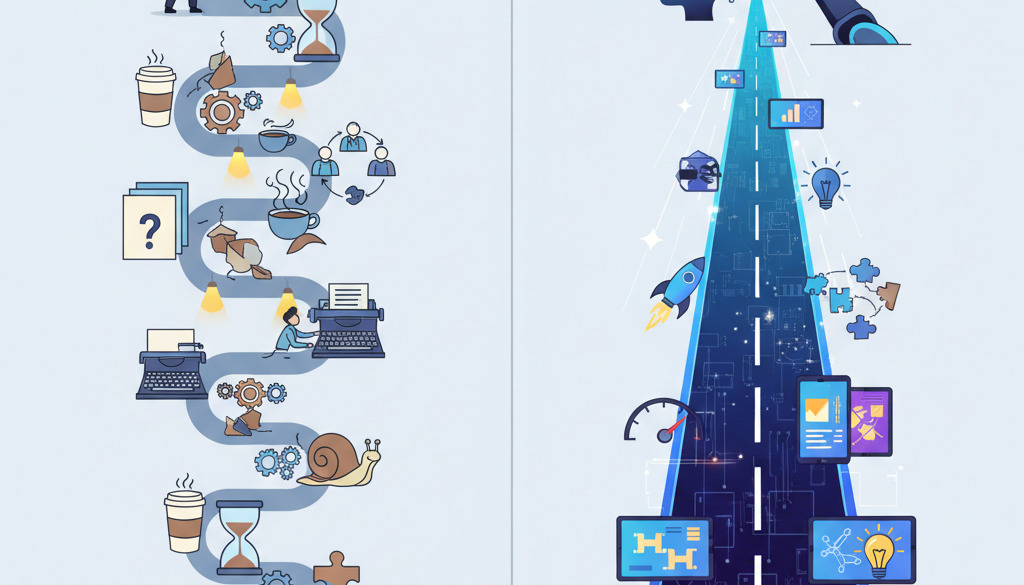
The traditional bottleneck of marketing growth has always been the human resource cost of content production. AI changes this math by enabling "content at scale." Instead of a team spending an entire workweek producing one comprehensive white paper and its supporting blog posts, AI can generate the initial drafts and the 30-40 social media snippets required to promote them in minutes. This increased velocity allows brands to maintain a constant presence across multiple platforms without a proportional increase in headcount.
The impact of this velocity is measurable through share-of-voice metrics. By saturating the market with high-quality, relevant collateral, businesses can test different messaging angles at a speed once unthinkable. In 2026, growth is often a game of "rapid iteration"—using AI to flood the market with variations and then pivoting quickly based on real-time engagement data.
Personalization at Scale Through AI
True personalization was once an expensive luxury reserved for high-ticket account-based marketing (ABM). AI has democratized this capability. Today, marketers can use AI to analyze vast datasets of customer behavior to create hyper-personalized email campaigns where the tone, imagery, and product recommendations are unique to each recipient. This isn't just about inserting a first name into a template; it’s about generating dynamic website content that changes its value proposition based on the visitor’s industry, past purchases, and intent signals.
Optimizing SEO and Discoverability with AI-Assisted Content
AI for Keyword Research and Topic Ideation
SEO in 2026 is less about keyword stuffing and more about "topical authority" and "search intent." AI tools excel at analyzing the massive corpus of the web to identify emerging trends before they hit standard SEO dashboards. By identifying long-tail keywords and niche "content gaps," AI allows businesses to claim the first-mover advantage on rising search terms. Rather than just following what competitors are doing, AI identifies what customers are asking but no one is yet answering.
Improving Content Readability and Engagement Metrics
Search engines now place a premium on user experience signals, such as dwell time and bounce rates. AI helps optimize these by analyzing the "scannability" and structure of content. Advanced tools can predict how a specific demographic will react to a certain headline or whether a paragraph is too dense for mobile readers. By streamlining the flow of information, AI-enhanced content keeps readers engaged longer, signaling to search algorithms that the content is highly valuable, which in turn boosts organic rankings.
Streamlining Sales and Customer Engagement with AI-Generated Content
Accelerating Sales Collateral Development
In B2B sales, the speed of response can decide the winner of a deal. AI enables sales teams to generate customized sales pitches, case studies, and competitive analyses tailored to a specific prospect’s pain points within seconds. Instead of pulling generic PDFs from a shared drive, a salesperson can use AI to synthesize the latest market data with the prospect's recent quarterly report to create a highly relevant, data-driven proposal. This significantly reduces the "time-to-market" for sales enablement materials, allowing reps to spend more time on relationship building and less on formatting slides.
Enhancing Customer Support and Communication
Customer engagement extends far beyond the sale. AI-powered virtual assistants are now capable of handling complex, multi-turn conversations that go beyond simple script-following. These systems generate instant responses to customer queries, draft FAQ articles based on recurring support tickets, and send personalized order updates. By providing prompt, accurate, and consistent information across all touchpoints, businesses can improve customer satisfaction (CSAT) scores while simultaneously reducing the operational costs of their support centers.

Driving Operational Efficiency with AI in Business Processes
Automating Internal Communications and Documentation
Operational friction often stems from poor internal clarity. AI streamlines this by drafting internal memos, summarizing lengthy meetings into actionable bullet points, and creating policy documents. For large organizations, maintaining consistency in tone and accuracy across thousands of internal documents is a daunting task. AI ensures that every piece of company-wide communication adheres to the same standards, reducing misunderstandings and the administrative burden on HR and leadership teams.
Content for Product Development and Technical Documentation
For tech-driven firms, writing technical specifications, API documentation, and user manuals is often the most time-consuming part of the product lifecycle. AI can ingest codebases or product designs and generate initial drafts of technical documentation that would otherwise take engineers weeks to write. This internal efficiency translates to external growth, as it allows for faster product iteration cycles and quicker updates for end-users, keeping the business agile in a fast-paced market.
Overcoming Challenges and Ensuring Quality in AI Content Production
Maintaining Brand Voice and Authenticity
A major risk of AI content is "sameness"—the tendency for generated text to feel generic. To drive growth, businesses must train AI models on their specific brand "soul." This involves uploading past successful kampaigns, style guides, and core values to the AI platform. However, human oversight remains non-negotiable. The "Human-in-the-Loop" (HITL) model ensures that while AI handles the heavy lifting of drafting, a human editor provides the final polish, nuanced humor, and cultural sensitivity that gives a brand its unique personality.
Addressing Accuracy, Bias, and Ethical Considerations
AI models are only as good as the data they are trained on. They can inherit biases or present "hallucinated" facts as truth. Leading organizations implement rigorous fact-checking protocols where AI-generated claims are cross-referenced against trusted databases. Ethically, businesses must also be transparent. In 2026, consumer trust is tied to "AI transparency"—clearly disclosing when content is AI-assisted. Furthermore, companies must navigate the complex landscape of copyright and intellectual property, ensuring that their AI tools are using ethically sourced data that does not infringe on original creators.
Measuring the ROI of AI Content Initiatives
Key Performance Indicators (KPIs) for AI Content Success
To justify the investment, businesses must look beyond superficial metrics. Key KPIs include the Cost Per Content Piece (which should drop significantly), Content-Led Revenue, and Engagement Depth. If the volume of content increases by 500% but engagement drops, the strategy is failing. Growth-focused firms track how AI content affects the entire funnel, from the initial organic visit to the final conversion rate. They also monitor "internal time-saving" metrics—how many hours were clawed back from creative teams that can now be spent on high-level strategy.
Financial and Human Resource Impact Analysis
The true ROI of AI content is often found in the reallocation of human talent. Instead of hiring three junior copywriters for basic SEO tasks, a company can hire one senior "AI Content Orchestrator" who manages a fleet of AI tools to produce ten times the output. This shift allows the business to invest more in top-tier talent for innovation, strategy, and complex problem-solving—the areas where humans still vastly outperform machines. The financial impact is a leaner, more productive organization with significantly higher output ceilings.
Future Trends and the Evolving Role of AI Content
Advancements in Generative AI Capabilities
Looking toward the end of the decade, we expect the rise of "multimodal" generative AI to redefine content once again. We will see AI that can turn a single blog post into a high-quality video with a synthetic voice-over and realistic avatars, all in one workflow. Predictive content will also emerge—AI that doesn't just respond to historical data but predicts which topics will trend next week and drafts the content in anticipation. The entire content lifecycle, from strategy to distribution, will likely become a closed-loop system managed by intelligent agents.
The Human-AI Collaboration Paradigm
The "replacement" narrative is being replaced by the "co-pilot" reality. The most valuable skill in the 2026 workforce is "prompt engineering" and "AI literacy." The future belongs to hybrid teams where AI acts as the "worker bee"—gathering data, drafting outlines, and generating variations—while humans act as "directors" who provide the creative vision, ethical judgment, and strategic steering. This synergy is what allows for exponential growth without losing the human touch that builds brand loyalty.
Implementing a Successful AI Content Strategy for Growth
Phased Approach and Pilot Programs
Organizations should avoid the "all-at-once" rollout, which often leads to confusion and poor-quality output. The most successful approach is to identify a low-risk, high-impact area—such as internal documentation or social media copy—and run a pilot program. This allows the team to establish feedback loops, refine their prompts, and demonstrate quick wins that build organizational buy-in. Once a pilot succeeds, the methodology can be scaled to more complex areas like technical writing or account-based marketing.
Training, Tools, and Continuous Optimization
Implementation is not a one-time event but a continuous process of optimization. Selecting the right platform—one that integrates seamlessly with your existing CRM and CMS—is critical. Furthermore, investing in ongoing staff training ensures that employees don't feel threatened by the technology but empowered by it. As AI models update and new tools emerge, businesses must remain agile, constantly benchmarking their AI performance against growth targets and industry standards.
In conclusion, AI content generation is no longer a futuristic concept; it is the fundamental engine of growth for the modern enterprise. By adopting a strategic, ethical, and human-centric approach, businesses can move beyond mere efficiency and achieve true reinvention. The divide between AI leaders and laggards is widening. Now is the time to leverage these tools to scale your creativity, personalize your message, and drive sustainable business growth into the 2030s.
Keep reading
Hand-picked guides that go deeper — open the one you need next:
- Mastering AI Article Writers for Engaging Content in 2026
- Achieve SEO Consistency with AI: Your Automated Content Strategy
- Automate Your Content Strategy: The Power of Blog Content Autopilot
- GMB Automation AI: Revolutionizing Local Search Success
→ Read the full AI Content guide