
Automate Your Content Strategy
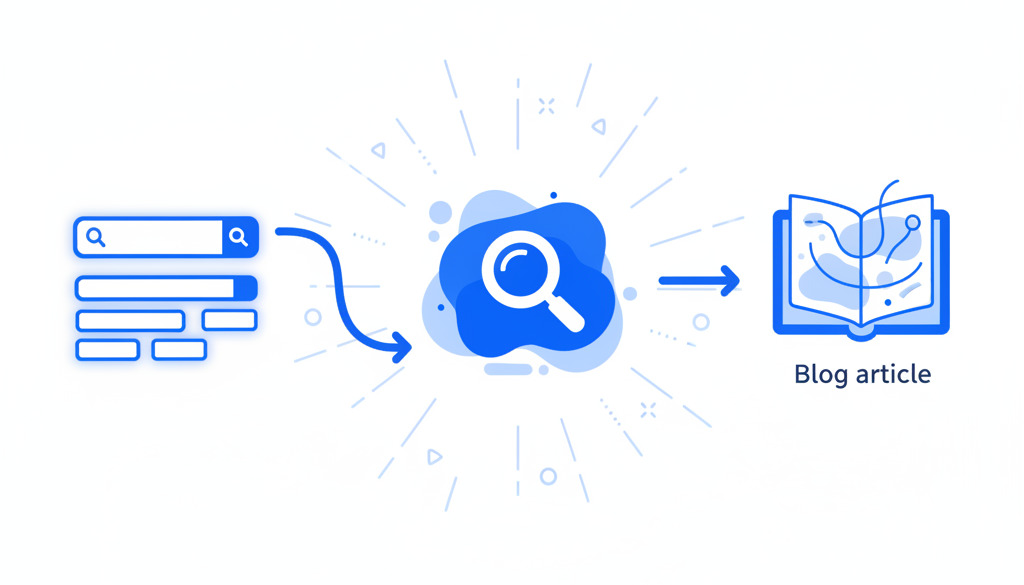
Key Takeaways
- An automated content strategy uses AI and software to handle the creation, optimization, and distribution of content, saving business owners significant time and effort.
- This strategy is not about losing control; it's about smart delegation, allowing you to focus on running your business while an automated system handles the labor of content marketing.
- Consistent, high-quality blog content is the engine of this strategy. It drives organic traffic from search engines like Google, attracting customers who are actively looking for your products or services.
- Modern AI can produce professional, SEO-optimized blog articles in minutes. This makes it possible to maintain a consistent publishing schedule without the typical time investment.
- The return on investment (ROI) is substantial. Content marketing generates three times more leads than traditional outbound marketing at a 62% lower cost, and automation dramatically reduces the production costs.
- Getting started is low-risk. Many services, including those that promise "More Customers From Your Blog," offer free trials to demonstrate the value of automated content creation firsthand.
Defining Automated Content Strategy: Beyond the Buzzword
As a business owner, you constantly hear about the importance of content. Blogs, social media, SEO—it can feel like a full-time job on top of your actual full-time job. The term "automated content strategy" might sound like more complex jargon, but it's actually the solution to this overwhelming problem.[1] It’s a system designed to give you back your time while still achieving powerful online growth.
What Content Automation Really Means
True automated content strategy goes far beyond simply scheduling a few social media posts in advance. It refers to a comprehensive system where technology, particularly artificial intelligence (AI), handles the heavy lifting across the entire content lifecycle. Based on frameworks used by top marketers, this involves six key phases:
- Strategy: Using AI to analyze data and identify valuable content topics.
- Creation: Employing AI to write complete, high-quality articles.
- Optimization: Automatically ensuring every piece of content is primed for search engines.
- Publishing: Scheduling and posting content directly to your website.
- Distribution: Pushing your content out to other channels like social media or email lists.
- Analytics: Tracking performance to see what works and refine the strategy.
It’s not about removing you from the equation. It's about automating the labor while you retain the strategic judgment. Think of it as hiring a digital assistant who works 24/7 to build your online presence.
Clearing Up Common Misconceptions
Many business owners worry that automation means creating generic, soulless content that doesn't reflect their brand. This is a common myth. A modern automated strategy uses your input and guidance to create content that aligns with your voice. You set the direction; the AI handles the execution. It’s a partnership, not a replacement. The goal is smart delegation and amplification, allowing you to scale your expertise and message without scaling your workload.
The Foundational Pillars of a Content Strategy (Even an Automated One)
Automation is a powerful tool, but it’s only as effective as the strategy behind it. Simply turning on an AI writer without a clear plan will lead to random acts of content—articles that don't build on each other and fail to attract the right audience. A solid foundation is crucial for an automated system to deliver real business results.
Why Strategy Still Comes First
Research shows that marketers with a documented content strategy generate three times more leads than those without one. This is because a strategy provides direction and purpose. It ensures every article, every post, and every keyword serves a specific business goal. Automation amplifies the execution of that strategy, making it more efficient and consistent. Without a plan, you're just automating chaos.
Key Strategic Elements
Even a simple, one-page strategy can provide immense clarity. Before you automate anything, you need to define three core pillars:
- Your Target Audience: Who are you trying to reach? What are their biggest challenges and questions?
- Your Business Goals: What do you want your content to achieve? Is it more website traffic, phone calls, or direct online sales?
- Your Unique Value Proposition: What makes your business different and better than the competition? This unique perspective must be the soul of your content.
Automation doesn't replace this thinking; it supports it. By providing the strategic framework, you ensure the AI creates content that speaks directly to your ideal customers and drives the outcomes that matter most to your business.
Identifying Your Ideal Customer: The Compass for Automated Content
You can’t create effective content if you don’t know who you’re talking to. For many established business owners, your ideal customer is someone a lot like you—someone who values straightforward solutions and doesn't have time for fluff. Understanding their mindset is the compass that guides every piece of content your automated system creates.
Understanding Your Audience's Pain Points
Think about a business owner over 40. They know they need to be online, but they're often overwhelmed by the technology and the jargon. They aren't looking for "growth hacks" or complex marketing funnels. They are looking for answers to fundamental business problems. Their pain points include:
- Lack of Time: They are too busy running their business to learn the intricacies of content marketing.
- Frustration with Technology: They may find digital marketing tools confusing and non-intuitive.
- Desire for Tangible Results: They want to see how an online presence translates into real customers and revenue.
Your content must address these issues directly, offering practical advice and clear solutions.
The Role of Buyer Intent
Buyer intent refers to the purpose behind a person's online search. Someone searching for "how to fix a leaky faucet" has a different intent than someone searching for a "plumber near me." An automated content strategy can target these different intents. Your blog posts can answer the "how-to" questions, establishing your expertise. When that person is later ready to hire a professional, your business will be the first one they think of. Your automated content works around the clock to capture these potential customers at every stage of their journey.
The Power of SEO: Why Your Customers Are Searching for You
SEO, or Search Engine Optimization, is a term that often intimidates business owners. But the concept is simple: it’s the process of making your website more visible to people who are using search engines like Google to find what you offer. For a business owner who doesn’t have time for marketing, this is the single most powerful concept to embrace. SEO brings customers to you, often when they are ready to buy.
SEO in Simple Terms: Being Found When It Matters
Imagine a potential customer needs your exact service. What do they do? They don't look in the phone book anymore; they pull out their phone and type a question into Google. The businesses that appear on the first page of the results are the ones that get the call. SEO is the art and science of ensuring your business is one of them. It’s not about tricking Google; it’s about providing the best, most relevant answers to your customers' questions. This is where an automated content strategy becomes your greatest asset.
The Link Between Content and Visibility
Search engines reward websites that consistently publish high-quality, helpful content. Every time you post a blog article that answers a customer's question, you are creating a new doorway for Google to send people to your site. A single blog post can attract visitors for years after it's published. An automated system that creates these posts for you is essentially building hundreds of these doorways, all leading directly to your business. This is why a strategy focused on mastering SEO optimized blog articles is the foundation of sustainable online growth.
Introducing AI-Powered Content Creation: Your Digital Writing Assistant
The biggest hurdle for most businesses in content marketing is the creation itself. Writing a single, well-researched blog post can take hours, if not days. This is where artificial intelligence has completely changed the game. Modern AI tools can now function as your dedicated digital writing assistant, producing professional-grade content at a scale and speed that was previously unimaginable.
How AI Generates Professional SEO Articles
The process is surprisingly straightforward. Advanced AI systems, like those used in services that deliver "More Customers From Your Blog," are trained on vast amounts of text from the internet. They learn the patterns, structures, and stylistic elements of high-quality writing. When you provide a topic or a keyword, the AI goes to work:
- It researches the topic to understand the key concepts and user questions.
- It outlines a logical structure for the article, complete with headings and subheadings.
- It writes the full text, ensuring it is informative, engaging, and readable.
- It optimizes the content for SEO, naturally including relevant keywords and phrases.
The result is a professional SEO blog article, written in minutes—or "percek alatt," as some innovators in the space say—that is ready to be published on your website. This isn't about creating robotic text; it's about leveraging technology to produce well-crafted content efficiently.
Addressing Concerns About AI Content
It's natural to be skeptical. Can a machine really write as well as a human? The key is to see AI as a tool, not a complete replacement for human judgment. The best automated content systems have safeguards in place to ensure originality, accuracy, and brand alignment. More importantly, they allow for a final human review. The AI does 95% of the work, and you or your team provide the final 5% of polish and strategic oversight, ensuring the content perfectly reflects your brand’s voice.
Automating Blog Content: The Engine of Organic Growth
While an automated strategy can encompass many types of content, the cornerstone for attracting new customers through search engines is the blog. A business blog is not a personal diary; it's a powerful marketing engine. When automated correctly, it becomes a relentless driver of organic growth, steadily bringing new visitors, leads, and customers to your digital doorstep.
Attracting Customers Organically
The core promise of this approach is that "customers will find you on their own in Google." This happens when your blog is consistently updated with articles that are directly relevant to your target audience's needs. Each post acts as a magnet for search traffic. For example:
- A roofing company could have articles on "Signs You Need a New Roof" or "How to Choose the Right Shingles."
- An accounting firm could publish posts like "Top 5 Tax Deductions for Small Businesses" or "Understanding Quarterly Estimated Taxes."
- A local bakery could write about "How to Order a Custom Wedding Cake" or "Gluten-Free Options for Your Next Event."
People searching for these terms are not just browsing; they are potential customers with a specific need. An automated blog ensures you are there to meet that need with a helpful answer and a clear path to your services.
Building Authority and Generating Leads
A consistent blog does more than just attract visitors. It establishes your business as an authority in its field. When you repeatedly provide valuable information, customers begin to trust you. This trust is the foundation of a strong customer relationship. Furthermore, every blog post is an opportunity to generate a lead. By including a simple call to action—like "Contact us for a free estimate" or "Download our guide"—you can turn passive readers into active prospects for your business.
Streamlining Content Production with Automation Tools
The theory of content automation is compelling, but the practical application is where busy entrepreneurs find true value. The right tools and services can transform content marketing from a time-consuming chore into a streamlined, background process. These solutions are designed specifically to save you time and resources while delivering professional results.

Leveraging "Done-for-You" Content Services
For many business owners, the ideal solution is a service that handles the entire process. This is where platforms designed to provide "More Customers From Your Blog" by writing the SEO articles for you become invaluable. Instead of you having to learn how to operate an AI or manage a content calendar, these services do it all. You provide your business information and strategic goals, and their system, powered by proprietary AI, generates and even posts the blog articles directly to your website. It’s the ultimate form of delegation, freeing you to focus entirely on serving your customers.
Other Helpful Automation Tools
Beyond content creation, other tools can complete your automation stack:
- Social Media Schedulers: Tools like Buffer or Hootsuite can automatically share your new blog posts across your social media profiles.
- Email Marketing Platforms: Services like Mailchimp can send out a weekly or monthly newsletter featuring your latest content to keep your audience engaged.
- Basic Analytics Dashboards: Simple tools like Google Analytics can be configured to send you a monthly report with the key metrics that matter, like website visitors and contact form submissions.
A recent study found that marketers who automate their content workflows can reduce the time they spend on manual tasks from over 10 hours per week to just two or three. For a business owner, those saved hours represent a massive return on investment.
Optimizing Content for Search Engines: An Automated Approach
Creating content is only half the battle. To ensure it gets found by customers on Google, it needs to be optimized for search engines. This used to be a highly technical process requiring specialized knowledge. Today, automation and AI can handle the most critical aspects of SEO, ensuring every article published on your site has the best possible chance of ranking high in search results.
Automated Keyword Research and On-Page SEO
Effective SEO starts with understanding the words and phrases your customers are searching for. This is called keyword research. AI tools can analyze search trends and competitor websites to identify the most valuable keywords for your business automatically. Discovering the right keywords can feel complex, but an AI-driven strategy for keyword research simplifies this process immensely.
Once the keywords are identified, the AI incorporates them naturally into your content. It also handles other crucial on-page SEO elements, such as:
- Meta Descriptions: The short text snippet that appears under your link in Google search results.
- Headings (H1, H2, H3): These structure your content and tell Google what the main topics are.
- Internal Linking: Linking between relevant posts on your own site helps both users and search engines navigate your content.
Automation ensures these best practices are applied consistently to every single post, creating a strong, search-friendly site structure over time.
Maintaining and Updating Evergreen Content
Some content, known as "evergreen content," remains relevant for years. Think of a guide on "How to Winterize Your Home" for a handyman service. Automation can help identify which of your posts are top performers and periodically update them with new information, keeping them fresh and maintaining their high search rankings.
Measuring Success: Key Metrics for Your Automated Content Strategy
One of the biggest benefits of a digital strategy is the ability to measure what’s working. However, for a busy business owner, diving into complex analytics reports can be another time-consuming task. A good automated content strategy focuses on tracking a few simple, high-impact metrics that directly reflect business growth.
Metrics That Truly Matter for SMBs
Forget about vanity metrics like "likes" or "shares." The numbers that matter are the ones that affect your bottom line. An effective automated system should allow you to easily track:
- Organic Website Traffic: Are more people finding your website through search engines this month than last month?
- Lead Generation: How many people filled out your contact form, called your business number, or signed up for your email list?
- Conversion Rate: What percentage of your website visitors are taking a desired action (like contacting you)?
- Time Saved: This is a crucial, though less tangible, metric. How many hours did you NOT spend writing blog posts this month? What was the value of that time to your business? According to recent industry data, teams using AI for content cut production costs by 30-40%.
The Feedback Loop: Refining Your Strategy
The goal of measurement isn't just to see how you did; it's to improve future performance. By looking at which articles are driving the most traffic and leads, you can provide feedback to your automated system. This creates a powerful feedback loop. The AI learns what topics resonate most with your audience, allowing it to create even more effective content over time. You don’t need to be an data scientist; you just need to identify the winners and ask for more of what works.
Overcoming Common Objections to Content Automation
Embracing a new way of doing things often comes with valid questions and concerns. For business owners who have built their companies on a foundation of personal touch and control, delegating content creation to an automated system can feel like a leap of faith. Let’s address the most common objections head-on.
"Will it sound like my brand?"
This is the most frequent concern. You’ve spent years building a reputation, and you don’t want generic, robotic content diluting your brand’s voice. The solution is a hybrid approach. The best automation services don’t operate in a vacuum. They start by learning about your business, your values, and your desired tone. The AI then creates the draft, which is reviewed—either by you or by a human editor at the service—to ensure it has the right personality and authenticity. Automation provides the efficiency; human oversight ensures the quality and voice.
"I’m afraid of losing control."
This is a natural feeling for any entrepreneur. However, you should frame automation not as a loss of control, but as a reallocation of it. Instead of controlling the tedious, word-by-word process of writing, you are now in control of the high-level strategy. You decide the topics, you set the goals, and you review the final product. This actually gives you more strategic control because you’re no longer bogged down in the manual labor. It empowers you to act as the publisher and editor-in-chief, not just the staff writer.
"Is it worth the budget?"
When considering cost, it’s essential to look at the return on investment (ROI). Consider the alternatives: hiring a freelance writer can cost hundreds of dollars per article, and a marketing agency can cost thousands per month. Your own time is even more valuable. Foundational marketing statistics show that content marketing generates three times the leads of outbound marketing at a 62% lower cost. Automation drastically lowers that cost even further, making it one of the most cost-effective marketing investments you can make.
Case Studies: Real Businesses Seeing Results with Automation
The transformative impact of an automated content strategy is best understood through real-world examples. While preserving client privacy, we can look at anonymized case studies that mirror the successes seen by the more than 500 companies already using advanced content automation services.
Case Study 1: The Local HVAC Contractor
A regional heating and air conditioning company was struggling to stand out online. They relied on word-of-mouth and expensive local ads. By implementing an automated blog strategy, they began publishing two articles per week on topics like "How to know if your AC unit needs replacing" and "Benefits of a smart thermostat." Within six months, their website traffic from Google had increased by 400%. They now receive an average of 15-20 online leads per month directly from their blog, reducing their reliance on paid advertising.
Case Study 2: The E-commerce Store for Specialty Goods
A small online shop selling handmade leather goods wanted to reach a national audience. Their products were high-quality, but they had no online visibility. They adopted an automated content service that created articles about "How to care for leather bags," "The difference between full-grain and top-grain leather," and gift guides for holidays. This content began to rank in search results, attracting niche hobbyists and buyers. Their online sales grew by 70% in the first year, driven almost entirely by organic search traffic. This aligns with trends showing that even merchants on platforms like Shopify can leverage AI blog content for strategic growth.
These examples show that an automated strategy works across different industries. The common thread is a commitment to consistently publishing helpful content, a task made possible and affordable through automation.
Getting Started: Your First Steps to an Automated Content Strategy
Embarking on an automated content strategy is far less complicated than it sounds. The key is to start with a simple, phased approach. You don’t need to build a complex, multi-channel marketing machine overnight. You can take measured steps to build momentum and see results quickly.

A Simple, Actionable Starting Plan
- Define Your Core Goal. What is the #1 thing you want your content to achieve? Is it generating phone calls? Driving traffic to a specific product page? Start with one clear objective.
- Identify Your Top 5 Customer Questions. Brainstorm the five most common questions you hear from customers. These are the perfect topics for your first blog posts.
- Take a Risk-Free First Step. The best way to see if this works for you is to try it. Many automation providers understand this and offer introductory deals. For instance, the service behind the "More Customers From Your Blog" philosophy offers your first five blog posts completely free. This allows you to experience the quality and convenience with zero financial commitment.
- Review and Publish. Once the articles are written by the automated system, take a few minutes to review them. Does the tone match your brand? Is the information accurate? Once you approve, they can be published to your site.
- Measure the Simplest Metric. After a month, just look at one number: your website traffic. Seeing that number climb is often all the motivation needed to fully commit to the strategy.
By starting small and focusing on a no-risk trial, you can test the waters and gain confidence as you see tangible results.
The Human Element in Automated Content: Maintaining Authenticity
Perhaps the most critical aspect of a successful long-term automation strategy is the integration of the human element. Automation is there to handle the 90% of work that is laborious and time-consuming. Your unique expertise, personality, and values handle the final 10%, which makes all the difference. Authenticity cannot be fully automated, but it can be powerfully amplified by it.
Injecting Your Brand's Unique Voice
The AI can generate a technically perfect article, but you are the one who knows your customers and your business best. The human review stage is where the magic happens. In just a few minutes, you can:
- Add a personal anecdote or a story about a recent customer success.
- Tweak a phrase to sound more like how you actually speak.
- Add a strong opinion or a unique perspective that only you have.
This light touch infuses the AI-generated content with your brand's soul, creating a final product that is both efficient and authentic.
Freeing Up Time for What Matters
The ultimate goal of content automation is not just to produce articles; it's to free up your most valuable asset: your time. By delegating the heavy lifting of content creation, you can now focus on higher-level tasks that only a human can do. This includes building relationships with partners, providing exceptional customer service, or developing new products and services. Automation lets you work on your business, not just in it.
The Future of Content Strategy: AI as a Co-Pilot
The role of artificial intelligence in business is evolving at a breathtaking pace. What seems revolutionary today will be standard practice tomorrow. For business owners, this isn't something to fear, but something to embrace. The future of content strategy lies in a seamless partnership between human vision and AI execution, with AI acting as a trusted co-pilot for your business growth.
Staying Ahead of the Curve
Your competitors are either already exploring these tools or they will be soon. According to recent data, 67% of content marketers are now using AI tools daily. Businesses that adopt automation early will build a significant and compounding advantage. They will be building their library of search-optimized content, capturing customer traffic, and refining their AI-driven processes while others are still trying to figure it out. Embracing this technology now positions you as a forward-thinker in your industry.
A Vision of an Intelligent Content Ecosystem
Looking ahead, we can envision a future where your content strategy is almost entirely self-sufficient. An AI co-pilot could identify trending topics in your industry on a Monday, draft three corresponding blog posts by Tuesday, schedule them for publication, and send you a performance report the following week showing which article generated the most phone calls. This isn't science fiction; it is the direction the technology is headed. Getting started with a simple automated blog today is the first step into this incredibly efficient future.
Maximizing ROI: The Tangible Benefits of an Automated Content Strategy
At the end of the day, any business strategy must answer one question: does it deliver a positive return on investment (ROI)? An automated content strategy excels on this front by delivering tangible benefits in both cost savings and revenue generation. It’s a strategic investment that pays for itself many times over.
Recapping the Key Benefits
Let's summarize the clear business value:
- Massive Time Savings: You reclaim hundreds of hours per year that would have been spent on the frustrating task of writing content. This time can be reinvested into core business operations.
- Reduced Marketing Costs: Content marketing is already more cost-effective than paid advertising. AI automation reduces the production cost of that content by 30-40%, making it one of the most affordable marketing channels available.
- Consistent Lead Generation: Your automated blog becomes a 24/7 lead-generation machine, attracting highly qualified customers from search engines without any ongoing effort.
- Compounding Asset Growth: Unlike an ad that disappears when you stop paying, every article you publish is a permanent asset that can generate traffic and leads for years. Your automated strategy is continuously building your company's most valuable marketing asset.
By saving time, reducing costs, and increasing customer acquisition, an automated content strategy offers a powerful and multifaceted return on investment that directly impacts your bottom line.
Conclusion
For the busy entrepreneur, the pressure to create a strong online presence can feel like an impossible addition to an already overflowing plate. An automated content strategy offers a powerful, practical, and accessible solution. It transforms content marketing from a resource-draining chore into an effortless background process that drives consistent business growth. By leveraging the power of AI, you can save invaluable time, dramatically improve your visibility on search engines, and generate a steady stream of qualified leads.
This isn't about replacing your expertise; it's about amplifying it. It allows you to delegate the "how" of content creation so you can focus on the "why"—running the business you love. We encourage you to explore a solution that can write your SEO articles for you, almost like magic. Taking that first step, especially with a risk-free offer to get your first posts for free, can be the start of a transformation—one where customers find their way to you, and your online presence grows effortlessly while you focus on what you do best.
Frequently Asked Questions
1. Is AI-generated content penalized by Google?
No. Google has been very clear that its focus is on the quality and helpfulness of content, not how it is produced. As long as the content is original, well-written, and created to help the user (not to manipulate search rankings), it is perfectly acceptable. High-quality, AI-assisted content is rewarded by search engines just like high-quality human-written content.
2. How much time will this really save me?
Industry data shows that a manual content process can take 10-15 hours per week for strategy, writing, and distribution. An automated system can reduce this to 2-3 hours per week, primarily for high-level strategy and review. This saves you 8-12 hours per week, or over 400 hours per year, that you can dedicate back to your core business.
3. Can I still control my company's brand and voice?
Absolutely. The best automated content services are not a "black box." They work with you to understand your brand voice and allow you to review and edit all content before it goes live. The AI acts as a writing assistant, doing the heavy lifting, while you provide the final approval and unique brand personality.
4. What kind of business is this strategy best for?
This strategy is effective for nearly any business that relies on customers searching for its services or products online. It is particularly powerful for service-based local businesses (like plumbers, lawyers, consultants, contractors) and niche e-commerce stores. If your customers use Google to find solutions, an automated content strategy can work for you.
5. What is the difference between subscribing to a service and just using ChatGPT myself?
While ChatGPT is a powerful tool, it requires you to do all the work: creating the prompts, researching the keywords, structuring the article, editing the output for SEO, and publishing it. A dedicated automated content service incorporates all of these steps into one seamless workflow. It uses a proprietary AI system specifically trained for creating SEO blog articles and handles the entire process from strategy to publishing, saving you significantly more time and ensuring a professional, consistent result.
Keep reading
Hand-picked guides that go deeper — open the one you need next:
- The Ultimate Guide to AI Product Description Generators
- Volteruno's AI Content Workflow: Idea to Publication
- The Ultimate Guide to a 'Blog on Autopilot'
- Content Marketing Automation: A Strategy for Entrepreneurs
→ Read the full AI Content guide