
From Idea to Article: Your AI Content Workflow
Key Takeaways
- An effective AI content generation workflow integrates AI as a powerful assistant, not a replacement for human strategy and oversight.
- Success with AI content begins with a solid foundation: clear goals, defined audience personas, and thorough AI-driven keyword research.
- The quality of AI-generated content is directly proportional to the quality of the prompts. Master prompt engineering to get better first drafts.
- Human editing is non-negotiable. It is essential for fact-checking, infusing brand personality, ensuring originality, and optimizing for SEO.
- To avoid overwhelming complexity, consider integrated platforms or full-service solutions that manage the entire workflow, from idea to publication, designed to get you more customers from your blog.
Introduction: The New Frontier of Content Creation
In today's digital marketplace, the pressure for businesses to produce a steady stream of high-quality content is immense. For small and medium-sized enterprise (SME) owners, especially those who didn't grow up in the online world, this is a daunting task. You know you need a strong online presence to attract customers, but finding the time, energy, and expertise to consistently write blog articles is a significant challenge. Between managing operations, serving clients, and overseeing growth, content creation often falls to the bottom of the list.
This is where artificial intelligence enters the picture, not as a futuristic concept, but as a practical, powerful solution available today.[1] AI content generation tools have evolved from simple curiosities into sophisticated partners capable of transforming your content strategy. They offer a way to bridge the gap between knowing you need content and actually getting it published.
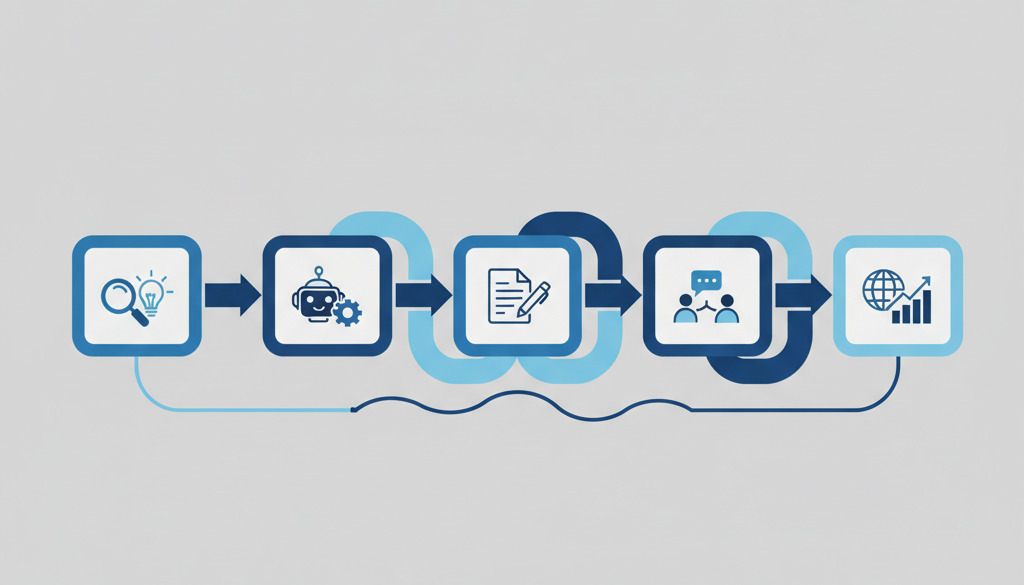
This article provides a comprehensive guide to building a seamless and effective AI-powered content generation workflow. We will break down each step, from initial idea to published article, showing you how to leverage AI to scale your content efforts without sacrificing quality. For busy business owners, services that promise to bring more customers from your blog have emerged to handle this entire process, simplifying the path to a robust online presence.
Understanding the Landscape: What is AI Content Generation?
At its core, AI content generation is the use of artificial intelligence technologies to produce written text. In a business context, this isn't about creating robotic, soulless articles. It's about using sophisticated software to assist in drafting blog posts, product descriptions, social media updates, and more, based on specific instructions you provide.
The technology behind these tools, primarily Natural Language Processing (NLP) and machine learning, allows the AI to understand language, context, and intent. It learns from vast amounts of text data from the internet, enabling it to write coherent, relevant, and often creative content. Think of it less as a vending machine for articles and more as an exceptionally fast and knowledgeable research assistant and co-writer.
Just a few years ago, AI-generated text was easily identifiable and often clumsy. Today, the leading tools can produce drafts that are nuanced, well-structured, and require only a human touch to become publish-ready. This evolution has made AI an indispensable tool for marketers and business owners aiming for efficiency and scale.
The Strategic Imperative: Why Automate Content Creation?
Content marketing is the engine of modern business growth. Consistent, valuable articles drive Search Engine Optimization (SEO), establish your brand as an authority, and generate qualified leads. However, manual content creation is a bottleneck. Recent industry data highlights the shift; a 2026 Adobe survey found that nearly 9 in 10 creatives feel generative AI has improved their work, and they now use it for over 40% of their projects. This isn't just a trend; it's a fundamental change in how work gets done.
For an SME, the inefficiencies of the old way are clear:
- Time Drain: Researching, writing, and editing a single blog post can take many hours—time a business owner simply doesn't have.
- High Costs: Hiring freelance writers or a content agency can be expensive, with costs quickly adding up for a consistent publishing schedule.
- Inconsistency: When time and resources are tight, content publication becomes sporadic, which hurts SEO and audience engagement.
Leveraging AI for content production provides a powerful competitive advantage. It allows you to produce more content, more consistently, and at a fraction of the cost, freeing up your valuable time to focus on running your business.
Setting the Foundation: Pre-Workflow Planning and Strategy
Automating content creation without a strategy is like driving a fast car without a map—you'll move quickly but likely in the wrong direction. Before you even write your first prompt, it's critical to lay a strategic foundation. AI is a tool to execute your strategy, not to create it from scratch.
Defining Content Goals and KPIs
What do you want your content to achieve? The answer can't be "we just need a blog." Set clear, measurable goals:
- Increase organic website traffic by 20% in 6 months.
- Generate 50 new leads per month through blog CTAs.
- Rank on the first page of Google for 5 key service-related terms.
Identifying Your Target Audience
You need to know exactly who you're talking to. Create simple personas for your ideal customers. What are their biggest challenges? What questions are they asking Google? Understanding their search intent—whether they are looking for information, comparing solutions, or ready to buy—is crucial for creating content that resonates.
Keyword Research and Topic Clusters
This is the bedrock of any successful content strategy, AI-driven or not. Use keyword research tools to identify the terms your audience is searching for. Group these keywords into "topic clusters"—a main pillar page covering a broad topic, supported by several in-depth articles on related subtopics. This structure signals your expertise to search engines. For a deeper dive, our guide on AI Content Keyword Research: The 2026 Strategy Guide can provide a comprehensive framework.
Choosing Your AI Arsenal: Selecting the Right Tools
The market for AI content tools is crowded and can be confusing. They generally fall into a few categories: pure text generators, SEO optimization suites, and idea generators. Recent reports highlight a common "stack problem," where businesses subscribe to over half a dozen different tools—one for writing, one for SEO scoring, one for grammar, and so on—costing hundreds of dollars a month and creating a clunky, inefficient process.
When evaluating tools, consider these criteria:
- Output Quality: Does the AI produce well-written, coherent, and accurate drafts?
- Ease of Use: Is the interface intuitive for someone who isn't a tech expert?
- Features: Does it offer SEO tools, plagiarism checks, and different content formats?
- Integration: Can it connect to your website's content management system (CMS)?
- Cost: Does the pricing model fit your budget and expected output?
For many business owners, the complexity of choosing, learning, and integrating multiple tools is a non-starter. This is why all-in-one solutions that manage the entire process are gaining popularity. Platforms that offer a curated and effective system, avoiding the overwhelming task of building a workflow from scratch, can be a more direct path to achieving content goals.
The Core Workflow: From Prompt to Publication
This is where the magic happens. A structured workflow turns a simple idea into a polished, SEO-optimized article. The process can be broken down into three key stages: prompting for the initial draft, structuring the output, and preparing for the human touch.
The Art of Prompt Engineering
The saying "garbage in, garbage out" is especially true for AI. A prompt is your instruction to the AI, and its quality determines the quality of the output. A weak prompt yields generic content, while a detailed prompt produces a nuanced and targeted draft.
Components of an effective prompt:
- Role: Tell the AI to act as an expert (e.g., "Act as a master plumber writing for homeowners...").
- Context: Provide background information on the topic and target audience.
- Task: Clearly state what you want it to create (e.g., "Write a 1500-word blog post...").
- Keywords: Include your primary and secondary keywords.
- Tone: Specify the desired tone of voice (e.g., "professional and reassuring," "energetic and inspiring").
- Format: Request specific formatting like headings, lists, and a concluding summary.
Example of a bad prompt: "Write a blog post about gutter cleaning."
Example of a good prompt: "Act as an expert home maintenance blogger. Write a 1200-word article titled 'The Top 5 Dangers of Neglecting Your Gutters.' The target audience is US homeowners aged 40-65. The tone should be informative, helpful, and slightly urgent. Include the keyword 'gutter cleaning services' 3-4 times. Structure the post with an introduction, five sections detailing each danger, and a conclusion that recommends professional help."
Generating Initial Drafts
Once you have a strong prompt, the AI will generate the first draft, often in a matter of minutes. This draft is your raw material. It’s important to manage your expectations: AI is your co-pilot, not an autopilot. The first draft will likely be 70-80% of the way there, providing a solid structure and well-researched information, but it will lack the final polish and unique perspective that only a human can provide.
Structuring and Outlining with AI
Even before generating the full text, you can use AI to build a logical framework. You can ask it to generate an outline for a topic, complete with H2 and H3 headings. This ensures the article flows logically from one point to the next. You can then review and refine this outline before instructing the AI to write the full content, giving you more control over the final piece.
Human Oversight: The Indispensable Role of Editing and Refinement
This is arguably the most critical stage in the entire AI content generation workflow. Blindly publishing raw AI output is a recipe for failure. It can damage your brand's credibility, spread misinformation, and fail to connect with your audience. The human element is what elevates good AI content into great content.
Fact-Checking and Verification
AI models, while incredibly knowledgeable, can make mistakes or present outdated information. It is your responsibility to verify all facts, statistics, and claims made in the article. Always cross-reference data with reliable sources. This step is non-negotiable for building trust with your readers.
Enhancing Readability and Engagement
An AI draft can sometimes be dry or repetitive. Your job as an editor is to inject personality, emotion, and storytelling. Rework sentences for better flow, break up long paragraphs, and add personal anecdotes or examples that resonate with your target audience. This is where you transform the text from being merely correct to being compelling.
Ensuring Brand Voice and Tone Consistency
Your brand has a unique voice. Are you formal and authoritative? Casual and friendly? Witty and irreverent? AI can mimic tone, but it can't capture the soul of your brand. During the editing phase, you must manually adjust the language, phrasing, and overall feel of the article to ensure it is perfectly aligned with your brand identity.
SEO Optimization: Making AI Content Discoverable
An article is only valuable if people can find it. While you should include primary keywords in your initial prompt, true SEO optimization happens during the editing phase. This ensures keyword placement feels natural and serves the reader, rather than just checking a box for a search engine.
During your review, focus on:
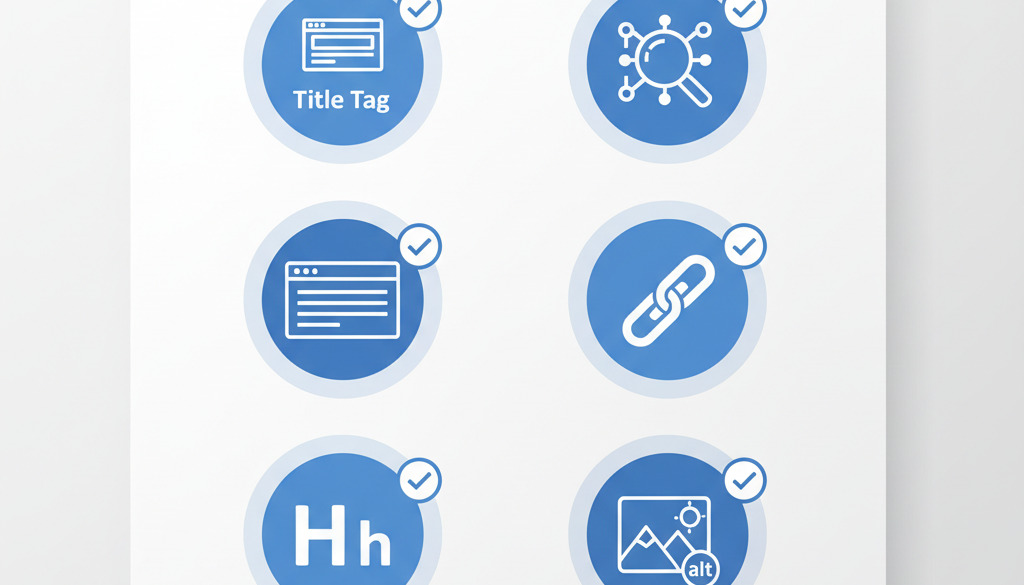
- Title and Meta Description: Craft a compelling, clickable title and a meta description that accurately summarizes the article and includes your main keyword.
- Headings (H1, H2, H3): Ensure your headings are clear, descriptive, and naturally incorporate your target keywords.
- Internal and External Linking: Add links to other relevant articles on your own site (internal links) to keep readers engaged and build topical authority. Link out to reputable, authoritative sources (external links) to back up claims. This process is essential for creating what experts call a Mastering SEO Optimized Blog Articles: A Strategic Blueprint.
- Image Alt Text: If you add images, use descriptive alt text that includes keywords where appropriate.
Advanced AI Applications in the Workflow
Beyond drafting articles, AI can inject efficiency into other parts of your content lifecycle. Modern "AI agents" are evolving from simple tools into autonomous systems that can manage more complex workflows, a trend that is rapidly accelerating.
Content Repurposing and Variation
A single blog post is a goldmine of content. With AI, you can instantly repurpose it into dozens of other assets. Paste your finished article into an AI tool and ask it to:
- Create 5 engaging social media posts for Facebook and LinkedIn.
- Write a concise email newsletter summary.
- Generate a script for a short YouTube or TikTok video.
- Create different headline variations for A/B testing.
This strategy maximizes the ROI on the effort you put into the original article.
Personalization at Scale
AI can help you tailor content to specific segments of your audience. For example, you can use AI to generate slightly different versions of a landing page or email that speak directly to the pain points of different customer personas. This level of personalization, once only possible for large corporations, is now accessible to SMEs.
Workflow Automation and Integration
To achieve a truly "seamless" workflow, the final step is to connect your tools. The goal is to minimize manual copy-pasting and administrative work. Many AI content platforms can now integrate directly with your Content Management System (CMS).
For instance, you can connect your AI tool to your website using workflow automation platforms like Zapier. This allows you to set up automations where a finished and approved article in one platform can be automatically sent as a draft to your WordPress or Shopify site. For businesses on specific platforms, exploring guides on WordPress SEO Automation with AI: A Strategic Guide can unlock even greater efficiency, allowing you to schedule, publish, and analyze content with minimal hands-on time.
Measuring Success: Tracking Your AI-Generated Content Performance
Your content workflow doesn't end at publication. To ensure your efforts are driving business results, you must track performance. Use tools like Google Analytics and Google Search Console to monitor key metrics:
- Organic Traffic: Are more people finding your site through search engines?
- Keyword Rankings: Is your content ranking for your target keywords?
- Engagement Rates: Are people spending time on the page, or are they leaving immediately?
- Conversion Rates: Is the content leading to newsletter sign-ups, contact form submissions, or sales?
This data creates a vital feedback loop. If an article on a certain topic performs exceptionally well, that’s a signal to create more content around that theme. If another fails to rank, you can analyze it to understand why and use those learnings to refine your future prompts and content strategies.
Ethical Considerations and Avoiding Pitfalls
While AI is a powerful ally, it comes with responsibilities. Addressing ethical concerns head-on is crucial for long-term success and maintaining the trust of your audience.
Plagiarism and Originality Concerns
Modern AI tools are designed to generate original content, not copy from existing sources. However, it's still wise to run your final draft through a plagiarism checker as a last line of defense. More importantly, the human editing and refinement process is your best tool for ensuring true originality, as you infuse the text with your unique insights and voice.
Transparency and Disclosure
The question of whether to disclose the use of AI is still being debated. A good rule of thumb is to focus on quality and value. If your content is accurate, helpful, and original, the method of its creation is less important to the reader. However, never misrepresent a fully AI-generated piece as being 100% human-written. Honesty builds trust.
Over-reliance and Stagnation
The biggest pitfall is becoming lazy. If you blindly accept whatever the AI produces, your content will become generic and lose its competitive edge. Always remember that AI is a tool to augment your expertise, not replace it. Your strategic oversight, creativity, and connection to your audience are what make your content special.
Case Studies: Real-World Success with AI Content Workflows
The true measure of this workflow is its impact on real businesses.
Example 1: A Local Bakery Increases Online Orders
A family-owned bakery wanted to rank for local search terms like "best birthday cakes in [City]" and "custom wedding cookies." They lacked the time to write. By using an AI workflow to create weekly blog posts focused on different events and cake types—optimized for local SEO and refined with their personal stories—they saw a 70% increase in website traffic and a 40% rise in online inquiries within six months.
Example 2: A B2B Consultant Establishes Authority
A financial consultant for small businesses needed to build credibility. She used AI to draft in-depth articles on complex topics like tax planning and cash flow management. She spent her time not on writing from scratch, but on editing the drafts to add her specific frameworks and client success stories. This allowed her to publish twice a week, rapidly building a library of expert content that attracted high-value leads.
Achieving these outcomes doesn't have to be a complex, hands-on process. Many businesses have found success by using comprehensive services like Client Acquisition Blogging, which is specifically designed to handle the entire AI content workflow for you, removing the burden and delivering results that get you more customers.
Building Your Scalable AI Content Engine
Once you have a working process, the next step is to make it a scalable engine for growth. This means creating a system that is repeatable, adaptable, and can grow with your business.
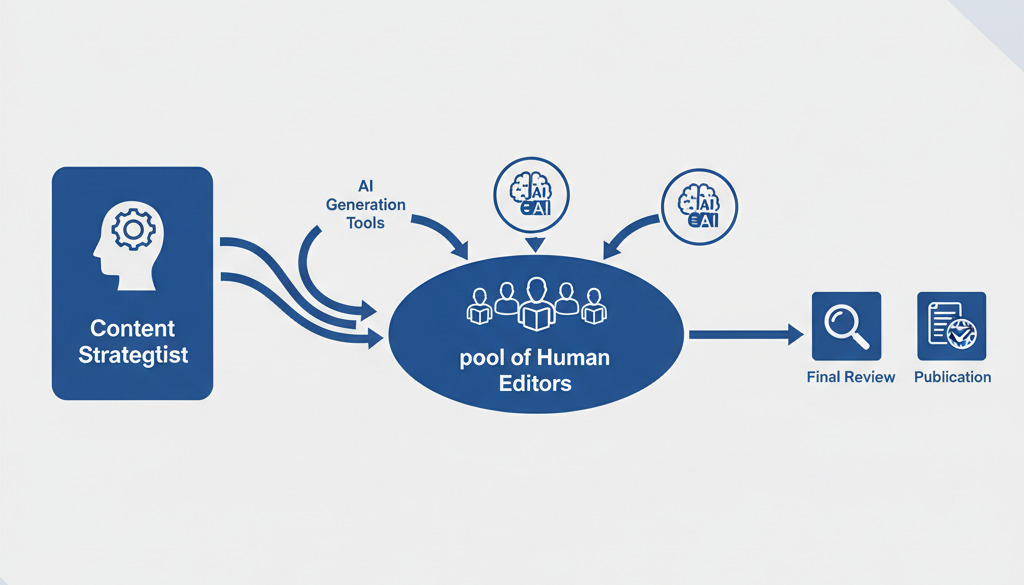
First, document your workflow. Create templates for your best-performing prompts and a clear style guide for editors to ensure brand consistency. This allows you to delegate tasks in the future without losing quality.
Second, embrace continuous learning. AI tools are constantly evolving. Stay updated on new features that can make your process even more efficient. At the same time, use your performance analytics to train yourself and your team on what types of content resonate most with your audience. This synergy between evolving technology and human insight is the key to a long-term, scalable content strategy.
Future Trends in AI Content Generation
The field of AI content generation is moving at a breakneck pace. We are rapidly moving from simple text generators to proactive "AI agents" that can manage entire marketing campaigns. In the near future, we can expect AI that handles multimodal content, creating not just the text for a blog post but also the imagery, social media videos, and audio clips to accompany it.
Hyper-personalization will become the standard, with AI dynamically tailoring website content for each individual visitor in real-time. The relationship between human creators and AI will continue to deepen, becoming a true partnership where strategy and creativity are guided by human experts and execution is flawlessly handled by AI assistants.
Conclusion: Embracing the Future of Content with Confidence
The challenge of creating consistent, high-quality content is no longer an insurmountable barrier for time-strapped business owners. An optimized AI content generation workflow offers a practical and powerful way to scale your online presence, drive traffic, and attract more customers. The key is to embrace AI as a co-pilot, not an autopilot, pairing its incredible speed and knowledge with your invaluable human expertise, strategy, and brand voice.
By establishing a clear strategy, choosing the right tools, and committing to a process of human refinement and oversight, you can build a sustainable content engine that fuels business growth for years to come. For those who find the process itself too demanding, services dedicated to managing this entire workflow—providing a straightforward path to getting more customers from your blog—are an excellent option, saving you time and effort while delivering professional, SEO-optimized content almost like magic.
Frequently Asked Questions
1. Can AI completely replace human content creators?
No, AI should be seen as a collaborative tool, not a replacement. While it can produce high-quality drafts, it lacks genuine creativity, emotional understanding, and strategic insight. The best results come from a partnership where AI handles the heavy lifting of drafting and research, while humans provide editing, fact-checking, brand alignment, and strategic direction.
2. Is AI-generated content bad for SEO?
No, the quality of the content is what matters to search engines, not how it was created. AI-generated content that is generic, inaccurate, or unhelpful will perform poorly. However, a well-crafted article that is created using AI and then thoroughly edited by a human to be original, valuable, and optimized for user intent can rank just as well, if not better, than purely human-written content.
3. How do I start with AI content generation if I have no experience?
The best way to start is to first define your goals and understand your audience. Then, choose a user-friendly AI content tool and begin experimenting with small, simple tasks. Start by generating outlines or social media posts before moving on to full articles. Focus on learning how to write detailed prompts, as this is the most important skill for getting good results.
4. How can I ensure my brand's unique voice isn't lost?
Ensuring your brand voice remains intact is a critical part of the human editing process. Start by including detailed instructions about your desired tone in your prompts. Then, during the manual review, rewrite sentences and adjust phrasing to match your style. Creating a simple brand style guide for anyone involved in the editing process can also ensure consistency across all your content.
5. What's the biggest mistake businesses make with AI content?
The most common mistake is having unrealistic expectations, specifically expecting a perfect, ready-to-publish article with a single click. This leads businesses to skip the essential human review and editing stage. This "copy, paste, and publish" approach results in generic, soulless content that can contain factual errors and fails to connect with the audience, ultimately damaging the brand's credibility.
Mastering the AI Content Generation Workflow
Successfully integrating AI into your content creation process requires a structured workflow, moving beyond simple prompt-and-publish. This workflow ensures that AI acts as a powerful assistant rather than a standalone creator, maintaining quality, originality, and brand alignment. Establishing a clear sequence of steps allows for greater control, efficiency, and ultimately, more impactful content.
The core of an effective AI content generation workflow begins long before you type a single prompt. It starts with thorough research and strategic planning. Understanding your target audience's needs, pain points, and search intent is paramount. What questions are they asking? What information are they looking for? This foundational knowledge will inform the topics you choose and the angle you take. Next, conduct keyword research to identify high-value terms that align with your content strategy and audience interests. This ensures your AI-generated content has the potential to rank and attract the right readers. Once you have a clear understanding of your goals and audience, you can begin brainstorming specific content ideas, formulating content pillars, and creating a topic cluster strategy to provide comprehensive coverage within your niche.
With your research and strategy in place, you can then move into the AI generation phase. This isn't just about asking the AI to write an article. It's about leveraging its capabilities for specific tasks within the larger workflow. For instance, you might use AI to generate a detailed outline based on your topic and keywords, develop multiple headline variations for A/B testing, or even draft introductory paragraphs to overcome writer's block. The key is to break down the content creation process into manageable stages where AI can assist effectively. This might involve using AI to generate different sections of an article independently or to rephrase existing content for better clarity or conciseness. Each AI-generated piece should be viewed as a first draft or a component to be integrated into the final product, not the final product itself.
The final and arguably most crucial stage of the AI content generation workflow is human oversight and refinement. This is where your brand voice, accuracy, and unique perspective come into play. After the AI has generated its output, a skilled human editor must thoroughly review and revise the content. This involves fact-checking, ensuring logical flow, enhancing readability, and injecting personality. The editor’s role is to shape the AI’s output into polished, authoritative, and engaging content that resonates with the intended audience and upholds brand standards. This iterative process of "AI-assist, human-refine" is what distinguishes high-quality AI-enhanced content from generic, uninspired text. By implementing a robust workflow that emphasizes strategic planning, targeted AI assistance, and meticulous human editing, businesses can truly harness the power of AI for scalable and effective content creation.
→ Read the full AI Content guide
Keep reading
Hand-picked guides that go deeper — open the one you need next:
- Multilingual AI Content: Reach 25 Languages
- Getting Started with AI Content: A Business Guide
- Why Manual Content Creation is Obsolete: The AI Advantage
- AI Blog Workflow Automation: Idea to Published
→ Read the full AI Content guide