
AI Content Marketing Investment: A Strategic Guide for 2026
The modern marketing landscape is undergoing a seismic shift. For decades, content marketing relied on manual intuition, grueling editorial cycles, and broad-spectrum distribution. However, as we move through 2026, the paradigm is shifting from human-only production to an AI-augmented model. According to recent data, 73% of B2B marketers now operate with a documented strategy, but the real differentiator is how they integrate Artificial Intelligence (AI) into that framework. AI content marketing investment is no longer a futuristic concept; it is a foundational business necessity.
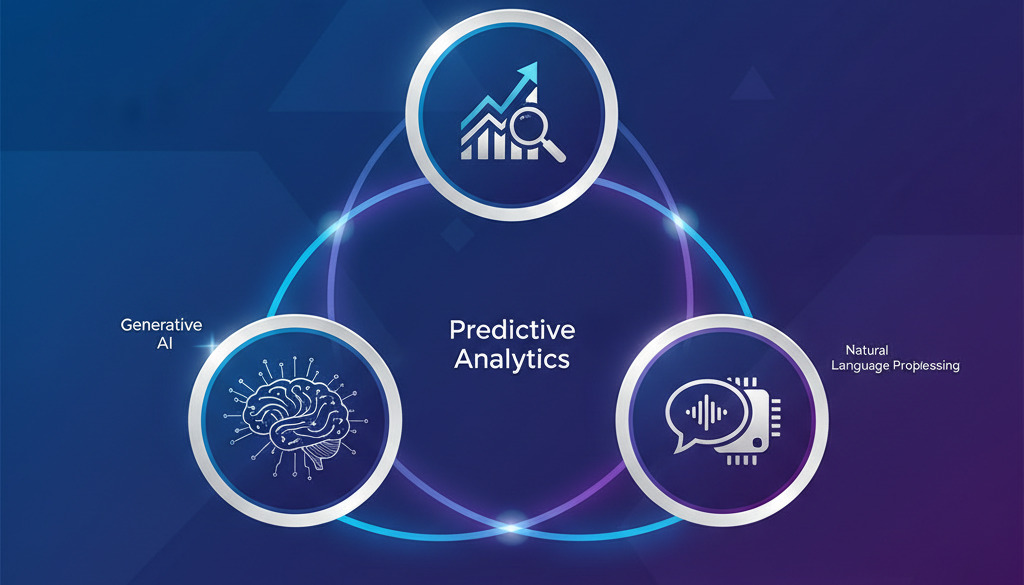
In this context, AI refers to a suite of technologies—ranging from Generative AI (GenAI) that crafts text and visuals to predictive analytics that forecast consumer trends. Investing in AI allows businesses to move beyond simple output and toward high-impact outcomes. This guide explores how organizations can strategically allocate capital and resources to AI to drive sustainable growth, reduce overhead, and dominate their digital verticals.
Understanding the Core AI Technologies for Content Marketing
To make an informed investment, one must understand the three technological pillars currently redefining the discipline. First is Generative AI. This technology uses Large Language Models (LLMs) to assist in everything from initial brainstorming to the production of high-fidelity video and long-form articles. It is the engine behind scaling content production without a linear increase in headcount. Businesses are increasingly using GenAI specifically for "first-draft" efficiency, allowing human creatives to focus on refinement rather than blank-page anxiety.
The second pillar is Predictive Analytics and Personalization. By processing enormous datasets, AI can predict which content formats will perform best with specific demographics. This eliminates guesswork. Instead of a "post and pray" approach, marketers use AI to segment audiences dynamically, delivering bespoke content experiences that adapt in real-time to user behavior. In 2026, this has evolved into "hyper-personalization," where the AI anticipates a customer's need before they even perform a search.
Finally, Natural Language Processing (NLP) serves as the bridge between human intent and machine understanding. AI-driven NLP tools facilitate advanced SEO optimization, topic clustering, and sentiment analysis. These tools ensure that content isn't just readable by humans, but perfectly structured for search discovery. NLP allows brands to monitor the "pulse" of their audience by analyzing comments, reviews, and social mentions to adjust their narrative voice instantly.
Strategic Benefits of Investing in AI for Content Marketing
The primary driver for AI content marketing investment is enhanced efficiency and productivity. Traditional content workflows—research, drafting, editing, and distribution—can take weeks. AI reduces these timelines by 30-40%. By automating repetitive tasks like generating meta descriptions or repurposing blog posts into social snippets, marketing teams can reclaim hundreds of hours. This shift allows human talent to pivot toward high-level strategic thinking, such as brand positioning and cross-channel integration.
Beyond speed, the improvement in content quality and relevance is substantial. AI tools act as specialized researchers, identifying content gaps that competitors have missed. By analyzing trending topics in real-time, AI ensures that a brand’s output is always current. Furthermore, AI helps maintain factual consistency across thousands of assets, a task that is nearly impossible for human editors alone to manage at scale. This leads to a more cohesive and authoritative brand presence.
Lastly, AI enables data-driven decision making that directly impacts the bottom line. Marketing budgets are increasingly scrutinized for ROI. AI provides granular insights into which content assets are actually driving conversions, not just vanity metrics like clicks. By optimizing ad spend and content placement based on these deep-learning insights, organizations can achieve a significant increase in conversion rates, with some reports suggesting that AI-integrated strategies see 2.4x better content ROI compared to traditional methods.
Identifying Key Investment Areas and AI Tools
When building an AI stack, the first area of focus is usually content creation and ideation. Tools like Jasper, Copy.ai, and Writesonic have matured into sophisticated assistants that understand brand-specific style guides. Beyond text, businesses are investing in AI image and video platforms (such as Midjourney or Runway) to reduce reliance on expensive stock photography and lengthy video production house cycles. These tools allow for a "create once, distribute everywhere" model that is extremely cost-effective.
The second investment area is content optimization and SEO. Platforms like Surfer SEO and MarketMuse use AI to perform deep-level audits of existing content, suggesting internal links and keyword clusters that maximize search visibility. In the age of "zero-click" search and AI-driven search engines (like Google's SGE), having content that is structured for machine readability is as important as the human experience. These tools provide the technical bridge needed to stay competitive in a changing search ecosystem.
Final considerations should be given to distribution and personalization platforms. Marketing automation has been revolutionized by AI that determines the optimal time to send emails or post to social media based on individual user habits. Recommendation engines, similar to those used by Netflix or Amazon, are now accessible to mid-market firms, allowing them to serve "recommended reading" or "next-step" content that keeps users on their site longer, effectively decreasing bounce rates and increasing customer lifetime value.
Building a Business Case for AI Content Marketing Investment
To secure executive buy-in, you must quantify the potential ROI. A robust framework for this involves comparing the "cost per asset" under a manual model versus an AI-augmented model. For example, if an AI tool costs $500 monthly but reduces the time to produce a whitepaper from 40 hours to 10, the labor savings alone often pay for the software within the first month. Marketers should track specific KPIs such as lead generation volume, cost per acquisition (CPA), and the velocity of the sales cycle to demonstrate AI's impact.
Alignment with overarching business objectives is equally critical. If the company goal is to expand market share into a new demographic, AI can be used to rapidly generate localized content and analyze the competitive landscape of that new niche.[1] It addresses pain points in the marketing funnel by identifying where users are dropping off and suggesting content interventions to re-engage them. Early adoption is no longer just a "perk"; it is a strategic advantage that builds a data wall against competitors.
However, no business case is complete without a risk assessment. Over-reliance on AI can lead to "hallucinations" (factual errors) or a loss of brand soul. There are also significant ethical and data privacy concerns, particularly regarding the training data of various LLMs. Mitigation strategies must include a "human-in-the-loop" requirement, where every AI-generated asset is reviewed by a subject matter expert. Ensuring compliance with regulations like GDPR or the CCPA when using AI for personalization is non-negotiable for risk management.

The Role of Human Expertise in an AI-Augmented Content Strategy
Despite the capabilities of machine learning, strategic oversight remains a human domain. AI is an exceptional tool for synthesis, but it lacks the nuanced judgment required for brand-voice alignment. Human editors must serve as the final gatekeepers for quality control, ensuring that content doesn't just meet SEO requirements but actually resonates with the brand's values. Humans are also essential for fact-checking; AI can confidently state inaccuracies, making human verification a critical component of the workflow.
Furthermore, humans are superior at developing unique brand narratives. Great marketing relies on emotional resonance and the ability to connect disparate ideas into a compelling story. AI can mimic tone, but it cannot feel empathy or understand the cultural subtleties of a specific moment in time. Human marketers bring intuition and creativity to the table, taking the "raw materials" generated by AI and polishing them into a narrative that moves the needle. AI handles the logistics; humans handle the magic.
Adapting to this new reality requires a shift in company culture. Teams must embrace a collaborative mindset, viewing AI as a co-pilot rather than a threat. This involves continuous learning, as AI capabilities evolve almost weekly. Encouraging a culture of experimentation—where marketers are rewarded for finding new ways to integrate AI into their tasks—ensures that the organization remains agile. The goal is to create a seamless synergy where the machine’s efficiency amplifies the human’s creative vision.
Implementing an AI Content Marketing Strategy: A Phased Approach
Successful implementation begins with Phase 1: Assessment and Pilot Programs. Rather than overhauling the entire department overnight, identify one or two bottlenecks. For instance, if social media captioning is taking too much time, run a 90-day pilot using an AI writing assistant. Define clear metrics for success—such as time saved or engagement rates—and compare them against previous benchmarks. This low-risk entry point provides the "proof of concept" needed for larger investments.
Phase 2 focuses on skill development and integration. Once a tool has proven its value, the team needs formal training. This isn't just about how to use the software, but how to write effective "prompts" and how to edit AI-generated text for brand consistency. In this stage, the AI tools should be integrated into existing project management platforms (like Asana or Monday.com) to ensure they are a standard part of the daily workflow, rather than a separate, siloed activity.
Finally, Phase 3 involves measurement, iteration, and expansion. Content marketing is not static. Marketing leaders should review the performance data monthly to see where the AI is overperforming and where it might be missing the mark. If the pilot in social media was successful, the strategy should then expand into video scripts or SEO auditing. This iterative approach allows the company to scale its AI capabilities in direct proportion to the value it receives, ensuring sustainable and manageable growth.
Measuring the Success of Your AI Content Marketing Investment
To truly understand the value of your investment, you must track specific KPIs for AI impact. These fall into three buckets: efficiency, quality, and business outcome. Efficiency metrics include "Volume of Content Produced per Employee" and "Total Production Time Reduction." Quality metrics focus on audience engagement: "Dwell Time," "Scroll Depth," and "Social Share Velocity." Business outcomes are the most vital, focusing on "Cost per Lead (CPL)" and "Conversion Rate Uplift." By segregating these metrics, you can see exactly where the AI is adding value.
ROI analysis must be ongoing. It is not enough to calculate it once at the start of the year. Because AI models learn and improve, and teams become more proficient at using them, the ROI should theoretically improve over time. Use these insights to perform continuous optimization. If the data shows that AI-generated blog posts are ranking well but have lower conversion than human-written ones, the strategy should shift to using AI for SEO structure while keeping the "call to action" and personal anecdotes strictly human-written.
Benchmarking against industry standards is essential to maintain a competitive edge. In 2026, the average marketing organization allocates 26% of its budget to content, with a significant portion of that going toward AI tools. If your competitors are using AI to produce hyper-targeted content at twice your speed, your long-term viability is at risk. Future-proofing your strategy means staying updated on the newest LLMs and being ready to pivot as the technology transitions from generative text to autonomous strategic planning.

Ethical Considerations and Responsible AI in Content Marketing
As brands become publishers, the ethical imperative of transparency grows. Audiences in the US and abroad are increasingly skeptical of "synthetic" content. Developing a clear disclosure policy—stating when and how AI was used—builds trust and authenticity. This is particularly important in sensitive industries like finance or healthcare. Ethical AI use also involves respecting intellectual property rights and ensuring that AI-generated images or text do not infringe on existing trademarks or copyrights.
Addressing bias and misinformation is another critical responsibility. AI models are trained on the internet, which is unfortunately rife with stereotypes and factual errors. A responsible AI strategy includes a "diversity and bias audit" of AI outputs. Brands must ensure that their AI-augmented content represents a diverse range of voices and perspectives, rather than falling into the "average" trap of the training data. Human oversight is the primary safeguard against the inadvertent spread of misinformation that could damage brand reputation.
Finally, data privacy and security are paramount. Marketing teams often feed internal data into AI models to "train" them on brand voice or customer preferences. Businesses must ensure that this data is handled securely and that they are not inadvertently feeding proprietary information into public AI models where it could be leaked. Adhering to the "Privacy by Design" principle ensures that user data is protected at every touchpoint of the AI content cycle, maintaining compliance with both domestic and international laws.
Future Trends in AI for Content Marketing
Looking toward the late 2020s, the move toward hyper-personalization at scale will accelerate. We are moving beyond "Hello [First Name]" to a world where an entire webpage's layout, copy, and imagery can change in real-time based on the specific psychographics of the visitor. AI will move from a reactive tool (answering a prompt) to a proactive one (pre-generating content based on predicted needs). This level of individualization will become the standard consumer expectation, making it a critical area for future investment.
We are also seeing the emergence of AI-powered content strategy generation. In this phase, AI doesn't just write the article; it analyzes the entire market, identifies a strategic "white space," and creates an 18-month content roadmap with zero human intervention. Humans then step in to refine and execute. This allows brands to be incredibly agile, shifting their entire messaging strategy in response to a sudden market event within hours rather than months.
Finally, we should expect new AI content formats. This includes interactive AI narratives where users "choose their own adventure" within a brand story, or personalized virtual reality (VR) experiences where the environment is generated on the fly. As these technologies become more accessible, the definition of "content" will expand far beyond the written word or the static video. The brands that invest in the infrastructure for these advanced formats now will be the leaders of the next digital era.
Conclusion: Making a Strategic AI Investment for Sustainable Growth
The transition to AI-augmented content marketing is not just a trend; it is a fundamental shift in how businesses communicate. By investing in the right technologies—Generative AI, Predictive Analytics, and NLP—organizations can unlock unprecedented levels of efficiency and relevance. However, the true power of AI is only realized when it is paired with human creativity, strategic oversight, and a commitment to ethical standards. A balanced approach ensures that while your output increases, your brand's unique soul remains intact.
For marketing leaders, the path forward is clear. Start with target pilot programs to prove value, build a business case focused on tangible ROI, and never stop iterating. The future belongs to those who view AI not as a replacement for the marketing team, but as the most powerful catalyst for innovation ever created. Now is the time to audit your current processes, identify your AI opportunities, and begin your journey toward a more intelligent, data-driven content strategy. The digital landscape won't wait—begin your AI investment planning today.
FAQ
What is the primary benefit of investing in AI content marketing for 2026?
The primary benefit is enhanced efficiency and scalability. AI tools can automate content creation, research, and optimization tasks, allowing marketing teams to produce more high-quality content faster and at a lower cost.
How can AI content marketing investment improve ROI?
AI content marketing investment improves ROI by increasing personalization, optimizing content for search engines, and enabling data-driven campaign adjustments, all leading to better engagement, higher conversion rates, and more effective resource allocation.
What are the key considerations when allocating budget for AI content marketing in 2026?
Key considerations include the cost of AI tools and platforms, necessary training for your team, integration with existing marketing stacks, and ongoing maintenance and updates to ensure maximum ROI from your AI content marketing investment.
Keep reading
Hand-picked guides that go deeper — open the one you need next:
- Your Blog, Your Rules: AI Content Customization
- Automated Content Publishing for Business Growth
- AI Marketing: Volteruno Delivers ROI
- Local Businesses Rejoice: Geo-Targeted Content With AI
→ Read the full AI Content guide