
AI in Digital Marketing: A Strategic Imperative
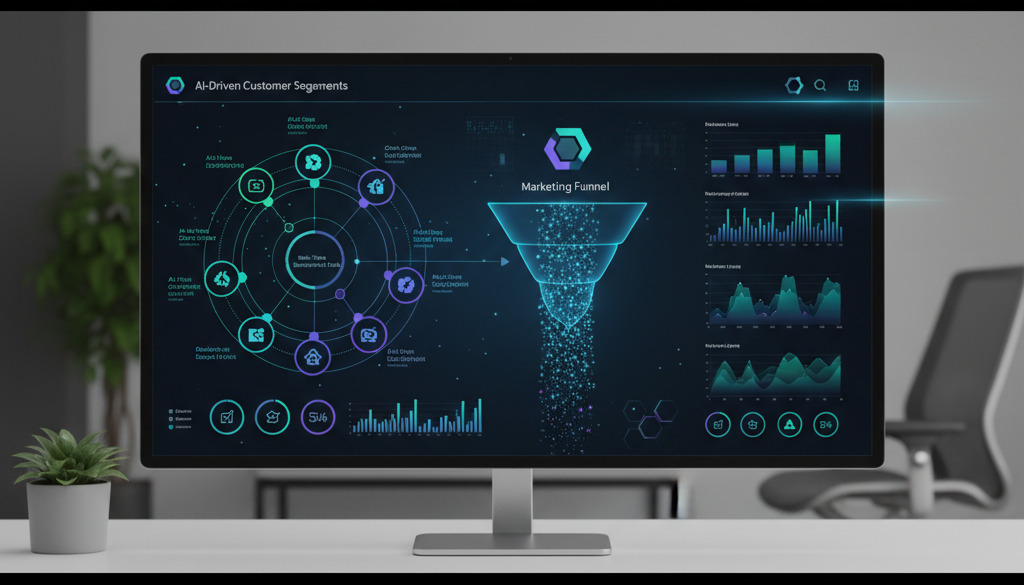
The digital marketing landscape has undergone a seismic shift, moving away from broad-spectrum broadcasting toward a model defined by precision, speed, and intelligence.[1] As we enter the mid-2020s, Artificial Intelligence (AI) has transitioned from a niche experimental tool to a $190 billion reality that dictates how brands interact with billions of global consumers. For modern businesses, AI is no longer an optional upgrade; it is the fundamental engine driving competitive advantage in a saturation-heavy marketplace.
1. The AI Revolution in Digital Marketing: A Foundational Overview
To understand the current state of marketing, one must define AI not as a singular technology, but as a suite of capabilities. In a digital marketing context, AI refers to the application of machine learning (ML), natural language processing (NLP), and predictive analytics to automate decisions and provide insights at a scale humanly impossible.[2] Machine learning allows algorithms to learn from data patterns without explicit programming, while NLP enables machines to read, understand, and generate human language—critical for everything from search queries to customer service.
The evolution from traditional to AI-powered marketing represents a shift from reactive to proactive strategies. Historically, marketers relied on backward-looking data—monthly reports that showed what had happened. Today, AI enables real-time responsiveness. We have moved from static segmentation to "segmentation of one," where the strategy adapts to the user in milliseconds. The primary benefits are clear: reduced operational overhead through automation, hyper-personalization that drives loyalty, and a significantly higher Return on Investment (ROI) by eliminating wasted ad spend and targeting high-intent prospects with surgical precision.
2. Personalization at Scale: AI-Driven Customer Segmentation and Targeting
Traditional marketing relied heavily on broad demographics: age, gender, and Zip code. AI makes these metrics look primitive. Modern hyper-segmentation focuses on "behavioral psychographics." AI algorithms analyze thousands of variables simultaneously—including mouse hover time, scrolling speed, past purchase latency, and even the sentiment of social media comments—to group users into micro-segments based on their immediate psychological state and intent.
Predictive customer journey mapping takes this a step further. Instead of reacting to a customer landing on a page, AI uses historical data from billions of similar user paths to predict the next three moves a customer is likely to make. If a user’s behavior mirrors that of past customers who were about to churn, the system can trigger an immediate intervention, such as a targeted discount or a helpful "how-to" guide. This anticipation of needs creates a sense of "ambient helpfulness" that builds deep brand affinity.
Dynamic Content Optimization (DCO) serves as the execution arm of this strategy. Through DCO, the actual visuals and copy of a website or an email change in real-time. A sports retailer’s homepage might show hiking gear to one user and yoga mats to another, not just based on what they bought last month, but based on the fact that it is currently raining in their specific city and they just clicked an ad for waterproof boots. This level of relevance is unattainable through manual campaign management.
3. Elevating Customer Experience Through AI-Powered Engagement
Customer engagement has moved from a "business hours" model to a "constant presence" model. Intelligent chatbots and virtual assistants are the frontline of this shift. Advanced bots powered by Large Language Models (LLMs) can now handle complex, multi-turn conversations that feel natural. Beyond simple 24/7 support, these agents act as sophisticated sales qualifiers. They can engage a visitor, identify their pain points, and determine if they meet the criteria for a high-value lead before smoothly transitioning the conversation to a human representative.
Personalized product recommendations have also evolved. While early versions used simple "people who bought this also bought that" logic, AI now uses deep learning to understand the context of a purchase. For example, if a customer buys a professional camera, the AI understands they are likely entering a new hobby and will need lenses, tripods, and memory cards over the next six months, drip-feeding recommendations based on the typical learning curve of a photographer.
Sentiment analysis provides the emotional intelligence necessary for proactive service. By monitoring social media mentions and review sites in real-time, AI can detect "anger spikes" or "disappointment trends" before they become viral PR crises. A recent example involves a global airline that used AI to detect flight delays and immediately pushed tailored compensation offers to passengers' mobile devices. According to industry data, this proactive approach led to an 800% increase in customer satisfaction scores, proving that AI can turn a negative experience into a loyalty-building moment.
4. Optimizing Advertising Campaigns with AI
In the realm of paid media, AI has revolutionized the concept of "buying an audience." Programmatic advertising and Real-Time Bidding (RTB) use AI to evaluate millions of ad impressions per second. These algorithms determine which specific user is most likely to convert and what price should be paid for that specific impression, all while the webpage is loading. This removes the guesswork from media buying, ensuring that budgets are optimized for performance rather than just reach.
Creativity is also being augmented by AI. Tools like Jasper and other specialized ad-gen platforms allow marketers to generate thousands of variations of ad copy and visual layouts. AI then runs "predictive A/B tests," analyzing which combinations of colors, headlines, and call-to-action buttons are likely to resonate with specific audience cohorts. This allows for a level of creative testing that would require weeks of human labor to be completed in minutes.
Furthermore, AI serves as a critical defense mechanism against ad fraud. Sophisticated bots cost the industry billions annually by mimicking human clicks. AI models can differentiate between a human's erratic mouse movements and a bot's programmatic clicks with incredible accuracy. This ensures brand safety by blocking ads from appearing on low-quality or fraudulent websites, preserving both the budget and the brand's reputation.
5. AI in Content Creation and Optimization
Content is often the bottleneck of digital marketing, but AI is widening that narrow passage. Automated content generation has moved beyond basic templates. Marketers are now using Generative AI to produce high-quality blog drafts, social media captions, and even video scripts. While human editing remains essential for brand voice and factual accuracy, the "blank page problem" has been effectively solved. AI can repurpose a single long-form webinar into dozens of LinkedIn posts, tweets, and email newsletters, maximizing the value of every piece of original content.
Performance prediction is another critical pillar. Before a single word is published, AI tools can analyze search volume trends, competitor performance, and current social sentiment to predict which topics will "trend" next. By aligning content production with these predictions, brands can capture organic traffic before the market becomes saturated with similar information.
Search Engine Optimization (SEO) has changed from "keyword stuffing" to "semantic relevance." AI-driven SEO tools help marketers understand topic clusters—how different subjects relate to each other in the eyes of search algorithms. These tools identify content gaps where a brand might be losing authority and suggest structural changes—such as internal linking strategies or schema markup—that improve visibility in an increasingly AI-driven search landscape where Google’s SGE (Search Generative Experience) prioritizes direct, authoritative answers.

6. Data Analytics and Insights: The AI Advantage
The modern marketer is drowning in data but starving for insights. AI solves this by providing advanced pattern recognition that transcends human capability. While a human analyst might notice a drop in sales in October, an AI system can identify that the drop was specifically linked to a 20% increase in mobile page load times on Android devices in the Northeast region following a specific software update. This granular interpretation allows for immediate, surgical fixes rather than broad, ineffective changes.
Predictive analytics allows businesses to shift from a "planning" mindset to a "forecasting" mindset. Instead of setting goals based on last year's performance plus 5%, companies use AI models to simulate thousands of market scenarios. These models account for macroeconomic factors, competitor pricing shifts, and consumer behavior trends to provide a more accurate forecast of campaign outcomes. This reduces the risk associated with major pivots or product launches.
Finally, AI is refining attribution modeling. In a multi-touch world, it is often difficult to know which ad actually caused the sale. Was it the first Instagram post the customer saw three weeks ago, or the Google search they did this morning? AI-driven attribution uses probabilistic modeling to assign weighted value to every touchpoint in the journey. This gives marketers a true understanding of their "marketing mix," allowing them to double down on the channels that truly drive bottom-line results, rather than just the ones that get the last click.
7. The Ethical and Practical Considerations of AI in Marketing
As AI becomes more powerful, the responsibility of the marketer grows. Data privacy is the most significant hurdle. With regulations like GDPR in Europe and CCPA in California setting strict boundaries, marketers must navigate a "privacy-first" world. AI can actually help here through "privacy-enhancing technologies," allowing for data analysis on anonymized datasets. However, transparency is non-negotiable. Consumers must know how their data is being used, and brands must ensure they are not infringing on user trust in the pursuit of personalization.
Algorithmic bias is another critical concern. Because AI learns from historical data, it can inadvertently learn—and amplify—human biases. If a past dataset shows that a certain demographic was more likely to receive a high-interest loan offer, the AI might continue to target that group unfairly. Marketers must actively audit their algorithms for fairness and ensure that their AI-driven campaigns do not exclude or stereotype protected groups.
Crucially, the "human in the loop" remains vital. AI is excellent at finding patterns and executing tasks, but it lacks empathy, cultural nuance, and high-level strategy. A human must still decide why a campaign exists and what message it should ultimately convey. AI should be viewed as a co-pilot that handles the heavy lifting of data and repetition, freeing the human marketer to focus on the creative sparks and strategic decisions that AI cannot replicate.
8. Implementing AI in Your Digital Marketing Strategy
Success with AI begins with an honest assessment of a company's current "marketing stack." Implementing AI on top of fragmented, messy data is a recipe for failure. Organizations must first unify their data—customer CRM data, web analytics, and social engagement—into a single source of truth. Without clean data, the "intelligence" provided by AI will be flawed.
Implementation should be phased. Rather than trying to automate the entire marketing department at once, businesses should identify a specific "pain point" with a high potential for ROI. This might be optimizing email send times using tools like Seventh Sense or automating ad bidding. By starting with a pilot project with clear KPIs, the marketing team can build "AI fluency" and demonstrate value to stakeholders before scaling the technology across the organization.
Choosing the right platform is also essential. The market is saturated with "AI-washed" tools—traditional software with a thin layer of automation rebranded as AI. Marketers should look for platforms that offer deep integration and measurable predictive capabilities. Finally, upskilling is mandatory. Modern marketers need to understand prompt engineering, data interpretation, and AI ethics. Investing in team training ensures that the technology is being used to its full potential rather than just sitting as an expensive line item in the budget.
9. The Future of AI in Digital Marketing: Emerging Trends and Innovations
Looking toward 2026 and beyond, we are moving toward "hyper-personalization evolved." This isn't just about showing a different product; it's about shifting the entire brand voice and aesthetic to match a single individual’s preferences in real-time. We will see the rise of "autonomous marketing operations," where AI agents not only suggest campaigns but actively execute, monitor, and pivot them without human intervention for days at a time.
Generative AI will also move into the visual and video space with greater intensity. We are nearing a point where personalized video advertisements, featuring a spokesperson addressing the customer by name and referencing their specific needs, can be generated at scale for a cost lower than a standard static ad today. This will fundamentally change the "creative" side of the industry, shifting the role of designers from creators to "creative directors" of AI systems.
Finally, the intersection of AI and the Metaverse or Web3 will create new paradigms. In decentralized environments, AI "virtual brand ambassadors" will interact with customers in 3D spaces, providing a bridge between digital commerce and a more immersive, social experience. As search engines evolve into "answer engines" and social platforms become primary search tools for younger generations, AI will be the filter through which all brand discoveries are made.
10. Conclusion: Embracing AI as a Strategic Marketing Driver
Artificial Intelligence has fundamentally rewritten the rules of engagement. From the way audiences are segmented to the way content is produced and analyzed, AI offers a level of efficiency and personalization that was previously unimaginable. However, the true power of AI lies not in the technology itself, but in how it is strategically integrated into a broader business vision. Organizations that proactively adopt AI, while remaining mindful of the ethical implications and the need for human oversight, will be the ones that define the next era of digital commerce.
The call to action for today's marketing leaders is clear: stop viewing AI as a futuristic experiment and start treating it as a foundational utility. The gap between AI-enabled businesses and their traditional counterparts is widening. By investing in the right data infrastructure, training teams, and focusing on customer-centric AI applications, businesses can transform their marketing from a cost center into a powerful, predictive engine for growth. The evolution of AI is continuous, and the best time to begin that journey is now.
FAQ
What are the key benefits of AI in digital marketing?
AI in digital marketing offers significant advantages, including enhanced personalization of customer experiences, improved campaign targeting, and increased operational efficiency through automation of repetitive tasks. It also provides deeper insights into consumer behavior and predictive analytics for better decision-making.
How can small businesses leverage AI for their digital marketing efforts?
Small businesses can start by utilizing AI-powered tools for content creation, social media management, and customer service chatbots. Many platforms offer accessible AI features that can help optimize ad spend and improve SEO without requiring extensive technical expertise.
What are some common challenges associated with implementing AI in digital marketing?
Implementing AI can present challenges such as the need for high-quality data, potential privacy concerns, the cost of advanced tools, and the requirement for skilled personnel. Overcoming these often involves a phased approach, focusing on specific use cases and investing in training.
Keep reading
Hand-picked guides that go deeper — open the one you need next:
- Top AI Content Agency Alternatives: A Strategic Guide
- From Zero to Hero: Build Your Online Presence With AI
- AI Scalable Content Strategy for Rapid Growth
- Scale Your Business with AI: Content Marketing for Growth
→ Read the full AI Content guide