
Automated Content Publishing: Set & Forget Guide

Key Takeaways
- Efficiency: Automation reduces the time spent on content tasks from hours to minutes.
- Consistency: Ensures your blog or store stays active without human intervention.
- SEO Growth: AI-driven tools handle keyword placement and technical metadata automatically.
- Cost Savings: Dramatically lowers the cost per article compared to manual production.
Are you tired of the content publishing treadmill? Many US business owners find themselves trapped in a cycle of writing, editing, and manual posting that never seems to end. You spend hours crafting the perfect piece, only to spend even more time fiddling with WordPress or Shopify settings. Despite all this effort, your website might still feel invisible while competitors seem to be everywhere at once. Imagine if content could flow professionally and automatically, driving traffic and sales while you focus on actually running your business. This isn't a futuristic dream; it's the reality of automated content publishing.
The Silent Killer of Your Growth: Manual Content Publishing
For many small to medium-sized businesses, the "old way" of doing things is a quiet drain on resources. Manual content creation is more than just a chore; it is a bottleneck that prevents scaling. Recent data suggests that small businesses can spend an average of 8 hours per week solely on content management tasks.[1] That is a full workday lost every single week to formatting, image uploading, and clicking "publish."
The Skill Gap and Inconsistency
Beyond the time drain, there is the issue of expertise. Not every business owner is a natural writer or an SEO specialist. Trying to wear these hats often leads to subpar results or, worse, inconsistency. When life happens—a busy sales week, a family emergency, or simply burnout—the content schedule is the first thing to break. An inactive blog sends a poor signal to both Google and your potential customers.
The Financial Weight of Friction
According to research into content workflows, a traditional team spends nearly 70% of its budget on "operational friction." This includes manual research, drafting briefs, and the back-and-forth of editing. By the time an article is live, the cost of acquisition is already bloated. This slow approach doesn't just hurt your schedule; it directly impacts your bottom line by increasing the cost per lead.
Unlock Your Online Potential: The Power of Automation
The core promise of automated content publishing is simple: it builds a content engine that works for you 24/7. Instead of being the worker, you become the architect. Automation handles the creation, optimization, and distribution of your message across the web without requiring your constant supervision.
By shifting to an automated model, you gain something far more valuable than just blog posts: you gain freedom. This is about the "LifeForce 8" principle of success and comfort. Less manual labor means more time to reinvest in strategic growth, improving your products, or spending time with family. When your digital presence is self-sustaining, you are free to think bigger.
Platforms like Volteruno act as the heavy lifting crew for your digital marketing. These tools don't just "schedule" a post you already wrote; they bridge the gap between an idea and a published, SEO-ready article. It allows for a "set it and forget it" mentality that is essential for busy entrepreneurs using Shopify or WordPress.
The Secret Weapon: AI-Powered Content Generation
At the heart of modern automated publishing is Artificial Intelligence. This technology has evolved beyond simple templates. Today's AI understands complex topics, maintains a natural brand voice, and learns from real-time data to ensure relevance.
Quality Over Speed
A common misconception is that automation sacrifices quality. In reality, modern AI can produce highly engaging articles that are specifically designed to convert readers into customers. It doesn't just dump text onto a page; it highlights product benefits, answers common customer pain points, and includes persuasive calls to action. AI engaging SEO articles are now the standard for brands that want to grow fast without hiring a full-scale agency.
Consider an e-commerce store owner. Instead of spending a weekend writing about "How to choose the right hiking boots," they can let an AI engine generate a 2,000-word guide that includes safety tips, material comparisons, and internal links to their products. The AI handles the research while the owner handles the inventory.
Beyond Just Writing: The Publishing Process Revolution
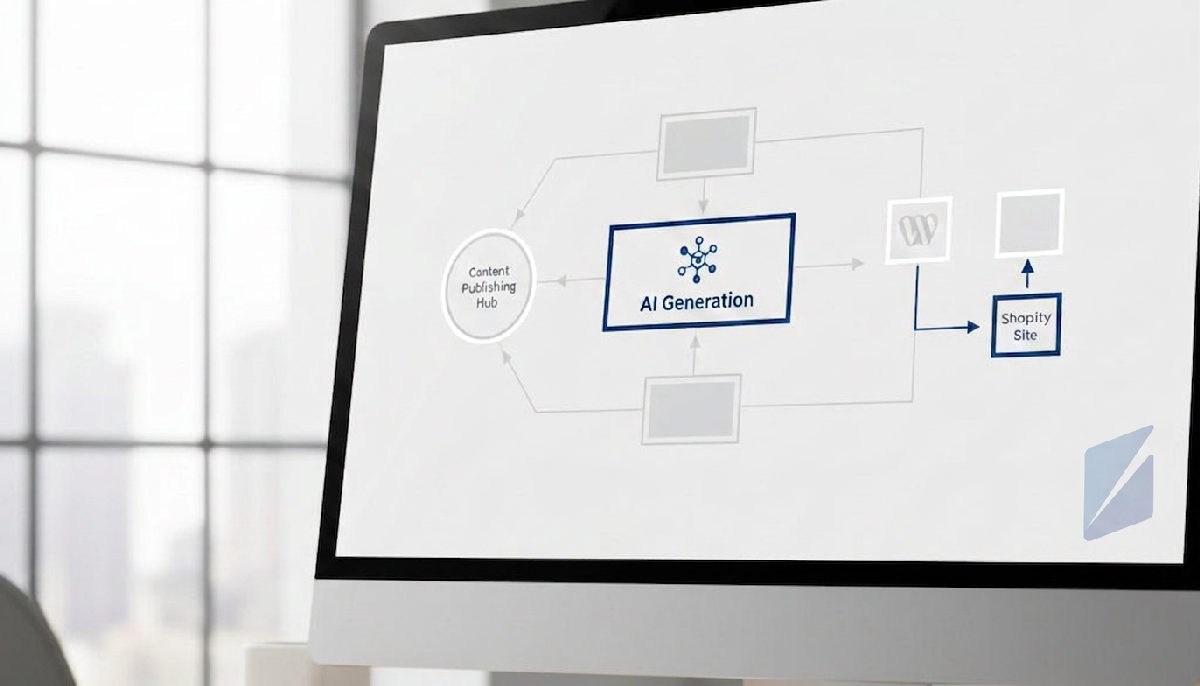
Writing the content is only phase one. The true "revolution" in this space is the orchestration of the entire workflow. As seen in recent digital trends, the industry is moving from mere acceleration to full orchestration. Real automation handles the trigger, the creation, and the final post.
| Feature | Manual Publishing | Automated Publishing |
|---|---|---|
| Post Creation | 2-4 hours | < 5 minutes |
| SEO Optimization | Manual checklist | Instant AI analysis |
| Formatting & Links | Manual entry | Automatic integration |
| Scheduling | Manual calendar | AI-set optimal timing |
For those managing WordPress content automation tools, the benefit is the elimination of the "copy-paste" cycle. You no longer have to move text from a Google Doc into a CMS, fix the broken headers, and manually add images. The system connects directly to your site, ensuring that the post looks perfect every time it goes live.
Instant Authority: Mastering SEO with Automation
Search engines like Google have a voracious appetite for fresh, helpful content. However, "fresh" isn't enough; it must be optimized. Automated systems now bake SEO into the very foundation of every post. This includes things like:
- Natural Keyword Integration: No more keyword stuffing; tools now place terms where they make sense for the reader.
- Semantic Structure: Proper use of H2 and H3 tags to help search bots understand the page hierarchy.
- Meta Data: Automatically generating descriptions and alt text for images to improve accessibility and ranking.
The results of this efficiency are quantifiable. Web properties that switch to a regular, SEO-optimized schedule often see a 30% to 50% increase in organic traffic within the first few months. By using an AI SEO small business guide strategy, even local shops can compete with national giants for high-value search terms. Volteruno specializes in this AI-driven SEO, ensuring that every published piece has the best possible chance of reaching page one.
Overcome Every Objection: Your Questions Answered
Despite the clear benefits, many business owners hesitate due to a few common fears. Let's address those directly. One major concern is that AI content might sound robotic or "fake." While early iterations of AI were stiff, modern large language models are trained on billions of human conversations. They can mimic tone, humor, and professional nuance with startling accuracy.
"Automation is not about replacing the human voice; it's about magnifying it so it reaches the right ears without the author burning out."
Another concern is the "unique content" factor. AI engines generate original text by synthesizing information, not by copying it. This ensures your site avoids plagiarism penalties while still covering industry-relevant topics. Finally, there is the cost. While there is an investment involved, the ROI is typically much higher than hiring a freelancer. Automated solutions can produce ten times the content for a fraction of the cost of one human-written article.
The Global Reach Advantage: Multilingual Content Automation
For US businesses looking to expand, the world is much larger than just the English-speaking market. Automation allows you to duplicate your success in multiple languages simultaneously. Using geo-targeted content AI, you can translate and adapt your blog posts for Spanish, French, or German-speaking audiences with a single click.
This expands your market reach without requiring you to hire a translation agency. Imagine a Shopify store in the US suddenly being able to serve the entire Latin American market because their blog provides helpful guides in Spanish. This level of global presence was previously reserved for Fortune 500 companies; today, any SMB can achieve it through automation.

Tangible Results: Real Numbers from Automation
In the world of business, data is king. The shift toward automated publishing is driven by results that show up in the bank account. Consider these hypothetical yet representative case studies based on current industry benchmarks:
- The SaaS Startup: By automating their blog workflow, they reduced their cost-per-article from $1,150 to $265, allowing them to publish four times as much content for the same budget.
- The Local Service Provider: A landscaping company used geo-targeted AI to rank for "best lawn care in [City Name]" across 15 different suburbs, resulting in a 40% increase in organic leads.
- The Shopify Store: By implementing Shopify blog content automation, a boutique clothing brand saw a 25% rise in return customers who came back to read weekly style guides.
These aren't just vanity metrics. More traffic leads to more conversions, and more conversions provide the capital needed to further dominate your niche. Automation is the gasoline on your business's growth fire.
Your First Step to Effortless Publishing
The transition from manual struggle to automated success is easier than most think. You don't need a degree in computer science to set up these systems. Modern platforms are designed with the non-technical business owner in mind. The "set it and forget it" lifestyle is about reclaiming your time so you can focus on the high-level tasks that only you can do.
Ready to stop being a slave to your CMS? It's time to let technology handle the grind. By integrating an AI SEO engine like Volteruno into your WordPress or Shopify site, you can ensure your business remains relevant and visible without ever typing another word if you don't want to. Start your journey toward effortless publishing and watch your online presence grow while you sleep.[2]
Frequently Asked Questions
Is automated content publishing safe for SEO?
Yes, as long as the content is high-quality and helpful to the user. Google's current guidelines prioritize "helpful content" regardless of how it was produced. Automated tools like Volteruno focus on creating informative, well-structured articles that satisfy both search engines and human readers.
Do I still need to edit the posts myself?
While modern AI produces excellent drafts, we always recommend a quick "skim" to ensure the content perfectly matches your specific brand voice or offers. However, the heavy lifting—research, structure, and formatting—is 100% handled for you, reducing your workload by about 90%.
Can I use this for my Shopify store?
Absolutely. Automated content publishing is particularly effective for e-commerce. It helps you create product guides, comparison articles, and "how-to" posts that drive organic traffic to your store, which is much more cost-effective than relying solely on paid ads.
How does the AI know what to write about?
AI engines use a combination of your initial input (like your business niche or specific keywords) and current web data. They analyze top-performing articles in your industry to understand what readers are looking for, ensuring the generated content is timely and relevant.
What platforms does Volteruno support?
Volteruno is designed to integrate seamlessly with the world's most popular platforms, specifically WordPress and Shopify. This allows for a direct "handshake" between the AI engine and your website, making the publishing process truly hands-free.
Will my content look different from my competitors?
Yes. The AI generates unique content based on specific triggers and your brand's unique profile. It does not simply "rewrite" existing articles; it synthesizes information to create a new, original perspective that helps your business stand out in the crowded digital landscape.
Maximizing Your ROI with Automated Content Publishing
The true power of automated content publishing lies not just in saving time, but in its direct impact on your bottom line. For businesses, especially those in competitive online spaces like e-commerce, organic traffic generated through consistent, high-quality content is a sustainable and cost-effective growth engine. Unlike paid advertising campaigns that cease to deliver traffic the moment the budget runs out, a well-executed automated content strategy builds an evergreen asset. Each article published has the potential to attract new visitors, engage existing ones, and convert them into loyal customers over time. This means that the initial investment in setting up an automated system continues to yield returns long after the content has been published, creating a compounding effect on your brand's visibility and authority.
Furthermore, automated content publishing allows for a level of scale and consistency that is difficult to achieve with manual content creation alone. Imagine needing to produce dozens, or even hundreds, of product descriptions, blog posts, or industry updates each month. Doing this manually would require a significant team of writers, editors, and SEO specialists, leading to substantial overhead. With an automated solution, you can maintain a robust content calendar, ensuring your website remains fresh and relevant to search engines and users alike, without the associated hiring and management costs. This consistency is crucial for building trust with your audience and signaling to search engines that your site is an active and valuable resource.
The strategic advantage extends to market responsiveness. In rapidly evolving industries, staying ahead of trends and competitor analysis is paramount. Automated content generation tools can be programmed to monitor industry news, emerging keywords, and consumer sentiment, allowing for the rapid creation of relevant content. This agility means you can quickly capitalize on new opportunities, address timely questions your audience might have, or counter competitor narratives with your own unique insights. This proactive approach to content marketing, powered by automation, ensures your brand remains at the forefront of conversations within your niche, driving both engagement and conversions more effectively than a purely reactive strategy.
Measuring the Impact of Your Automated Content Strategy
To truly harness the financial benefits of automated content publishing, it's essential to implement robust tracking and analytics. Key performance indicators (KPIs) such as organic traffic growth, keyword rankings, time on page, bounce rate, and conversion rates directly tied to content will provide crucial insights. By differentiating traffic and conversions from automated content versus other channels, you can accurately quantify the ROI. Tools like Google Analytics, SEMrush, or Ahrefs can be integrated to monitor these metrics. Regularly reviewing these reports allows for data-driven adjustments to your automated content strategy, optimizing topics, keywords, and content formats for maximum impact. This continuous improvement cycle ensures your automated content remains a powerful driver of business growth and profitability.
Keep reading
Hand-picked guides that go deeper — open the one you need next:
- AI Keyword Research: Beyond Basic Keywords
- From Zero to Hero: Launch Your Business Blog with AI in Days
- Try Before You Buy: Evaluate One AI Article with Volteruno’s Free Plan
- Publishing AI Content to Any Website Platform