
Content Automation for SMBs: Scale Your Business Fast

Key Takeaways
- Content automation is the strategic use of software to generate, manage, and distribute content, significantly reducing the manual burden on SMB owners.
- Implementing automation can lead to dramatic time savings and lower operational costs while maintaining a consistent brand presence.
- Success requires a balance between efficiency and authenticity, ensuring that AI-driven tools enhance rather than replace the human touch.
- The adoption of automation is no longer optional for SMBs looking to compete in a digital-first economy where speed and personalization are paramount.
1. Introduction: The SMB Content Conundrum and the Rise of Automation
For many small and medium-sized businesses (SMBs), the digital landscape is a double-edged sword.[1] On one hand, the barrier to entry for global marketing has never been lower. On the other, the demand for high-quality, frequent content across dozens of channels is overwhelming. Most SMBs operate with lean teams where the "marketing manager" is often also the owner, the customer service representative, and the product developer. This resource scarcity leads to inconsistent posting, neglected email lists, and missed opportunities for growth.
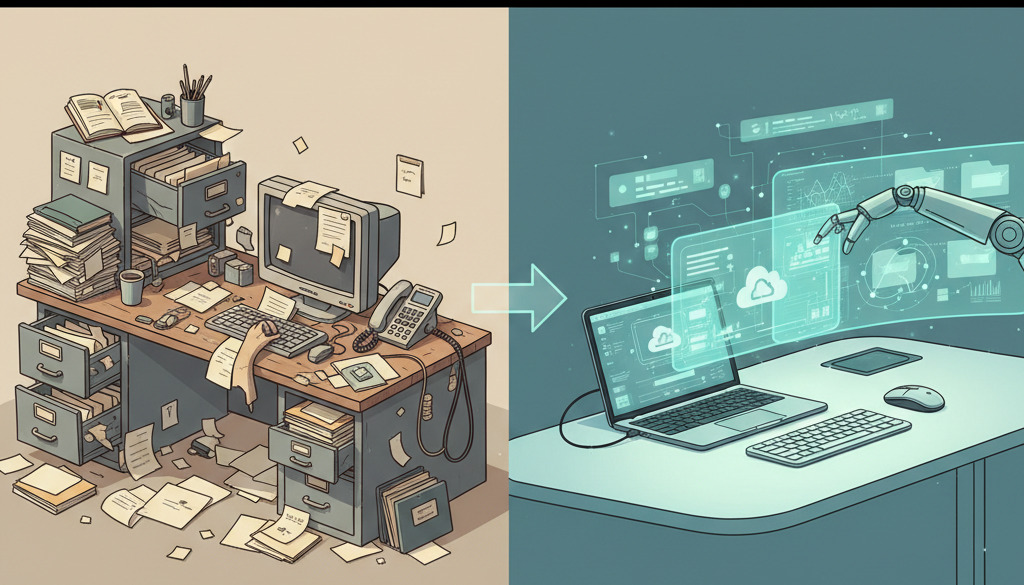
The promise of content automation is not to replace the creative spirit of a small business, but to provide the mechanical leverage needed to amplify it. Automation involves using specialized software to handle repetitive tasks—from scheduling social media posts to generating draft copy and tailoring email sequences. By streamlining these workflows, SMBs can ensure their digital presence remains active and professional without requiring 24/7 manual intervention.
In this guide, we will explore the fundamental concepts of content automation, the tangible benefits of adoption, and a step-by-step roadmap for choosing and implementing the right tools. We will also peek into the future of AI-driven hyper-personalization, illustrating how scaling your message doesn't have to mean losing your soul.
2. Understanding the Core Concepts of Content Automation
Content automation is more than just setting a timer for a Facebook post. It is a comprehensive framework that utilizes technology to manage the lifecycle of content. This includes everything from the initial data-driven research phase to the final performance analysis. For an SMB, understanding these layers is critical to moving beyond basic tools and toward a truly integrated system.
Defining Content Automation
At its core, content automation is the process of using technology to automate segments of the content marketing process. Unlike "simple scheduling," which only manages the timing of delivery, true automation involves dynamic content generation and workflow triggers. For example, an automated system can sense when a customer abandons a shopping cart and instantly generate a personalized email featuring the exact items they left behind, accompanied by a limited-time discount code. This is personalization at scale, achieved without a single human click.
Key Technologies and Tools
The landscape of automation tools is vast. Marketing automation platforms like HubSpot or ActiveCampaign serve as the "brain," connecting various data points. AI-powered writing assistants facilitate rapid drafting, while social media management tools (such as Sprout Social or Hootsuite) handle the distribution. Additionally, low-code integration tools like Zapier or IFTTT act as the "connective tissue," allowing different apps to talk to each other—for instance, automatically saving a new Instagram post's caption into a spreadsheet for later repurposing.
The Automation Spectrum
Automation exists on a spectrum. On the low end, you have manual scheduling, where humans create everything but a machine handles the "send" button. In the middle, you have assisted automation, where AI might help generate headlines or suggest the best times to post based on audience data. At the high end lies fully autonomous workflows, where AI analyzes market trends, creates content drafts, segments the audience, and optimizes the campaign in real-time based on engagement metrics.
3. Quantifiable Benefits of Content Automation for SMB Growth
Adopting automation is an investment of both time and capital. For an SMB, the return on investment (ROI) must be clear and measurable. Recent data suggests that businesses utilizing automation see significant improvements in both operational efficiency and revenue generation.
Efficiency and Time Savings
The most immediate impact is the reclamation of time. By automating the technical aspects of content distribution—such as resizing images for different platforms or formatting newsletters—marketing teams can save upwards of 12 hours per week. This foundational efficiency allows staff to focus on high-level strategy, such as product innovation or high-touch client relationships, rather than being bogged down in administrative "busy work."
Cost Reduction and Resource Optimization
Hiring a full-time content agency or a large in-house team is often financially out of reach for smaller firms. Automation acts as a force multiplier. It allows a single marketing generalist to execute the output of a much larger department. By reducing the reliance on manual labor for repetitive tasks like data entry or basic copywriting, businesses can allocate their limited budgets toward high-impact areas like paid advertising or premium video production.
Enhanced Lead Generation and Nurturing
Automation ensures that no lead falls through the cracks. Consider a lead nurturing sequence: when a visitor downloads a whitepaper, the system automatically tags them in the CRM. Over the next two weeks, they receive a series of three educational emails followed by a discovery call invitation. This consistent touchpoint happens automatically, ensuring the lead remains warmed up until they are ready for a sales conversation. This level of persistence is nearly impossible to maintain manually at scale.
Improved Customer Engagement and Retention
Retaining a customer is significantly cheaper than acquiring a new one. Automation tools can track a customer’s last purchase date and send a "we miss you" message or a tailored recommendation based on their past behavior. By delivering the right message at the right time, SMBs create a sense of being "seen" by the brand, which fosters long-term loyalty and minimizes churn.
4. Strategic Applications of Content Automation in SMB Marketing
For an SMB to succeed with automation, it shouldn't try to automate everything at once. Focusing on the three "heavy hitters" of digital marketing usually yields the fastest results.
Social Media Management
Social media is often the most time-consuming channel. Automation allows you to batch-produce content once a month and have it drip-fed across platforms. Beyond just posting, modern tools use "social listening" to monitor mentions of your brand. If someone asks a question on Twitter, an automated trigger can alert your customer service team or provide an instant, AI-generated answer for common queries like "what are your hours?"
Email Marketing Automation
Email remains the king of ROI for SMBs. Automation turns a static list into a dynamic sales engine. A robust "Welcome Series" is the perfect example: the moment someone signs up, they receive an immediate "thank you," followed by an "about us" email 48 hours later, and a "first-time buyer discount" 72 hours after that. This sequence runs in the background, building trust with every new subscriber without any manual effort from the business owner.
Website Personalization and User Experience
Your website can be a silent salesperson that adapts to every visitor. Using dynamic content display, a local hardware store’s website could show snow shovel promotions to visitors in Maine while showing lawnmower deals to visitors in Florida. Personalized recommendations, similar to the "customers also bought" section on Amazon, can be implemented on a smaller scale to increase average order value by showcasing relevant products based on the visitor’s current browsing session.
5. Beyond Marketing: Automating Operational Content Workflows
While marketing is the obvious use case, the power of content automation extends deep into the operations of a business. Any area where information needs to be communicated repeatedly is a candidate for optimization.
Customer Support and Service
The modern customer expects a response in minutes, not days. AI-powered chatbots can handle the "Level 1" queries—tracking an order, checking stock levels, or resetting passwords. This filters out the high-volume, low-complexity tasks, leaving your human staff free to handle complex issues that require empathy and nuanced problem-solving. Furthermore, automated ticket routing ensures that a technical question goes straight to the IT person, while a billing question goes to accounting, reducing internal friction.
Internal Communications and HR
As an SMB grows from 5 employees to 50, internal communication often breaks down. Automation can streamline employee onboarding by delivering training videos and policy documents over the first week of employment. Instead of an HR manager manually sending emails, the system tracks which modules the new hire has completed and prompts them to finish the next one. This ensures every employee receives the same high standard of training and stays informed about company updates through automated internal newsletters.
6. Choosing the Right Content Automation Tools for Your SMB
The "shiny object syndrome" is a real threat to SMBs. With thousands of SaaS tools available, the key is to select a stack that solves your specific problems without adding unnecessary complexity.
Assessing Your Needs
Before looking at software, perform a time audit. Identify which content tasks take your team the most time and which ones provide the least creative fulfillment. If you are spending four hours a day answering the same Facebook messages, your priority is a social inbox tool. If you have a massive email list but no sales, you need email sequence automation. Don't buy a solution for a problem you don't have.
Key Features to Look For
The most important feature for any SMB tool is integration. If your email tool doesn't talk to your CRM, you are creating more manual work, not less. Look for "all-in-one" platforms if you have a small team, as managing one tool is easier than managing five. Additionally, prioritize user-friendliness; if the tool requires a degree in computer science to operate, your team won't use it, and the investment will be wasted.
Budget Considerations and ROI
Most automation tools offer tiered pricing. Start with the "Pro" or "Starter" tier that covers your immediate needs. While free versions are tempting, they often lack the "automation" features that make the tool valuable. Calculate the cost of the software against the hourly rate of the staff member currently doing the task manually. Usually, if a $50/month tool saves two hours of a manager's time, it has already paid for itself.

7. Implementing Content Automation: A Step-by-Step Guide
Execution is where most automation projects fail. A haphazard approach leads to broken links and "uncanny valley" content that alienates customers. Follow this structured path to ensure a smooth transition.
Define Clear Goals
Start with one specific KPI. Do you want to increase lead conversion by 10%? Do you want to reduce the time spent on social media by 5 hours a week? Having a singular focus prevents the project from becoming bloated and allows you to measure whether the automation is actually working.
Map Your Existing Workflows
Draw out your current process on a whiteboard or a digital tool. From the moment a customer sees an ad to the moment they receive their product, what happens? Identify the manual bottlenecks. For example, if you find that you are manually copying customer names from a contact form into an Excel sheet, that is your first "Zap" or automation trigger.
Select and Integrate Your Tools
Once you have mapped the flow, choose the tools that fit. It is highly recommended to run a pilot program. Pick one department—like customer service—and automate their FAQ responses first. Spend two weeks monitoring the results and tweaking the settings before rolling automation out to your social media or sales departments. This "start small" approach mitigates the risk of a technical failure impacting the entire business at once.
8. Overcoming Common Challenges in Content Automation
Automation is not a "set it and forget it" panacea. It requires ongoing maintenance and a watchful eye to ensure the human element of your business remains intact.
Data Quality and Management
Automation is only as good as the data feeding it. If your CRM is full of duplicate entries or misspelled emails, your automated campaigns will look unprofessional. SMBs must establish data hygiene protocols—simple rules for how information is entered and cleaned. Garbage in, garbage out; clean data is the fuel for effective automation.
Maintaining Brand Voice and Authenticity
The biggest fear of automation is sounding like a robot. To avoid this, use human-in-the-loop workflows. AI should be used for the "First Draft" or the "Final Distribution," but a human should provide the "Creative Direction" and the "Final Polish." Maintain a strong brand style guide and ensure that any automated templates still reflect your company’s unique tone—whether that is quirky and fun or serious and corporate.
Employee Training and Adoption
Employees often fear that automation will replace them. Frame the transition as upskilling. Explain that the tools are taking over the "robotic" parts of their job so they can do more "human" work. Provide comprehensive training and allow for an adjustment period. When the team sees how much easier their daily tasks become, resistance usually turns into advocacy.
9. The Future of Content Automation for SMBs: AI and Hyper-Personalization
We are entering the era of hyper-personalization. In the past, "personalization" meant putting a customer's first name in an email. In the near future, AI will allow SMBs to generate entire web pages or video messages tailored to an individual’s unique interests and historical data.
Predictive analytics will also become more accessible to small businesses. Instead of reacting to a customer leaving, your automation system will predict who is likely to churn based on a drop in their engagement levels and automatically trigger a "retention campaign" before the customer even realizes they are unhappy. As voice-activated devices and conversational AI continue to evolve, the "content" we automate will move from text and images to interactive, voice-driven experiences, allowing SMBs to maintain a tireless 24/7 presence in the lives of their customers.
10. Conclusion: Embracing Automation for Sustainable SMB Success
Content automation is no longer a luxury reserved for Fortune 500 companies with massive technical budgets. For the modern SMB, it is a strategic necessity. By leveraging the right tools to handle repetitive distribution, lead nurturing, and operational communications, small business owners can finally break free from the "content treadmill."
The key to success lies in starting small, focusing on workflows with the highest manual burden, and never losing sight of the authentic human connection that makes small businesses special. Those who embrace these technologies today will find themselves miles ahead of the competition tomorrow. The digital world is moving fast; it is time to let automation do the heavy lifting so you can focus on building your legacy.
Frequently Asked Questions
Is content automation expensive for a small business?
While some enterprise platforms are costly, there are many affordable, tiered solutions designed specifically for SMBs. Many tools offer "pay-as-you-grow" models, and when you factor in the hours of manual labor saved, the ROI is usually positive within the first few months of implementation.
Will using automation make my brand feel cold or impersonal?
Not if it is implemented correctly. Automation should handle the mechanics of delivery, while humans dictate the strategy and tone. By automating the repetitive tasks, you actually free up more time for your team to have genuine, high-quality interactions where they matter most.
Do I need to be a "tech-savvy" person to set up content automation?
Most modern automation tools are no-code or low-code, meaning they use "drag-and-drop" interfaces. If you can navigate a smartphone or a standard web browser, you can learn to use these tools. Most platforms also provide extensive tutorials and support to help beginners get started.
How much time does it take to set up an automated system?
Setup time varies depending on complexity. A basic social media or email automation can be ready in a few hours. A more complex, cross-departmental integration might take a few weeks to map and test. However, this is a one-time time investment that pays dividends every single day thereafter.
What is the difference between AI content generation and content automation?
AI content generation refers to using AI (like ChatGPT) to create the actual text, images, or ideas. Content automation refers to the systems and workflows that decide when, where, and to whom that content is sent. They work best when used together.
Keep reading
Hand-picked guides that go deeper — open the one you need next:
- Before You Hire: Why AI Writing Outperforms Freelancers
- Mastering the AI Content Creation Process: 2026 Guide
- Content Creation in Minutes: The AI Solution for Busy Entrepreneurs
- Multi-Language Content: Expand Your Reach with AI Translation
→ Read the full AI Content guide