
Multi-Language Content: Expand Your Reach with AI Translation
Key Takeaways
- Go Global, Not Local: In today's digital economy, limiting your content to a single language severely restricts your market reach and growth potential. Multilingual content is no longer a luxury but a strategic necessity.
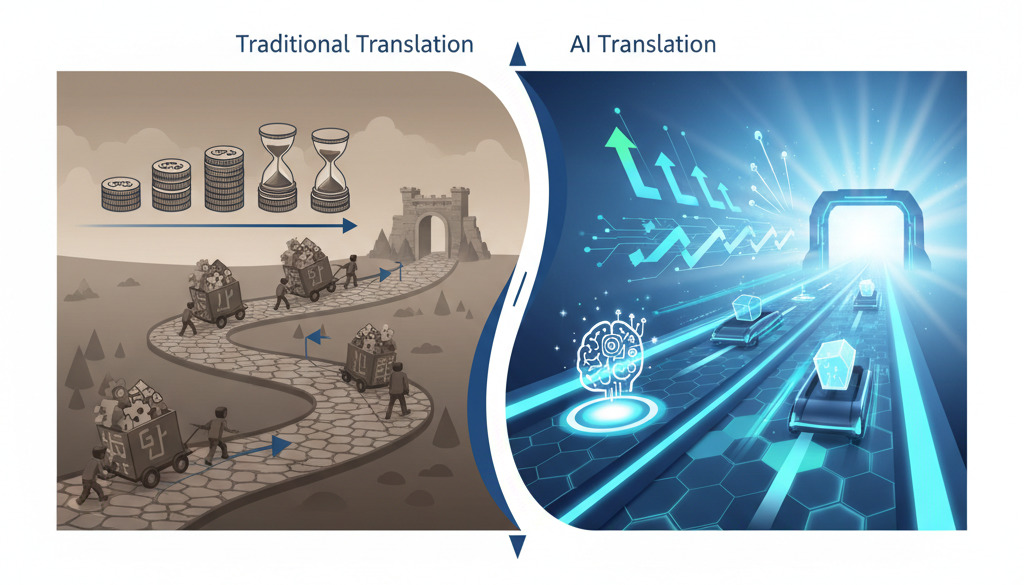
- AI Overcomes Hurdles: Traditional translation is slow, expensive, and difficult to scale. AI-powered solutions dramatically reduce costs and timelines, making global content strategies accessible to businesses of all sizes.
- More Than Translation: Advanced AI offers localization, adapting content to cultural nuances, regional idioms, and local search behaviors, which is crucial for building trust and relevance.
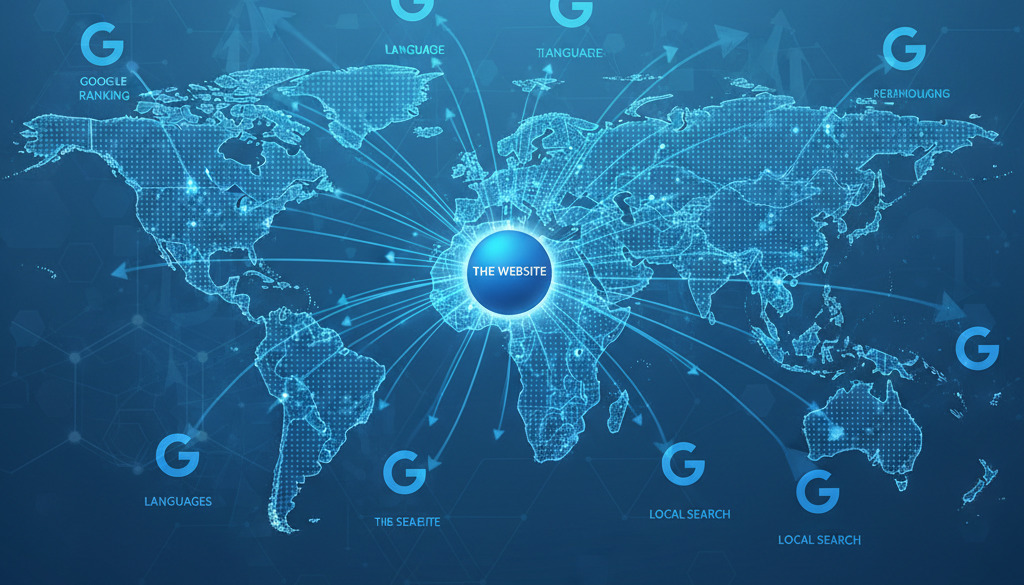
- SEO is a Universal Language: AI can create and optimize content for search engines in multiple languages simultaneously, helping new international customers find your business through platforms like Google.
- The Human-AI Partnership: The most effective approach combines AI's speed and scale with human oversight for quality assurance, brand voice consistency, and nuanced cultural understanding. AI augments human talent, it doesn't replace it.
- Accessible Starting Points: With services offering free trials and user-friendly interfaces, any business owner can begin leveraging AI for multilingual content with minimal risk and no technical expertise required.
The Expanding Digital Frontier: Why Multilingual Content is No Longer Optional
In a world where digital storefronts have replaced physical borders, the language you speak as a business directly defines the size of your potential market. For too long, companies have operated under the assumption that English is the lingua franca of the internet. While it remains a dominant language, this view is increasingly outdated and, more importantly, costly. The reality is that billions of potential customers browse, shop, and make decisions in their native tongues. By communicating only in English, you are voluntarily closing the door on a vast global audience.
The Psychology of Language and Trust
Consider the immediate sense of comfort and familiarity you feel when you hear your own language spoken in a foreign country. The same principle applies online. When a potential customer lands on your website and finds content in their native language, it does more than just facilitate understanding; it builds an instantaneous bridge of trust. It signals that you see them, you respect their culture, and you have made an effort to connect with them on their own terms. Research consistently shows that consumers are overwhelmingly more likely to make a purchase from a website that provides information in their own language. This isn’t just a preference; it’s a fundamental driver of conversion.
Quantifying the Missed Opportunity
The numbers speak for themselves. The majority of the world’s internet users do not speak English as their first language. This means if your blog, your product descriptions, and your marketing materials are monolingual, you are invisible to a massive segment of the global market. Each untapped region represents a stream of potential revenue, a new community of brand advocates, and a chance to diversify your customer base, making your business more resilient. As we look towards 2026 and beyond, experts note that English-centric digital strategies are not just a design flaw but a systemic business risk, effectively disempowering and excluding massive user bases.
The Traditional Roadblocks to Multilingual Content Creation
For any established business owner who recognizes the importance of an online presence but lacks the time to manage it, the idea of creating content in one language is daunting enough. Expanding into multiple languages has historically seemed like an insurmountable obstacle, fraught with complexity, high costs, and logistical nightmares. These traditional barriers have kept many businesses confined to their linguistic comfort zones, unable to unlock their global potential.
Prohibitive Costs and Complex Coordination
The conventional path to multilingual content involves hiring professional human translators. While an essential service for certain high-stakes documents, scaling this across an entire website or blog is incredibly expensive. You’re not just paying for translation; you're paying for localization experts, project managers, and proofreaders for each target language.[2] This can quickly run into tens or even hundreds of thousands of dollars, a budget that is simply unfeasible for many small and medium-sized enterprises (SMEs).
Glacial Timelines and Inconsistent Outputs
Beyond the cost, the time investment is a significant deterrent. A manual translation workflow is inherently slow. A single blog post can take days or weeks to be translated, reviewed, and approved. Now multiply that by five, ten, or twenty languages. The process becomes a logistical bottleneck, preventing you from being agile and responsive in international markets. Furthermore, maintaining a consistent brand voice and tone across different translators—each with their own style—is a constant challenge. This often results in a disjointed customer experience, where the carefully crafted personality of your brand is lost in translation.
A Comparative Look: Traditional vs. AI-Powered Translation
To put these challenges in perspective, a side-by-side comparison reveals a stark contrast in efficiency and scalability.
| Feature | Traditional Translation Process | AI-Powered Content Generation |
|---|---|---|
| Cost | High (per-word rates, project management fees) | Low (flat-rate subscriptions, pay-per-use models) |
| Speed | Slow (days or weeks per document) | Extremely Fast (minutes or hours) |
| Scalability | Difficult and expensive to scale to new languages | Effortless; can generate content in dozens of languages simultaneously |
| Consistency | Challenging; varies between translators | High; maintains a consistent brand voice and terminology |
| SEO Potential | Dependent on translator's SEO knowledge | Can be specifically designed to integrate local keywords and SEO best practices |
AI as Your Global Content Catalyst: A Paradigm Shift
The frustrations and limitations of traditional multilingual content strategies have set the stage for a revolutionary solution: Artificial Intelligence. For the business owner who understands the need for a global footprint but is constrained by resources, AI is not just an incremental improvement—it represents a complete paradigm shift. It transforms the daunting task of global content creation from a costly, time-consuming chore into an efficient, scalable, and strategic advantage.
AI-powered platforms can now achieve in minutes what used to take teams of people weeks to accomplish. Imagine writing a single expert article and having it instantly and accurately localized for ten different markets, complete with cultural nuances and regional SEO. This is the power AI brings to the table. It acts as a catalyst, breaking down the barriers of cost and speed that once kept businesses from expanding their reach. By automating the heavy lifting of translation and content generation, AI empowers you to focus on strategy and growth, rather than getting bogged down in the mechanics of language.
Understanding AI's Multilingual Content Capabilities: Beyond Basic Translation
It's a common misconception to equate AI's language capabilities with the simple, often clunky, translation tools of the past. Modern AI does far more than swap words from one language to another. It's the critical difference between basic translation and intelligent localization.
Translation vs. Localization
- Translation is the literal conversion of text from a source language to a target language. It answers the question, "What is the equivalent word?"
- Localization is a more holistic process. It adapts the entire content—including idioms, cultural references, date formats, and imagery—to feel native to the target audience. It answers the question, "How would a local expert convey this message?"
Today's sophisticated AI models are designed for localization. They can understand context and nuance, recognizing that a marketing slogan that works in the United States might be ineffective or even offensive in Japan. This ability to adapt content for cultural relevance is what makes AI a truly powerful tool for building global brand trust.
Generative Powerhouse: Creating Content from Scratch
Perhaps most impressively, the latest wave of AI can do more than just translate existing articles. It can generate entirely new, original content in multiple languages based on a simple prompt. For a busy entrepreneur, this is a game-changer. You can task the AI to write a blog post on a specific topic tailored for a German audience, another for a Brazilian audience, and another for a South Korean audience, and it will create three distinct pieces of content, each optimized for its respective market. This generative capability allows for a truly proactive and scalable global content strategy.
Demystifying the Technology: How AI Creates Multilingual Content
While the technology behind AI-driven content is immensely complex, understanding its core principles is straightforward. You don’t need to be a data scientist to appreciate how this "magic" works. The engine driving this revolution is primarily composed of Machine Learning (ML), particularly a subfield known as Natural Language Processing (NLP).
The Brains of the Operation: NMT and LLMs
At the heart of modern AI translation is a technology called Neural Machine Translation (NMT).[1] Unlike older systems that translated phrase by phrase, NMT models process entire sentences at once, allowing them to capture context and produce much more fluent and natural-sounding translations. These NMT systems are often built on what are known as Large Language Models (LLMs)—the same technology behind popular AI chatbots.
"Think of an LLM as a massive digital brain that has been trained on a colossal amount of text and data from the internet, including books, articles, and websites in hundreds of languages. This training allows it to understand grammar, syntax, context, and even subtle cultural nuances."
A Cycle of Continuous Improvement
The beauty of these AI models is that they are constantly learning. Every translation they process and every piece of content they generate provides new data that can be used to refine their performance. Recent studies, such as the RWS TrainAI study from early 2026, show that the performance gap between well-supported languages like English and underrepresented ones is shrinking rapidly. This means AI's ability to produce high-quality content for a wider range of global markets is improving at an exponential rate. While performance can shift between model releases, the clear trend is toward greater accuracy and inclusivity.
Strategic Advantages of AI-Powered Multilingual SEO Content
Creating content in different languages is one thing; ensuring it gets discovered by your target audience is another challenge entirely. This is where the synergy between AI and Search Engine Optimization (SEO) becomes a powerful growth lever for your business. AI doesn't just translate your content; it can strategically optimize it to rank on search engines like Google in every target market.
Targeting Local Search from a Global Platform
SEO is not a one-size-fits-all discipline. The keywords customers use to find products or services can vary dramatically from one region to another. A direct translation of your English keywords will almost certainly fail. AI-powered content platforms can perform localized keyword research, identifying high-intent search terms specific to each language and culture. They can then seamlessly weave these keywords into your blog posts, product pages, and meta descriptions, ensuring your content is perfectly aligned with what local customers are searching for. This is the key to having customers find you on Google, rather than you having to chase them down with expensive ads.
Building Domain Authority on a Global Scale
Search engines reward websites that consistently produce high-quality, relevant content. By using AI to maintain a steady stream of blog posts across multiple languages, you signal to Google that your website is a valuable resource for a global audience. This builds your site's overall domain authority, which can improve your search rankings across the board. An AI-driven approach ensures you can achieve this consistency and scale without hiring a massive international content team, leading directly to more customers from your blog by establishing you as a thought leader in multiple markets simultaneously.
Choosing the Right AI Tools: Navigating the Landscape
The market for AI tools is exploding, and it can be overwhelming to know where to start. For a business owner who values their time and needs a solution that just works, the selection criteria are simple: effectiveness, efficiency, and ease of use. You don’t have time for a steep learning curve or a tool that requires a PhD in computer science to operate.
Key Features for the Non-Technical User
When evaluating AI multilingual content solutions, look for these crucial features:
- Intuitive Interface: The platform should be designed for business users, not developers. You should be able to generate and publish content with just a few clicks.
- High-Quality Output: The content should be fluent, accurate, and ready to publish with minimal editing. Request samples or use a free trial to assess the quality.
- SEO Integration: The best tools do more than write. They should have built-in features for SEO, including keyword integration and meta description generation.
- Language Support: Ensure the tool supports the specific languages of the markets you want to enter.
- Scalability: The solution should be able to grow with your business, whether you need 5 articles a month or 50.
Effortless Content Generation with 'More Customers From Your Blog': Your AI Advantage
Navigating the sea of AI tools can be daunting, but some solutions are built specifically for business owners who need results without the technical hassle. A prime example is the service known as More Customers From Your Blog. This platform epitomizes the accessible power of modern AI, designed to handle the heavy lifting of content creation so you can focus on running your business.
The core value proposition is powerfully simple: it generates professional, SEO-optimized blog articles for your website in minutes. This isn't about giving you a complicated tool to learn; it's about delivering a finished product. As the creators put it, "Our own AI writes professional SEO blog articles for your website in minutes – almost like magic." This approach removes the guesswork and the learning curve, making it an ideal entry point for business owners who are new to AI but eager to reap its benefits, including seamless expansion into multilingual content.
Case Study: Small Business Success with Multilingual AI Content
To illustrate the tangible impact of this technology, consider the story of "Global Gadgets," a hypothetical US-based e-commerce store selling unique electronic accessories. Initially, their business was strong but limited entirely to the American market. Their blog, full of helpful tips and product reviews, attracted a steady stream of domestic traffic but had zero international reach.
The Challenge: A Plateau in Growth
The owner, a savvy entrepreneur in her late 40s, knew there was demand in Europe and Latin America but was intimidated by the cost and complexity of localization. Hiring translators for Spanish, German, and French—her top three target markets—was quoted at over $20,000 for just the core website pages and top 10 blog posts, with a timeline of three months.
The Solution: An AI-Powered Strategy
Instead, she turned to an AI content service. In a single afternoon, she was able to:
- Translate and localize her entire website into the three target languages.
- Generate 15 new, SEO-optimized blog posts, with five tailored specifically for each new market (US, Germany, and Mexico).
- Identify and incorporate local keywords to attract organic search traffic.
The Results: Measurable Global Growth
Within six months, the results were transformative:
- International website traffic increased by 400%.
- The store received its first orders from Germany within two weeks of the German-language content going live.
- Conversion rates in the target regions were nearly double the English-language baseline, proving the power of speaking to customers in their native tongue.
- The total cost was less than 10% of the manual translation quote.
Overcoming Implementation Hurdles: Best Practices for AI Adoption
Adopting any new technology can come with questions and concerns. The key to successfully integrating AI into your content strategy is to approach it with a clear plan and realistic expectations. The goal is to leverage AI as a powerful tool that works for you, streamlining your workflow and amplifying your reach.
A primary concern for many is the quality of AI-generated content. While today's models are incredibly advanced, they are not infallible. The best practice is to always have a human in the loop. Think of the AI as a brilliant junior writer who produces a fantastic first draft at lightning speed. Your role, or that of a team member, is to be the senior editor—reviewing the content for accuracy, refining the tone to perfectly match your brand voice, and adding any unique personal insights or anecdotes. This "human-in-the-loop" approach combines the best of both worlds: AI's scale and speed with human nuance and expertise.
The Human Touch in an AI World: Augmenting, Not Replacing
The rise of AI has fueled fears about technology replacing human jobs. However, in the context of multilingual content, the reality is far more collaborative. AI is best viewed not as a replacement for human talent but as a powerful force multiplier. It automates the most time-consuming and repetitive aspects of content creation, freeing up your valuable time and your team's creative energy for higher-level strategic work.
Instead of spending days on translation and basic drafting, your team can now focus on:
- Strategic Planning: Researching new markets and identifying content opportunities.
- Creative Direction: Developing unique campaign ideas and brand narratives.
- Customer Engagement: Interacting with your new global audience on social media and forums.
- Final Polish: Ensuring every piece of content perfectly reflects the brand’s quality and values.

Future Trends: The Evolution of AI in Multilingual Content
The field of AI is advancing at a dizzying pace, and its capabilities in multilingual content are set to become even more sophisticated. Looking ahead, we can expect several key developments that will further revolutionize how businesses communicate globally.
One of the most exciting frontiers is AI's growing ability to understand and replicate sentiment and emotion across cultures. This means AI will not only translate what you say but how you say it, capturing the enthusiasm, urgency, or empathy of your message. We are also moving towards an era of hyper-personalized multilingual content, where AI can tailor a piece of content not just for a region, but for an individual user's preferences and past behavior. Finally, expect to see the seamless integration of real-time translation into every aspect of business, from live video conferences to instant customer support chats, creating a truly frictionless global customer experience.
Measuring the ROI of Your Multilingual AI Content Strategy
As a business owner, every investment must be justified by a return. The beauty of a digital content strategy is that its impact is highly measurable. To track the success of your AI-powered multilingual efforts, you need to focus on a few key performance indicators (KPIs).
Key Metrics to Monitor
- International Traffic Growth: Use tools like Google Analytics to segment your audience by country and language. A steady increase in traffic from your target regions is the first sign of success.
- Conversion Rate by Language: Are visitors who read your Spanish content more likely to buy than those who read your English content? This metric directly proves the value of localization.
- Keyword Rankings in Target Countries: Track your position on Google for your localized keywords. Improved rankings are a direct indicator of successful multilingual SEO.
- Lead Generation from New Markets: How many contact form submissions, newsletter sign-ups, or demo requests are you getting from countries you previously had no presence in?
By regularly monitoring these KPIs, you can clearly attribute business growth to your AI content initiatives and make data-driven decisions to refine your strategy over time.
Expert Tips for Maximizing Your Multilingual Content Impact
Once you’ve started generating multilingual content with AI, there are several strategies you can employ to amplify its impact and ensure you get the most out of your efforts. It’s not just about creating the content; it’s about making sure the right people see it.
Promotion is Paramount
Don't just publish and pray. Promote your translated content where your target audience congregates online. This could mean sharing your articles on regional social media platforms, participating in local-language online forums, or even running small, targeted ad campaigns. The goal is to kickstart the discovery process so that search engines begin to recognize your content's relevance. This strategic promotion is a vital step in helping new customers find you on Google and other platforms naturally over time.
Localize More Than Just Words
Think beyond the text. Are the images on your blog culturally relevant to your new audience? A picture that resonates with an American audience might not have the same impact in Southeast Asia. Use AI tools to suggest or even generate culturally appropriate visuals. Also, consider localizing case studies and testimonials. A success story featuring a local business will always be more powerful than a foreign one.
Investing in Growth: The Cost-Effectiveness of AI Solutions
For any business owner, the bottom line is paramount. The single most compelling argument for adopting AI for multilingual content is its staggering cost-effectiveness. When you compare the long-term costs of an AI solution to the traditional model of hiring translation agencies, the savings are undeniable.
Traditional translation costs scale linearly; translating ten times the content costs ten times the price. With AI, a subscription-based model allows you to generate vast amounts of content for a fixed, predictable cost. This enables you to scale your content production to meet market demand without a proportional increase in your budget. This investment yields returns not just in cost savings, but in the immense opportunity it unlocks. By reaching new markets, you create new revenue streams that can far exceed the modest cost of the AI service. Many leading platforms even offer a risk-free entry point; for example, some services allow you to get your first 5 posts free, letting you prove the concept before committing.
Getting Started: Your First Steps Towards Global Content Dominance
Embarking on your AI-powered multilingual content journey is far simpler than you might imagine. You don't need a massive budget or a complex implementation plan. You just need to take the first step.
A Simple Roadmap to Begin:
- Identify Your Top 1-2 Expansion Markets: Look at your existing website analytics. Do you see a trickle of traffic from a specific country? Start there. Or, choose a market with a large population speaking a language you want to target, like Spanish.
- Choose a User-Friendly AI Tool: Select a service designed for business owners. Look for one with a strong reputation and proven results. With platforms that have been successfully adopted by hundreds of businesses—over 500 companies already use it, in some cases—you can be confident in the solution's reliability.
- Start Small and Test: Use the AI to translate your five most popular blog posts or product pages. Review the output, make minor edits for brand voice, and publish the content.
- Measure and Scale: After a few weeks, check your analytics. If you see a positive response, even a small one, you have a winning formula. You can now confidently scale up your content production and expand to other languages.
Conclusion
The digital landscape has opened up a world of opportunity, but this world speaks in many tongues. For too long, the barriers of cost and complexity have confined businesses to their linguistic comfort zones. Today, Artificial Intelligence has shattered those barriers, offering a path to global reach that is fast, affordable, and incredibly effective. AI-powered multilingual content is no longer a futuristic concept; it is a practical tool that can deliver a significant competitive advantage right now.
By leveraging AI, you can speak directly to customers in their native language, building trust and driving conversions. You can scale your content strategy efficiently, establishing your brand as a global authority. For business owners who know they need to be creating content but lack the time and resources, AI is the ultimate assistant. It empowers you to break into new markets, attract international customers, and achieve sustainable business growth. The future of communication is here; it’s time to join the conversation.
Frequently Asked Questions
1. What exactly is AI multilingual content?
AI multilingual content refers to text, such as blog articles or website copy, that has been generated or translated into multiple languages using artificial intelligence. Modern AI goes beyond simple word-for-word translation to offer localization, which means it adapts the content's style, cultural references, and keywords to feel native and relevant to each specific audience.
2. Is AI translation accurate enough for professional business use?
Yes, for most business use cases, it is more than accurate. The technology, particularly Neural Machine Translation (NMT), has become incredibly sophisticated. While for highly sensitive legal or medical documents, human review is still recommended, AI is exceptionally effective for marketing content, blog posts, product descriptions, and customer support articles. The best practice is to use AI for the initial creation and have a human perform a quick review for brand voice and nuance.
3. How can AI help with multilingual SEO?
AI is a powerful tool for international SEO. It can perform localized keyword research to find what customers in different countries are searching for. It then strategically incorporates these keywords into the generated or translated content, helping your pages rank higher on search engines like Google in those specific regions. This allows you to attract organic traffic from a global audience.
4. Will AI replace human translators?
AI is more likely to augment human translators, not replace them. It dramatically speeds up the workflow by handling the initial, time-consuming translation work. This frees up human experts to focus on more strategic tasks like editing for subtle cultural nuances, verifying brand tone, and reviewing the final output for quality assurance. It creates a partnership where AI provides scale and speed, and humans provide the final layer of polish and expertise.
5. How can I get started with AI for my website's content?
Getting started is easier than ever. Look for a user-friendly, all-in-one AI content generation service designed for business owners. Many platforms, like More Customers From Your Blog, are built for non-technical users and offer a streamlined experience. You can often start with a free trial to test the service by generating your first few articles and seeing the quality for yourself before making any commitment.
6. Is it expensive to use AI for creating content in multiple languages?
No, it is significantly more cost-effective than traditional methods. While hiring human translators for multiple languages can cost thousands of dollars, AI solutions are typically offered as affordable monthly subscriptions. This allows you to produce a large volume of content in many languages for a single, predictable fee, making it a scalable and budget-friendly investment for business growth.
Keep reading
Hand-picked guides that go deeper — open the one you need next:
- Achieve SEO Consistency with AI: Your Automated Content Strategy
- Automate Your Content Strategy: The Power of Blog Content Autopilot
- GMB Automation AI: Revolutionizing Local Search Success
- Unlock Organic Growth: The SME's Guide to AI-Powered Content Automation
→ Read the full AI Content guide