
Advanced AI SEO Features: A Strategic Blueprint for 2026
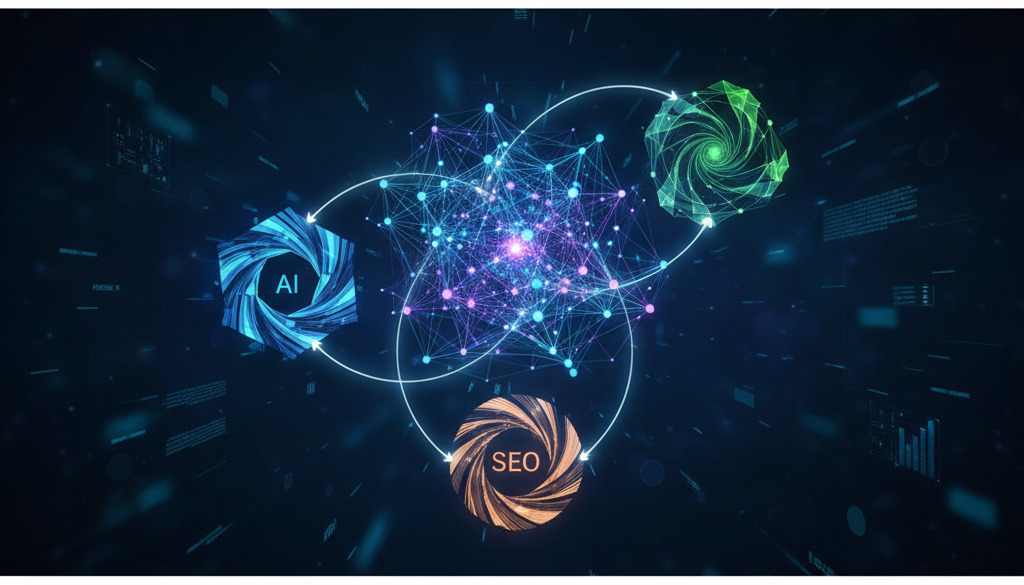
- Generative Engine Optimization (GEO) is now essential for appearing in AI-driven search results like Google AI Overviews and Perplexity.
- AI has shifted SEO from simple keyword matching to complex intent and entity-based understanding.
- Advanced AI tools can predict emerging keyword trends and automate technical audits with 99% accuracy.
- Success in 2026 requires balancing generative efficiency with human-led authoritative oversight to avoid ranking penalties.
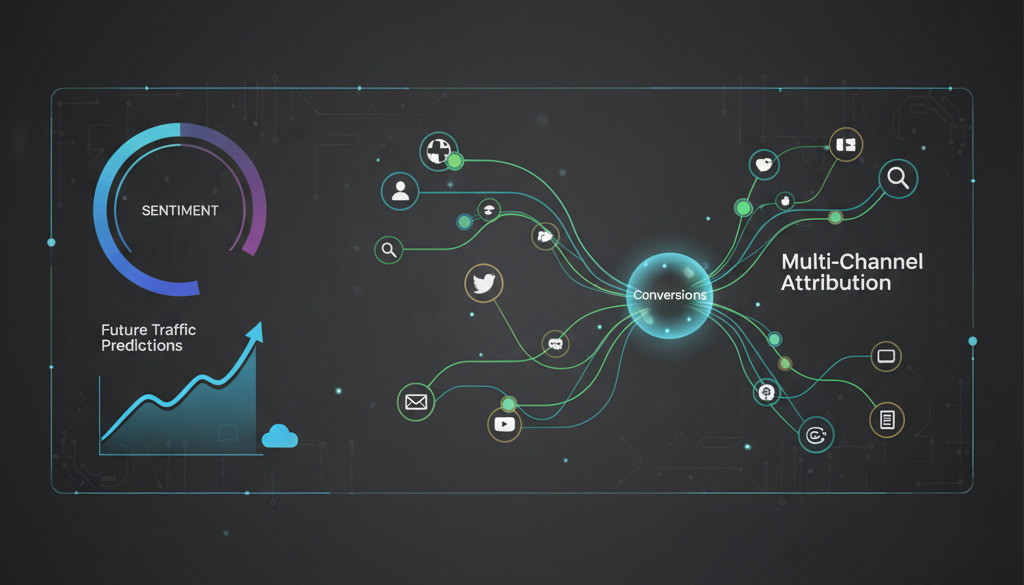
- Advanced analytics now leverage AI-driven sentiment analysis and predictive traffic modeling for more accurate ROI forecasting.
The digital landscape is undergoing its most significant transformation since the inception of the search engine itself. Advanced AI SEO features are no longer experimental add-ons; they are the foundation of modern search visibility. As search engines like Google evolve into "answer engines," the traditional tactics of keyword density and manual link-building are giving way to sophisticated machine-learning models that understand context, nuance, and user intent better than ever before.
For businesses, this shift represents both a challenge and an unprecedented opportunity. By integrating advanced AI into your SEO workflow, you can move from reactive site maintenance to a proactive, data-driven growth engine. This guide explores the most critical AI developments in SEO and how to implement them to secure your brand's future in the age of intelligence.
Understanding the AI Revolution in SEO
The Paradigm Shift: From Keywords to Entities
In the early days of SEO, success was often a matter of matching strings of text—if a user typed "blue running shoes," the engine looked for pages with that exact phrase. Today, we are in the era of Generative Engine Optimization (GEO). The paradigm has shifted from strings to things. Search engines now view the web as a massive graph of interconnected entities—people, places, concepts, and products. AI allows search engines to understand that a "running shoe" is a sub-type of "athletic footwear" and carries specific attributes like cushioning, drop height, and breatheability.
Core AI Technologies Driving SEO
To master advanced AI SEO features, one must understand the three pillars of the technology:
- Machine Learning (ML): Algorithms that iterate and improve themselves based on data patterns, powering Google’s core ranking systems like RankBrain.
- Natural Language Processing (NLP): The technology that helps engines "read" and comprehend the context, sentiment, and intent of human language.
- Generative AI: Large Language Models (LLMs) like GPT and Gemini that create content and synthesize information to provide direct answers (e.g., AI Overviews).
The Strategic Imperative for Businesses
Adopting AI is no longer optional. With the rise of conversational search interfaces, the real estate on the first page of search results is shrinking. Brands that fail to optimize for AI-driven discovery risk being invisible in an environment where AI assistants provide the "one best answer" rather than a list of ten blue links. Staying competitive requires leveraging these tools to scale operations and gain insights that are humanly impossible to uncover manually.
AI-Powered Keyword Research and Intent Analysis
Traditional keyword research tools provide historical data—what people *did* search for. Advanced AI SEO features focus on predictive analysis and semantic intent—what people *will* search for and *why* they are searching in the first place.
Identifying Long-Tail Opportunities with AI
AI tools like Semrush’s AI features and specialized platforms such as Evertune analyze vast datasets to find "content gaps." Instead of just suggesting words, these platforms identify "topic clusters." By analyzing millions of conversations across social media, forums, and niche sites, AI can uncover high-intent, low-competition long-tail queries that traditional scraper-based tools miss. Advanced SEOs use these tools to build topical authority by covering every possible nuance of a subject.
Analyzing Competitor Keyword Strategies using AI
AI doesn't just list a competitor’s keywords; it reverse-engineers their "semantic map." Tools like MarketMuse or Surfer SEO can compare your content architecture against top-ranking rivals, identifying not just the words they use, but the entity relationships they have established. This allows for a more surgical approach to competitive positioning, focusing on where your rivals are weak in their topical coverage.
Uncovering User Intent
NLP models classified as Intent Classifiers help marketers distinguish between a user looking to buy (transactional) and someone just learning (informational). For example, a search for "best CRM for startups 2026" carries a different weight than "what is CRM." AI can automatically categorize thousands of keywords into intent buckets, allowing you to tailor your landing pages to the specific stage of the buyer's journey with pinpoint accuracy.
Content Optimization with Generative AI and NLP
The goal of content optimization in the AI era is to create "information gain." Search engines now prioritize content that adds new, unique value rather than simply rehashing existing top-ranking pages.
Intelligent Content Creation and Brainstorming
Generative AI serves as a powerful co-pilot. Instead of using it to write entire articles—which can lead to generic, "hallucinated," or low-authority content—top agencies use it for content ideation and structural optimization. AI can suggest unique angles, generate catchy headlines based on click-through rate (CTR) data, and draft comprehensive outlines that ensure no critical sub-topic is overlooked. This accelerates the creative process while maintaining high editorial standards.[1]
Optimizing for Readability and User Engagement using AI
NLP-driven tools can now grade content based on cognitive load. If a paragraph is too complex, the AI flags it, suggesting simpler sentence structures to keep users engaged. AI analysis also checks for "dwell time potential" by suggesting where to add interactive elements, bullet points, or media that align with how users consume information in specific niches.
Ensuring Content Topical Authority through AI Analysis
To rank as an authority, your site must demonstrate expertise across an entire subject area. AI tools conduct Correlational SEO analysis, comparing your content to the entire corpus of high-ranking pages. They identify "missing entities"—specific terms or sub-concepts that search engines expect to see in a high-authority piece. Adding these missing semantic links can often boost a page from page two to the top of page one without changing the overall word count.
AI-Driven Technical SEO Audits and Improvements
Technical SEO is often the most time-consuming aspect of digital marketing. AI is revolutionizing this by automating the detection of errors and predicting performance bottlenecks before they happen.

AI for Core Web Vitals Optimization
Google’s Core Web Vitals (CWV) are critical for ranking, but diagnosing poor scores can be difficult. AI-powered crawlers like Screaming Frog (integrated with AI) or specialized platforms like ClickRank can now pinpoint exactly which script or image is causing a Cumulative Layout Shift (CLS) or slowing down Largest Contentful Paint (LCP). Furthermore, AI can generate the necessary code fixes or suggest optimized image formats to resolve these issues automatically.
Identifying Schema Markup Opportunities with AI
Structured data (Schema) is the language AI uses to understand your site. Manually implementing Schema for thousands of pages is prone to error. Advanced AI features can scan your pages, identify the entities present, and automatically generate JSON-LD code for everything from product details and FAQs to authorship and local business info. This makes your content significantly more "digestible" for AI-powered search engines.
Automated Site Crawling and Proactive Issue Detection
Instead of monthly audits, AI allows for continuous monitoring. Machine learning models can learn your site's "normal" crawl pattern and send instant alerts if Googlebot starts experiencing high response times or if there is a sudden spike in 404 errors. This proactive approach ensures that technical glitches are resolved before they can impact your organic traffic or search visibility.
The Evolution of Link Building with AI
Link building remains a cornerstone of SEO, but the methods of acquisition are shifting from quantity-based outreach to relevance-based relationship building, powered by advanced AI prospecting.
Intelligent Prospecting and Risk Analysis
Identifying the right targets for outreach is often a manual slog. AI can sift through millions of domains to find sites that are not only high-authority but also share topical relevance with your brand. AI tools also provide Link Toxicity Prediction. Using historical data on sites that have been penalized by Google, AI can warn you against pursuing a link from a "PBN" (Private Blog Network) or a low-quality site, protecting your domain's integrity.
AI-Powered Competitor Backlink Analysis
Advanced AI features can monitor your competitors' backlink profiles in real-time. When a competitor earns a high-value link, AI can analyze the content that earned it and suggest how you can create a "superior version" (the Skyscraper Technique on steroids) to win a similar link. This level of competitive intelligence allows you to capitalize on their successes and avoid their failures.
Predicting Link Earning Potential
Modern AI can analyze your own content and predict its "linkability." By comparing your draft to thousands of highly-linked articles in your niche, the AI can suggest adding data points, original research, or visual assets that historically increase the chances of journalists and bloggers linking to the piece.
AI and the Future of Search: Featured Snippets, Voice Search, and Conversational AI
Search is moving away from the browser. Voice assistants and conversational chatbots are becoming the primary interface for many users, necessitating a shift in how we structure information.
Natural Language Queries and Conversational SEO
Voice search is fundamentally conversational. People don't say "best pest control near me"; they ask, "Hey Siri, who can come fix a wasp nest in my attic today?" AI-powered NLP analysis helps businesses identify these "question-based" queries. Optimizing for these requires content that uses natural, human language and provides direct, concise answers (the "inverted pyramid" style of writing).
The Role of Structured Data in Voice Search
Conversational AI relies heavily on Knowledge Graphs. By using AI to implement deep Schema markup, you ensure that assistants like Alexa or Google Assistant can find the "facts" on your page—your hours, your prices, or your specific service areas. This structured data acts as a "cheat sheet" for the AI, making it more likely to cite your brand as the source of truth.
Optimizing for Featured Snippets and AI Overviews
To appear in Google’s "AI Overviews," your content must be clear and authoritative. AI tools can analyze your content to ensure it answers the "Who, What, Where, Why, and How" of a topic within the first few paragraphs. This concise summarization is exactly what AI engines look for when pulling data for featured snippets or conversational responses.
Measuring AI-Powered SEO Success: Advanced Analytics and Reporting
Traditional SEO reporting (rankings and traffic) is too shallow for 2026. Advanced AI SEO features enable predictive modeling and deeper sentiment analysis.
Attribution Modeling with AI
SEO doesn't exist in a vacuum. AI-driven attribution models can show how an organic search visit today contributes to a sale 30 days later via a retargeting ad. By analyzing the multi-touch customer journey, AI helps marketing directors see the true value of their SEO efforts, often revealing that organic search is the "assist" leader for conversions in other channels.
Predictive Analytics for SEO Performance
Platforms like Evertune and AthenaHQ now offer predictive forecasting. Based on current trends, algorithm updates, and your content velocity, they can predict your organic traffic growth for the next quarter. This allows businesses to set realistic KPIs and adjust their strategy *before* a downward trend begins.
Sentiment Analysis of User Feedback
AI can scan your reviews, social mentions, and comment sections to perform sentiment analysis. If the sentiment around certain keywords turns negative, it could signal a problem with your product or content relevance. Conversely, positive sentiment spikes can highlight "viral" keyword opportunities you should capitalize on immediately.
Ethical Considerations and Responsible AI in SEO
As the power of AI grows, so does the risk of misuse. Maintaining transparency and long-term brand equity requires a commitment to ethical AI practices.
Avoiding AI-Generated Spam and Low-Quality Content
The temptation to flood the internet with "mass-produced" AI content is high, but the risks are higher. Search engines have become adept at identifying "low-effort" AI content that lacks Experience, Expertise, Authoritativeness, and Trustworthiness (E-E-A-T). Responsible SEO involves using AI to research and outline, while ensuring the final output is refined by human experts to add genuine value and unique insights.
Maintaining Transparency and Authenticity
Users value authenticity. If a product review or a medical advice piece is entirely AI-generated without human oversight, it can erode trust. Brands should be transparent about their use of AI and ensure that all AI-generated suggestions are fact-checked by subject matter experts. This "Human-in-the-loop" model is the only sustainable way to build long-term authority.
The Future of Human Oversight
AI is a tool, not a strategist. Decisions regarding brand voice, target audience nuances, and long-term business goals still require human intuition. The most successful SEO strategies of 2026 will be those that combine AI's processing power with the empathy and creativity of experienced human marketers.
Implementing an AI-Driven SEO Strategy: A Step-by-Step Approach
Transitioning to an AI-first SEO workflow requires a methodical approach to ensure your team and technology are aligned with your goals.
Assessing Current Capabilities and Selecting Tools
Start by auditing your current tech stack. Are you still relying on manual keyword tools? Identify the bottlenecks in your process—is it content production, technical auditing, or link outreach? Choose AI tools that address your specific pain points. High-tier platforms like Evertune offer API access for custom integrations, while tools like Surfer SEO are excellent for content teams.
Integrating AI Tools into Existing Workflows
Do not attempt to replace your entire workflow overnight. Instead, phase in AI features. Start by using AI for keyword intent clustering, then move to technical audit automation, and finally integrate generative AI for content optimization. This allows your team to learn the nuances of the tools without being overwhelmed by a complete system overhaul.
Developing a Phased Implementation Plan
- Phase 1: Automate data collection and technical health monitoring.
- Phase 2: Implement AI-driven content gap analysis and topical clustering.
- Phase 3: Use Generative AI for structured data creation and content outlining.
- Phase 4: Deploy predictive analytics to forecast ROI and adjust strategy dynamically.
The Evolving Landscape: Future Trends in AI and SEO
The relationship between search engines and AI is in a state of constant flux. Staying ahead means looking beyond the current horizon of search results.
Hyper-Personalization at Scale
In the near future, search results won't just be based on the query; they will be hyper-personalized based on the user's specific context, history, and even their current device. AI will allow brands to serve dynamically optimized content that changes in real-time to match the visitor's likely intent. This "one-to-one" SEO will become the gold standard for high-conversion brands.
The Rise of AI-Powered Search Interfaces
We are already seeing platforms like Perplexity and ChatGPT Search change how people find information. SEO will expand into AI Engine Optimization (AEO), where the goal isn't just to rank on Google, but to be the "source of truth" that different LLMs cite in their answers. This requires a focus on high-quality citations and clean, structured data across the entire web.
Continuous Learning and Adaptation
The defining characteristic of AI is its ability to learn. As algorithms become more "human-like" in their evaluation of content, the bar for quality will continue to rise. SEO is no longer a "set it and forget it" task; it is a continuous cycle of learning, testing, and adapting. The organizations that thrive will be those that embrace AI as a permanent partner in their quest for digital visibility.
Frequently Asked Questions
How does AI improve keyword research compared to traditional tools?
AI improves keyword research by analyzing search intent and semantic relationships rather than just looking at volume and difficulty. It can predict emerging trends by analyzing datasets from across the web (social media, news, forums) and cluster keywords into "topics," helping you build more comprehensive authority than traditional manual methods allow.
Can Google penalize my site for using AI-generated content?
Google’s guidelines state that content is evaluated based on its value to the user (E-E-A-T), regardless of how it was produced. However, if AI is used to generate large volumes of low-quality, "spammy" content that lacks original insight or human oversight, your site can be penalized. The key is to use AI for research and drafting while ensuring a human expert adds unique value and fact-checks the final output.
What is Generative Engine Optimization (GEO)?
GEO is the practice of optimizing content specifically to appear in AI-driven search results, such as Google’s AI Overviews, ChatGPT Search, or Perplexity. This involves using clear structured data, providing concise answers to common questions, and building high-authority citations so that AI models trust your content as a primary source for their synthesized answers.
Is technical SEO still relevant with the rise of AI?
Technical SEO is more relevant than ever. AI-powered search engines depend on a site's technical health to crawl and understand content efficiently. AI tools actually help technical SEO by automating the detection of errors like Core Web Vitals issues, broken links, and Schema markup gaps, allowing humans to focus on high-level strategy rather than manual fixes.
How can small businesses afford advanced AI SEO tools?
While enterprise AI platforms can be expensive, many top SEO tools now offer "lite" or free tiers with built-in AI features. Small businesses can start with tools like Google Search Console (which integrates AI-driven insights) or affordable AI plugins for CMS platforms like WordPress. The "Human-in-the-loop" approach is also cost-effective, using free LLMs for ideation while focusing budget on quality human content.
How often should I update my AI-driven SEO strategy?
Because AI models and search algorithms update frequently, you should review your strategy at least quarterly. However, with AI-powered monitoring tools, you can receive real-time alerts about performance shifts, allowing you to make small, data-driven adjustments weekly. Continuous adaptation is the hallmark of a successful AI-driven SEO strategy.
Keep reading
Hand-picked guides that go deeper — open the one you need next:
- The Traffic Quiz: See How Much You're Missing with Current SEO Efforts
- We Write the SEO Posts for You
- Free AI Article Trial: Unlock SEO Growth with Volteruno
- DIY SEO Articles: Generate High-Quality Content with AI Writer