
Page 1 on Google in 90 Days: Volteruno's AI-Powered SEO Promise
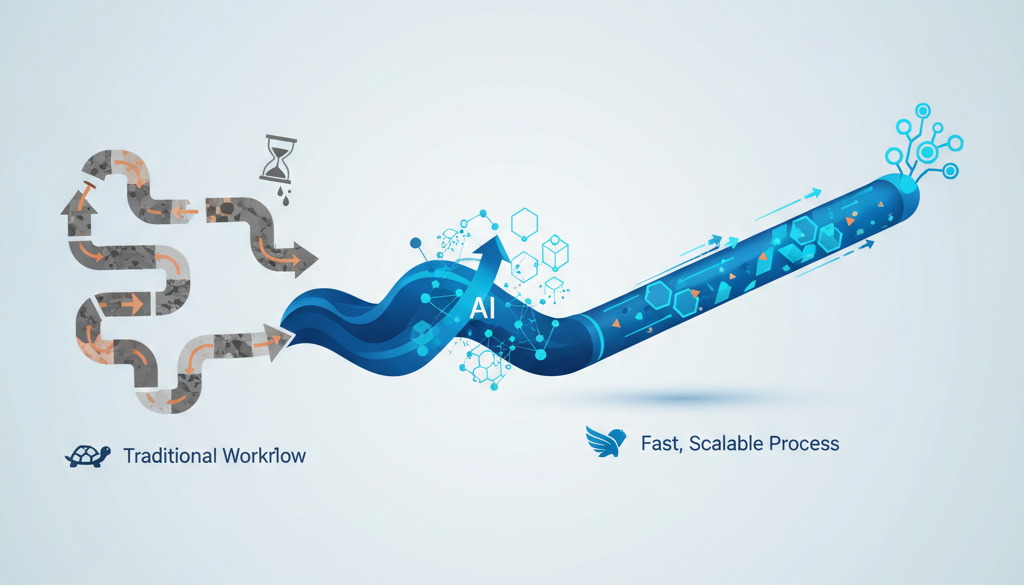
Key Takeaways
- The 90-Day Challenge is Real: Achieving significant SEO gains, including first-page rankings, within 90 days is possible but requires a highly focused, aggressive content strategy.
- AI is the Accelerator: Artificial Intelligence is no longer a novelty; it's an essential tool for creating the volume and quality of content needed to compete in today's search landscape, especially with the rise of Google's AI Overviews.
- Strategy Trumps Tools: Simply using AI isn't enough. Success hinges on a solid strategy encompassing keyword research, topical authority, on-page optimization, and a human touch to ensure quality and brand alignment.
- Focus on E-E-A-T: Google's emphasis on Experience, Expertise, Authoritativeness, and Trustworthiness (E-E-A-T) is paramount. Your content, even when AI-assisted, must demonstrate deep knowledge and build trust with your audience.
- Beyond the 90 Days: This plan is a sprint to gain momentum. True, lasting SEO success comes from a sustained commitment to creating valuable content that serves your customers.
Understanding the SEO Landscape: Beyond the Basics
If you're a business owner who has been around for a while, you might feel like the rules of Google are constantly changing. You're right. The world of Search Engine Optimization (SEO) in 2026 is fundamentally different from what it was just a few years ago. It's no longer a simple game of finding a keyword and repeating it on a page. Today, Google operates more like an "answer engine," and its priority is providing the best, most comprehensive answer to a user's query, often without them ever needing to click on a website.
Recent data paints a stark picture: Google's AI Overviews, the automated answers that appear at the top of search results, now show up in nearly 48% of all searches. This has led to a significant drop in the click-through rate (CTR) for traditional organic results. However, it's not all bad news. The visitors who do click through from these more specific searches often convert at a much higher rate.
This shift introduces a new concept: Answer Engine Optimization (AEO). It's the practice of making your content so clear, structured, and authoritative that AI systems trust it enough to use it as a source for their answers. The cornerstone of both modern SEO and AEO is consistent, relevant, and high-quality content. Google wants to see that you are an expert in your field, and the best way to prove it is by regularly publishing insightful content that helps your target audience. For busy business owners, this presents a classic dilemma: the time, cost, and expertise required for traditional content creation are often significant barriers to success.
The Promise of AI in SEO: A Paradigm Shift
This is where Artificial Intelligence (AI) transforms from a buzzword into a breakthrough business tool. AI is revolutionizing content generation by enabling businesses to produce high-quality, relevant articles at a scale and speed that was previously unimaginable. For owners who know they need online content but lack the time or inclination to write it, AI is the solution to a long-standing problem.[2]
Let's dispel a common myth: using AI for SEO is not about creating spam. Early AI tools produced thin, nonsensical content that Google rightly penalized. Today's sophisticated AI, however, can draft well-researched, coherent, and valuable articles. The goal is not to "trick" Google but to use AI as a powerful assistant—a way to overcome the content bottleneck and consistently publish the expert material Google and your customers are looking for.
Think of AI not as a replacement for your expertise, but as a force multiplier for it. It handles the heavy lifting of drafting and structuring, allowing you to focus on adding your unique insights and brand voice.
Can AI really impact your rankings in 90 days? Yes, but expectations must be realistic. You won't go from invisible to number one overnight for a highly competitive term. However, by executing a focused strategy, you can achieve significant momentum, rank for valuable long-tail keywords, and establish the topical authority needed to compete for broader terms, setting the stage for first-page rankings.
Building Your 90-Day SEO Strategy: The Foundation
Before you write a single word, you need a solid plan. A successful 90-day SEO sprint is built on a foundation of smart strategy. Rushing into content creation without this groundwork is like building a house with no blueprint—it’s destined to fail.
Define Your Target Audience and Their Search Intent
As a business owner, you already know your customers. Now, you need to think like them online. What problems are they trying to solve? What questions do they ask? What words do they use when they search on Google? Your target audience isn't "everyone." It's a specific group with specific needs. For example, instead of targeting "landscaping," a more focused audience might be "homeowners in their 40s in suburban Dallas looking for low-maintenance garden ideas." This clarity is crucial.
Conduct Thorough Keyword Research
Keyword research is a discovery process. It's about finding the exact phrases your target audience is typing into Google. Your goal is to identify high-impact, low-competition terms. These are often longer, more specific phrases known as "long-tail keywords." For example, instead of the highly competitive keyword "accounting software," a better target might be "accounting software for small construction businesses." These terms have lower search volume but much higher purchase intent, meaning the people searching are closer to becoming customers.
Analyze Your Current Website's SEO Health
You need to know your starting point. Use free tools like Google Search Console to get a baseline. Look at your current organic traffic, which pages are getting visitors, and what keywords you already rank for (if any). This initial analysis will help you identify low-hanging fruit—pages that could be improved—and track your progress accurately over the next 90 days.
The Power of Topical Authority: Establishing Expertise
Imagine trying to become a recognized expert on a topic in real life. You wouldn't just share one random tip. You'd write articles, give talks, and answer questions, covering the subject from multiple angles. Building topical authority online works the same way. It’s the process of proving to Google that you are a comprehensive, trustworthy resource on a specific subject.
Instead of writing one article on "roofing," a better strategy is to build a "topic cluster." This involves creating one central, in-depth "pillar page" (e.g., "The Ultimate Guide to Roof Replacement for Homeowners") and then surrounding it with multiple, related articles that link back to it. These could be posts like:
- "5 Signs You Need a New Roof"
- "Asphalt Shingles vs. Metal Roofing: Which is Best for Texas Homes?"
- "How to Choose a Reputable Roofing Contractor"
- "The Cost of a New Roof in 2026: A Detailed Breakdown"
This structured approach does two things: it provides immense value to the reader, and it sends a powerful signal to Google that your website is an authority on roofing. When you comprehensively cover a topic, Google is more likely to rank your pages for the thousands of related queries associated with it.
AI-Powered Content Creation: Your 90-Day Engine
The biggest challenge in building topical authority is the sheer volume of content required. This is where an AI-powered content service becomes your engine for growth. The traditional process of researching, writing, and editing a single blog post can take hours, if not days. To create the 15-20 articles needed for a topic cluster, you could be looking at months of work.
This is the problem solutions like Volteruno were built to solve. Instead of you spending countless hours staring at a blank page, Volteruno acts as a service that provides AI-powered SEO articles designed to help your business attract more customers directly from Google. It turns the content creation process from a manual, time-consuming chore into a streamlined, efficient system. This allows you to deploy a full topic cluster in days, not months, making the 90-day ranking goal a tangible reality.
By leveraging a service that specializes in this, you overcome the primary bottleneck that stops most small businesses from succeeding with SEO: a lack of time and consistent output. It allows you to build topical authority at a pace that matches your ambition.
Crafting Engaging and Optimized Content with AI
Using AI effectively is a collaborative process. It’s about guiding the tool to produce content that is not only optimized for search engines but also genuinely engaging for your customers. The process should look less like hitting "generate" and more like a partnership between your strategic direction and the AI's execution capabilities.
Brainstorming, Outlining, and Drafting
Start by feeding the AI your target keyword and a brief description of your audience and goals. An advanced AI can help you brainstorm a list of relevant blog post titles that fit within your topic cluster. Once you select a title, the AI can generate a logical outline, complete with H2 and H3 headings. This outline serves as the skeleton of your article. From there, the AI can draft the full content, saving you hours of writing time. Your role then shifts from writer to editor and strategist.
Ensuring Content Quality and Uniqueness with AI
A common concern with AI is content originality. Reputable AI tools and services are designed to generate unique content, but it's wise to run the output through a plagiarism checker for peace of mind. More importantly, your focus should be on adding value. While the AI can provide a solid, fact-based draft, it doesn't have your years of business experience. This is your opportunity to infuse the content with your unique personality. Add a personal anecdote, share a specific customer success story, or offer a contrarian opinion based on your expertise. This human layer is what elevates good content to great content and builds a real connection with your readers.
On-Page Optimization: Maximizing Content Performance
Once you have a well-written draft, the next step is to optimize it for Google. This process, known as on-page SEO, involves fine-tuning various elements on the page itself to make it as clear and crawlable as possible for search engines. AI can be an invaluable assistant in this technical but crucial phase.
Key on-page elements to focus on include:
- SEO Titles and Meta Descriptions: These are the first things users see in search results. AI can help you craft compelling, keyword-rich titles and descriptions that entice users to click.
- Headings (H1, H2, H3): Your headings structure your content and tell Google what the main topics are. Ensure your primary keyword is in the H1 title and related keywords are in your H2s.
- Internal Linking: Linking to other relevant pages on your website helps users and Google discover more of your content. This is essential for building your topic clusters.
- Keyword Integration: AI can help ensure your target keyword and related terms are included naturally throughout the text, avoiding the old practice of "keyword stuffing."
- Image Optimization: All images should have descriptive file names and "alt text" (e.g., `alt="roofing-contractor-installing-asphalt-shingles"`). This helps Google understand the content of the image and can help you rank in Google Image Search.
Off-Page SEO Strategies to Complement Content
While on-page SEO is about what’s on your site, off-page SEO is about the signals of authority you build elsewhere on the web. The most powerful off-page signal is backlinks—links from other reputable websites pointing to yours. Each backlink acts as a "vote of confidence," telling Google that your content is trustworthy and valuable.
You don't get backlinks by asking for them out of the blue. You earn them by creating exceptional content that other people want to share. This is another area where a robust, AI-powered content strategy pays dividends. When you publish an in-depth guide, a piece of original research, or a genuinely helpful article, other bloggers, journalists, and industry websites are more likely to link to it as a resource.
Once you’ve published a cornerstone piece of content, you can engage in strategic outreach. This could involve emailing a non-competing local business and showing them an article of yours that might be valuable to their audience, or sharing your guide in a relevant online forum. The key is to lead with value, not with a request for a link.
Technical SEO Fundamentals for Ranking Success
Technical SEO is the foundation upon which your entire content strategy rests. If your website is slow, hard to use on a phone, or difficult for Google to crawl, even the best content in the world won't rank. As a business owner, you don't need to become a web developer, but you should be aware of a few key fundamentals.
- Mobile-Friendliness: The majority of Google searches happen on mobile devices. Your website must be easy to read and navigate on a smartphone.
- Site Speed: Users are impatient. If your site takes more than a few seconds to load, many will leave. Google knows this and prioritizes faster websites.
- Structured Data (Schema Markup): This is a type of code you can add to your website to give Google more detailed information about your content. For example, schema can identify a recipe, an event, or a product review, which can help you get "rich snippets" in search results. Making your content easy for AI to understand through schema is a core part of Answer Engine Optimization.
Many modern website builders handle these elements well, but it’s always worth running your site through Google's PageSpeed Insights tool to check for any major issues.
Tracking Your Progress: Key Performance Indicators (KPIs)
To know if your 90-day strategy is working, you must track your results. Data, not guesswork, should guide your decisions. The most important tool for this is Google Search Console (GSC), a free service from Google that shows you how your site is performing in search. It’s a must-have for any website owner.
Here are the key metrics to track:
| KPI | What It Means | Why It Matters |
|---|---|---|
| Impressions | How many times your site appeared in search results. | This is the first sign of progress. It means Google is starting to see your content as relevant for certain queries. |
| Clicks / Organic Traffic | How many people clicked on your site from search results. | This is the ultimate goal—getting relevant visitors to your website. |
| Keyword Rankings | Your average position in search results for specific keywords. | Tracking this shows your direct progress toward page-one rankings for your target terms. |
| Conversion Rate | The percentage of visitors who take a desired action (e.g., fill out a contact form, make a purchase). | Traffic is good, but business results are better. This metric connects your SEO efforts to your bottom line. |
Check these metrics weekly. Don't get discouraged by daily fluctuations. Look for upward trends over several weeks. This data will tell you which articles are performing well and where you should focus your efforts.

The 90-Day Action Plan: A Week-by-Week Breakdown
Here is a structured plan to guide your efforts. This aggressive timeline is designed for maximum impact, leveraging AI to handle the heavy lifting of content creation so you can focus on strategy and growth.
Weeks 1-4: Foundation and Initial Content Push
- Week 1: Strategy & Setup. Perform your in-depth audience analysis and keyword research. Identify your first topic cluster (1 pillar page, 4-5 sub-topics). Set up Google Analytics and Google Search Console.
- Week 2: Pillar Content Creation. Use your chosen AI tool or service to generate the draft for your main pillar page (e.g., your "Ultimate Guide"). Focus on making this piece incredibly comprehensive (3000+ words). Edit, add your personal insights, and publish.
- Week 3: Cluster Content Generation. Generate and publish the first 2-3 supporting blog posts for your topic cluster. Ensure they are internally linked to each other and back to your pillar page.
- Week 4: Finalize First Cluster & Analyze. Publish the remaining supporting articles. Your first topic cluster is now live. Begin reviewing initial data in Google Search Console—you'll start to see impressions for your new pages.
Weeks 5-8: Optimization and Expansion
- Week 5: Performance Review. Analyze the data from your first month. Which articles are getting the most impressions? Use this insight to plan your second topic cluster.
- Week 6: Second Pillar Page. Based on your research, create and publish the pillar page for your second topic cluster.
- Week 7: Expand Second Cluster. This is where AI-driven speed becomes a massive advantage. Services that use proprietary artificial intelligence can write professional SEO articles for your website in minutes, almost like magic, allowing you to build out your second topic cluster rapidly. This acceleration is key to establishing broad authority quickly. You might already see some of your first articles appearing on pages 2-3 of Google.
- Week 8: On-Page Optimization. Go back to your first cluster of articles. Based on the data in Search Console, you might see new keywords people are using to find you. Edit your content to better incorporate these terms and improve your headings and meta descriptions.
Weeks 9-12: Deepening Authority and Refinement
- Week 9: Content Promotion. With a solid base of ~10-15 high-quality articles, it's time for outreach. Share your best content with other businesses, on social media, and in relevant online communities.
- Week 10: Monitor and Refine. Keep a close eye on your keyword rankings. You should see significant upward movement for your long-tail keywords. Some may be hitting the first page.
- Week 11: Third Cluster or Content Updates. Decide whether to start a third topic cluster or update/expand your existing ones based on performance data. Keeping content fresh is a strong ranking signal.
- Week 12: Full 90-Day Review. Compare your KPIs from Day 1 to Day 90. Analyze your organic traffic, keyword rankings, and conversions. You now have a data-proven content engine and a clear path for future growth.
Beyond 90 Days: Sustaining and Scaling Your SEO Growth
The 90-day plan is a sprint designed to build momentum. True SEO dominance is a marathon. The habits and systems you establish during this initial push are what will carry you to long-term success. Your goal is to create a sustainable content creation workflow that continually builds your website's authority and traffic.
As search algorithms and AI continue to evolve, your strategy must be adaptable. Continue to monitor your analytics, stay informed about changes in SEO, and most importantly, never stop listening to your customers. Your AI workflow should evolve with you, consistently producing content that answers their questions and solves their problems. This customer-centric approach, powered by the efficiency of AI, is the ultimate strategy for scalable and sustainable business growth.
Overcoming Common Challenges in the 90-Day Sprint
Embarking on an aggressive SEO plan can come with challenges. It's important to anticipate them and know how to respond.
- Ranking Fluctuations: Search rankings are not static; they can fluctuate daily. Don't panic if a page drops from position 9 to 12. Look for trends over weeks, not days. These fluctuations are a normal part of the process.
- Time Management: Even with AI, this process requires your strategic input. Block out a few hours each week dedicated solely to your SEO strategy—reviewing content, analyzing data, and planning your next move.
- Algorithm Updates: Google periodically rolls out major "core updates" that can shake up rankings. The best defense is a good offense: a commitment to high-quality, genuinely helpful content that demonstrates strong E-E-A-T (Experience, Expertise, Authoritativeness, and Trust). The March 2026 Core Update made it clear that sites with deep, authoritative content were rewarded, while those with thin, unhelpful content were penalized. Your focus on building topical authority is the best insurance against these updates.

The Human Element: Augmenting AI for Superior Results
It's crucial to remember that AI is a tool, not a magic wand. The most successful AI-driven SEO strategies are those that masterfully blend artificial intelligence with human intelligence. Your brand's unique voice, your personal experiences, and your deep understanding of your customers are things that AI cannot replicate.
Your expertise is your most valuable SEO asset. AI helps you package and distribute that expertise at scale.
Use AI to generate the foundational draft, but always perform a final review to add your unique flavor. Inject a personal story, refine the tone to match your brand, and double-check that every claim is accurate and aligns with your company's values. It’s this final 10% of human touch that builds trust and turns a reader into a loyal customer. AI can attract an audience; your authenticity is what keeps them.
Real-World Success Stories: AI-Driven SEO Transformations
The principles outlined here are not just theoretical. All across the country, small and medium-sized businesses are seeing tangible results. Consider a hypothetical example: a local plumbing company in Chicago. For years, they relied on word-of-mouth and paid ads with inconsistent results. They decided on a 90-day AI-powered SEO sprint.
They focused on the topic cluster "winter plumbing problems." Using an AI service, they quickly generated a pillar page ("Complete Guide to Preventing Frozen Pipes") and supporting articles like "How to Thaw a Frozen Pipe Safely" and "Should I Turn Off My Water When I Go on Vacation?". Within 60 days, they were ranking on the first page for multiple long-tail keywords like "how to thaw frozen pipes chicago basement." By day 90, their pillar page was ranking in the top 5 for the more competitive term "frozen pipes chicago." They saw a 300% increase in organic traffic, and more importantly, a 40% increase in qualified leads through their website—all because they finally had the content to prove their expertise.
Preparing for the Future: AI as a Permanent SEO Partner
The integration of AI into search is not a passing trend; it is the future of how information is found and consumed. Businesses that embrace AI as a strategic partner will have a significant competitive advantage. Staying competitive means continuously learning and adapting.
By using AI to handle the scale of content production, you free up your own valuable time to focus on higher-level strategy: exploring new service offerings, building partnerships, and engaging with your community. See AI not just as a content writer, but as a core component of your marketing engine that enables sustainable, long-term growth for your business.
Conclusion
Reaching the first page of Google in 90 days is an ambitious goal, but with the right strategy and the power of AI, it is more achievable than ever before. For busy business owners, the challenge has always been one of resources. AI decisively solves this problem, providing the engine to create the high-quality content Google demands, consistently and at scale.
By following the roadmap laid out in this guide—building a strategic foundation, focusing on topical authority, and blending AI efficiency with your human expertise—you can transform your website from a digital brochure into a powerful customer acquisition tool. Services like Volteruno, which are trusted by over 500 companies, are designed to make this process seamless. The journey starts with your commitment to a plan. Start today, and in 90 days, you can see the kind of significant SEO improvement that directly impacts your bottom line.
Frequently Asked Questions
1. Can I really get to page 1 of Google in 90 days?
It is absolutely possible, especially for new or less competitive keywords (long-tail keywords). For more competitive terms, a 90-day sprint will build significant momentum, likely getting you onto pages 2 or 3, and establish the authority needed to crack the first page in the following months. The key is consistency and strategic content creation.
2. Will Google penalize my website for using AI-generated content?
No. Google's official stance is that it rewards high-quality content, regardless of how it is produced. They are against using AI to create spammy, unhelpful content designed to manipulate rankings. As long as you use AI to create valuable, original, and helpful articles that are reviewed and edited by a human, you are fully compliant with Google's guidelines.
3. How much human editing does AI content actually need?
This is crucial. You should think of the AI draft as the first 80-90% of the work. The final 10-20% is you. This involves fact-checking, refining the tone to match your brand's voice, adding personal anecdotes or specific examples from your business, and ensuring the article has a clear and compelling call to action. This human touch makes the content trustworthy and unique.
4. What's more important: writing new content or updating old content?
In your first 90 days, the focus should be heavily on creating new content to build topical authority. After that, a balanced approach is best. Use your analytics to identify pages that are performing well but could be better. Updating these pages with new information, statistics, and examples (a "content refresh") can often provide a significant ranking boost with less effort than creating a new article from scratch.[1]
5. How is using an AI service different from just using ChatGPT myself?
While ChatGPT is a powerful tool, a specialized AI SEO service is built for a specific purpose. These services often integrate keyword research, SEO optimization features, and workflows designed specifically for creating long-form blog content that ranks. They streamline the entire process from idea to optimized draft, saving you significant time compared to manually prompting and piecing together an article from a general-purpose chatbot.
Keep reading
Hand-picked guides that go deeper — open the one you need next:
- Multilingual Content SEO AI: A Guide to Global Search Success
- Truth About AI SEO Ranking Guarantees: Experts Guide
- The Non-Technical Guide to SEO: AI Makes it Simple for Business Owners
- Multilingual SEO AI Content: Scaling Global Growth in 2026