
Automate Your Blog with an AI Platform & Save Time
Key Takeaways
- Time is Your Most Valuable Asset: For busy business owners, manual blog creation is unsustainable. The hours spent on research, writing, and SEO are better invested in core business operations.
- AI is the Solution: Modern AI platforms can automate the entire blog writing process, producing high-quality, SEO-optimized content in minutes, not days.
- Drive Real Business Growth: An automated, consistent blog strategy attracts customers through Google, builds brand authority, and generates inbound leads, directly impacting your bottom line.
- You Don't Need to Be a Tech Expert: The best AI blog automation tools are designed for ease of use, allowing any business owner to set up and manage their content strategy without technical skills.
- Human Touch is Still Key: AI is a powerful partner, but human oversight is crucial. A quick review and edit ensures the content perfectly matches your brand's voice and values.
As a business owner, you’re constantly told that "content is king." You know a regularly updated blog is vital for attracting customers online. But let's be honest: who has the time? Between managing operations, serving clients, and handling finances, the idea of spending 5-10 hours every week writing a single blog post is overwhelming. It’s a classic challenge for established business owners over 40; you know an online presence is critical for growth, but you have neither the time nor the desire to become a professional writer and SEO expert.
What if you could have a professionally written, SEO-optimized blog working for you around the clock, attracting customers from Google, without you having to write a single word? It sounds like magic, but it’s the reality of AI-powered blog automation. This technology is no longer an experiment; it's a practical, powerful tool for business growth.
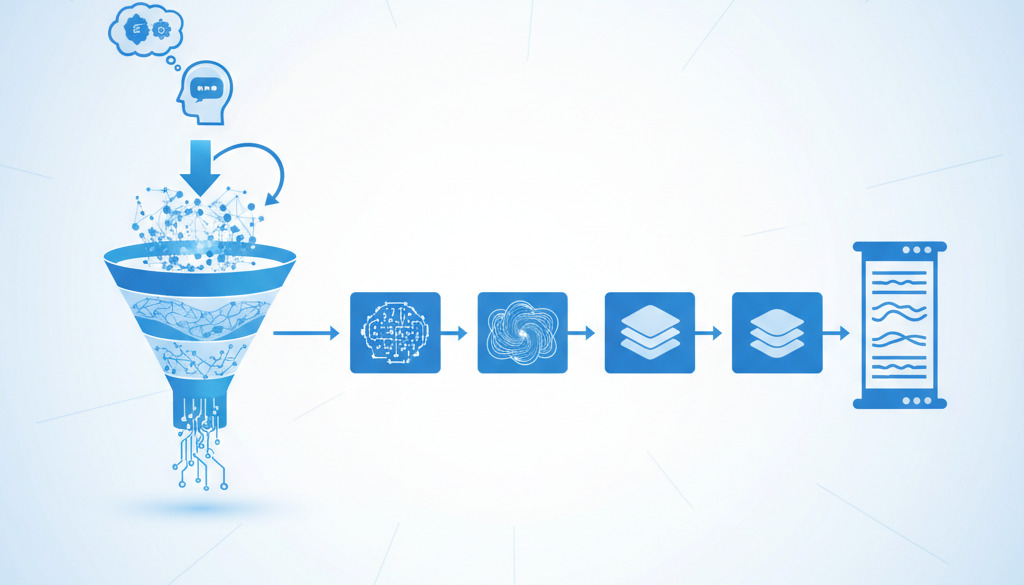
This comprehensive guide will walk you through everything you need to know. We’ll demystify the technology, show you how to choose the right platform, and provide a step-by-step plan to automate your blog content. It's time to stop wasting time and start leveraging artificial intelligence to drive real, measurable results for your business.[1]
The Evolving Landscape of Business Content Marketing
The way customers find and choose businesses has fundamentally changed. The days of relying solely on traditional advertising like print ads or local radio spots are over. Today, your customers are online, and they are actively searching for solutions to their problems. This shift has given rise to inbound marketing, a strategy focused on attracting customers by creating valuable content and experiences tailored to them.
At the heart of this strategy is the business blog. A blog is no longer a simple online diary; it's a critical marketing asset that serves several key functions:
- It answers your customers' questions: By creating content that addresses their pain points, you position your business as a helpful expert.
- It builds trust and credibility: Consistent, high-quality content establishes you as an authority in your industry.
- It drives search engine traffic: Every blog post is another page for Google to index and another opportunity for customers to find you when they search for relevant keywords.
In today's digital-first economy, a static website isn't enough. You need a living, breathing online presence that consistently provides value. For busy entrepreneurs, the challenge isn't understanding this; it's finding a sustainable way to execute it.
Why Manual Blog Creation Isn't Sustainable for Busy Entrepreneurs
If you've ever tried to maintain a business blog yourself, you already know the immense effort it requires. The process is far more than just writing. A single, effective blog post involves a chain of time-consuming tasks:
The Time Sink of Content Creation
- Keyword Research: Identifying what your customers are searching for.
- Topic Ideation: Brainstorming ideas that are both relevant and engaging.
- Outlining and Structuring: Planning the flow of the article for maximum impact.
- Writing and Drafting: The core task of putting words on the page, which can take hours.
- Editing and Proofreading: Polishing the draft for clarity, grammar, and style.
- SEO Optimization: Strategically placing keywords, writing meta descriptions, and formatting for search engines.
- Publishing and Formatting: Uploading the content to your website and ensuring it looks professional.
Common Roadblocks and Opportunity Costs
Beyond the sheer time investment, many business owners face other hurdles like writer's block or a lack of confidence in their writing skills. A bigger issue is the lack of deep SEO knowledge, which means that even if you do manage to write a post, it may never be found by your target audience. This often leads to inconsistent output—a flurry of activity for a few weeks, followed by months of silence, which hurts your credibility and search rankings.
The most significant factor is the opportunity cost. Every hour you spend trying to be a content marketer is an hour you're not spending on what you do best: running your business, innovating your services, and talking to your customers.
Understanding Artificial Intelligence in Content Creation
The term "Artificial Intelligence" can sound intimidating, but the concept behind AI content creation is surprisingly straightforward. Think of it like hiring an incredibly fast, knowledgeable, and tireless apprentice.
What is Generative AI?
The technology we're discussing is a specific type of AI called Generative AI. This is the same technology behind tools like ChatGPT. In simple terms, these AI models have been trained on a massive library of text and data from the internet—books, articles, websites, and more. Through this training, they learn the patterns, structures, grammar, and nuances of human language.
When you give a Generative AI a prompt (a command or a question), it doesn't "think" in the human sense. Instead, it uses its training to predict the most logical sequence of words to produce a relevant and coherent response. It’s a sophisticated pattern-matching system that can generate entirely new text that is often indistinguishable from what a human would write. For business owners, this means you can provide a topic or a keyword, and the AI can generate a complete, well-structured article based on that input.
AI-Powered Blog Automation: A Paradigm Shift
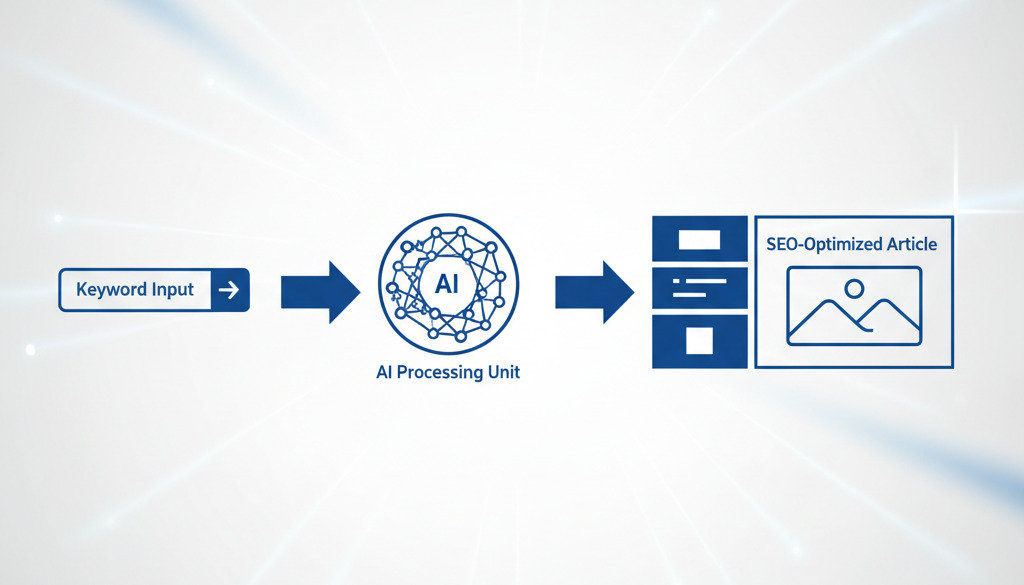
An AI blog automation platform takes the power of Generative AI and wraps it in a user-friendly system specifically designed for content marketing. Its primary function is to transform a simple input—like a keyword or a brief description—into a full-fledged, SEO-optimized blog post and, in many cases, publish it directly to your website.
This represents a fundamental change from the manual process. The core benefits are undeniable:
- Speed: Generate an entire article in minutes, not hours or days.
- Scale: Create a month's worth of content in the time it used to take to write one post.
- Consistency: Easily maintain a regular publishing schedule (e.g., one new post per week) to keep your audience engaged and satisfy search engine algorithms.
- Cost-Effectiveness: Dramatically reduce the cost associated with hiring freelance writers or a marketing agency, which can run into thousands of dollars per month.
For entrepreneurs who aren’t digital natives, this is the ultimate "done-for-you" content solution. It bridges the gap between knowing you need to do content marketing and having the resources to execute it effectively.
Identifying Your Content Needs: The First Step to Automation
AI is a powerful tool, but it works best when given clear direction. Before you can automate your blog, you need a strategy. This doesn't have to be complicated. Start by answering two fundamental questions:
- Who is my ideal customer? Think about their demographics, their challenges, and what they care about. For example, are you selling to homeowners who need renovation services or to other businesses that need accounting help?
- What problems do I solve for them? Your blog topics should directly align with your business offerings. If you are a financial advisor, your blog should answer common questions about retirement planning, investing, and saving.
Your goal is to create a list of potential blog topics that sit at the intersection of your customer's needs and your business's expertise. An AI platform can then take these a-la-carte topics and turn them into compelling articles that attract the right kind of attention.
Key Features to Look for in an AI Blog Automation Platform
Not all AI platforms are created equal, especially for a business owner who values simplicity and results. When evaluating your options, focus on these key areas.
Content Generation Quality
The most important feature is the quality of the written output. The AI should produce content that is natural, engaging, and grammatically correct. It should not sound robotic or be filled with repetitive phrases. Look for platforms that allow for customization of tone of voice (e.g., professional, friendly, witty) to ensure the content aligns with your brand.
SEO Optimization Capabilities
A beautifully written article is useless if no one finds it. A great AI platform automates Search Engine Optimization. Key features include:
- Automated Keyword Integration: The AI should naturally weave your primary keyword and related secondary keywords throughout the article.
- On-Page SEO Generation: The platform should automatically create crucial SEO elements like meta descriptions, title tags, and properly structured headings (H1, H2, H3).
- LSI Keyword Suggestions: Some advanced platforms can suggest Latent Semantic Indexing (LSI) keywords, which are terms thematically related to your main topic, helping Google better understand your content.
Ease of Use and User Interface
For a non-technical user, the platform must be intuitive. The process from entering a topic to getting a finished article should be straightforward and require only a few clicks. Avoid platforms with cluttered dashboards or complex settings. The goal is to save you time, not to give you another complicated piece of software to learn.
Integration Options
To truly automate the process, the platform should be able to connect directly with your website. Look for seamless integration with popular Content Management Systems (CMS) like WordPress. This allows the AI to not only write the post but also upload it to your website as a draft, saving you the manual step of copying and pasting.
The "Magic" Behind AI-Generated SEO Content: How it Works
How can a machine understand the complex, ever-changing rules of SEO? The process is a combination of massive data analysis and sophisticated pattern recognition. The AI models behind these platforms have been trained on countless examples of high-ranking web pages and articles.
From this vast dataset, the AI learns what successful content looks like. It identifies the common characteristics of articles that Google rewards, such as:
- Optimal article length for a given topic.
- The right density and placement of keywords.
- The use of headings, subheadings, and lists to improve readability.
- The inclusion of thematically related concepts.
When you input your topic, the platform doesn't just write about it; it constructs the article according to this proven blueprint for SEO success. Advanced services take this a step further. For instance, some platforms like Volteruno leverage their own proprietary AI. Their system is fine-tuned specifically for creating SEO blog articles, allowing it to generate professional content that is structured to rank on Google, all in minutes. It's less magic and more about leveraging massive amounts of data to execute a proven formula with incredible speed and precision.
Crafting Winning Prompts for Your AI Content Generator
While AI platforms are designed for simplicity, the quality of your input (the "prompt") directly influences the quality of the output. Learning to write effective prompts is a key skill. Here are some actionable tips:
- Be Specific: Instead of a generic prompt like "blog post about mortgages," try a more detailed one like, "Write a how-to guide for first-time homebuyers in the US on securing a mortgage pre-approval."
- Define the Audience and Goal: Add context to your prompt. For example: "Write a listicle for busy small business owners explaining 5 simple ways to improve their website's speed."
- Specify the Format: Tell the AI what kind of article you want. Use terms like "Create a comprehensive guide," "Write a 7-item listicle," "Draft a product comparison between X and Y," or "Explain the pros and cons of..."
Think of it as giving instructions to a new employee. The more context and detail you provide, the closer the first draft will be to your expectations. A good prompt might be: "Write an SEO-optimized blog post with the keyword 'home staging tips'. The target audience is sellers in a competitive real estate market. The tone should be helpful and professional. Include a section on budget-friendly ideas."
Beyond Text: AI's Role in Visual Content and Distribution
While text is the core of blogging, AI's capabilities are expanding. Many content platforms are beginning to integrate features that go beyond the written word. For example, some tools can automatically generate or suggest relevant images to include in your blog posts, saving you from having to search stock photo websites.
Furthermore, AI can assist with content distribution. Once an article is published, some systems can help schedule social media posts to promote it across platforms like LinkedIn, Facebook, and Twitter. This creates a more holistic approach to automation, covering not just the creation but also the promotion of your content, ensuring your hard-won articles get the visibility they deserve.
Overcoming Common Skepticism About AI-Written Content
It's natural for business owners who pride themselves on quality and expertise to be skeptical of AI-generated content. The most common concerns are that the content will sound robotic, lack genuine creativity, or be factually inaccurate.
Modern AI has come a long way. Because these models learn from a vast and diverse range of human writing, they are capable of producing nuanced, sophisticated, and stylistically varied text. However, the key to success is viewing AI as a powerful assistant, not a complete replacement for human judgment.
The best practice is always to perform a quick human review. A 5-10 minute read-through allows you to:
- Fact-check any specific data or claims.
- Inject your own personal anecdotes or brand-specific examples.
- Ensure the tone of voice perfectly matches your company's identity.
This hybrid approach combines the speed and efficiency of AI with the authenticity and strategic oversight of a human expert, delivering the best of both worlds.
Real-World Impact: How AI Automation Drives Business Growth
Automating your blog isn't just about saving time; it's about creating a powerful engine for business growth. The impact can be seen in several tangible ways:
- Increased Website Traffic and Improved SEO: By consistently publishing content optimized for relevant keywords, you dramatically increase your chances of ranking on Google for terms your ideal customers are searching for. This drives a steady stream of "free" organic traffic to your website.
- Audience Trust and Authority: A blog filled with helpful, well-researched articles positions you as an expert in your field. This builds trust with potential customers long before they ever contact you directly.
- Inbound Lead Generation: More traffic and more trust lead directly to more inbound leads. When a potential customer finds your business through a helpful article rather than an intrusive ad, they are already more qualified and more inclined to do business with you. This is how a blog turns into a predictable source of new customers.
Success Stories: Businesses Thriving with AI Blog Automation
The theory is compelling, but the real proof is in the results. Across the country, small and medium-sized businesses are already using AI to revolutionize their marketing. Consider these common scenarios:
- A local roofing contractor who never had time for marketing starts publishing two AI-generated articles per week on topics like "signs you need a new roof" and "choosing the right shingles." Within three months, their website traffic from Google has tripled, and they are receiving several new quote requests per week directly from their blog.
- A B2B consultant uses an AI platform to create in-depth articles on industry trends. She spends 15 minutes reviewing and adding her unique insights to each post. This content solidifies her reputation as a thought leader, leading to more speaking engagements and high-value client inquiries.
These are not isolated incidents. The impact is widespread. For example, businesses using dedicated SEO automation platforms are seeing remarkable growth. Over 500 companies are already using Volteruno to achieve these kinds of results, turning their blogs from a neglected chore into a primary driver of customer acquisition. They are a testament to the fact that customers will find you on their own in Google if you provide them with the valuable content they are looking for.

Ethical Considerations and Best Practices for AI Content
As with any powerful new technology, it’s important to use AI responsibly. When automating your blog, keep these ethical best practices in mind:
- Transparency is Your Choice: There is currently no consensus on whether you must disclose that content is AI-written. Some brands prefer to be transparent, while others treat AI as just another tool, like a spell checker or grammar assistant. The most important thing is that you stand behind the quality and accuracy of the content.
- Fact-Checking is Non-Negotiable: While AI is highly capable, it can occasionally make mistakes or "hallucinate" facts. It is your responsibility to review any content, especially if it contains data, statistics, or technical information, to ensure its accuracy before publishing.
- Maintain the Human Touch: Never become so reliant on AI that your blog loses its personality. Your brand's unique voice, your personal stories, and your expert insights are your ultimate competitive advantage. Use AI to handle the heavy lifting of writing, but always add a final layer of human polish.
Choosing the Right AI Blog Automation Platform: A Practical Guide
With a growing number of tools on the market, choosing the right one can feel daunting. The best approach is to circle back to your specific needs as a business owner who values time and simplicity.
Create a simple checklist based on the features we discussed earlier:
| Feature | What to Look For |
|---|---|
| Content Quality | Natural language, customizable tone, low error rate. |
| SEO Features | Automated keyword placement, meta description generation, and proper heading structure. |
| Ease of Use | Clean, simple interface. From topic to draft in just a few clicks. |
| Integrations | Direct connection to WordPress or other CMS to automate publishing. |
Perhaps the most practical way to choose is to try before you buy. Most reputable platforms offer a trial period or a limited free plan. This allows you to experience the workflow and judge the quality of the content for yourself. For example, some services are so confident in their value that they make it easy to get started. An offer like the one from Volteruno, where your first 5 posts are free, is an excellent risk-free way to see the power of AI automation firsthand.
Implementing AI Blog Automation: A Step-by-Step Approach
Ready to get started? Here is a simple, five-step plan to implement AI blog automation for your business.
- Set Up Your Platform: Choose a platform and create an account. This usually takes just a few minutes.
- Define Your Initial Strategy: Start with a list of 5-10 blog post topics based on the customer questions you identified earlier. Enter your primary keyword for each topic.
- Generate Your First Batch of Content: Use the platform to generate the first few articles. Don’t try to do everything at once; start with a manageable number.
- Review, Edit, and Publish: Take 10-15 minutes per article to read through it, add a personal touch or a specific business example, and check the facts. Then, use the platform's integration to send it to your website's blog as a draft and hit "publish."
- Monitor Performance: After a few weeks, use a tool like Google Analytics (it's free) to see which articles are starting to get traffic. This can help you decide what topics to focus on next.
Maximizing Your Investment: Beyond Just Publishing
Automating your blog is just the beginning. To maximize your return on investment, think about how you can repurpose the content that your AI platform creates. A single blog post can be deconstructed and used across all your marketing channels:
- Social Media: Pull out key quotes, statistics, or tips from the article and turn them into a week's worth of social media updates.
- Email Newsletters: Send the full article or a summary to your email list to provide value and drive traffic back to your site.
- Pillar Content: After generating several articles on a related theme (e.g., "mortgage tips"), you can group them into a comprehensive "pillar page" or downloadable guide, which is highly valuable for both users and SEO.
The Future of Content Marketing: AI as a Strategic Partner
Artificial intelligence is not a fleeting trend. It is rapidly becoming a fundamental part of a modern marketing toolkit. In the near future, AI will become even more integrated, helping not just with writing but with strategic planning, performance analysis, and personalization on a massive scale.
For business owners, this is incredibly empowering. It levels the playing field, allowing small and medium-sized businesses to execute sophisticated marketing strategies that were once only possible for large corporations with huge budgets. Embracing this technology now gives you a significant competitive advantage. The key is to view AI not as a threat or a shortcut to be feared, but as a strategic partner that frees you up to focus on what humans do best: building relationships, thinking strategically, and running a great business.
Conclusion
For the busy business owner, the traditional model of blogging is broken. The time commitment is too high, and the required expertise is too specialized. AI blog automation fixes this. It offers a practical, efficient, and cost-effective way to create a high-performing blog that consistently attracts new customers from search engines. These tools are no longer futuristic concepts; they are accessible, easy-to-use solutions designed for entrepreneurs who are experts in their trade, not in digital marketing.
It’s time to reclaim your time and put your content marketing on autopilot. By leveraging a platform to do the heavy lifting, you can finally have the powerful, lead-generating blog your business deserves, without the headache. This is how you get more customers from your blog. With services like Volteruno, we write the SEO articles for you. Their proprietary artificial intelligence writes professional SEO blog articles for your website in minutes—almost like magic. Customers find you on their own in Google, freeing you to run your business.
Frequently Asked Questions
1. Will AI-generated content really be unique and not plagiarized?
Yes. Reputable AI platforms generate content from scratch for every request. They use their vast training data to construct new sentences and paragraphs, not copy and paste from existing sources. The resulting articles are original and will pass plagiarism checks.
2. Can Google detect AI-written content, and will it penalize my website?
Google's official stance is that they reward high-quality content, regardless of how it is produced. Their primary concern is whether the content is helpful to the user. As long as the AI-generated content is accurate, relevant, and provides value, it is perfectly acceptable for SEO. The era of penalizing AI content is over, provided it meets quality standards.
3. Is it expensive to use an AI blog automation platform?
It is significantly more cost-effective than the alternatives. Hiring a good freelance writer can cost $200-$500+ per article. A marketing agency can cost several thousand dollars per month. Most AI automation platforms operate on a monthly subscription model that costs a fraction of that, offering a much higher return on investment. Many, like Volteruno, even offer free articles to get you started.
4. How much technical skill do I need to use one of these platforms?
Virtually none. The best platforms are designed specifically for users who are not tech-savvy. If you can write an email and browse the internet, you have all the skills you need. The user interfaces are typically very simple, guiding you through the process of creating an article in a few easy steps.
5. Won't my blog sound generic and lose its unique voice?
This is a valid concern, but it's easily managed. First, many platforms allow you to specify a tone of voice. Second, the recommended best practice is to spend 5-10 minutes reviewing each article. This is your opportunity to inject your own personality, add a personal anecdote, or tweak a phrase to better match your brand. This combines the efficiency of AI with the authenticity of your human touch.
Keep reading
Hand-picked guides that go deeper — open the one you need next:
- The Ultimate Guide to AI Product Description Generators
- Volteruno's AI Content Workflow: Idea to Publication
- The Ultimate Guide to a 'Blog on Autopilot'
- Content Marketing Automation: A Strategy for Entrepreneurs
→ Read the full AI Content guide