
Blog Autopilot for Business: The Strategy for Scalable Growth

- Blog Autopilot is a strategic framework, not just a technical shortcut, designed to maintain consistency and quality.
- Google prioritizes helpful, people-first content; automation should enhance value, not just increase volume.
- Successful systems rely on content pillars and a standardized workflow from ideation to distribution.
- Human oversight remains critical for brand voice, quality control, and strategic pivots.
- Automation tools like AI and CMS scheduling are force multipliers that drive long-term SEO and ROI.
The modern digital landscape is a relentless cycle of content demand. For a growing business, the pressure to produce high-quality, SEO-optimized blog posts on a frequent basis can quickly become a bottleneck, draining resources and distracting teams from core operations. This is where the concept of Blog Autopilot for Business transitions from a wishful idea to a critical strategic necessity.
What is blog autopilot? Contrary to popular belief, it is not a "set it and forget it" solution that spits out generic, low-value text. Instead, it is a sophisticated framework that combines strategic planning, advanced automation tools, and streamlined workflows to ensure your brand remains visible, authoritative, and helpful to your audience without requiring daily manual intervention. By 2026, the integration of AI-driven tools has made it possible to automate the repetitive tasks of research, drafting, and distribution, allowing human creativity to focus where it matters most: strategy and connection.
Implementing a robust autopilot system allows businesses to achieve consistent content creation, sustained audience engagement, and measurable ROI. The pillars of this system—strategy, workflow, technology, and oversight—work in concert to build a content engine that gains momentum over time, effectively turning your blog into a self-sustaining lead generation asset.[2]
Defining Your Blog Autopilot Strategy: The Foundation of Automation
Before implementing any tool or hiring a writer, you must define the strategic objectives of your business blog. Automation without a roadmap is simply an efficient way to get lost. Are you aiming for top-of-funnel brand awareness, mid-funnel customer education, or bottom-of-funnel lead generation? Each goal requires a different tone, frequency, and technical setup.
Understanding your target audience is equally vital. You must move beyond basic demographics to understand their pain points, the specific questions they ask search engines, and the digital platforms where they spend their time. An autopilot system is only successful if it delivers the right message to the right person at the optimal moment.
Finally, you must establish clear Key Performance Indicators (KPIs). These might include organic traffic growth, time-on-page, conversion rates from newsletter sign-ups, or keyword ranking improvements. By setting these benchmarks early, you ensure that your automated efforts are driving real business growth rather than just inflating vanity metrics.
Content Pillar Planning: Building a Scalable Content Engine
To keep a blog running smoothly on autopilot, you need a content pillar strategy. Pillars are secondary broad topics that represent your business expertise and satisfy the search intent of your customers. For example, a financial advisor might have pillars for "Retirement Planning," "Tax Strategy," and "Small Business Investing."
By defining 3-5 core pillars, you create a content matrix that ensures variety and depth. This structure prevents the common pitfall of writing about the same topic too frequently or leaving gaps in your topical authority. It also simplifies the ideation process; instead of starting from scratch, you simply look for new angles within your existing pillars.
Within these pillars, the focus should be on evergreen content ideas. These are topics that remain relevant over several years, such as "How to Start a 401k" versus temporary news items. Evergreen content forms the bedrock of your autopilot system because it continues to generate traffic and leads long after the initial publication date.
The Automated Content Workflow: From Idea to Publication
Efficiency in blog autopilot comes from a standardized process. This workflow should cover everything from initial keyword research to the final click of the "schedule" button. By creating a repeatable checklist, you reduce the cognitive load of content creation and minimize the risk of errors.
The ideation phase can be streamlined using tools that monitor trending topics and search volume. Once a topic is selected, a standardized outline ensures the content meets SEO requirements and brand guidelines. This structural consistency is what allows a blog to feel cohesive, even if different team members or automated tools contribute to the writing.
Outsourcing vs. In-House Content Creation
Deciding who creates the content is a pivotal part of the autopilot framework. In-house creation offers total control over brand voice and deep subject matter expertise but can be difficult to scale if the team is small. Conversely, outsourcing to specialized agencies or freelance experts provides high scalability and fresh perspectives, though it requires more rigorous quality control and clear creative briefs. Many modern businesses use a hybrid model, keeping strategy in-house while outsourcing the heavy lifting of drafting and formatting.
Leveraging AI for Content Augmentation and Efficiency
AI is the primary engine behind modern blog autopilot systems. Tools like specialized AI writers and SEO platforms can handle the heavy lifting of data analysis and initial drafting. In 2026, AI is no longer just about generating text; it is about providing the data-driven insights needed to outrank competitors in AI-driven search overviews.
AI-powered tools are exceptionally proficient at optimizing content for search engines. They can suggest the most relevant semantically related keywords, draft compelling meta descriptions, and ensure that the structure of your post aligns with what search algorithms are currently rewarding. This ensures that your content is not just written, but discovered.
However, the ethical application of AI is non-negotiable. Google’s priority remains helpful, people-first content. The goal of using AI in your autopilot system should be to enhance human creativity, not replace it. The most successful businesses use AI to create a "first draft" or a detailed outline, which is then refined by a human editor to ensure the brand's unique voice and authentic perspective are preserved.
Establishing a Content Distribution and Promotion Autopilot
Creating content is only half the battle; the "autopilot" must also extend to distribution and promotion. A blog post sitting on a website without a distribution plan is a wasted resource. A multi-channel strategy ensures that your content reaches your audience through social media, email, and potentially syndication partners.
Modern social media scheduling tools allow you to plan a month's worth of promotional posts in a single sitting. These tools can automatically cycle through your evergreen library, promoting older posts to new followers and ensuring that your social feeds remain active without daily manual posting. Similarly, email marketing automation can be configured to send a "new post" alert to your subscribers the moment an article goes live.
Repurposing Content for Maximum Reach
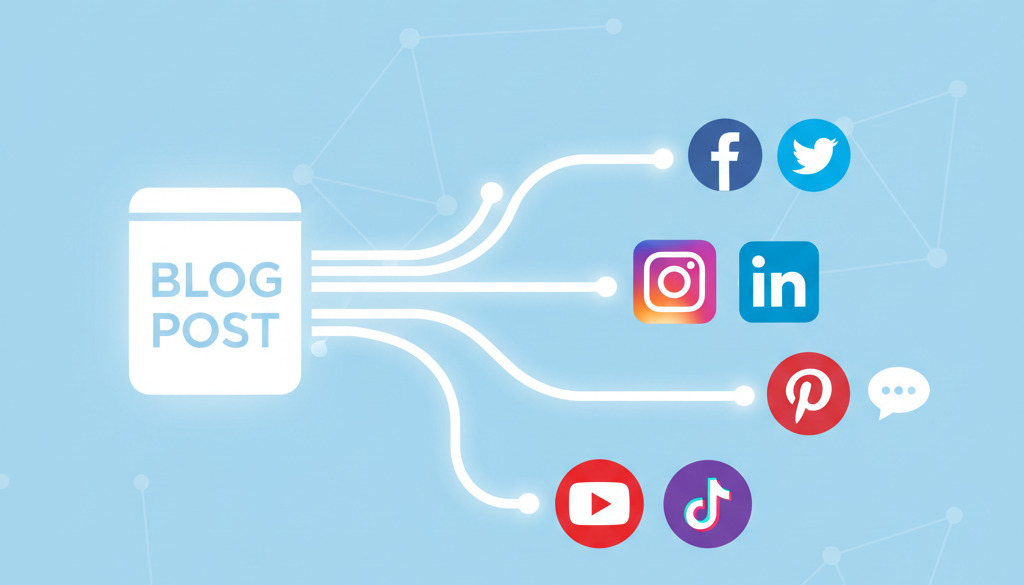
To truly maximize the efficiency of your blog, you must master the art of content repurposing. A single long-form blog post can be transformed into a series of social media snippets, an infographic for LinkedIn, a script for a short-form video, or even a podcast segment. By automating the extraction of key points from your blog posts, you can populate multiple platforms from a single source of truth.
Building an Evergreen Content Library for Continuous Engagement
The ultimate goal of a blog autopilot system is to create an evergreen content library. This is a collection of high-value posts that do not have an expiration date. These articles address timeless problems, explain foundational concepts, or provide "how-to" guidance that remains accurate over time.
Maintaining an evergreen library requires regular maintenance. Even timeless advice can benefit from updated statistics, new examples, or fresh internal links. An autopilot system should include a recurring task to review and refresh top-performing evergreen posts every 6 to 12 months. This signal to search engines that the content is still relevant and accurate can lead to significant boosts in ranking.
Strategically, your evergreen library acts as your business’s digital insurance policy. Even if you stop publishing new content for a month, these evergreen posts will continue to attract organic traffic, educate prospects, and drive conversions in the background.
Monetization Strategies Integrated into Your Autopilot Blog
A business blog should be a profit center, not just a marketing expense. Integrating monetization into your autopilot framework ensures that every visitor has a pathway to becoming a customer. This starts with the strategic placement of Calls-to-Action (CTAs) within your content. Whether it is a button to download a whitepaper, a link to a product page, or a signup form for a webinar, these CTAs should be woven naturally into the text.
Other automated monetization methods include affiliate marketing, where you link to complementary tools or services your audience might find useful, and digital product promotion. For B2B businesses, the primary monetization is often lead generation—using the blog to capture contact information that is then fed into an automated sales nurture sequence.
To ensure these efforts are working, you must track monetization ROI. Using tracking pixels and UTM parameters allows you to see exactly which blog posts are driving the most revenue, enabling you to refine your future content strategy to focus on the most profitable topics.
Performance Monitoring and Iterative Optimization
The "autopilot" requires a sophisticated dashboard to monitor performance. You cannot improve what you do not measure. Essential metrics include organic sessions, bounce rates, and conversion numbers. Tools like Google Analytics and specialized SEO platforms provide the data needed to see how your content engine is performing in real-time.
Performance monitoring allows for iterative optimization. If the data shows that your guide to "Business Automation" is getting high traffic but low conversions, you might need to adjust the CTA or the lead magnet associated with that post.[1] If a specific topic is consistently underperforming in search, it may be time to pivot your content pillars.
A regular review cycle—perhaps monthly or quarterly—is necessary to analyze these insights. This is the moment where the human strategist steps in to recalibrate the autopilot, ensuring the system is moving in the right direction according to the latest market trends and business shifts.
The Human Element: Oversight and Strategic Direction
It is a common misconception that "autopilot" means the total absence of human effort. In reality, the more you automate, the more human oversight becomes precious. Machines excel at scale and speed, but they lack the intuition, brand empathy, and ethical judgment that a human content strategist provides.
Quality control is the first line of human intervention. Every piece of content, whether human-written or AI-augmented, must be reviewed for brand consistency and accuracy. A human editor ensures that the content sounds like your brand and provides the nuanced perspective that automated tools might miss. Furthermore, human oversight is critical for crisis management—the ability to pause automated posts if a global event or industry shift makes them insensitive or irrelevant.
The strategist’s role is to guide the engine. While the system handles the "how" and "when," the human stays focused on the "why." This high-level direction ensures that the blog autopilot remains aligned with the broader business goals and continues to resonate with the target audience on a human level.
Case Studies: Businesses Thriving with Blog Autopilot
To understand the power of this system, consider a mid-sized SaaS company that implemented a blog autopilot framework in 2025. By focusing on three evergreen pillars related to workflow efficiency, they used AI to assist in drafting 50 high-quality articles over six months. By automating their distribution across LinkedIn and an email newsletter, they saw a 150% increase in organic traffic and a 40% rise in demo requests within a year. The key was their commitment to a weekly human review process to ensure every article met their high expertise standards.
Another example is an e-commerce brand in the organic skincare space. They utilized automated content creation to address common skin concerns (evergreen pillar) and integrated AI to optimize these posts for "AI Overviews" in search engines. By repurposing these blog posts into automated Pinterest pins and Instagram carousels, they built a multichannel presence that drove consistent referral traffic without a dedicated social media manager. Their results showed a significant decrease in customer acquisition costs as organic content began to replace paid ad spend.

Mastering Your Blog Autopilot for Sustainable Growth
The journey toward a fully functional Blog Autopilot for Business is one of structured growth and technological empowerment. By moving away from sporadic, manual blogging and toward a systematic framework, businesses can finally unlock the true potential of content marketing. This system ensures that your brand remains a constant, helpful voice in your industry, building trust with your audience every single day.
Consistency is the currency of the digital age. When you implement a strategy built on solid content pillars, efficient AI augmentation, and automated distribution, you aren't just saving time—you are building a scalable asset that appreciates in value. The future of business growth lies in the ability to deliver value at scale, and a well-executed blog autopilot is the engine that will take you there.
Frequently Asked Questions
Is blog automation safe for SEO?
Yes, blog automation is safe for SEO as long as the focus remains on quality and helpfulness. Search engines like Google do not penalize content simply because it was created using automated tools or AI. They penalize low-quality, "spammy" content that provides no value to the reader. By using automation to enhance your research and maintain consistency while keeping a human in the loop for quality control, you can actually improve your SEO rankings significantly.
How much does it cost to set up a blog autopilot system?
The cost varies depending on the scale of your business and the tools you choose. A basic setup might include a CMS (like WordPress), an AI writing assistant, and a social media scheduler, which can cost between $100 to $500 per month. For larger enterprises requiring advanced AI platforms, high-volume content, and dedicated strategists, the investment can be several thousand dollars monthly. However, the ROI often far exceeds these costs through reduced manual labor and increased lead generation.
Does "autopilot" mean I don't need a writer or editor?
No. While automation reduces the time spent on repetitive tasks, human editors and strategists are more important than ever. They are responsible for ensuring brand voice, factual accuracy, and strategic alignment. Think of the autopilot system as a high-performance vehicle; while it has many automated features, it still needs a skilled driver to navigate the destination and handle complex situations.
Which industries benefit most from blog autopilot?
Virtually any industry that relies on information-sharing and trust-building can benefit. This includes B2B services (SaaS, consulting, finance), e-commerce (product education, lifestyle tips), and local professional services (lawyers, healthcare, real estate). Any business where the customer has questions before making a purchase is a prime candidate for an automated evergreen content strategy.
How often should I update my automated content?
Your evergreen content library should be reviewed on a recurring cycle, typically every 6 to 12 months. This ensures that statistics are current, links are working, and the advice remains accurate. More frequent updates may be necessary for fast-moving industries like technology or finance. Automated alerts can be set up within many CMS platforms to remind your team when a specific post is due for a refresh.
Keep reading
Hand-picked guides that go deeper — open the one you need next:
- Mastering Automated Content Publishing for Business Scale
- Mastering the AI Article Writer for SEO Content
- The Entrepreneur's Secret Weapon: AI-Powered Blog Autopilot Explained
- Unlock Organic Traffic: AI-Generated Blog Content
→ Read the full AI Content guide
→ Read the full AI Content guide