
The Entrepreneur's Secret Weapon

Key Takeaways
- A blog autopilot system is not a fully hands-off tool, but a strategic workflow leveraging AI and automation to create, publish, and distribute content efficiently.
- For entrepreneurs, especially those over 40 who are not digital natives, this system saves hundreds of hours while consistently attracting customers through Google.
- The foundation of a successful autopilot system is a strong content strategy, including deep keyword research and an understanding of your audience's needs.
- Modern AI, specifically agentic AI, can manage entire workflows, from research to writing and even scheduling, representing a competitive baseline in 2026.
- Human oversight remains critical. The best results come from combining AI's speed with a human expert's strategic direction, editing, and quality control.
- Getting started is easier than ever, with some services offering free trials to prove their value and help you begin building your online presence immediately.
Blog Autopilot for Entrepreneurs: Reclaim Your Time, Amplify Your Reach
For most entrepreneurs, content marketing presents a frustrating paradox. You know a high-quality blog is a powerful engine for growth. It attracts customers, builds authority, and establishes your brand as a leader. Yet, who has the time? Between managing operations, serving clients, and handling finances, the idea of consistently writing and publishing blog posts feels like an impossible luxury. This is the exact challenge that a blog autopilot system is designed to solve. It’s a strategic approach that turns content creation from a time-draining chore into a streamlined, automated asset that drives organic growth and lets you focus on what you do best: running your business.
The Entrepreneurial Challenge: Why Content Creation Feels Like a Roadblock
If you're a Small to Medium-sized Business (SME) owner, your time is your most precious commodity. The daily demands are relentless. You're not just the CEO; you're often the head of sales, customer service, and HR, all at once. The idea of also becoming a part-time content writer and SEO expert can feel overwhelming. Many business owners know they *should* be blogging, but the reality is that it consistently falls to the bottom of the to-do list. This struggle isn't a personal failing; it's a systemic problem for busy leaders.
The Common Hurdles for Business Owners
Most entrepreneurs face a trifecta of content challenges: a lack of time, a lack of specialized expertise, and a lack of consistent inspiration. You might sit down to write, only to stare at a blank screen, wondering what your customers even want to read. You might draft an article but have no idea how to optimize it for Google. The result is often sporadic posting, generic content, or complete inaction. Unfortunately, in the digital age, inaction leads to huge missed opportunities, including a stagnant online presence and a steady stream of potential customers finding your competitors instead of you. This is why many are now exploring how to unlock organic growth through AI-powered content automation, moving from manual effort to a scalable system.
What Exactly IS Blog Autopilot? Deconstructing the Concept
The term "blog autopilot" can conjure images of a magical button that instantly generates perfect content forever. The reality is more practical and powerful. It’s not a single, hands-off tool, but a strategic, integrated system designed to minimize your direct effort while maximizing results. It’s about leveraging smart delegation and cutting-edge automation in a structured workflow.
The Core Components of an Autopilot System
A true blog autopilot system is built on four pillars:
- Strategy: A clear plan based on who you want to reach and what you want to achieve.
- Efficient Creation: Using tools and services to produce high-quality content at scale.
- Automated Distribution: Setting up systems to share your content across multiple platforms automatically.
- Consistent Measurement: Tracking key metrics to understand what’s working and refine your approach.
In 2026, this concept has evolved beyond simple outsourcing. It now involves "agentic AI" – intelligent systems that can execute entire multi-step workflows autonomously. This isn't just a productivity tool; it's a new way of operating your business, closing the gap between manual effort and automated efficiency.
The Strategic Foundation: Building Your Automated Content Engine
Before you even think about automation or AI, you must lay a strategic foundation. Firing up an AI writer without a plan is like building a house with no blueprint. You’ll get a structure, but it will likely be unstable and unfit for purpose. A successful blog autopilot system begins with a deep understanding of your goals, your audience, and your market. This initial strategic work is the most critical investment you will make in the entire process. It ensures every piece of content created by your system is purposeful, targeted, and effective.
Evergreen Content and Topic Clusters
A key part of this strategy is focusing on evergreen content—articles that remain relevant and valuable long after publication—and organizing it into topic clusters. A topic cluster involves a main "pillar" page covering a broad topic, with several "cluster" articles linking back to it, each covering a specific sub-topic in detail. This structure signals your expertise to Google and creates a logical, user-friendly experience on your site, leading to sustainable organic traffic over the long term.
Section 1: Keyword Research – Unearthing Your Audience's Search Intent
The first step in any effective content strategy is keyword research. This isn't about stuffing your articles with technical jargon; it's about discovering the real words and phrases your potential customers are typing into Google when they have a problem your business can solve. Understanding this search intent is the secret to creating content that doesn't just exist but actually attracts qualified leads.
How to Find What Customers Are Asking
Think about your customers. What are their biggest pain points? What questions do they ask you most often? Each of these is a potential keyword. Your goal is to find phrases that have a decent search volume but aren't impossibly competitive. Simple tools like Google Keyword Planner or paid platforms can help, but you can also find a wealth of ideas by simply looking at the "People also ask" section on a Google search results page. The right keywords align your content directly with customer needs, making your blog a magnet for inbound traffic.
Section 2: Content Planning – Architecting Your Automated Workflow
With your keywords in hand, the next step is to create a plan. A content calendar is your best friend here. It’s a simple spreadsheet or tool that maps out what topics you’ll publish and when. This seemingly basic step is transformational for an autopilot system. It eliminates the daily "what should I write about?" panic and provides a clear roadmap for your content engine, whether it's powered by an AI, a freelancer, or an agency.
The Power of Batching and Repurposing
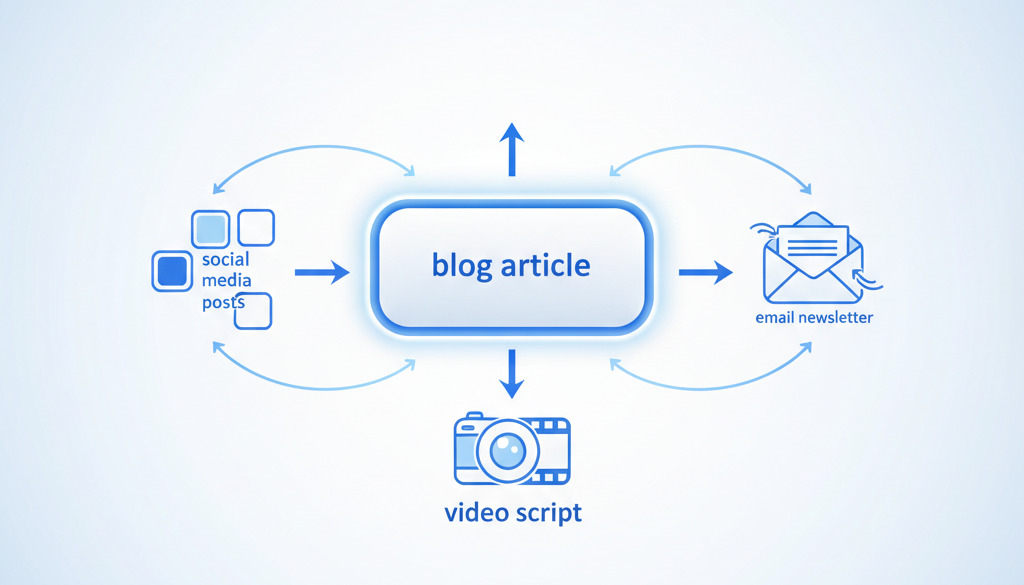
An effective content plan allows you to work smarter, not harder. You can batch your content creation—for example, by outlining an entire month's worth of articles in one session. Furthermore, your plan should include repurposing. A single blog post can be transformed into multiple social media updates, a video script, an email newsletter, or even a podcast episode, maximizing the return on your initial content investment.
Section 3: The Power of AI-Assisted Writing Tools
This is where the "autopilot" really begins to take shape. Artificial Intelligence has revolutionized content creation.[1] Modern AI writing tools are no longer clunky toys; they are sophisticated assistants that can help you overcome writer's block, generate detailed outlines, draft entire sections of an article, and do it all in a fraction of the time it would take a human.
Human Oversight is Non-Negotiable
While AI provides incredible speed, it is not a replacement for human expertise. It's a co-pilot. The best practice is to use AI to generate the first draft, which a human then edits for accuracy, tone, and brand voice. This combination gives you the best of both worlds: the efficiency of a machine and the nuance of a human expert. For entrepreneurs who lack the time to write from scratch, this is a game-changer. Specialized services that promise to get you "more customers from your blog" often use their own proprietary AI to generate professional SEO posts in minutes, bridging the gap between idea and publication.
Section 4: Mastering SEO: Ensuring Your Content Gets Found
Creating great content is only half the battle. If no one can find it, it can’t deliver results. This is where Search Engine Optimization (SEO) comes in. SEO is the practice of optimizing your content so that search engines like Google will rank it highly in search results. For a business owner, you don’t need to be a world-class expert, but you do need to understand the fundamentals.
Key On-Page SEO Elements
Every post your autopilot system generates should adhere to basic on-page SEO principles:
- Title Tag: The headline that appears in the Google search results. It should be compelling and include your primary keyword.
- Meta Description: The short summary that appears under the title tag. It should entice users to click.
- Heading Structure: Use H1, H2, and H3 tags properly to structure your article logically.
- Internal Linking: Link to other relevant pages and articles on your own website.
Mastering these basics ensures your automated content has the best possible chance of being discovered by your target audience. For those using specific platforms, understanding the nuances of WordPress SEO automation with AI can provide a significant advantage.
Section 5: Crafting Compelling Content: Beyond the Basics
Once your content is found, it needs to be compelling enough to keep readers engaged. Quality matters more than ever. Your content must provide real value, answer the reader's questions thoroughly, and be easy and enjoyable to read. An autopilot system should be configured to produce high-quality outputs, not just high quantity.
Elements of an Engaging Blog Post
Focus on creating content with:
- A Strong Headline: The headline is your first and only chance to grab attention.
- An Engaging Introduction: Hook the reader in the first few sentences by stating the problem and promising a solution.
- Clear, Concise Writing: Use short paragraphs, simple language, and bullet points to make your content scannable.
- Clear Calls to Action (CTAs): Tell the reader what you want them to do next, whether it’s "contact us," "download our guide," or "read another article."
Section 6: Streamlining Content Creation: Tools and Techniques
As an entrepreneur, you have several options for fueling your content engine. The key is to choose the path that best fits your budget, your time commitment, and your need for control. You can hire freelance writers, engage a full-service content marketing agency, or leverage one of the new breeds of AI-powered content solutions.
Choosing Your Content Creation Model
Each model has pros and cons. Freelancers can be cost-effective but require management. Agencies offer expertise but come at a premium price. For many SMEs, an all-in-one AI solution is the most efficient path. Imagine a service that can write professional SEO articles for your website almost like magic, allowing customers to find you automatically in Google searches. This is the promise of modern AI content platforms that are designed specifically for busy business owners who need results without the complexity.
Section 7: The Automation Factor: Beyond Just Writing
True blog autopilot extends far beyond content creation. The next layer is automating the distribution and promotion of your articles. Once a blog post is published, an automated workflow can ensure it gets the maximum possible visibility with minimal manual effort from you. This is how you amplify your reach and drive consistent traffic back to your site.
Automating Your Distribution Channels
Tools are available to fully automate this process. For example:
- Social Media Scheduling: Tools like Buffer or Hootsuite can automatically share your new blog post across all your social profiles.
- Email Newsletters: Services like Mailchimp can be configured to automatically send a notification to your email list whenever a new post goes live.
- Content Syndication: You can set up workflows to automatically republish your content on platforms like Medium or LinkedIn, exposing it to a wider audience.
This level of automation transforms a single blog post into a marketing campaign that runs on its own.
Section 8: Building Authority and Trust Through Consistent Publishing
One of the most powerful, yet often overlooked, benefits of a blog autopilot system is consistency. Publishing high-quality content on a regular, predictable schedule sends a powerful signal to both your audience and to search engines. It shows that your business is active, knowledgeable, and reliable. Over time, this consistency builds immense trust and authority in your industry.
The Long-Term Impact of Consistency
Think of each blog post as a small investment in your brand's credibility. A single post might not change your business overnight, but a library of dozens or hundreds of helpful articles creates an unshakeable foundation of authority. Your blog becomes a go-to resource for potential customers, and your brand becomes synonymous with expertise. This is the long-term ROI of an automated system: building a durable asset that appreciates in value over time.
Section 9: Measuring Success: The Metrics That Matter
An autopilot system still needs a pilot to check the gauges. To ensure your content engine is driving real business results, you need to track a few key performance indicators (KPIs). You don’t need to get lost in a sea of data; focus on the metrics that directly connect to your business goals: growth and revenue.
Key KPIs to Track
- Organic Traffic: How many visitors are finding your site through search engines? Is this number growing month over month?
- Keyword Rankings: Are your articles ranking on the first page of Google for your target keywords?
- Engagement Metrics: How long are people spending on your articles? Are they clicking on your internal links?
- Leads and Conversions: Most importantly, is your blog generating leads, contact form submissions, or sales?
Using free tools like Google Analytics and Google Search Console, you can easily track these metrics and use the data to refine your content strategy for even better results.
Section 10: Common Pitfalls to Avoid on Your Autopilot Journey
While a blog autopilot system is incredibly powerful, it’s not without potential pitfalls. The biggest mistake entrepreneurs make is treating it as a "set it and forget it" solution. Over-automation without human oversight can lead to generic, soulless content that damages your brand more than it helps. It’s critical to avoid these common traps.
Maintaining Authenticity and Value
Remember that you are writing for humans, not just algorithms. Avoid the temptation to create low-quality, keyword-stuffed articles that offer no real value. Authenticity is paramount. Your content must reflect your brand's unique voice and genuinely help your audience. The human touch—in strategy, editing, and final approval—is the secret ingredient that prevents your content from sounding robotic and undifferentiated.
Section 11: Case Studies: Entrepreneurs Thriving with Blog Autopilot
The proof is in the results. Across industries, business owners who have embraced automated content strategies are seeing transformative growth. Consider a hypothetical local bakery. By setting up an autopilot system focusing on keywords like "best birthday cakes in [city]" and "custom wedding dessert tables," they began attracting dozens of local searchers every week. This content, running in the background, became their single most effective lead generation tool.
Tangible Business Impact
Or think of a B2B consultant. By automating the creation of in-depth articles on industry trends and challenges, their website traffic tripled in six months. This surge in traffic led to a 50% increase in qualified leads from their website. These aren't just vanity metrics; they are real, tangible business results. It's no surprise that a growing number of businesses—with reports showing over 500 companies already using specialized AI content services, for example—are seeing a tangible return on their investment.
Section 12: The First Step: Getting Started with Your Blog Autopilot
The idea of building a complete autopilot system can seem daunting, but starting is easier than you think. The key is to begin small, prove the concept, and scale from there. Don't try to automate everything at once. Your first step is to simply define your strategy for a handful of core topics.
Your Action Plan
- Choose One Core Service: Select one key service or product your business offers.
- Identify 5-10 Customer Questions: Brainstorm the top questions customers have about that service. These are your initial keywords.
- Experiment with a Tool or Service: This is the perfect time to explore your options without a major commitment. Some AI-driven content platforms even offer a risk-free trial. For instance, some solutions designed to help you get more customers from your blog offer to write your first 5 posts for free, providing a perfect, no-cost entry point to experience the power of automation firsthand.
Section 13: Scaling Your Blog Autopilot for Maximum Impact
Once you have a small-scale system running and you’re seeing positive results, it’s time to scale. Scaling your blog autopilot means expanding your content strategy to cover more products, services, and customer segments. You can increase your publishing frequency, broaden your keyword targets, and explore more advanced automation workflows.
Growing Your Content Engine
As your business grows, your content strategy can grow with it. You might create separate topic clusters for different audience personas or develop a more sophisticated content repurposing system that includes video and podcasts. The beauty of an autopilot system is its scalability. The initial framework you build can be expanded and enhanced over time to become a dominant force in your market, continuously generating leads and building your brand authority.

Section 14: The Human Element in Automated Content
It is worth re-emphasizing the most important point: automation is a tool to augment human capability, not replace it entirely. Your strategic insight, your creativity, and your understanding of your customers are the essential human elements that make an autopilot system truly effective. The most successful entrepreneurs in 2026 are not just delegating to AI; they are becoming "AI Orchestrators," directing their digital workforce with precision and purpose.
Finding the Perfect Balance
AI is brilliant at handling the repetitive, time-consuming tasks: the research, the drafting, the scheduling. This frees you up to focus on the high-value strategic work: reviewing and refining content, connecting with customers, and developing new ideas. This partnership between human and machine is where the magic happens, striking the perfect balance between efficiency and genuine connection.
Section 15: Future-Proofing Your Content with an Autopilot System
The digital world is constantly changing. Search engine algorithms evolve, market trends shift, and new competitors emerge. A static content strategy is a fragile one. An automated content system, however, is inherently resilient and adaptable. By building a consistent and efficient engine for producing and publishing content, you create a marketing asset that is designed for the long term.
Building a Resilient Growth Engine
With an autopilot system in place, you can quickly pivot your content strategy to respond to new opportunities or changing customer behavior. You can easily update old articles, create content for new product launches, or target emerging keyword trends. This agility ensures that your online presence doesn't just survive; it thrives. Your blog becomes a sustainable, future-proofed growth engine that will continue generating leads and revenue for your business for years to come.
Conclusion
For the busy entrepreneur, the daily grind can make strategic growth feel out of reach. A blog autopilot system is the secret weapon that changes the equation. By blending smart strategy with powerful automation, you can reclaim your valuable time while simultaneously building a powerful, customer-attracting content machine. It allows you to step off the content hamster wheel and focus on steering the ship. The technology is here, the path is clear, and the opportunity to amplify your reach without sacrificing your time is waiting. It's time to put your blog on autopilot and watch your business soar.
Frequently Asked Questions
1. Is a "blog autopilot" system completely hands-off?
No, and that's a good thing. A successful system is not "set it and forget it." It's "strategize, automate, and oversee." It handles about 80% of the manual labor (drafting, scheduling, distributing), but it still requires your human expertise for the critical 20%: setting the strategy, reviewing content for accuracy and brand voice, and analyzing performance to make improvements.
2. Will using AI-generated content hurt my website's SEO?
This is a common concern. The answer is no, as long as the content is high-quality, relevant, and human-edited. Google's guidelines focus on the quality and helpfulness of the content, not how it was produced. Low-effort, generic AI content can absolutely hurt your rankings. However, a well-managed autopilot system uses AI as a tool to create well-researched, comprehensive articles that are then polished by a human to ensure they meet the highest standards of quality and provide real value to the reader.
3. How much does it cost to set up a blog autopilot system?
The cost can vary dramatically based on your approach. A Do-It-Yourself (DIY) system using various software for keyword research, AI writing, and social scheduling could cost anywhere from $50 to $300 per month. Hiring a full-service agency can cost several thousand dollars per month. A middle ground is emerging with specialized AI content services that bundle the technology and workflow into a more affordable package, sometimes with free trials to let you test the waters.
4. How quickly can I realistically expect to see results?
SEO and content marketing are a marathon, not a sprint. While you are building a long-term asset, you will not see a flood of traffic overnight. Generally, you can expect to see initial positive signals—like an increase in keyword rankings and a slight uptick in organic traffic—within 3 to 6 months of consistently publishing high-quality, optimized content. The significant, business-driving results often build over 6 to 12 months and continue to compound from there.
5. Can AI really capture my business's unique brand voice?
On its own, a generic AI tool will produce generic text. However, the technology has evolved significantly. Many modern AI content platforms can be "trained" on your existing website content, marketing materials, and previous articles. They learn your tone, style, and terminology. While it still requires a final human review to perfect it, these systems can get remarkably close (80-90% of the way there) to your unique brand voice, dramatically reducing editing time.
Keep reading
Hand-picked guides that go deeper — open the one you need next:
- AI Content Conversion Optimization: The 2026 Strategy Guide
- Blog on Autopilot: Consistent Content Without the Hassle
- From Draft to Done: How AI Automates Your Content Publishing
- Automate Your Blog with an AI Platform & Save Time
→ Read the full AI Content guide