
The 'Autopilot' Advantage: Consistent SEO Content
Key Takeaways
- A blog content autopilot strategy is not about eliminating human oversight, but about creating efficient systems using tools and delegation to produce consistent, high-quality content with minimal hands-on effort.
- For small and medium-sized enterprise (SME) owners, this approach solves the dilemma of needing a strong online presence without having the time to personally write and manage a blog.
- Understanding your customer's search intent—what they are actually looking for—is the foundation of a successful content strategy that attracts qualified leads.
- AI content generation tools are now capable of producing professional, SEO-optimized drafts in minutes, drastically reducing the time and cost barriers to content creation.
- The most effective autopilot systems combine AI for speed and scale with essential human oversight for fact-checking, brand voice alignment, and strategic direction.
- Success should be measured not just by traffic, but by business-oriented metrics like organic search impressions, keyword rankings, and lead conversions from your blog content.
Defining "Blog Content Autopilot" for the Modern SME
As a business owner, you're likely familiar with the concept of autopilot in aviation—a system that maintains a steady course, allowing the pilot to focus on higher-level strategy and navigation. A blog content autopilot strategy applies the same principle to your digital marketing. It’s about building a sustainable, streamlined system that consistently produces and publishes high-quality, SEO-optimized content without requiring your daily, hands-on involvement.
Let's be clear: this isn't a "set it and forget it" magic button. Rather, it's a strategic combination of smart planning, powerful tools, and often, expert delegation. Instead of staring at a blank page every week wondering what to write, you operate from a pre-defined blueprint. The goal is to shift your role from being the content creator to the content strategist—the pilot who sets the destination, not the one manually flying the plane.
This approach differs fundamentally from simply outsourcing a few articles here and there. A true autopilot strategy is a cohesive, long-term system where topic ideation, content creation, optimization, and publication happen in a predictable, efficient workflow. It transforms your blog from a sporadic chore into a reliable engine for business growth.
The Untapped Power of SEO: Why Your Business Needs a Blog
You may wonder if maintaining a blog is still worth the effort in today's fast-paced digital world. The answer is an unequivocal yes, and the primary reason is Search Engine Optimization (SEO).[1] In simple, business-focused terms, SEO is the process of making your website more visible to people who are actively searching on Google for the products, services, or solutions you offer.
Here’s how a consistent blog directly fuels your SEO and, consequently, your bottom line:
- It builds your authority with Google: Every well-written article you publish is another page for Google to index, another opportunity to rank for relevant keywords, and another signal that you are a knowledgeable authority in your industry.
- It attracts targeted traffic: A blog allows you to answer the specific questions your potential customers are asking. When someone searches for "how to choose the best commercial roofing material" and your blog post provides the answer, you attract a highly qualified visitor to your site.
- It creates appreciating assets: Unlike a paid ad that disappears when you stop paying, a high-quality blog post can attract traffic for years. This evergreen content becomes a digital asset that works for you 24/7, continuously generating leads and building brand awareness.
Think of each blog post as a digital salesperson, working around the clock to bring potential customers to your door. The more high-performing salespeople you have, the more your business grows.
Understanding Your Ideal Customer's Search Intent
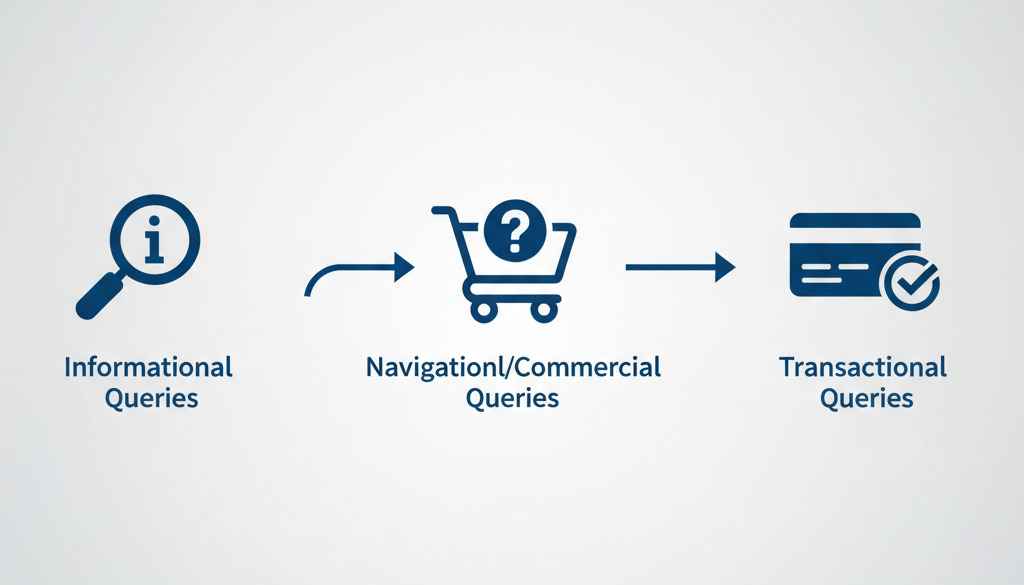
The single most important factor for a successful blog is not how clever your writing is, but how well it aligns with your customer's search intent. This term simply means understanding the "why" behind a person's Google search. Are they looking for information, comparing options, or ready to make a purchase?
Keyword research isn't a dark art reserved for technical gurus. For a business owner, it’s an exercise in customer empathy. You already know your customers better than anyone. Tap into that knowledge by brainstorming the questions they ask you every day. What are their biggest problems? What information do they need before they can make a decision? What are their common objections?
Actionable Steps to Identify Search Intent:
- Brainstorm "Problem" Keywords: Think about the problems your service solves. If you're an accountant, your clients might search for "how to reduce small business tax liability" or "what documents do I need for a business loan?"
- Think in "Question" Format: Use phrases like "How to...", "What is...", "Best way to...", and "Alternatives to..." that your customers would use.
- Use Google's Autocomplete: Start typing a relevant search term into Google and see what suggestions pop up. These are common queries from real users. The "People also ask" and "Related searches" sections on the results page are also goldmines of content ideas.
Creating content that directly answers these queries is the most reliable way to get found by the people who are most likely to become your customers.
Crafting a Sustainable Content Calendar: The Blueprint for Autopilot
A content calendar is the backbone of your autopilot strategy. It’s the blueprint that ensures consistency and eliminates the stress of last-minute content decisions. Without a plan, you'll inevitably fall back into a reactive cycle, posting sporadically when you find a spare moment. With a calendar, you are proactive and strategic.
Your calendar doesn't need to be complicated. For a busy owner, a simple spreadsheet is often the most effective tool. Create columns for:
- Publication Date: When the article will go live.
- Working Title: The proposed headline for the post.
- Target Keyword: The primary search phrase you are targeting.
- Content Pillar: The main topic category this post falls under (e.g., "Tax Tips," "Growth Strategies").
- Status: A simple tracker (e.g., "Ideation," "Writing," "Published").
When it comes to posting frequency, consistency trumps volume. Publishing one high-quality, well-researched article every week is far more effective than publishing five mediocre posts one week and then nothing for a month. An autopilot system is designed for a steady, sustainable pace that Google’s algorithms favor.
Leveraging AI for Rapid, Professional Content Creation
For decades, the biggest bottleneck in content creation has been the sheer time it takes to write. The rise of sophisticated Artificial Intelligence has completely changed the game. For time-strapped SME owners, AI is not just a novelty; it's a revolutionary tool that makes a high-volume content strategy feasible for the first time.
Modern AI writing assistants go far beyond simple grammar correction. They can take a topic or a keyword and generate a comprehensive, well-structured article draft in minutes. This overcomes the dreaded "blank page syndrome" and provides a robust foundation that you or your team can then refine.
However, the quality and capability of AI tools vary significantly. This is where specialized services designed for business results truly shine. For instance, the platform from More Customers From Your Blog is built specifically for this purpose. As they promise, "Our proprietary artificial intelligence writes professional SEO blog articles for your website in minutes—almost like magic." This type of solution removes the guesswork, integrating SEO best practices directly into the content generation process, saving you yet another layer of work.
The Art of AI-Assisted Content Optimization (Not Just Creation)
The power of AI in a content autopilot strategy extends beyond initial draft creation. It is also an invaluable assistant for optimization—the process of refining your content to maximize its performance on search engines and its engagement with readers. Many business owners find this part of the process intimidating, but AI simplifies it dramatically.
Here are a few ways AI can help optimize your content:
- Headline Analysis: AI tools can analyze a proposed headline and suggest more compelling, clickable alternatives based on data from millions of articles.
- Keyword Integration: Instead of manually stuffing keywords, AI can naturally weave your target keywords and related terms (semantic SEO) throughout the text for better search ranking.
- Readability Improvements: AI can score the reading level of your text and suggest changes—like shortening complex sentences—to make it more accessible to a wider audience.
- Meta Description Generation: AI can instantly craft a concise, compelling meta description (the short blurb that appears under your title in Google search results) to improve your click-through rate.
The goal is to let technology handle the tedious, formulaic aspects of SEO, allowing the system to work more efficiently toward the ultimate goal: ensuring that, as the team at More Customers From Your Blog puts it, "Customers will find you on their own in Google."
Streamlining the Content Workflow: From Idea to Publication
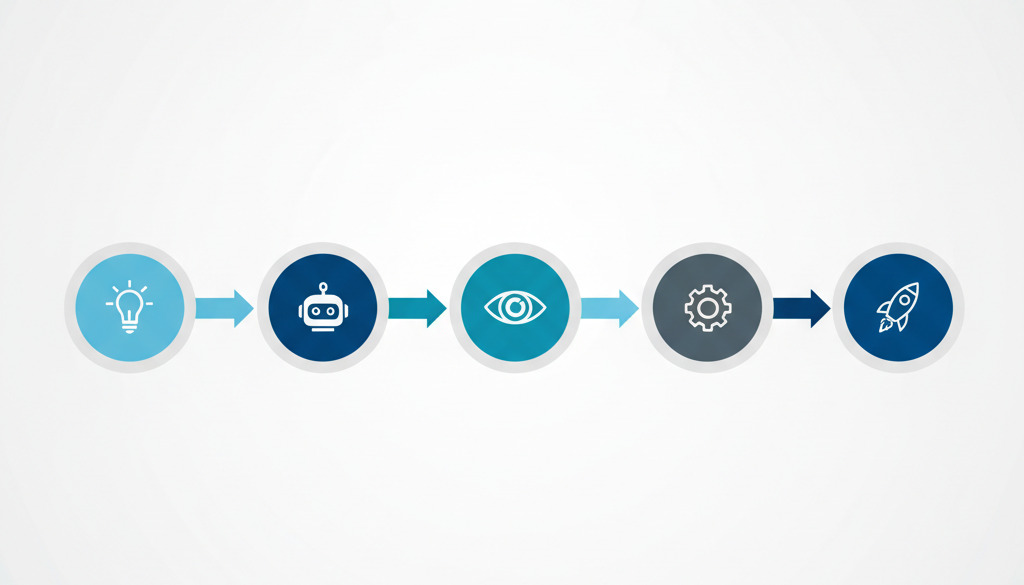
An effective autopilot system hinges on a well-defined workflow. Breaking down the content lifecycle into discrete, manageable steps allows you to see exactly where automation and delegation can be most effective. A typical workflow looks like this:
- Ideation: Sourced from your content calendar and ongoing keyword research.
- Brief Creation: A short document outlining the article’s goal, target keyword, and key points to cover.
- AI-Powered Drafting: Using a tool to generate the initial article draft based on the brief.
- Human Review & Editing: A subject matter expert (often you, or a trusted team member) reviews the draft for accuracy, brand voice, and adds unique insights.
- Optimization: The draft is run through AI-assisted tools for SEO and readability improvements.
- Formatting & Publishing: The final text is formatted in your website’s content management system (CMS) with headings, images, and links, then scheduled for publication.
- Promotion: The published post is shared on social media or in an email newsletter.
In a true autopilot model, steps 3, 5, and parts of 7 can be heavily automated. Step 4 is the critical human checkpoint, ensuring quality and authenticity remain high. This streamlined process creates a predictable rhythm, turning what was once a chaotic task into a smooth-running operation.
Beyond Writing: The Crucial Elements of Blog Post Success
A wall of text, no matter how well-written, will not keep a modern reader engaged. A successful blog post in an autopilot system must be structured for readability and designed to guide the reader toward a business goal. These elements should be a standard part of your publishing checklist.
Compelling Headlines That Grab Attention
Your headline is the most important part of your article. It’s the first—and sometimes only—thing a potential reader will see. It must be powerful enough to command a click in a crowded search results page. Good headlines are often specific, promise a clear benefit, and create a sense of urgency or curiosity.
Engaging Introductions That Hook Readers
Once they click, you have about three seconds to convince the reader to stay. Your introduction must hook them immediately. The most effective way to do this is by directly addressing their pain point or asking a question you know is on their mind. Show them you understand their problem right from the start.
Strategic Internal and External Linking
Links are critical for both SEO and user experience. Internal links (links to other pages on your own website) keep readers engaged longer and help Google understand the structure of your site. External links (links to other reputable websites) can signal to Google that your content is well-researched and credible. Every post should have a mix of both.
Effective Call-to-Actions (CTAs) for Lead Generation
What do you want the reader to do after they finish your article? Don’t leave them guessing. Every post should have a clear Call-to-Action (CTA). This could be an invitation to "Contact us for a free consultation," "Download our free guide," or "Subscribe to our newsletter." A blog without CTAs is a missed business opportunity.
The Human Touch: When and Why Human Oversight is Essential
While AI is a powerful accelerator, it is not a replacement for human expertise and judgment. The most successful and safest blog automation strategies—the ones that Google rewards—insist on meaningful human involvement. As recent guidance from search engines emphasizes, the focus is on "people-first content," regardless of how it's produced.
Google has been clear: they don't penalize AI-generated content, they penalize low-quality, unhelpful content. The distinction is critical. Strong automation scales quality; weak automation scales garbage.
Human oversight is non-negotiable in two key areas:
- Factual Accuracy and Subject Matter Expertise: AI can sometimes produce information that is outdated or incorrect. A human expert (you or someone on your team) must review every single article for factual accuracy. This step protects your brand's credibility and ensures you are providing real value. You should also add your own unique experiences, anecdotes, or case studies that an AI could never replicate.
- Brand Voice and Tone: Your business has a unique voice. Are you formal and authoritative? Friendly and approachable? An AI will produce generic text unless guided. The human editing phase is where you infuse the content with your brand's personality, ensuring it sounds like it came from you.
Think of AI as the world’s most efficient junior writer. It produces a solid first draft, but the final polish and strategic sign-off must come from an experienced editor or strategist.
Building Authority Through Consistent, Valuable Content
Putting your blog on autopilot isn't just about saving time; it's about strategically building your brand's authority. When potential customers repeatedly find your business providing clear, helpful answers to their questions, you cease to be just another vendor. You become a trusted resource and a thought leader in your field.
This authority is built brick-by-brick with every valuable post you publish. Consistency is key. A blog that is updated regularly signals to both users and search engines that your business is active, current, and engaged. This builds trust over time, which is a crucial factor in a customer's decision-making process.
To ensure your content provides genuine value, always apply the "so what?" test. For every point you make, ask yourself, "so what does this mean for my customer?" Frame your content around solving their problems and helping them achieve their goals. When your primary focus is on being helpful, you will naturally build the kind of authority that drives long-term business growth.
Measuring Success: Key Metrics for Your Autopilot Blog
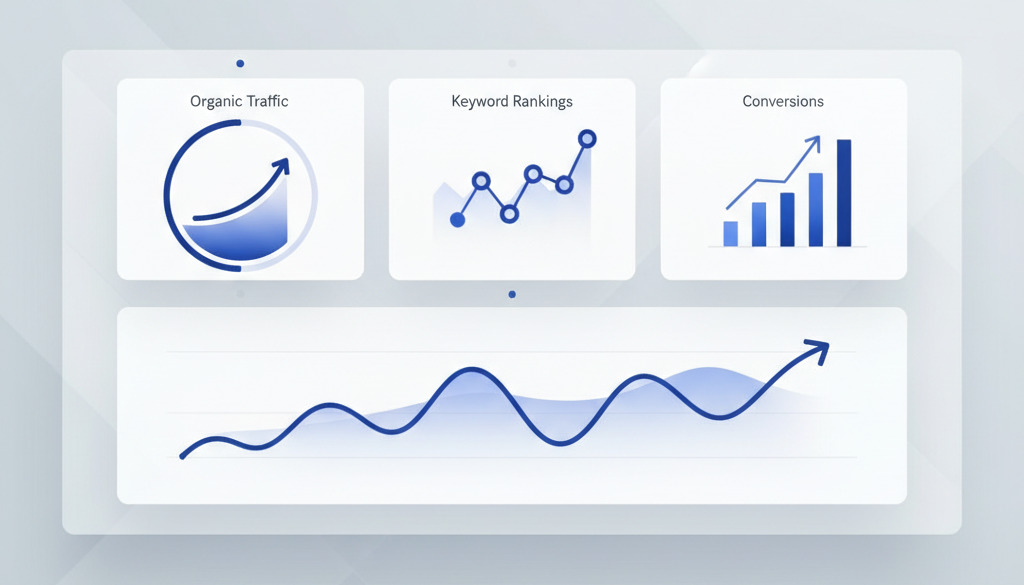
To justify any business activity, you need to be able to measure its return on investment (ROI). A blog content strategy is no different. While it's exciting to see your website traffic go up, that's just one piece of the puzzle. To truly understand the impact on your business, you need to track a few key metrics, most of which can be found for free in Google Analytics and Google Search Console.
Here are the essential metrics to monitor:
| Metric | What It Tells You | Why It Matters for Business |
|---|---|---|
| Organic Search Impressions | How many times your pages appeared in Google search results. | This is a top-of-funnel indicator of your growing visibility and brand awareness. |
| Organic Traffic | The number of visitors who arrive at your site from a search engine. | Shows that your content is successfully attracting visitors who are actively searching for information. |
| Keyword Rankings | Your position in search results for your target keywords. | Directly measures your SEO progress. Moving up in rankings for commercially-valuable keywords is a primary goal. |
| Time on Page / Engagement Rate | How long visitors are staying to read your content. | A high engagement rate signals to Google that your content is valuable and relevant to the search query. |
| Blog-Attributed Conversions | The number of leads or sales that originated from a blog post. | This is the ultimate bottom-line metric. It directly connects your content efforts to revenue. |
Tracking these metrics allows you to see what’s working, double down on successful topics, and make data-driven decisions to continually refine your autopilot strategy.
Scaling Your Autopilot: From Blog to Content Ecosystem
Once your blog content autopilot system is running smoothly, you can begin to scale your efforts by creating a complete content ecosystem with your blog at its core. This means repurposing your long-form articles into other formats to reach a wider audience across different platforms, all with minimal extra effort.
Efficient Content Repurposing Strategies:
- Social Media Posts: Each key point or statistic from a blog post can be turned into a separate post for LinkedIn, Facebook, or Twitter.
- Email Newsletters: Your latest blog post can be the featured content in your weekly or monthly newsletter, driving traffic back to your site and nurturing your email list.
- Short Video Scripts: The main ideas of an article can serve as a script for a short YouTube or TikTok video.
- Downloadable Checklists or Guides: A detailed how-to post can be condensed into a one-page PDF checklist, which can be used as a "lead magnet" to capture email addresses.
This "create once, distribute many" approach maximizes the ROI of each article and further cements your brand’s authority across the digital landscape. Your blog becomes the central hub of a powerful, far-reaching marketing machine.
Identifying and Mitigating Potential Pitfalls
Even the best-designed autopilot systems can encounter turbulence. Being aware of the potential pitfalls and having a plan to address them is key to long-term success. Here are the most common challenges and how to mitigate them:
- Content Staleness: An over-reliance on a rigid template can make your content feel repetitive. Mitigation: Regularly inject new formats, like expert interviews or case studies, and always have a human add unique, timely insights during the review phase.
- Loss of Brand Voice: If your human review process becomes lazy, the generic "AI voice" can take over. Mitigation: Create a simple brand style guide that outlines your tone and voice, and make it a required checklist item during editing.
- Ignoring Performance Data: It's easy to just let the system run without checking the results. Mitigation: Schedule a monthly 30-minute review of your key metrics (see the table above). This is the strategic oversight that only a human can provide.
- Technical SEO Neglect: Great content can be held back by a slow website or poor mobile experience. Mitigation: Perform a basic technical SEO audit once a quarter or use a service that bundles this expertise with content creation.
Proactive management of these issues ensures your content engine continues to run smoothly and effectively.
The "Try It Before You Buy It" Approach to Content Automation
For a business owner who is rightfully cautious about investing in new systems, the prospect of committing to a content automation service can seem daunting. You understand the potential, but you want proof that it will work for *your* business, in *your* industry. This is where a risk-free trial becomes invaluable.
The best and most confident service providers understand this. They let you experience the benefits firsthand before you commit. This is a powerful signal of their belief in their product. It allows you to see the quality of the AI-generated content, test the workflow, and even publish a few articles to start gathering real-world data.
This is why an offer like the one from More Customers From Your Blog—where your first 5 posts are free—is so compelling for SME owners. It removes the financial risk and allows you to validate the solution for yourself. With a track record of being "already used by more than 500 companies," it offers a proven path to test the waters of content automation and see the tangible results on your own website.
Conclusion: Reclaiming Your Time, Reigniting Your Growth
As a business owner, your most valuable asset is your time. The constant demand for fresh, high-quality content is one of the biggest drains on that asset. A blog content autopilot strategy is your solution to this modern business paradox. It’s a strategic framework for reclaiming your time while simultaneously building one of the most powerful and sustainable marketing assets your company can have: a top-ranking blog.
By combining strategic planning, the efficiency of AI, and the critical oversight of human expertise, you can create a system that consistently attracts qualified customers, builds your brand's authority, and drives measurable growth. You don't have to become a professional writer or an SEO expert to achieve this. You simply need to become the architect of a smarter system.
The path to dominating search results and generating leads through your blog is no longer reserved for large corporations with massive marketing departments. With the right strategy and tools, it is now more accessible and affordable than ever. It’s time to put your content on autopilot and focus on what you do best: running your business.
Frequently Asked Questions
1. Will Google penalize my site for using AI-generated content?
No. Google's official stance is that it rewards high-quality, helpful content that is created for people, regardless of how it is produced. They penalize low-quality, spammy content, not AI use itself. The key to a "safe" autopilot strategy is the human-in-the-loop approach, where every AI-generated draft is reviewed, edited, and fact-checked by a human expert to ensure it is accurate, original, and provides real value to the reader.
2. How much human involvement is really needed in an "autopilot" system?
While the system automates much of the heavy lifting, human involvement is crucial for high-level strategy and quality control. At a minimum, a person should be responsible for: 1) Initial strategy and content calendar planning, 2) Reviewing and editing every article for factual accuracy and brand voice, and 3) Monthly check-ins on performance metrics to guide future strategy. This involvement might only be a few hours per month, a stark contrast to the dozens of hours required to write everything from scratch.
3. What's the difference between content automation and just scheduling posts?
Scheduling posts is simply timing the publication of already-completed content. A true content automation or "autopilot" strategy is a full-stack system that handles much of the creation process itself. It involves workflows that can take a keyword or topic, generate a draft, assist with optimization, and then move it toward publication. It’s the difference between using a simple timer and having an entire assembly line.
4. How quickly can I expect to see results from a blog content strategy?
SEO is a long-term strategy, not an overnight fix. While you can get articles published quickly with an autopilot system, it typically takes 3-6 months of consistent posting for Google to begin rewarding your site with significantly improved rankings and organic traffic. Early positive indicators to look for are an increase in search impressions and rankings for long-tail (more specific) keywords.
5. Is this kind of strategy affordable for a small business?
Absolutely. In fact, this is one of its primary benefits. Compared to the cost of hiring a full-time content writer or a traditional marketing agency, an AI-assisted autopilot strategy is significantly more affordable. Services built around this model, especially those offering free initial posts, are designed to provide a high ROI for small and medium-sized businesses, making consistent, professional content creation accessible without a large budget.
6. How do I get started without being a tech expert?
The best approach is to start with a user-friendly platform that is designed for business owners, not developers. Look for services that offer an all-in-one solution for content ideation, AI-writing, and optimization. Many platforms, like the one mentioned in this article, guide you through the process. Starting with a free trial is the perfect way to learn the workflow and see how simple it can be to generate your first few high-quality posts.
Keep reading
Hand-picked guides that go deeper — open the one you need next:
- Content Marketing Automation: A Strategy for Entrepreneurs
- Blog Autopilot for Business: The Strategy for Scalable Growth
- Mastering AI Article Writers for Engaging Content in 2026
- Content Creation in Minutes: The AI Solution for Busy Entrepreneurs
→ Read the full AI Content guide
→ Read the full AI Content guide