
Content Marketing Automation for Small Business
Key Takeaways
- Automation is a Necessity, Not a Luxury: For time-strapped small business owners, content marketing automation is the key to maintaining a consistent, effective online presence without working around the clock.
- Strategy First, Tools Second: A successful automation plan starts with clear goals and a deep understanding of your customer's journey. The technology is there to support your strategy, not define it.
- Start Small and Scale: You don't need to automate everything at once. Begin with high-impact tasks like email welcome series or social media scheduling, then expand as you grow more confident.
- AI is Your Content Co-pilot: Modern tools, including AI article writing services, can dramatically reduce the time and effort of content creation, turning a major bottleneck into a streamlined process.
- Personalization Drives Results: Automation allows you to deliver personalized content at scale, moving leads through the buying process more effectively and building stronger customer relationships.
- Measure and Optimize: The true power of automation is realized when you use the data it provides to continuously refine your approach, improving ROI over time.
Supercharge Your Small Business Growth: Mastering Content Marketing Automation
As a small business owner, you wear countless hats. You're the CEO, the head of sales, the customer service manager, and the chief financial officer. You know that a strong online presence is crucial for growth, and that means consistent, high-quality content. But who has the time? Between managing daily operations, serving clients, and planning for the future, content marketing often feels like a task you'll get to "someday."
This is a common and frustrating challenge. You see competitors with active blogs and social media feeds, and you know you're missing out on valuable leads and customers. The traditional routes—hiring a marketing agency or a full-time writer—often come with prohibitive costs. This is where the game changes. Content marketing automation is no longer a complex, enterprise-level luxury; it's an accessible and powerful solution for small businesses ready to compete and grow.
By automating the right tasks, you can put your content strategy on autopilot, nurturing leads and engaging customers 24/7, even while you sleep. It's about working smarter, not harder. And for the most significant hurdle—creating the content itself—groundbreaking solutions are emerging. Services that provide AI to generate SEO-optimized articles, for example, can almost magically solve the content bottleneck, freeing you to focus on an automation strategy that amplifies its reach.
Understanding the Core Principles of Content Marketing Automation
At its heart, content marketing automation refers to using software and technology to manage and streamline repetitive marketing tasks.[1] Instead of manually posting on social media every day or sending individual follow-up emails, you create automated workflows that do it for you. Think of it as hiring a digital assistant who works tirelessly in the background to execute your content strategy.
Key Components of Automation
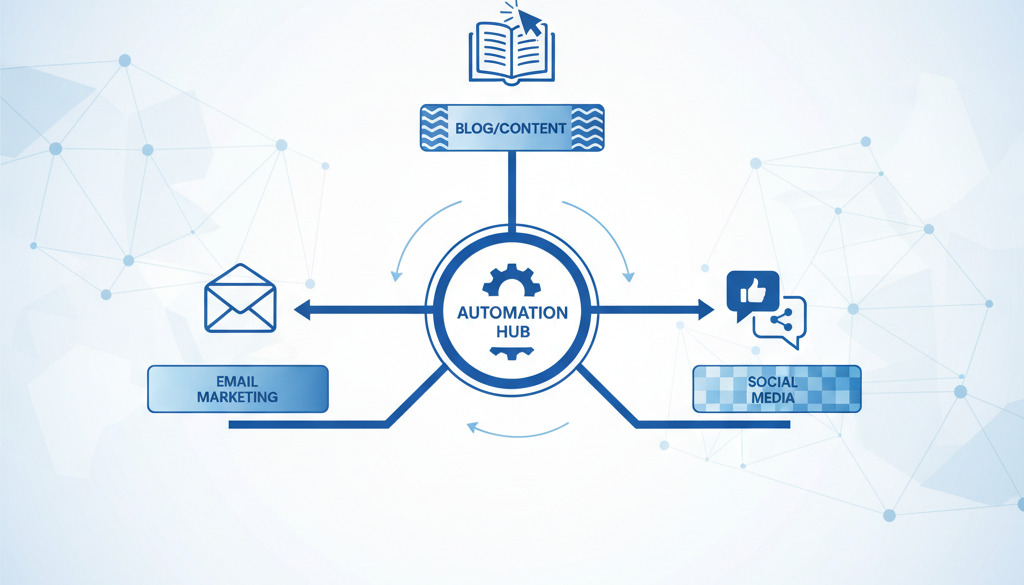
For a small business, automation typically revolves around a few core components:
- Email Marketing: Automatically sending a sequence of emails to new subscribers (a "welcome series") or nurturing leads who downloaded a resource from your site.
- Social Media Scheduling: Planning and scheduling your social media posts weeks or months in advance across multiple platforms.
- Lead Nurturing: Guiding potential customers through their buying journey with targeted content delivered at just the right moment based on their behavior.
- Personalized Content Delivery: Showing different website visitors different messages or offers based on their past interactions with your brand.
- Analytics and Reporting: Automatically gathering data on your campaign performance so you can see what's working and what isn't.
Why It's Crucial for Small Businesses
The primary benefit is unprecedented efficiency. Tasks that once took hours of manual work can be completed in minutes. But the impact goes deeper. Automation allows you to scale your marketing efforts in a way that's impossible to do manually. You can nurture hundreds or thousands of leads simultaneously, each with a personalized experience. This directly translates to a stronger pipeline, more conversions, and a higher return on investment (ROI) for your marketing dollars.
Identifying Your Ideal Customer and Their Content Journey
Effective automation isn't about spamming everyone with the same message. It's about delivering targeted, valuable content to the right people at the right time. This starts with a crystal-clear understanding of who your ideal customer is and the path they take before making a purchase.
Defining Your Target Audience (Beyond Demographics)
While basic demographics (age, location) are a starting point, you need to go deeper. Ask yourself:
- What are their biggest professional challenges or personal pain points that your product or service solves?
- What questions are they typing into Google related to your industry?
- What are their goals and aspirations?
- Where do they spend their time online (e.g., Facebook, LinkedIn, specific forums, industry blogs)?
Creating a detailed *customer persona* is a powerful exercise. Give this fictional ideal customer a name, a job title, and a story. The more real they feel, the easier it will be to create content that resonates with them.
Mapping the Customer Journey
The customer journey describes the stages a person goes through from first hearing about your brand to becoming a loyal customer. A simple, effective model includes three stages:
- Awareness: The prospect is experiencing a problem and is doing research to understand it better. They aren't looking for solutions yet, just information. Content here should be educational (e.g., "Why Does My Small Business Need Better Cash Flow Management?").
- Consideration: The prospect has now clearly defined their problem and is researching all available solutions. Content should compare different approaches or types of solutions (e.g., "Choosing Between Accounting Software vs. Hiring a Bookkeeper").
- Decision: The prospect is ready to choose a specific solution or provider. Content at this stage should build trust and highlight why you are the best choice (e.g., case studies, testimonials, detailed product pages).
The Role of Automation in Personalization
This is where automation shines. You can "tag" contacts in your system based on the content they engage with. Someone who downloads an Awareness stage checklist can be automatically entered into a nurture sequence with Consideration stage content. This ensures your communication is always relevant to their current needs, dramatically increasing engagement and conversions.
The Foundation: Building a Content Strategy That Drives Results
Automation tools are powerful, but they are only as effective as the strategy behind them. Before you invest in any software, you must lay a solid foundation by defining what you want to achieve and how you plan to get there.
Setting Clear, Measurable Goals
Don't just aim to "do content marketing." Set *SMART* goals: Specific, Measurable, Achievable, Relevant, and Time-bound.
- Bad Goal: "Get more website traffic."
- SMART Goal: "Increase organic blog traffic by 20% over the next 6 months by publishing two new, SEO-optimized articles per month."
- Bad Goal: "Get more leads."
- SMART Goal: "Generate 50 new qualified leads per quarter by promoting our new eBook through an automated email and social media campaign."
These clear goals will guide your entire strategy and give you a benchmark for measuring success.
Content Pillars and Topic Clusters
Instead of writing about random topics, organize your content around core themes, known as *content pillars*. These are the big, important subjects that your ideal customers care about. For each pillar, you then create a series of related, more specific articles called *topic clusters* that link back to the main pillar page. For example, a marketing agency might have a pillar page on "Lead Generation," with cluster posts on "Email Marketing," "SEO for Leads," and "Social Media Lead Ads." This structure is not only helpful for your audience but also signals your expertise to Google, boosting your search rankings.
Integrating Automation into Your Existing Strategy
If you're already doing some marketing, you don't need to start from scratch. Look at what you're currently doing manually and identify the biggest time sinks. Is it posting on social media? Following up with new contacts? Start by automating one of those processes. A small, early win will build momentum and confidence.
Essential Content Types for Small Business Automation
Your automation engine needs fuel, and that fuel is content. Different content formats are suited for different stages of the customer journey and work best with specific automation workflows. Here are the essentials for any small business.
Blog Posts as the Cornerstone
Regularly publishing high-quality, helpful blog posts is the single best way to attract organic traffic from search engines like Google. Each article is an opportunity to answer a customer's question, demonstrate your expertise, and draw potential buyers to your website.
The Challenge of Consistent Blogging
The problem, as most business owners know, is the immense effort required. A single, well-researched post can take hours to write, edit, and format. This is precisely why **consistent blogging is a key area where automation and new technologies can provide a massive advantage**.
Email Newsletters and Updates
Email remains one of the most powerful marketing channels, with an incredibly high ROI. Automation allows you to create segmented newsletters that send different content to different groups of subscribers. A new customer might get tips on using your product, while a long-time subscriber might see a special offer. This relevance keeps open rates high and unsubscribes low.
Social Media Content
Automation lets you schedule a steady stream of content across your social media profiles. This ensures your brand stays visible and top-of-mind. You can schedule posts to go live at the optimal times for engagement and automatically share your new blog posts across all your channels the moment they're published.
Lead Magnets and Gated Content
A *lead magnet* is a valuable piece of content—like an eBook, a checklist, a webinar, or a guide—that you offer in exchange for a person's email address. This "gated content" is the primary way you will acquire new leads to fuel your automated email nurturing campaigns.
Leveraging Automation Tools: A Practical Guide for Small Businesses
The marketing technology landscape is vast, but you don't need the most expensive or complex platform to get started. For a small business, the focus should be on user-friendliness, core functionality, and affordability.
Key Features to Look For
When evaluating tools, prioritize these features:
- Email Marketing & Automation: The ability to build automated email sequences (drip campaigns).
- Landing Page Builder: A simple, drag-and-drop way to create pages for your lead magnets.
- Forms & Pop-ups: Tools to capture leads on your website.
- Basic CRM (Customer Relationship Management): A central place to store and track your contacts and leads.
- Analytics & Reporting: Easy-to-understand dashboards that show campaign performance.
Popular Automation Platforms (Overview)
Recent research from 2026 shows a clear trend toward platforms that offer a mix of power and usability. Platforms can generally be divided into two categories: all-in-one suites and specialized, best-of-breed tools. Making the right choice depends on your business needs.
| Feature | All-in-One Platforms (e.g., HubSpot, Brevo) | Best-of-Breed Tools (e.g., Mailchimp + Hootsuite) |
|---|---|---|
| Scope | An integrated suite covering CRM, email, social media, landing pages, and more. | Highly specialized tools that excel at one specific function (e.g., email or social media). |
| Integration | Seamless integration between all features within the single platform. | Requires setting up connections (integrations) between separate tools, which can sometimes be complex. |
| Cost | Often a higher monthly fee, but can be more cost-effective than multiple subscriptions. | Lower entry cost for a single tool, but costs can add up as you subscribe to more services. |
| Best For | Businesses that want a single source of truth and value ease-of-use and an all-in-one dashboard. | Businesses that need deep, advanced functionality in one specific area (like e-commerce email). |
Budget-Friendly Options
The good news is that many industry-leading platforms offer free or low-cost starter plans specifically for small businesses. These plans often include generous limits on contacts and email sends, allowing you to build a sophisticated automation system without a large upfront investment. As your business grows, you can scale up to higher tiers.
Automating Your Content Creation Pipeline
For many small businesses, the single biggest obstacle is the creation of the content itself. You can have the best distribution and nurturing strategy in the world, but without a steady stream of high-quality articles, eBooks, and social posts, your engine will stall. This is where modern technology, particularly artificial intelligence, is creating a paradigm shift.
Streamlining Ideation and Planning
Coming up with fresh ideas for content is a job in itself. Automation can help. Many tools, including SEO platforms and some automation suites, have features that help you:
- Discover trending topics in your industry.
- Analyze competitor content to see what resonates.
- Identify keywords your customers are searching for.
- Plan and organize your ideas into a content calendar.
Content Generation Assistance
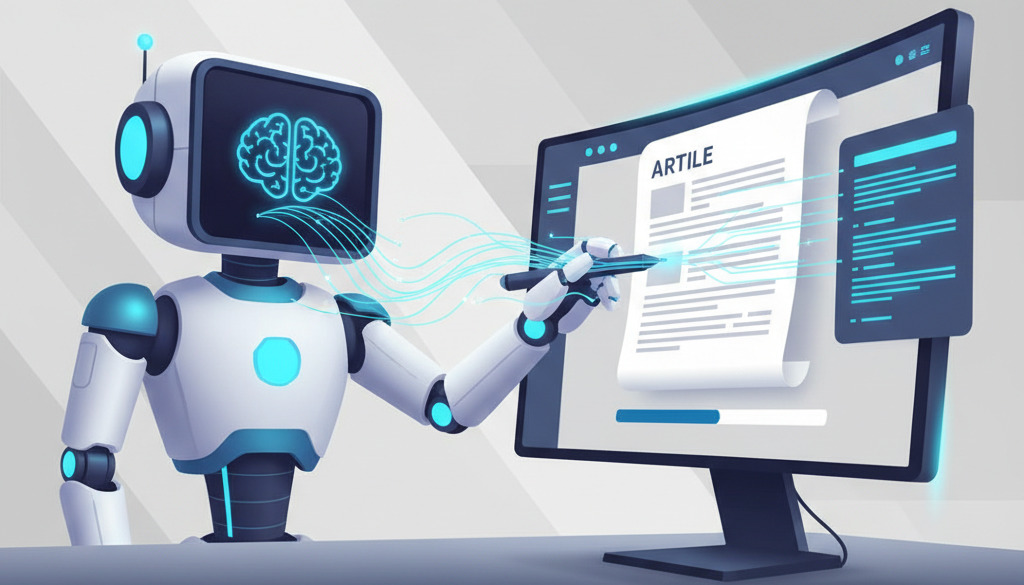
This is the most revolutionary development for small businesses. The days of struggling for hours over a blank page are over. AI-powered content generation has matured from a novelty into a legitimate business tool. For a business owner who lacks the time or desire to write, this is a game-changer.
Your Personal AI Content Team
Imagine having a professional SEO article written for your website in minutes instead of days. That's the promise of emerging platforms. For example, services created specifically for this purpose function like an AI-powered content team. Our research found services designed to get you "more customers from your blog" by using their proprietary AI to produce complete, professional-grade SEO articles almost instantly. Instead of just helping with outlines or paragraphs, these tools deliver a finished product, ready for you to review and publish. This radically reduces the time, cost, and expertise needed to run a powerful content program, allowing you to focus on strategy and your customers.
Content Repurposing Made Easy
Automation can also help you get more mileage out of every piece of content you create. An automated workflow can take a new blog post and:
- Extract key points to create a series of tweets.
- Use the main ideas to draft a script for a short video.
- Turn the key statistics into a simple infographic.
- Bundle it with other related posts into a downloadable PDF guide.
This *content repurposing* strategy ensures maximum visibility and value from your initial time investment.
Automating Content Distribution and Promotion
Creating great content is half the battle; getting it in front of the right audience is the other half. Automation ensures your content gets the visibility it deserves without you having to manually share it everywhere.
Social Media Scheduling and Optimization
This is often the first step businesses take into automation. Tools like Hootsuite, Buffer, or the social media features within all-in-one platforms allow you to write and schedule all your social posts for the week or month in one session. Many of these tools also offer optimization features, suggesting the best time to post for maximum engagement based on your audience's past activity.
Email Automation Workflows
When you publish a new blog post, an automated workflow can instantly send a notification to your email subscribers. You can even segment this distribution. For example, a post about advanced strategies might only be sent to your most engaged readers, while a beginner's guide is sent to new subscribers. This keeps your communication relevant and valuable.
Syndication and Cross-Promotion
Set up automations that share your new articles on platforms like Medium or LinkedIn Articles to reach a wider audience. You can also create workflows that automatically repromote your "evergreen" content—your most valuable, timeless posts—every few months to keep them driving traffic and leads long after they were first published.
Lead Nurturing Workflows with Automation
A new lead is just the beginning of a conversation. Lead nurturing is the process of building a relationship with that prospect and guiding them toward a sale. Automation makes this process scalable and incredibly effective.
Defining Lead Scoring and Segmentation
Lead scoring is an automated process of assigning points to your leads based on their profile and behavior. For example:
- Visiting the pricing page: +10 points
- Opening an email: +1 point
- Title is "Manager" or "Owner": +5 points
Once a lead reaches a certain score, they can be automatically flagged as a "sales-qualified lead" and routed to a salesperson. *Segmentation* involves grouping leads based on shared characteristics (e.g., industry, interests, location) to send them more relevant content.
Automated Email Sequences for Different Lead Stages
This is the core of automated lead nurturing. You can create distinct email "drip campaigns" for different segments and stages of the customer journey:
- Welcome Series: A 3-5 email sequence for new subscribers that introduces your brand and highlights your best content.
- Nurture Series: An educational series of emails sent to a lead who downloaded an Awareness stage guide, designed to move them to the Consideration stage.
- Cart Abandonment Series: For e-commerce businesses, an automated email (or series of emails) sent to someone who put items in their cart but didn't complete the purchase.
Trigger-Based Communications
Modern automation platforms allow you to send communications based on specific user actions, or "triggers." If a lead visits your product page three times in one week, you can automatically trigger an email from a salesperson offering a demo. This real-time relevance is incredibly powerful.
Personalization at Scale: Delivering the Right Message, To the Right Person, At the Right Time
Personalization is no longer a "nice-to-have"; customers expect it. Studies consistently show that personalized marketing drives significantly higher engagement and conversion rates. Automation is what makes true personalization possible for a small business.
Dynamic Content in Emails and on Websites
This is a powerful feature of many automation tools. *Dynamic content* allows you to show different versions of an email or web page to different people based on the data you have about them. For instance, a single email newsletter can show different featured articles or product recommendations to different customer segments, all within one send.
Personalized Product Recommendations
If you run an e-commerce store, you can use automation to send emails with product recommendations based on a customer's past purchases or browsing history. This is the same technology that giants like Amazon use to drive repeat purchases, and it's now accessible to you.
Behavioral Targeting
Beyond simple demographics, you can target content and offers based on a user's behavior. Did a prospect just read three blog posts about a specific service you offer? You can use automation to show them a targeted pop-up with a case study related to that service the next time they visit your site. This level of responsiveness makes your marketing feel less like a broadcast and more like a helpful, one-on-one conversation.
Measuring Success: Key Metrics and Analytics for Automation
One of the greatest advantages of digital marketing automation is the wealth of data it provides. You no longer have to guess what's working. You can track, measure, and optimize every aspect of your content strategy to maximize ROI.
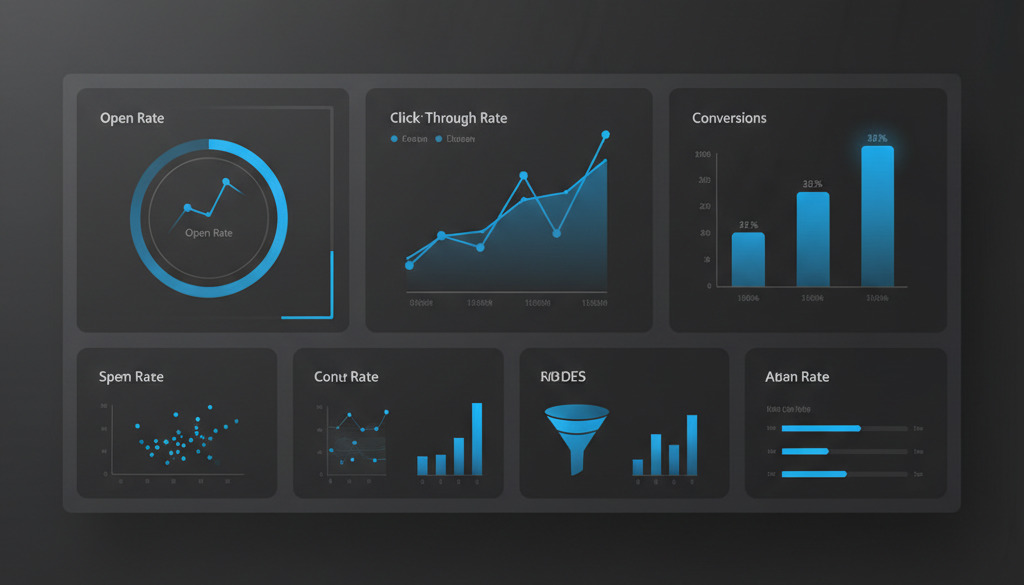
Understanding Your Dashboard
Your automation platform's dashboard is your command center. While it can seem overwhelming, focus on the key performance indicators (KPIs) that align with your SMART goals:
- Email Metrics: Open Rate, Click-Through Rate (CTR), Unsubscribe Rate, Conversion Rate.
- Website/Landing Page Metrics: Traffic, Time on Page, Bounce Rate, Form Conversion Rate.
- Lead Metrics: New Leads Generated, Cost Per Lead, Lead-to-Customer Conversion Rate.
Analyzing Campaign Performance
Don't just look at individual metrics in isolation. Analyze the performance of entire campaigns. For example, when you look at an email nurture sequence, ask:
- Which email in the sequence has the highest CTR? Can you learn from its subject line or content?
- Where in the sequence do most people unsubscribe? Is that email turning people off?
- What percentage of people who complete the sequence end up requesting a consultation or making a purchase?
"For years, most automation stacks were organized around a simple promise: set the rules once, trigger messages automatically, and scale repetitive tasks. The market is moving beyond that baseline... companies getting the most from marketing automation are no longer treating it as a campaign tool. They are treating it as an operating layer that connects data, content, orchestration, measurement, and optimization." - ALM Corp, 2026 Marketing Automation Trends
Iterating and Optimizing
The data from your analytics dashboard is your roadmap for improvement. Automation is not a "set it and forget it" tool. It's a dynamic system that requires ongoing refinement. Use A/B testing to experiment with different email subject lines, landing page headlines, or calls to action. Make small, incremental changes based on your data, and over time, you will see significant improvements in your results.
Overcoming Common Challenges in Content Marketing Automation for Small Businesses
While the benefits are immense, it's important to be aware of potential pitfalls on the path to successful automation. Proactively addressing these challenges will ensure a smoother implementation and better long-term results.
Avoiding the "Set It and Forget It" Trap
The biggest mistake businesses make is meticulously setting up workflows and then never looking at them again. Customer preferences change, marketing channels evolve, and your own business goals will shift. **Schedule time each month to review your automation performance.** Check your analytics, read the emails in your nurture sequences, and ensure everything is still relevant and effective.
Maintaining Brand Voice and Authenticity
A common fear is that automation will make your marketing feel robotic and impersonal. This only happens when the strategy is flawed. The key is to **ensure your brand's unique voice and personality are infused into every automated email and social post.** Write as if you were speaking to one person. Use personalization tokens (like a contact's first name) wisely, but rely on genuinely helpful content and an authentic tone to build a real connection.
Data Privacy and Compliance
As you collect contact information, you become responsible for protecting that data. It is crucial to understand and comply with regulations like the GDPR in Europe and state-level privacy laws in the US, such as the CCPA in California. Always use a double opt-in for email subscriptions, make it easy for users to unsubscribe, and be transparent in your privacy policy about how you use their data. Reputable automation platforms have built-in features to help you manage compliance.
Integrating Content Marketing Automation with Other Business Functions
The true power of automation is unlocked when it breaks out of the marketing silo and integrates with other parts of your business. This creates a more cohesive customer experience and improves overall operational efficiency.
Customer Relationship Management (CRM) Synergy
Your marketing automation platform and your CRM should be best friends. When integrated, marketing activities (like email opens and clicks) can be seen directly in the CRM, giving your sales team valuable context. Conversely, data updated in the CRM (like a lead's status changing to "customer") can trigger automated marketing workflows (like moving them to a customer onboarding sequence).
Sales Team Alignment
Automation can be a massive asset to your sales process. As mentioned, lead scoring can automatically identify the hottest leads and notify sales. You can also create workflows that send follow-up emails from a salesperson's address, saving them time while ensuring timely communication.
Customer Support Enhancement
Automation isn't just for acquiring customers; it's for keeping them, too. You can use it to create an automated onboarding series for new clients, providing them with training materials and helpful tips. You can also build a knowledge base of articles that answer common questions and use automation to point customers to the right resource when they submit a support query.
The Future of Content Marketing Automation for SMBs
The field of marketing automation is evolving at a breakneck pace. What was once defined by scheduled workflows is rapidly transforming into self-optimizing systems. Staying aware of these trends will help you prepare for what's next.
Emerging Technologies
Artificial intelligence is the driving force of this evolution. AI is moving beyond content generation and into *autonomous journey optimization*. In the near future, platforms will not just execute the workflows you build; they will analyze results in real-time and automatically adjust the journey for each individual to maximize the likelihood of conversion. This move from scheduled workflows to self-optimizing systems is the defining story of modern automation.
Hyper-Personalization Trends
As customers become more accustomed to personalized experiences, their expectations will continue to rise. The future lies in *hyper-personalization*, where every touchpoint with a brand feels uniquely tailored. This will be powered by AI analyzing vast datasets to predict customer needs and deliver a one-to-one experience at scale.
The Role of Human Oversight
It's crucial to remember that automation is a tool to augment human strategy, not replace it. The creativity to develop a compelling brand story, the empathy to truly understand a customer's pain point, and the strategic wisdom to set the right goals will always be human endeavors. The most successful businesses will be those that skillfully blend human-centered strategy with powerful automation technology.
Conclusion: Your New Competitive Advantage
For too long, small business owners have been caught in a difficult position: knowing they need to create content to grow, but lacking the time, resources, or expertise to do it consistently. Content marketing automation breaks this cycle. It empowers you to implement a sophisticated, always-on marketing system that saves you invaluable time, builds meaningful relationships with customers, and drives sustainable growth.
By starting with a clear strategy, choosing the right tools for your budget, and embracing new technologies, you can level the playing field. You can compete with larger companies by delivering personalized, relevant content to your audience at every stage of their journey. The path forward is clear: start small, measure your results, and continuously optimize.
And to solve the content creation problem once and for all, remember that you don't have to do it alone. By leveraging revolutionary solutions like AI article writing services that get you more customers from your blog for content generation, and then embracing automation for distribution and nurturing, you can finally achieve the powerful, consistent online presence you need. With the right approach, content marketing automation is not just an achievable strategy; it's your small business's new secret weapon.
Frequently Asked Questions
1. Isn't marketing automation too expensive for a small business?
Not anymore. While "enterprise" platforms can be very expensive, the market is now filled with powerful and affordable options designed specifically for small businesses. Many top-tier providers like Brevo, ActiveCampaign, and HubSpot offer free or low-cost starter plans that provide all the functionality you need to get started with email automation, lead capture, and basic CRM. The ROI from time saved and leads generated often makes it one of the most cost-effective investments a small business can make.
2. Will automation make my marketing feel robotic and impersonal?
This is a common concern, but it's a myth. Impersonal marketing is a result of a bad strategy, not the tools themselves. Effective automation relies on segmentation and personalization to deliver messages that are *more* relevant and timely than what you could ever manage manually. By using data on a customer's behavior and interests to send them helpful content, you build a stronger, more personal connection, not a weaker one. The key is to maintain your authentic brand voice in all your automated communications.
3. How much time does it take to set up content automation?
The initial setup requires a time investment, but it pays dividends for years to come. Plan on dedicating a few days to a week to choose your platform, import your contacts, and build your first one or two core workflows (a welcome series is a great place to start). The most time-consuming part for many is creating the content. However, by using AI content generation tools, you can reduce the time it takes to create a blog post or a lead magnet from days to minutes, dramatically speeding up the entire process.
4. Can I use automation if I'm not very tech-savvy?
Absolutely. Modern automation platforms are built with non-technical users in mind. Most feature intuitive, visual "drag-and-drop" workflow builders that look like flowcharts. You don't need to know how to code. If you can map out a simple "if this, then that" scenario on paper, you can build an automation sequence. All major platforms also have extensive libraries of tutorials, videos, and support articles to guide you.
5. What's the difference between content automation and just scheduling social media posts?
Social media scheduling is a *part* of content marketing automation, but it's only one small piece. Scheduling is a linear process: you schedule a post for a specific time. True content marketing automation is a dynamic system. It involves triggering entire sequences of events based on user behavior (e.g., if a user downloads an eBook, *then* send them email #1, wait 3 days, *then* send them email #2). It encompasses email, website behavior, lead scoring, and CRM integration to manage the entire customer journey, not just your social media calendar.
Keep reading
Hand-picked guides that go deeper — open the one you need next:
- Local SEO for Plumbers: Attract More Customers with AI Content
- Boost Local Rankings with Volteruno's AI Content
- Small Business SEO: AI Levels the Playing Field
- Professional Content Marketing on a Budget: The AI Advantage
→ Read the full Small Business guide