
Hyperlocal Marketing AI: Target Local Growth

For decades, local marketing was a game of radius circles and zip codes. Businesses would buy billboard space or distribute mailers based on general proximity, hoping to catch the attention of anyone passing through. However, as digital connectivity has deepened, the "local" boundary has shrunk. We have entered the era of hyperlocal marketing—targeting consumers within a few blocks, a specific neighborhood, or even the immediate vicinity of a storefront.[1]
The challenge has always been the sheer amount of data required to make these micro-campaigns work. Scaling a strategy that treats every street corner differently is impossible for human teams alone. This is where Artificial Intelligence (AI) serves as the ultimate catalyst.[2] By processing real-time location data, consumer sentiment, and environmental factors, AI is transforming hyperlocal marketing from a niche tactic into a high-precision engine for local business dominance. This article explores how AI isn't just improving local reach, but fundamentally redefining how businesses integrate into the daily lives of their immediate communities.
Understanding the Hyperlocal Imperative
Hyperlocal marketing is the practice of targeting prospective customers within a very specific, limited geographic area, often as narrow as a few city blocks or a direct radius around a physical business. Unlike traditional local marketing, which might encompass an entire metropolitan area or county, hyperlocal strategies focus on the "near me" intent. According to recent search data, "near me" queries have grown by over 400% in recent years, signaling a profound shift in how Americans interact with their surroundings.
The imperative for this approach is driven by the mobile-first consumer. Today’s shoppers expect instant gratification. If they are looking for a specialty coffee or a dry cleaner, they aren't searching for the best option in the city; they are searching for the best option within a five-minute walk or drive. This demand for immediacy has rendered broad targeting inefficient.
Traditional hyperlocal efforts often failed due to "fragmentation fatigue." Managing unique messages for twenty different neighborhood locations manually leads to errors and generic "cookie-cutter" content that fails to resonate. AI solves this by automating the nuance. It recognizes that a resident in the West Village has different immediate needs and cultural touchpoints than someone in the Financial District, even if they are only a mile apart.
The Genesis of AI in Marketing
The journey of AI in the business world began with back-end automation—optimizing supply chains and managing large databases. In the mid-2010s, AI moved into the marketing front-end through basic programmatic advertising and recommendation engines. However, the true breakthrough for local businesses came with the advancement of Machine Learning (ML) and Natural Language Processing (NLP).
Initially, AI was the playground of enterprise giants who used predictive analytics to forecast national sales trends. As the technology matured and became more accessible through SaaS platforms, its application shifted toward the micro-scale. Foundational AI concepts like "deep learning" allow systems to recognize patterns in local foot traffic that a human manager would never notice, such as the correlation between local high school football schedules and increased demand for specific grocery items.
Today, the integration of AI is moving from "generative" (creating text and images) to "agentic." Agentic AI refers to systems that can autonomously execute tasks based on high-level goals. For a local business, this means an AI agent can monitor local weather, recognize a sudden heatwave, and automatically launch a localized social media ad for iced beverages targeted at people within a 1,000-meter radius, all without human intervention.
AI-Powered Customer Understanding at a Micro-Level
At the heart of any successful hyperlocal campaign is a granular understanding of the community. AI excels at synthesizing vast amounts of disparate data to build "Micro-Personas." Instead of a broad "suburban mom" segment, AI identifies "The 7:00 AM Yoga Enthusiast in zip code 90210 who prefers organic snacks."
By analyzing demographics, psychographics, and real-time location data, AI-driven platforms can map the unique "vibe" of a specific zone. This includes analyzing sentiment on local community boards (like Nextdoor or Reddit), monitoring local news, and tracking historical purchase data. This allows businesses to understand not just who is in the area, but why they are there at a specific time.
Furthermore, AI can identify "niche audiences" that traditional tools might miss. For example, it might identify a specific cluster of remote workers in a residential neighborhood who frequent parks between 2:00 PM and 4:00 PM. A local cafe can use this insight to push a "mid-day recharge" offer specifically to that micro-segment, ensuring the marketing spend is focused purely on high-intent individuals.
Precision Targeting with AI in Hyperlocal Campaigns
The most tangible application of AI in this space is the evolution of geofencing and geo-conquesting. Geofencing creates a virtual perimeter around a location; when a mobile device enters that area, it triggers a specific action, like a push notification or an ad. AI enhances this by adding "Contextual Intelligence."
Rather than pinging everyone who enters the fence, AI uses algorithms to determine the probability of conversion. If a person is moving at 45 mph, they are likely driving and shouldn't be distracted. If they are walking at 3 mph and have previously searched for "artesian bread," the AI delivers a personalized notification for the local bakery they are about to pass. This is known as "Hyper-Contextual Delivery."
Geo-conquesting takes this a step further by targeting customers when they are near a competitor’s location. AI can analyze the wait times or stock levels at a competitor (using public data and social sentiment) and offer a timely alternative. "Long line at the big-box pharmacy? Come to Smith’s Local Drugs—we’re 2 blocks away with zero wait time." This level of precision ensures that marketing dollars are never wasted on consumers who are unlikely or unable to visit the store.

Optimizing Local Content and Messaging with AI
Content is often the bottleneck of hyperlocal marketing. Producing unique, high-quality content for dozens of micro-locations is resource-heavy. AI-driven content tools now allow businesses to generate "Hyper-Relevant" messaging at scale. These tools don't just write text; they adapt the tone and references to suit the specific neighborhood.
For instance, an AI can scan local events and trending topics in a specific town. If there is a local high school graduation or a neighborhood street fair, the AI can suggest or create social media posts that reference these events, making the business feel like a genuine part of the community rather than a detached corporate entity. This builds "Community Equity," which is vital for long-term loyalty.
Furthermore, AI can perform A/B testing on a micro-scale. It might find that residents in one neighborhood respond better to "sustainability" messaging, while those three blocks over are more motivated by "convenience" or "price." The AI automatically adjusts the creative assets and copy for each specific zone, maximizing the resonance of every impression.
AI-Driven Local Search Engine Optimization (SEO)
Local SEO is no longer just about keywords; it’s about "Machine Readability." With the rise of AI search engines and voice assistants (like Alexa, Siri, and ChatGPT Search), businesses must ensure their data is structured so AI can find and cite it. This is often referred to as "AI Citation Optimization."
AI tools now automate the management of Google Business Profiles (GBP) and other local directories. They can monitor for "NAP" (Name, Address, Phone) consistency across hundreds of sites, which is a critical ranking factor. More importantly, AI can analyze local search patterns to predict which semantic queries are gaining traction. Instead of just "pizza," the AI might identify a surge in "gluten-free wood-fired pizza in [Neighborhood Name]" and advise the business to update its menu and metadata accordingly.
Review management is another area where AI shines. It can scan hundreds of reviews to identify common themes—perhaps customers are consistently praising the "outdoor seating" but complaining about "slow parking." AI allows the business to respond to these reviews with personalized, empathetic language while simultaneously highlighting those positive "outdoor seating" attributes in local search ads to capitalize on the trend.
Personalizing the Local Customer Journey with AI
The "customer journey" in a hyperlocal context is often very short, sometimes lasting only minutes from search to purchase. AI bridges the gap between digital discovery and physical entry. By integrating with local inventory systems, AI can show a customer exactly what is on the shelf at their nearest branch in real-time.
Once a customer is in the "Loyalty Circle," AI can deliver personalized offers based on their specific routines. If the AI learns that a customer typically visits a local gym on Tuesday mornings, it can send a mobile coupon for a protein smoothie at the neighboring health bar at exactly 10:15 AM. This level of personalization makes the brand feel like a helpful neighbor rather than a persistent advertiser.
Chatbots and virtual assistants have also become "locally aware." A hyperlocal AI chatbot doesn't just answer general FAQs; it knows the specific parking situation at the Main Street branch, the current wait time for a table, and the name of the local manager on duty. This reduces the friction of the "last mile" of the customer journey, significantly increasing the likelihood of a physical visit.
Measuring and Maximizing Hyperlocal Marketing ROI with AI
One of the historical complaints about local marketing was the difficulty of attribution. How do you know if a local flyer or a broad radio ad actually drove a customer into the store? AI provides the answer through "Multi-Touch Attribution" and "Location Lift Analysis."
By correlating digital ad exposure with anonymized GPS dwell-time data, AI can determine with high statistical confidence whether an ad led to a physical visit. Businesses can track Key Performance Indicators (KPIs) such as:
- Cost Per Walk-In: The total spend divided by the number of people who entered the store after seeing an ad.
- Hyperlocal Reach Efficiency: How effectively the brand is capturing the "share of wallet" within a specific radius.
- Sentiment Lift: The change in local social media sentiment following a neighborhood-specific campaign.
AI doesn't just report these numbers; it acts on them. If the AI detects that a specific geofence is underperforming, it can automatically shift the budget to a higher-performing neighborhood or adjust the offer in real-time to see if a deeper discount sparks interest. This creates a "closed-loop" optimization system that constantly improves the ROI of local spending.
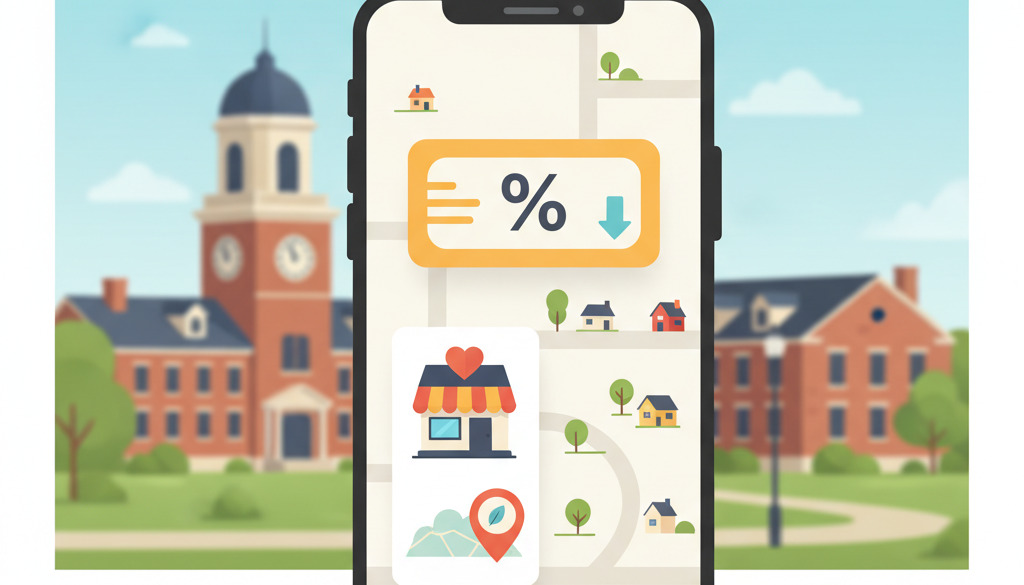
Ethical Considerations and Future Trends in Hyperlocal AI Marketing
As hyperlocal targeting becomes more precise, ethical considerations regarding privacy and data security move to the forefront. Businesses must navigate the fine line between "helpful" and "creepy." The responsible use of AI requires transparent data collection practices and strict adherence to regulations like the CCPA and GDPR. AI models must be trained on "clean" data to avoid biases that could inadvertently exclude certain neighborhoods or demographics from receiving high-value offers.
Looking toward the future, we are seeing the emergence of "Agentic Commerce." In this scenario, a consumer’s personal AI assistant negotiates with a local business’s AI to find the best deal. For example, your car’s AI might detect you need tires and negotiate a discount with the three nearest service centers based on your schedule and their current bay availability.
We are also seeing the integration of Hyperlocal AI with Augmented Reality (AR). Imagine a customer walking down a street wearing AR glasses; AI identifies the stores they are interested in and overlays real-time reviews, daily specials, and personalized "loyalty" discounts directly onto the storefronts in their field of vision. The physical world is becoming a clickable, personalized interface.
Conclusion
Hyperlocal marketing AI is no longer a futuristic concept reserved for tech giants. It is a practical, essential toolkit for any local business that wants to survive and thrive in an increasingly crowded digital landscape. By leveraging AI to understand the micro-nuances of their community, automate the delivery of hyper-relevant content, and precisely measure the results, businesses can build a level of neighborhood dominance that was previously unimaginable.
The transformation from broad, "best-guess" marketing to precision-targeted AI strategies represents the biggest shift in local commerce since the invention of the yellow pages. For business owners and marketing directors, the message is clear: the most valuable data is often right outside your front door. Embracing AI is the key to unlocking that value and turning "near me" searches into long-term, loyal neighbors.
Unlocking Hyperlocal Advertising with AI-Driven Precision
Hyperlocal marketing AI is revolutionizing how businesses connect with their immediate customer base by moving beyond generic advertising to hyper-targeted campaigns. Traditional local advertising often relied on broad demographics or chosen neighborhoods. However, hyperlocal marketing AI delves deeper, analyzing real-time data such as current location, local events, weather patterns, and even the time of day to deliver ads that are maximally relevant to an individual at a specific moment. Imagine a coffee shop owner using AI to identify that a sudden downpour has occurred in their immediate vicinity. The AI can then trigger a promotion for a "cozy up with a hot latte" deal, sent directly to smartphone users within a few blocks of the shop. This level of granular targeting ensures that marketing messages not only reach the right people but do so at precisely the opportune moment, significantly increasing the likelihood of conversion and customer engagement.
This precision extends to understanding the unique characteristics of different micro-locations. AI algorithms can identify distinct customer segments within a few-block radius, recognizing that the preferences of residents near a park might differ significantly from those living in a bustling commercial district, even if they are geographically very close. For instance, a bookstore might discover through AI analysis that weekend afternoons see a surge in families with young children browsing their shelves in a particular section. The hyperlocal marketing AI can then suggest targeted ads for children's story time events or new releases specifically to parents in that immediate area during those peak times. This nuanced approach allows businesses to tailor their offerings and messaging not just to a neighborhood, but to the specific individuals inhabiting and interacting with that micro-environment, fostering a sense of personal connection and relevance.
Furthermore, the analytical power of hyperlocal marketing AI provides invaluable feedback loops for continuous improvement. Unlike traditional methods where campaign effectiveness could be vaguely estimated, AI-powered campaigns offer detailed insights into performance metrics at an extremely granular level. Businesses can track which specific micro-campaigns resonate most with which micro-segments, understand the customer journey from ad interaction to in-store visit, and optimize ad spend in real-time based on conversion rates. This data-driven approach empowers local businesses to move away from guesswork and towards scientifically optimized marketing strategies, ensuring that every dollar spent contributes directly to measurable growth within their immediate service area. The ability to pinpoint success and failure at such a micro-level is a game-changer for local business owners seeking to maximize their advertising ROI.
FAQ
What is hyperlocal marketing AI?
Hyperlocal marketing AI refers to artificial intelligence tools and strategies focused on precise, neighborhood-level marketing. It leverages data to understand and engage with consumers within very specific geographic areas, like a few-block radius.
How does hyperlocal marketing AI help businesses grow locally?
It enables businesses to deliver highly relevant promotions and messages to potential customers who are physically close by and likely to convert. This precision reduces wasted ad spend and increases the effectiveness of marketing campaigns, leading to improved local sales and foot traffic.
What are some common applications of hyperlocal marketing AI?
Common applications include sending location-based offers to nearby consumers via mobile apps, optimizing local search engine results to appear for nearby queries, and personalizing online ads based on a user's current vicinity and known interests.
Keep reading
Hand-picked guides that go deeper — open the one you need next:
- Unlocking Growth: The Complete Small Business AI Guide
- Tell Us About Your Business
- More Customers Through Your Blog
- The Ultimate Guide to AI-Powered SEO for Small Businesses
→ Read the full Small Business guide