
Unlocking Growth: The Complete Small Business AI Guide
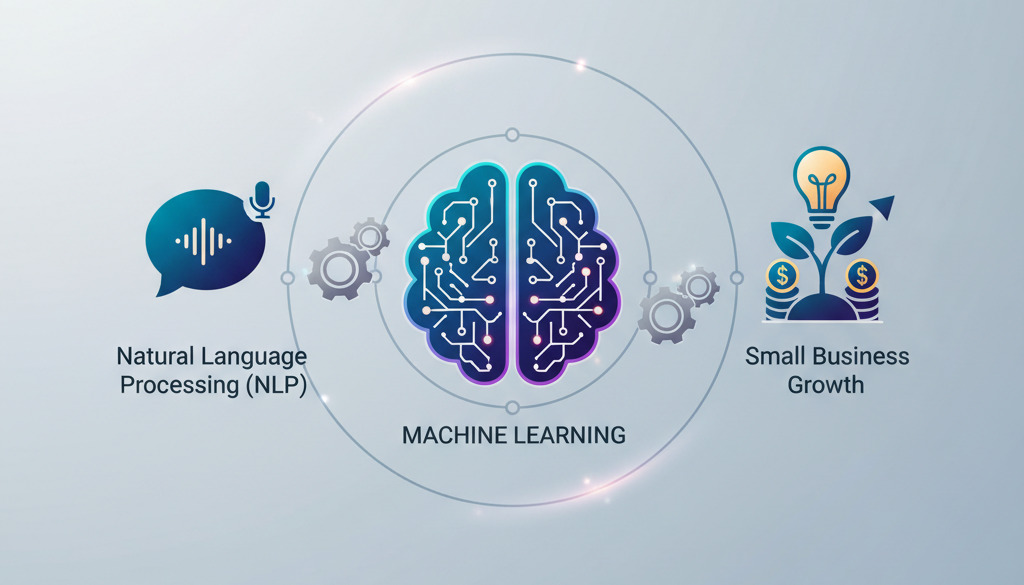
The acceleration of digital transformation has reached a pivotal juncture where Artificial Intelligence (AI) is no longer a luxury reserved for Silicon Valley giants or Fortune 500 conglomerates. Today, the landscape of small business AI is rapidly evolving, offering accessible, cost-effective solutions that allow lean teams to punch well above their weight class. For the modern entrepreneur, AI represents more than just automation; it is a fundamental shift in how value is created, delivered, and captured. This guide provides a strategic blueprint for small business owners ready to navigate this technological frontier and leverage AI for sustainable growth.
Understanding the Core Concepts: What is AI for Small Businesses?
In the context of a small business, Artificial Intelligence is best understood as a suite of technologies that allow software to perform tasks that typically require human intelligence—such as recognizing patterns, making predictions, or understanding natural language. For a local retailer or a boutique consulting firm, AI isn't a humanoid robot; it is the algorithm that predicts which customers are likely to churn or the software that automatically categorizes expenses.
To implement AI effectively, it is essential to understand three primary subfields that dominate the SME (Small and Medium Enterprise) landscape:
- Machine Learning (ML): This involves training systems to learn from data. For example, if you feed a system historical sales data, it can "learn" to predict future demand. It is the engine behind recommendation engines and fraud detection.
- Natural Language Processing (NLP): This technology allows machines to read, understand, and generate human language. It powers the chatbots on your website and the tools that summarize long legal documents or customer reviews.
- Computer Vision: This enables software to "see" and interpret visual information. In small businesses, this is used for everything from automated inventory scanning via smartphone cameras to security systems that identify unauthorized access.
Small businesses generally choose between two paths: off-the-shelf tools and custom integrations.[1] Off-the-shelf tools are SaaS (Software as a Service) platforms like Canva (for AI design) or Salesforce (for AI-driven CRM) that require zero coding. Custom integrations involve using APIs—like those from OpenAI or Google Cloud—to build specific functionalities into existing business workflows. For most SMEs, the journey begins with off-the-shelf solutions, as they offer the lowest barrier to entry and the fastest time-to-value.
Identifying Opportunities: Where Can AI Drive Immediate Value?
The most successful AI implementations in small businesses focus on solving high-friction, low-creativity "pain points." Instead of looking for "cool" tech, owners should look for "boring" problems that consume too much time. Identifying these opportunities requires a focus on Return on Investment (ROI) and measurable efficiency gains.
Consider the three core pillars where AI delivers immediate impact:
1. Customer Service: Traditional customer service is expensive to scale. AI-driven sentiment analysis can flag an angry customer email before a human even opens it, allowing for prioritized intervention. Furthermore, AI can provide personalized product recommendations based on a user's browsing history, directly increasing the average order value (AOV).
2. Marketing & Sales: Lead generation is often a "spray and pray" exercise for small firms. AI tools can analyze LinkedIn profiles and company data to identify leads that mirror your highest-paying clients. In sales, predictive analytics can suggest the "next best action" for a sales rep, such as when to follow up or what specific benefit to highlight based on the lead's industry.
3. Operations & Efficiency: This is where the most significant cost savings reside. AI-powered inventory management systems can analyze local weather patterns, seasonal trends, and historical sales to ensure you never overstock perishables or run out of bestsellers. Predictive maintenance in service-based businesses (like HVAC or plumbing) can alert teams to equipment failure before it happens, preventing costly emergency repairs.
AI for Enhanced Customer Experience & Engagement
Modern consumers expect a level of personalization that was previously impossible for small businesses to provide manually. AI bridges this gap by creating "hyper-personalized" experiences. By analyzing data points such as past purchases, geographic location, and even time-of-day interactions, AI allows a small business to treat every customer like a VIP.
The Rise of AI Chatbots and Virtual Assistants
The new generation of AI chatbots, powered by Large Language Models (LLMs), has moved past the frustrating "I don't understand that" phase. For a small business, these tools act as 24/7 digital receptionists. They can handle up to 80% of routine inquiries—such as "where is my order?" or "what are your hours?"—without human intervention. However, the key to success lies in the human handover. The most effective systems detect when a query is too complex or emotionally charged and seamlessly transfer the conversation to a human staff member with a full transcript of the interaction.
Leveraging AI for Personalized Marketing Campaigns
Email marketing used to mean sending the same blast to 5,000 people. With AI, a small business can implement dynamic content delivery. This means that if Customer A frequently buys organic dog food, their version of the newsletter features a story about pet nutrition, while Customer B receives a version focused on cat grooming. This level of relevance significantly boosts open rates and conversion metrics by ensuring the marketing message aligns perfectly with individual intent.
Streamlining Operations: AI-Driven Efficiency Gains
Efficiency in a small business is often the difference between a healthy margin and breaking even. AI excels at the "drudge work"—the repetitive, high-volume tasks that lead to employee burnout and human error. By automating these processes, business owners can redirect their human talent toward strategy, creativity, and relationship building.
Automating Repetitive Tasks with AI
Consider the process of accounts payable. Traditionally, an employee would manually enter data from PDF invoices into accounting software. AI-powered Optical Character Recognition (OCR) now does this instantly with 99% accuracy. Similarly, AI tools can manage complex scheduling for service businesses, optimizing routes for field technicians to minimize drive time and fuel costs. Even email management has been transformed; AI can now draft initial responses to common inquiries, leaving the human staff only to review, tweak, and hit "send."
Predictive Analytics for Smarter Business Decisions
Small businesses often operate on "gut feeling." AI introduces data-backed precision. Predictive analytics can forecast cash flow by analyzing historical payment patterns of your clients, alerting you to a potential shortfall three months in advance. In the retail sector, it can identify "dead stock" early, suggesting targeted discounts to clear the shelves before the product becomes unsellable. These insights allow for proactive rather than reactive management.

AI in Marketing and Sales: Boosting Reach and Conversion
In the digital-first economy, the noise is deafening. Small businesses struggle to be heard over the massive advertising budgets of larger competitors. AI levels the playing field by optimizing every dollar of marketing spend through higher precision and better content.
AI for Smarter Lead Generation and Qualification
Not all leads are created equal. AI-driven lead scoring systems analyze how a prospect interacts with your website, social media, and emails to assign a "hotness" score. This allows your sales team to stop chasing cold leads and focus their energy on the 10% most likely to close. Furthermore, AI tools can scrape the web to find "lookalike" audiences—people who haven't heard of you yet but share the exact characteristics of your most loyal customers.
Optimizing Content and SEO with AI
Search Engine Optimization (SEO) is a moving target. AI tools now analyze top-ranking pages in real-time to suggest the exact keywords, headings, and content depth required to rank. In content creation, AI doesn't just write; it assists. It can turn a single long-form blog post into ten social media snippets, three email subject lines, and a video script, ensuring that your message is consistent and optimized for every platform without requiring a full-time content team.
Data-Driven Insights: Making Smarter Business Decisions with AI
Data is often called the "new oil," but for most small businesses, it's just raw sludge sitting in spreadsheets. AI acts as the refinery. By processing vast amounts of data that would take a human weeks to read, AI uncovers the "why" behind business performance. This deep intelligence allows owners to move from "I think this is happening" to "I know this is happening."
Understanding Customer Behavior Through AI Analytics
AI-powered journey mapping can pinpoint exactly where customers drop off in your sales funnel. For instance, you might discover that customers in a specific zip code consistently abandon their carts at the shipping page because rates are too high. Additionally, churn prediction models can identify "at-risk" customers based on a decline in login frequency or support tickets, allowing you to reach out with a retention offer before they leave for a competitor.
Market Trend Analysis and Competitive Intelligence
Small businesses rarely have the budget for expensive market research firms. However, AI tools can monitor the entire web for mentions of your competitors, tracking their price changes, new product launches, and customer complaints in real-time. This "competitive intelligence" allows you to pivot your strategy instantly—for example, by launching an aggressive ad campaign the moment a competitor hikes their prices or suffers a service outage.
Implementing AI: A Practical Roadmap for Small Businesses
The prospect of implementing AI can be daunting. The key is to avoid "shiny object syndrome"—the urge to buy every new tool that hits the market. Instead, adopt a disciplined, phased approach that prioritizes utility over novelty.
Assessing Your Business Needs and Goals
Start by auditing your calendar. What tasks take the most time but require the least thought? These are your prime candidates for AI. Define success clearly: do you want to reduce customer response time by 50%, or do you want to increase lead conversion by 15%? Having a specific metric ensures you can measure the "AI-driven" impact and justify the investment.
Choosing the Right AI Tools and Vendors
Look for vendors that offer "low-code" or "no-code" interfaces. A small business rarely has the resources to manage complex software development. Prioritize tools that integrate natively with your existing tech stack (e.g., your CRM, accounting software, or email platform). Before committing to a yearly subscription, run a 30-day pilot program to ensure the tool actually solves the problem you identified in the audit phase.
Data Preparation and Training Your Team
AI is only as good as the data it consumes. Before launching, ensure your data is clean, organized, and relevant. Simultaneously, invest in "AI literacy" for your staff. Transitioning to AI can cause job anxiety; reassure your team that AI is there to augment their abilities, not replace them. Reskilling should focus on how to "prompt" AI tools effectively and how to interpret the data-driven insights the system generates.

Ethical Considerations and Responsible AI Use
As small businesses adopt AI, they must also adopt a framework for its ethical use. Trust is a small business's greatest asset, and a single ethical lapse in AI usage can destroy years of reputation building. Responsibility in AI involves transparency, security, and fairness.
Data Privacy and Security Compliance
With AI comes the handling of significant customer data. Small businesses must ensure their AI vendors are compliant with regulations like the CCPA (California Consumer Privacy Act) or GDPR. This means having clear opt-in/opt-out procedures for data collection and ensuring that the data used to train or inform your AI is stored securely. Customers need to know their data isn't being sold or used in ways they didn't agree to.
Mitigating Bias in AI Algorithms
AI is not inherently neutral; it reflects the biases present in its training data. If your AI-driven hiring tool is trained on historical data from a period when your industry was less diverse, it may inadvertently filter out qualified minority candidates. Small business owners must perform "fairness checks" by regularly reviewing AI outputs for unintended bias. It’s vital to maintain "human-in-the-loop" systems where a person reviews significant AI-generated decisions—especially those affecting people’s lives or livelihoods.
The Future of Small Business with AI: Trends and Predictions
The evolution of AI is moving at a breakneck pace, and the tools available to small businesses next year will likely dwarf the capabilities of today. Staying competitive requires a forward-looking perspective on how these technologies will mature and democratize.
One major trend is hyper-percepion via AI co-pilots. We are moving toward a world where every employee has a personalized AI assistant that understands their specific workflow, manages their calendar, drafts their communications, and provides real-time coaching during sales calls. This will drastically reduce the "onboarding" time for new employees and raise the baseline productivity of the entire organization.
Furthermore, we expect to see autonomous operations in logistics and inventory. Imagine a warehouse that automatically reorders stock, negotiates the best price from five different vendors via AI-driven "negotiation bots," and handles the customs paperwork without a human ever touching a keyboard. For the small business, this level of automation removes the "scale penalty"—the traditional disadvantage where smaller firms pay more for everything because they lack the volume of larger corporations. In the AI era, the playing field isn't just leveled; it's rebuilt to favor the agile.
Ultimately, the small businesses that thrive will be those that view AI as a strategic partner rather than a technical hurdle. By starting small, focusing on ROI, and maintaining a commitment to ethical practice, entrepreneurs can harness the power of AI to build more resilient, efficient, and customer-centric organizations. The journey of a thousand AI-powered miles begins with a single automated task. Now is the time to take that first step.
Keep reading
Hand-picked guides that go deeper — open the one you need next:
- Small Business SEO AI: The Ultimate 2026 Growth Strategy
- Local SEO for Service Businesses: The Ultimate Ranking Guide
- Local Business, Global Reach? How AI Shapes Your Local SEO Strategy
- Dominate Your Niche: AI Content for Any Industry
→ Read the full Small Business guide