
Local SEO for Service Businesses: The Ultimate Ranking Guide
Key Takeaways
- Google Business Profile (GBP) is the most critical asset for local rankings; complete every field and update it weekly.
- NAP Consistency (Name, Address, Phone Number) across all digital directories is non-negotiable for building search engine trust.
- Customer Reviews are not just social proof—the quantity, frequency, and keyword richness of reviews directly impact your position in the Local Pack.
- Location-Specific Pages are essential for businesses serving multiple areas, as they allow for precise geo-targeting.
- Mobile Optimization is the backbone of local search, as over 50% of local queries result in a physical visit within 24 hours.
For service businesses, the digital landscape has shifted from being a luxury to a primary survival mechanism. Whether you are a plumber in Phoenix or a law firm in Boston, your customers are no longer flipping through phone books; they are typing "near me" into Google. Local SEO is the process of optimizing your online presence to attract more business from relevant local searches. For service-based companies—those whose revenue depends on serving a specific geographic radius—Local SEO isn't just a marketing tactic; it is the most effective way to reach ready-to-buy customers at the exact moment they need your expertise.
This guide provides a comprehensive roadmap for service businesses to dominate their local markets. We will explore the mechanics of the local search ecosystem, the nuances of Google Business Profile management, and advanced strategies like schema markup and local link building.[1] By the end of this article, you will have a professional framework to increase your visibility, outshine your competitors, and drive measurable growth through organic local search.
Understanding the Local Search Ecosystem
The local search ecosystem is a complex web of data sources that search engines use to determine which business deserves the top spot. When a user performs a search with local intent, Google doesn't just look at websites; it scans a massive database of "entities" to provide the most relevant, nearby, and trustworthy solution.
The Anatomy of the Local Pack
Commonly referred to as the "Map Pack" or "3-Pack," this is the box that appears at the top of Google search results showing three local businesses alongside a map. For service businesses, this is the holy grail of digital real estate. Research indicates that the Local Pack receives the lion's share of clicks on mobile devices because it provides immediate answers: business hours, phone numbers, and star ratings. If your business is not in these top three spots, you are potentially losing over 70% of local search traffic to your competitors.
Relevance, Proximity, and Prominence
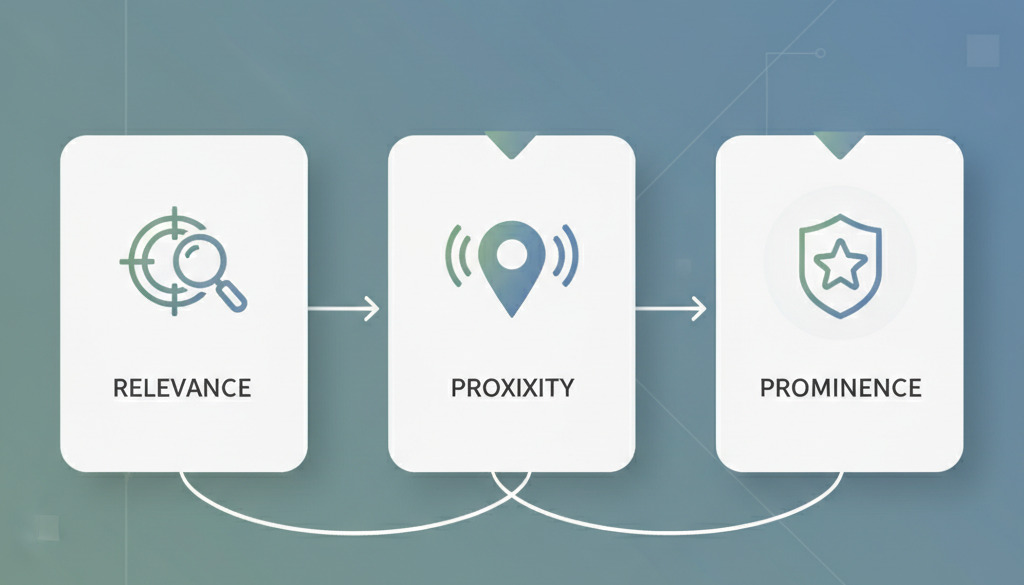
Google uses three primary pillars to rank local businesses. Relevance refers to how well your business profile matches what someone is searching for. Proximity considers how far your business is from the searcher's location. Prominence is a measure of how well-known or important your business is in the digital world, based on information Google has from across the web, such as links, articles, and reviews. While you cannot control proximity, you have total control over your relevance and prominence.
Optimizing Your Google Business Profile (GBP) - The Cornerstone of Local SEO
If your website is your digital storefront, your Google Business Profile is your digital billboard on the busiest highway in town. It is the single most important factor for ranking in the Local Pack. A half-optimized profile is a signal to Google that your business might not be the best answer for a user's query.
Claiming, Verifying, and Categorization
The first step is claiming your profile and undergoing the verification process, which usually involves a postcard, phone call, or video verification. Once verified, choosing the correct primary category is paramount. Service businesses often make the mistake of picking a category that is too broad. If you are a commercial HVAC contractor, don't just settle for "Contractor." Be specific. Use secondary categories to capture related services like "Air Conditioning Repair" or "Heating Equipment Supplier."
Maximizing Engagement with High-Quality Media
Visual content is a powerful conversion tool. Profiles with high-quality photos receive 35% more clicks to their websites than those without. For service businesses, this means uploading photos of your branded trucks, your team in uniform, and "before and after" shots of your work. These images act as visual proof of service. Additionally, use the "Products" and "Services" sections to build out detailed lists of what you offer, including prices and descriptions, which helps Google understand your business's depth.
Leveraging Posts and Messaging
Google Business Posts are essentially mini-social media updates that appear directly in your search listing. Use them to announce seasonal discounts, share recent blog posts, or highlight successful projects. Furthermore, enabling the "Messaging" feature allows potential customers to text your business directly from the search results. In a world where people prefer texting over calling, this can drastically increase your lead conversion rates.
Harnessing the Power of Local Citations and NAP Consistency
In the eyes of a search engine, consistency equals trust. Local citations are mentions of your business's name, address, and phone number (NAP) on other websites. These citations help Google verify that your business actually exists at the location you claim.
The Golden Rule of NAP Consistency
Your NAP data must be identical across every platform. If your address is "123 Main Street, Suite 5" on your website, but "123 Main St. #5" on Yelp, search engines may perceive this as two different entities or, worse, an unreliable business. This confusion can dilute your local authority and lower your rankings. Audit your major listings—including Facebook, Bing Places, and Apple Maps—to ensure they mirror your Google Business Profile exactly.
Building a Citation Portfolio
Start with the "Big Three" aggregators: Neustar Localeze, Foursquare, and Data Axle. These platforms feed data to hundreds of smaller directories. Beyond the majors, focus on niche-specific directories. For example, a home service business should have a presence on Angi, Houzz, and HomeAdvisor. These industry-specific citations carry more weight for relevance than a generic directory listing. Use tools like BrightLocal or Whitespark to identify gaps in your citation profile and automate the cleanup of incorrect data.
Localized Website Content Strategy
Your website needs to speak the language of your local community. Standard SEO focuses on "What" you do; Local SEO focuses on "Where" you do it. To rank well, your content must signal to Google that you are an authority in your specific service area.
On-Page Optimization and Geographic Keywords
Incorporate your city and neighborhood names into your H1 tags, URL slugs, and meta descriptions. Instead of a generic page titled "Plumbing Services," use "Emergency Plumbing Services in Seattle, WA." However, avoid "keyword stuffing." The goal is to make the location mention feel natural to the reader. Mentioning local landmarks or nearby intersections can also provide semantic clues to search engines about your precise service radius.
Creating Dedicated Location Landing Pages
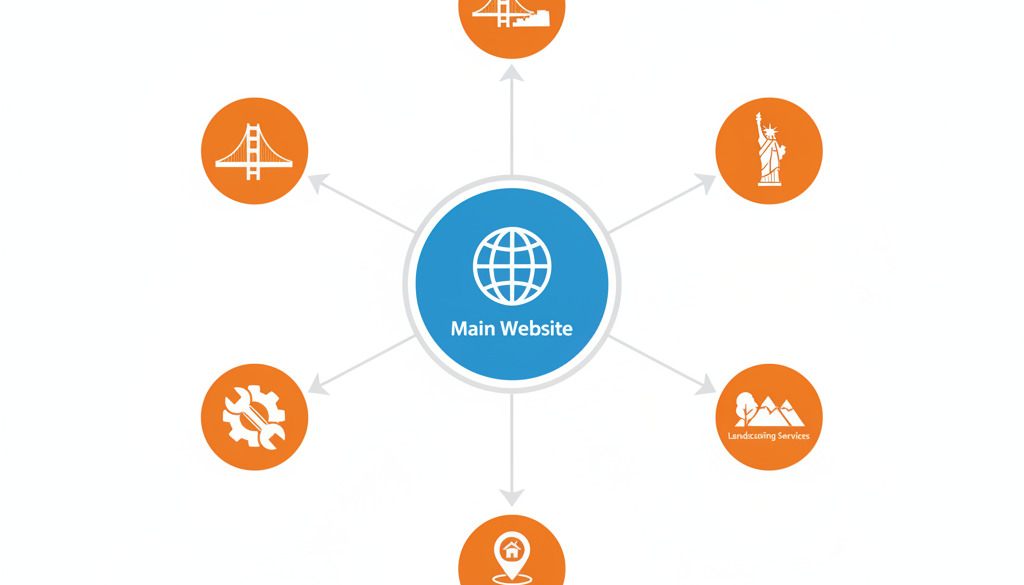
If your service business operates in multiple cities or counties, creating individual landing pages for each area is a game-changer. Each page should have unique content—do not simply swap out the city names. Include local testimonials, photos of projects completed in that specific area, and localized maps. This allows you to rank for "service + city" searches for every location you serve without confusing Google about your primary base of operations.
Building Trust and Authority with Local Reviews
Reviews are the lifeblood of the modern service business. They are more than just feedback; they are a direct ranking factor. Google tracks the quantity of reviews, the average star rating, and the frequency (velocity) at which new reviews are posted. Most importantly, Google reads the content of the reviews to understand your business better.
Proactive Review Acquisition
Waiting for customers to leave reviews naturally usually leads to a profile full of outliers—the extremely happy or the extremely disgruntled. To build a robust profile, you must ask. Implement a system where service technicians send a follow-up text or email with a direct link to your GBP review page immediately after a job is completed. When a customer includes keywords like "best roofer" or mentions the specific service they received, it significantly boosts your relevance for those terms.
The Art of the Response
Never leave a review unanswered. Responding to positive reviews builds loyalty and shows potential customers that you are engaged. Responding to negative reviews is even more critical. A professional, calm response that offers to make things right can often turn a one-star review into a four-star one. It also demonstrates to Google that you are a legitimate business that cares about customer satisfaction. Tip: Include your business name and service keywords in your responses to further reinforce your local SEO signals.
Schema Markup for Enhanced Local Search Visibility
Schema markup is a form of structured data that you add to your website's code to help search engines provide more informative results for users. It is essentially a way of "translating" your website content into a language that search bots can digest with 100% accuracy.
Implementing LocalBusiness Schema
By using LocalBusiness schema, you can explicitly tell Google your business hours, your service area, your price range, and even your star ratings from other platforms. For service businesses, using the "service" property within schema allows you to list every specific thing you do. When Google has this level of certainty about your data, it is more likely to reward you with "Rich Snippets"—those enhanced search results that show extra information like FAQs or star ratings directly on the results page.
Geo-Targeted Structured Data
Beyond basic business info, you can use "AreaServed" schema to define exactly which zip codes or cities your business covers. This is particularly helpful for "SABs" (Service Area Businesses) that don't have a physical storefront where customers visit. Structured data helps bridge the gap between your physical location and the broad area where you actually perform your work.
Local Link Building Strategies
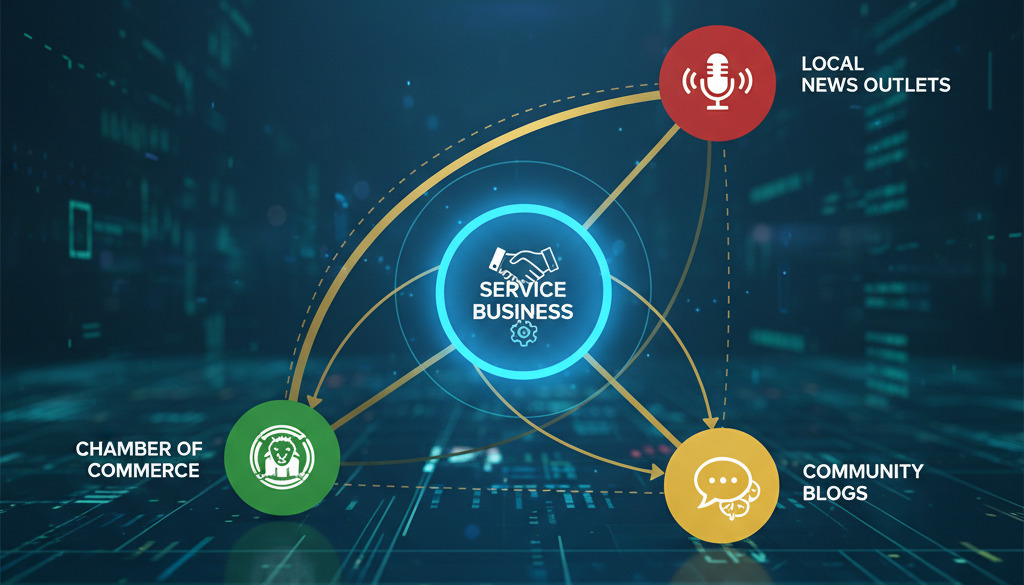
In traditional SEO, a link from a massive site like Forbes is the goal. In Local SEO, a link from the local high school's football team website or the neighborhood Chamber of Commerce can be just as valuable. These local links tell Google that you are a prominent member of the local community.
Regional Partnerships and Sponsorships
Look for opportunities to sponsor local events, charities, or youth sports. These often result in a "Sponsors" page link. While these may be "nofollow" links, they still drive local traffic and signal geographic relevance. Joining your local Chamber of Commerce or the Better Business Bureau (BBB) provides powerful, authoritative local backlinks that are difficult for competitors to replicate. These links act as digital endorsements of your local presence.
Guest Blogging and Community Involvement
Reach out to local news sites or community blogs to offer an expert opinion piece. For instance, an electrician could write a "Winter Electrical Safety Guide" for a local neighborhood association's blog. This positions you as the local expert and earns you a highly relevant backlink from a site that Google already associates with your city.
Measuring Local SEO Success and Iterative Improvement
You cannot manage what you do not measure. Tracking the performance of your Local SEO efforts ensures you are getting a return on your investment and allows you to pivot when strategies aren't delivering results.
Critical KPIs to Monitor
The most important metric for a service business isn't just "traffic"—it's conversions. Monitor your Google Business Profile Insights to see how many people called you directly from the listing, how many requested directions, and how many clicked through to your website. Track your rankings for core "service + city" keywords, but also keep an eye on "near me" queries. If you notice a dip in phone calls despite high rankings, you may need to improve your review profile or update your GBP photos.
Utilizing Search Console and Analytics
Google Search Console provides a wealth of data on which search queries are bringing people to your site. Look for "Local Intent" queries and see which landing pages are performing best. Use Google Analytics to track the behavior of users who arrive via local search. Are they visiting your "Contact Us" page? Are they filling out your lead forms? High bounce rates on location pages may indicate that the content isn't relevant enough to the local user's needs.
Navigating Mobile Local Search and Voice Search
Local search is inherently mobile. Most "near me" searches happen on a smartphone while the user is on the go or in immediate need of a service. If your website is slow or difficult to navigate on a phone, your rankings will suffer regardless of your other SEO efforts.
The Mobile-First Mandate
Google uses "mobile-first indexing," meaning it looks at the mobile version of your site to determine rankings. For a service business, this means your phone number should be "click-to-call," your menus should be easy to tap, and your site must load in under three seconds. Mobile users have high intent but low patience; if they can't find your contact info in five seconds, they will hit the "back" button and call the next business in the Local Pack.
Optimizing for the Voice Search Revolution
With the rise of Siri, Alexa, and Google Assistant, voice search is becoming a dominant way people find local services. Voice queries are typically longer and more conversational. Instead of "plumber Boston," a user might ask, "Who is the best plumber near me that is open now?" To capture this traffic, your content should include long-tail keywords and an FAQ section that mirrors the way people actually speak.
Advanced Tactics and Future-Proofing Your Local Strategy
As AI and machine learning become more integrated into search, Local SEO is evolving. Google's "Search Generative Experience" (SGE) is beginning to provide AI-written summaries of local businesses. To stay ahead, your digital footprint needs to be so clear that an AI can easily summarize why you are the best choice.
Integrating Local SEO with Paid Advertising
A "holistic" search strategy involves using Local Services Ads (LSAs) alongside your organic efforts. LSAs appear at the very top of the search result—even above the Local Pack—and operate on a "pay-per-lead" basis. Using both organic Local SEO and LSAs allows you to dominate the top of the page, making it nearly impossible for a customer to miss your business. This "all-enveloping" presence builds massive brand authority.
Staying Ahead of Algorithm Changes
Google updates its local algorithm frequently. The businesses that survive these updates are the ones that focus on authentic user experience rather than trying to "game" the system. Avoid "spammy" tactics like adding keywords to your business name (if they aren't part of your legal name) or buying fake reviews. In 2026 and beyond, Google's ability to detect manipulation will only improve. Stick to the fundamentals: provide great service, ask for honest reviews, and keep your business information accurate and widespread.
Conclusion
Dominating the local market is not about a single "trick"; it is about building a consistent, trustworthy, and authoritative digital presence. For service businesses, Local SEO is the great equalizer. It allows a small, local contractor to outrank a massive national franchise by proving to Google that they are the most relevant and reliable choice for a specific community.
By optimizing your Google Business Profile, maintaining strict NAP consistency, fostering a culture of customer reviews, and leveraging localized content, you create a marketing engine that works 24/7. Local SEO is a long-term investment that builds compound value over time. Every positive review, every local backlink, and every optimized landing page adds to your professional reputation. Start implementing these strategies today, and you will find your business not just appearing in the search results, but winning the trust of your neighbors and driving sustainable growth for years to come.
Frequently Asked Questions
How long does it take to see results from Local SEO?
Local SEO is typically a medium-term strategy. While some changes, like updating your Google Business Profile or fixing NAP errors, can show impact within a few weeks, it generally takes 3 to 6 months to see a significant and stable increase in rankings and lead volume. This timeline depends on the competitiveness of your industry and the current health of your digital presence.
Do I need a physical office to rank in Local SEO?
No, you do not necessarily need a storefront where customers visit. Google has a specific designation for "Service Area Businesses" (SABs). You can hide your home address and instead define a service radius (e.g., 20 miles around a certain city). However, you still need a verified physical address to register the profile, and having a physical office in the city you want to rank in usually provides a proximity advantage.
What is the most important factor for ranking in the Map Pack?
While Google uses over 200 ranking signals, the consensus among experts is that your Google Business Profile (GBP) optimization is the #1 factor. This includes choosing the right category, having a high number of positive reviews, and physical proximity to the searcher. Without a fully optimized and active GBP, it is nearly impossible to rank in the top three local spots.
Is it worth paying for local directory listings?
Generally, it is better to focus on free, high-authority directories first. However, paying for a membership in your local Chamber of Commerce or a reputable industry-specific directory (like a state bar association for lawyers) is often worth the investment because of the high-quality backlink and the trust it builds with both Google and potential customers. Avoid "link farms" or cheap directory packages that promise hundreds of listings, as these can look like spam to search engines.
How often should I post on my Google Business Profile?
Consistency is more important than frequency. A good rule of thumb for most service businesses is to post at least once a week. This keeps your profile looking "fresh" to both users and Google's algorithm. Use these posts to share project updates, seasonal tips, or current promotions to maintain high engagement levels.
Keep reading
Hand-picked guides that go deeper — open the one you need next:
- Google Business Profile Rankings: Boost Local SEO with AI Content
- Content Marketing Automation for Small Business
- AI for Small Business Content Marketing: Boost Reach and ROI
- Local SEO for Small Business: Dominate with AI Content
→ Read the full Small Business guide
→ Read the full Small Business guide