
Mastering SEO Optimized Blog Articles: A Strategic Blueprint

In the rapidly evolving digital landscape, the definition of a successful blog article has shifted. It is no longer enough to simply write well; content must be engineered for both human resonance and machine discoverability. Search Engine Optimization (SEO) has matured from a tactical checklist of keyword placements into a sophisticated discipline of brand authority, technical excellence, and user experience.[1] As we navigate an era defined by generative AI and shifting user behaviors, the strategy behind SEO optimized blog articles must be more robust and forward-thinking than ever before.
This article provides a strategic blueprint for professionals and businesses aiming to dominate search results and convert organic traffic into tangible business outcomes. By aligning editorial quality with technical precision, you can ensure your content doesn't just rank, but serves as a sustainable engine for growth.
The Foundational Pillars of SEO Content Strategy
Every successful SEO campaign begins long before the first word is typed. The foundation of high-performing content is built upon a deep understanding of who the audience is and what they are trying to achieve. In 2026, search engines like Google and Bing have become increasingly adept at identifying "Search Intent." It is no longer about the broad topic; it is about the why behind the query. We categorize intent into four primary types: Informational (seeking knowledge), Navigational (seeking a specific site), Commercial (researching options), and Transactional (ready to buy). An SEO optimized blog article must align its tone and depth with these specific stages of the buyer's journey.
Keyword research serves as the compass for this journey. However, the methodology has evolved beyond targeting high-volume terms. Modern strategy prioritizes "keyword velocity" and long-tail potential. Using tools like Google Trends and SEMrush, marketers must identify "breakout" trends—topics experiencing 5,000%+ growth—to capture demand before the market becomes saturated. This proactive approach allows brands to establish early authority in emerging niches.
Finally, content cannot exist in a vacuum. It must be tethered to clear Key Performance Indicators (KPIs). Whether the goal is lead generation, increasing "share of model" within AI-generated overviews, or driving direct conversions, every article needs a defined purpose. By setting these goals early, you ensure that the content serves the business's bottom line while providing maximum value to the reader.
Crafting Compelling, Keyword-Rich Content
The core of an SEO optimized blog article is the content itself. However, the era of "keyword stuffing" is long dead. Today, search engines reward "Semantic SEO"—the practice of using related concepts and natural language to provide context. Primary keywords should be placed strategically in the first 100 words, in at least one H2 heading, and naturally within the body. Secondary keywords and synonyms (LSI keywords) should be woven in to signal to search engines that the content is comprehensive and authoritative.
Readability is a ranking factor, albeit an indirect one. If a user encounters a "wall of text," they are likely to bounce, signaling to the search engine that the content was not helpful.[2] High-performing articles utilize a logical hierarchy. The H1 tag is reserved for the title, while H2 and H3 tags break down the subtopics. This structure allows "skimming" readers to find exactly what they need while helping search crawlers understand the relationship between different sections of the text.
An authoritative voice is non-negotiable. Business-to-business (B2B) and high-end B2C content must demonstrate Expertise, Authoritativeness, and Trustworthiness (E-A-T). This means citing original research, providing specific data points, and writing with a level of nuance that generic AI-generated content cannot replicate. In the age of AI synthesis, the human element—perspective, experience, and unique insights—is what separates a ranking article from a forgotten one.
On-Page Optimization Beyond Keywords
While the body text is vital, the technical "metadata" surrounding the article often dictates whether a user clicks at all. The Meta Title is your first impression; it should be under 60 characters and include the primary keyword while offering a clear benefit to the reader. Similarly, the Meta Description serves as your "ad copy" in the Search Engine Results Pages (SERPs). While not a direct ranking factor, a well-crafted description significantly improves Click-Through Rate (CTR), which is a vital signal of relevance to search engines.
Visual elements also require optimization. Every image should include "Alt Text" that is both descriptive and keyword-conscious. This is not only essential for web accessibility for the visually impaired but also allows your images to rank in image search, providing an additional funnel for traffic. Furthermore, internal linking is often the most undervalued on-page tactic. By linking to other relevant articles on your site using descriptive anchor text, you distribute "link equity" and keep users engaged for longer periods, reducing bounce rates and building site-wide authority.
Technical SEO Considerations for Blog Articles
Technical SEO is the infrastructure that supports your content. Even the most brilliant article will fail if the page is slow or broken. URL structure should be clean, descriptive, and permanent. Avoid generic strings like /blog/post-123; instead, use keyword-rich slugs like /seo-optimized-blog-articles. This provides search engines and users with an immediate understanding of the page content.
In a mobile-first indexing world, your blog's performance on smartphones is paramount. Google primarily uses the mobile version of a site for indexing and ranking. This means your layout must be responsive, buttons must be easy to tap, and text must be legible without zooming. Closely tied to this is page speed. Research shows that a 100-millisecond delay in load time can hurt conversion rates by 7%. Implementing image compression, leveraging browser caching, and minimizing heavy JavaScript are essential steps to ensure your blog remains competitive in a high-speed digital economy.
Enhancing User Experience (UX) for SEO Success
Google's algorithms are increasingly focused on "User Signals." If people love your content, Google will too. Enhancing UX is about removing friction. This involves aesthetic choices like font size (typically 16px to 18px for body text) and line spacing, which improve comprehension. Utilizing white space effectively prevents cognitive overload, allowing the reader to focus on the key messages of the article.
Engagement elements such as custom infographics, embedded videos, and interactive charts can significantly increase "Time on Page." These visuals shouldn't be mere window dressing; they should provide a different way to digest information. For instance, a complex data set is often better represented as a chart than a three-paragraph explanation. Finally, every SEO optimized blog article must lead somewhere. Strategic Calls to Action (CTAs)—whether they are "Download our Guide," "Sign Up for a Newsletter," or "Contact an Expert"—must be placed where the reader is most likely to take the next step in their journey.
The Crucial Role of Off-Page SEO and Content Promotion
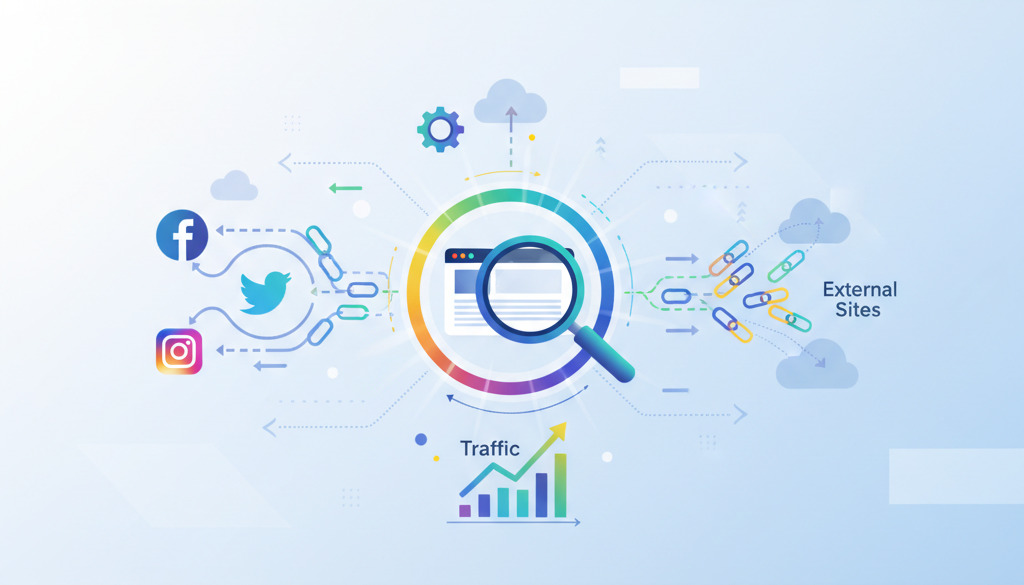
Content excellence is only half the battle; the other half is building authority through external validation. Backlinks remain one of the most powerful ranking signals. However, the focus has shifted from quantity to quality. Earning a link from a reputable industry publication is worth more than a hundred links from low-quality directories. Strategies like "The Skyscraper Technique" (improving upon existing popular content) or original data reporting are effective ways to naturally attract these high-value links.
Promotion is the catalyst for SEO. Leveraging social media platforms like LinkedIn for B2B or Instagram for B2C can drive initial traffic "sparks" that signal relevance to search engines. Email marketing remains a powerhouse; sending a new blog article to a curated list of subscribers ensures immediate engagement and can lead to secondary sharing and organic backlink opportunities. Remember, SEO does not exist in a silo; it is part of a cross-channel ecosystem where each platform reinforces the other.
Measuring and Iterating: The SEO Content Lifecycle
SEO is not a "set it and forget it" task. It is a continuous loop of measurement and refinement. Utilizing tools like Google Analytics 4 (GA4) and Google Search Console is vital for tracking progress. You must monitor not just rankings, but "dwell time" and "engagement rate." If an article ranks high but has a 90% bounce rate, it likely isn't meeting the user's intent, and its ranking will eventually decline.
Content auditing is a critical component of a mature strategy. Every 6 to 12 months, existing content should be reviewed. Is the data still current? Are there new keywords we should be targeting? Refreshing an old, high-authority post with new insights and updated links is often faster and more effective than writing a brand-new article. This "evergreen" approach ensures that your content library continues to gain value over time rather than becoming obsolete.
Advanced Strategies for SEO Blog Dominance
For organizations looking to lead their industry, basic optimization is insufficient. You must adopt advanced frameworks like "Topic Clusters." Instead of writing disconnected posts, you create a "Pillar Page"—a comprehensive guide to a broad topic—and then link it to several "Cluster Content" articles that dive deep into specific subtopics. This structure signals an incredible depth of topical authority to search engines, making it harder for competitors to displace you.
Schema Markup (Structured Data) is another advanced tool. By adding specific code to your article, you can help search engines understand that a piece of text is a "How-to," a "Review," or a "FAQ." This can result in "Rich Snippets"—enhanced search results that occupy more screen real estate and have significantly higher click-through rates. Furthermore, focusing on LSI (Latent Semantic Indexing) keywords ensures that your content covers the "breadth" of a topic, which is increasingly important as AI models try to summarize your content for users.
Common Pitfalls to Avoid in SEO Blog Article Creation
The most common mistake in modern SEO is prioritizing the algorithm over the human. Keyword stuffing, thin content, and "clickbait" titles might provide a short-term boost, but they inevitably lead to high bounce rates and brand erosion. Search engines are now smart enough to detect these "black hat" or "gray hat" tactics and will penalize sites that prioritize manipulation over value.
Another pitfall is the "Publish and Pray" mentality. Great content without promotion or technical support is a wasted investment. Likewise, ignoring mobile performance or page speed is a recipe for failure in our current "instant gratification" culture. Even a one-second difference in mobile load time can be the difference between a new lead and a lost opportunity. Avoid these traps by maintaining a holistic view of the SEO process, where technical, creative, and promotional efforts are perfectly synchronized.

Future-Proofing Your Blog Content Strategy
As we look toward 2026 and beyond, the rise of AI and Generative Search is the most significant shift since the birth of the search engine. Discovery is becoming conversational. Users are increasingly receiving synthesized answers from AI Overviews rather than clicking through to sites. To survive this, your SEO optimized blog articles must aim for "Citations." You want to be the source that the AI uses to formulate its answer. This requires structured content, verified facts, and a strong brand presence.
Voice Search and Visual Search are also on the rise. Optimizing for conversational queries (e.g., "How do I...") and ensuring high-quality images with detailed metadata will be essential. Ultimately, the long-term winner in the SEO world is the brand that builds authority and trust. By consistently delivering high-value, expert-led content, you transform your blog from a mere marketing tool into a trusted industry resource. This level of authority is the ultimate "algorithm-proof" strategy.
Conclusion
Mastering SEO optimized blog articles is a journey of continuous improvement. It requires a balance of analytical rigor and creative excellence. By focusing on deep audience understanding, strategic technical execution, and an unwavering commitment to quality, you can create a content engine that drives organic growth for years to come. Remember that SEO is a marathon, not a sprint; the cumulative effect of marginal gains across your content strategy will eventually lead to market dominance and sustained business success.
Keep reading
Hand-picked guides that go deeper — open the one you need next:
- Boost Your Business: AI Article Writing for SEO & Traffic
- Multilingual SEO Made Easy: Expand Your Reach with Volteruno's AI
- Manual Blogging vs AI SEO: Which Driven Strategy Wins?
- Demystifying SEO: A Non-Technical Guide for Business Owners Using AI