
WordPress Blog Automation: Publish SEO Content with AI Plugin
Key Takeaways
- Effortless Content Creation: AI publishing plugins for WordPress can dramatically reduce the time and effort required to create high-quality blog posts, product descriptions, and marketing copy.
- SEO-Driven Growth: The best AI plugins have built-in SEO features that help you optimize content for search engines, attracting more organic traffic and potential customers directly from Google.
- Strategic Business Tool: This technology is not just for writing; it's for scaling your business. It allows you to maintain a consistent publishing schedule, enhance brand authority, and engage your audience without hiring a large team.
- Human Oversight is Key: AI is a powerful assistant, not a replacement for human strategy. The most successful approach involves using AI to generate drafts and ideas, then applying your expert knowledge and brand voice for the final polish.
- High ROI Potential: For business owners short on time, the investment in an AI plugin or a related service offers a significant return by automating a critical, time-consuming marketing function and driving lead generation.
For modern business owners, the message is loud and clear: content is king. A steady stream of high-quality blog posts, articles, and updates is the engine of online visibility. It drives search engine rankings, builds trust with your audience, and ultimately, brings in customers. Yet, who has the time? Between managing operations, serving clients, and planning for growth, creating content often falls to the bottom of the to-do list. What if you could automate this entire process without sacrificing quality?
This isn't a far-off futuristic concept; it's a present-day reality powered by artificial intelligence. Specifically, AI publishing plugins designed for WordPress are changing the game for businesses, turning the content conundrum into a streamlined, automated, and powerful growth strategy.[1] This guide will walk you through exactly what these tools are, how they work, and how you can leverage them to achieve effortless content growth.
What is AI-Powered Content Publishing?
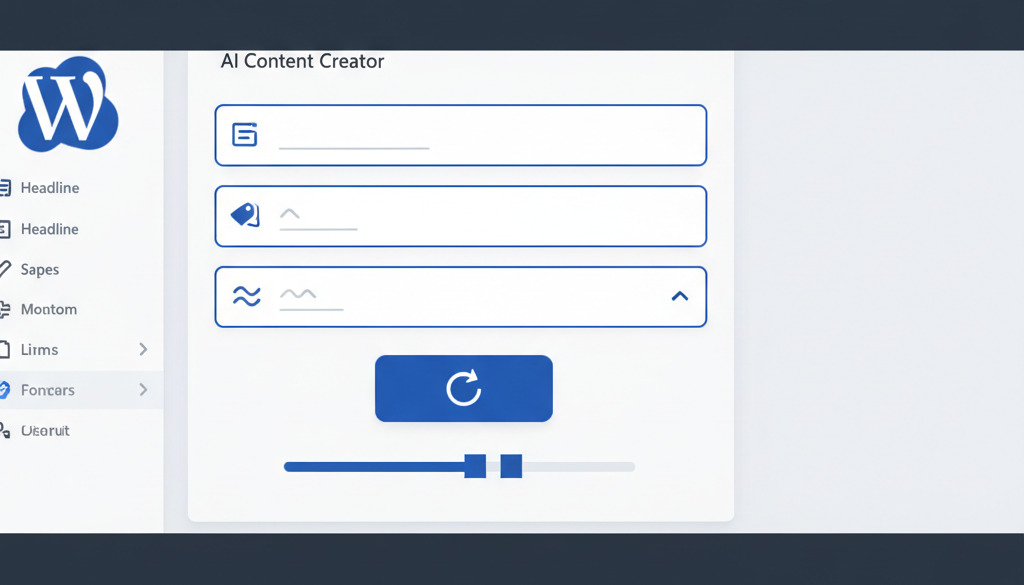
At its core, AI-powered content publishing refers to the use of artificial intelligence technologies to assist in or automate the creation, optimization, and distribution of digital content. In the context of your WordPress website, this is managed through a plugin that integrates directly into your dashboard. It’s not just about a simple grammar checker; we're talking about sophisticated systems that can generate entire articles from a single prompt.
Distinguishing AI Writers from Publishing Solutions
It's important to understand the difference between a standalone AI writing tool (like a web-based chat interface) and a fully integrated AI publishing plugin for WordPress.
- Standalone AI Writers: These tools are excellent for drafting content, but they operate outside your website. You must copy and paste the text into WordPress, format it, add images, and handle all the SEO details manually.
- Integrated AI Publishing Plugins: These solutions are built directly into your WordPress environment. They combine the content generation with SEO tools, publishing schedulers, and formatting options, creating a seamless workflow from idea to "Publish". This integration is what provides the true automation that busy business owners need.
The Core Benefits of AI for Content Creation
The appeal of using AI for your business blog goes far beyond simple convenience. It offers a strategic advantage that was once only available to companies with large marketing departments. The benefits are tangible and directly impact your bottom line.
Here’s a breakdown of the primary advantages:
- Unprecedented Speed: An AI plugin can draft a 2,000-word article in a matter of minutes, a task that could take a human writer several hours or even days. This allows you to scale your content output exponentially.
- Scalability on Demand: Need to create detailed descriptions for 100 new products? Or publish a daily blog post to dominate a niche topic? AI allows you to scale your content production up or down instantly to meet business demands without the need to hire and train new staff.
- Significant Cost-Efficiency: The cost of a monthly subscription for a powerful AI plugin is often a fraction of the price of hiring a freelance writer for just one or two articles. This makes consistent content creation accessible to businesses on any budget.
- Overcoming Writer's Block: Every business owner has stared at a blank screen, wondering what to write about. AI tools can be a powerful brainstorming partner, generating dozens of topic ideas, outlines, and introductory paragraphs to get you started.
How WordPress AI Publishing Plugins Enhance Your Workflow
The real magic happens when AI technology meets the world's most popular content management system: WordPress. Because these tools are designed as plugins, they are typically easy to install and manage, even for those who aren't particularly tech-savvy. They bring the power of AI directly into the familiar environment where you already manage your website.
Instead of a fragmented, multi-step process, your workflow becomes unified. You can research topics, generate a draft, optimize it for a target keyword, add it to your content calendar, and schedule it for publication—all from a single dashboard inside WordPress. This streamlined process is the key to unlocking true blog automation.
Key Features to Look For in an AI Publishing Plugin
Not all AI plugins are created equal. As the market floods with options, it's crucial for a business owner to know what features provide the most value. Look for a solution that offers a comprehensive suite of tools, not just a single function.
Content Generation Capabilities
This is the core function. The AI should be able to produce well-written, coherent, and relevant content. Look for options to specify the desired tone of voice (e.g., professional, casual, witty), content length, and target audience. The best plugins are powered by the latest large language models (LLMs), ensuring higher-quality output.
SEO Integration
Content without SEO is like a ship without a rudder. A critical feature is built-in SEO analysis. This should include keyword suggestions, on-page optimization guidance (like meta descriptions and header tags), and a scoring system to tell you how well your article is optimized before you publish it. This turns your AI writer into an AI-powered SEO strategist.
Customization and Control
AI should be your assistant, not your replacement. A good plugin must offer robust editing capabilities. You need to be able to easily review, edit, and fact-check the generated text. The ability to adapt the content to your specific brand voice and add your own unique insights is paramount for creating authentic content that resonates with your customers.
Publishing Automation
To truly automate your blog, look for features that go beyond writing. Key automation features include:
- Content Scheduler: Plan and schedule posts weeks or months in advance.
- Bulk Generation: Create multiple articles at once based on a list of keywords or titles.
- Auto-Publishing: Set rules to have the AI generate and publish content on a recurring schedule automatically (use with caution and always review).
The Technical Underpinnings: Demystifying the Technology
You don't need to be an engineer to use these tools, but understanding the basics can help you appreciate their power and limitations. Most modern AI content plugins are powered by Large Language Models (LLMs). These are massive AI systems trained on vast amounts of text and data from the internet.
"Until now, integrating AI into WordPress meant relying on fragmented, third-party plugins. Recent developments, however, are seeing AI frameworks being built directly into WordPress core, creating a more stable and powerful foundation for plugin developers."
This means the AI isn't "thinking" in the human sense. Instead, it's an incredibly sophisticated pattern-matching machine. It predicts the next most likely word in a sequence to form coherent sentences and paragraphs. This is why human oversight is so important. While the output is often impressively creative and accurate, it can sometimes contain factual errors or "hallucinations." Always treat AI-generated content as a first draft that needs a final review from a human expert: you.
Elevating Your Blog with Consistent, High-Quality Content
For most service-based and e-commerce businesses, the blog is the single most important tool for attracting new customers. But its effectiveness hinges on consistency. Publishing one article every six months won't make an impact. Search engines like Google reward websites that produce a steady stream of fresh, relevant content.
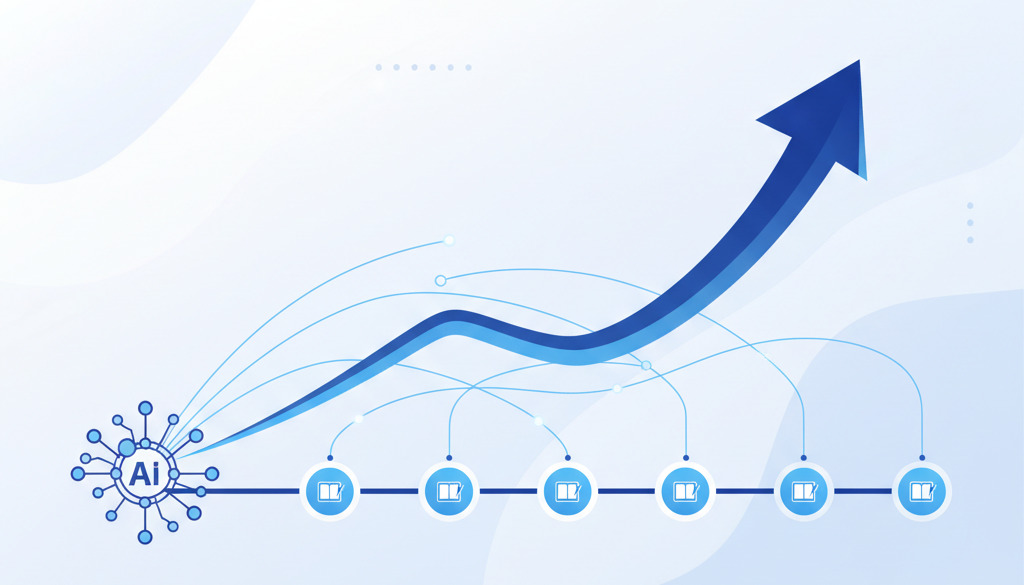
This is where an AI publishing plugin becomes a strategic asset. It helps you overcome the primary hurdle of "what to write about" by generating ideas and outlines a business owner can approve. From there, it can produce a full draft, allowing you to maintain a weekly or even daily publishing schedule. This consistency signals to Google that your site is a valuable resource, helping you rank for more keywords and attract a wider audience.
Revolutionizing Product Descriptions and E-commerce Content
If you run an e-commerce store on WordPress with WooCommerce, you know the challenge of writing unique, compelling descriptions for dozens or hundreds of products. It’s tedious, time-consuming work. Recent data shows that AI is now even an official contributor to the WooCommerce open-source project, signaling a deep integration into the e-commerce landscape.
AI plugins can be a lifesaver for online stores. You can feed the AI basic product specs, and it can generate persuasive, keyword-rich descriptions designed to convert visitors into buyers. This not only saves hundreds of hours but also improves the quality and consistency of your product pages, which can have a direct, positive impact on your sales.
| Content Type | Manual Effort | AI-Assisted Workflow | Business Impact |
|---|---|---|---|
| Product Descriptions | Hours per product | Minutes per batch of products | Faster product launches, improved SEO for products |
| Category Pages | Difficult to write unique copy | Generates unique intros and FAQs | Better user experience and SEO |
| Marketing Emails | Requires creative brainstorming | Generates subject lines and body copy | Increased engagement and sales from email campaigns |
Harnessing AI for Social Media and Marketing Copy
Your content strategy shouldn't end with your blog. An effective online presence requires consistent messaging across all your marketing channels. Many advanced AI plugins can be prompted to repurpose content, helping you maintain an active and engaging social media feed.
For example, you can ask the AI to:
- Summarize a new blog post into a short, punchy Facebook update.
- Extract key points into a series of tweets.
- Rewrite the introduction into a compelling email newsletter to drive traffic back to your site.
- Generate ad copy variations for Google Ads or social media campaigns.
This ensures your messaging is consistent and saves you from the creative burden of crafting unique content for each platform.
Driving Organic Traffic: The SEO Advantage
Ultimately, the goal for most business owners is to get found on Google by people searching for the solutions they offer. This is called organic traffic, and it’s the most valuable and sustainable source of leads. AI publishing plugins with strong SEO features are designed specifically to achieve this.
They help you systematically target the keywords your potential customers are using. By guiding the content generation process with SEO goals, the AI produces articles that are not just well-written but also mathematically more likely to rank high on search engine results pages. This is the long-term benefit that truly transforms a business: attracting customers organically without paying for every single click.
For business owners who want the strategic advantage of SEO content without managing the process themselves, dedicated services have emerged. These companies focus on a singular promise: delivering more customers from your blog by writing the SEO articles for you. They essentially act as your outsourced content and SEO team, powered by sophisticated AI to deliver results efficiently.
Choosing the Right AI Publishing Plugin for Your Business
With a clear understanding of the benefits, the next step is selection. Making the right choice depends on your specific business needs, budget, and technical comfort level.
Evaluation Framework
Use this checklist to compare different plugins:
- Feature Set: Does it only write content, or does it include SEO tools, a scheduler, and image integration?
- Content Quality: Use the free trial period to generate a few test articles. Is the output high-quality, or is it generic and robotic?
- Ease of Use: Is the interface intuitive? Or does it require a steep learning curve? Remember, the goal is to save time, not create a new technical headache.
- Cost and Pricing Model: Compare subscription tiers. Some are based on word count, while others are based on the number of articles. Choose a plan that aligns with your content goals.
- Support and Reviews: Check what other users are saying. Good customer support can be invaluable if you run into issues.
Getting Started: A Step-by-Step Implementation Guide
Once you've selected a plugin, getting started is usually straightforward. For most business owners, the process looks like this:
- Installation: From your WordPress dashboard, navigate to "Plugins" > "Add New." Search for your chosen plugin, and click "Install" and "Activate."
- Configuration: Connect your account by entering an API key provided by the plugin developer. This is usually a simple copy-and-paste step.
- Set Your Parameters: In the plugin's settings, you can often define your default language, tone of voice, and other preferences.
- Generate Your First Article: Navigate to the plugin’s content creation page. Enter a title or a descriptive prompt for the article you want to create. Specify your target keyword.
- Review and Refine: Let the AI work its magic. Once the draft is generated, it will appear in your WordPress editor. Now it's time for the crucial human touch.
The Human Touch: Maximizing AI-Generated Content
This is the step that separates mediocre content from great content. AI should be viewed as a remarkably efficient first-draft generator, not the final author. Your expertise, your brand's personality, and your unique stories are what will make the content truly valuable to your audience.
Your Role in the Process:
- Fact-Checking: Verify any statistics, dates, or specific claims the AI makes.
- Injecting Personality: Rewrite sentences to sound more like you. Add personal anecdotes or case studies.
- Strategic Edits: Ensure the article aligns perfectly with your business goals and the reader's intent. Add a clear call-to-action directing readers what to do next.
- Adding Internal Links: Link to other relevant pages and posts on your website to boost SEO and keep visitors on your site longer.
This human-AI collaboration is the sweet spot for producing high-quality content at scale.
Beyond Generation: Post-Publishing Strategies
Hitting "Publish" is not the end of the journey. To maximize the return on your AI-assisted content, you need a distribution strategy. Once an article is live, you should be promoting it across your other channels. Use the AI plugin to help you create promotional snippets for social media, email newsletters, and online forums. Additionally, monitor the performance of your content using tools like Google Analytics. Which articles are bringing in the most traffic? Which ones are leading to conversions? Use these insights to inform your future content prompts, creating a virtuous cycle of continuous improvement.
Common Misconceptions About AI Content
As with any transformative technology, there is a lot of misinformation surrounding AI content. Let's address some of the most common concerns for business owners.
Myth 1: The content will be generic and robotic.
While early AI models produced stilted text, modern LLMs are incredibly sophisticated. When guided by a good prompt and your final edits, the content can be engaging, nuanced, and indistinguishable from human-written text.
Myth 2: Google will penalize my site for using AI.
Google's official stance is that they reward high-quality content, regardless of how it is produced. Their focus is on content that is helpful, reliable, and user-focused. Low-quality, spammy AI content will perform poorly, but well-edited, valuable content created with AI assistance is perfectly acceptable and can rank very well.
Myth 3: AI-generated content is plagiarized.
Reputable AI plugins do not copy and paste from other sources. They generate new text word by word based on patterns learned from their training data. While accidental similarities can occur (just as with human writers), these tools are designed to produce original content. Most also come with built-in plagiarism checkers for peace of mind.
The Cost-Benefit Analysis: Is an AI Publishing Plugin Worth It?
For a business owner whose time is their most valuable asset, the answer is almost always a resounding yes. Let's break down the return on investment (ROI).
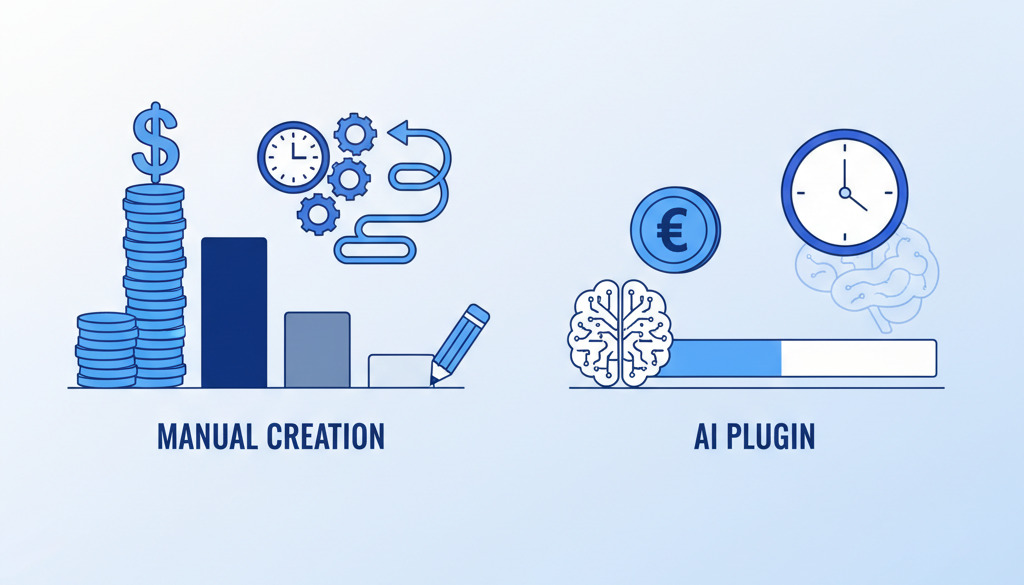
Consider the cost of manually creating four well-researched, 1500-word blog posts per month. Hiring a decent freelance writer could cost anywhere from $500 to $2000+. In contrast, a premium AI publishing plugin might cost $50 to $100 per month. For that price, you can generate a virtually unlimited amount of content.
The time savings are even more compelling. The hours you would have spent writing can now be redirected toward core business activities like sales, customer service, and strategy. When you evaluate costs, consider platforms that leverage advanced AI to craft professional SEO blog posts in minutes. This is the core promise of solutions that focus on making customers find you on Google, a model championed by specialized services now used by over 500 companies to automate their content growth.
The Future of AI and Content Publishing
The integration of AI into WordPress is only just beginning. The upcoming release of WordPress 7.0 is expected to include a native AI framework, which will make these tools even more powerful and seamlessly integrated. We are moving toward a future where the CMS itself is an intelligent partner in your digital strategy.
The role of the business owner or marketer will shift from being a manual content creator to a strategic content director. Your job will be to guide the AI, set the strategy, and provide the final layer of human expertise and quality control. Emerging platforms are making this future a present-day reality. For example, some specialized AI services now offer to create your first five blog posts for free, allowing you to witness firsthand how artificial intelligence can write professional SEO articles for your website in minutes—almost like magic.
Embracing the Future of Content with Confidence
The content creation arms race can feel daunting for a small or medium-sized business owner. You know you need to be publishing content to compete, but you lack the time and resources. WordPress AI publishing plugins are the great equalizer. They provide a powerful, affordable, and scalable solution to this persistent challenge.
By embracing this technology, you are not cutting corners; you are working smarter. You are empowering your business to build its brand authority, attract organic traffic, and generate leads on autopilot. The future of content is a collaboration between human insight and artificial intelligence. The time to embrace that future and automate your blog for growth is now.
Frequently Asked Questions
1. Will using an AI WordPress plugin hurt my SEO rankings?
No, not if used correctly. Google's core mission is to provide users with helpful, high-quality content. Their algorithms reward content that satisfies search intent, regardless of whether it was written by a human or produced with AI assistance. The key is to use AI as a tool to create well-researched, original, and valuable articles, and to always review and edit the output to ensure it meets quality standards. Low-effort, spammy AI content will hurt your SEO, but high-quality, AI-assisted content will help it.
2. How can I ensure the AI-generated content matches my brand's unique voice?
This is where the "human touch" is critical. First, many modern AI plugins allow you to specify a tone of voice (e.g., "professional," "friendly," "witty") in the content prompt. Second, the best practice is to treat the AI output as a first draft. During your review and editing process, you should rewrite phrases and sections to inject your unique personality, industry knowledge, and specific brand messaging. Over time, you will become efficient at guiding the AI and quickly refining its output.
3. How much technical skill do I need to use these plugins?
Very little. If you are comfortable using the basic features of WordPress (like installing a plugin and writing a post), you have all the technical skills you need. These plugins are designed for users, not developers. The installation is typically a one-click process, and the interfaces are made to be intuitive, often integrating directly into the familiar WordPress post editor.
4. Is content created by AI safe from plagiarism?
Reputable AI models generate original content by predicting the next word in a sequence; they do not "copy and paste" from existing web pages. Therefore, the risk of plagiarism is extremely low. However, because the AI learns from a vast dataset of public information, it is possible for it to generate phrases that are coincidentally similar to other sources. For this reason, many top-tier AI publishing plugins include a built-in plagiarism checker to give you complete peace of mind before you publish.
5. How much does a good AI publishing plugin typically cost?
Pricing models vary, but you can typically expect to pay a monthly subscription fee. Basic plans might start around $20-$40 per month, which may have limits on the number of words you can generate. More robust, premium plans with unlimited content generation, advanced SEO features, and bulk processing capabilities usually range from $50 to $100 per month. When compared to the cost of hiring a freelance writer (which can be $100-$500+ per article), the ROI on a plugin subscription is significant for businesses looking to scale content production.
6. Can I use an AI plugin for my existing WordPress website?
Absolutely. AI publishing plugins are designed to be installed on any existing WordPress site. Once activated, you can use them to create new content, or even to improve and update your old blog posts. For example, you could use the AI to rewrite an outdated article with fresh information, optimize it for a new keyword, or expand it to be more comprehensive, giving your existing content a new lease on life.
Keep reading
Hand-picked guides that go deeper — open the one you need next:
- WordPress SEO: Auto-Publishing with AI Content
- WordPress AI Content SEO: The Expert Guide for 2026
- WordPress SEO Autopilot: How Volteruno Automates Your Blog for Google
- WordPress SEO Made Easy: Auto-Publish Expert Articles with Volteruno's AI
→ Read the full WordPress guide