
WordPress Shopify AI Content: Strategic Integration Guide

In the competitive digital commerce landscape of 2026, the velocity and quality of content have become the primary differentiators for brands aiming to capture market share. Whether you are managing a high-growth store on Shopify or a content-rich ecosystem on WordPress, the demand for fresh, relevant, and SEO-optimized material is relentless. Traditionally, meeting this demand required vast teams of writers or significant financial outlays. However, the emergence of advanced Artificial Intelligence (AI) has fundamentally altered this dynamic.
Integrating WordPress Shopify AI content strategies is no longer a futuristic concept but a present-day necessity for businesses looking to scale. AI-driven tools are now capable of handling the heavy lifting of drafting, optimizing, and even publishing, allowing human creatives to focus on high-level strategy and brand storytelling. This guide explores how to leverage these technologies strategically to ensure your digital presence is not only consistent but also highly effective at converting visitors into loyal customers.
The Synergy of AI, WordPress, and Shopify for E-commerce Growth
Content remains the undisputed engine of organic growth. For Shopify users, content often takes the form of persuasive product descriptions and high-converting landing pages. For WordPress users, the focus is frequently on long-form blogging and educational resources that build topical authority. When these platforms are powered by AI, the potential for growth becomes exponential. AI allows businesses to bypass the "blank page" syndrome, moving from concept to published content in a fraction of the time.
The synergy here lies in the ability of AI to mirror the strengths of both platforms. On Shopify, AI can analyze vast product catalogs to ensure every SKU has a unique, SEO-friendly description that highlights benefits rather than just features. On WordPress, AI agents can monitor trending topics within a niche and suggest timely articles that align with current search intent. This proactive approach to content ensures that your store or site remains a living, breathing entity that search engines favor and customers trust.
Furthermore, the integration of AI into these ecosystems addresses the problem of "content fatigue." Maintaining a blog or updating a store with hundreds of products is exhausting for human teams. By automating the repetitive aspects of content production, businesses can maintain a high publishing cadence without sacrificing quality or burning out their staff, leading to a sustained increase in organic traffic and customer engagement.
Understanding AI Content Generation: Capabilities and Limitations
To use AI effectively, one must understand that it is built on Large Language Models (LLMs) such as GPT-4o or specialized e-commerce models. These systems utilize Natural Language Processing (NLP) to predict the most logical next word in a sequence based on trillions of data points. This allows for the generation of content that is grammatically perfect and contextually relevant. However, the distinction between purely automated output and AI-assisted writing is critical for a business-grade strategy.
Key Capabilities Include:
- Ideation and Outlining: Generating months’ worth of content calendars in seconds.
- Multilingual Scaling: Translating and localizing content for global markets without losing the original marketing intent.
- SEO Formatting: Automatically inserting H2 tags, bullet points, and keyword-rich headers to improve readability.
Despite these strengths, limitations persist. AI can occasionally "hallucinate" facts or produce generic prose that lacks a brand’s unique "soul." There is also the ethical consideration of transparency; search engines and consumers are increasingly sensitive to fully automated content that adds no value. Successful brands use AI as a sophisticated "first draft" engine, ensuring that every piece of content undergoes human fact-checking and stylistic refinement before going live.
Strategic Applications of AI for WordPress Content
WordPress remains the gold standard for content marketing, and AI has supercharged its capabilities beyond simple blogging. One of the most effective applications is the use of AI for SEO-driven topic clustering. Instead of writing isolated posts, AI can help you map out a "pillar and spoke" strategy, ensuring your site covers a topic comprehensively to build domain authority. Tools like Surfer SEO or Clearscope, which integrate with WordPress, analyze the top-ranking results to tell you exactly which terms to include.
Beyond articles, AI is revolutionizing landing page creation for lead magnets and service offerings. By inputting target audience pain points, AI can draft persuasive sales copy using established frameworks like AIDA (Attention, Interest, Desire, Action) or PAS (Problem, Agitation, Solution). This ensures your WordPress site is not just a repository of information but an active tool for lead generation.
Content refreshing is another area where AI excels. Instead of letting old blog posts decay, AI can analyze the current search landscape and suggest specific updates—adding new statistics, updated links, or fresh paragraphs—to reclaim lost rankings. This "repurposing" capability extends to taking a long-form article and instantly generating social media snippets, email newsletter summaries, and even video scripts, maximizing the ROI of every piece of content created.
AI-Powered Content for Shopify Product Success
For Shopify merchants, the challenge is often volume. A store with 500 products requires 500 unique descriptions to avoid "thin content" penalties from Google. Shopify Magic and other third-party apps now allow for the generation of these descriptions at scale. By feeding the AI technical specifications (color, material, size), the engine can produce a narrative that speaks to the customer's lifestyle. Recent data suggests that shoppers who interact with personalized, AI-enhanced product content are 40% more likely to complete a purchase.

Visual content is also seeing an AI revolution. Tools integrated with Shopify can now take raw product photos and place them in high-end lifestyle settings or remove backgrounds instantly.[1] This complements the text-based AI content by creating a cohesive, professional aesthetic that builds buyer confidence. Additionally, AI-driven FAQ generators can scan your product details and common customer support tickets to create a dynamic "Questions" section, reducing the burden on your support team and improving on-page SEO.
The integration of AI chatbots within the Shopify ecosystem is another critical content layer. These are no longer simple logic trees; modern AI assistants like Tidio or Alhena can handle complex product Q&A, acting as virtual sales assistants that guide users through the content on your site, leading to reported conversion rate improvements of 15% to 35%.
Integrating AI Content Tools into Your Workflow
Effective implementation requires more than just a subscription to an AI tool; it requires a structured workflow. The first step is selecting the right stack. For WordPress, this might involve plugins like AI Power or Elementor AI. For Shopify, apps like CopyGenius or native Shopify Magic features are preferred. The goal is to reduce "tool hopping" by keeping the AI where the content lives.
A Recommended Workflow:
- Prompt Engineering: Develop a library of prompts that include your brand's tone of voice, target persona, and "exclusion words" (terms your brand never uses).
- Initial Drafting: Let the AI generate the structure and core content based on those prompts.
- Human-in-the-Loop (HITL): An editor reviews the draft for factual accuracy, adds internal links, and ensures the "voice" aligns with the brand identity.
- Technical Optimization: Use AI tools to generate meta descriptions, alt text for images, and URL slugs.
API integrations are becoming increasingly popular for larger enterprises. By connecting OpenAI's API directly to a WordPress headless CMS or Shopify’s backend via Zapier, businesses can automate the creation of draft pages whenever a new product is added to an inventory management system, creating a truly autonomous content pipeline.
Optimizing AI-Generated Content for Search Engines (SEO)
Search engines like Google have clarified their stance: they reward high-quality content regardless of how it is produced, but they penalize low-effort, automated content that lacks utility. Therefore, the strategic use of AI in SEO must focus on Search Intent. AI can help you identify whether a user is looking for information (blog post) or is ready to buy (product page), allowing you to tailor the content accordingly.
On-page SEO benefits significantly from AI's ability to handle technical metadata. AI can generate dozens of variations for meta titles, allowing you to choose the one with the highest predicted click-through rate (CTR). Furthermore, AI models can analyze the "readability" of your content, suggesting where to break up long sentences or simplify jargon to satisfy both users and search algorithms. This focus on user experience (UX) is a core component of modern SEO.
Crucially, be wary of duplicate content. If you and your competitors use the same generic prompts, the AI may produce very similar descriptions. To combat this, always include unique "proprietary data" in your prompts—such as specific customer testimonials or unique manufacturing details—to ensure the output remains distinct and holds a competitive edge in search rankings.
Maintaining Brand Voice and Authenticity with AI
The greatest risk of over-reliance on AI is the "blandness" of the output. In a business context, your brand voice is your moat. To maintain this, you must treat AI as a junior copywriter that needs a strict style guide. Define your parameters: Is your voice authoritative or conversational? Do you use industry jargon or simplified English? By feeding these style guides into the "System Instructions" of an AI tool, you can achieve a more consistent output.
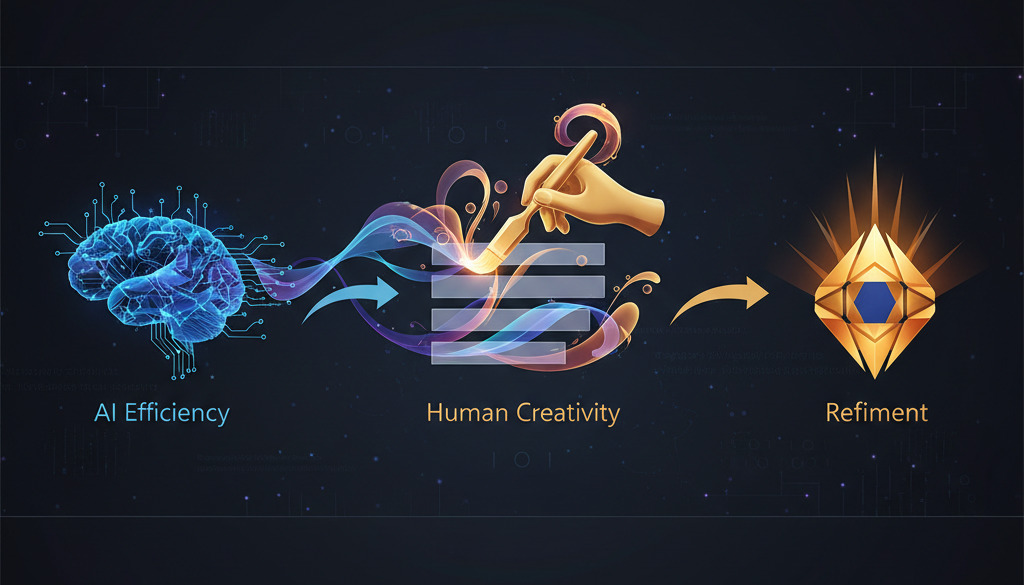
Authenticity comes from the human elements that AI cannot replicate: personal anecdotes, original research, and emotional resonance. A blog post about "The Top 10 Running Shoes" becomes authentic when a human editor adds a paragraph about their personal experience training for a marathon in those shoes. AI provides the skeleton; human experience provides the meat. This hybrid approach ensures that the content not only ranks but also builds a genuine connection with the reader.
Regular audits are also necessary. As AI models update, their "personality" can shift. Periodically reviewing your published AI-assisted content ensures that the tone hasn't drifted over time and that the messaging remains aligned with your current marketing goals. Authenticity is a moving target that requires constant human oversight.
Measuring the ROI of AI Content Strategies
Investing in AI tools and workflows must be justified by measurable outcomes. The most immediate KPI is content velocity—the number of high-quality pages published per month compared to your previous baseline. However, efficiency alone isn't enough. You must track how this content performs in the real world. Use Google Analytics and Shopify Reports to monitor organic traffic growth and conversion rates on AI-optimized pages.
Metrics to Watch:
- Time-to-Publish: Reduction in the hours spent from ideation to live page.
- Cost per Content Piece: The total cost of tools + human editing vs. traditional freelance or agency costs.
- Engagement Metrics: Bounce rate and average time on page. If these are worse than your human-written content, your AI implementation needs refinement.
Attribution can be handled by A/B testing. Run a test where half of your new product descriptions are AI-generated (and human-polished) while the other half are your traditional style. Compare the conversion rates over 90 days. This data-driven approach allows you to iterate on your prompts and workflow, ensuring that your AI strategy is contributing to the bottom line rather than just being a "cool" technological experiment.
Future Trends: The Evolving Landscape of AI in E-commerce Content
As we look toward 2027 and beyond, the trend is moving toward hyper-personalization. Imagine a Shopify store where the product description changes dynamically based on the visitor’s past browsing history. If a user is price-sensitive, the AI focuses on "value and savings"; if they are luxury-oriented, it focuses on "exclusivity and craftsmanship." This level of real-time content generation is the next frontier for AI integration.
We are also seeing the rise of Multimodal AI Agents. These tools won't just write text; they will generate accompanying short-form videos (like Reels or TikToks) and interactive 3D content directly within WordPress or Shopify. The line between a "website" and an "interactive experience" will blur as AI handles the technical complexities of rich media creation.
Finally, ethical considerations will lead to better disclosure and "Watermarking" of AI content. As regulators and search engines demand more transparency, tools that can verify the accuracy and origin of content will become essential components of the e-commerce tech stack. The businesses that lead in this space will be those that use AI not to cut corners, but to reach new heights of creativity and customer service.
Conclusion
The integration of WordPress Shopify AI content strategies represents a paradigm shift in how digital businesses operate. By embracing AI as a strategic partner, merchants and content creators can overcome the traditional trade-off between volume and quality. The key to success lies in the balance: using AI for its speed, scale, and technical precision, while relying on human expertise for nuance, brand integrity, and strategic direction.
As you move forward, start small. Identify a repetitive content task—be it meta tags or product descriptions—and implement an AI workflow. Measure the results, refine your prompts, and gradually expand the role of AI in your business. In an era where content is the currency of commerce, those who master the tools of the digital age will be the ones who lead the market.
Augmenting E-commerce Workflows with AI-Powered WordPress and Shopify Integrations
The strategic integration of AI into WordPress and Shopify platforms extends far beyond simple content generation. It allows for the sophisticated augmentation of existing e-commerce workflows, optimizing operations and enhancing the customer journey. Consider the power of AI in personalizing product recommendations. Instead of relying on generic algorithms, AI can analyze browsing history, purchase patterns, and even demographic data to deliver tailor-made suggestions within the WordPress or Shopify storefront. This not only increases the likelihood of conversion but also fosters a sense of individualized attention for the customer.
Furthermore, AI can revolutionize customer support. Chatbots powered by natural language processing can handle a significant volume of customer inquiries, providing instant responses to frequently asked questions, assisting with order tracking, and even guiding users through the checkout process. This frees up human support agents to address more complex or sensitive issues, leading to more efficient and satisfying customer service. The ability for these AI tools to seamlessly integrate with WordPress and Shopify ensures that this enhanced support is delivered directly within the familiar e-commerce environment, maintaining a consistent brand experience.
Automated inventory management and dynamic pricing are other areas ripe for AI-driven enhancements. AI can monitor sales trends, predict demand, and automatically adjust stock levels or pricing to maximize revenue and minimize waste. This predictive capability, when implemented within the WordPress or Shopify framework, can provide a significant competitive advantage by ensuring products are available when customers want them and are priced optimally for the current market conditions. The overarching theme is one of intelligent automation, where AI tools act as digital assistants, streamlining backend processes and refining frontend customer interactions.
FAQ
What is WordPress Shopify AI content integration?
This refers to using artificial intelligence tools to generate content for your Shopify store and then integrating or managing that content within a WordPress environment, or vice versa. It leverages AI for efficiency in creating product descriptions, blog posts, or marketing copy tailored for e-commerce platforms.
How can AI content improve my WordPress and Shopify stores?
AI can help generate unique product descriptions, engaging blog posts, and social media updates at scale. This saves time and resources, improves SEO through consistent, relevant content, and can even assist in personalizing customer experiences.
What are the potential challenges of integrating AI content between WordPress and Shopify?
Potential challenges include maintaining brand voice consistency across both platforms, ensuring accuracy and factual correctness of AI-generated content, and managing the technical integration to avoid duplicate content issues or SEO penalties.
→ Read the full Shopify & Ecommerce guide
Keep reading
Hand-picked guides that go deeper — open the one you need next:
- E-commerce Content Marketing Automation Strategy 2026
- Shopify Success: Buyer-Intent Keywords Supercharge Your Blog
- Shopify Blog Optimization AI: The Complete Merchant Guide
- Shopify Blog Content for Sales: A Strategic Blueprint
→ Read the full Shopify & Ecommerce guide