
Volteruno's AI: Consistent Blog Content & Traffic
Key Takeaways
- Consistency is Critical: Businesses that publish 16 or more blog posts per month see approximately 3.5 times more traffic than those publishing only 0-4 posts. Consistency signals authority to both Google and your customers.
- AI is a Force Multiplier, Not a Replacement: Over 67% of bloggers now use AI tools. The most successful strategy is AI-assisted content creation, where AI generates the initial draft, and a human expert provides the final polish, fact-checking, and brand voice. This approach maintains quality while dramatically boosting output.
- Long-Form Content Wins: The average blog post now exceeds 1,400 words. Long-form articles (2,000+ words) are proven to earn significantly more backlinks and social shares, which are crucial signals for SEO success.
- Quality Overcomes Quantity (After a Point): While frequent posting is vital, publishing quality drops off, so do the returns. The goal isn't just to produce content but to produce valuable, relevant, and well-optimized content that AI can help you scale.
- Strategic Integration is Key: Using AI for blog content isn't about pushing a button. It requires a strategy encompassing keyword research, audience understanding, and a content calendar to guide the AI's output for maximum business impact.
The Unignorable Power of Consistent Blog Content for Business
In today's digital-first marketplace, the way customers find your business has fundamentally changed. The days of relying solely on print ads or local directories are long gone. Your potential customers are online, actively searching for information, solutions, and expert advice. They turn to Google with their questions, and the businesses that provide the best answers are the ones that win. This is where a powerful, consistent blog becomes not just a marketing tool, but a core business asset.[1]
The Entrepreneurial Dilemma
As a seasoned business owner, you understand your industry inside and out. You know the value you provide. You also know that having an online presence is critical. Yet, you face a significant challenge: time is your most limited resource. The demands of running a business—managing operations, serving clients, overseeing finances—leave precious little room for mastering SEO, writing, editing, and publishing blog posts week after week. It feels like a full-time job in itself, one you simply don't have the time or, frankly, the desire to take on.
Introducing the Solution: AI for Content Creation
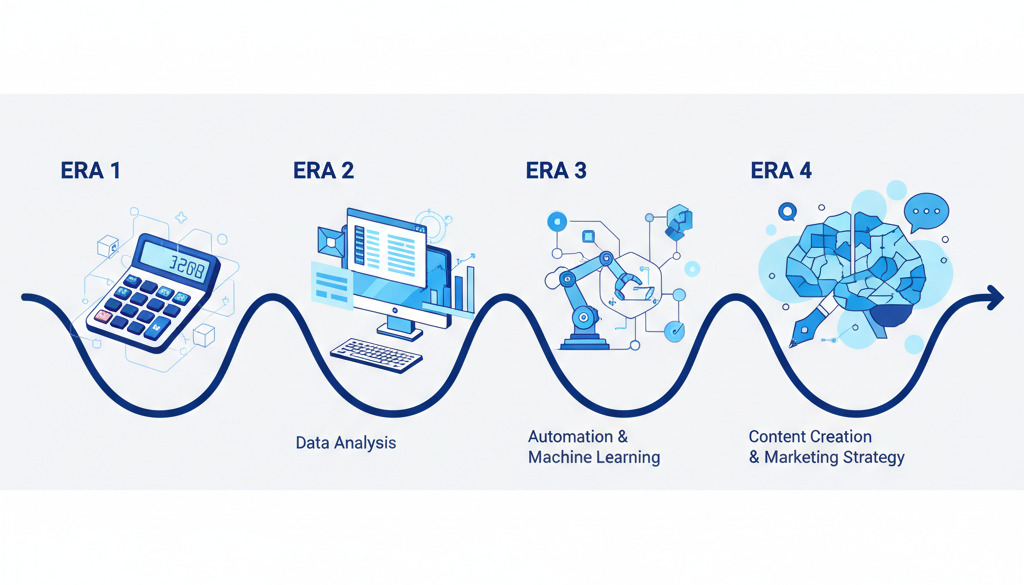
What if you could harness the power of a consistent, high-quality blog without sacrificing hundreds of hours or hiring an expensive marketing agency? This is the promise of Artificial Intelligence. AI content creation has evolved from a futuristic concept into a practical, powerful tool for business owners just like you.[2] It acts as a tireless assistant, capable of generating well-structured, relevant, and SEO-friendly content in a fraction of the time it would take manually. AI is the secret weapon that finally makes consistent, traffic-driving blog content achievable for busy entrepreneurs.
Beyond Guesswork: Why Consistency is King in Content Marketing
Publishing a blog post sporadically whenever you find a spare moment is better than nothing, but it won't move the needle for your business. True growth comes from consistency. A regular publishing schedule is the engine of a successful content marketing strategy, delivering compounding returns over time.
Building Authority and Trust
When you consistently publish insightful content that addresses your customers' pain points and questions, you are doing more than just sharing information. You are demonstrating your expertise. Each post acts as a brick in the foundation of your brand's authority. Over time, your audience begins to see you not just as a provider of a service or product, but as a trusted leader and go-to resource in your field. This trust is invaluable and directly translates into customer loyalty and sales.
Enhancing Search Engine Visibility (SEO Fundamentals)
Search engines like Google love fresh, relevant content. Every time you publish a new blog post, you give Google a new page to index and a new opportunity to rank your website for relevant keywords. A consistent publishing schedule signals to search algorithms that your website is active and a valuable source of current information. As recent studies show, companies that publish at least 16 posts per month generate 3.5 times more traffic than those who publish infrequently. This isn’t a coincidence; it’s a direct result of feeding the search engine beast what it craves: consistent, quality content.
Fostering Audience Engagement and Loyalty
Your blog is a direct line of communication to your customers and prospects. A steady stream of content keeps your brand top-of-mind. It gives your audience a reason to return to your website, engage with your ideas, and share your content with their own networks. This continuous engagement builds a loyal community around your brand, turning passive readers into active advocates who are more likely to convert when they are ready to buy.
The Evolving Role of Artificial Intelligence in Content Creation
Artificial Intelligence isn't the stuff of science fiction anymore, especially not in the world of digital marketing. It has rapidly transformed from a high-tech novelty into an indispensable business tool, particularly for content creation. Understanding this evolution helps clarify its role as a strategic asset for your company.
From Novelty to Necessity
Just a few years ago, AI-generated text was often clunky, impersonal, and easily identifiable. It was an interesting experiment, but not a serious tool for professional use. Today, the technology has advanced exponentially. Modern AI platforms can understand nuance, research topics, adapt to specific tones of voice, and produce sophisticated, human-like text. For businesses struggling to keep up with the demands of content marketing, AI has become a necessity for survival and growth, leveling the playing field against larger competitors with bigger marketing teams.
Demystifying AI for the Non-Technical
You don't need to understand the complex algorithms behind AI to use it effectively. Think of an AI content tool like a highly advanced calculator for words. You provide the inputs—your topic, your target keywords, your desired tone—and it performs the complex "calculations" to produce a structured, well-written draft. The focus for you, the business owner, is not on the technology itself but on its practical output: saving time and generating results.
The Efficiency Multiplier
The single greatest benefit of using AI for content is the incredible boost in efficiency. Consider the traditional content workflow: hours spent on brainstorming, researching, outlining, writing, and editing. An AI can compress the most time-consuming parts of this process—researching and drafting—from hours into minutes. This doesn't eliminate the need for your expertise, but it multiplies its impact. Instead of spending your time staring at a blank page, you can focus on refining and enhancing a solid first draft, ensuring the final product aligns perfectly with your brand and your customers' needs. This is the definition of working smarter, not harder.
Strategic Content Planning in the Age of AI
Using AI effectively isn't about blindly generating articles. It's about strategically guiding the tool to create content that serves a specific business purpose. A solid plan is the difference between producing random noise and creating a valuable asset that attracts and converts customers.
Defining Your Target Audience and Their Needs
Before you write a single word (or prompt an AI to), you must know exactly who you are talking to. As a business owner, you likely have a deep, intuitive understanding of your customers. The key is to codify this knowledge. Who are they? What are their biggest challenges and questions related to your industry? What goals are they trying to achieve? Your content should be a direct answer to these questions. When you provide the AI with a clear picture of your audience, it can generate content that is far more relevant and resonant.
Keyword Research: The Foundation of Discoverability
Keyword research is the process of identifying the specific words and phrases your potential customers are typing into Google. It’s the foundation of any successful SEO strategy. You wouldn’t build a house on a weak foundation, and you shouldn’t build your content strategy on guesswork. Tools (some of which are also AI-powered) can help you discover these keywords, understand how many people are searching for them, and how difficult it might be to rank for them. This data provides the strategic direction for your content calendar, ensuring every article you produce has a built-in audience.
Content Calendars: Orchestrating Your AI-Powered Output
A content calendar is a simple schedule that dictates what topics you will publish and when. It turns your strategy into an actionable plan. With AI, you can fill this calendar more quickly and ambitiously than ever before. You can plan for themed content clusters, where you create a series of articles around a central topic, establishing deep expertise. You can schedule posts to align with seasonal trends or industry events. A content calendar provides the structure necessary to maintain consistency and ensures that your AI-powered content efforts are focused and aligned with your business goals.
Harnessing AI for High-Impact SEO Blog Posts
Once your strategy is in place, AI becomes your partner in execution. It can assist in nearly every phase of creating a blog post, from the initial spark of an idea to the final structured article, all while keeping SEO best practices at the forefront.
AI-Assisted Topic Ideation
Stuck on what to write about? This is one of the first and most powerful ways AI can help. You can provide an AI tool with a few of your core keywords or a description of your business, and it can generate a long list of potential blog post topics. It can analyze what topics are currently trending, what questions users are asking online, and what content gaps your competitors have left open. This transforms brainstorming from a frustrating chore into an exciting discovery process, ensuring you never run out of relevant ideas.
Crafting Compelling Headlines with AI
The headline is arguably the most important part of your blog post. It’s what captures attention in a crowded search results page and convinces a user to click. However, writing great headlines is a specific skill. AI tools are trained on millions of the internet’s most successful headlines. They can generate dozens of variations for your topic—some focused on benefits, some on curiosity, some on addressing a specific problem. You can then choose the one that is most compelling and best suited to your audience, dramatically improving your click-through rate.
Structuring and Outlining with AI
A great blog post needs a logical, easy-to-follow structure. Before writing, an outline with clear H2 and H3 headings helps organize your thoughts and ensures you cover the topic comprehensively. This is another area where AI excels. You can ask an AI to create a detailed outline for a chosen topic. It will break the subject down into logical sub-sections, suggest points to cover in each, and create a framework that is both reader-friendly and optimized for search engines, which favor well-structured content.
AI-Powered Content Generation: From Draft to Polish
This is the core of AI's power: the ability to generate the body of the article itself. But it's critical to understand the process as a collaboration between technology and human expertise. The goal is not to abdicate responsibility but to enhance your capabilities.
Generating First Drafts at Scale
The most significant time-saving comes from AI’s ability to produce a complete first draft in minutes. Based on your topic, outline, and keywords, the AI can write hundreds or even thousands of words of relevant content. This single step eliminates the "blank page" problem and provides you with a substantial foundation to work from. For a busy business owner, this means you can go from an idea to a full draft over a single cup of coffee, a task that might have previously taken an entire afternoon.
Ensuring Quality and Accuracy: The Human Touch is Crucial
This is the most important rule of using AI for content: AI is your drafter, not your publisher. While incredibly advanced, AI systems are not infallible. They can occasionally misinterpret data, miss nuances specific to your industry, or create statements that are not perfectly accurate. Your expertise is irreplaceable. You must review, edit, and fact-check every piece of AI-generated content before it goes live. This human oversight ensures factual accuracy, injects your unique perspective, and safeguards your brand’s reputation. Recent data confirms this, showing that human-edited AI content significantly outperforms purely AI-generated content in long-term rankings.
Optimizing for Readability and Engagement
Beyond factual accuracy, the final polish involves refining the content for readability. This means breaking up long paragraphs, adding bulleted lists, and using bold or italic text to emphasize key points—much like this article. While AI can often do a good job of this, a human eye can fine-tune the flow and rhythm of the text, making it more engaging and enjoyable for the reader. Your goal is to combine the speed of AI with the nuance of a human touch for a final product that is both effective and authentic.
Maximizing the SEO Benefits of AI-Generated Content
Using AI doesn’t just help you create content faster; it can help you create content that is inherently better optimized for search engines. By understanding SEO principles and guiding the AI accordingly, you can build a powerful engine for organic traffic.
On-Page Optimization with AI Assistance
On-page SEO refers to the optimization of elements on the page itself. AI can be a massive help here. When generating an article, you can instruct it to:
- Naturally integrate primary and secondary keywords throughout the text, headings, and subheadings.
- Suggest compelling SEO titles and meta descriptions that are within character limits and designed to maximize clicks from search results.
- Propose internal links to other relevant articles on your blog, which helps search engines understand your site structure and keeps users engaged longer.
By building these instructions into your prompts, the AI produces a draft that is already 80% of the way to being perfectly optimized.
Understanding Search Intent and AI's Role
Search intent is the "why" behind a user's search query. Are they looking to buy something, learn something, or find a specific website? The most successful content directly matches this intent. Modern AI models are surprisingly adept at understanding this. By analyzing your target keyword, an AI can infer the likely user intent and generate content that delivers the right kind of answer. For example, for a keyword like "how to fix a leaky faucet," it will generate a step-by-step guide, whereas for "best plumber near me," it will understand the intent is more commercial.
The Importance of a Unique Value Proposition
While AI can generate fantastic content based on existing information online, it cannot invent your company's unique expertise or point of view. This is where your contribution is vital. After the AI creates the draft, you must inject your unique value proposition. What is your special take on the subject? Do you have a proprietary process, a unique customer success story, or a contrarian opinion? Adding this unique flavor is what elevates your content from being merely "good" to being "great" and memorable.
Crafting a Distinct Brand Voice with AI Assistance
One of the biggest concerns business owners have about AI is the potential loss of their unique brand voice. You've worked hard to build a brand with a specific personality. The good news is that AI can be trained to adopt and amplify that voice, not erase it.
AI as a Brand Voice Amplifier, Not a Replacement
Think of AI as a skilled actor who needs direction. You are the director. You need to provide the AI with clear instructions on the tone you want to achieve. Do you want to sound formal and authoritative, or friendly and conversational? Is your brand voice humorous and witty, or serious and empathetic? By defining these characteristics in your prompts, you guide the AI to generate content that aligns with your established brand personality. For example, you could instruct it: "Write in a polished, expert, and business-like tone, addressing established business owners who are not tech experts."
Training AI on Your Existing Content
The most sophisticated AI platforms can learn from example. You can "train" the AI by providing it with samples of your existing content that you feel perfectly capture your brand voice—whether it's past blog posts, website copy, or even emails. The AI analyzes the vocabulary, sentence structure, and tone of these examples and uses them as a model for future content generation. This is a powerful way to ensure consistency across all your communications.
The Human Editor's Role in Brand Voice Consistency
As always, the final verification rests with you. No matter how well you train the AI, there will be subtleties and nuances it may miss. The final editing pass is your opportunity to tweak the language, adjust the phrasing, and make sure the article sounds like it truly came from you. This final human touch is what bridges the gap between technically correct and authentically on-brand.
Overcoming Common Concerns and Misconceptions About AI Content
As with any transformative technology, AI-generated content is surrounded by questions and a few persistent myths. Let's address the most common concerns head-on to separate fact from fiction.
Addressing the "Robot Voice" Fear
The earliest AI writers often produced text that was stiff, repetitive, and devoid of personality—a "robot voice." Today’s leading AI models are vastly more sophisticated. They can craft prose that is engaging, varied, and stylistically rich. The key, as discussed, is providing clear guidance on tone and voice. When you direct the AI with intention and then apply your own final polish, the end result is content that is indistinguishable from purely human-written work.
AI and Plagiarism: Ensuring Originality
This is a valid and important concern. Reputable AI content generation tools are not built to copy and paste from other sources. They work by learning patterns, structures, and information from a massive dataset and then generating new sentences to express those ideas. It's analogous to how a human learns about a topic and then writes about it in their own words. Furthermore, most professional AI platforms have built-in plagiarism checkers to verify the originality of the content they produce, giving you an extra layer of assurance.
The Ethical Considerations of AI in Content Marketing
The most important ethical guideline in using AI is transparency and honesty. Google’s official stance is that high-quality content is what matters, regardless of how it is produced. They are against using AI to generate low-quality, spammy content intended to manipulate search rankings. However, using AI as a tool to assist in the creation of valuable, helpful, and original content is perfectly acceptable. The ethical line is crossed when automation is used to deceive or provide a poor user experience. As long as you are using AI to create genuine value for your readers, you are on safe and ethical ground.
Selecting the Right AI Content Generation Tool for Your Business
The market for AI writing assistants is growing crowded. Choosing the right one depends on your specific needs, technical comfort level, and business goals. Here’s a framework for making the right choice.
Key Features to Look For
When evaluating different platforms, look for a combination of power and simplicity. Essential features include:
- SEO-focused functionalities: Does the tool help with keyword research, on-page optimization, and meta descriptions?
- Content Variety: Can it generate more than just blog posts? Look for tools that can also create social media copy, email newsletters, and ad headlines.
- Tone and Voice Customization: How easily can you guide the tool to match your brand’s unique voice?
- Ease of Use: Is the interface intuitive for someone who isn't a tech expert? You need a tool that simplifies your work, not one that requires a steep learning curve.
Evaluating Different AI Platforms
Compare a few top contenders based on your needs. Consider their pricing models—is it a monthly subscription or pay-per-use? Read reviews from other business owners, and most importantly, take advantage of free trials. The best way to know if a tool is right for you is to use it for a real-world task.
Introducing Volteruno: Your AI Solution for Effortless SEO Content
For business owners who lack the time and inclination to manage the content process, a service-oriented solution like Volteruno is often the perfect fit. It’s an AI-powered platform specifically designed for one purpose: creating professional, SEO-optimized blog content to get more customers from Google. Volteruno operates on a simple but powerful promise: "We write the SEO articles for you." This approach removes the burden entirely from you. Our proprietary artificial intelligence writes professional SEO blog articles for your website in minutes—almost like magic. You provide the strategic direction, and the platform handles the heavy lifting, ensuring customers will find you organically on Google.
Integrating AI Content into Your Existing Marketing Strategy
Creating content is only half the battle. To get the maximum return on your investment, you must integrate your new, AI-powered content stream into your broader marketing efforts. This creates a cohesive system where each part amplifies the others.
Beyond Blog Posts: Expanding AI's Reach
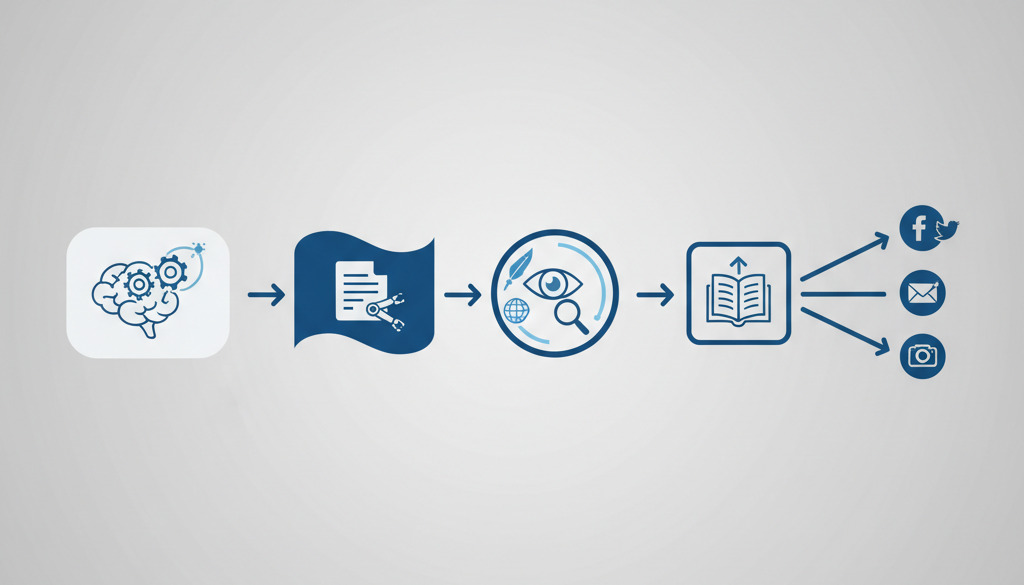
Once you have a steady flow of high-quality blog posts, you can use AI to repurpose that content for other channels, saving even more time. For instance, an AI can:
- Summarize a blog post into a series of engaging tweets or a LinkedIn update.
- Rewrite the key points of an article into the script for a short video.
- Transform a blog post into a compelling email newsletter to nurture your existing audience.
This allows you to get maximum mileage out of every piece of core content you create.
Distributing and Promoting Your AI-Generated Content
Don’t just publish and pray. Once a new article is live, you need to promote it. Share it on all your social media channels. Send it to your email list. If you reference another business or influencer in your post, reach out and let them know. The initial promotion is what gives your content the momentum it needs to start climbing the search rankings and attracting organic traffic.
Measuring the Impact: Analytics and KPIs
To know if your strategy is working, you must track your results. Key Performance Indicators (KPIs) for content marketing include:
- Organic Traffic: Are more people finding your site through search engines?
- Keyword Rankings: Are you ranking higher for your target keywords?
- Time on Page: Are people reading your articles?
- Conversion Rate: Are readers taking the desired next step, like signing up for your newsletter or contacting you for a quote?
Using free tools like Google Analytics and Google Search Console, you can track this data and demonstrate the tangible return on investment (ROI) from your content efforts.
The Future of Content Marketing: AI as a Strategic Partner
The integration of AI into marketing is not a passing trend; it is the new standard. Looking ahead, the relationship between human creativity and artificial intelligence will only become deeper and more collaborative, empowering businesses like yours to achieve unprecedented growth.
The Evolving Capabilities of AI
The pace of AI development is staggering. In the near future, AI will become even better at understanding multimedia content, personalizing experiences for individual users, and predicting content trends before they happen. For business owners, this means access to increasingly powerful strategic tools that can provide deeper insights and automate more complex marketing tasks, further leveling the playing field.
AI and Human Collaboration
The future of content marketing is not a contest of human vs. machine. It is a synergy. The winning formula will always be AI's speed + Human strategy and expertise. AI will handle the repetitive, time-consuming tasks of drafting and data analysis, freeing up human marketers and business owners to focus on what they do best: understanding customers, building relationships, and providing the creative spark and strategic oversight that machines cannot replicate.
Empowering SMB Growth in the Digital Age
Ultimately, the rise of accessible AI is a massive boon for small and medium-sized businesses. It democratizes the power of a sophisticated content marketing department. You no longer need a huge budget or a large team to compete effectively online. With the right AI tools and a clear strategy, you can build a powerful online presence that drives consistent traffic, builds unshakeable brand authority, and fuels long-term, sustainable growth.
Case Studies: Real-World Success with AI-Powered Content
Theory is useful, but results are what matter. Let's look at how implementing a consistent, AI-assisted content strategy can translate into tangible business growth for businesses just like yours.
Example 1: Increased Website Traffic and Lead Generation
Consider a local B2B service company, like an accounting firm for small businesses. They were experts in their field but had a stagnant blog with only a few old posts. By adopting an AI-powered strategy, they began publishing three SEO-optimized articles per week targeting specific questions their clients ask (e.g., "how to choose the right business structure," "quarterly tax tips for freelancers"). Within six months, their organic website traffic increased by 400%, and they were generating a steady stream of qualified inbound leads directly from their blog—people who found their helpful articles through Google.
Example 2: Improved Brand Authority and Customer Engagement
Imagine a niche e-commerce store selling high-end gardening supplies. They used AI to create a rich content hub around advanced gardening techniques, plant care guides, and landscape design ideas. This consistent stream of valuable information established their brand as an authority. Customers started sharing the articles in gardening forums and on social media. This not only drove traffic but also built a loyal community that trusted their brand and chose to buy from them over cheaper, big-box competitors. Their blog became a key part of their brand identity.
Success at Scale with Volteruno
These examples of success aren't isolated. They are reflective of a wider trend that shows why over 500 companies are already using Volteruno to power their content strategy and drive growth. The platform is designed to produce these kinds of results by systemizing the creation of high-quality, SEO-focused content, allowing business owners to reap the benefits of authority and traffic without getting bogged down in the execution.
Getting Started: Your First Steps Towards Consistent AI Content
Embracing AI content creation can feel like a big leap, but you can start small and build momentum. The key is to take the first step with a clear and manageable plan.
The Importance of a Pilot Project
Don’t try to overhaul your entire marketing strategy overnight. Start with a small, defined pilot project. For example, commit to publishing four AI-assisted blog posts over the next month, each targeting a specific, relevant keyword. This allows you to get comfortable with the workflow, learn how to prompt and edit effectively, and measure the initial results in a controlled way before scaling up.
Setting Realistic Expectations
AI is a powerful tool, but it is not a magic wand that delivers instant #1 rankings overnight. SEO and content marketing are a long-term game. It takes time for Google to index your new content and for it to gain traction and authority. Set realistic expectations: aim to see initial movement in rankings and traffic within 3-6 months, with results compounding significantly after that.
The Risk-Free Advantage with Volteruno
Start by assessing the content and workflow rather than assuming a traffic result. Volteruno Free includes one successful, quality-passed article generation per account lifetime for one connected website. You may publish that completed article. The allowance does not reset monthly, and Autopilot activation and operation require a paid plan.
Conclusion: The Strategic Imperative for SMB Owners
For the busy business owner, the digital landscape can seem daunting, and the demands for consistent content, overwhelming. For years, the choice has been to either sacrifice your precious time, spend a fortune on a marketing team, or simply fall behind. AI-powered content creation has introduced a powerful new option. It is a strategic ally that allows you to finally achieve the consistency needed to drive traffic, build authority, and grow your business, all while saving your most valuable asset: your time.
Embracing this technology is no longer a choice for early adopters; it is a strategic imperative for any small or medium-sized business that wants to compete and win in the modern era. By pairing the speed and efficiency of AI with your own invaluable industry expertise, you can create a content engine that works for you, attracting new customers and cementing your status as a leader in your field. The tools are here. The path is clear. Now is the time to take action and build the long-term, sustainable growth your business deserves.
Frequently Asked Questions
1. Will Google penalize my website for using AI-generated content?
No. Google's official guidance is that they reward high-quality, helpful content that puts the user first, regardless of how it was created. They are against using AI to create spammy, low-value content designed purely to manipulate search rankings. As long as you are using AI as a tool to produce well-researched, original, and valuable articles that are reviewed and edited by a human expert, you are fully compliant with their guidelines.
2. How much human editing is really needed for an AI-generated article?
This is crucial. You should treat every AI-generated piece as a first draft. At a minimum, a human expert must perform three checks: 1) Fact-Checking: Verify all data, statistics, and claims for accuracy. 2) Brand Voice and Tone: Edit the text to ensure it aligns perfectly with your company’s unique voice and personality. 3) Adding Unique Insights: Inject your own expert opinions, personal anecdotes, or proprietary information that the AI cannot know. This final step is what makes the content uniquely yours.
3. Can AI create content that understands the specific jargon and nuances of my niche industry?
Yes, but it requires your guidance. Modern AI models have a very broad knowledge base, but for highly specific or technical industries, you may need to "feed" it the right information. You can do this by providing key terminology, linking to reference articles, or even pasting in samples of your own writing for it to learn from. The AI is a fast learner, but you are the expert who must provide the initial direction.
4. Is AI-generated content truly original and free from plagiarism?
Reputable AI content tools are designed to generate original content. They don't copy and paste from existing sources but rather construct new sentences based on the patterns and information they have learned. However, it is a best practice to always run the final draft through a plagiarism checker, a feature that is often built into professional AI writing platforms. This provides a final layer of certainty and protects your site’s integrity.
5. How quickly can I expect to see results from an AI content strategy?
Content marketing, and the SEO benefits that come with it, is a long-term strategy. While you can produce content much faster with AI, the process of Google indexing, ranking, and driving traffic takes time. You should expect to see initial positive signals (like increased keyword impressions and some traffic growth) within 3 to 6 months, with more significant and compounding results appearing after the 6-month mark as your content library grows and builds authority.
6. Is it expensive to use an AI content service?
It can be significantly more cost-effective than the alternatives. Compared to hiring a full-time writer or a marketing agency (which can cost thousands of dollars per month), AI tools and services are very affordable. Many, like Volteruno, which is specifically designed for this purpose, offer service packages that cost a fraction of hiring staff, and often include risk-free trials (like a set of free articles) so you can prove the value before committing.
Keep reading
Hand-picked guides that go deeper — open the one you need next:
- Content Creation in Minutes: The AI Solution for Busy Entrepreneurs
- Multi-Language Content: Expand Your Reach with AI Translation
- The AI Blog Autopilot: Set It and Forget It
- Beyond Basic Blogging: Volteruno's AI Article Writer Delivers Expert Content
→ Read the full AI Content guide
→ Read the full AI Content guide
Sources
- blogging frequency benchmarks
- AI content creation SEO