
Shopify Success: Buyer-Intent Keywords Supercharge Your Blog
Key Takeaways
- Focus on Intent, Not Just Keywords: Success on Shopify isn't just about attracting visitors; it's about attracting visitors who are ready to buy. Understanding buyer intent is the key to unlocking higher conversion rates.
- The Four Types of Intent: Searches are categorized into Informational (learning), Navigational (finding), Commercial (comparing), and Transactional (buying). A successful strategy targets all stages.
- Content is King for Capturing Intent: Your Shopify blog is a powerful tool for attracting customers at every stage. Use it to answer questions (Informational) and compare products (Commercial) to guide users toward a purchase.
- Optimize Your Entire Store: Buyer intent SEO applies to everything, not just your blog. Product pages, category pages, and even your meta descriptions should be crafted to match the user's specific intent.
- Measure What Matters: Track metrics like conversion rates from specific keyword groups, average order value, and user flow to understand what's working and refine your strategy.
- Embrace Efficiency: Creating content consistently is a challenge for busy business owners. AI-powered tools can help generate high-quality, SEO-optimized articles, saving you time and driving results.
Introduction: The Untapped Power of Buyer Intent for Shopify Stores
As a Shopify store owner, you've meticulously curated your products and polished your website.[1] You're driving traffic, the numbers on your analytics look good, but there’s a frustrating disconnect: the sales aren't matching the visitor count. It feels like your store is full of window shoppers who browse but never make it to the checkout. This is a common pain point for many established business owners who know they need an online presence but find the digital world a bit bewildering.
The problem often isn't your products or your store's design. It's the *kind* of traffic you're attracting. You might be drawing in a crowd, but it's not a crowd of buyers. The secret to changing this lies in a powerful concept: buyer intent SEO. In simple terms, this means understanding *why* a person is searching online and using that knowledge to attract qualified leads who are genuinely interested in making a purchase, not just gathering random information.
This article is your roadmap to mastering buyer intent for your Shopify store. We'll move beyond the confusing jargon and focus on practical, actionable strategies. You will learn how to identify what your potential customers *really* want and how to create content that meets their needs, guiding them from a casual Google search to a completed order. By the end, you'll have a clear blueprint for turning your Shopify blog into a supercharged engine for sales.
Why Standard SEO Isn't Enough for Your Shopify Store
For years, the world of Search Engine Optimization (SEO) felt like a game of numbers. The goal was to rank for a specific keyword, and the more traffic you got, the better. However, for an e-commerce business, traffic alone doesn't pay the bills. If your website visitors aren't turning into paying customers, you're investing time and resources with little to show for it.
The Illusion of High Traffic
Imagine ranking number one for a broad term like "shoes." You'd get tens of thousands of visitors. But what do those visitors want? Are they looking for information about the history of shoes? Pictures of shoes? How to repair shoes? Or are they looking to buy the specific type of running shoes you sell? Ranking for generic keywords that don't reflect a readiness to purchase creates an illusion of success. Your traffic numbers soar, but your conversion rates—the percentage of visitors who make a purchase—remain flat.
The Evolution of Search Behavior
Modern consumers are savvy. Their search behavior changes dramatically depending on where they are in their purchasing journey. Someone just starting to think about a new laptop might search for "how to choose a laptop." A few days later, they might search for "MacBook Air vs. Dell XPS reviews." Finally, when they're ready to pull the trigger, they'll search for "buy MacBook Air online" or "Dell XPS discount code." Google's algorithms have become incredibly sophisticated at understanding this evolving behavior. As a store owner, you must, too.
The High Cost of Ignoring Buyer Intent
Focusing on the wrong keywords is more than just a missed opportunity; it's a drain on your resources. Every dollar spent on ads targeting generic terms and every hour invested in writing content that attracts non-buyers is a waste. By ignoring buyer intent, you're essentially leaving money on the table and allowing your more strategic competitors to connect with the customers who are actually ready to spend.
Understanding the Spectrum of Buyer Intent
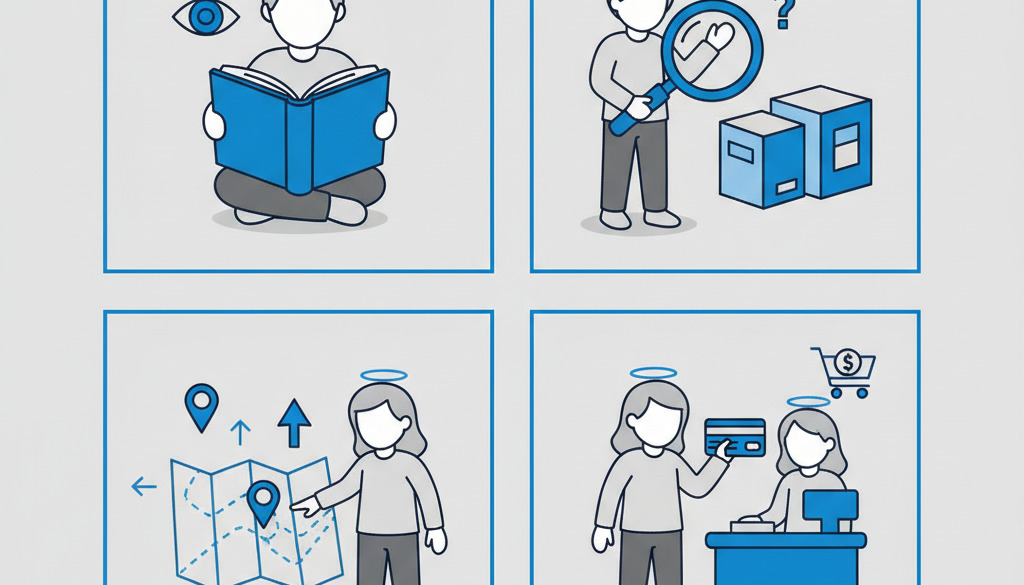
To effectively target customers, you first need to understand the different mindsets they have when they type a query into a search engine. We can generally break these down into four main categories. Think of it as a spectrum, moving from general curiosity to a specific desire to buy.
1. Informational Intent
At this stage, users are looking for answers, knowledge, or solutions to a problem. They aren't ready to buy yet; they are in the research and discovery phase. Their goal is to learn.
- Example Keywords: "how to clean leather boots," "what are the benefits of organic cotton," "best types of coffee beans for espresso," "why is my skin so dry."
2. Navigational Intent
Here, the user already knows where they want to go. They are using the search engine as a shortcut to find a specific website or brand. Targeting these keywords is mainly for ensuring your own customers can find you easily.
- Example Keywords: "Shopify login," "your brand name," "Amazon."
3. Commercial Investigation Intent
This is a critical stage for e-commerce. The user has identified a need and is now actively comparing different products, brands, or solutions. They have a strong potential to buy soon, but they are weighing their options. They are looking for the *best* option for them.
- Example Keywords: "best running shoes for flat feet," "Ninja blender vs. Vitamix," "top-rated Shopify apps for marketing," "[your product] alternatives," "reviews for [your competitor's product]."
4. Transactional Intent
This is the final stage. The user has made a decision and is ready to make a purchase. Their searches are highly specific and include words that signal a clear intent to buy. These are the most valuable keywords for driving direct sales.
- Example Keywords: "buy iPhone 15 online," "men's leather wallet sale," "discount code for [your brand]," "free shipping on hiking boots," "[product name] price."
The Crucial Role of Buyer Intent for Shopify Success
Grasping the concept of buyer intent is more than an academic exercise; it's the foundation of a profitable e-commerce strategy. Aligning your SEO and content efforts with user intent directly impacts your bottom line in several powerful ways.

Dramatically Higher Conversion Rates
This is the most significant benefit. When a user searching "buy handmade black leather bifold wallet" lands on your product page for that exact item, the chances of them making a purchase are exceptionally high. You are providing the perfect solution at the exact moment they are ready to act. This alignment between intent and content leads to higher conversion rates and more sales from the traffic you already have.
Improved Return on Investment (ROI)
Whether you're investing in paid ads or content creation, focusing on high-intent keywords ensures your marketing budget is spent more efficiently. Instead of paying for clicks from users who are "just looking," you are attracting visitors who are actively looking to spend money. This leads to a much stronger return on your marketing investment.
Reduced Bounce Rates and a Better User Experience
Bounce rate is the percentage of visitors who leave your site after viewing only one page. A high bounce rate can be a signal to Google that your page isn't relevant to the search query. When you match content to intent, visitors find exactly what they were looking for. This encourages them to stay longer, explore other pages, and engage with your brand, which reduces your bounce rate and improves your overall SEO performance.
Building Trust and Authority
By creating content that helps users at every stage of their journey—from informational blog posts to detailed comparison guides—you position your brand as a helpful expert, not just a seller. When a customer finds the answer to their initial question on your blog, they are more likely to return to you when they are ready to investigate commercial options and, ultimately, make a purchase. You become a trusted authority in your niche.
Identifying Buyer Intent Keywords for Your Shopify Niche
Now that you understand the *why*, let's get into the *how*. Finding the right buyer-intent keywords is a process of strategic thinking and using the right tools. You don't need to be an SEO wizard, but you do need to think like your customer.
Start by Brainstorming Your Core Topics
Begin with the basics. What do you sell? More importantly, what problems do your products solve? Create a list of your main product categories and the key benefits they offer. For example, if you sell organic skincare, your topics might be "acne solutions," "anti-aging creams," or "sensitive skin moisturizers."
Leverage Keyword Research Tools
While you can start with brainstorming, specialized tools can uncover keywords you would never have thought of. There are many options available, from free tools like Google Keyword Planner to more advanced platforms. When using these tools, don't just look at search volume. Look for the phrases and questions people are using. Many tools allow you to filter for questions (e.g., "how," "what," "where"), which are great for informational content. You can explore a detailed strategy in this AI Content Keyword Research guide.
Analyze What Your Successful Competitors Are Doing
Your competitors can be a goldmine of information. Look at the top-ranking Shopify stores in your niche. What keywords are they ranking for? Pay special attention to the titles and headings on their top-performing blog posts and category pages. Are they using terms like "best," "review," "vs," or "guide"? This indicates they are successfully targeting commercial investigation intent.
Using Google Search Itself for Powerful Intent Clues
Google search results are one of the best free tools for understanding user intent. Here’s how to use them:
- "People Also Ask" (PAA) Box: Type in one of your core topic keywords. Google will often show a "People Also Ask" box with a list of related questions. These are real queries from users, giving you direct insight into their informational needs.
- "Related Searches" Section: Scroll to the bottom of the search results page. The "Related Searches" section shows you other queries that are thematically linked to your original search. This can help you discover long-tail keywords and understand different angles of a topic. For example, a search for "leather wallet" might show related searches like "best minimalist leather wallet" (Commercial) or "how to restore a leather wallet" (Informational).
Mapping Keywords to the Buyer Journey on Shopify
Identifying keywords is just the first step. The next is to organize them and map them to the different stages of the buyer journey. This allows you to create a cohesive content strategy where each piece of content serves a specific purpose, guiding the customer from awareness to purchase.
Awareness Stage (Informational Intent)
At this top-of-the-funnel stage, your goal is to attract users who are just starting their research. You want to be the helpful expert who provides answers. Your blog is the perfect home for this content.
- Content Type: How-to guides, checklists, tutorials, explainer articles.
- Keyword Example: "how to start a skincare routine"
- Content Idea: A blog post titled "A Beginner's Guide to Building a Daily Skincare Routine."
Consideration Stage (Commercial Investigation Intent)
In the middle of the funnel, users know they need a product like yours and are now comparing their options. You need to create content that helps them make an informed decision and positions your products as the superior choice.
- Content Type: Product comparison guides, "best of" lists, case studies, in-depth reviews.
- Keyword Example: "best vitamin C serum for sensitive skin"
- Content Idea: A blog post titled "The 5 Best Vitamin C Serums for Sensitive Skin in 2026."
Decision Stage (Transactional Intent)
At the bottom of the funnel, the customer is ready to buy. All your optimization efforts here should be focused on your product and category pages. The goal is to make the purchase as easy and compelling as possible.
- Content Type: Product pages, category pages, pricing pages.
- Keyword Example: "buy [your brand] vitamin C serum"
- Content Idea: An optimized product page with a clear title, high-quality images, compelling description, customer reviews, and a prominent "Add to Cart" button.
Leveraging Buyer-Intent Keywords for Enhanced Shopify SEO Beyond the Funnel
While understanding the buyer's journey through the marketing funnel is crucial, a robust Shopify SEO strategy extends its reach beyond the initial research and decision-making phases. By strategically employing buyer-intent keywords, you can continue to attract qualified traffic and nurture customer relationships even after a purchase has been made, or when potential customers are exploring adjacent needs. This post-purchase and exploration phase is often overlooked but presents a significant opportunity to foster loyalty, encourage repeat business, and even upsell or cross-sell related products. Think of it as building a long-term relationship with your customer, not just completing a single transaction.Post-Purchase Engagement and Loyalty with Buyer-Intent Keywords
Once a customer has made a purchase, their journey with your brand doesn't necessarily end. In fact, this is a prime time to re-engage them with content that addresses their immediate needs related to their new purchase, or proactively anticipates their next steps. For instance, if someone just bought a new coffee maker from your Shopify store, they might be searching for "how to descale my [brand] coffee maker" or "best coffee beans for espresso machines." These are clear examples of post-purchase buyer-intent keywords. By creating helpful, informative content around these search queries, you demonstrate ongoing value and support. This not only enhances the customer experience but also positions your brand as a trusted resource, making them more likely to return for future purchases or to explore complementary products. Consider creating content like detailed user manuals, troubleshooting guides, advanced usage tutorials, or even recipes tailored to the products they've bought. The keywords here are specific and often include brand names or product model numbers, indicating a user who is actively seeking information to maximize their existing purchase. This is a critical area for minimizing returns and customer service inquiries while simultaneously building brand advocacy.Exploring Adjacent Needs and Future Purchases
Beyond immediate post-purchase support, buyer-intent keywords can also be incredibly effective in capturing customers who are exploring related needs or are in the early stages of considering their next purchase, even if it's not directly from your current product offerings. For example, a customer who recently bought a set of hiking boots might later search for "waterproof backpack for day hikes" or "best portable water filter for camping." These searches indicate a broadening interest within a specific niche. By identifying and targeting these adjacent buyer-intent keywords, your Shopify store can become a destination for a wider range of their needs. This requires a slightly more speculative approach to keyword research, looking at what other products or services complement your existing inventory. Content ideas in this realm could include comprehensive guides on outdoor adventures, reviews of camping gear, or tips for sustainable travel. While these searches might not have an immediate transactional intent for your current products, they place your brand at the forefront when the customer is ready to make those related purchases, potentially from a competitor. Investing in this type of content helps you build authority within your niche and capture a larger share of your target audience's wallet over time, turning tentative explorers into loyal patrons. Incorporating educational content that subtly introduces your broader product catalog or related services can be a subtle yet powerful way to guide these users further down the funnel.Maximizing Conversion: Beyond Basic Buyer Intent for Shopify Growth
While targeting straightforward buyer-intent keywords like "buy [product name]" or "[product name] discount" is foundational, truly supercharging your Shopify blog with SEO requires a more nuanced understanding of user intent. This involves digging deeper into the user's journey and anticipating their needs *before* they explicitly state them. Consider the "informational" to "transactional" conversion funnel not as a linear path, but as a fluid, interconnected web. Users often jump between stages, and your content strategy needs to reflect this. For instance, a user researching "how to choose a sustainable coffee bean" is likely in the informational stage. However, if you can subtly introduce your ethically sourced coffee beans and their unique flavor profiles within that content, you're guiding them towards a transactional decision without being overly promotional. This requires a blend of in-depth keyword research and sophisticated content mapping. Tools that analyze search results and identify common questions users ask around a given topic can be invaluable here. Think about the long-tail keywords that often reveal specific pain points or desires. A search for "best lightweight backpack for van life" is far more specific than "backpacks," and understanding the underlying needs of a "van life" enthusiast – durability, organization, portability – allows you to create content that directly addresses these with your product offerings in mind, even if the initial search wasn't explicitly for a purchase.
Furthermore, don't underestimate the power of "navigational" intent in a Shopify context. While often associated with users trying to find a specific website, in a broader sense, it also applies to users who know *what* they want but not necessarily *where* to find it. For example, someone searching for "[Your Brand Name] return policy" or "[Your Brand Name] customer service number" has already engaged with your brand. Your blog can preemptively address these needs by having easily accessible content. A blog post titled "Navigating Your [Your Brand Name] Order: Returns, Exchanges, and Support" can not only cater to this navigational intent but also demonstrate exceptional customer care, fostering trust and repeat business. This type of content, while not directly driving new sales, is crucial for customer retention and building brand loyalty. By anticipating and fulfilling these logistical information needs, you reduce friction in the customer experience, making future purchases even more likely. It's about understanding the entire customer lifecycle and creating blog content that serves them at every touchpoint, from initial discovery to post-purchase support.
The Evolving Landscape of Buyer Intent: Embracing User-Centric Content
The concept of "buyer intent" itself is evolving. It's no longer just about identifying users who are ready to click "add to cart." Search engines are becoming increasingly adept at understanding the underlying *intent* behind a query, even if the keywords aren't explicitly transactional. This means your Shopify blog should prioritize creating comprehensive, authoritative content that answers user questions thoroughly, regardless of their immediate stage in the buyer's journey. For instance, a user searching for "what are the benefits of organic cotton clothing" might not be ready to buy, but they are demonstrating a clear interest in a core attribute of your products. By creating a detailed blog post exploring the environmental, health, and tactile benefits of organic cotton – and naturally weaving in how your organic cotton products embody these benefits – you position yourself as a trusted source of information. This holistic approach builds credibility and keeps your brand top-of-mind when that user eventually *is* ready to make a purchase. The key is shifting from simply targeting transactional keywords to creating content that genuinely helps and educates your audience, establishing your brand as an indispensable resource within your niche.
Moreover, consider the impact of "comparison" and "review" keywords. Users actively searching for "[Product A] vs. [Product B]" or "[Your Product Category] reviews" are in a critical decision-making phase. Your Shopify blog can provide immense value by offering unbiased, in-depth comparisons and product reviews. This doesn't mean solely promoting your own products; it means providing genuine insights that help the user make an informed choice. If you have a product that excels in a particular comparison, highlight that fact with data and user testimonials. If you don't directly compete, you can still offer valuable content by reviewing popular alternatives and explaining how your own offerings might be a better fit for specific needs or budgets. For example, if you sell high-end camera lenses, a blog post comparing entry-level DSLR cameras (even if you don't sell them) can attract users who are exploring the broader photographic ecosystem and might eventually upgrade to your products. This strategy demonstrates transparency and a commitment to user satisfaction, which can significantly outweigh a direct sales pitch. By becoming the go-to source for honest and comprehensive product information, your Shopify blog can capture a vast segment of users who are further along in their purchase journey and are actively seeking validation for their choices.
Finally, the rise of voice search and conversational AI presents new opportunities for capturing buyer intent through your Shopify blog. Users often phrase voice queries more naturally and holistically. Instead of "running shoes," they might ask, "What are the best comfortable running shoes for beginners training for a 5k?" Your blog content should adapt to this by incorporating longer, more conversational phrases and answering the underlying questions explicitly. Create blog posts that directly address these complex queries, using the language your customers use. For example, a post titled "Finding Your First 5k Footwear: A Beginner's Guide to Comfortable Running Shoes" would directly capture this voice search intent. Furthermore, optimize your content for snippet inclusion by providing clear, concise answers to common questions. When a user asks a question via voice search, search engines often pull answers from featured snippets. By structuring your blog posts with clear headings, bullet points, and direct answers, you increase the likelihood of your content appearing in these coveted spots, driving significant traffic from users who are actively seeking solutions and are very close to making a purchasing decision. This proactive adaptation to evolving search behaviors is crucial for sustained success in the increasingly competitive Shopify landscape.
Leveraging Buyer-Intent Keywords for Shopify Blog Content Strategy
To truly supercharge your Shopify blog with buyer-intent keywords, a structured approach to content creation is essential. Start by brainstorming the actual search queries your ideal customers are using at different stages of their decision-making process. Think beyond generic terms. For instance, instead of just targeting "dresses," consider phrases like "buy sustainable maxi dresses online," "best floral summer dresses petite," or "affordable wedding guest dresses with sleeves." These longer-tail keywords are more specific and indicate a stronger intent to purchase. Tools like Google Keyword Planner, Semrush, or Ahrefs can be invaluable here, revealing not only the search volume but also the "buying intent" score associated with various keywords. Prioritize keywords that signal a user is ready to evaluate options and make a purchase, such as those containing words like "review," "best," "comparison," "discount," "coupon," or "buy."
Once you’ve identified your target buyer-intent keywords, the next step is to weave them organically into your blog content. This doesn't mean keyword stuffing, which can harm your SEO. Instead, focus on creating high-quality, valuable content that naturally incorporates these phrases. Developing product comparison posts, detailed buying guides, in-depth reviews of your own products or complementary items, and case studies demonstrating the benefits of your offerings are excellent formats. For example, if you sell artisanal coffee beans, a blog post titled "Choosing the Perfect Bean: A Guide to Arabica vs. Robusta for Your Home Brew" could effectively target users actively researching coffee types before buying. Similarly, if you offer handmade jewelry, a post like "Sparkle Sustainably: Comparing Recycled Gold vs. Sterling Silver for Everyday Wear" directly addresses a buyer's considerations.
Moreover, think about how to optimize your content for discoverability beyond direct search. Implement internal linking strategies, directing readers from broader informational posts to more purchase-oriented ones. For instance, a blog post discussing the benefits of ethical fashion could link to specific product pages or categorized collections featuring ethically sourced clothing. Ensure your meta descriptions and title tags for these buyer-intent-focused blog posts are compelling and include your primary keywords, enticing users to click through from search engine results pages. By strategically aligning your content with the stages of the buyer's journey and the specific language they use when considering a purchase, your Shopify blog can become a powerful engine for driving qualified traffic and ultimately, increasing conversions.
On-Page Optimization for Buyer Intent
Beyond keyword integration, meticulous on-page optimization is crucial. Ensure your buyer-intent blog posts have clear, concise titles that directly reflect the search query. Use headings (H2, H3) to break down content logically, incorporating keywords naturally within these structures. Write compelling meta descriptions that act as mini-advertisements, highlighting the value proposition to the user and encouraging clicks. Image alt text should also be descriptive and relevant to the content and associated keywords. Remember to include clear calls-to-action (CTAs) within the content, guiding readers towards the next step, whether it’s exploring a specific product category, signing up for a newsletter for exclusive discounts, or directly adding an item to their cart. This focused approach ensures that when a user with high buyer intent lands on your blog, they find exactly what they're looking for and are guided smoothly towards a purchase.
Shopify Success: Buyer-Intent SEO FAQ
What are buyer-intent keywords for Shopify?
Buyer-intent keywords are terms that indicate a user is actively looking to make a purchase. For Shopify, this includes phrases like "buy [product name]," "[product name] reviews," or "best [product category] online store."
How do buyer-intent keywords help Shopify SEO?
By targeting buyer-intent keywords, your Shopify blog can attract highly qualified traffic—users who are further down the sales funnel and more likely to convert into paying customers.
Where can I find buyer-intent keywords for my Shopify store?
You can discover these keywords using keyword research tools like Ahrefs, SEMrush, or Google Keyword Planner, focusing on terms that suggest transactional intent and are relevant to your products.
→ Read the full Shopify & Ecommerce guide
Keep reading
Hand-picked guides that go deeper — open the one you need next:
- E-commerce AI Content Marketing: The 2026 Strategy Guide
- Automate Shopify Blog for E-commerce Sales
- WordPress Shopify AI Content: Strategic Integration Guide
- E-commerce AI Content Marketing Solved
→ Read the full Shopify & Ecommerce guide