
Automate Shopify Blog for E-commerce Sales
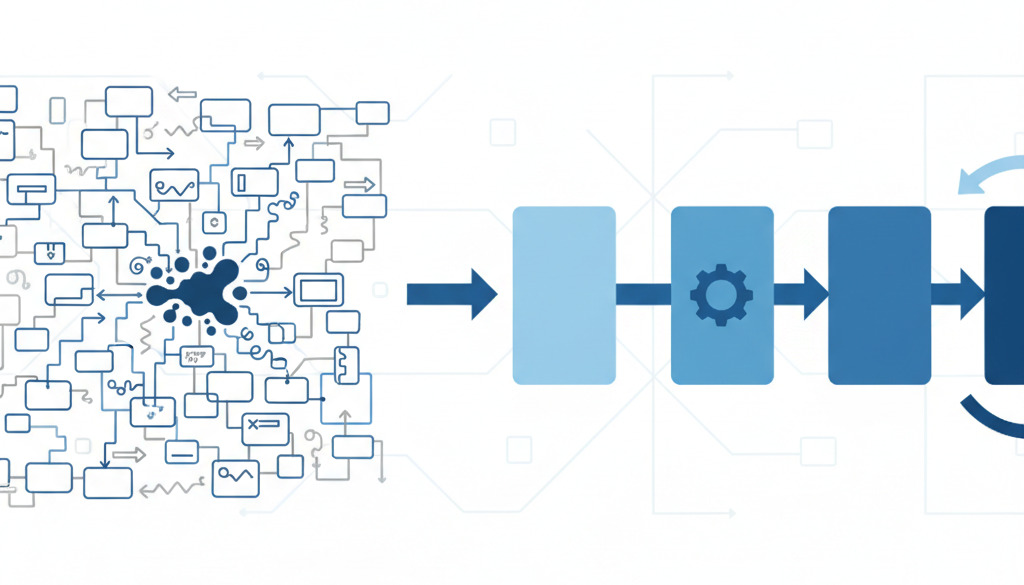
Key Takeaways
- Time is Money: Traditional blogging consumes immense resources. E-commerce blog automation frees up dozens of hours, allowing business owners to focus on core operations.
- Automation is More Than Scheduling: True automation leverages AI for content ideation, drafting, SEO optimization, and distribution, creating a complete content engine.
- SEO and Traffic Growth: A consistent flow of high-quality, optimized blog content is a powerful signal to search engines, leading to higher rankings and a steady stream of organic traffic.
- Boost Brand Authority: Regularly publishing valuable content establishes your brand as an expert in your niche, building trust and credibility with potential customers.
- Human Oversight is Key: Automation is a powerful tool, not a complete replacement for human strategy. The best results come from combining AI efficiency with human expertise for nuanced editing and brand alignment.
- Accessible for All Businesses: Modern automation solutions are scalable and cost-effective, offering a significant return on investment for small and medium-sized businesses aiming for growth.
Understanding the "Why": The Evolving Digital Landscape for Businesses
In the highly competitive e-commerce landscape of 2026, simply having great products is no longer enough. The digital storefront is crowded, and capturing customer attention requires a strategic approach to online visibility. This is where content marketing becomes a critical pillar of success. For business owners, especially those who didn't grow up in the digital world but recognize its importance, navigating this landscape can feel like a full-time job in itself.
Search engines like Google are the primary way customers discover new brands. Their algorithms are designed to reward websites that consistently provide fresh, relevant, and helpful content. A static website, no matter how well-designed, quickly becomes invisible. An active blog that answers customer questions, explains product benefits, and discusses industry trends signals to Google that your site is a valuable resource. According to recent industry reports, the operational baseline for any profitable online retailer in 2026 is being "measurable, automated, and observable." This shift highlights the inadequacy of manual efforts in a world where AI is increasingly shaping consumer behavior and business operations.
The fundamental challenge for most small and medium-sized business owners is a stark imbalance of resources. You have a business to run, orders to fulfill, and customers to support. The time and expertise required to maintain a high-performance blog often seem out of reach, creating a significant barrier to growth in the digital marketplace.
The Traditional Blogging Bottleneck: Resources vs. Results
For any Shopify store owner, the goal of a blog is to attract potential buyers and convert them into loyal customers. However, the traditional process of creating a single blog post is a major drain on resources. It's a multi-stage marathon that pulls you away from the core activities that generate immediate revenue. Let's break down the manual effort involved.
First comes topic research, which can take hours of sifting through competitor blogs, forums, and keyword tools to find an idea that is both relevant to your audience and has a chance of ranking on Google. Next is the writing itself—crafting thousands of words of engaging, informative content. This is followed by editing and proofreading to ensure quality and clarity. Finally, there's SEO optimization, a technical process of weaving in keywords, structuring headings, writing meta descriptions, and optimizing images. A single post can easily consume an entire day or more.
Maintaining this pace consistently—week after week—is where most businesses falter. The result is often an abandoned blog with a few sporadic posts, which does little to build authority or attract organic traffic. Alternatively, you could outsource this work. Hiring a freelance writer or a marketing agency to produce regular content can be effective, but it comes with a significant price tag, often running into thousands of dollars per month, an expense that can be difficult for a growing business to justify.
Defining E-commerce Blog Automation: More Than Just Scheduling
When business owners hear "automation," they often think of simple tools that schedule social media posts or pre-publish blog articles. While that is a component, true e-commerce blog automation is a far more comprehensive and powerful concept. It is not just about posting content; it is about fundamentally streamlining the entire content creation lifecycle, from the initial idea to the final published piece.
At its core, blog automation involves using technology to handle the repetitive, time-consuming tasks associated with content marketing. Instead of you or your team manually performing each step, specialized software and systems execute them efficiently and at scale. This allows you to produce more high-quality content in a fraction of the time, turning your blog from a resource-draining chore into a consistent driver of sales.
It’s helpful to distinguish between two main types of automation:
- Semi-automation: This involves using specific tools to accelerate parts of your workflow. For example, you might use a tool for keyword research, another for generating a rough draft, and a third for SEO analysis. You are still heavily involved, but the tools act as powerful assistants.
- Full automation: This is where advanced systems, often powered by artificial intelligence, handle the majority of the process. You provide the strategic direction—the topics, the keywords, the target audience—and the system generates, optimizes, and even publishes a complete, professional article. This is the model that offers the most significant time savings and scalability.
The Core Pillars of Blog Automation for E-commerce
A successful blog automation strategy rests on four key pillars, each designed to tackle a specific stage of the content lifecycle. By systemizing these areas, you can create a reliable engine that consistently produces valuable content for your Shopify store.
Content Ideation and Research Automation
The question of "What should I write about?" is a major hurdle. Automation tools eliminate this guesswork. They connect to vast data sources to analyze what your potential customers are actively searching for. These systems can identify trending topics, analyze competitor content to find valuable gaps, and uncover long-tail keywords that signal strong purchase intent. Instead of spending hours brainstorming, you receive a data-driven list of content ideas virtually guaranteed to resonate with your audience. For a deeper dive into this process, exploring a guide on AI-driven keyword research can be incredibly beneficial.
Content Generation Automation: From Blank Page to Draft
This is where Artificial Intelligence has become a game-changer. Overcoming the "blank page syndrome" is one of the biggest challenges in writing. AI-powered tools act as expert writers that can generate a structured, well-written first draft in minutes. You provide a topic or a set of prompts, and the AI builds a complete article, complete with an introduction, body paragraphs, and a conclusion. For many business owners, this is the most transformative part of the process. Services built specifically for this purpose, whose mission is to get you more customers from your blog by writing professional SEO articles for you, leverage their own proprietary artificial intelligence. This specialized AI can produce drafts that are not only well-written but also structured for search engine success from the very beginning.
SEO Optimization Automation
Writing the content is only half the battle; it must be optimized to rank on Google. SEO automation tools handle the technical details that are tedious for humans but simple for software. They can automatically insert relevant keywords in the right places, suggest compelling meta descriptions to increase click-through rates, and ensure your article has a logical heading structure (H2s, H3s). Some tools even analyze readability to make sure your content is easy for customers to understand. While human oversight is still important for nuanced strategy, as discussed in guides on effective Shopify blog SEO, automation removes 90% of the manual SEO busywork.
Publishing and Distribution Automation
Once an article is ready, automation can ensure it reaches the widest possible audience. You can set up automated schedules to publish content at optimal times, ensuring a steady stream of new posts without any last-minute effort. Furthermore, these systems can integrate directly with your social media channels and email marketing platform. A new blog post can be automatically shared on your Facebook page and sent to your email subscribers, driving immediate traffic and engagement with zero additional work.
The Power of AI in Content Creation: A Deeper Dive
Artificial intelligence, particularly large language models (LLMs), has fundamentally changed what is possible in content automation. These AI models have been trained on billions of pages of text, allowing them to understand context, tone, and structure with incredible sophistication. They can generate text that is not just grammatically correct, but also coherent, engaging, and remarkably human-like.
The process for an e-commerce business owner is surprisingly simple. You interact with the AI through prompts—a set of instructions that guide the content creation. For example, you might input: "Write a 1500-word blog post about the benefits of organic cotton baby clothes, targeting new parents. The tone should be informative and reassuring. Include a section on why it's better for sensitive skin." The AI takes these instructions and generates a unique article tailored to your specifications.
For busy entrepreneurs, this capability is revolutionary. It eliminates writer's block and drastically cuts down the time it takes to produce a first draft. What used to take a full day of writing can now be accomplished in minutes. This speed is a key advantage of specialized solutions. Some services utilize a proprietary artificial intelligence that can write professional SEO blog articles for your website in minutes—almost like magic. This allows you to scale your content marketing efforts in a way that was previously unimaginable for a small business.
Automating for Visibility: How Blog Automation Drives Organic Traffic
The ultimate goal of a blog for an e-commerce store is to drive sales, and the primary driver of this is organic traffic from search engines. Blog automation is directly linked to improved search engine rankings and sustained traffic growth. The logic is simple: Google's business model is based on providing the best answers to user queries. A website that consistently publishes high-quality, relevant content is seen as a more authoritative and trustworthy source.
By using automation to maintain a regular publishing schedule—whether it's one, two, or five new articles per week—you are constantly sending positive signals to Google. Each new post is another opportunity to rank for valuable keywords related to your products and industry. This creates a powerful compounding effect. Over time, this consistent output builds a vast library of content that establishes your website's authority in its niche.
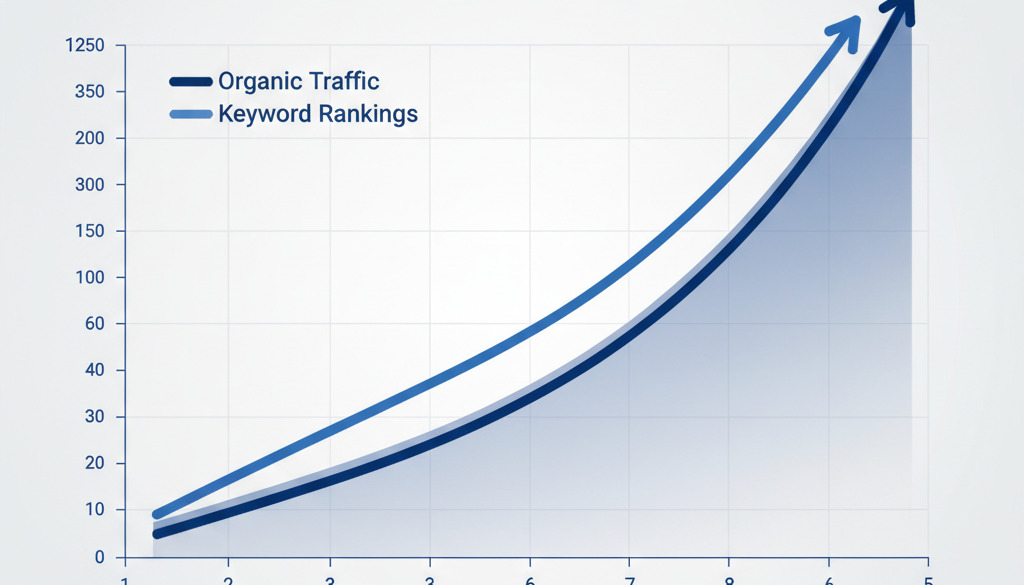
This increased visibility has a direct impact on your bottom line. As your rankings improve, more potential customers will discover your website when searching for information or products. The beauty of this system is that it works for you 24/7. This ongoing process ensures that customers will find you on their own in Google, reducing your reliance on costly paid advertising and creating a sustainable channel for customer acquisition.
Beyond Traffic: Other Tangible Benefits of Blog Automation
While driving organic traffic is a primary objective, the benefits of a well-executed blog automation strategy extend much further. It strengthens your brand, engages your audience, and improves the overall performance of your website.
Enhanced Brand Authority and Credibility
When a potential customer lands on your site and finds a rich library of helpful articles, it immediately builds trust. A blog that consistently provides valuable information—how-to guides, product comparisons, industry insights—positions your brand as an expert. You are no longer just a seller; you are a credible resource. This authority is crucial in converting hesitant shoppers into confident buyers.
Improved Customer Engagement and Lead Generation
Your blog is an ideal platform to engage with your audience on a deeper level. You can use posts to answer common customer questions, address pain points, and showcase your products in real-world scenarios. Each article is also an opportunity for lead generation. By including calls-to-action (CTAs) within your posts, you can encourage readers to sign up for your newsletter, download a free guide, or claim a discount code, turning passive readers into active leads in your sales funnel.
Increased Website Stickiness and Reduced Bounce Rates
When a visitor arrives at your site from Google, you want them to stay and explore. A deep an d interconnected blog encourages this behavior. If they find one useful article, they are likely to click on internal links to read related posts. This "stickiness" reduces your website's bounce rate (the percentage of visitors who leave after viewing only one page), which is another positive signal to search engines. The longer users stay on your site, the more likely they are to become familiar with your brand and make a purchase.
Choosing the Right Automation Tools: A Practical Guide
With the rise of AI, the market for blog automation is growing rapidly. For a business owner, choosing the right solution can seem daunting. The key is to focus on tools or services that are built with the specific needs of an e-commerce business in mind, especially for platforms like Shopify.
When evaluating your options, look for these key features:
- Shopify Integration: The solution should seamlessly integrate with your Shopify store. This is crucial for features like direct publishing to your blog and potentially pulling product information into articles.
- High-Quality AI: Not all AI is created equal. Look for solutions that produce content that is well-written, coherent, and requires minimal editing.
- SEO-Friendliness: The tool should have built-in features to assist with SEO, such as keyword optimization, meta description generation, and proper content structure.
- Ease of Use: As a busy owner, you need a solution that is intuitive and doesn't require a steep learning curve. The interface should be clean and the process straightforward.
- Scalability and Cost-Effectiveness: The right solution should grow with your business. It should be affordable for a small business to start with but have the capacity to handle a larger volume of content as your needs expand.
Ultimately, the best tool is one that saves you the most time while delivering the best results, allowing you to focus on running your business, not on becoming a content marketer.
Implementing Blog Automation: A Step-by-Step Approach
Adopting blog automation is a strategic process. By following a clear, step-by-step approach, you can ensure a smooth implementation and maximize your return on investment. It’s not just about turning on a machine; it’s about guiding that machine with a smart strategy.
Setting Clear Content Goals and Strategy
Before you automate anything, you must define what success looks like. Who is your target audience? What are their biggest questions and pain points? What do you want your blog to achieve? Your goals could be increasing organic traffic by 20% in six months, generating 50 new email leads per month, or ranking for a specific set of product-related keywords. These goals will inform your entire content strategy and the prompts you give your automation tools.
Selecting and Configuring Your Automation Tools
Once your strategy is defined, select the tool or service that best aligns with your goals and budget. The setup process typically involves configuring your preferences. This includes defining your brand's tone of voice (e.g., professional, witty, casual), inputting target keywords, and setting up a content calendar within the system. This initial configuration is vital for ensuring the automated content aligns with your brand identity.
The Crucial Role of Human Oversight and Editing
This is the most important step and one that is often overlooked. Automation is a tool to enhance human capability, not replace it entirely. AI can generate a fantastic draft, but a human touch is essential for adding unique insights, fact-checking critical information, and ensuring the content perfectly reflects your brand’s voice and values. Services that excel in this area recognize this synergy. For instance, some solutions provide more than just software; they ensure that the AI-generated articles are reviewed by actual SEO experts. This guarantees brand voice consistency and adds a layer of strategic insight that pure AI cannot replicate, a key element explored in many strategic guides to AI blog content.
Overcoming Common Concerns and Misconceptions
For business owners new to this technology, some apprehension is natural. The idea of a machine writing for your brand can raise valid questions. However, most of these concerns are based on outdated perceptions of what AI content is.
One of the biggest fears is that the content will sound "robotic" or inauthentic. While this was a problem with older technologies, modern AI models are incredibly sophisticated. They can adapt to different tones and styles, producing content that is engaging and natural-sounding. With the right prompts and a final human review, your automated content will be indistinguishable from that written entirely by a person.
Another common concern is the risk of being penalized by Google for duplicate content. This is a misunderstanding of how quality automation works. Reputable AI content generation tools do not copy and paste from other sources. They generate entirely new, unique text based on the patterns they have learned. Each article is original and passes plagiarism checks. True automation, especially when guided by a clear strategy and human oversight, focuses on creating unique value for the reader, which is precisely what search engines are designed to reward.
Real-World Success: Case Studies and Examples
The proof of any strategy lies in its results. Across the e-commerce world, small and medium-sized businesses are leveraging blog automation to achieve remarkable growth. Consider a hypothetical small business selling handmade leather goods. By implementing an automated blog strategy, they could shift from producing one article per month to two per week.
They could target topics like "How to care for a leather wallet," "The difference between full-grain and top-grain leather," and "Gift ideas for men who appreciate quality." Within six months, such a strategy could lead to a 300% increase in organic traffic. More importantly, this traffic is highly qualified. The people searching for these topics are already interested in high-quality leather products, leading to a significant uplift in conversion rates and sales.

This is not an isolated case. This strategy has proven so effective that some leading AI content services report being used by over 500 companies to automate and elevate their content marketing. From niche Shopify stores to larger brands, automation is unlocking a level of marketing efficiency that was once only available to corporations with massive budgets.
The Future of E-commerce Blogging: Advanced Automation and Personalization
The technology behind blog automation is evolving at a breathtaking pace. Looking ahead, the trends point towards even more intelligent and integrated systems. The rise of "agentic AI"—AI systems capable of taking autonomous actions—is set to reshape e-commerce. Recent data from Boston Consulting Group shared at industry summits revealed that 81% of US consumers already use LLMs like ChatGPT for product discovery, and 43% are interested in letting these AI agents make purchase decisions for them.
This signals a shift away from traditional keyword search towards conversational discovery. Customers will increasingly ask an AI for recommendations, and the AI will scan the web for the best information. The brands with the richest libraries of high-quality, helpful blog content will be the ones recommended. The future of e-commerce blogging is not just about producing content; it's about producing the authoritative content that will train these AI agents.
Furthermore, we are moving towards hyper-personalization, where the content itself could be dynamically adapted to individual user behavior. Automation will be the only way to manage this level of complexity, ensuring your brand remains visible and relevant in the intelligent commerce era.
Getting Started with Blog Automation: Your First Steps
Embracing blog automation doesn't require you to be a tech expert. The journey can start with a few simple, manageable steps. For a busy business owner, the best approach is to start small and see the benefits firsthand before scaling up.
A great first step is to identify the biggest content bottleneck in your business. Is it coming up with ideas? Is it the writing itself? Start by exploring a tool or service that solves that specific problem. Many solutions are designed to be user-friendly, especially for those who are not tech-native. You can begin by commissioning just a few articles on topics you know are important to your customers.
To make this decision even easier, many top-tier automation services understand the need to prove their value. They remove the risk for business owners by letting them test the platform. Look for introductory offers that let you experience the benefits directly, such as a promise that your first 5 blog posts are free. This allows you to get high-quality, professional SEO content for your Shopify blog and see the impact for yourself, without any upfront investment.
Conclusion
For small and medium-sized business owners, the demands of modern e-commerce can be overwhelming. Competing for online visibility requires a consistent investment in content marketing—an investment of time and resources that many entrepreneurs simply do not have. E-commerce blog automation offers a powerful and practical solution to this challenge.
By leveraging the power of artificial intelligence, you can transform your blog from a neglected task into your most powerful tool for customer acquisition. It allows you to save invaluable time, increase your visibility on search engines, build unshakable brand authority, and ultimately, drive more sales through your Shopify store. The technology is no longer a futuristic concept; it is an accessible, affordable, and essential strategy for sustainable business growth. Embracing automation is not about replacing your role as a business owner; it's about empowering you to achieve more than you ever could alone.
Frequently Asked Questions
Will AI-generated content hurt my SEO?
No, quite the opposite, as long as it's done correctly. Google's core mission is to reward high-quality, helpful content that satisfies user intent, regardless of how it was created. Modern AI, guided by a good strategy and human oversight, produces unique, valuable, and SEO-optimized content that search engines favor. It's low-quality, spammy content that gets penalized, not AI-generated content.
How much time does blog automation actually save?
The time savings are substantial. A single blog post can take anywhere from 4 to 10 hours to research, write, edit, and optimize manually. With an effective automation workflow, this time can be reduced to under an hour. For a complete, AI-driven service, your time commitment could be as low as a few minutes to approve a topic and review the final draft.
Is this affordable for a small business?
Absolutely. Many blog automation tools and services are designed specifically for the budgets of small to medium-sized businesses. When you consider the cost of hiring a freelance writer or agency, or the monetary value of your own time, automation services often provide a significantly higher return on investment (ROI). The affordability and scalability make it one of the most cost-effective marketing strategies available today.
Can I still maintain my brand's unique voice?
Yes. Maintaining your brand voice is a critical part of a successful automation strategy. The best platforms allow you to input detailed style guides, brand tones (e.g., "professional," "playful," "expert"), and other specific instructions. The AI uses these parameters to generate content that aligns with your brand. The final human review step is crucial for making those final tweaks that ensure perfect consistency.
What's the difference between a simple AI writer and a full automation service?
A simple AI writer (like a public ChatGPT interface) is a tool that assists you in drafting text. You are still responsible for the strategy, keyword research, SEO optimization, editing, and publishing. A full automation service is a complete, end-to-end solution. It handles the entire workflow—from topic ideation and SEO research to generating a fully optimized article—and often includes a layer of human expertise to ensure quality and strategic alignment.
How quickly can I expect to see results from blog automation?
SEO is a long-term strategy, and results are not instantaneous. However, by consistently publishing optimized content through automation, you can expect to see positive momentum, such as an increase in keyword rankings and organic traffic, within 3 to 6 months. These results are cumulative and will continue to compound over time, building a sustainable asset for your business.
Keep reading
Hand-picked guides that go deeper — open the one you need next: