
Beyond Basic Blogging: Advanced SEO Features of Volteruno's

Key Takeaways
- AI is not the future of SEO; it's the present. Search engines like Google now use advanced AI to understand user intent, making old keyword-stuffing tactics obsolete.
- Advanced AI features go far beyond basic content generation. They include semantic analysis, technical SEO audits, predictive keyword research, user experience optimization, and even generative engine optimization (GEO).
- AI empowers busy business owners. It automates time-consuming tasks like content creation, performance tracking, and identifying link-building opportunities, allowing you to focus on your business.
- Human oversight is still crucial. AI is a powerful tool to augment your strategy, but human expertise is essential for maintaining brand voice, ensuring accuracy, and making final strategic decisions.
- Platforms like Volteruno make this technology accessible. You don't need to be a tech wizard to leverage AI; specialized services can handle the heavy lifting, generating professional, SEO-optimized content for you.
Understanding the Foundations: Why AI is Revolutionizing SEO
As a business owner, you've likely heard the term 'SEO' for years, often associated with a complex and ever-changing set of rules. For decades, Search Engine Optimization was about finding the right keywords and placing them correctly. Today, that approach is fundamentally outdated. The revolution isn't just another algorithm update; it's a complete architectural shift in how search engines think, powered by Artificial Intelligence (AI).
Search engines have evolved from digital librarians, merely matching keywords to documents, into sophisticated problem-solvers. Thanks to AI and machine learning models like Google's Gemini, they now strive to understand the context and intent behind a user's query. When someone searches for "best business laptop," the engine knows they aren't just looking for a page with those words; they're likely comparing models, looking for reviews, and considering factors like battery life, price, and performance. AI allows the search engine to grasp this entire constellation of needs.
This transition from keyword-matching to intent-matching is where AI-driven SEO shines. Traditional tactics were reactive and manual. AI-powered strategies are proactive, predictive, and highly efficient.[1] Instead of guessing what might work, AI analyzes vast datasets to provide data-backed recommendations, automating tasks that once took countless hours and delivering insights with a level of precision previously unimaginable. This efficiency is a game-changer for business owners who need to see real results without getting bogged down in technical minutiae.
AI-Powered Keyword Research and Intent Analysis
Traditional keyword research involved brainstorming terms and using tools to check their search volume and difficulty. While useful, this method often misses the most crucial element: user intent. AI transforms this process from a guessing game into a science.
Beyond Keywords to Clusters and Concepts
Advanced AI tools don't just find individual keywords. They identify topic clusters—groups of related queries that represent a user's entire learning journey. Instead of just targeting "small business accounting software," an AI might reveal a cluster of related intents, including:
- "how to choose accounting software for a startup" (Informational)
- "QuickBooks vs. Xero for small business" (Commercial Investigation)
- "free accounting software for freelancers" (Transactional/Informational)
- "small business bookkeeping checklist" (Navigational/Informational)
By understanding these interconnected queries, you can create comprehensive content that answers every potential question a customer might have, establishing your website as a definitive authority. AI excels at uncovering these long-tail keywords and conversational questions that real people use, especially in voice search.
Predicting the Next Big Trend
Perhaps most impressively, some AI platforms can perform predictive analysis on search trends. By analyzing market data, social media chatter, and emerging query patterns, AI can forecast which topics are about to gain traction. This allows you to create content *before* your competitors do, capturing traffic for keywords that are just beginning to trend. This is the difference between chasing demand and getting ahead of it.
Semantic Search Optimization: Speaking the Search Engine's Language
Have you ever searched for something on Google and found the perfect answer on a page that didn't even contain your exact search term? That's the power of semantic search. It’s the ability of a search engine to understand the meaning behind your query and the relationships between words, concepts, and entities.
For search engines, "New York," "NYC," and "The Big Apple" are all the same entity. AI is the engine that makes this understanding possible. To optimize for semantic search, your content must demonstrate a deep, holistic understanding of a topic. It’s no longer enough to repeat a keyword. You must cover related subtopics, answer associated questions, and use the language an expert would.
This is where AI SEO tools provide a massive advantage. They can analyze the top-ranking content for a given topic and identify the key concepts, entities, and related terms that Google expects to see. An AI tool might suggest that an article about "home mortgages" should also discuss:
- Fixed-rate vs. Adjustable-rate mortgages
- Private Mortgage Insurance (PMI)
- Loan-to-value ratios
- The role of credit scores
- Amortization schedules
By including these related concepts, you are signaling to the search engine that your content is comprehensive and authoritative, which is a powerful ranking factor in the age of AI.
AI for Content Creation: Generating High-Quality, SEO-Optimized Articles
For many business owners, the single biggest obstacle to a successful blog is the time and effort required to write it. You know you need fresh, high-quality content to attract customers, but who has the time to research, write, edit, and optimize multiple articles every month? This is perhaps the most transformative application of AI for businesses.
Modern AI is not about creating soulless, robotic text. It’s about creating a powerful first draft that is 80% of the way there in 10% of the time. AI platforms can generate detailed outlines, write informative sections, and even produce complete, well-structured articles based on a simple prompt. This allows you to shift your role from writer to editor and strategist, ensuring the content is infused with your unique brand voice and expertise.
This is precisely where a service like Volteruno comes in. Recognizing that most business owners lack the time and inclination for content creation, Volteruno leverages its own sophisticated AI to produce professional SEO blog posts in minutes. It's a service designed to help you get found on Google without the steep learning curve or time investment. With over 500 companies already using the platform, it’s a proven solution for getting more customers from your blog. Plus, with an offer to get your first five posts for free, it removes the risk of getting started.
Intelligent Content Optimization and Refreshing
SEO is not a "set it and forget it" activity. An article that ranked #1 a year ago might be on page three today. Search trends change, new competitors emerge, and information becomes outdated. This is where AI-powered content optimization becomes invaluable.
Automated Content Audits
AI tools can continuously scan your website, analyzing every piece of content for SEO performance. They act like a tireless SEO consultant, identifying issues and opportunities around the clock. An AI might flag an article because:
- Its traffic has declined over the past three months.
- It’s missing new keywords that have become relevant to the topic.
- Competitors have published more comprehensive content.
- Internal links are broken or non-existent.
Data-Driven Refresh Suggestions
Beyond simply identifying a problem, AI provides actionable solutions. The tool might suggest adding a new section on "AI's impact on financial forecasting" to a post about accounting trends, or it might recommend embedding a new video tutorial. It can even compare your content against the top 10 results and generate a "content gap" analysis, showing you exactly what information you're missing. This allows you to strategically refresh and relaunch your existing content, reclaiming your rankings and extending its lifespan without starting from scratch.
Advanced User Experience (UX) Signals and AI
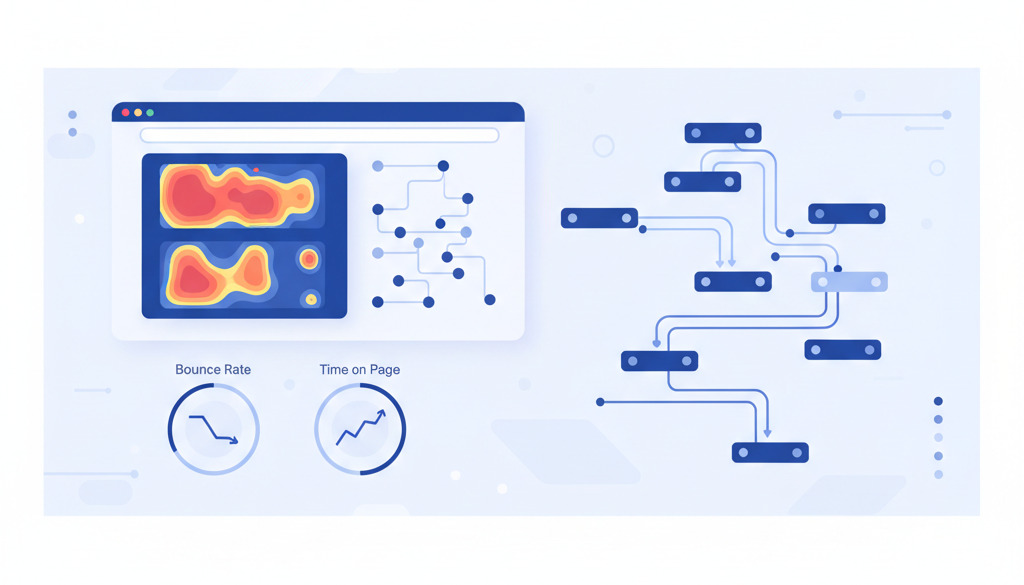
Google has made it clear: it wants to rank websites that users love. How users interact with your site—your User Experience (UX)—sends powerful signals to search engines. Metrics like dwell time (how long visitors stay), bounce rate (how many leave after viewing only one page), and click-through rate are all proxies for user satisfaction. A poor UX tells Google your site isn't a good answer to the user's query.
AI is exceptionally good at analyzing user behavior data at a massive scale to pinpoint UX problems. By processing thousands of user sessions, an AI can identify patterns that a human might miss. For example, it might discover that users on mobile devices consistently drop off on a specific page in your checkout process, or that visitors who land on a particular blog post rarely click on any other links.
These insights are gold for SEO. By fixing the identified UX issues—improving site speed, simplifying navigation, making text more readable, or adding clearer calls-to-action—you directly improve user satisfaction. Happier users stay longer, engage more, and convert better. These positive behaviors are strong signals to Google that your site is a high-quality result, which can lead to significant ranking improvements.
AI-Driven Link Building Strategies
Backlinks—links from other websites to yours—remain one of the most powerful ranking factors in SEO. They act as votes of confidence, telling search engines that your content is credible and valuable. However, building high-quality backlinks is notoriously difficult and time-consuming.
AI streamlines this process by automating opportunity discovery. Advanced AI tools can:
- Analyze competitor backlink profiles: AI can dissect the backlink profiles of all your top competitors, identifying the high-authority sites that link to them but not to you. This instantly creates a high-quality list of outreach targets.
- Identify unlinked brand mentions: AI can scour the web for mentions of your brand name that don't include a link. Reaching out to these authors and requesting a link is one of the easiest ways to build powerful backlinks.
- Discover guest posting opportunities: By analyzing your niche, AI can identify relevant, high-authority blogs that accept guest posts, helping you get your expertise in front of a new audience while earning a valuable backlink.
- Evaluate link quality: Not all links are created equal. AI can assess the authority, relevance, and traffic of a potential linking site to ensure you’re pursuing opportunities that will actually move the needle on your rankings.
By using AI, you can build a more effective link-building strategy in a fraction of the time, focusing your energy on building relationships rather than on manual prospecting.
Personalizing Content and User Journeys with AI
Personalization is the holy grail of marketing. Imagine a website that adapts its content based on who is visiting. A first-time visitor might see an introductory offer, while a returning customer sees content related to their past purchases. This level of dynamic customization was once the exclusive domain of giants like Amazon, but AI is now making it accessible to more businesses.
By analyzing data signals such as location, past browsing behavior, traffic source, and demographics, AI can help you tailor the user journey. For example:
- A user arriving from a search for "emergency plumbing services" could be shown a prominent "Call Now" button with your phone number.
- A visitor from a different state might see content tailored to services offered in their region.
- A user who has previously read blog posts about "DIY home repair" could be shown your articles on advanced renovation projects.
While direct personalization's impact on SEO is debated, its indirect benefits are undeniable. A personalized experience leads to higher engagement, longer dwell times, and increased conversion rates. These positive UX signals, as discussed earlier, are exactly what Google looks for when evaluating a site's quality. Personalization turns a generic website into a helpful, responsive resource, which is what wins in modern search.
AI for Technical SEO Audits and Issue Resolution
Technical SEO is the foundation upon which your content and links are built. It involves ensuring your website is structured in a way that search engines can easily crawl, understand, and index. Issues like slow page speed, broken links, improper use of `robots.txt`, or missing schema markup can cripple your SEO efforts, no matter how great your content is.
Traditionally, technical SEO audits required an expert to spend hours, or even days, manually checking hundreds of factors. AI completely changes this. AI-powered crawlers can audit your entire website in minutes, identifying a vast range of technical issues with superhuman speed and accuracy.
These tools can pinpoint problems such as:
- Crawl Errors: Pages that the Googlebot cannot access.
- Site Speed Issues: Identifying specific images, scripts, or code that are slowing down your site.
- Schema Markup Errors: Finding and validating structured data, which helps Google understand your content.
- Duplicate Content: Locating pages with identical or near-identical content that can dilute your ranking signals.
Some advanced AI can even suggest specific code fixes or, in some cases, automate the resolution of common problems. This frees up your time and ensures that your website's technical health isn't holding back your search performance.
Voice Search Optimization: The Future is Spoken
The way people search is changing. Instead of typing short, fragmented keywords, more and more users are asking full-sentence questions to their smart speakers and phones. "Hey Google, what's the best restaurant near me that's open now?" or "Siri, how do I fix a leaky faucet?" This is voice search, and it requires a different approach to SEO.
Voice queries are typically longer, more conversational, and phrased as questions. AI is crucial for optimizing for this trend because it specializes in understanding Natural Language Processing (NLP)—the same technology that powers voice assistants. AI SEO tools can help you:
- Identify question-based keywords: They can find the exact questions your customers are asking related to your business.
- Structure content for featured snippets: The single answer that a voice assistant reads aloud often comes from a "featured snippet" or "position zero" result. AI can help you structure your content in a clear, concise Q&A format that is more likely to be chosen for these coveted spots.
- Focus on immediate, actionable information: Many voice searches are looking for a quick, direct answer. AI can help you create content that gets straight to the point.
Optimizing for voice search is not just about the future; it's about being visible where a growing segment of your audience is already looking for answers.
AI in Local SEO: Reaching Your Neighborhood Customers
For businesses that serve a specific geographic area, Local SEO is everything. It’s the process of optimizing your online presence to be found by customers in your community. When someone searches for "HVAC repair near me" or "best coffee shop in downtown," you want to be the first result they see. AI is adding a new layer of sophistication to local search strategy.
AI tools can help you dominate your local market by:
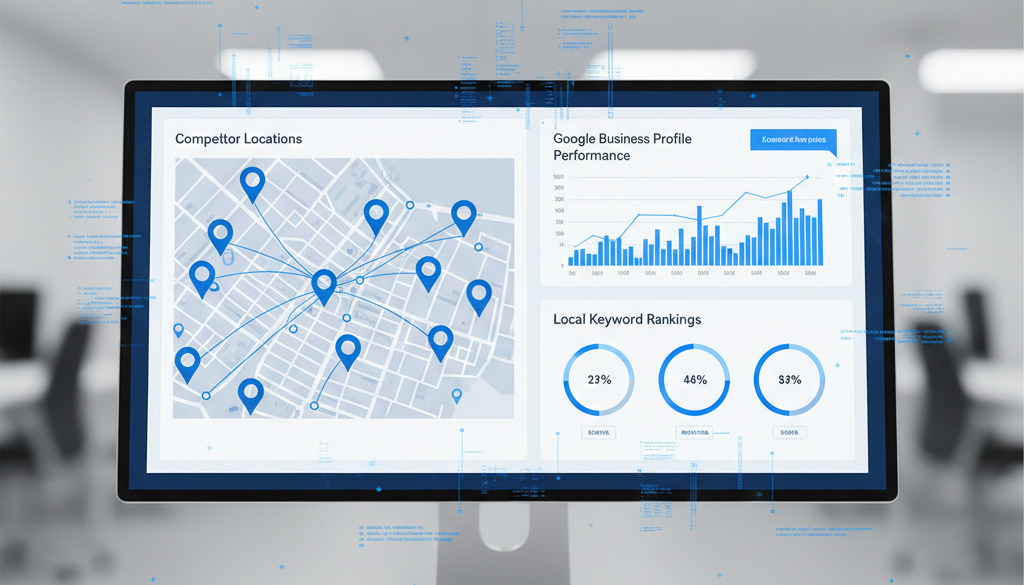
- Optimizing your Google Business Profile (GBP): AI can analyze your GBP listing and suggest improvements, such as adding specific attributes, generating compelling descriptions, and ensuring all information is accurate and complete.
- Managing local citations: It can audit your business listings across dozens of online directories (like Yelp, Yellow Pages, etc.) to ensure your Name, Address, and Phone number (NAP) are consistent everywhere, a key local ranking factor.
- Analyzing local search trends: AI can identify what local customers are searching for and how they are finding businesses like yours, helping you target geographically-relevant keywords.
- Monitoring online reviews: Some AI tools can even analyze the sentiment of your customer reviews, providing insights into what your customers love and what needs improvement.
By leveraging AI, you can ensure your business is highly visible to the customers who are closest to you and most likely to make a purchase.
Measuring AI-Enhanced SEO Performance: KPIs that Matter
With any business investment, you need to be able to measure success. While traditional SEO metrics are still relevant, AI allows for a more nuanced and powerful way to track performance. It’s no longer just about where you rank; it’s about the tangible business impact of your SEO efforts.
Focus on these Key Performance Indicators (KPIs) to understand the true return on your AI SEO investment:
| Key Performance Indicator (KPI) | Why It Matters with AI SEO | How to Track It |
|---|---|---|
| Organic Traffic Growth | The most fundamental metric. AI-optimized content should attract more visitors from search engines over time. | Google Analytics |
| Keyword Ranking for Intent-Based Terms | Instead of just tracking a few vanity keywords, monitor your ranking for a broader set of high-intent, long-tail queries identified by AI. | AI SEO Platforms, Google Search Console |
| Organic Conversion Rate | Are the visitors from search actually taking action (e.g., making a purchase, filling out a form)? AI helps attract more qualified traffic, which should lead to higher conversion rates. | Google Analytics (with goal tracking set up) |
| Share of Voice / SERP Visibility | A metric that measures your overall visibility across a set of important keywords compared to your competitors. AI helps you capture more real estate on the search results page. | Advanced SEO Platforms (e.g., Evertune, AthenaHQ) |
| Content Efficiency | This is a crucial metric for busy owners. Measure the time and cost to produce and optimize content before and after implementing AI tools or services. | Internal Time Tracking / Project Management |
By focusing on these smarter KPIs, you move beyond simple rankings to measure what truly matters: how your online presence is driving business growth.
The Synergy: Human Expertise and AI Tools
A common misconception is that AI is here to replace SEO professionals. This couldn't be further from the truth. AI is a tool, not a replacement for strategy. The most successful SEO strategies in 2026 and beyond will be those that create a powerful synergy between human expertise and AI capabilities.
Think of AI as the world’s most powerful research assistant and analyst. It can process data, find patterns, and automate repetitive tasks at a scale no human ever could. However, it lacks genuine creativity, brand understanding, and ethical judgment. The human expert's role evolves to:
- Set the Strategy: Define business goals, identify the target audience, and set the overall direction for the SEO campaign.
- Guide the AI: Provide the right prompts, ask the right questions, and interpret the AI's output to find actionable insights.
- Ensure Quality and Brand Voice: Edit and refine AI-generated content to ensure it is accurate, engaging, and perfectly aligned with your company's unique voice and values.
- Build Relationships: AI can identify link-building opportunities, but a human is needed to build the genuine relationships required for high-quality outreach.
"We aren’t just optimizing for a bot that reads text anymore; we are optimizing for systems that actually “understand” the context," explains one expert in a recent industry analysis. This shift means the best results come from combining AI’s ability to "understand" with a human’s ability to create a truly great answer and experience.
- Saood Zafar, ClickRank.ai
Overcoming Objections: AI and the Business Owner
It’s natural to be skeptical of new technology, especially when you’re busy running a business. Many owners share common concerns about integrating AI into their marketing.
"Isn't it too expensive and complicated?"
While some enterprise-level AI platforms carry a hefty price tag, the landscape has changed dramatically. The rise of competitive startups has made powerful AI SEO tools surprisingly affordable. More importantly, you don't need to become an AI expert yourself. This is where services come into play, offering a "done-for-you" model that provides all the benefits without the complexity. A solution like Volteruno is specifically designed to be the easy button for SEO content, making it a cost-effective choice for businesses that need professional results without the hassle of managing complex software.
"Will my content sound robotic and impersonal?"
This was a valid concern with early AI writers, but the technology has made exponential leaps. Modern AI can generate nuanced, well-written drafts that are often indistinguishable from human writing. The key is to use the AI as a starting point. By providing a solid first draft, it allows you to spend your limited time injecting your personal expertise, stories, and brand personality, resulting in content that is both highly optimized and authentically yours.
"Can I trust the output?"
AI is a powerful tool, but it is not infallible. It can occasionally make factual errors or "hallucinate" information. This is why human oversight remains non-negotiable. Always fact-check data and review content to ensure it aligns with your standards for accuracy and quality before publishing.
Getting Started: Implementing Advanced AI SEO Features
Feeling motivated but not sure where to begin? Adopting AI doesn’t have to be an all-or-nothing proposition. A phased approach is the smartest way to start.
- Start with the Biggest Pain Point: Content Creation. For most business owners, this is the most time-consuming task. Start by exploring an AI content generation tool or service. This will deliver the most immediate impact and free up your time.
- Use a Free Tool for a Quick Audit. Use one of the many free AI SEO tools to run a quick audit of your website. This can provide immediate, actionable insights into low-hanging fruit, such as identifying pages with slow load times or missing meta descriptions.
- Focus on One New Area: Keyword Intent. For your next piece of content, use an AI tool to explore topic clusters and user intent instead of just search volume. Try to build a comprehensive article around a cluster of related long-tail keywords.
- Measure and Iterate. Pick one or two KPIs that matter most to you (e.g., organic traffic to your blog, or leads from a specific service page). Track these metrics as you implement new AI-driven changes. Let the data guide your next steps.
Conclusion: Your New Competitive Edge
The world of SEO has undergone a seismic shift. Staying competitive no longer means just keeping up with Google's latest algorithm change; it means embracing the intelligence that powers search itself. The advanced AI SEO features discussed here—from semantic analysis and predictive research to automated technical audits and intelligent content creation—are not futuristic concepts. They are practical tools available today that can deliver a significant competitive advantage.
For a busy business owner, this technology represents a pivotal opportunity. It’s a chance to level the playing field, to execute a sophisticated, data-driven marketing strategy without needing a massive team or an unlimited budget. It’s the power to get your business found by the customers who are actively looking for you.
By demystifying these tools and understanding their practical benefits, you can move "beyond basic blogging" and into a new era of intelligent, efficient, and effective growth. And with solutions like Volteruno designed to bridge the gap between needing world-class SEO content and having the resources to create it, there has never been a better time to take control of your online visibility and welcome the influx of customers who find you on Google.
Frequently Asked Questions
1. Is AI-generated content penalized by Google?
No, Google does not penalize content simply because it was created with the help of AI. Google's long-standing guidance is to reward high-quality, helpful content that is created for people, not for search engines. As long as the content is original, accurate, and provides real value to the reader, its method of creation is irrelevant. The key is to use AI as a tool to produce helpful content, not to generate low-quality spam.
2. Do I still need an SEO expert if I use AI tools?
For most small and medium-sized businesses, the combination of AI and human expertise yields the best results. AI tools are excellent at data analysis and automation, but they lack strategic thinking, creativity, and brand understanding. An SEO expert can interpret AI-driven insights, set the overarching strategy, ensure content quality, and handle complex issues. Alternatively, a service like Volteruno acts as a hybrid, using AI for efficiency but managed by experts to deliver a strategic, "done-for-you" solution.
3. How much does it cost to get started with AI SEO?
The cost varies widely. Some powerful AI SEO software tools offer generous free tiers or trials that are perfect for getting started. Standalone AI content generators can cost anywhere from $20 to $100+ per month depending on usage. Comprehensive "done-for-you" services have their own pricing models, but often provide a higher ROI by saving you dozens of hours per month. For example, Volteruno offers a trial of the first five articles for free to prove its value before you commit.
4. How quickly can I expect to see results from using AI SEO?
SEO is a long-term strategy, and results are never instantaneous. However, AI can significantly accelerate the process. While it can take 3-6 months to see significant ranking improvements for competitive keywords, you can see more immediate results in other areas. For example, using AI for a technical SEO audit can yield improvements in site speed and indexability within weeks. Using AI to create a consistent flow of high-quality blog posts will build your topical authority faster than manual methods, often showing positive traffic trends within a couple of months.
5. What is Generative Engine Optimization (GEO)?
Generative Engine Optimization (GEO) is a new and emerging discipline focused on optimizing your brand's visibility in AI-powered search experiences like Google's AI Overviews, ChatGPT, and Perplexity. Since these AI engines synthesize information from multiple sources to provide a single, direct answer, the goal of GEO is to ensure your website's content is a primary source for these AI-generated responses. It is the next evolution of SEO, adapting to a world where users get answers from an AI, not just a list of blue links.
Keep reading
Hand-picked guides that go deeper — open the one you need next:
- SEO Simplified for Business Owners: A Practical Growth Guide
- AI Competitive SEO: Overtake Competitors
- AI for SEO Article Ranking: Google's First Page
- Multilingual Content Strategy: Expand Your Reach with AI