
Multilingual Content Strategy: Expand Your Reach with AI

Key Takeaways
- Go Global, Grow Local: Reaching customers in their native language is no longer optional; it's essential for growth. Over 75% of online shoppers prefer to buy from sites in their own language.
- AI is Your Accelerator: Artificial Intelligence drastically simplifies and speeds up the process of creating high-quality, culturally relevant content for multiple languages, a task that was once prohibitively expensive and slow.
- It's More Than Translation: Effective multilingual SEO involves deep cultural localization, technical setup (like hreflang tags), and market-specific keyword research, all areas where AI provides a significant advantage.
- Address Your Audience: For established business owners (40+) who are not digital natives, AI-powered services can bridge the gap, handling the complex technical work and content creation so you can focus on your business.
- Start Smart: You don't need to translate your entire site overnight. Begin with one target language, measure the results, and scale your strategy. AI makes this iterative approach feasible for any budget.
The Powerhouse of Global Reach: Unlocking Multilingual Content SEO with AI
I. Introduction: The Untapped Potential of Global Markets
In today's interconnected world, your next biggest customer might not speak your language. While your business has thrived locally, a vast, untapped global market is searching for your products and services online. A staggering 75% of consumers prefer to buy products in their native language, and over 60% rarely or never buy from English-only websites. Ignoring these customers is like leaving money on the table. For many business owners, the thought of launching a global strategy seems daunting, tangled in complexities of language, culture, and technical SEO. However, a revolution is underway. The fusion of Artificial Intelligence (AI) with multilingual content strategies is not just leveling the playing field; it's building a whole new one. This guide will show you how to harness this power to expand your reach, build international brand authority, and drive significant growth.
II. Understanding the Demographics: Reaching Your International SME Audience
This guide is specifically for established small and medium-sized enterprise (SME) owners, perhaps over 40, who know the importance of an online presence but don't have the time, technical background, or frankly, the inclination to become digital marketing experts. You've built a successful business on quality and relationships, and the online world can seem like a different planet. You might worry about:
- Time Commitment: "I don't have hours to spend learning SEO and managing a multilingual website."
- Technical Hurdles: "What are hreflang tags? What's a ccTLD? The jargon is overwhelming."
- Cost and ROI: "Hiring translators and SEO experts for multiple languages seems incredibly expensive."
These are valid concerns. But the opportunity is too significant to ignore. By strategically targeting non-native online markets, even within your own country (like the massive Spanish-speaking population in the US), you can unlock new revenue streams you never thought possible. The key is to work smarter, not harder, by leveraging new technology that handles the heavy lifting for you.
III. The Foundation: Why Multilingual SEO is Non-Negotiable Today
Search Engine Optimization (SEO) is the art and science of getting your website to rank high on search engines like Google. Multilingual SEO applies these same principles to multiple languages. When someone in Mexico searches for "best running shoes" in Spanish ("mejores zapatillas para correr"), you want your website—your Spanish-language page—to appear. Without it, you are invisible to that entire market.
Benefits of Multilingual SEO:
- Massive Traffic Increase: By ranking for keywords in different languages, you open the floodgates to a much larger pool of potential customers.
- Enhanced Customer Trust: Providing content in a user's native language shows respect and builds immediate trust, dramatically increasing the likelihood of a sale.
- Greater Brand Authority: A brand that communicates globally is perceived as a major player, boosting your authority and credibility.
- Competitive Advantage: While your competitors remain confined to one language, you can capture market share across the globe.
Traditionally, this meant a long and costly process of manual translation, localization, and technical setup. AI changes the entire equation, making a robust international presence achievable for businesses of any size.
IV. Decoding the Alphabet Soup: Key Multilingual SEO Terminology
The world of multilingual SEO is filled with jargon. Let's demystify the most important terms so you can speak the language of global expansion with confidence.
| Term | Simple Explanation |
|---|---|
| International SEO | The overall practice of optimizing your website to attract traffic from different countries and/or languages. |
| Localization | More than just translation. It's adapting your content to a specific locale, including cultural norms, currency, date formats, and imagery. |
| Internationalization | The technical process of designing a website so it can be easily adapted for various languages and regions without needing to be re-engineered. |
| hreflang Tags | A piece of code that tells Google which language and regional version of a page to show to a user based on their location and language settings. (e.g., this page is for Spanish speakers in Spain). |
| gTLD vs. ccTLD | A gTLD (generic top-level domain) is like .com or .org. A ccTLD (country-code top-level domain) is specific to a country, like .de for Germany or .fr for France, giving a strong signal to search engines. |
V. The AI Advantage: Revolutionizing Multilingual Content Creation
Artificial Intelligence is the engine that makes scalable multilingual SEO possible. Previously, every new language required a significant manual effort. AI-powered platforms can now automate and streamline these tasks with incredible speed and accuracy.
Here's how AI helps:
- High-Quality Translation: Modern neural machine translation models go far beyond the clunky, literal translations of the past, capturing nuance and tone with remarkable precision.
- Content Generation: AI can create original, SEO-optimized articles, product descriptions, and web copy in multiple languages from a single prompt.
- Keyword Discovery: AI tools can analyze search patterns in different countries, uncovering local keywords and search phrases that manual research would miss.
- Technical Automation: Some advanced systems can even help automate the implementation of technical elements like hreflang tags, which are notoriously tricky to manage by hand.
VI. Strategic Keyword Research Across Linguistic Borders
You can't simply translate your English keywords and expect them to work. A user in Brazil won't search for a "car" a "coche" (Spain); they'll search for a "carro." Understanding these local nuances is the key to success.
H3: Beyond Literal Translation
Keyword research in a new language is about understanding search intent and cultural context. For example, a search for "holiday deals" in the US implies vacations, while in the UK it often means discounts for Christmas or other public holidays.
H3: How AI Uncovers Hidden Opportunities
This is where AI truly shines. AI tools can analyze vast amounts of data from local search engines and forums to:
- Identify the most common search terms and phrases for your products in a specific region.
- Discover long-tail keywords (longer, more specific phrases) that show high purchase intent.
- Understand semantic search—how search engines interpret the context and intent behind a query, not just the words themselves.
By using AI, you can build a keyword strategy that is deeply rooted in the local culture, ensuring your content connects with real user needs.
VII. Crafting Compelling Content: The AI-Assisted Localization Workflow
Creating high-quality content in another language is not about hitting a "translate" button. It's a sophisticated workflow where AI acts as a powerful assistant. Here’s a typical process:
- Define the Goal: Select a target market and language. Let's say you want to target French-speaking customers in Canada.
- AI-Powered Keyword Research: Use an AI tool to identify top keywords for your product category in Canadian French. notice differences from European French ("magasiner" vs "faire du shopping" for "to shop").
- Generate the Core Content: Provide a detailed brief to an AI content generator. It drafts a blog post or landing page optimized around your target keywords, written in fluent Canadian French.
- Cultural Adaptation Pass: The AI can be prompted to ensure idioms, examples, and references are relevant to a Canadian audience (e.g., referencing hockey instead of baseball).
- Human Review and Refinement: A native-speaking human editor reviews the content. They don't have to write from scratch; instead, they polish the AI's draft, ensuring brand voice, subtle cultural nuances, and perfect flow.
This hybrid approach delivers the best of both worlds: the speed and scale of AI combined with the irreplaceable nuance of human expertise. Services like 'More customers from your blog — We write the SEO articles for you' have perfected this workflow, leveraging advanced AI to generate professional, localized SEO content that feels entirely authentic to the end-reader.
VIII. The Magic of 'More customers from your blog': AI-Powered SEO Article Generation
Imagine having a professional SEO content writer on call, ready to produce a perfectly optimized article for any market in minutes. That’s the power that platforms dedicated to AI content a GaaS (Generation as a Service) provide. For business owners who feel overwhelmed by the prospect of content creation, this is a game-changer.
Here’s how a service like 'More customers from your blog — We write the SEO articles for you' works its magic:
- You Provide the Topic: Simply enter a keyword or a topic, like "eco-friendly cleaning products for families."
- The AI Gets to Work: The system's proprietary artificial intelligence analyzes top-ranking content for that topic, identifies key themes and questions, and researches relevant information.
- Content Creation in Minutes: In just a few minutes, it writes a comprehensive, well-structured, and SEO-friendly blog post. It’s not just translated; it’s created from the ground up to be effective in the target language.
- Instant Delivery: The finished article appears on your website, professionally formatted and ready to attract new customers.
"It feels almost like magic. Our proprietary artificial intelligence writes professional SEO blog posts for your website in minutes. Customers will find you on their own in Google."
IX. Mastering Technical SEO for a Global Audience
Great content needs a solid technical foundation to be seen. For multilingual websites, two areas are critical: domain structure and hreflang tags.
H3: Choosing Your Domain Structure
You have three main options for organizing your different language sites, each with pros and cons:
- ccTLDs (Country-Code Top-Level Domains): e.g., `yourbrand.de` for Germany. This is the strongest signal to search engines and users that your site is for a specific country, but it requires managing separate websites.
- Subdomains: e.g., `de.yourbrand.com`. Easier to set up than ccTLDs and still a strong signal.
- Subdirectories: e.g., `yourbrand.com/de/`. This is the most common and often easiest approach from an SEO perspective, as it consolidates all your site authority onto one domain.
H3: The Critical Role of Hreflang Tags
The hreflang tag is arguably the most important piece of technical code for international SEO. It’s a snippet placed in your page’s HTML that tells Google: "This page is the English version. For the German version, go here. For the Spanish version for users in Mexico, go here."
Implementing hreflang tags correctly prevents issues like duplicate content and ensures that users land on the correct language version of your site from search results, providing a seamless user experience.[1] While they can be complex to manage manually, especially with many languages, many modern website platforms and AI-assisted SEO tools can help automate their creation and maintenance.
X. Cultural Nuances and Linguistic Etiquette: Beyond Literal Translation
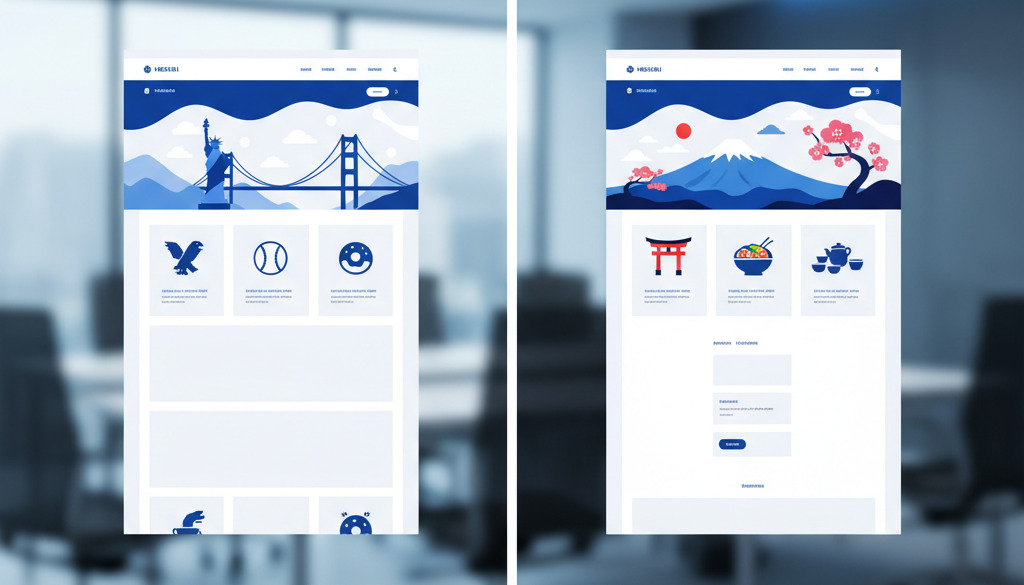
A successful global strategy respects cultural differences. What works in one country can be ineffective or even offensive in another. Localization is about adapting every aspect of your message.
- Imagery and Colors: A color that signifies joy in one culture could represent mourning in another. Website imagery should reflect local people and environments.
- Tone of Voice: A direct, bold tone might work well in the US but be perceived as aggressive in Japan, where a more formal and humble tone is preferred.
- Formats and Units: Are you using the correct currency, date format (MM/DD/YYYY vs. DD/MM/YYYY), and units of measurement (inches vs. centimeters)?
- Humor and Idioms: These rarely translate well. An idiom that is hilarious in English might be meaningless gibberish in Italian.
AI can assist by flagging potentially problematic phrases, but this is an area where human oversight is non-negotiable. A native speaker’s review is essential to ensure your content is not just linguistically correct, but culturally resonant.
XI. Measuring Success: Tracking Performance Across Languages
How do you know if your multilingual strategy is working? You need to track the right Key Performance Indicators (KPIs) for each language version of your site.
| KPI | What It Tells You | Tools to Use |
|---|---|---|
| Organic Traffic by Language | How many visitors are coming from search engines to each language version of your site. | Google Analytics |
| Keyword Rankings by Country | Where you rank for your target keywords in specific countries. | Google Search Console, Semrush, Ahrefs |
| Conversion Rate by Language | What percentage of visitors from each language group are completing a desired action (e.g., making a purchase, filling a form). | Google Analytics |
| Bounce Rate by Language | The percentage of visitors who leave after viewing only one page. A high bounce rate may indicate a mismatch between content and user expectations. | Google Analytics |
By setting up dashboards in a tool like Google Analytics, you can easily monitor performance across all your markets and make data-driven decisions to refine your approach.
XII. The Human Touch: When AI Needs a Partner
AI is a phenomenal tool, but it is not a complete replacement for human intelligence and sensitivity. The most successful multilingual strategies use AI to handle 80-90% of the work, with humans providing the crucial final 10-20%.
The ideal partnership looks like this:
- AI handles: Initial translation, content drafting, keyword data analysis, and technical automation.
- Humans handle: Final proofreading, brand voice alignment, cultural validation, and strategic oversight.
Think of AI as an incredibly fast and knowledgeable junior employee. It produces a fantastic first draft, but it needs an experienced manager (a human expert) to give it the final polish and strategic direction. This is the model that expert services use to deliver high-quality content at scale.
XIII. Building Trust and Authority in New Markets
Entering a new market is like being the new person in town. You need to earn trust. Consistent, high-quality content in the local language is the fastest way to do it. When customers see that you’ve invested in speaking their language and understanding their culture, you are no longer just a foreign company; you are a local resource.
By being present and relevant in local search results, you build credibility before the customer even clicks on your website. This is a powerful competitive advantage that creates a lasting moat around your business.
XIV. Overcoming Common Obstacles for 40+ Business Owners
Let's circle back to the core challenges for an established, non-digital-native business owner. The path to global reach can seem blocked by a lack of time and a fear of complexity. This is where leaning on a specialized service becomes a strategic business decision.
Instead of trying to become an expert yourself, you can partner with a service that has already mastered the process. The promise that "Customers will find you on their own in Google" is not hyperbole; it is the outcome of a well-executed, AI-driven content strategy. By delegating the task of content creation and SEO to a dedicated platform, you free yourself to do what you do best: run your business. The technology handles the "how," allowing you to focus on the "what"—your products, your services, and your customers.

XV. The Future of Multilingual SEO: Trends and Innovations
The world of AI and SEO is evolving at a breakneck pace. As we look toward 2027 and beyond, several trends are set to further transform global digital marketing:
- AI-Powered Search (SGE): Google's Search Generative Experience and other AI-driven search engines like ChatGPT will become primary sources of information. Optimizing your content to appear in these AI-generated answers will be crucial.
- Hyper-Personalization: AI will enable content to be dynamically personalized not just by language, but by user dialect, location, and even past behavior.
- Voice Search Optimization: As more people use voice assistants, optimizing for natural, conversational queries in different languages will become increasingly important.
Staying ahead of these trends doesn’t require you to be a tech wizard. It requires a forward-thinking mindset and a willingness to adopt tools that keep you competitive.
XVI. Getting Started: Your First Steps Towards Global Domination
Ready to take the first step? It’s easier than you think. You don't need to boil the ocean.
- Pick One Target Market: Analyze your existing website data. Do you see traffic from a specific country? Start there. Or, choose a large, accessible market like the Spanish-speaking market in the US.
- Identify Core Content: Choose your top 5-10 pages—your homepage, top-selling product pages, and a few key blog posts.
- Leverage an AI Service: This is the most efficient way to begin. Find a service that specializes in AI-powered SEO content. For a risk-free entry, look for an introductory offer. For example, with 'More customers from your blog', your first 5 posts are free. This allows you to experience the power of the technology firsthand without any commitment.
- Measure and Iterate: Track your KPIs for that new language for 3-6 months. As you see positive results, you can reinvest the returns into expanding to your next language.
XVII. Case Study Snippet: Early Wins for Businesses Using AI Multilingual SEO
Consider a hypothetical US-based online store selling handmade leather goods. They notice a small but consistent amount of traffic from Germany. Using an AI-powered service, they translate their top 10 product pages and create 5 SEO-optimized blog posts in German. Within three months, their organic traffic from Germany increases by 400%, and they receive their first dozen orders from German customers. This early success provides the ROI to justify a further expansion into French and Spanish markets. This story is a common one among the more than 500 companies that are already using these AI content generation services to fuel their growth.
XVIII. Conclusion: Embracing the World, One Keyword at a Time
The world is more connected than ever, and your potential for growth has never been greater. The barriers of language and distance that once defined business boundaries are crumbling, thanks to the power of AI. For the savvy business owner, this is a golden opportunity. By adopting a smart, AI-driven multilingual content strategy, you can efficiently and effectively reach new markets, build a global brand, and secure a powerful competitive advantage.
You don't need to be an SEO expert or a linguist. You just need to be willing to embrace the tools that make global reach accessible. The world is searching. It’s time to let them find you.
Frequently Asked Questions
1. Is AI translation good enough to use for my website?
Modern neural machine translation AI is remarkably accurate for most content, far surpassing older tools. For website copy, blog posts, and product descriptions, AI provides an excellent and fast first draft. However, for the best results and to ensure perfect brand voice and cultural nuance, we always recommend a final review by a native-speaking human editor. The ideal strategy is an AI-first, human-polished workflow.
2. How much does it cost to start a multilingual SEO strategy?
The cost has decreased dramatically thanks to AI. Instead of hiring expensive agencies and multiple translators for each language upfront, you can use an AI-powered service. Many, like 'More customers from your blog — We write the SEO articles for you', offer free trials or very affordable entry-level plans (e.g., getting your first 5 posts for free). This allows you to test a market with minimal investment and scale up as you see a return.
3. What's more important: targeting a new country or a new language?
This depends on your business, but often the easiest first step is targeting a new language within your current country. For example, if you operate in the United States, creating a Spanish-language version of your site is a huge opportunity, as there are over 40 million native Spanish speakers in the US. This allows you to reach a new audience without dealing with international shipping and logistics. After that, you can expand to new countries.
4. How long does it take to see results from multilingual SEO?
Like all SEO, multilingual SEO is a long-term strategy. You won't see results overnight. Generally, you can expect to see initial traction, such as an increase in traffic and keyword rankings, within 3 to 6 months. The key is consistency in publishing high-quality, localized content and ensuring your technical SEO is set up correctly.
5. Do I need a separate website for each language?
Not necessarily. While using country-specific domains (like `.fr` for France) can be beneficial, it's also more complex to manage. The most common and effective approach for most businesses is to use subdirectories on your existing domain (e.g., `yourwebsite.com/fr/`). This consolidates your SEO authority and is much easier to manage. A good web developer or a comprehensive SEO platform can help you set this up correctly.
6. Can I just use a simple website translator plugin?
Simple, on-the-fly translator plugins are not a substitute for a true multilingual SEO strategy. These tools often don't create static, indexable pages for search engines to find. This means your "translated" content is invisible to Google in that language. Furthermore, they don't allow for the cultural localization, keyword optimization, or URL structure (like `yoursite.com/es/`) needed to actually rank and earn trust in a new market.
Leveraging AI for Multilingual Content Creation and Optimization
The landscape of multilingual content creation is being transformed by artificial intelligence (AI). While manual translation and localization have been the traditional methods, AI offers powerful tools to streamline these processes, enhance efficiency, and improve the quality and relevance of your content for diverse audiences. AI-driven platforms can now assist with everything from initial content generation and translation to sophisticated analysis of linguistic nuances and cultural adaptions. This allows businesses to scale their multilingual efforts more effectively than ever before, ensuring that their message resonates deeply in every target market.
One of the primary advantages of using AI in multilingual content strategy is its speed and scalability. AI-powered translation tools can process vast amounts of text exponentially faster than human translators. This doesn't mean replacing human expertise entirely, but rather augmenting it. AI can handle the initial heavy lifting of translation, providing a solid draft that human linguists can then refine, ensuring accuracy, cultural appropriateness, and brand voice consistency. This hybrid approach significantly reduces turnaround times for content deployment, allowing businesses to react quickly to market trends and competitor activities across different regions. For instance, if a new product is launched or a marketing campaign is initiated, AI can help generate localized versions of press releases, social media posts, and website copy in multiple languages simultaneously, enabling a coordinated global rollout.
Beyond mere translation, AI excels at content optimization for search engines across different languages. AI algorithms can analyze search patterns, keyword popularity, and user intent in various linguistic contexts. This data can then be used to inform content creation, ensuring that keywords are not just translated but also culturally relevant and strategically placed to maximize organic visibility. AI tools can identify "keyword gaps" – topics that are popular in a target market but not yet addressed by your localized content. Furthermore, AI can assist in analyzing the performance of your multilingual content, providing insights into which pieces are resonating most with specific audiences, what adjustments might be needed, and how to improve engagement metrics. This data-driven approach to multilingual content SEO AI ensures that your efforts are not only about reaching more people but also about effectively connecting with them in a way that drives business objectives.
AI also plays a crucial role in maintaining consistency and quality across all your localized assets. Natural Language Processing (NLP) models can be trained on your brand's specific terminology, style guides, and previous successful content. This allows AI to generate new content that aligns perfectly with your established brand identity, regardless of the language. For example, AI can ensure that product descriptions use the same brand-specific adjectives or that customer service responses maintain a consistent tone. This level of control is difficult to achieve with purely manual processes, especially when dealing with a large volume of content in numerous languages. AI-powered tools can also perform automated quality checks, flagging potential grammatical errors, inconsistencies, or stylistic deviations before content is published.
The integration of AI into a multilingual content strategy is not just about efficiency; it’s about achieving superior results. By leveraging AI for rapid translation, intelligent keyword research, culturally sensitive adaptation, and consistent quality control, businesses can build a robust and effective multilingual online presence. This allows them to tap into new markets, foster stronger customer relationships globally, and ultimately achieve greater success in the international arena. The effective use of multilingual content SEO AI moves businesses beyond simply translating words to truly connecting with customers worldwide.
Keep reading
Hand-picked guides that go deeper — open the one you need next:
- SEO for the Non-Techy: AI Simplifies Content Marketing for Your Business
- Unlock SEO Success: How AI Transforms Your Blog Content Strategy
- Mastering AI Keyword Research: A Volteruno Guide
- Automate Your Blog: The Power of AI Autopilot Publishing